The bomb is in a grey Saab 9000 near the Ealing Broadway station, restaurants and pubs on Uxbridge Road, which explodes shortly after midnight, injuring seven people. Debris from the blast spreads more than 220 yards. The bomb is timed to target leaving karaoke pub-goers, but while most escape injury, the explosion still causes significant damage to property, estimated to be around £200,000. The adjacent Ealing Broadway shopping centre is also damaged by flooding arising from the water main under the car bomb being ruptured.
Experts regard the bomb to be designed to look spectacular on CCTV for the purposes of “armed propaganda” rather than to cause large numbers of injuries. However, anti-terrorist detectives claim that the attack is planned to be a massacre and to cause as much carnage as the Omagh bombing three years earlier.
In November 2001, three men, Noel Maguire, Robert Hulme and his brother Aiden Hulme, are arrested in connection with the Ealing, BBC and Birmingham bomb attacks. They are all later convicted at the Old Bailey on April 8, 2003. Robert and Aiden Hulme are each jailed for twenty years. Noel Maguire, whom the judge says played “a major part in the bombing conspiracy,” is sentenced to twenty-two years.
Two other men, James McCormack of County Louth and John Hannan of Newtownbutler, County Fermanagh, had already admitted the charge at an earlier hearing. McCormack, who plays the most serious part of the five, is jailed for twenty-two years. John Hannan, who is seventeen at the time of the incidents, is given sixteen years of detention.
Ewart-Biggs is 55 when he is killed by a land mine planted by the IRA on July 21, 1976. He had been taking precautions to avoid such an incident since coming to Dublin only two weeks earlier. Among the measures he employs is to vary his route many times a week however, at a vulnerable spot on the road connecting his residence to the main road, there is only a choice between left or right. He chooses right and approximately 150 yards from the residence he hits a land mine that is later judged to contain hundreds of pounds of explosives. Ewart-Biggs and fellow passenger and civil servant Judith Cooke (aged 26) are killed. Driver Brian O’Driscoll and third passenger Brian Cubbon (aged 57) are injured. Cubbon is the highest-ranking civil servant in Northern Ireland at the time.
The Irish government launches a manhunt involving 4,000 Gardaí and 2,000 soldiers. TaoiseachLiam Cosgrave declares that “this atrocity fills all decent Irish people with a sense of shame.” In London, Prime MinisterJames Callaghan condemns the assassins as a “common enemy whom we must destroy or be destroyed by.” Thirteen suspected members of the IRA are arrested during raids as the British and Irish governments attempt to apprehend the criminals, but no one is ever convicted of the killings. In 2006, released Foreign and Commonwealth Office files reveal that the Gardaí had matched a partial fingerprint at the scene to Martin Taylor, an IRA member suspected of gun running from the United States.
(Pictured: The twisted remains of the car lie upended beside a huge crater after the explosion that killed Christopher Ewart-Biggs and civil servant Judith Cooke)
After the 1981 Irish hunger strike, floods of recruits sign up to join the IRA. Republicans in County Tyrone are especially angry over the death of Martin Hurson who was from the small Tyrone village of Cappagh and was one of Cappagh’s most famous sons. Cappagh becomes a Republican stronghold in the 1980s. Many young men flock to join the East Tyrone Brigade to avenge Hurson’s death. Some of those who join after being radicalized by the Hunger Strike go onto become famous IRA Volunteers like Declan Arthurs and Martin McCaughey who were both small children when the conflict broke out in 1969.
Sinn Féin member Francie Molloy said the following on Hurson’s funeral and the effect his death had on the young people of Cappagh:
“There was people everywhere. The village was black with them. It was the first sign in Tyrone of thousands and thousands of people assembling to honor the remains of a native son coming home. Martin was young when he went to jail and young when died on hunger strike. His death just made young people more determined that they were going to replace him. They saw ten men dead as the British government taking people out of the struggle. I think the young people of Cappagh and surrounding areas decided there and then that they were going to replace every one of them and replace them tenfold. And that is what they did. The number of young people who joined up in response was massive.”
On July 13, 1983, four British Army (Ulster Defence Regiment) soldiers (Ronald Alexander, Thomas Harron, John Roxborough, and Oswald Neely), all Protestant members of the 6th Battalion UDR, are travelling in their mobile patrol along a road in Tyrone close to the small town of Ballygawley. IRA Volunteers from the East Tyrone Brigade plant a 500 lb. land mine along the road the UDR patrol is traveling. The IRA unit notices the UDR takes a similar route every so often and has spotted weakness in the patrol. The IRA Volunteers are watching the UDR patrol while being well hidden. Once the UDR patrol is close to the land mine the IRA Volunteers detonate the land mine by remote control killing the four UDR soldiers almost immediately. This is the highest casualty rate suffered by the UDR in a single incident during The Troubles and worst attack suffered by the security forces since 1981. The attack is carried out by an Active Service Unit (ASU) of the IRA’s East Tyrone Brigade which is one of the most active and successful Brigade areas in the IRA during the 1980s.
Within five years the IRA’s East Tyrone Brigade launches two more high-profile attacks in Ballygawley. In 1985, during the Attack on Ballygawley barracks, an IRA unit led by Patrick Joseph Kelly and Jim Lynagh attacks the Ballygawley RUC barracks, shooting dead two RUC officers who are at the front of the station. A 200 lb. bomb destroys the entire barracks and injures three more RUC officers. In 1988, the IRA kills eight British soldiers and injures twenty-eight others during the Ballygawley bus bombing. Many Republicans see this as revenge for the Loughgall ambush the year before when the Special Air Service (SAS) shot dead eight IRA Volunteers.
As Irish immigration to the United States begins to increase in the 18th century many Irish organizations are formed. In the later part of the 1780s, a strong Irish patriot character begins to grow in these organizations and amongst recently arrived Irish immigrants.
In 1858, the IRB is founded in Dublin by James Stephens. In response to the establishment of the IRB in Dublin, a sister organization is founded in New York City, the Fenian Brotherhood, led by John O’Mahony. This arm of Fenian activity in America produces a surge in radicalism among groups of Irish immigrants, many of whom had recently emigrated from Ireland during and after the Great Famine.
In October 1865, the Fenian Philadelphia Congress meets and appoints the Irish Republican Government in the United States. Meanwhile in Ireland, the IRB newspaper The Irish People is raided by the police and the IRB leadership is imprisoned. Another abortive uprising occurs in 1867, but the British remain in control.
After the 1865 crackdown in Ireland, the American organization begins to fracture over what to do next. Made up of veterans of the American Civil War, a Fenian army is formed. While O’Mahony and his supporters want to remain focused on supporting rebellions in Ireland, a competing faction, called the Roberts, or senate wing, wants this Fenian Army to attack British bases in Canada. The resulting Fenian raids strain U.S.–British relations. The level of American support for the Fenian cause begins to diminish as the Fenians are seen as a threat to stability in the region.
After 1867, the Irish Republican Brotherhood headquarters in Manchester chooses to support neither of the existing feuding factions, but instead promotes a renewed Irish republican organization in America, to be named Clan na Gael.
According to John Devoy in 1924, Jerome James Collins founds what is then called the Napper Tandy Club in New York on June 20, 1867, Wolfe Tone‘s birthday. This club expands into others and at one point at a picnic in 1870 is named the Clan na Gael by Sam Cavanagh. This is the same Cavanagh who killed the informer George Clark, who had exposed a Fenian pike-making operation in Dublin to the police.
Collins, who dies in 1881 on the disastrous Jeannette Expedition to the North Pole, is a science editor on the New York Herald, who had left England in 1866 when a plot he was involved in to free the Fenian prisoners at Pentonville Prison was uncovered by the police. Collins believes at the time of the founding in 1867 that the two feuding Fenians branches should patch things up.
The objective of Clan na Gael is to secure an independent Ireland and to assist the Irish Republican Brotherhood in achieving this aim. It becomes the largest single financier of both the Easter Rising and the Irish War of Independence.
The Clan na Gael still exists today, much changed from the days of the Catalpa rescue. In 1987 the policy of abstentionism is abandoned. As recently as 1997 another internal split occurs as a result of the IRA shift away from the use of physical force as a result of the 1998 Good Friday Agreement. The two factions are known to insiders as Provisional Clan na Gael (allied to Provisional Sinn Féin/IRA) and Republican Clan na Gael (associated with both Republican Sinn Féin/Continuity IRA and 32 County Sovereignty Movement/Real IRA, though primarily the former). These have been listed as terrorist organizations at various times by the UK Government.
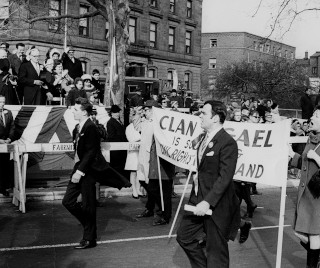
(Pictured: Clan na Gael marching in the 1970 St. Patrick’s Day Parade in Philadelphia, photograph by John Hamilton)
Holland originally works in fashion for Vogue magazine and then The Observer. She comes to prominence as one of the first Irish journalists to report on the rise of the Northern Ireland Civil Rights Association and becomes an increasingly prominent commentator on the affairs of the region.
In 1977 Conor Cruise O’Brien is appointed editor-in-chief of The Observer. He is a writer and politician who serves as a government minister in the Irish Parliament, Oireachtas. He is often criticized for his uncompromising opposition to “physical force Irish republicanism,” and his actions to that end during Liam Cosgrave‘s tenure as Taoiseach are labelled as censorship by some. Shortly after starting as editor, he sends a memo to Holland:
“It is a very serious weakness of your coverage of Irish affairs that you are a very poor judge of Irish Catholics. That gifted and talkative community includes some of the most expert conmen and conwomen in the world and I believe you have been conned.”
The series of killings which lead to the Coagh ambush begin on April 26, 1988, when a 23-year-old UDR soldier from Coagh, Edward Gibson, is shot dead by an IRA unit at Ardboe while at work for Cookstown Council on a bin lorry. The Ulster Volunteer Force (UVF) retaliates by murdering Phelim McNally, brother of local Sinn Féin councillor Francie McNally, on November 24, 1988. This is followed by an IRA attack upon a car maintenance garage business owned by retired UDR soldier Leslie Dallas on March 7, 1989, in which Dallas, along with two civilian pensioners that are in the premises at the time of the attack, are all murdered by machine gun fire from a passing vehicle, the IRA attackers driving off afterwards cheering as reported by eyewitnesses in the vicinity.
The tit-for-tat campaign around Coagh continues on November 29, 1989, when UVF gunmen attack a pub owned by IRA member Liam Ryan, shooting Ryan dead. A customer in the premises is also killed in the incident. On March 8, 1990, part-time UDR soldier and construction worker Thomas Jamison is killed by the IRA in a gun and grenade ambush attack on a lorry he is driving near Donaghmore, while delivering concrete to a British Army base. On March 3, 1991, the Ulster Volunteer Force carries out an attack at the village of Cappagh, killing three IRA members. On April 9, 1991, the IRA’s East Tyrone Brigade shoots dead Derek Ferguson in Coagh, a cousin of local Member of Parliament Reverend William McCrea, stating afterward that he was a paramilitary with the Ulster Volunteer Force. Ferguson’s family subsequently refutes that he had anything to do with Loyalist paramilitarism.
At 7:30 AM on June 3, 1991, three Tyrone IRA paramilitaries, Tony Doris (21), Michael “Pete” Ryan (37) and Lawrence McNally (39), drive a stolen Vauxhall Cavalier from Moneymore, County Londonderry to the village of Coagh, crossing the border of counties Londonderry and Tyrone, to kill a part-time Ulster Defence Regiment soldier, who is in his civilian life a contractor that works with the security forces. Their intent, however, is known to the British security forces, having been revealed by either a Crown agent within the IRA itself or from covert technical surveillance. In consequence a detachment from the British Army’s Special Air Service is lying in wait on both sides of Coagh’s main street, and also in a red Bedford lorry at the scene.
The stolen car is driven by Doris towards the centre of the village, its journey from Moneymore being tracked on the ground and in the air. At the scene of the ambush the British Army has set up a “decoy” target for the IRA to go for in the form of an SAS trooper who is pretending to be their intended victim, sitting in his car at a regular spot while waiting to pick up a friend on their way to work, which IRA intelligence had established as a behavioral pattern of their intended victim. When the stolen car carrying the IRA men approaches the scene, the Special Air Service detachment opens sustained automatic fire upon it from close range. Doris is immediately hit and the out-of-control car crashes into two nearby parked cars. The shooting continues until the car explodes in flames. According to an eyewitness, one of the IRA men in the car returns fire from within the vehicle after the crash.
Some reports claim at least two of the IRA men attempt to exit the crashed car and are subsequently found lying half out of its doors by the later police investigation of the scene. Relatives of the IRA men subsequently state that they had received information from the scene that two of the IRA attackers had fled on foot from the car after the crash, but had been pursued after and shot down by the British Army in the vicinity, with their bodies being taken back to the car, which is subsequently reported to be riddled with over 200 bullet holes. A Royal Ulster Constabulary crime-scene report states that a balaclava belonging to one of the IRA men is found some distance away from the vehicle.
The bodies of Doris, Ryan and McNally are badly burned and have to be identified by police using their dental records. Two rifles are recovered from within the burned-out stolen car and subsequent police forensic examination reveals that they had both been used in the multiple murders at Leslie Dallas’s garage in March 1989.
(Pictured: Looking towards Coagh village, from the County Londonderry side)
A Chinook helicopter of the Royal Air Force (RAF) crashes on the Mull of Kintyre, Scotland, in foggy conditions on June 2, 1994. The crash results in the deaths of all twenty-five passengers and four crew on board. Among the passengers are almost all the United Kingdom‘s senior Northern Irelandintelligence experts who are travelling from Belfast to a security conference in Inverness. The accident is the RAF’s worst peacetime disaster.
Earlier in the day, the helicopter and crew carry out a trooping flight, as it is considered to be unsafe for British troops to move around in certain parts of Northern Ireland using surface transport at the time due to the threat posed by Provisional Irish Republican Army attacks. This mission is safely accomplished and they return to Joint Helicopter Command Flying Station Aldergrove at 3:20 PM. The helicopter takes off for Inverness at 5:42 PM. Weather en route is forecast to be clear except in the Mull of Kintyre area. The crew makes contact with military air traffic control (ATC) in Scotland at 5:55 PM.
Around 6:00 PM, the helicopter flies into a hillside in dense fog. The pilots are Flight Lieutenants Jonathan Tapper, 28, and Richard Cook, 30, both United Kingdom Special Forces pilots. There are two other crew. The helicopter is carrying 25 British intelligence experts from MI5, the Royal Ulster Constabulary and the British Army, from RAF Aldergrove (outside Belfast, Northern Ireland) to attend a conference at Fort George, near Inverness, Scotland. At the time of the accident Air Chief Marshal Sir William Wratten calls it “the largest peacetime tragedy the RAF had suffered.”
In the immediate aftermath of the accident, one commentator states that the loss of so many top level Northern Ireland intelligence officers in one stroke is a huge blow to the John Major government, “temporarily confounding” its campaign against the IRA. That the crash kills so many British intelligence experts, without any witnesses in the foggy conditions, leads to considerable speculation and conspiracy theories being devised on the issue on the potential of a cover-up having been performed. Among these are accusations that wake turbulence from a top-secret hypersonic U.S. aircraft had been responsible for the crash, while another postulates that it is a deliberate assassination of the intelligence operatives on board in connection with the then on-going Northern Ireland peace process.
In 1995, an RAF board of inquiry rules that it is impossible to establish the exact cause of the accident. This ruling is subsequently overturned by two senior reviewing officers, who state the pilots were guilty of gross negligence for flying too fast and too low in thick fog. This finding proves to be controversial, especially in light of irregularities and technical issues surrounding the then-new Chinook HC.2 variant which were uncovered. A Parliamentary inquiry conducted in 2001 finds the previous verdict of gross negligence on the part of the crew to be “unjustified.” In 2011, an independent review of the crash clears the crew of negligence.
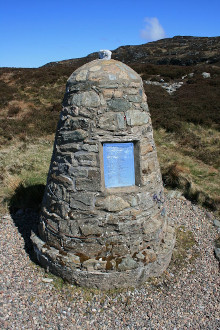
(Pictured: Memorial on Mull of Kintyre, Scotland to the crash victims of the 1994 RAF Chinook crash)
At its peak the force has around 8,500 officers with a further 4,500 who are members of the RUC Reserve. During the Troubles (late 1960s-1998), 319 members of the RUC are killed and almost 9,000 injured in paramilitary assassinations or attacks, mostly by the Provisional Irish Republican Army, which by 1983 makes the RUC the most dangerous police force in the world in which to serve. During the same period, the RUC kills 55 people, 28 of whom are civilians.
The RUC is superseded by the Police Service of Northern Ireland (PSNI) in 2001. The former police force is renamed and reformed, as is provided for by the final version of the Police (Northern Ireland) Act 2000. The RUC has been accused by republicans and Irish nationalists of one-sided policing and discrimination, as well as collusion with loyalist paramilitaries. Conversely, it is praised as one of the most professional policing operations in the world by British security forces.
Allegations regarding collusion prompt several inquiries, the most recent of which is published by Police Ombudsman For Northern IrelandNuala O’Loan on January 22, 2007. The report identifies police, Criminal Investigation Department (CID) and Special Branch collusion with loyalist terrorists under 31 separate headings, in her report on the murder of Raymond McCord, Jr. and other matters, but no member of the RUC has been charged or convicted of any criminal acts as a result of these inquiries. Ombudsman O’Loan states in her conclusions that there is no reason to believe the findings of the investigation were isolated incidents.
A statement is read out from Dublin after the previous night’s meeting of the executive of the Northern Republican Clubs, a political movement allied to the IRA. It states, “The overwhelming desire of the great majority of all the people of the north is for an end to military actions by all sides.”
It goes on to say that a suspension of activities will be a chance to prevent all-out civil war in Ulster. The group insists it will continue a campaign of civil disobedience and the political struggle until its demands are met, namely:
The Royal Ulster Constabulary (RUC) and British Army are the first to benefit from such a ceasefire as they have been the primary targets of the IRA. Residents of Belfast in particular have been worn down by the four-year campaign of violence and this news is very welcome there.
Father Hugh O’Neill, who leads a Londonderry peace movement, says, “Please God, everyone will now sit down and begin to talk.”
Cahill is educated at St. Mary’s Christian Brothers’ Grammar School. At age 14 he leaves school to assist in his father’s print shop. Soon after, he joins the Catholic Young Men’s Society, which campaigns on social issues with a focus on eradicating moneylenders from working-class areas of Belfast, as they often charge usurious interest rates. At the age of seventeen, he joins Na Fianna Éireann, a republican-orientated Scouting movement. Na Fianna Eireann is regarded as the “Junior Irish Republican Army.”
Cahill joins the local Clonard-based ‘C’ Company of the Belfast Brigade of the Irish Republican Army in 1938. Four years later, during an anniversary march by the IRA for the Easter Rising, he gets into a shootout with five other IRA men against four Royal Ulster Constabulary (RUC) officers. Several men are wounded, and Constable Patrick Murphy is killed. Cahill and four of the other men spend time in prison in Belfast. The IRA declares a formal ceasefire in 1945. Afterwards, republican prisoners begin to be released. Cahill is released in October 1949.
The IRA launches a new campaign in 1956. The IRA border campaign attacks ten targets in six counties, damaging bridges, courthouses and border roads. By 1957, three RUC officers and seven republicans have been killed during the campaign. Cahill is arrested and interned in January 1957 with several other republicans. He is released from internment in April 1961. Following his release from prison, he is disappointed at the direction of the IRA and resigns from the organisation around 1962.
In 1969, Cahill is a key figure in the founding of the Provisional Irish Republican Army. During his time in the Provisional IRA, he helps import weapons and raise financial support. He serves as the chief of staff in 1972 but is arrested the following year when a ship importing weapons was intercepted.
After his release, Cahill continues to serve on the IRA Army Council and leads all financial dealings for Sinn Féin. In the 1990s, the IRA and Sinn Féin begin to work on seeking peace. Cahill serves on the council that calls a cessation on July 21, 1996. He attends several of the talks that finally lead to the Good Friday Agreement on April 10, 1998. Shortly after the agreement is made, he resigns as treasurer of Sinn Féin. To honour his service, he is made honorary Sinn Féin Vice-President for life. He serves the Republican movement in Ireland all his life, as one of the longest-serving political activists in Ireland of any political party.
Cahill dies at age 84 in Belfast on July 23, 2004. He had been diagnosed with asbestosis, which he probably developed while working at the Harland & Wolff shipyards in his twenties. He and several other former shipyard workers later sue the company for their exposure to the dangerous substances but only win minimal compensation.




 A
A  The
The  The
The 
 seamus dubhghaill