seamus dubhghaill

Promoting Irish Culture and History from Little Rock, Arkansas, USA


Leave a comment

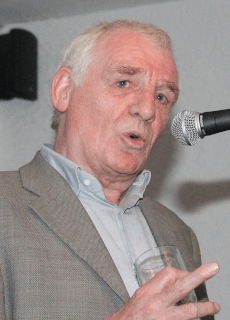
Birth of Eamon Dunphy, Media Personality & Journalist

Eamon Martin Dunphy, Irish media personality, journalist, broadcaster, author, sports pundit and former professional footballer, is born in Dublin on August 3, 1945.

Dunphy grows up in Drumcondra, Dublin, in what he describes as “a one-room tenement flat [with] no electricity, no hot water.” He attends Saint Patrick’s National School, Drumcondra. In 1958, he gets a one-year government scholarship to Sandymount High School but has to work as a messenger at the tweed clothing shop Kevin and Howlin.

A promising footballer, Dunphy leaves Dublin while still a teenager to join Manchester United as an apprentice. He does not break into the first team at United, and subsequently leaves to play for York City, Millwall, Charlton Athletic, Reading and Shamrock Rovers. It is at Millwall that he makes the most impact. He is considered an intelligent and skillful player in the side’s midfield. He is a member of “The Class of ’71,” the Millwall side that fails by just one point to gain promotion to the Football League First Division.

Dunphy plays 23 times for the Republic of Ireland and is Millwall’s most capped international footballer with 22 caps, until surpassed by David Forde and Shane Ferguson. He makes his Ireland debut on November 10, 1965, in the playoff at the Parc des Princes in Paris for the 1966 FIFA World Cup which Spain wins 1–0, thanks to a José Ufarte goal. He goes on to become, in his own words, “a good player, not a great player.”

Dunphy accompanies Johnny Giles back to Ireland to join Shamrock Rovers in 1977. Giles wants to make the club Ireland’s first full-time professional club and hopes to make Rovers into a force in European football by developing talented young players at home who would otherwise go to clubs in England. Dunphy is originally intended to be in charge of youth development. However, despite an FAI Cup winners medal in 1978, his only medal in senior football, and two appearances in the UEFA Cup Winners’ Cup, he becomes disillusioned with the Irish game and drops out of football altogether to concentrate on a career in journalism.

After retiring from the game, Dunphy first begins writing on football for the Sunday Tribune and then contributes regular columns on both football and current events for the Sunday Independent. He currently writes a column on football for the Irish Daily Star. He coins the term “Official Ireland” to refer to the establishment. He also works for Ireland on Sunday (now the Irish Daily Mail), The Sunday Press (now defunct), and the Irish Examiner.

Since the 1980s, Dunphy has written a number of books. His first and most widely praised book is Only a Game? The Diary of a Professional Footballer, which is an autobiographical account of his days playing for Millwall. Written in diary form, it records events from the dressing room of his 1973–74 season, which begins well for him at Millwall but subsequently ends in disillusionment: after being substituted in an October 27, 1973, home loss to eventual league winners Middlesbrough, he does not play another game all season, the club finishing mid-table.

In 1985, rock band U2 and manager Paul McGuinness commission Dunphy to write the story of their origins, formation, early years and the time leading up to their highly successful album The Joshua Tree. His book Unforgettable Fire – Past, Present, and Future – The Definitive Biography of U2 is published in 1988. It receives some favourable reviews, but critics close to the band speak of many inaccuracies. A verbal war erupts in the press during which he calls lead singer Bono a “pompous git.”

Dunphy also writes a biography of long-serving Manchester United manager Matt Busby and in 2002 ghost writes the autobiography of Republic of Ireland and Manchester United player Roy Keane.

Since the mid-1980s, Dunphy has regularly appeared as an analyst during football coverage on Raidió Teilifís Éireann (RTÉ). Since RTÉ acquired the rights to show English football, he has been a regular contributor to Premier Soccer Saturday. He also contributes to analysis of UEFA Champions League games and, in international football, RTÉ’s coverage of FIFA World Cups, UEFA European Football Championships and qualifying matches involving the Republic of Ireland national football team.

In 2001, Dunphy becomes the first male host of the quiz show The Weakest Link, which airs on TV3, for just one series. In 2003, he is hired again by TV3 to host their new Friday night chat show, entitled The Dunphy Show. Pitted head-to-head with RTÉ’s long-running flagship programme, The Late Late Show, Dunphy’s show loses what is a highly publicised “ratings war,” and is cancelled before its original run concludes.

Dunphy is the first presenter of a made-for-mobile television show on the 3 mobile network in Ireland. His rants and “Spoofer of the Week” are watched by thousands of 3 Mobile customers. The shows are awarded “Best Entertainment Show” at Ireland’s Digital Media Awards. He admits he never uses a mobile himself but enjoys filming for a mobile audience from his living room in Ranelagh.

In July 2018, Dunphy announces that he is leaving RTÉ after 40 years with the broadcaster, and that he intends to focus on his podcast The Stand with Eamon Dunphy.

Dunphy has also has a prominent radio career with several stations, including Today FM, Newstalk and RTÉ Radio 1. He is the original host in 1997 of the popular current affairs show The Last Word on Today FM. In September 2004, he takes over The Breakfast Show slot on the Dublin radio station Newstalk 106 from David McWilliams. The show tries to court controversy and listeners in equal measure. He fails to attract the large listenership predicted, with only a few additional thousand tuning in. He announces in June 2006 his intention to leave Newstalk 106, citing an inability to sustain the demands of an early morning schedule. After his departure from Newstalk 106, he confirms he is suffering from a viral illness from which he later recovers.

In July 2006, RTÉ announces that Dunphy will present a new weekly programme as part of the new RTÉ Radio 1 autumn schedule.

Dunphy rejoins Newstalk but leaves again in 2011 “due to interference from management and a push to put a more positive spin on the news.” On his last show he accuses his boss, Denis O’Brien, of “hating journalism.” He quits after Sam Smyth is sacked from Today FM (also owned by O’Brien) and says management at Newstalk is trying to remove “dissenting voices” like Constantin Gurdgiev from the airwaves.

Dunphy is a daily Mass-goer until he is preparing for marriage to his first wife, Sandra from Salford, when he is 21. He is Catholic and she is Protestant. The priest instructing them for marriage disapproves strongly of the mixed couple, saying that he should not marry her because she is “not a proper person.” Dunphy’s observance is already weakening but he quits his daily Mass-going at this point. He and Sandra have two children, a boy and a girl, and he is now a grandfather. His first marriage ends, and he moves to Castletownshend in County Cork for two years in the early 1990s. He lives with another partner, Inge, before meeting his second wife, RTÉ commissioning editor Jane Gogan, in the Horseshoe Bar in Dublin in 1992. They marry at the Unitarian Church on St. Stephen’s Green on September 24, 2009.

In an interview with An Phoblacht, Dunphy, who had previously written highly critical articles on the Provisional IRA and Sinn Féin, states that he is now a Sinn Féin supporter and declares he had voted for them in the 2011 Irish general election. He describes their representatives as “incredibly hard-working and incredibly intelligent.”

Dunphy publishes his autobiography entitled The Rocky Road in October 2013.

Today, Dunphy generally resides at his home near Ranelagh in Dublin. He also owns a holiday home in Deauville, France.

(Pictured: Éamon Dunphy at the Sinn Féin Summer School, 2013)


Leave a comment

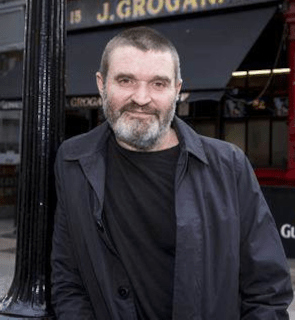
Birth of Irish Playwright Jimmy Murphy

Irish playwright Jimmy Murphy is born to Irish parents in Salford, Lancashire, England, on September 30, 1962. He is a former writer-in-residence at the National University of Ireland, Maynooth (2000–01), a member of the Abbey Theatre’s Honorary Advisory Council, a recipient of three bursaries in literature from the Arts Council (Irish: An Chomhairle Ealaíon) and is elected a member of Aosdána in 2004.

When Murphy is six, his family returns to Dublin, settling in the South inner-city district of Islandbridge. He first goes to school in nearby Inchicore, attending the Oblate Fathers’ primary school there, then moves to Ballyfermot, a working-class heartland of suburban Dublin, in his teens. There, he attends secondary school at St. John’s De La Salle College. After failing the Irish Intermediate Certificate he leaves school to pursue an apprenticeship in painting and decorating, taking his Junior and Senior Irish Trade Certificates, and the City and Guilds of London exams at the Dublin Institute of Technology, Bolton Street.

Murphy’s stage plays include Brothers of the Brush (Dublin, The Peacock, Dublin Theatre Festival 1993), which is awarded best new Irish play; A Picture of Paradise (The Peacock, 1997); The Muesli Belt (Dublin, The Abbey Theatre, 2000); Aceldama (1998); The Kings of the Kilburn High Road (Waterford, Red Kettle Theatre Company, 2000); The Castlecomer Jukebox (Red Kettle, 2004); and What’s Left of The Flag (Theatre Upstairs at The Plough, 2010), nominated for The Irish Times Best New Play Award. His last play, with an all-female cast, The Hen Night Epiphany, premieres at the Focus Theatre, Dublin, in September 2011 and is published by Oberon Books. It has recently been translated into Hebrew.

Plays for radio include Mandarin Lime (BBC Radio 4, 1995), Peel’s Brimstone (BBC Radio 4, 1995), and The Jangle of the Keys (BBC Radio 4 1997). His awards include the Stewart Parker Trust Award in 1994. The play The Kings of the Kilburn High Road is adapted by Tommy Collins as the Irish language film Kings, and is selected as Ireland’s entry for best foreign-language film for the Academy Awards by the Irish Film & Television Academy.

Three of Murphy’s plays have been presented at the Acting Irish International Theatre Festival: Brothers of the Brush (2001 Festival, presented by the Tara Players of Winnipeg), The Kings of the Kilburn High Road (2005 Festival, first North American production, presented by the Irish Players of Rochester), and The Muesli Belt (2008 Festival, presented by the Toronto Irish Players).

A one act play, Perfida, premieres at Theatre Upstairs in July 2012. In October 2012, The Muesli Belt receives its United States premiere at the Banshee Theater, Burbank, California, and in 2013 The Hen Night Epiphany receives its U.S. premiere at the Wade James Theater, Edmonds, Washington. In June 2013 a new production of Perfidia is staged by Red Kettle Theatre Company at their new theatre in Waterford. In May 2017 his second Verabtim piece for the Abbey, looking at police corruption, A Whisper Anywhere Else, is produced at the Peacock theatre. His first Verbatim play for the Abbey, Of This Brave Time, commissioned to commemorate the 1916 Easter Rising, tours the United Kingdom in 2016 and later returns to the Peacock stage for a short run. A new full length play, The Cartographer’s Pen, commissioned to mark the centenary of the drawing of the Irish border, opens at the Town Hall Theatre, Cavan, in May 2022.

Murphy is currently living in Dublin.


Leave a comment

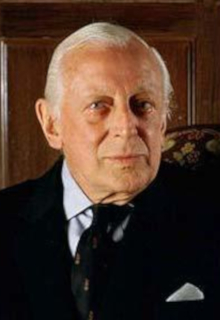
Birth of Alistair Cooke, Journalist & Broadcaster

alistair-cooke

Alistair Cooke, British journalist, television personality, and broadcaster, who describes himself as a “Lancastrian Irishman,” is born in Salford, Lancashire, England on November 20, 1908. He is best known for his lively and insightful interpretations of American history and culture.

The son of Samuel Cooke, a Wesleyan Methodist lay preacher, and Mary Elizabeth (Byrne) from County Sligo, He is educated at Blackpool Grammar School, Blackpool and wins a scholarship to Jesus College, Cambridge, where he gains an honours degree in English. Later he wins a Commonwealth Fund fellowship to study in the United States, first at Yale University (1932–33), then at Harvard University (1933–34). His cross-country travels during the summers of these years have a profound influence on his professional life.

Following a brief period as a scriptwriter in Hollywood, Cooke returns to England to become a film critic for the British Broadcasting Corporation (BBC) and later serves as London correspondent for the National Broadcasting Company (NBC) of the United States. In 1937 he returns to the United States, settles in New York City, and becomes an American citizen in 1941.

From the late 1930s, Cooke reports and comments on American affairs for BBC Radio and several major British newspapers. His weekly 15-minute program, Letter from America, broadcast from 1946 to 2004, is one of the longest-running series on radio. The texts of many broadcasts are collected in One Man’s America (1952) and Talk About America (1968). From 1956 to 1961 he hosts and narrates the weekly television “magazine” Omnibus, which wins numerous broadcasting awards.

Cooke’s interpretation of the American experience culminates in his BBC-produced television series America: A Personal History of the United States (1972–1973). In thirteen installments, filmed on location throughout the United States, he surveys some 500 years of American history in an eclectic and personal but highly coherent narrative. Alistair Cooke’s America (1973), the book based on the award-winning program, is a best-seller in the United States. From the 1970s to the early 1990s, as host of Masterpiece Theatre, he serves as an interpreter of British culture through the presentation of BBC dramatic television programming to American audiences.

Cooke’s other works include the critical biography Douglas Fairbanks: The Making of a Screen Actor (1940), Generation on Trial: The USA v. Alger Hiss (1950), based on his coverage of a celebrated Congressional investigation, The Vintage Mencken (1955), The Patient Has the Floor (1986), America Observed (1988), Memories of the Great and the Good (2000) and, with Robert Cameron, The Americans (1977).

On March 2, 2004, at the age of 95, following advice from his doctors, Cooke announces his retirement from Letter from America—after 58 years, the longest-running speech radio show in the world.

Alistair Cooke dies at midnight on March 30, 2004 at his home in New York City. He had been ill with heart disease, but dies of lung cancer, which had spread to his bones. He is cremated and his ashes are clandestinely scattered by his family in New York’s Central Park.