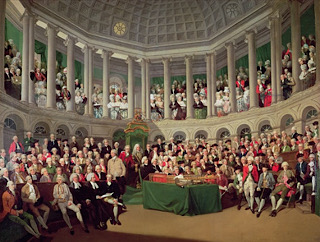
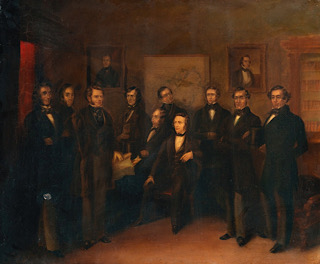
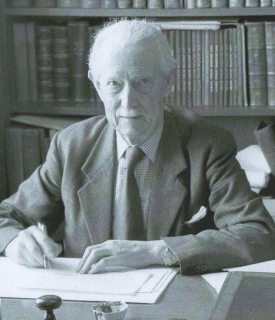
On October 23, 1662, the Parliament of Ireland passes an act ordering that October 23 be observed annually as a day of thanksgiving for what it describes as deliverance from the Irish Rebellion of 1641. This rebellion, which began on the same date in 1641, was led by Irish Catholics against English and Protestant rule, and it triggered widespread violence, massacres, and deepened sectarian divisions.
The 1641 Rising started with a planned coup by Irish gentry and military officers to end English domination, restore confiscated Catholic lands, and secure Irish self-government. It quickly escalated into the Irish Confederate Wars (1641–1653), part of the wider Wars of the Three Kingdoms. The conflict saw large-scale expulsions and killings of Protestant settlers, especially in Ulster, and the creation of an alternative Catholic-led government in Kilkenny.
By 1662, the Parliament of Ireland’s act institutionalizes the memory of the uprising in a way that reinforces Protestant identity. For over a century, Protestant churches across Ireland hold annual services on October 23 to commemorate their survival and to frame the rebellion as evidence of Catholic disloyalty. This state-sponsored remembrance becomes a symbolic cornerstone of Protestant identity in Ireland throughout the 18th century.
The observance is formalized with a form of divine service to be used on the day, and notices are issued for congregations to gather for thanksgiving services. The act thus not only commemorates a historical event but also serves as a political and religious statement, embedding the memory of the 1641 Rising into the Protestant cultural and political consciousness of Ireland.
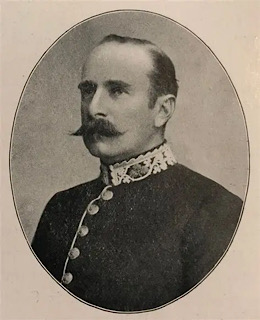
Watt is born on November 4, 1853, to Samuel Watt of Thornhill House, then on the northern outskirts of Derry, and his wife Jane Newman, daughter of Captain Robert Newman, R.N.. He is educated at Foyle College in Derry and then at home by tutors. The Watt family are Ulster Scots gentry who had arrived at Claragh, on the outskirts of Ramelton in the north of County Donegal, during the Plantation of Ulster.
Watt is the owner of Watt’s Distillery, located on Abbey Street in the Bogside in Derry, one of the largest distilleries in Ireland, and the creator of many whiskies, including the famous Tyrconnell, which he names after his racehorse that wins the National Produce Stakes against the odds of 100 to 1. The horse itself is named after Tyrconnell (Irish: Tír Chonaill), the ancient túath or Gaelic kingdom that once covered most of what is now County Donegal in the west of Ulster.
During industrial unrest in 1921, brought about by World War I, prohibition in the United States, and the Irish War of Independence, Watt’s workers at the distillery in Derry are made redundant after challenging his authority. He is said to have stood on a barrel outside the gates to his distillery in the Bogside, while the workers are on strike, and shouted, “Well men, I shall put it to you like this …what is it to be? Will you open the gates?” To which the workers retorted, “The gates stay shut!” This prompts Watt to reply, “Shut they are, and shut they shall remain!” He subsequently closes down Watt’s Distillery, at great economic expense to Derry and neighbouring areas of County Donegal.
On October 7, 1875, Watt marries Violet Flora de Burgh, daughter of George de Burgh and Constance Matthews, with whom he had four sons and two daughters.
Watt serves as High Sheriff of County Londonderry from 1886 to 1887. He is a member of Boodle’s. He dies at Easton Hall in Lincolnshire, where he lives in England after he left Ireland. Easton Hall is later demolished in 1951.
The Catholic Association is the latest in a series of similar associations formed over the previous ten years or so, none of which had prospered. Like the other associations, this new association is composed mainly of the middle class elite: an annual subscription amounting to a guinea, an amount equivalent to what an average farmer would pay for six months’ rent. In 1824, the Catholic Association begins to use the money that it has raised to campaign for Catholic emancipation.
In 1824, the association creates a new category of associate members at the cost of a penny per month, the so-called Catholic Rent. The reasoning behind the creation of this new membership category is to stimulate a swelling in association numbers. This new, cheaper category ensures Catholics from a poorer background can join, and thus the association’s initial class-based entry barriers are removed. The Catholic rent transforms the association and Catholic political advocacy more broadly. In terms of the association, the rent catalyzes a transformation in a number of ways. Firstly, as previously mentioned, it gives the Catholic Association a constant source of money, which enables O’Connell to run a consistent campaign. Secondly, it facilitates easy calculation of total association membership numbers so that O’Connell can say with confidence that he has the support of so many people. This is important as it can be used to apply pressure against the British government. Third, and perhaps most importantly, however, it announces the arrival of mass mobilization politics, being the first such populist movement in Europe. O’Connell decides to add this additional membership level, at a reduced price of a penny a month, deliberately. The benefits are clear. With the membership subscription set at a relatively cheap price, a large number of the peasant and working classes can join. Affordability ensures large numbers. In effect, it becomes a universal Catholic organization that is transparent and populist. The fact that each member contributes financially to the association also ensures that they are more deeply involved in pushing the cause of Catholic emancipation. People want value for their money. Thus, this ensures a cheap method for O’Connell to get the message of Catholic emancipation spread throughout Ireland.
The Catholic Association’s funds are diffused widely in a variety of areas. Some is spent campaigning for Catholic emancipation, defraying the costs of sending petitions to Westminster, and training of priests. Following the 1826 election campaign, funds are used to support the members of the organization who had voted against their landlords. The money is used for those who have been evicted from land by the landlords because of their connection to the Catholic organization or for those who were boycottingabsentee landlord. For the Catholic peasants that are in this situation, the future would be grim as they would be unable to continue the boycott without food and money, and they would be unable to lease land from any landlord as the peasants would be boycotted against in return. The Catholic Association’s funds are used to support these boycotts so that they can continue and live well enough to have enough food to survive.
The Catholic Association is originally aristocratic in its composition, and some of the gentry (such as Richard Lalor Sheil) hold relatively conservative views. However, O’Connell holds an enormous influence over society and largely dictates the policies it pursues. It is radical in nature but also extremely loyal to the Crown in appearance. This had been the strategy of the previous major Catholic group, the Catholic Committee of the 1790s, which achieved major Catholic Relief in 1793.
Since the aims of the Catholic Association are fairly moderate and the organization remains loyal to the monarch, British MPs are conceptually more willing to pass Catholic emancipation. The matter had been discussed in London since the Acts of Union 1800, when Prime MinisterWilliam Pitt and most of his colleagues resign from the cabinet when emancipation is denied by the king. Henry Grattan continues to support the cause, and Catholic emancipation had been passed by the House of Commons previously by a majority of six, but it is rejected in the House of Lords and generally by King George III, who reigns until 1820.
The biggest strength of the Catholic Association is that the Catholic Church helps in the collection of the Catholic rent. Catholic priests also hold sermons in favor of Catholic emancipation. This means that it is easy for the members to pay the Catholic rent, and it will attract more members as the message of Catholic emancipation is being spread throughout Ireland. Sir Robert Peel believes the alliance of the Catholic Association and the Catholic Church is a “powerful combination.”
In 1826, the Catholic Association begins to use its funds to support pro-emancipation MPs in elections. They use their money and manpower to campaign for the candidate to be elected into parliament to pressure the government from within to pass Catholic emancipation.
The turning point comes in 1828, when two factors come into play. The first is that the Catholic Church takes over the collection of the Catholic Rent and effectively the Catholic Association itself. The other is that by 1828, O’Connell’s reputation has increased dramatically. He is an internationally recognized figure and is seen as one of the leading figures in liberal thinking. This successful campaign leads on to, but is distinguished from, his later efforts to end the union with Britain, to increase the franchise, and to end the payment of tithes. His particular talent is to push the emancipation process along in an organized way.
In May 1828, the Sacramental Test Act 1828 repeals the Test Acts 1673 & 1678 against non-AnglicanProtestants. This gives non-Catholic non-conformists greater political freedom and equality in Britain. The repeal has two effects: it gives Catholics hope that a similar act will be passed that will include Catholics; it also alienates Catholics, as they have become the only Christians not to have political freedom and equality.
In May 1828, William Huskisson resigns from the cabinet, and William Vesey-Fitzgerald is chosen as the President of the Board of Trade. According to the law, there is to be a by-election in his constituency of Clare. O’Connell decides to exploit a loophole in the Acts of Union 1800. It requires MPs to take the Oath of Allegiance, but the oath is not required of candidates for election. He stands in the by-election and wins. Since he is a Catholic, he cannot take his seat in parliament. Demand rises to allow him to become an MP for Clare, as it does not have representation.
Sir Robert Peel and Arthur Wellesley, 1st Duke of Wellington, see that if O’Connell is not allowed to take his seat, then there could be a revolution in Ireland. While using non-violent methods, O’Connell hints that he will get more Catholics elected to force the situation. In an emotive speech, he says, “They must crush us or conciliate us.”
Peel decides to change the government’s approach and submits the Roman Catholic Relief Act 1829 in February 1829. The bill is passed. It is a momentous victory for O’Connell and the Catholic middle class, and he becomes known as “the liberator” and the “uncrowned king of Ireland.” However, the simultaneous enactment of the Parliamentary Elections (Ireland) Act 1829 restricts the franchise in the county constituencies in Ireland. The archive of the Catholic Association is housed with the archives of Dublin Diocese in Holy Cross College, Dublin.
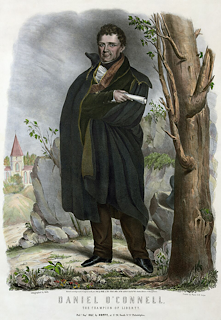
(Pictured: “Daniel O’Connell: The Champion of Liberty” poster published in Pennsylvania, 1847)
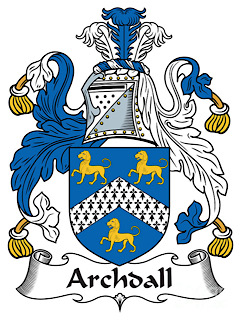
Archdall is educated by Dr. Keenane, and enters Trinity College Dublin (TCD) in 1739. He graduates with a Bachelor of Arts (BA) in 1744 and a Master of Arts (MA) in 1747, and is ordained in the Church of Ireland. He is curate of Howth from 1750 to 1753, and of Kilgobbin and Taney, also in Dublin, from 1753 to 1758, rector of Nathlash in the diocese of Cloyne from 1749 to 1758, and from 1756 domestic chaplain to Richard Pococke, Bishop of Ossory. In 1761 Pococke gives Archdall the livings of Agharney and Attanagh in Ossory which he holds until 1786, when he becomes rector of Slane in the Diocese of Meath. He is also prebendary of Cloneamary from 1762 to 1764 and of Mayne from 1764 to 1772, both in Ossory.
Archdall is interested, almost from his student days, in ancient history and antiquities, and for forty years he gathers material for a work similar to an earlier compilation, William Dugdale‘s Monasticon Anglicanum. He intends to publish two or more large folio volumes, but after Pococke’s death has no sponsor and has to pay for its publication himself causing him to cut back the scale of the project. Monasticon Hibernicum appears in 1786 as a quarto volume, though still of over 800 pages. Archdall attempts encyclopaedic coverage of the history of Ireland’s pre-reformation monasteries and abbeys. The work is ground-breaking and ambitious, though marred by mistakes and inadequacies. He receives help from friends, including scholars such as Pococke and Edward Ledwich, and with them and others is a founder member of the Royal Irish Academy (RIA) in 1786.
In 1789, Archdall publishes his second important work, a new edition of ThePeerageof Ireland by John Lodge. Lodge’s original work in four volumes is expanded by Archdall into seven octavos, adding a good deal of material from his own research to update the genealogies, as well as incorporating manuscript additions unpublished by the original author. These had been left in a cipher or in a private form of shorthand which could not be decoded by any contemporary expert in Dublin, and Archdall is just about to abandon the attempt to read them when his second wife works on it and discovers the key.
Archdall’s first wife, Sarah Colles or Collis, whom he marries in Dublin on July 30, 1747, is said to have been a relative of Thomas Prior, though she may also – or instead – have been connected in some way to Pococke. The bishop is known to have educated Christopher Colles (1739–1816), who becomes an important engineer and entrepreneur in the United States. They have two sons and a daughter, the elder son dying young. Sarah dies on May 28, 1782. Archdall marries his second wife, Abigail Young, on November 25, 1782.
Archdall’s works are still of interest to historians and genealogists, and surviving copies are valuable collectors’ items. In an apologia in his preface to the Peerage he notes, “I have left that inaccurate which could not be exact, and that imperfect which cannot be completed.” He dies suddenly on August 6, 1791, and is buried in Slane churchyard.
(From: “Archdall, Mervyn” by Linde Lunney, Dictionary of Irish Biography, http://www.dib.ie, October 2009)
In June 1846, Sir Robert Peel‘s Tory Ministry falls, and the Whigs under Lord John Russell comes to power. Daniel O’Connell, founder of the Repeal Association which campaigns for a repeal of the Acts of Union 1800 between Great Britain and Ireland, simultaneously attempts to move the Association into supporting the Russell administration and English Liberalism.
The intention is that Repeal agitation is to be damped down in return for a profuse distribution of patronage through Conciliation Hall, home of the Repeal Association. On June 15, 1846, Thomas Francis Meagher denounces English Liberalism in Ireland saying that there is a suspicion that the national cause of Repeal will be sacrificed to the Whig government and that the people who are striving for freedom will be “purchased back into factious vassalage.” Meagher and the other “Young Irelanders” (an epithet of opprobrium used by O’Connell to describe the young men of The Nation newspaper), as active Repealers, vehemently denounce in Conciliation Hall any movement toward English political parties, be they Whig or Tory, so long as Repeal is denied.
The “Tail” as the “corrupt gang of politicians who fawned on O’Connell” are named, and who hope to gain from the government places decide that the Young Irelanders must be driven from the Repeal Association. The Young Irelanders are to be presented as revolutionaries, factionists, infidels and secret enemies of the Church. For this purpose, resolutions are introduced to the Repeal Association on July 13 which declare that under no circumstances is a nation justified in asserting its liberties by force of arms. The Young Irelanders, as members of the association, have never advocated the use of physical force to advance the cause of repeal and oppose any such policy. Known as the “Peace Resolutions,” they declare that physical force is immoral under any circumstances to obtain national rights. Meagher agrees that only moral and peaceful means should be adopted by the Association, but if it is determined that Repeal cannot be carried by those means, a no less honourable one he would adopt though it be more perilous. The resolutions are again raised on July 28 in the Association and Meagher then delivers his famous “Sword Speech.”
Addressing the Peace Resolutions, Meagher holds that there is no necessity for them. Under the existing circumstances of the country, any provocation to arms will be senseless and wicked. He dissents from the Resolutions because by assenting to them he would pledge himself to the unqualified repudiation of physical force “in all countries, at all times, and in every circumstance.” There are times when arms will suffice, and when political amelioration calls for “a drop of blood, and many thousand drops of blood.” He then “eloquently defended physical force as an agency in securing national freedom.” Having been at first semi-hostile, Meagher carries the audience to his side and the plot against the Young Irelanders is placed in peril of defeat. Observing this he is interrupted by O’Connell’s son, John, who declares that either he or Meagher must leave the hall. William Smith O’Brien then protests against John O’Connell’s attempt to suppress a legitimate expression of opinion, and leaves with other prominent Young Irelanders, and never returns.
After negotiations for a reunion have failed, the seceders decide to establish a new organisation which is to be called the Irish Confederation. Its founders determine to revive the uncompromising demand for a national Parliament with full legislative and executive powers. They are resolute on a complete prohibition of place-hunting or acceptance of office under the existing Government. They wish to return to the honest policy of the earlier years of the Repeal Association, and are supported by the young men, who have shown their repugnance for the corruption and insincerity of Conciliation Hall by their active sympathy with the seceders. There are extensive indications that many of the previously Unionist class, in both the cities and among land owners, are resentful of the neglect of Irish needs by the British Parliament since the famine began. What they demand is vital legislative action to provide both employment and food, and to prevent all further export of the corn, cattle, pigs and butter which are still leaving the country. On this there is a general consensus of Irish opinion according to Dennis Gwynn, “such as had not been known since before the Act of Union.”
The first meeting of the Irish Confederation takes place in the Rotunda, Dublin, on January 13, 1847. The chairperson for the first meeting is John Shine Lawlor, the honorary secretaries being John Blake Dillon and Charles Gavan Duffy. Duffy is later replaced by Meagher. Ten thousand members are enrolled, but of the gentry there are very few, the middle class stand apart and the Catholic clergy are unfriendly. In view of the poverty of the people, subscriptions are purely voluntary, the founders of the new movement bearing the cost themselves if necessary.
Following mass emigration by Irish people to England, the Irish Confederation then organises there also. There are more than a dozen Confederate Clubs in Liverpool and over 700 members of 16 clubs located in Manchester and Salford.
Brownlow’s father, grandfather, and great-grandfather had been MPs, and in 1753 he wins a hotly contested by-election in which his opponents accuse him of papist and Jacobite sympathies. The unsuccessful candidate is Francis Caulfeild, brother of James, 1st Earl of Charlemont, his petition to parliament causing a furor and is defeated by only one vote in one of the most celebrated electoral struggles of the day. Brownlow represents the county for over forty years, from 1753 until his death. In 1753, he supports the government on the controversial money bill.
Brownlow marries Judith, daughter of the Rev. Charles Meredyth, Dean of Ardfert, of County Meath, on May 25, 1754. They have two sons. After her death in Lyon, France, in October 1763, he marries Catherine, daughter of Roger Hall of Newry, County Down, on November 25, 1765. They have two sons and five daughters, three who marry into the nobility. In 1758, he is one of the Wide Streets commissioners in Dublin and owns an imposing house in Merrion Square. He is a trustee of the linen board in Ulster, and makes many improvements to his estate, castle, and demesne, the local church, and the town of Lurgan. However, it is alleged that private roads in his demesne were built with public money. He is one of a few landowners in County Armagh who are believed to have misappropriated the unusually high county cess levied by the grand jury, of which he is a member. In 1758, he suggests that salaries be paid to government officials, and one official, Henry Meredyth, his first wife’s uncle, subsequently receives an annual salary of £500.
In June 1763, large numbers of Presbyterian farmers and weavers, calling themselves the Hearts of Oak, in a notable show of dissatisfaction with the privileges of landlords, march on the homes of the gentry to demand redress. Brownlow is in England and avoids a confrontation. Despite the allegations of abuse of public money, he is generally recognised as one of the more independent and reform-minded MPs of the day. He captains a Volunteer troop of dragoons which march from Lurgan to assist Belfast after the French commander François Thurot lands at Carrickfergus in 1760. As one of the supporters of Henry Grattan, he is prominent in the Volunteer movement of the 1780s. He is captain of the Lurgan Volunteer company and lieutenant-colonel of the northern battalion and backs the movement in parliament until displeased by the Volunteer national convention (November 10 – December 2, 1783), which seeks franchise reform and seems to challenge the authority of the existing parliament.
Brownlow subscribes £9,000 to help found the Bank of Ireland in 1783, and in parliament on February 7, 1785, vigorously opposes William Pitt‘s proposals on Ireland’s commercial relations with England, seeing in them the danger that Ireland would become a “tributary nation.” He is appointed a privy councilor in 1765. He organises horse races in his locality and is a talented harpsichord player. After his death on October 28, 1794, the Belfast News Letter prints an unusually long and glowing tribute, expressing admiration for his “incorruptible integrity” and patriotism, as well as two poetic elegies. He is succeeded by his son William Brownlow.
(From: “Brownlow, William” by Linde Lunney, Dictionary of Irish Biography, http://www.dib.ie, October 2009 | Pictured: Portrait of the Right Honorable William Brownlow, oil on canvas by Gilbert Stuart, circa 1790)
Thomas George Farquhar Paterson, local historian, folklore collector and museum curator, is born on February 29, 1888, in or near Toronto, Ontario, Canada.
Paterson is the eldest child in a family of seven sons and one daughter born to John and Rachel (née Farquhar) Paterson. His parents had emigrated from County Armagh, in what is now Northern Ireland. Their first three children are born in Canada, but the family returns to Ireland in the early 1890s, to the family farm in Cornascreeb, five miles south of Portadown, County Armagh. Also known as George, he attends Aghory national school, and leaves at age 14 to be apprenticed to a grocer in Portadown. In 1911, he takes a position in Couser’s, the leading grocery and wine merchant’s business in Armagh. In time becoming the manager, he is acquainted with the local gentry and clergy.
However, the grocery trade is never Paterson’s main interest. From an early age, he is fascinated by the history and folklore of his native place. He becomes an expert on the genealogy of the gentry as well as of the farming families around Armagh, and also collects material on many aspects of Armagh life. His notebooks eventually contain well over a million words of notes on history, archaeology, dialect, folkways and natural history, as well as drawings and plans of traditional houses, fireside accoutrements and farm implements. His knowledge of history, archaeology and natural history is widely recognised, and in 1931 Armagh County Council asks him to become honorary curator of the small museum established by the Armagh Natural History and Philosophical Society. Four years later, he leaves Couser’s and becomes full-time curator of the museum, re-named the Armagh County Museum. He greatly augments and improves the collections, and in the late 1950s oversees the enlargement of the building. His life’s work culminates in the opening of the new building in 1962. He retires a year later at the age of 75.
Paterson’s work wins the respect of scholars, including Emyr Estyn Evans, a lifelong friend, and material that he records has been cited in a wide variety of books and journal articles. Over one hundred citations are listed in a posthumous bibliography in 1972, and since then hundreds of scholarly works have drawn on his published and unpublished material. His manuscripts are in Armagh County Museum, where they form an important resource.
Paterson publishes a book, Country Cracks: Old Tales from the County of Armagh (1939), and a very large number of articles in newspapers and journals, especially in Seanchas Ardmhacha, Ulster Journal of Archaeology and Ulster Folklife. He sometimes uses the pseudonym “Cornascreeb.” He greatly assists researchers interested in the Armagh background of Alexander Campbell and his father Thomas Campbell and is made an honorary member of the Disciples of Christ Historical Society, based in Nashville, Tennessee.
Paterson is a founder member of the committee that re-establishes the Ulster Journal of Archaeology. He is active in local history societies, and for many years is a member of the Ancient Monuments Advisory Council. He records many local sites for the register of ancient monuments. He is a member of the Northern Ireland committee of the National Trust and seeks to preserve Armagh’s architectural heritage and local industrial archaeology. He donates much important archive material to the Public Record Office of Northern Ireland. He describes and collects folk artefacts, at least thirty years before most academic historians are interested in such objects, and he is a foundation trustee of the Ulster Folk Museum in Cultra, County Down. He is also a member of the first board of the Institute of Irish Studies in Queen’s University Belfast (QUB), from 1965.
Membership of the Royal Irish Academy is an honour not often accorded to someone who has not had a university education, still less to someone who leaves school at the age of 14, but Paterson is elected MRIA in 1941. He is conferred with an honorary MA by QUB in 1944. His service on many public bodies is acknowledged by the award of an Order of the British Empire (OBE).
Paterson never marries and dies in Armagh on April 6, 1971. Hundreds of people contribute to a memorial fund. Some of the money subscribed is used to purchase nineteenth-century drawings for the county museum, and in 1975 the memorial committee also publishes Harvest home: the last sheaf: a selection from the writings of T. G. F. Paterson relating to County Armagh, edited by Emyr Estyn Evans.