seamus dubhghaill

Promoting Irish Culture and History from Little Rock, Arkansas, USA


3 Comments

Birth of Stage Actress Julia Betterton Glover

julia-betterton-glover

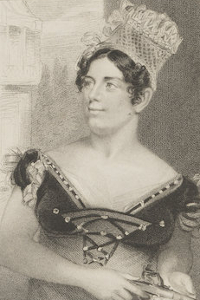
Julia Betterton Glover, Irish-born stage actress well known for her comic roles in the late 18th and 19th centuries, is born on January 8, 1779, in Newry, in what is now Northern Ireland.

“Betterton” is not her real name, despite her father`s promotion of the fiction. She is born Julianna Butterton, the daughter of the Newry`s theatre manager William Butterton. His venture fails and he decides there will be financial benefit to him if her name is changed to “Betterton,” claiming links to a famous actor and long dead Thomas Betterton. With this deception he and his family travel round the theatres and the young Julia is acclaimed as an infant acting prodigy in York, the West Country, Bath, and elsewhere.

In 1787, she joins the York Circuit under manager Tate Wilkinson and appears as the Page in Thomas Otway‘s The Orphan, as well as the Duke of York with George Frederick Cooke in Richard III. When Cooke is cast as Glumdalca, the Queen of the Giants, in Henry Fielding‘s burlesque play Tom Thumb, Cooke chooses Julia to play the title role.

In 1790, at age nine, she makes her debut in Scotland at the Dumfries Theatre Royal. In 1795 she goes to Bath and plays the parts of Juliet, Imogen, Desdemona, Lady Macbeth, and Lydia Languish. She becomes well known, particularly praised for her comic role as Languish, and news of her success reaches London. A number of job offers are made, but they are declined by her father. He eventually accepts a lucrative offer, taking her salary for himself, for which she makes her London début in 1797 as Percy by Hannah More.

In 1800, her father sells her in marriage to Samuel Glover, the son of an industrial family from Birmingham, for £1, 000, although the money is never paid. Unhappily married, she has eight children, four of whom survive childhood. In 1820, she plays Hamlet at the Lyceum Theatre to critical acclaim. In 1822, she appears as Nurse in Romeo and Juliet at the Theatre Royal, Drury Lane. Her daughter Phyllis plays Juliet. On February 8, 1837, her father, with whom she has had an unhappy relationship, dies.

One of her sons is Edmund Glover and another is William Howard Glover. In 1850, Glover announces her retirement from the stage. After two weeks confined to her bed, she appears at Drury Lane for her farewell benefit performance on July 12, 1850, as Mrs. Malaprop in The Rivals. She is noticeably ill and weak during her performance and is unable to stand to receive her applause at the end of the play. Instead, the curtain rises to reveal Glover seated, surrounded by the rest of the cast. She dies in London four days later on July 16, 1850. She is buried in St. George’s Churchyard Gardens in London.
Leave a comment

Death of Artist Augustus Joseph Nicholas Burke

augustus-nicholas-burke

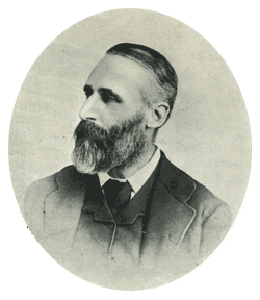
Augustus Joseph Nicholas Burke, artist and a member of the Royal Hibernian Academy (RHA), dies on December 28, 1891, at 22 Via La Marmora, Florence, Italy.

Burke is born on July 28, 1838, into the Galway Burkes of Glinsk and is the sixth son of William Burke of Knocknagur, Tuam, County Galway. He is born at Waterslade House in the town. One of his brothers is Theobald Hubert Burke, 13th Baronet of Glinsk, while another brother is Thomas Henry Burke, Permanent Under Secretary at the Irish Office.

Burke shows an early interest in drawing, displaying a love for depicting the people and land of Connemara. His career in the arts is initiated at the Royal Academy of Arts in London. He exhibits at the Royal Academy and the Royal Hibernian Academy, where he is also Professor of Painting, from 1863 until his death. From 1870 to 1872 he resides in the Netherlands where he illustrates a handful of Dutch scenes. One of the earliest Irish artists to travel to Brittany, Burke exhibits fifteen Breton scenes at the Royal Hibernian Academy between 1876 and 1878. He paints further in his native Ireland, as well as Scotland and England. The 1880s bring Burke to Walberswick in Suffolk to an artist’s colony created by Philip Wilson Steer. A student of Burke, Walter Osborne, paints with him here.

Burke, overcome with grief by his brother Thomas’ murder during the Phoenix Park Murders in 1882, leaves the Royal Hibernian Academy and his position as Professor of Painting. He moves with the remaining members of his family first to England and then to Italy.

Two of Burke’s most famous paintings, Connemara Girl and A Connemara Landscape, hang at the National Gallery of Ireland. His work is relatively rare, mainly because the contents of his studio are destroyed during the fire that engulfs the Abbey Street buildings of the RHA in 1916. Furthermore, many of the paintings lay hidden in a cellar for over ninety years until their recent discovery.


Leave a comment

Birth of Pianist Charles Lynch

charles-lynch

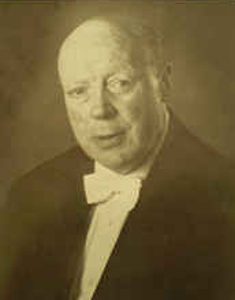
Charles Edgeworth Cagney Lynch, Irish pianist who premiers works by several important 20th-century composers, is born in Parkgariff, County Cork, on October 22, 1906.

Lynch’s father is a British army colonel and his mother comes from a well-known Cork business dynasty, the Suttons. While still a young boy, the family moves to Greenock in western Scotland and it is there, at the Tontine Hotel, that the young pianist gives his first public recital at the age of nine. When he is fifteen, he wins a scholarship to the Royal Academy of Music in London, where he studies under York Bowen and, later, Egon Petri.

Lynch becomes a popular recitalist in London during the 1920s and 1930s. He gives the first performance in England of Sergei Rachmaninoff‘s Piano Sonata No. 2 in B flat minor, having been coached beforehand by the composer. Sir Arnold Bax‘s Fourth Piano Sonata (1932) is dedicated to the 26-year-old Lynch, whom Bax later describes as “Ireland’s most imaginative pianist.” In addition to concert recitals he broadcasts regularly with the BBC and, in 1937, acts as assistant to Sir Thomas Beecham at Covent Garden. Lynch is the Ballet Rambert‘s pianist for many years, having helped Marie Rambert form the company.

A pacifist, Lynch returns to Ireland following the outbreak of World War II, where he becomes the country’s premier concert pianist. During this phase of his career he premiers a number of works by leading Irish composers, including Brian Boydell‘s Sonata for Cello and Piano (1945) and Sean Ó Riada‘s Nomos No. 4 (1959). Lynch also performs in the world première of English composer Ernest John Moeran‘s Cello Sonata in A minor, given in Dublin in May 1947. He is joined by the composer’s wife, cellist Peers Coetmore.

In February 1971 at Trinity College, Dublin, he plays the entire set of Franz Liszt‘s transcriptions of Beethoven’s symphonies over four successive Saturday evenings.

Lynch continues to give public recitals throughout Ireland until shortly before his death at the age of 77. He also lectures in music at University College Cork and gives masterclasses at the Cork School of Music. In 1982, Lynch receives a doctorate in music from the National University of Ireland.

Lynch’s technique is remarkable for the stillness with which he sits, making the most difficult of music seem almost technically unremarkable. His recorded legacy is small, but includes music by Samuel Barber, Ernest John Moeran‘s Violin Sonata (with Geraldine O’Grady, violin) as well as music by Irish composers such as Aloys Fleischmann.

Toward the end of his life he lives in very reduced circumstances. He dies in Cork on September 15, 1984 at St. Finbarr’s Hospital and is buried near Sir Arnold Bax in St. Finbarrs Cemetery, Glasheen Road, Cork.


Leave a comment

Founding of the Irish National Land League

land-league-poster

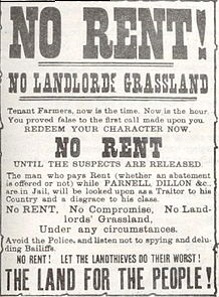
The Irish National Land League, one of the most important political organizations in Irish history which seeks to help poor tenant farmers, is founded at the Imperial Hotel in Castlebar, County Mayo, on October 21, 1879. Its primary aim is to abolish landlordism in Ireland and enable tenant farmers to own the land they work on. The national organization is modeled on the Land League of Mayo, which Michael Davitt had helped found earlier in the year.

At the founding meeting Charles Stewart Parnell is elected president of the league. Davitt, Andrew Kettle, and Thomas Brennan are appointed as honorary secretaries. This unites practically all the different strands of land agitation and tenant rights movements under a single organisation.

Parnell, Davitt, John Dillon, and others including Cal Lynn then go to the United States to raise funds for the League with spectacular results. Branches are also set up in Scotland, where the Crofters Party imitates the League and secures a reforming Act in 1886.

The government introduces the Landlord and Tenant (Ireland) Act 1870, which proves largely ineffective. It is followed by the marginally more effective Land Acts of 1880 and 1881. These establish a Land Commission that starts to reduce some rents. Parnell together with all of his party lieutenants including Father Eugene Sheehy, known as “the Land League priest,” go into a bitter verbal offensive and are imprisoned in October 1881 under the Protection of Person and Property Act 1881 in Kilmainham Gaol for “sabotaging the Land Act.” It is from here that the No-Rent Manifesto is issued, calling for a national tenant farmer rent strike until “constitutional liberties” are restored and the prisoners freed. It has a modest success In Ireland and mobilizes financial and political support from the Irish Diaspora.

Although the League discourages violence, agrarian crimes increase widely. Typically, a rent strike is followed by eviction by the police and the bailiffs. Tenants who continue to pay the rent can be subject to a boycott by local League members. Where cases go to court, witnesses would change their stories, resulting in an unworkable legal system. This in turn leads on to stronger criminal laws being passed that are described by the League as “Coercion Acts.”

The bitterness that develops helps Parnell later in his Home Rule campaign. Davitt’s views as seen in his famous slogan: “The land of Ireland for the people of Ireland” is aimed at strengthening the hold on the land by the peasant Irish at the expense of the alien landowners. Parnell aims to harness the emotive element, but he and his party are strictly constitutional. He envisions tenant farmers as potential freeholders of the land they have rented.


Leave a comment

Birth of Patrick d’Arcy, Scientist & Soldier

patrick-darcy

Patrick d’Arcy, scientist and soldier in the Irish Brigade of France, is born in Kitulla, County Galway, on September 27, 1725.

The d’Arcy family, who are Catholics, suffer under the Penal Laws. In 1739 d’Arcy is sent to Paris for his education. He is tutored in mathematics by Jean-Baptiste Clairaut, and becomes a friend of Jean-Baptiste’s son, Alexis-Claude Clairaut, who is a brilliant young mathematician. d’Arcy makes original contributions to dynamics. He is best known for his part in the discovery of the principle of angular momentum, in a form which is known as “the principle of areas,” which he announces in 1746.

Perhaps seeking more adventure than an academic life can provide, d’Arcy enlists in the French army. He fights in Germany in the regiment of Condé and serves as an aide-de-camp to Marshal Saxe at the Battle of Fontenoy. He obtains the title of “Count” in the French nobility and is a generous patron of Irish refugees in France. He sails for Scotland in 1745, attempting to fight in “Bonnie” Prince Charlie‘s rising, but his ship is captured, and he is taken prisoner.

After his release, d’Arcy returns to France where he continues both his scientific and military careers. In addition to his contributions to dynamics, he performs research on artillery and electricity. One of his experiments on visual perception, reported in 1765, is often referenced. It involves a rotating disk on which a burning coal ember is placed. When the disk is spun at an angular velocity exceeding seven revolutions per second, a full circle of light is perceived. This and other experiments make d’Arcy the first person to demonstrate the illusion of a moving image, although Joseph Plateau greatly elaborates on this initial finding.

Patrick d’Arcy is elected to the Academie Royale des Sciences in 1749. He died from cholera in Paris on October 18, 1779.


Leave a comment

Birth of Richard John Griffith, Author of Griffith’s Valuation

richard-john-griffith

Richard John Griffith, Irish geologist, mining engineer, and chairman of the Board of Works of Ireland, is born in Hume Street, Dublin, on September 20, 1784. He completed the first complete geological map of Ireland and is author of the valuation of Ireland, known ever since as Griffith’s Valuation.

Griffith goes to school in Portarlington and later, while attending school in Rathangan, his school is attacked by the rebels during the Irish Rebellion of 1798. He also studies in Edinburgh, Scotland.

In 1799 he obtains a commission in the Royal Irish Artillery, but a year later, when the corps is incorporated with that of England, he retires, and devotes his attention to civil engineering and mining. He studies chemistry, mineralogy, and mining for two years in London under William Nicholson and afterwards examines the mining districts in various parts of England, Wales, and Scotland.

While in Cornwall he discovers ores of nickel and cobalt in material that has been rejected as worthless. He completes his studies under Robert Jameson and others at Edinburgh, is elected a Fellow of the Royal Society of Edinburgh in 1807, a member of the newly established Geological Society of London in 1808, and in the same year he returns to Ireland.

In 1809, he is appointed by the commissioners to inquire into the nature and extent of the bogs in Ireland and the means of improving them. In 1812 he is elected Professor of Geology and Mining Engineer to the Royal Dublin Society. Shortly afterwards he expresses his intention of preparing a geological map of Ireland. During subsequent years he makes many surveys and issues many reports on mineral districts in Ireland. These form the foundation of his first geological map of the country in 1815. He also succeeds Dr. Richard Kirwan as government inspector of mines in Ireland. In 1822 Griffith becomes engineer of public works in Cork, Kerry, and Limerick, and is occupied until 1830 in repairing old roads and in laying out many miles of new roads in some of the most inaccessible parts of the country.

Meanwhile, in 1825, he is appointed by the government to carry out a boundary survey of Ireland. He is to mark the boundaries of every county, barony, civil parish, and townland in preparation for the first Ordnance Survey. He is also called upon to assist in the preparation of a parliamentary Bill to provide for the general valuation of Ireland, which passes in 1826. Griffith is appointed Commissioner of Valuation in 1827 but does not start work until 1830 when the new 6″ maps become available from the Ordnance survey and which he is required to use as provided for by statute. He continues to work on this until 1868. On Griffith’s valuation the various local and public assessments are made.

His extensive investigations furnish him with ample material for improving his geological map and the second edition is published in 1835. A third edition on a larger scale (1 in. to 4 m.) is issued under the Board of Ordnance in 1839 and it is further revised in 1855. For this great work and his other services to science Griffith is awarded the Wollaston Medal by the Geological Society in 1854. In 1850 he is made chairman of the Irish Board of Works and in 1858 he is created a baronet.

Griffith dies at the age of 95 at his residence in Dublin on September 22, 1878. At the time of his death, he is the oldest surviving fellow of the Geological Society of London and is the last survivor of the long-since disbanded Royal Irish Regiment of Artillery. He is buried alongside his wife, Maria Jane, in Mount Jerome Cemetery, Harold’s Cross, Dublin.


Leave a comment

The Second Battle of Athenry

athenry-castle

The Second Battle of Athenry takes place on August 10, 1316. The English Colonists defeat the Irish in a very bloody battle. This is one of the most decisive battles of the Bruce campaign in Ireland (1315-1318).

The numbers involved are unknown and can only be estimated. The royal army is believed to have been as much as a few thousand, while that of Athenry is probably several hundred less. While it is doubtful that there are any more than seven thousand, the list of participants on the Irish side alone indicates that an overall figure of at least three to four thousand are involved. The English claim that they take some 1,100 heads from the Irish on that day.

Unlike the First Battle of Athenry in 1249, no account is given of the battle itself in any surviving account. Even the site of the battle itself is uncertain.

Fedlim Ó Conchobair, the King of Connacht, leads a coalition of the Gaels to stop the return of William Liath de Burgh, the Anglo-Irish Lord of Connacht. He has come back from Scotland to try and regain his lost lands in the western province. He gathers together a large and well-equipped army from the colonists of Connacht and Meath. Rickard de Bermingham leads the English of Meath. Ó Conchobair also puts together a formidable army drawn from north Munster, south Connacht, and the kingdoms of Breifne and Meath.

Although details of the battle are very sketchy at best, the Irish certainly meet with catastrophe. Fedlim Ó Conchobair and Tadhg Ó Cellaigh, King of Uí Maine, are among those who are killed along with numerous other kings and chieftains of the Gaels.

(Pictured: Athenry Castle)


Leave a comment

Pádraig Harrington Wins the 2007 Open Championship

padraig-harrington

Pádraig Harrington of Dublin becomes the first Irish golfer to win the British Open in 60 years on July 22, 2007, when he snatches victory from the jaws of defeat at Carnoustie Golf Links in Scotland.

At the 2007 Open Championship, Harrington defeats Sergio García in a four-hole playoff at Carnoustie, becoming the first Irishman to win The Open Championship in 60 years, and the first ever from the Republic of Ireland. Both players go into the playoff having shot a 7-under 277 for the championship. Harrington subsequently wins by one stroke in the playoff.

Harrington is the first European golfer to secure a major victory since Paul Lawrie on the same course in 1999 and Ireland’s first since Fred Daly in 1947. President Mary McAleese is the first to convey her congratulations to Harrington, while Labour sports spokesman Jack Wall says, “Pádraig Harrington’s magnificent victory in the Open without doubt represents one of the greatest days in the history of Irish sport.”

A year later at the 2008 Open Championship, it is unclear if Harrington would get a chance to defend his Open title at Royal Birkdale Golf Club as eight days prior to the event he injures his wrist. However, he successfully defends his title, overcoming a 2-shot deficit to Greg Norman with a final round 69. He shoots a four-under-par 32 on the back nine, which enables him to pull away from Norman and Ian Poulter. His eagle on the par-5 17th all but seals the tournament. He is the first European golfer since James Braid in 1906 to retain the Claret Jug. The win moves him from fourteenth to third in the world rankings, behind only Tiger Woods and Phil Mickelson.

Just three weeks after winning the 2008 Open Championship, Harrington wins the PGA Championship over the South Course of the Oakland Hills Country Club, for his third major. Although at five over par after two rounds, he shoots eight under par for the weekend, carding successive scores of 66 in both the third and fourth rounds. His three under par 277 is two shots ahead of Sergio García and Ben Curtis. Harrington becomes the first European to win the PGA Championship since Tommy Armour in 1930 and is the first winner from Ireland.

Harrington’s victory in the PGA Championship secures his position as the number one player in Europe, earning him a spot in the 2008 European Ryder Cup team under captain Nick Faldo.


Leave a comment

The Barebone’s Parliament of 1653

Oliver Cromwell

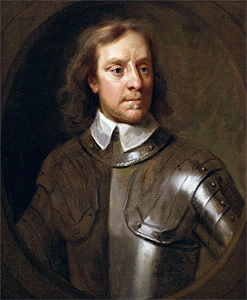
The Barebone’s Parliament, also known as the Little Parliament, the Nominated Assembly, and the Parliament of Saints, comes into being on July 4, 1653, and is the last attempt of the English Commonwealth to find a stable political form before the installation of Oliver Cromwell (pictured) as Lord Protector. It is an assembly entirely nominated by Oliver Cromwell and the New Model Army‘s Council of Officers. It acquires its name from the nominee for the City of London, Praise-God Barebone. The Speaker of the House is Francis Rous. There are a total of 140 nominees – 129 from England, five from Scotland, and six from Ireland. The Barebone’s Parliament is preceded by the Rump Parliament and succeeded by the First Protectorate Parliament.

The assembly, inspired by the Jewish Sanhedrin, meets for the first time on July 4 in the council chamber at Whitehall. Cromwell opens proceedings with a speech around two hours long. He begins by summing up the “series of Providences” that have brought them to this point, starting with the Short Parliament and singling out 1648 as the “most memorable year that ever this nation saw.”

The assembly then adjourns before sitting in full on the following day. On that day they elect Francis Rous, initially as chairman. He is not known as Speaker until a month later. Henry Scobell is appointed as Clerk. On July 12, the assembly publishes a declaration declaring itself to be the parliament of the Commonwealth of England. This is the first time that it has been formally described as a parliament.

By early September, Cromwell is said to be growing frustrated with the assembly’s in-fighting between different groups. Attendance also begins to fall. Over one hundred members are present at most votes in July, dropping to an average turnout of 70 by October. Various bills inflame conflict between the radical and moderate members – bills to abolish the Court of Chancery, regulate legal fees, tithes, and speeding up the settlement of cases in the Court of Admiralty all become bogged down in conflict. At this point, however, radical members are still mainly outnumbered in votes by moderate and conservative members.

This changes during November and December when debate returns to the question of tithes. On December 6, the committee appointed to consider the question presents their report, covering the question of how unfit ministers are to be ejected, naming commissioners who will have the job of enacting this, and retaining support for tithes in prescribed circumstances. In a defeat for the moderates, the first clause is voted down 56 to 54. Two days later, moderates come to the House and demand that the assembly abdicate its powers, criticising radical members for threatening the well being of the Commonwealth by fomenting disagreement. Rous and around 40 members walk out and go to Cromwell at Whitehall, presenting a document signed by nearly 80 members that declares: “Upon a Motion this day made in the House, that the sitting of this Parliament any longer as now constituted, will not be for the good of the Commonwealth.” Those left in the house are soon confronted by troops requesting that they leave. On December 12, 1653, the members of the assembly vote to dissolve it.


Leave a comment

Formation of the Independent Orange Order

independent-orange-orderThe Independent Orange Order, a Protestant fraternal organisation, is formed in Belfast on June 11, 1903 by Thomas Sloan and others associated with the Belfast Protestant Association, who have been expelled from the Orange Order because they voice opposition to it being used for party political ends by Ulster Unionists. Originally it is associated with the labour movement, but it soon realigns itself with traditional unionist politics.

It takes its name in memory of King William of Orange of the house of Orange who fights at the Battle of the Boyne, brings about the Glorious Revolution and the Bill of Rights giving the Westminster parliament ultimate power of the country rather than the Monarch. The Independent Order is small compared to the main organisation with 1,500 to 2,000 members. It is largely based around north County Antrim in Northern Ireland but has lodges around the world, including England, Scotland, and Australia. Its annual main Twelfth of July demonstration is held in a north Antrim town or village.

The first notable effect after the formation of the Independent Order is a more liberal interpretation of the rules of the “Old Order.” In the early years of the Institution, many suffer the full wrath of the “powers that be,” who are opposed to any splitting of the Orange Order. Jobs are lost, homes are burned, and their headquarters in Belfast is bombed.

Independent Orangeism today maintains that it is essential for the Orange Institution to be kept free from politics and to guard the principles of Reformation Protestantism. They often express alarm when they believe these principles are endangered by conciliatory politicians. They are opposed to ecumenism and, while being opposed to Orangeism being linked to the Ulster Unionist Party, they are not apolitical and tend to work alongside unionist politicians and parties.

The Institution also promotes Ulster Protestant history and proclaims the principle of “Liberty of Conscience.” They declare their right to think and act independently without direction from political or clerical masters, they seek to strengthen the position of Orangeism, and they often warn of the danger of the development of a social and cultural Orangeism devoid of Protestant principle.