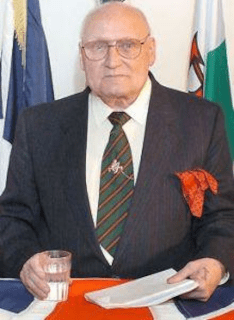
Jameson is born in Portadown to a ProtestantChurch of Ireland family in about 1953, one of five sons. He has a twin brother, Stuart. A former reservist in the Royal Ulster Constabulary (RUC) (1973-81), he works as a manager in the Jameson Group, a building firm which is a family-owned business. The building firm is regularly awarded government contracts to carry out work for the security forces and it is for this reason that his brother David loses a leg in a 1991 Provisional Irish Republican Army bombing attack. He is a member of the Orange Order‘s Drumherriff Star of Erin LOL 8 Portadown district.
It is not known exactly when Jameson becomes a member of the Ulster Volunteer Force (UVF) nor the leader of its Mid-Ulster Brigade. The Portadown unit of the Mid-Ulster Brigade had been officially stood down by the Brigade Staff in Belfast in August 1996 when it carried out an unauthorised sectarian killing while the UVF were on ceasefire. The Mid-Ulster Brigade’s commander at the time, Billy Wright, was expelled from the UVF. Wright brazenly defies a Combined Loyalist Military Command (CLMC) order to leave Northern Ireland or face execution by establishing the breakaway Loyalist Volunteer Force (LVF), taking most of the Portadown Mid-Ulster UVF with him. The units of the Mid-Ulster Brigade that remain loyal to the Brigade Staff continue to operate and Jameson becomes commander. He is said by The Guardian to be a “staunch supporter of the Good Friday Agreement.”
In the weeks prior to his killing, Jameson is in a violent street altercation with LVF member Muriel Gibson, whom he accuses of involvement in drugs and slaps forcefully in the face. This is followed by a fracas at the Portadown F.C. Social Club on December 27, 1999, where LVF members are commemorating the death of their comrade Billy Wright, shot and killed inside the Maze Prison by the Irish National Liberation Army (INLA) exactly two years previously. When he enters the club, several LVF men begin to push and jostle him and challenge him to a fight, telling him to hit them instead of women. Deeply offended, he leaves and soon returns with a UVF gang armed with pickaxe handles and baseball bats. In the violent brawl that ensues, twelve people, including three LVF prisoners out on Christmas parole, receive severe injuries. The LVF leaders subsequently make the decision that Jameson is to pay for the attack with his life.
One of the LVF members, who lives near Dungannon, gets in touch with a family of north Belfast loyalists who had been members of the UVF but who had left after Wright’s expulsion. From these former UVF members the LVF obtains the gun with which to shoot Jameson. On the evening of January 10, 2000, Jameson returns from work and drives his Isuzu Trooper jeep into the driveway outside his home on the Derrylettiff Road near Portadown. Waiting in ambush, a single gunman suddenly approaches from the passenger side of the parked jeep. Before Jameson can emerge from the vehicle and with the engine still running, the gunman opens fire through the window with a 9mm semi-automatic pistol, shooting Jameson five times in the head and chest. His assassin escapes to a nearby getaway car. He is rushed to Craigavon Area Hospital but dies of his wounds minutes after his arrival. The RUC immediately begins a murder inquiry. Within hours of the killing, the UVF Brigade Staff convene an emergency meeting at “the Eagle,” their headquarters on the Shankill Road, where they compile a list of all those they believe to be involved in Jameson’s death and plan their retaliation against the LVF.
Among those who condemn the killing is Northern Ireland’s First MinisterDavid Trimble who releases the following statement: “This is exactly the sort of thing we thought we had finally put behind us. I’m shocked by the news.”
Jameson’s funeral is held on January 13 at the Tartaraghan Parish Church and attended by several thousand mourners including Progressive Unionist Party (PUP) leaders David Ervine and Billy Hutchinson. Drumcree Orangeman Harold Gracey and Gary McMichael, the son of slain Ulster Defence Association (UDA) brigadier John McMichael, also attend as does local politicians representing the Ulster Unionist Party (UUP) and Democratic Unionist Party (DUP). The service is officiated by Reverend David Hilliard who speaks out against vengeance and describes Jameson as a “man admired and loved by many” and who “had been so cruelly murdered.” He is buried in the adjacent churchyard.
Despite Reverend Hilliard’s pleas and LVF leader Mark “Swinger” Fulton‘s claim that his organisation had nothing to do with Jameson’s shooting, the UVF/LVF feud intensifies. In the immediate aftermath members of Jameson’s family are filmed angrily defacing LVF murals in Portadown. A month after his killing, two Protestant teenagers, Andrew Robb (19) and David McIlwaine (18), are savagely beaten and repeatedly stabbed to death in a country lane outside Tandragee, County Armagh by a local UVF gang. The young men, believed to have been LVF members, are targeted by their UVF killers after they leave a nightclub together in search of a party. However, neither teenager is part of any paramilitary organisation and only Robb had tenuous links to the LVF. It is reported in the Belfast Telegraph that according to court hearings Robb had made disparaging remarks about Jameson’s death. Two of the UVF men, Stephen Leslie Brown and Noel Dillon, are infuriated by the comments and afterward Brown drives the victims to Druminure Road where he, Dillon and another man carry out the double killing. One of Jameson’s brothers, Bobby, is among the mourners at David McIlwaine’s funeral. The West Belfast Brigade of the Ulster Defence Association, whose brigadier Johnny Adair is close to the LVF, briefly becomes involved in the feud after Adair attends Andrew Robb’s funeral and joins LVF members at the Drumcree conflict. After the UVF track down Jameson’s killer to the Oldpark area of Belfast and attempt to shoot him, he is taken away under the protection of the West Belfast Brigade. The tit-for-tat killings continue intermittently until 2005 when the UVF makes a final assault against the LVF, leaving four members dead and the LVF leadership with no alternative but to order its military units to permanently disband.
Jameson’s family has persistently denied that he was a UVF member. They maintain that he was a vigilante who was murdered in retaliation for the firm stand he had taken against drug dealing in the Portadown area. The late PUP leader David Ervine expressed the same opinion the day after the killing by stating, “Mr. Jameson had been murdered by drug dealers masquerading as loyalists because he had been a bulwark in his community against dealers.” Ervine also described him as having been a “fine and honourable man, widely respected in the community.” Northern Ireland security sources, however, have repeatedly named Jameson as the Mid-Ulster UVF commander. He is listed as a UVF member in the CAIN: Sutton Index of Deaths, an online University of Ulster-sponsored project which chronicles the Northern Ireland conflict. It also emerges that for several days prior to his killing, he had been working at the BallykinlerBritish Army base. Immediately after his murder by the LVF, his family begins an anti-drug campaign in Portadown by putting up posters and handing out leaflets to passing motorists.
Spence, the sixth of seven children, is born and raised in the Shankill Road area of West Belfast in Northern Ireland, the son of William Edward Spence, a member of the Ulster Volunteers who fought in World War I, and Isabella “Bella” Hayes. The family home is 66 Joseph Street in an area of the lower Shankill known colloquially as “the Hammer.” He is educated at the Riddel School on Malvern Street and the Hemsworth Square school, finishing his education at the age of fourteen. He is also a member of the Church Lads’ Brigade, a Church of Ireland group, and the Junior Orange Order. His family has a long tradition of Orange Order membership.
Spence takes various manual jobs in the area until joining the British Army in 1957 as a member of the Royal Ulster Rifles. He rises to the rank of Provost Sergeant (battalion police). He is stationed in Cyprus and sees action fighting against the forces of Colonel Georgios Grivas. He serves until 1961 when ill-health forces him to leave. He then finds employment at the Harland & Wolff shipyard in Belfast, where he works as a stager (builder of the scaffolding in which the ships are constructed), a skilled job that commands respect among working class Protestants and ensures for him a higher status within the Shankill.
From an early age Spence is a member of the Prince Albert Temperance Loyal Orange Lodge, where fellow members include John McQuade. He is also a member of the Royal Black Institution and the Apprentice Boys of Derry. Due to his later involvement in a murder, he is expelled from the Orange Order and the Royal Black Institution. The Reverend Martin Smyth is influential in his being thrown out of the Orange Order.
Spence’s older brother Billy is a founding member of Ulster Protestant Action (UPA) in 1956, and he is also a member of the group. He is frequently involved in street fights with republicans and garners a reputation as a “hard man.” He is also associated loosely with prominent loyalists such as Ian Paisley and Desmond Boal and is advised by both men in 1959 when he launches a protest against Gerry Fitt at Belfast City Hall after Fitt had described Spence’s regiment as “murderers” over allegations that they had killed civilians in Cyprus. He, along with other Shankill Road loyalists, break from Paisley in 1965 when they side with James Kilfedder in a row that follows the latter’s campaigns in Belfast West. Paisley intimates that Kilfedder, a rival for the leadership of dissident unionism, is close to Fine Gael after learning that he had attended party meetings while a student at Trinity College Dublin (TCD). The Shankill loyalists support Kilfedder and following his election as MP send a letter to Paisley accusing him of treachery during the entire affair.
Spence claims that he is approached in 1965 by two men, one of whom was an Ulster Unionist Party MP, who tells him that the Ulster Volunteer Force is to be re-established and that he is to have responsibility for the Shankill. He is sworn in soon afterward in a ceremony held in secret near Pomeroy, County Tyrone. Because of his military experience, he is chosen as the military commander and public face of the UVF when the group is established. However, RUC Special Branch believes that his brother Billy, who keeps a much lower public profile, is the real leader of the group. Whatever the truth of this intelligence, Spence’s Shankill UVF team is made up of only around 12 men on its formation. Their base of operations is the Standard Bar, a pub on the Shankill Road frequented by Spence and his allies.
On May 7, 1966, a group of UVF men led by Spence petrol bomb a Catholic-owned pub on the Shankill Road. Fire also engulfs the house next door, killing the elderly Protestant widow, Matilda Gould (77), who lives there. On May 27, he orders four UVF men to kill an Irish Republican Army (IRA) member, Leo Martin, who lives on the Falls Road. Unable to find their target, the men drive around in search of any Catholic instead. They shoot dead John Scullion (28), a Catholic civilian, as he walks home. Spence later writes “at the time, the attitude was that if you couldn’t get an IRA man you should shoot a Taig, he’s your last resort.” On June 26, the same gang shoots dead Catholic civilian Peter Ward (18) and wounds two others as they leave a pub on Malvern Street in the lower Shankill. Two days later, the government of Northern Ireland uses the Special Powers Act to declare the UVF illegal. Shortly after, Spence and three others are arrested.
In October 1966, Spence is sentenced to life imprisonment for the murder of Ward, although he has always claimed his innocence. He is sent to Crumlin Road Prison. During its July 12, 1967, march, the Orange lodge to which he belongs stops outside the prison in tribute to him. This occurs despite him having been officially expelled from the Orange Order following his conviction. His involvement in the killings gives him legendary status among many young loyalists and he is claimed as an inspiration by the likes of Michael Stone. Tim Pat Coogan describes Spence as a “loyalist folk hero.” The murder of Ward is, however, repudiated by Paisley and condemned in his Protestant Telegraph, sealing the split between the two.
Spence appeals against his conviction and is the subject of a release petition organised by the Ulster Constitution Defence Committee, although nothing comes of either initiative. Despite the fact that control of the UVF lay with his closest ally, Samuel “Bo” McClelland, from prison he is often at odds with the group’s leadership, in particular with regards to the 1971 McGurk’s Bar bombing. Spence now argues that UVF members are soldiers and soldiers should not kill civilians, as had been the case at McGurk’s Bar. He respects some Irish republican paramilitaries, who he feels also live as soldiers, and to this end he writes a sympathetic letter to the widow of Official IRA leader Joe McCann after he is killed in 1972.
Spence is granted two days leave in early July 1972 to attend the wedding of his daughter Elizabeth to Winston Churchill “Winkie” Rea. The latter had formally asked Spence for his daughter’s hand in marriage during a prison visit. Met by two members of the Red Hand Commando upon his release, Spence is informed of the need for a restructuring within the UVF and told not to return to prison. He initially refuses and goes on to attend his daughter’s wedding. Afterward a plot is concocted where Jim Curry, a Red Hand Commando member, will drive Spence back to prison but the car is to be stopped and Spence “kidnapped.” As arranged, the car in which he is a passenger is stopped in Springmartin and he is taken away by UVF members. He remains at large for four months and during that time gives an interview to ITV‘s World in Action in which he calls for the UVF to take an increased role in the Northern Ireland conflict against the Provisional IRA. At the same time, he distances himself from any policy of random murders of Catholics. He also takes on responsibility for the restructuring, returning the UVF to the same command structure and organisational base that Edward Carson had utilised for the original UVF, with brigades, battalions, companies, platoons and sections. He also directs a significant restocking of the group’s arsenal, with guns mostly taken from the security forces. He gives his permission for UVF brigadier Billy Hanna to establish the UVF’s Mid-Ulster Brigade in Lurgan. His fugitive status earns him the short-lived nickname the “Orange Pimpernel.” He is arrested along with around thirty other men at a UVF drinking club in Brennan Street, but after giving a false name, he is released.
Spence’s time on the outside comes to an end on November 4 when he is captured by Colonel Derek Wilford of the Parachute Regiment, who identifies him by tattoos on his hands. He is sent directly to Long Kesh Detention Centre soon afterward, where he shares a cell with William “Plum” Smith, one of the Red Hand Commandos whom he had met upon his initial release and who had since been jailed for attempted murder.
Spence soon becomes the UVF commander within the Long Kesh Detention Centre. He runs his part of Long Kesh along military lines, drilling inmates and training them in weapons use while also expecting a maintenance of discipline. As the loyalist Long Kesh commander, he initially also has jurisdiction over the imprisoned members of the Ulster Defence Association (UDA), although this comes to an end in 1973 when, following a deterioration in relations between the two groups outside the prison walls, James Craig becomes the UDA’s Maze commander. By this time Spence polarises opinion within the UVF, with some members fiercely loyal to a man they see as a folk hero and others resenting his draconian leadership and increasing emphasis on politics, with one anonymous member even labelling him “a cunt in a cravat.”
Spence begins to move toward a position of using political means to advance one’s aims, and he persuades the UVF leadership to declare a temporary ceasefire in 1973. Following Merlyn Rees‘ decision to legalise the UVF in 1974, Spence encourages them to enter politics and support the establishment of the Volunteer Political Party (VPP). However, his ideas are abandoned as the UVF ceasefire falls apart that same year following the Ulster Workers’ Council strike and the Dublin and Monaghan bombings. The carnage of the latter shocks and horrifies Spence. Furthermore, the VPP suffers a heavy defeat in West Belfast in the October 1974 United Kingdom general election, when the DUP candidate, John McQuade, captures six times as many votes as the VPP’s Ken Gibson.
Spence is increasingly disillusioned with the UVF, and he imparts these views to fellow inmates at Long Kesh. According to Billy Mitchell, Spence quizzes him and others sent to Long Kesh about why they are there, seeking an ideological answer to his question. When the prisoner is unable to provide one, Spence then seeks to convince them of the wisdom of his more politicised path, something that he accomplishes with Mitchell. David Ervine and Billy Hutchinson are among the other UVF men imprisoned in the mid-1970s to become disciples of Spence. In 1977, he publicly condemns the use of violence for political gain, on the grounds that it is counterproductive. In 1978, he leaves the UVF altogether. His brother Bobby, also a UVF member, dies in October 1980 inside the Maze, a few months after the death of their brother Billy.
Released from prison in 1984, Spence soon becomes a leading member of the UVF-linked Progressive Unionist Party (PUP) and a central figure in the Northern Ireland peace process. He initially works solely for the PUP but eventually also sets up the Shankill Activity Centre, a government-supported scheme to provide training and leisure opportunities for unemployed youths.
Spence is entrusted by the Combined Loyalist Military Command (CLMC) to read out their October 13, 1994, statement that announces the loyalist ceasefire. Flanked by his PUP colleagues Jim McDonald and William Plum Smith, as well as Ulster Democratic Party (UDP) members Gary McMichael, John White and David Adams, he reads the statement from Fernhill, a former Cunningham family home on their former Glencairn estate in Belfast’s Glencairn area. This building had been an important training centre for members of Edward Carson’s original UVF. A few days after the announcement, he makes a trip to the United States along with the PUP’s David Ervine and Billy Hutchinson and the UDP’s McMichael, Adams and Joe English. Among their engagements is one as guests of honour of the National Committee on American Foreign Policy. He goes on to become a leading advocate for the Good Friday Agreement.
In August 2000, Spence is caught up in moves by Johnny Adair‘s “C” Company of the UDA to take control of the Shankill by forcing out the UVF and other opponents. Due to his involvement in the peace process and the eventual Good Friday Agreement, the authorities insist against his wishes to install additional security measures to the doors and windows. As a result, when Adair’s men try to force their way into Spence’s Shankill home, they only manage to push a long stick through a partially open window of the bungalow and dislodge a few of his military frames off the opposite wall. There is no other damage and other than that small disruption no one is able to gain any physical entry into the property. When Spence’s wife dies three years later, he says that C Company is responsible for her death, as the events had taken on her health.
On May 3, 2007, Spence reads out the statement by the UVF announcing that it will keep its weapons but put them beyond the reach of ordinary members. The statement also includes a warning that activities could “provoke another generation of loyalists toward armed resistance.” He does not specify what activities or what is being resisted.
Spence marries Louie Donaldson, a native of the city’s Grosvenor Road, on June 20, 1953, at Wellwood Street Mission, Sandy Row. The couple has three daughters, Elizabeth (born 1954), Sandra (1956) and Catherine (1960). Louie dies in 2003. Spence, a talented footballer in his youth with Old Lodge F.C., is a lifelong supporter of Linfield F.C.
Spence dies in a Belfast hospital at the age of 78 on September 25, 2011. He had been suffering from a long-term illness and was admitted to hospital 12 days prior to his death. He is praised by, among others, PUP leader Brian Ervine, who states that “his contribution to the peace is incalculable.” Sinn Féin‘s Gerry Kelly claims that while Spence had been central to the development of loyalist paramilitarism, “he will also be remembered as a major influence in drawing loyalism away from sectarian strife.”
However, a granddaughter of Matilda Gould, a 74-year-old Protestant widow who had died from burns sustained in the UVF’s attempted bombing of a Catholic bar next door to her home, objects to Spence being called a “peacemaker” and describes him as a “bad evil man.” The unnamed woman states, “When you go out and throw a petrol bomb through a widow’s window, you’re no peacemaker.”
Spence’s funeral service is held in St. Michael’s Church of Ireland on the Shankill Road. Notable mourners include Unionist politicians Dawn Purvis, Mike Nesbitt, Michael McGimpsey, Hugh Smyth and Brian Ervine, UVF chief John “Bunter” Graham and UDA South Belfast brigadier Jackie McDonald. In accordance with his wishes, there are no paramilitary trappings at the funeral or reference to his time in the UVF. Instead, his coffin is adorned with the beret and regimental flag of the Royal Ulster Rifles, his former regiment. He is buried in Bangor, County Down.
Gallagher is always on time. He often reprimands colleagues for their lack of punctuality. He arrives to sign on at the social security office on the Falls Road at exactly 11:00 a.m. every two weeks. Usually a friend goes with him, however, on this day he goes alone. He is talking to the woman at the counter when a man approaches from behind. He does not get a chance to turn around. Four bullets are fired into the back of his head. He slumps to the ground and dies instantly.
As the office descends into chaos, the killer calmly walks out. He is in his mid-20s but well disguised in a woolen cap, pony-tail wig and glasses. He was only 5’3″ tall.
The INLA vows revenge and immediately begins an investigation. Early on there are no concrete clues. “It was an unbelievably clean killing,” says one source in the Irish Republican Socialist Party (IRSP), the INLA`s political wing. “People in the dole office, the street, the houses nearby were all questioned. Nobody really saw anything. We don’t know if the gunman acted with others or alone. We don’t know where he drove to. No car has been found. He did a very professional job.”
In June 1994, Gallagher had shot dead three loyalists on the Shankill. But the INLA rules out possible retaliation by the Ulster Defence Association (UDA) or Ulster Volunteer Force (UVF), believing that a loyalist assassin would not move so confidently in a republican area.
The Royal Ulster Constabulary (RUC) and Sinn Féin politicians point to an INLA feud. The group has historically been riven by internal disputes and it suffered serious difficulties the previous April. A statement read aloud in a Dublin courtroom by four Northern Irish men arrested following an arms find in Balbriggan announces an unconditional INLA ceasefire.
Gallagher, supported by others, says that the men lack the authority to make the statement. He takes over as Chief-of-Staff, and the four are expelled from the republican socialist movement. They receive almost no internal backing, and a violent split is avoided.
The gut reaction of some members of the INLA is that people loyal to these former members could have carried out the attack on Gallagher. But others think it unlikely. “I don’t believe these people are leading suspects,” says one source. “They’re a beaten docket. It would be illogical anyway. They wanted an end to violence so why provoke conflict with us by killing Gino?”
Gallagher’s killing bears no resemblance to previous INLA feuds, when attacks were claimed by each faction. No one admits responsibility for his death. No splinter group is set up claiming to be the “real INLA” and no gang warfare breaks out on the streets.
There is some speculation that elements of British intelligence could be responsible. The INLA, which describes itself as Marxist, is the only paramilitary group in Northern Ireland which refuses to call a ceasefire. Although substantially smaller than the IRA, it is well armed. It has engaged in an 18-month suspension of violence, but there is a strong possibility it will eventually return to conflict. Gallagher had said that Irish unity and socialism could not be achieved through constitutional politics. He foresaw violence “having some part to play in our strategy.”
“He was a real threat to the state, and some of its agents could have wanted him out of the way before he caused any trouble,” says an IRSP source.
One of the most popular and controversial theories is that the IRA had killed Gallagher. In an internal IRSP document two weeks prior to his assassination, Gallagher expresses fear that his life is in danger from the IRA. He has also been warned by contacts in the Provisionals that he is at risk.
Gallagher was reorganising the INLA into a more formidable force than it had been in years. It was building a base in areas where it had been dormant. He had also taken over as the IRSP’s national organiser.
In December 1996, the IRSP refused to make a submission to the Mitchell Commission, saying to do so would be “collaborating” with the peace process. It had just started giving regular media interviews and had reopened offices on the Falls Road. It was considering contesting any elections to a talk’s convention in the North and challenging Sinn Féin in nationalist areas. Gallagher’s high profile as a gunman made him popular with IRA grassroots and it was feared that he could become a rallying point for dissidents.
“He led an organisation which was nowhere near the size of the Provos,” says one republican source, “but he really had them worried. He saw a vacuum emerging as republican supporters became disillusioned with the peace process and he wanted to fill it. Given time, he could have caused trouble. It wouldn’t be surprising if the Provos wanted to nip that in the bud.”
Notably, Sinn Féin does not condemn the killing. An unnamed spokesman, an unusual move, describes it as “tragic.” Similar language has been used about the assassination of drug dealers when the IRA has not wanted to admit responsibility.
The IRA issues a statement denying responsibility but, as one source says, “they aren’t likely to admit it.” If IRA involvement is established, the INLA will have to decide whether or not to retaliate. Arguments are made not to allow the Provisionals to walk over the INLA, but the organisation also fears being wiped out in a bitter republican feud.
If clues about the killing remain scarce, the less likely it is that former INLA members are involved. “They wouldn’t be able to fully cover their tracks,” says one source. “If the group responsible is able to do that, then it’s a really professional outfit. That points to the IRA or elements of British intelligence.”
(From: “Gallagher murder ‘an unbelievably clean killing'” by Susanne Breen, The Irish Times, http://www.irishtimes.com, February 3, 1996)
A rally of twelve to fifteen thousand Peace People from both north and south takes place at the new bridge over the River Boyne at Drogheda, County Louth, on December 5, 1976. In general, the Peace People’s goals are the dissolution of the Irish Republican Army (IRA) and an end to violence in Northern Ireland. The implicit goals of the Peace People rallies are delegitimization of violence, increasing solidarity, and gaining momentum for peace.
In the 1960s, Northern Ireland begins a period of ethno-political conflict called the Troubles. Through a series of social and political injustices, Northern Ireland has become a religiously divided society between historically mainland Protestants and Irish Catholics. Furthermore, the Irish people have become a fragmented body over a range of issues, identities, circumstances and loyalties. The conflict between Protestants and Catholics spills over into violence, marked by riots and targeted killings between the groups beginning in 1968. In addition, paramilitary groups, including the prominent IRA, launch attacks to advance their political agendas.
The violence continues to escalate. On August 10, 1976, Anne Maguire and her children are walking along Finaghy Road North in Belfast. Suddenly, a Ford Cortina slams into them. The car is being driven by Danny Lennon, who moments before had been shot dead by pursuing soldiers. The mother is the only survivor. The collision kills three of her four children, Joanne (8), John (2), and Andrew (6 months). Joanne and Andrew die instantly while John is injured critically.
The next day, immediately following John’s death, fifty women from the Republican neighborhoods of Andersonstown and Stewartstown protest Republican violence by marching with baby carriages. That evening, Mairead Corrigan, Anne Maguire’s sister, appears on television pleading for an end to the violence. She becomes the first leader of the Peace People to speak publicly.
However, she was not the only one to initiate action. As soon as she hears Mairead speak on the television, Betty Williams begins petitioning door-to-door for an end to sectarian violence. She garners 6,000 signatures of support within a few days. This support leads directly into the first unofficial action of the Peace People. On 14 August, only four days after the incident, 10,000 women, both Protestant and Catholic, march with banners along Finaghy Road North, the place of the children’s death, to Milltown Cemetery, their burial site. This march mostly includes women along with a few public figures and men. The marchers proceed in almost utter silence, only broken by short bouts of singing from the nuns in the crowd and verbal and physical attacks by Republican opposition.
The following day, the three who become leaders of the Peace People – Mairead Corrigan, Betty Williams, and journalist Ciaran McKeown – come together for their first official meeting. During these initial meetings they establish the ideological basis of nonviolence and goals for the campaign. The essential goals for the movement are the dissolution of the IRA and an end to the violence in Northern Ireland. The goals of the campaign implicit in their declaration are awareness, solidarity, and momentum. Peace People’s declaration:
“We have a simple message to the world from this movement for Peace. We want to live and love and build a just and peaceful society. We want for our children, as we want for ourselves, our lives at home, at work, and at play to be lives of joy and peace. We recognise that to build such a society demands dedication, hard work, and courage. We recognise that there are many problems in our society which are a source of conflict and violence. We recognise that every bullet fired, and every exploding bomb make that work more difficult. We reject the use of the bomb and the bullet and all the techniques of violence. We dedicate ourselves to working with our neighbours, near and far, day in and day out, to build that peaceful society in which the tragedies we have known are a bad memory and a continuing warning.”
During the four-month campaign, Peace People and partners organize and participate in 26 marches in Northern Ireland, Britain, and the Republic of Ireland. In order to organize these marches effectively they establish their main headquarters in Belfast.
After the initial Finaghy Road March, the Peace People, both Protestants and Catholics, rally in Ormeau Park on August 21. The official Declaration of the Peace People is first read at this rally, the largest rally of the entire campaign. The group numbers over 50,000. The rally even includes some activists from the Republic of Ireland, most notably Judy Hayes from the Glencree Centre of Reconciliation near Dublin. After the rally, she and her colleagues return to the south to organize solidarity demonstrations.
In the few days before the next march, the organization “Women Together” request Peace People to call off the march, disapproving of Catholics and Protestants participating in a joint march. The Peace People are not dissuaded. The next Saturday, 27,000 people march along Shankill Road, the loyalist/Protestant neighborhood.
In the next three months, Peace People organize and participate in a rally every Saturday; some weeks even have two. Some of the most notable marches include the Derry/Londonderry double-march, the Falls march, the London march, and the Boyne march.
The Saturday following the Shankill march marks the Derry/Londonderry double-march. At this march, Catholics march on one side of the River Foyle and Protestants on the other. The groups meet on the Craigavon Bridge. Simultaneously, 50,000 people march in solidarity in Dublin.
On October 23, marchers meet in the Falls, Belfast, in the pouring rain on the same Northumberland street corner where the Shankill March had started. The Falls Road rally is memorable for the fear and violence that ensues. During this rally Sinn Féin supporters throw stones and bottles at the marchers. The attackers escalate the violence as the marchers near Falls Park. The marchers are informed by others that more attackers await them at the entrance to the park, inciting fear within the body of the rally. The leaders decide that this is an important moment of conflict in the rally and that they must push on. They continue verbally encouraging the marchers through the cloud of bottles, bricks, and stones.
The leaders plan to escalate the campaign momentum for the last two major symbolic rallies in London and Boyne, Drogheda. A week before the rallies, on November 20-21, they plan a membership drive. Over 105,000 people sign within two days.
The symbolic week of the culminating rallies begins on November 27 at the glamorous London Rally. They begin to march at Hyde Park, cut through Westminster Abbey, and end at Trafalgar Square. Some groups sing “Troops Out,” and others resound with civil rights songs.
On December 5, Peace People holds its final march of the campaign, along the River Boyne. The Northern and Southern Ireland contingents met at the Peace Bridge. This is an important point in the legacy of the Peace People movement. Now that the enthusiastic rallies are over, the people are responsible for the tedious local work and continuing the momentum and solidarity that the rallies have inspired. The shape of the Peace People is changing.
After the planned marches are over, the rally portion of the campaign fades and the Peace People take a new shape. Corrigan, Williams, and McKeown stop planning marches, but continue to be involved in action that takes the form of conferences and traveling overseas. However, the leaders begin doing more separated work. Ciaran McKeown increases his focus on radical political restructuring.
In 1977, Betty Williams and Mairead Corrigan receive the Nobel Peace Prize. Issues regarding the use of the monetary award impact the two leaders’ relationships in an irreconcilable manner.
Due to the fact that many people, unlike McKeown, are less interested in the political side of the equation, the People continue actions along the lines of rallies and social work. Actions continue through the People’s initiative in the form of Peace Committees that each does separate work in local areas.
The Peace People makes a substantial impact. They help to de-legitimize violence, increase solidarity across sectarian lines, and develop momentum for peace. Although the violence does not fully subside until 1998 with the negotiation of political change, Ireland sees in 1976 one of its most dramatic decreases in political violence, accompanying the Peace People’s marches and rallies. The campaign dramatizes how tired the people are of bloodshed, their desperate desire for peace, and the clear possibility of alternatives.
(From: “Peace People march against violence in Northern Ireland, 1976” by Hannah Lehmann, Global Nonviolent Action Database, https://nvdatabase.swarthmore.edu/, 2011 | Pictured: The Peace People organisation rally in Drogheda, County Louth, December 5, 1976)
Brian Robinson, loyalist militant from Belfast, Northern Ireland, and member of the Ulster Volunteer Force (UVF), is shot dead by two members of an undercover British Army unit on September 2, 1989. His death is one of the few from the alleged shoot-to-kill policy in Northern Ireland to have involved a loyalist victim.
Robinson is born in Belfast in 1962 to Rab and Margaret Robinson, and brought up a Protestant on Disraeli Street in the staunchly loyalist Woodvale district of the Shankill Road. It is unknown when he becomes a member of the local Ulster Volunteer Force. He holds the rank of volunteer in its B Company, 1st Battalion Belfast Brigade. By the time of his death he has moved to Forthriver Crescent in the Glencairn estate, an area immediately northwest of Woodvale.
On September 2, 1989, Robinson and fellow UVF member Davy McCullough are travelling on a motorbike, with Robinson as the passenger armed with a gun, in Belfast’s Crumlin Road, close to the Irish nationalist area of Ardoyne. Upon seeing Paddy McKenna, a Catholic civilian, walking along the street, Robinson opens fire, hitting McKenna a total of eleven times and killing him. Unbeknownst to the two UVF members, an undercover British Army unit, linked to the Special Air Service, is in the area. Giving chase in a Vauxhall Astra car and a Fiat, the soldiers ram the motorbike, forcing both men off the road. Robinson is shot twice in his torso, then twice more in the back of the head by a female soldier standing over him. He is 27-years-old. Upon hearing the news of her son’s death, Robinson’s mother, Margaret, suffers a fatal heart attack. The two are buried on the same day.
The UVF leadership in west Belfast later claims that the intelligence leading to Robinson’s death had been provided by one of their own men, Colin “Crazy” Craig, who allegedly had been a police informer for several years. Craig is killed by the Irish National Liberation Army (INLA) on June 16, 1994, along with fellow UVF members Trevor King and David Hamilton. A UVF commander is quoted as mourning King and Hamilton, but adding that Craig was in line to be shot by the UVF anyway. Republican sources claim that the security forces infiltration of the UVF is even deeper, including Trevor King and “the most senior UVF figure in the North.”
Robinson’s funeral is well-attended as it leaves his home in Forthriver Crescent. Despite his membership in the UVF there are no paramilitary displays at the funeral, and the coffin is covered in the Union Jack instead of a UVF standard. Robinson is a member of the “Old Boyne Heroes” lodge of the Orange Order, and several members wearing their sashes flank the coffin. The cortege then meets up with Margaret Robinson’s funeral as it leaves her home in Crimea Street. A lorry carrying floral tributes leads the cortege. Both mother and son are buried in Roselawn Cemetery. A death notice from Robinson’s Orange lodge is published in the local press, which causes controversy.
Robinson’s death is commemorated annually in a band parade attended by loyalist bands in the Belfast area. One band, Star of the Shankill, has “In Memory of Brian Robinson” written on its crest and emblazoned upon its bass drum. The band also attracts controversy when it appears at a parade organised by the Apprentice Boys of Derry that passes near the area in which Robinson killed his victim. In 2010, Rab Robinson, the brother of Brian, issues an appeal to the parades organisers to postpone the parade that year, owing to the death of his younger brother earlier that year.
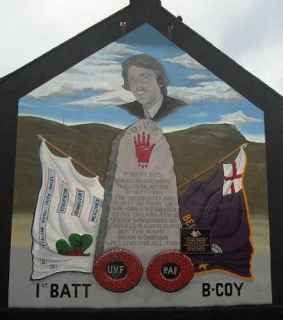
Robinson is commemorated in a mural on Disraeli Street, off Woodvale Road in Belfast.
In 2015, Robinson’s son Robert removes a Special Air Service flag that had been erected by the loyalists at the Twaddell Avenue protest camp. The Shankill UVF is later said to be reviewing its policy of flying the flag.
(Pictured: Mural commemorating Brian Robinson on Disraeli Street, off Woodvale Road in Belfast)
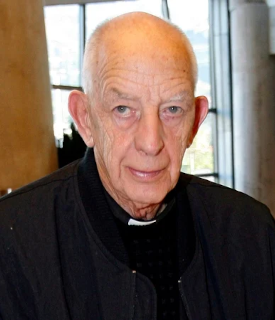
In the late 1980s, Reid facilitates a series of meetings between Gerry Adams and John Hume, in an effort to establish a “Pan-Nationalist front” to enable a move toward renouncing violence in favour of negotiation. Reid, himself a staunch nationalist who favours a united Ireland and the withdrawal of British forces from Northern Ireland, then acts as their contact person with the Irish Government in Dublin from a 1987 meeting with Charles Haughey up to the signing of the Good Friday Agreement in 1998. In this role, which is not public knowledge at the time, he holds meetings with various Taoisigh, and particularly with Martin Mansergh, advisor to various Fianna Fáil leaders. After the eventual success of the peace negotiations, Gerry Adams says, “there would not be a peace process at this time without [Father Reid’s] diligent doggedness and his refusal to give up.”
After he moves to Dublin, Reid is involved in peace efforts in the Basque Country. In January 2003, he is awarded the Sabino Arana 2002 “World Mirror” prize, by the Sabino Arana Foundation in Bilbao, in recognition of his efforts at promoting peace and reconciliation. He and a Methodist minister, the Rev. Harold Good, announce that the IRA has decommissioned their arms at a news conference in September 2005.
Reid is involved in controversy in November 2005 when he makes comments during a meeting in Fitzroy Presbyterian Church concerning the Unionist community in Northern Ireland. When the loyalist activist Willie Frazer makes remarks that Catholics had butchered Protestants during the Troubles, Reid angrily responds, “You don’t want to hear the truth. The reality is that the nationalist community in Northern Ireland were treated almost like animals by the unionist community. They were not treated like human beings. They were treated like the Nazis treated the Jews.” Reid later apologises, saying his remarks had been made in the heat of the moment. In an interview with CNN, he says that “The IRA were, if you like, a violent response to the suppression of human rights.”
Reid dies in a Dublin hospital on November 22, 2013. He is survived by two sisters and an aunt, and is buried in Milltown Cemetery, Belfast.
The Shankill Butchers, a gang of eleven Ulster loyalists, are sentenced to life imprisonment on February 20, 1979, for 112 offences including nineteen murders. Many of the gang are members of the Ulster Volunteer Force (UVF) that is active between 1975 and 1982 in Belfast, Northern Ireland. The gang is based in the Shankill area and is responsible for the deaths of at least 23 people, most of whom are killed in sectarian attacks. The gang is notorious for kidnapping, torturing and murdering random or suspected Catholic civilians. Each is beaten ferociously and has their throat hacked with a butcher’s knife. Some are also tortured and attacked with a hatchet. The gang also kills six Ulster Protestants over personal disputes, and two other Protestants mistaken for Catholics.
Most of the Butchers are eventually captured and eleven of them come to trial during 1978 and early 1979. On February 20, 1979, the eleven men are convicted of a total of nineteen murders, and the 42 life sentences handed out are the longest combined prison sentences in United Kingdom legal history.
William Moore pleads guilty to eleven counts of murder and Bobby “Basher” Bates pleads guilty to ten counts. The trial judge, Lord Justice Turlough O’Donnell, says that he does not wish to be cast as “public avenger” but feels obliged to sentence the two to life imprisonment with no chance of release. Gang leader Lenny Murphy and his two chief “lieutenants,” however, escape prosecution.
In summing-up, Lord Justice O’Donnell states that their crimes, “a catalogue of horror”, are “a lasting monument to blind sectarian bigotry.” After the trial, Detective Chief Inspector Jimmy Nesbitt, head of the Criminal Investigation Department (CID) Murder Squad in Tennent Street Royal Ulster Constabulary (RUC) base and the man charged with tracking down the Butchers, comments, “The big fish got away,” a reference to Murphy (referred to in court as “Mr. X” or the “Master Butcher”) and to Messrs “A” and “B.”
Lenny Murphy is assassinated by a Provisional Irish Republican Army hit squad early in the evening of November 16, 1982, outside the back of his girlfriend’s house in the Glencairn estate. The IRA is likely acting with loyalist paramilitaries who perceive him as a threat.
The first of the Butchers to be released from prison is John Townsley, who had been only fourteen when he became involved with the gang and sixteen when arrested. Bobby Bates is released in October 1996, two years after the paramilitary ceasefires of 1994. He reportedly “found religion” behind bars. He is shot and killed in the upper Shankill area on June 11, 1997, by the son of the Ulster Defence Association (UDA) man he had killed in the Windsor Bar. “Mr. B”, John Murphy, dies in a car accident in Belfast in August 1998. William Moore is the final member of the gang to be released from prison in August 1998, in accordance with the Good Friday Agreement, after over twenty-one years behind bars. He dies on May 17, 2009, from a suspected heart attack at his home.
The investigations by Martin Dillon, author of The Shankill Butchers: A Case Study of Mass Murder (1989 and 1998), suggests that a number of other individuals (whom he is unable to name for legal reasons) escape prosecution for participation in the crimes of the Butchers and that the gang are responsible for a total of at least thirty murders.
The Butchers brought a new level of paramilitary violence to a country already hardened by death and destruction.
The Shankill Butchers gang is based in the Shankill area and is responsible for the deaths of at least 23 people, most of whom are killed in sectarian attacks. The gang is notorious for kidnapping, torturing and murdering random or suspected Catholic civilians. Each victim is beaten ferociously and has their throat hacked with a butcher knife. Some are also tortured and attacked with a hatchet. The gang also kills six Ulster Protestants over personal disputes, and two other Protestants mistaken for Catholics.
The commander of the Shankill Butchers gang is Lenny Murphy. He is the youngest of three sons of Joyce (née Thompson) and William Murphy from the loyalist Shankill Road area of Belfast. At school he is known as a bully and threatens other boys with a knife or with retribution from his two older brothers. Soon after leaving school at 16, he joins the UVF. He often attends the trials of people accused of paramilitary crimes, to become well acquainted with the laws of evidence and police procedure.
On September 28, 1972, Murphy shoots and kills William Edward “Ted” Pavis at the latter’s home in East Belfast. Pavis is a Protestant whom the UVF say has been selling weapons to the Provisional Irish Republican Army (PIRA). Murphy and an accomplice, Mervyn Connor, are arrested shortly afterwards and held on remand in Belfast’s Crumlin Road Gaol. After a visit by police to Connor, fellow inmates suspect that he might cut a deal with the authorities with regard to the Pavis killing. On April 22, 1973, Connor dies by ingesting a large dose of cyanide. Before he dies, he writes a confession to the Pavis murder, reportedly under duress from Murphy. Murphy is brought to trial for the Pavis murder in June 1973. The court hears evidence from two witnesses who had seen Murphy pull the trigger and had later picked him out of an identification parade. The jury acquits him due in part to Murphy’s disruption of the line-up. His freedom is short-lived as he is arrested immediately for a number of escape attempts and imprisoned, then interned, for three years.
In May 1975, Murphy is released from prison. He spends much of his time frequenting pubs on the Shankill Road and assembling a paramilitary team that will enable him to act with some freedom at a remove from the UVF leadership (Brigade Staff). His inner circle consists of two “personal friends.” These are a “Mr. A” and John Murphy, one of Lenny’s brothers, referred to as “Mr. B.” Further down the chain of command are his “sergeants,” William Moore and Bobby “Basher” Bates, a UVF man and former prisoner.
Moore, formerly a worker in a meat-processing factory, had stolen several large knives and meat-cleavers from his old workplace, tools that are later used in more murders. Another prominent figure is Sam McAllister, who uses his physical presence to intimidate others. On October 2, 1975, the gang raids a drinks premises in nearby Millfield. On finding that its four employees, two females and two males, are Catholics, Murphy shoots three of them dead and orders an accomplice to kill the fourth. By now Murphy is using the upper floor of the Brown Bear pub, at the corner of Mountjoy Street and the Shankill Road near his home, as an occasional meeting-place for his unit.
On November 25, 1975, using the city’s sectarian geography to identify likely targets, Murphy roams the areas nearest the Catholic New Lodge in the hope of finding someone likely to be Catholic to abduct. Francis Crossen, a 34-year-old Catholic man and father of two, is walking towards the city centre at approximately 12:40 a.m. when four of the Butchers, in Moore’s taxi, spot him. As the taxi pulls alongside Crossen, Murphy jumps out and hits him with a lug wrench to disorient him. He is dragged into the taxi by Benjamin Edwards and Archie Waller, two of Murphy’s gang. As the taxi returns to the safety of the nearby Shankill area, Crossen suffers a ferocious beating. He is subjected to a high level of violence, including a beer glass being shoved into his head. Murphy repeatedly tells Crossen, “I’m going to kill you, you bastard,” before the taxi stops at an entry off Wimbledon Street. Crossen is dragged into an alleyway and Murphy, brandishing a butcher knife, cuts his throat almost through to the spine. The gang disperses. Crossen, whose body is found the following morning by an elderly woman, is the first of three Catholics to be killed by Murphy in this “horrific and brutal manner.” “Slaughter in back alley” is the headline in the city’s major afternoon newspaper that day. A relative of Crossen says that his family was unable to have an open coffin at his wake because the body was so badly mutilated.
Most of the gang are eventually caught and, in February 1979, receive the longest combined prison sentences in United Kingdom legal history. However, gang leader Lenny Murphy and his two chief “lieutenants” escape prosecution. Murphy is murdered in November 1982 by the Provisional IRA, likely acting with loyalist paramilitaries who perceive him as a threat. The Butchers brought a new level of paramilitary violence to a country already hardened by death and destruction. The judge who oversaw the 1979 trial describes their crimes as “a lasting monument to blind sectarian bigotry.”
On October 2, 1975, the Ulster Volunteer Force (UVF), a loyalistparamilitary group, carries out a wave of shootings and bombings across Northern Ireland. Six of the attacks leave 12 people dead (mostly civilians) and around 45 people injured. There is also an attack in the small village of Killyleagh, County Down. There are five attacks in and around Belfast which leave people dead. A bomb which explodes near Coleraine leaves four UVF members dead. There are also several other smaller bombs planted around Northern Ireland, sixteen in total, but other than causing damage they do not kill or injure anyone.
There is a rise in sectarian killings during the Provisional Irish Republican Army (IRA) truce with the British Army, which begins in February 1975 and officially lasts until February 1976. Loyalists, fearing they are about to be forsaken by the British government and forced into a united Ireland, increase their attacks on Irish Catholics/Irish nationalists. Loyalists kill 120 Catholics in 1975, the vast majority civilians. They hope to force the IRA to retaliate and thus end the truce. Some IRA units concentrate on tackling the loyalists. The fall-off of regular operations causes unruliness within the IRA and some members, with or without permission from higher up, engage in tit-for-tat killings.
The first attack of the day takes place at Casey’s Bottling Plant in Belfast. The UVF group, which is alleged to have been led by Shankill Butchers leader Lenny Murphy, enters the premises by pretending to have an order to be filled before launching the attack. Four employees are shot and killed in the attack, sisters Frances Donnelly (35), Marie McGrattan (47) and Gerard Grogan (18) all die that day, with a fourth, Thomas Osborne (18), dying of his wounds three weeks later. Murphy personally shoots all except Donnelly who is killed by his accomplice William Green. The two sisters are forced to kneel on the ground and are shot in the back of the head.
In the next attack Thomas Murphy (29), a Catholic photographer from Belfast, is killed in a booby-trap bomb and gun attack, when two UVF gunmen enter his premises on Carlisle Circus (close to both the loyalist Shankill Road and republican New Lodge areas of Belfast) and shoot him in the chest, before planting a duffel bag bomb in his shop. The resulting explosion injures several people including a female passer-by who loses her leg.
Next the UVF carries out a gun and bomb attack on McKenna’s Bar near Crumlin, County Antrim, which kills a Catholic civilian John Stewart (35) and injures scores of people.
In Killyleagh, County Down, a no-warning bomb explodes outside a Catholic-owned bar, The Anchor Inn. Irene Nicholson (37), a Protestant woman, is killed as she is passing by while the attack is being carried out. Three UVF members are later arrested for this attack in Bangor and one of them claims the attack was “a small one to scare them.”
Next Ronald Winters (26), a Protestant civilian, is shot dead by the UVF in his parents’ house on London Road, Belfast.
Later that night four UVF members are killed as they drive along a road in Farrenlester, near Coleraine, when the bomb they are transporting explodes prematurely.
The following day, October 3, the UVF is once again made a proscribed terrorist organisation. Secretary of State for Northern IrelandMerlyn Rees had unbanned the UVF in May 1974, the same day the ban on Sinn Féin was lifted, a move never extended to the IRA. Despite this the UVF are still able to kill Catholic civilians at will for the remainder of 1975 and for most of 1976 also.
The son of a shipyard worker, McWhirter is raised in a large extended family on the Shankill Road in Belfast. He and his extended family spend the war years and then weekends and the summers at their seaside bungalow in Carnalea, now a suburb of Bangor, County Down. In 1957 he begins a “combined scholarship” studying English and Spanish at Queen’s University Belfast, and education at Stranmillis University College, Belfast. His tutor at Queen’s is the poet Laurence Lerner, and he is a classmate with the future literary critic Robert Dunbar and the poets Seamus Heaney and Seamus Deane.
McWhirter is associated with PRISM International magazine from 1968 to 2005. He is the author and editor of numerous books and the recipient of many awards. His first book of poetry, Catalan Poems, is a joint winner of the first Commonwealth Poetry Prize with Chinua Achebe‘s Beware, Soul Brother. He is made a life member of the League of Canadian Poets in 2005 and is also a member of the Writers’ Union of Canada and PEN International. In March 2007, he is named Vancouver’s inaugural Poet Laureate for a two-year term.
McWhirter currently writes full-time and lives in Vancouver with his wife. They have two children and three grandchildren.