seamus dubhghaill

Promoting Irish Culture and History from Little Rock, Arkansas, USA


Leave a comment

The Baltic Exchange Bombing

IRA Bombing of the Baltic Exchange

The Baltic Exchange bombing, an attack by the Provisional Irish Republican Army (PIRA) on London‘s financial centre, takes place on April 10, 1992, the day after the General Election which re-elects John Major from the Conservative Party as Prime Minister. The one-ton bomb, concealed in a large white truck and consisting of a fertilizer device wrapped with a detonation cord made from 100 lbs. of Semtex, is the biggest detonated on mainland Britain since World War II. The bombing kills three people, injures 91 others, and causes massive damage, destroying the Baltic Exchange building and severely damaging surroundings.

Since the PIRA’s campaign in the early 1970s, many commercial targets are attacked on the mainland which cause economic damage and severe disruption. Since 1988, Gerry Adams of Sinn Féin and John Hume of the Social Democratic and Labour Party are engaged in private dialogue to create a broad Irish nationalist coalition. British Prime Minister John Major refuses to openly enter into talks with Sinn Féin until the IRA declares a ceasefire. The risk of an IRA attack on London increases due to the lack of progress with political talks, resulting in a warning being circulated to all police forces in Britain highlighting intelligence reports of a possible attack, as it is believed that the IRA has enough personnel, equipment and funds to launch a sustained campaign in England.

On April 10, 1992, at 9:20 PM, a huge bomb is detonated in front of the Baltic Exchange building at 24-28 St. Mary Axe. The façade of the offices is partially destroyed, and the rest of the building is extensively damaged. The bomb also causes heavy damage to surrounding buildings. It causes £800 million worth of damage, £200 million more than the total damage caused by the 10,000 explosions that had occurred during the Troubles in Northern Ireland up to that point.

The IRA gives a telephone warning twenty minutes before the explosion, saying there is a bomb inside a van outside the London Stock Exchange. This is a half mile away from the actual location by the Baltic Exchange.

The homemade explosive is inside a white Ford Transit van parked in St. Mary Axe. The components are developed in South Armagh, shipped from Ireland, and assembled in England. The attack is planned for months and marks a dangerous advance to the British of the IRA’s explosives manufacturing capabilities. The bomb is described as the most powerful to hit London since the Luftwaffe raids of World War II.

A few hours later another similarly large bomb goes off in Staples Corner in north London, also causing major damage.

The next day, the IRA claims responsibility in a statement from Dublin. It is believed the IRA are trying to send a message to the Conservative Party who won the election, which also sees Sinn Féin leader Gerry Adams lose his unused seat in the Westminster Parliament.

Many of the damaged buildings are once again badly damaged by the Bishopsgate bombing the following year. Both incidents contribute to the formation of the “Ring of Steel” in the city to protect it from further terrorism.

The Exchange sells its badly damaged historic building to be redeveloped under the auspices of English Heritage as a Grade II* site. However, the City and English Heritage later allow it to be demolished, seeking instead a new landmark building. The site, together with that of the UK Chamber of Shipping at 30–32 St. Mary Axe, is now home to the skyscraper commissioned by Swiss Re commonly referred to as The Gherkin.

The stained glass of the Baltic Exchange war memorial, which suffered damage in the bomb blast, has been restored and is in the National Maritime Museum in London.

(Pictured: The scene of devastation following the IRA bomb which destroyed London’s Baltic Exchange. Image credit: Gulf News Archives)
Leave a comment

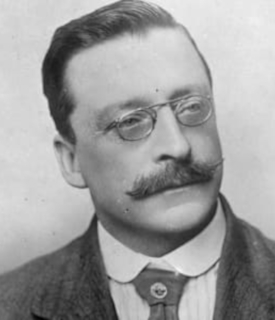
Birth of Arthur Griffith, Founder of Sinn Féin

arthur-griffith

Arthur Joseph Griffith, writer, newspaper editor and politician who founded the political party Sinn Féin, is born in Dublin on March 31, 1871. He leads the Irish delegation at the negotiations that produce the 1921 Anglo-Irish Treaty and serves as President of Dáil Éireann from January 1922 until his death in August 1922.

Griffith, a Roman Catholic, is educated by the Irish Christian Brothers. He works for a time as a printer before joining the Gaelic League, which is aimed at promoting the restoration of the Irish language.

After a short spell in South Africa, Griffith founds and edits the Irish nationalist newspaper The United Irishman in 1899. In 1904, he writes The Resurrection of Hungary: A Parallel for Ireland, which advocates the withdrawal of Irish members from the Parliament of the United Kingdom and the setting up of the institutions of government at home, a policy that becomes known as Sinn Féin (ourselves). On November 28, 1905, he presents “The Sinn Féin Policy” at the first annual Convention of the National Council. The occasion is marked as the founding date of the Sinn Féin party. Although the organization is still small at the time, Griffith takes over as president of Sinn Féin in 1911.

Griffith is arrested following the Easter Rising of 1916, despite not having taken any part in it. On his release, he works to build up Sinn Féin, which wins a string of by-election victories. At the party’s Ardfheis (annual convention) in October 1917, Sinn Féin becomes an unambiguously republican party, and Griffith resigns the presidency in favour of the 1916 leader Éamon de Valera, becoming vice-president instead. Griffith is elected as a member of parliament (MP) in June 1918, and is re-elected in the 1918 general election, when Sinn Féin wins a huge electoral victory over the Irish Parliamentary Party and refusing to take their seats at Westminster, set up their own constituent assembly, Dáil Éireann.

In the Dáil, Griffith serves as Minister for Home Affairs from 1919 to 1921, and Minister for Foreign Affairs from 1921 to 1922. In September 1921, he is appointed chairman of the Irish delegation to negotiate a treaty with the British government. After months of negotiations, he and the other four delegates sign the Anglo-Irish Treaty, which creates the Irish Free State, but not as a republic. This leads to a split in the Dáil. After the Treaty is narrowly approved by the Dáil, de Valera resigns as president and Griffith is elected in his place. The split leads to the Irish Civil War.

Griffith enters St. Vincent’s Nursing Home, Leeson Street, Dublin, during the first week of August 1922, following an acute attack of tonsillitis. He is confined to his room by his doctors, who had observed signs of what they thought might be a subarachnoid hemorrhage. It is difficult to keep him quiet and he resumes his daily work in the government building. When about to leave for his office shortly before 10:00 AM on August 12, 1922, he pauses to retie his shoelace and falls down unconscious. He regains consciousness but collapses again with blood coming from his mouth. Three doctors render assistance, but to no avail. Father John Lee of the Marist Fathers administers extreme unction, and Griffith expires as the priest recites the concluding prayer. The cause of death, cerebral hemorrhage, is also reported as being due to heart failure. He dies at the age of 51, ten days before Michael Collins‘ assassination in County Cork and two months after the outbreak of the Irish Civil War. He is buried in Glasnevin Cemetery four days later.


Leave a comment

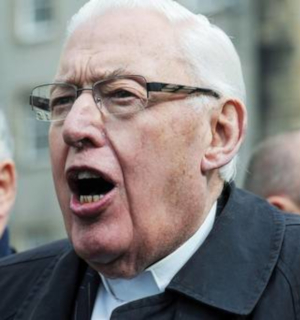
Ian Paisley’s Retirement from the Power-Sharing Assembly

ian-paisley

On March 23, 2011, Ian Paisley calls for a new era of sharing and reconciliation in an emotional farewell at his final sitting of the power-sharing Assembly he helped to create at Stormont. Dr. Paisley continues his political career in the House of Lords.

Protestant and Catholic leaders in Northern Ireland‘s unity government celebrate their first full four-year term in power and lauded Paisley, the unlikely peacemaker who made it possible, on his effective retirement day.

Paisley, a stern anti-Catholic evangelist who spent decades rallying pro-British Protestants against compromise, stuns the world in 2007 by agreeing to forge a coalition alongside senior Irish Republican Army (IRA) veterans. Their polar-opposite combination governs Northern Ireland with surprising harmony for the four years leading up to his retirement.

The Northern Ireland Assembly that elects the administration is dissolved on March 14, 2011, in preparation for a May 5 election in the British territory. The 84-year-old Paisley makes his last debate in an elected chamber on March 6, 2011, noting that this local government is not ending in chaos and acrimony, as 1999-2002 attempts at power-sharing repeatedly had done.

At this point, Paisley has already stepped down as a member of the British and European parliaments and as leader of the Democratic Unionists, a party of hard-line Protestant protesters that he founded in 1970 and watched grow over the previous decade into the most popular in Northern Ireland.

Those lauding him include Peter Robinson, who succeeded him in 2008 as leader of both the government and the Democratic Unionists and Sinn Féin‘s Martin McGuinness, the senior Catholic politician who spends decades as a commander of Paisley’s archenemy, the IRA.

The IRA kills nearly 1,800 people in a failed 1970-1997 effort to force Northern Ireland out of the United Kingdom. Northern Ireland remains part of the United Kingdom when the overwhelmingly Catholic rest of Ireland gains its independence in 1922. The outlawed IRA formally renounces violence and disarms in 2005, clearing the way for its allied Sinn Féin party to recognize the legal authority of Northern Ireland and its police.

Still, few observers expected Paisley to agree to a pact so quickly after the IRA-Sinn Féin peace moves or to get along so warmly with McGuinness during their year in partnership.

McGuinness, whose organization once considered Paisley a prime target for assassination, addressing his remarks to the stooped, silver-haired Paisley across the chamber, notes that Ulster wits had christened the two of them “the Chuckle Brothers.” He adds, “And I would like to think that we showed leadership. I think my relationship with him will undoubtedly go down in the history books.”

(From: “Northern Ireland power-sharing marks 1st full term,” the Associated Press and CTV News, March 23, 2011)


Leave a comment

The Milltown Cemetery Attack

milltown-cemetery-attack

The Milltown Cemetery attack, also known as the Milltown Cemetery killings or the Milltown Massacre, takes place on March 16, 1988 at Milltown Cemetery in Belfast, Northern Ireland.

On March 6, 1988, Provisional Irish Republican Army members Daniel McCann, Seán Savage and Mairéad Farrell are shot dead by the Special Air Service (SAS) in Gibraltar, in Operation Flavius. The three were allegedly preparing a bomb attack on British military personnel there, but their deaths outrage republicans as the three are unarmed and shot without warning. Their bodies arrive in Belfast on March 14 and are taken to their family homes.

The “Gilbraltar Three” are scheduled to be buried in the republican plot at Milltown Cemetery on March 16. For years, republicans had complained about heavy-handed policing of IRA funerals, which had led to violence. In a change from normal procedure, the security forces agree to stay away from the funeral in exchange for guarantees that there will be no three-volley salute by IRA gunmen. The British Army and Royal Ulster Constabulary (RUC) would instead keep watch from the sidelines. This decision is not made public.

Present at the funeral are thousands of mourners and top members of the IRA and Sinn Féin, including Sinn Féin leader Gerry Adams and Martin McGuinness. Two RUC helicopters hover overhead.

Michael Stone, a loyalist and member of the Ulster Defence Association (UDA), learns there are to be no police or armed IRA members at the cemetery. As the third coffin is about to be lowered into the ground, Stone throws two grenades, which have a seven-second delay, toward the republican plot and begins shooting. The first grenade explodes near the crowd and about 20 yards from the grave. There is panic and confusion, and people dive for cover behind gravestones.

As Stone runs towards the nearby motorway, a large crowd begins chasing him and he continues shooting and throwing grenades. Some of the crowd catches Stone and begin beating him, but he is rescued by the police and arrested. Three people are killed and more than 60 wounded in the attack. The “unprecedented, one-man attack” is filmed by television news crews and causes shock around the world.

Three days later, two British Army corporals drive into the funeral procession of one of the Milltown victims. The non-uniformed soldiers are dragged from their car by an angry crowd, beaten and then shot dead by the IRA, in what becomes known as the corporals killings.

In March 1989, Stone is convicted for the three murders at Milltown, for three paramilitary murders before, and for other offences, receiving sentences totaling 682 years. He is released after serving 13 years as a result of the Good Friday Agreement.

(Pictured: The funeral at Milltown Cemetery in Belfast moments before the attack by Michael Stone)


Leave a comment

Ahern & Blair Push for Implementation of the Good Friday Agreement

ahern-and-blair-1998

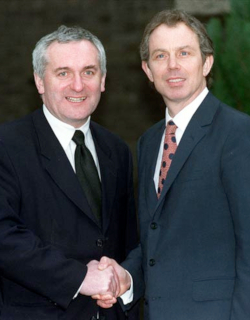
At an informal European Union summit near Bonn on February 26, 1999, Taoiseach Bertie Ahern and British Prime Minister Tony Blair agree to push for implementation of the Good Friday Agreement by the March 10 deadline.

As EU delegates discuss the Union’s budget and Europe‘s farming subsidies, the two prime ministers vow to battle on with the peace deal’s outstanding problems.

“We’re very clear on what we have to do in the Good Friday agreement … we have just got to keep pushing the thing forward as well as we possibly can,” says Blair.

Both Ahern and Blair say the way forward on the outstanding deadlocked issue of paramilitary disarmament is through the official decommissioning commission. Chaired by former Canadian General John de Chastelain, the international commission is working to take arms out of the province’s political arena.

The republican party Sinn Féin insists it is fully cooperating with the commission, which is implementing the final deadline for the handover of arms in May 2000. But some Ulster Unionists oppose further peace moves because of the Irish Republican Army‘s (IRA) failure to begin disarming.

According to Ahern and Blair, the following few weeks will be a key time to try and finalise disarmament issues.

“During the month of March … we can conclude the central aspects,” says Blair.

However, in a separate development on February 26, the chairman of the IRA’s political wing, Sinn Féin’s Mitchel McLaughlin, warns that pressure on disarmament could cause irreparable damage to the fragile peace process. He adds that disarmament should not become a litmus test for progress.

“Those who are now demanding prior decommissioning before we move to setting up the executive are reneging on the Good Friday Agreement,” says McLaughlin in an interview with BBC Radio.

(From BBC News Online Network, Friday, February 26, 1999 | Pictured: Bertie Ahern with Tony Blair at the signing of the Good Friday Agreement in April 1998)


Leave a comment

Cumann na mBan Rejects Anglo-Irish Treaty

cumann-na-mban

Cumann na mBan (Irishwomen’s Council), at the behest of Constance Markievicz, votes overwhelmingly to reject the Anglo-Irish Treaty on February 5, 1922. During the Irish Civil War, over 400 members of the movement are arrested by the Irish Free State Government.

Cumann na mBan is an Irish republican women’s paramilitary organisation formed in Dublin on April 2, 1914, merging with and dissolving Inghinidhe na hÉireann and, in 1916, it becomes an auxiliary of the Irish Volunteers. Although it is otherwise an independent organisation, its executive is subordinate to that of the Volunteers.

On January 7, 1922 the Anglo-Irish Treaty is approved by the Second Dáil by a close vote of 64–57. On February 5 a convention is held to discuss this, and 419 Cumann na mBan members vote against as opposed to 63 in favour. In the ensuing Civil War, its members largely support the anti-Treaty Republican forces. Over 400 of its members are imprisoned by the forces of the Provisional government which becomes in December 1922 the Irish Free State. Some of those who support the Treaty change the name of their branches to Cumann na Saoirse, while others retain their name but give allegiance to the Free State Government.

Cumann na mBan continues to exist after the Treaty, forming (alongside Sinn Féin, the Irish Republican Army, Fianna Éireann and other groups) part of the Irish republican milieu. The government of the Irish Free State bans the organisation in January 1923 and opens up Kilmainham Gaol as a detention prison for suspect women.

Its membership strength is adversely affected by the many splits in Irish republicanism, with sections of the membership resigning to join Fianna Fáil, Clann na Poblachta and other parties. Máire Comerford, a lifelong member from 1914, reflects in later years that it became a “greatly weakened organisation” that “gathered speed downhill” from the founding of Fianna Fáil in 1926.


Leave a comment

Birth of Kuno Meyer, Scholar of Celtic Philology

kuno-meyer

Kuno Meyer, German scholar distinguished in the field of Celtic philology and literature, is born in Hamburg, Germany on December 20, 1858. He was considered first and foremost a lexicographer among Celtic scholars but is known by the general public in Ireland rather as the man who introduced them to Selections from Ancient Irish Poetry (1911). His brother was the distinguished classical scholar, Eduard Meyer.

Meyer studies in Hamburg at the Gelehrtenschule des Johanneums. He spends two years in Edinburgh, Scotland, as a teenager (1874–1876) learning English. From 1879, he attends Leipzig University, where he is taught Celtic scholarship by Ernst Windisch. He receives his doctorate for his thesis Eine irische Version der Alexandersage, an Irish version of the Romance of Alexander, in 1884.

Meyer then takes up the post of lecturer in Teutonic languages at the new University College, Liverpool, the precursor of the University of Liverpool, which is established three years earlier.

Meyer continues to publish on Old Irish and more general topics on the Celtic languages, as well as producing textbooks for German. In 1896, he founds and edits, jointly with Ludwig Christian Stern, the prestigious Zeitschrift für celtische Philologie. He also cofounds Archiv für celtische Lexicographie in 1898 with Whitley Stokes, producing three volumes from 1900 to 1907.

In 1903, Meyer founds the School of Irish Learning in Dublin, and the next year creates its journal Ériu of which he is the editor. Also in 1904, he becomes Todd Professor in the Celtic Languages at the Royal Irish Academy. In October 1911, he follows Heinrich Zimmer as Professor of Celtic Philology at Friedrich Wilhelm University in Berlin. The following year, a volume of Miscellany is presented to him by pupils and friends in honour of his election, and he is made a freeman of both Dublin and Cork.

At the outbreak of World War I, Meyer leaves Europe for the United States, where he lectures at Columbia University, University of Illinois at Urbana-Champaign, and elsewhere. A pro-German speech he gives in December 1914 to Clan na Gael on Long Island causes outrage in Britain and some factions among the Irish, and as a result, he is removed from the roll of freemen in Dublin and Cork and from his Honorary Professorship of Celtic at Liverpool. He also resigns as Director of the School of Irish Learning and editor of Ériu. Harvard University also had extended an invitation to Meyer to lecture on campus, but it subsequently cancels the invitation in the fall of 1914 on account of Meyer’s propagandist activity.

Meyer nevertheless accepts candidacy for the post of exchange professor at Harvard, at the recommendation of German professors there. However, when the April 1915 issue of The Harvard Advocate awards first prize to an anti-German satirical poem “Gott mit Uns” written by an undergraduate, Meyer sends the university and the press a letter of protest, rebuking the faculty members who served as judges for failure to exercise neutrality. Meyer also declines his candidacy from the exchange professorship in the letter. In a reply, President Abbott Lawrence Lowell says, in explaining Harvard’s policy, that freedom of speech includes pro-German and pro-Allied voices alike.

Meyer is injured in a railway collision in 1915 and meets 27-year-old Florence Lewis while he is recovering in a California hospital. They marry shortly afterwards. He returns to Germany in 1917 and dies in Leipzig on October 11, 1919.

Posthumously, in 1920, Meyer’s name is restored, both by Dublin and Cork, in their Rolls of Honorary Freemen. The restoration occurs on April 19, 1920, in Dublin, where Sinn Féin had won control of the City Council three months earlier, rescinding the decision taken in 1915 by the Irish Parliamentary Party. The restoration in Cork follows on May 14, 1920.


Leave a comment

The Kilmichael Ambush

SAMSUNG DIGITAL CAMERA

The Kilmichael Ambush is carried out near the village of Kilmichael in County Cork on November 28, 1920, by the Irish Republican Army (IRA) during the Irish War of Independence. Thirty-six local IRA volunteers commanded by Tom Barry kill seventeen members of the Royal Irish Constabulary‘s Auxiliary Division. The Kilmichael ambush is politically as well as militarily significant. It occurs one week after Bloody Sunday, marking an escalation in the IRA’s campaign.

As dusk falls the ambush takes place on a road at Dus a’ Bharraigh in the townland of Shanacashel, Kilmichael Parish, near Macroom.

Just before the Auxiliaries in two lorries come into view, two armed IRA volunteers, responding late to Barry’s mobilisation order, drive unwittingly into the ambush position in a horse and sidecar, almost shielding the British forces behind them. Barry manages to avert disaster by directing the car up a side road and out of the way. The Auxiliaries’ first lorry is persuaded to slow down by the sight of Barry placing himself on the road in front of a concealed Command Post, wearing an IRA officer’s tunic given to him by Paddy O’Brien. Concealed on the south side of the road are six riflemen, whose instructions are to prevent the enemy taking up positions on that side. Another six riflemen are positioned some way off as an insurance group, should a third Auxiliary lorry appear.

The first lorry, containing nine Auxiliaries, slows almost to a halt close to their intended ambush position, at which point Barry gives the order to fire. He throws a Mills bomb that explodes in the open cab of the first lorry. A savage close-quarter fight ensues. According to Barry’s account, some of the British are killed using rifle butts and bayonets in a brutal and bloody encounter. This part of the engagement is over relatively quickly with all nine Auxiliaries dead or dying.

While this part of the fight is going on, a second lorry also containing nine Auxiliaries has driven into the ambush position. This lorry’s occupants, at a more advantageous position than Auxiliaries in the first lorry because of their distance from the ambushing group, dismount to the road and exchange fire with the IRA, killing Michael McCarthy. Barry then brings the Command Post soldiers who had completed the attack on the first lorry to bear on this group. Barry claimed these Auxiliaries called out a surrender and that some dropped their rifles but opened fire again with revolvers when three IRA men emerged from cover, killing volunteer Jim O’Sullivan instantly and mortally wounding Pat Deasy. Barry then orders his men to open fire and not stop until told to do so. Barry ignores a subsequent attempt by remaining Auxiliaries to surrender and keeps his men firing until he believes all the Auxiliaries are dead.

At the conclusion of the fight, it is observed that two IRA volunteers, Michael McCarthy and Jim O’Sullivan, are dead and that Pat Deasy, brother of Liam Deasy, is mortally wounded. Although the IRA fighters think they had killed all of the Auxiliaries, two actually survive, one very badly injured and another who escapes and is later captured and shot dead. Among the 16 British dead on the road at Kilmichael is Francis Crake, commander of the Auxiliaries in Macroom, probably killed at the start of the action by Barry’s Mills bomb.

Many IRA volunteers are deeply shaken by the severity of the action, referred to by Barry as “the bloodiest in Ireland,” and some are physically sick. Barry attempts to restore discipline by making them form-up and perform drill, before marching away. Barry himself collapses with severe chest pains on December 3 and is secretly hospitalized in Cork. It is possible that the ongoing stress of being on the run and commander of the flying column, along with a poor diet as well as the intense combat at Kilmichael contribute to his illness, diagnosed as heart displacement.

The political fallout from the Kilmichael ambush outweighs its military significance. While the British forces in Ireland can easily absorb 18 casualties, the fact that the IRA had been able to wipe out a whole patrol of elite Auxiliaries is for them deeply shocking. The British forces in the West Cork area take their revenge on the local population by burning several houses, shops and barns in Kilmichael, Johnstown and Inchigeelagh, including all of the houses around the ambush site. On December 3, three IRA volunteers are arrested by the British Essex Regiment in Bandon, beaten and killed, and their bodies dumped on the roadside.

For the British government, the action at Kilmichael is an indication that the violence in Ireland is escalating. Shortly after the ambush, barriers are placed on either end of Downing Street to protect the Prime Minister‘s office from IRA attacks. On December 10, as a result of Kilmichael, martial law is declared for the counties of Cork, Kerry, Limerick and Tipperary.

The British military now has the power to execute anyone found carrying arms and ammunition, to search houses, impose curfews, try suspects in military rather than civilian courts and to intern suspects without trial. On December 11, in reprisal for Kilmichael and other IRA actions, the centre of Cork city is burned by Auxiliaries, British soldiers and Black and Tans, and two IRA men are assassinated in their beds. In separate proclamations shortly afterwards, the authorities sanction “official reprisals” against suspected Sinn Féin sympathisers and the use of hostages in military convoys to deter ambushes.

(Pictured: The Kilmichael Ambush Monument at the ambush site)


Leave a comment

Birth of Hugh Leonard, Dramatist, Writer & Essayist

hugh-leonard

Hugh Leonard, Irish dramatist, television writer and essayist, is born in Dublin on November 9, 1926. In a career that spans 50 years, he writes nearly 30 full-length plays, 10 one-act plays, three volumes of essays, two autobiographies, three novels and numerous screenplays and teleplays, as well as writing a regular newspaper column.

After birth, Leonard is put up for adoption. Raised in Dalkey, a suburb of Dublin, by Nicholas and Margaret Keyes, he changes his name to John Keyes Byrne. For the rest of his life, despite the pen name of “Hugh Leonard” which he later adopts and becomes well known by, he invites close friends to call him “Jack.”

Leonard is educated at the Harold Boys’ National School, Dalkey, and Presentation College, Glasthule, winning a scholarship to the latter. He works as a civil servant for fourteen years. During that time, he both acts in and writes plays for community theatre groups. His first play to be professionally produced is The Big Birthday, which is mounted by the Abbey Theatre in Dublin in 1956. His career with the Abbey Theatre continues until 1994. After that his plays are produced regularly by Dublin’s theatres.

Leonard moves to Manchester for a while, working for Granada Television before returning to Ireland in 1970. There he settles in Dalkey.

During the 1960s and 1970s, Leonard is the first major Irish writer to establish a reputation in television, writing extensively for television including original plays, comedies, thrillers and adaptations of classic novels for British television. He is commissioned by RTÉ to write Insurrection, a 50th anniversary dramatic reconstruction of the Easter Rising of 1916. His Silent Song, adapted for the BBC from a short story by Frank O’Connor, wins the Prix Italia in 1967. He writes the script for the RTÉ adaptation of Strumpet City by James Plunkett.

Three of Leonard’s plays have been presented on Broadway: The Au Pair Man (1973), which stars Charles Durning and Julie Harris, Da (1978) and A Life (1980). Of these, Da, which originates off-off-Broadway at the Hudson Guild theatre before transferring to the Morosco Theatre, is the most successful, running for 20 months and 697 performances, then touring the United States for ten months. It earns Leonard both a Tony Award and a Drama Desk Award for Best Play. It is made into a film in 1988, starring Martin Sheen and Barnard Hughes, who reprises his Tony Award-winning Broadway performance.

Leonard writes two volumes of autobiography, Home Before Night (1979) and Out After Dark (1989). Some of his essays and journalism are collected in Leonard’s Last Book (1978) and A Peculiar People and Other Foibles (1979). In 1992 the Selected Plays of Hugh Leonard is published. Until 2006 he writes a humorous weekly column, “The Curmudgeon,” for the Irish Sunday Independent newspaper. He has a passion for cats and restaurants, and an abhorrence of broadcaster Gay Byrne.

Even after retiring as a Sunday Independent columnist, Leonard displays an acerbic humour. In an interview with Brendan O’Connor, he is asked if it galls him that Gay Byrne is now writing his old column. His reply is, “It would gall me more if he was any good at it.” He is a patron of the Dublin Theatre Festival.

In 1994, Leonard appears in a televised interview with Gerry Adams, president of Sinn Féin, an Irish political party associated with the Provisional Irish Republican Army. He has long been an opponent of political violence and a critic of the IRA. However, on the show and afterwards he is criticised for being “sanctimonious and theatrical” towards Adams. At one point he refers to Sinn Féin as “dogs.”

Hugh Leonard – Odd Man In, a film on his life and work is shown on RTÉ in March 2009. Leonard’s final play, Magicality, is not performed during his lifetime. A rehearsed reading of the second act is staged at the Dalkey Castle and Heritage Centre in June 2012.

Hugh Leonard dies after a long illness on February 12, 2009, in his hometown of Dalkey at the age of 82, leaving €1.5 million in his will.


Leave a comment

Birth of Albert Reynolds, Taoiseach & Fianna Fáil Leader

albert-reynolds

Albert Reynolds, politician and businessman, is born in Rooskey, County Roscommon on November 3, 1932. He serves as a Teachta Dála (TD) from 1977 to 2002, Minister for Posts and Telegraphs from 1979 to 1981, Minister for Transport from 1980 to 1981, Minister for Industry and Energy from March 1982 to December 1982, Minister for Industry and Commerce from 1987 to 1988, Minister for Finance from 1988 to 1991, Leader of Fianna Fáil from 1992 to 1994 and as Taoiseach from 1992 to 1994.

Reynolds is educated at Summerhill College in County Sligo and works for a state transport company before succeeding at a variety of entrepreneurial ventures, including promoting dances and owning ballrooms, a pet-food factory, and newspapers. In 1974 he is elected to the Longford County Council as a member of Fianna Fáil. He enters Dáil Éireann, lower house of the Oireachtas, the Irish parliament, in 1977 as a member representing the Longford-Westmeath parliamentary constituency and becomes Minister for Posts and Telegraphs in the Fianna Fáil government of Charles Haughey (1979–81). He is subsequently Minister of Industry and Commerce (1987–88) and Minister for Finance (1988–91) in Haughey’s third and fourth governments. He breaks with Haughey in December 1991 and succeeds him as leader of Fianna Fáil and as Taoiseach in February 1992.

The Fianna Fáil–Progressive Democrats coalition that Reynolds inherits breaks up in November 1992 but, after the general election later that month, he surprises many observers by forming a new coalition government with the Labour Party in January 1993. He plays a significant part in bringing about a ceasefire between the Irish Republican Army (IRA) and unionist paramilitary groups in Northern Ireland in 1994, but he is less effective in maintaining his governing coalition. When this government founders in November 1994, he resigns as Taoiseach and as leader of Fianna Fáil, though he remains acting prime minister until a new government is formed the following month. He unsuccessfully seeks his party’s nomination as a candidate for the presidency of Ireland in 1997. He retires from public life in 2002.

In December 2013, it is revealed by his son that Reynolds is in the final stages of Alzheimer’s disease. Albert Reynolds dies on August 21, 2014. The last politician to visit him is John Major. His funeral is held at Church of the Sacred Heart, in Donnybrook on August 25, 2014. Attendees include President Michael D. Higgins, Taoiseach Enda Kenny, former British Prime Minister John Major, former Social Democratic and Labour Party (SDLP) leader and Nobel Prize winner John Hume, Sinn Féin President Gerry Adams, Secretary of State for Northern Ireland Theresa Villiers, former President of Ireland Mary McAleese, former Taoiseach Liam Cosgrave, Archbishop of Dublin Diarmuid Martin and the Lord Mayor of Dublin Christy Burke. An unexpected visitor from overseas is the frail but vigorous Jean Kennedy Smith, former United States Ambassador to Ireland, who is the last surviving sibling of John Fitzgerald Kennedy. Reynolds is buried at Shanganagh Cemetery with full military honours.