seamus dubhghaill

Promoting Irish Culture and History from Little Rock, Arkansas, USA


Leave a comment

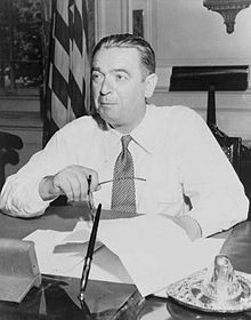
Death of Al Smith, Irish American Four Term Governor of New York

Alfred Emanuel Smith, Irish American politician who serves four terms as the 42nd governor of New York and is the Democratic Party‘s presidential nominee in 1928 United States presidential election, dies on October 4, 1944, in New York City.

Smith is born at 174 South Street, New York City, on December 30, 1873, and raised in the Fourth Ward on the Lower East Side of Manhattan. He resides there for his entire life. His mother, Catherine (née Mulvihill), is the daughter of Maria Marsh and Thomas Mulvihill, who are immigrants from County Westmeath, Ireland. His father, baptised Joseph Alfred Smith in 1839, is a Civil War–veteran and the son of Emanuel Smith, an Italian marinaro.

Although Smith remains personally untarnished by corruption, he — like many other New York Democrats — is linked to the notorious Tammany Hall political machine that controls New York City politics during his era. He serves in the New York State Assembly from 1904 to 1915 and holds the position of Speaker of the Assembly in 1913. He also serves as sheriff of New York County from 1916 to 1917. He is first elected governor of New York in 1918, loses his 1920 bid for re-election, and is elected governor again in 1922, 1924, and 1926. He is the foremost urban leader of the efficiency movement in the United States and is noted for achieving a wide range of reforms as the New York governor in the 1920s.

Smith is the first Roman Catholic to be nominated for president of the United States by a major party. His 1928 presidential candidacy mobilizes both Catholic and anti-Catholic voters. Many Protestants, including German American Lutherans and Southern Baptists, fear his candidacy, believing that the Pope in Rome would dictate his policies. He is also a committed “wet” (i.e., an opponent of Prohibition in the United States) and as New York governor, he repeals the state’s prohibition law. As a “wet,” he attracts voters who want beer, wine and liquor without having to deal with criminal bootleggers, along with voters who are outraged that new criminal gangs have taken over the streets in most large and medium-sized cities. Incumbent Republican Secretary of Commerce Herbert Hoover is aided by national prosperity, the absence of American involvement in war and anti-Catholic bigotry, and he defeats Smith in a landslide in 1928.

Smith then enters business in New York City and becomes involved in the construction and promotion of the Empire State Building. He seeks the 1932 Democratic presidential nomination but is defeated by Franklin D. Roosevelt, his former ally and successor as governor of New York. During the Roosevelt presidency, he becomes an increasingly vocal opponent of Roosevelt’s New Deal.

Smith is an early and vocal critic of the Nazi regime in Germany. He supports the Anti-Nazi boycott of 1933 and addresses a mass-meeting at Madison Square Garden against Nazism in March 1933. His speech is included in the 1934 anthology Nazism: An Assault on Civilization. In 1938, he takes to the airwaves to denounce Nazi brutality in the wake of Kristallnacht. His words are published in The New York Times article “Text of the Catholic Protest Broadcast” of November 17, 1938.

Like most New York City businessmen, Smith enthusiastically supports American military involvement in World War II. Although he is not asked by Roosevelt to play any role in the war effort, he is an active and vocal proponent of FDR’s attempts to amend the Neutrality Act in order to allow “Cash and Carry” sales of war equipment to be made to the British. He speaks on behalf of the policy in October 1939, to which FDR responds directly: “Very many thanks. You were grand.”

In 1939, Smith is appointed a Papal Chamberlain of the Sword and Cape, one of the highest honors which the Papacy bestows on a layman.

Smith dies of a heart attack at the age of 70 at the Rockefeller Institute Hospital on October 4, 1944. He had been broken-hearted over the death of his wife from cancer five months earlier, on May 4, 1944. He is interred at Calvary Cemetery, a Catholic cemetery in Maspeth and Woodside, Queens, New York City.

Smith is memorialized by The Alfred E. Smith Foundation, founded by Cardinal Francis Spellman. Today it is a significant fund raiser for charity. Each election year, presidential candidates are expected to attend, make witty remarks, and profound commentary about Smith. In 2008, then candidate Barack Obama speaks eloquently of “a man who fought for many years to give Americans nothing more than fair shake and a chance to succeed. He touched the lives of millions as a result.”

(Pictured: Official Gubernatorial portrait of Alfred E. “Al” Smith by Douglas Volk)

Leave a comment

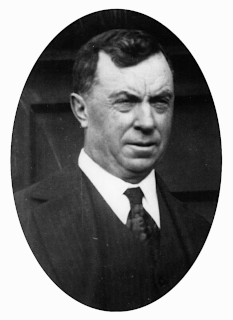
Birth of Daniel F. Cohalan, Irish American Lawyer & Politician

Daniel Florence Cohalan, American lawyer and politician of Irish descent, is born December 21, 1867, in Middletown, Orange County, New York, the eldest of five sons of Timothy E. Cohalan and Ellen Cohalan (née O’Leary), both Irish immigrants.

Cohalan graduates from Manhattan College in 1885, takes a master’s degree in 1894, and is given an honorary LL.D. in 1911. He is admitted to the bar in 1888, and practices law in New York City. In September 1889, he removes to the Bronx, practices law there, and enters politics, joining Tammany Hall, becoming an adviser to party boss Charles F. Murphy and later to John F. Curry. He is Grand Sachem of the Tammany Society from 1908 to 1911.

Cohalan is active in Democratic Party politics by 1900, drafting state party platforms and serving as a delegate to the national conventions in 1904 and 1908.

On May 18, 1911, Cohalan is appointed by Gov. John Alden Dix to the New York Supreme Court, to fill the vacancy caused by the election of James Aloysius O’Gorman as U.S. Senator from New York. In November 1911, he is elected to succeed himself. On December 28, 1923, he tenders his resignation, to become effective on January 12, 1924, claiming that the annual salary of $17,500 is not enough to provide for his large family.

Cohalan is a close associate of Irish revolutionary leader John Devoy and is influential in many Irish American societies including Clan na Gael. He helps to form the Sinn Féin League in 1907 and is a key organiser of the Irish Race Convention and the Friends of Irish Freedom (FOIF) on March 4-5, 1916. He is involved with the financing and planning of the Easter Rising in Dublin and is instrumental in sending Roger Casement to Germany in 1914. He is Chairman of the Irish Race Convention held in Philadelphia on February 22-23, 1919, and active in the Friends of Irish Freedom (1916–34).

When the United States enters World War I, Cohalan’s earlier work to obtain German assistance for Ireland becomes a liability, but he urges Irish Americans to support the war effort and to insist that self-determination for Ireland be included among the war aims. He opposes the peace treaty and the League of Nations and leads an Irish American delegation to the United States Senate Committee on Foreign Relations hearings, contributing to the defeat of the treaty in the Senate.

Cohalan strongly opposes President Woodrow Wilson‘s proposals for the League of Nations, on the basis that the Irish Republic had been denied a policy of self-determination at the Paris Peace Conference in 1919. In 1920, he works for the nomination of Hiram W. Johnson as the Republican Party candidate for president. His quarrels with Franklin D. Roosevelt begin in 1910, and he fights Roosevelt’s nomination for president in 1932 and 1936. He breaks with both Éamon de Valera and Irish American leader Joseph McGarrity in late 1919 on Irish American political direction.

In the aftermath of the Anglo–Irish Treaty, Cohalan and the FOIF back Arthur Griffith, Michael Collins and the Irish Free State. He visits Ireland in 1923 and supports William T. Cosgrave in the election of that year.

Cohalan dies at his home in Manhattan, New York, on November 12, 1946, and is buried on November 15 at the Calvary Cemetery in Woodside, Queens, New York. The Daniel F. Cohalan papers are in the possession of the American Irish Historical Society, New York.

State Senator John P. Cohalan (1873–1950) is one of Cohalan’s eleven siblings, and church historian Monsignor Florence Daniel Cohalan (1908–2001) is one of his nine children.


1 Comment

Birth of Patrick Ford, Irish American Journalist & Land Reformer

Patrick Ford, Irish American journalist, Georgist land reformer and fund-raiser for Irish causes, is born in Galway, County Galway, on April 12, 1837.

Ford is the son of Edward Ford (1805-1880) and Anne Ford (1815-1893). He emigrates with his parents to Boston, Massachusetts, in 1845, never returning to Ireland. Although he devotes his life to Irish causes, he writes in The Irish World in 1886 that “I might as well have been born in Boston. I know nothing of England. I brought nothing with me from Ireland—nothing tangible to make me what I am. I had consciously at least, only what I found and grew up with in here.”

Ford is educated in Boston’s public schools and the Latin school of the parish of St. Mary in the North End. He leaves school at the age of thirteen and two years later is working as a printer’s devil for William Lloyd Garrison‘s abolitionist newspaper The Liberator. He begins writing for Boston newspapers in 1855 and by 1861 is editor and publisher of the Boston Tribune, also known as the Boston Sunday Tribune or Boston Sunday Times. He is an abolitionist and pro-union.

During the American Civil War, Ford serves in the Union Army with his father and brother. He serves in the 9th Massachusetts Infantry Regiment and sees action in the Northern Virginia campaign, including the Battle of Fredericksburg on December 13, 1862.

After the Civil War, Ford spends four years in Charleston, South Carolina, editing the South Carolina Leader which promotes the welfare of newly freed slaves. He later edits the Irish American Charleston Gazette. He settles in New York City in 1870 and founds the populist The Irish World, which promotes Irish and Catholic interests and becomes the principal newspaper of Irish America. It promises “more reading material than any other paper in America” and outsells John Boyle O’Reilly‘s Boston Pilot. In 1878, he re-titles his newspaper The Irish World and American Industrial Liberator. During the early 1880s, he promotes the writings of land reformer Henry George in his paper.

The American economic depression of 1873 convinces Ford that the Irish rural poor and the American urban poor share the same plight. He believes that the Homestead Act of 1862 is exploited by big business, especially the railroads, and by speculators who leave the poor without access to the western land meant for settlement. He calls for land reform with the belief that land monopoly is the cause of poverty and that a single tax based on land valuation is the solution. In the mid–1870s he leaves the Democratic Party. Critical of Tammany corruption and attracted to the fiscal policies of the Greenback Party, he is a member of the party’s New York State central committee as early as 1876 and backs the Greenback presidential candidates Peter Cooper and James B. Weaver in 1876 and 1880. Even the Greenbacks fail to offer the land reforms envisaged by Ford, so he forms the short-lived National Cooperative Democracy Party in 1879.

In 1880, Ford begins to solicit donations through The Irish World to support Land League activities in Ireland. Funds received are tabulated weekly under the heading “Land League Fund.” Between January and September 1881 alone, more than $100,000 is collected in donations. British Prime Minister William Ewart Gladstone later states that without the funds from The Irish World, “there would have been no agitation in Ireland.”

In the 1884 and 1888 elections, Ford turns to the Republican Party, encouraging Irish American voters to abandon their traditional loyalty to the Democrats for the Republican candidate James G. Blaine, whom he promotes in The Irish World as supportive of labour and of Ireland. The Republican patronage of the financially troubled The Irish World is a factor in the endorsement, but he believes Blaine’s promise to introduce high trade tariffs will protect American labour interests.

After the Irish Parliamentary Party split in 1891, Ford supports the Parnellite faction of John Redmond and endorses the terms of the Third Home Rule Bill of 1912.

Ford dies on September 23, 1913, at his home at 350 Clermont Street, Brooklyn. After an impressive funeral, he is buried in Brooklyn’s Holy Cross Cemetery.

In 1863, Ford marries Odele McDonald, who predeceases him. They have eleven children, three daughters and eight sons. At the time of his death, his son Patrick is managing editor of The Irish World, and his brother Augustine is business manager and publisher. He appears to have destroyed his personal papers. The files of The Irish World are the best record of his life and work.


Leave a comment

Death of Michael Corcoran, General in the Union Army

Michael Corcoran, Irish American general in the Union Army during the American Civil War and a close confidant of President Abraham Lincoln, dies on December 22, 1863, of a fractured skull after being thrown from a runaway horse.

Corcoran is born in Carrowkeel, near Ballymote, County Sligo, on September 21, 1827. As its colonel, he leads the 69th Infantry Regiment (New York) to Washington, D.C. and is one of the first to serve in the defense of Washington by building Fort Corcoran. He then leads the 69th into action at the First Battle of Bull Run. After promotion to brigadier general, he leaves the 69th and forms the Corcoran Legion, consisting of at least five other New York regiments.

Corcoran is the only child of Thomas Corcoran, an officer in the British Army, and Mary McDonagh. Through his mother, he claims descent from Patrick Sarsfield, hero of the Williamite War in Ireland and leader of the Wild Geese. In 1846 he takes an appointment to the Revenue Police, enforcing the laws and searching for illicit stills and distilling activities in Creeslough, County Donegal. He also joins a guerrilla group called the Ribbonmen.

On August 30, 1849, Corcoran emigrates from Sligo to the United States and settles in New York City where he finds work as a clerk in the tavern owned by John Heaney, whose niece, Elizabeth, he marries in 1854.

Corcoran enlists as a Private in the 69th New York Militia. By 1859 he is appointed colonel of the regiment. The regiment is a state militia unit at the time composed of citizens, not soldiers, and is involved in the maintenance of public order. On October 11, 1860, he refuses to march the regiment on parade for the 19-year-old Prince of Wales, who is visiting New York City at the time, protesting the British imposition of the Irish Famine. He is removed from command and a court martial is pending over that matter when the Civil War begins.

Corcoran also becomes involved in Democratic politics at Tammany Hall. He becomes district leader, a member of the judicial nominations committee, an elected school inspector for his ward, and a member of the Fourteenth Ward General Committee. He is one of the founders of the Fenian Brotherhood in America.

With the outbreak of war, the court martial is dropped and Corcoran is restored to his command because he had been instrumental in bringing other Irish immigrants to the Union cause. He leads the 69th to Washington, D.C. and serves for a while in the Washington defenses building, Fort Corcoran. In July 1861 he leads the regiment into action at the First Battle of Bull Run and is taken prisoner.

While Corcoran is imprisoned, the United States makes threats to execute captured Confederate privateers. Corcoran and several other Union prisoners are selected by lot for execution if the United States carries out its threats against the privateers. This event is known as the Enchantress Affair, but no executions are ever carried out by either side. Corcoran is then offered a parole under the conditions that he does not take up arms against the Confederacy. Intending to resume his place in the Union army upon his release he refuses the offer of parole. He is appointed Brigadier General of volunteers in July and exchanged in August 1862. His role in the Enchantress Affair and his refusal for parole gains him some attention and upon his release he is invited to dinner with President Abraham Lincoln.

In April 1863 Corcoran is involved in an incident that ends with Corcoran shooting and killing Edgar A. Kimball, commander of the 9th New York Volunteer Infantry Regiment. Corcoran attempts to pass through the 9th New York’s area without giving the required password after receiving the challenge from a sentry. When Kimball intervenes on the side of the sentry, Corcoran shoots him. Corcoran is not charged with a crime or reprimanded and continues to serve.

Corcoran returns to the army and sets about recruiting more Irish volunteers. He raises and takes command of what becomes known as the Corcoran Legion. Placed in command of the 1st Division, VII Corps he is engaged in the Battle of Deserted House and takes part in the Battle of Suffolk. In late 1863 he is placed in command of a division in the XXII Corps and returns to serve in the Washington defenses. While riding alone in Fairfax, Virginia he is thrown from a runaway horse and suffers a fractured skull. He dies at the age of 36 at the William Gunnell House on December 22, 1863.

New York City Mayor Michael Bloomberg unveils Ireland’s national monument to the Fighting 69th in Ballymote on August 22, 2006. The monument is sculpted by Philip Flanagan. The inscription around the top of the monument reads “Michael Corcoran 1827–1863” Around the base is inscribed “New York Ballymote Creeslough Bull Run.” Underneath the monument is a piece of steel from the World Trade Center, donated by the family of Michael Lynch, who died in the tower on September 11, 2001. Lynch’s family are also from County Sligo.


Leave a comment

Birth of John Purroy Mitchel, the 95th Mayor of New York City

John Purroy Mitchel, the 95th mayor of New York City (1914-17), is born on July 19, 1879, at Fordham, Bronx, New York City. He is remembered for his short career as leader of reform politics in New York as well as for his early death as a U.S. Army Air Service officer in the last months of World War I.

Mitchel is born to James Mitchel, a New York City fire marshal, and Mary Purroy who works as a schoolteacher until her marriage. His father is Irish, and Presbyterian in faith, the son of the famous Irish nationalist John Mitchel, and a veteran of the Confederate States Army. Two of his uncles were killed fighting for the Confederacy. His maternal grandfather, Venezuelan-born Juan Bautista Purroy, was that country’s consul in New York, which makes Mitchel the first Mayor of New York City of Latino descent. His great-grandfather, José Joaquin de Purroy, was a lawyer from Spain who settled in Venezuela. He graduates from a Catholic secondary school at Fordham Preparatory School in the late 1890s. He obtains his bachelor’s degree from Columbia College in 1899 and graduates from New York Law School in 1902 with honors. He then pursues a career as a private attorney.

In December 1906, Mitchel’s career takes flight when he is hired by family friend and New York City corporation counsel William B. Ellison to investigate the office of John F. Ahearn, borough president of Manhattan, for incompetence, waste and inefficiency. As a result, Ahearn is dismissed as borough president of Manhattan. He begins his career as assistant corporation counsel and then becomes a member of the Commissioners of Accounts, from which he investigates city departments. He gains results and recognition for his thorough and professional investigations into various city departments and high-ranking officials. Along with the help of Henry Bruère and other staff members of the Bureau of Municipal Research, he turns the insignificant Commissioners of Accounts into an administration of importance.

The young Mitchel’s reputation as a reformer garners him the support of the anti-Tammany forces. In 1909, he is elected president of the New York City Board of Aldermen, an organization similar to the current New York City Council. As president of the Board of Aldermen, he is able to enact fiscal reforms. He cuts waste and improves accounting practices. Also, he unsuccessfully fights for a municipal-owned transit system and the city sees him vote against allowing the Interborough Rapid Transit and the Brooklyn Rapid Transit companies permission to extend their existing subway and elevated lines. For a six-week period in 1910 after current Mayor William J. Gaynor is injured by a bullet wound, he serves as acting mayor. His biggest accomplishment during his short tenure is the act of neutrality during a garment industry strike.

As the mayoral election approaches in 1913, the Citizens Municipal Committee of 107 sets out to find a candidate that will give New York “a non-partisan, efficient and progressive government.” They are assisted in this endeavor by the Fusion Executive Committee, led by Joseph M. Price of the City Club of New York. After nine ballots, Mitchel is nominated as a candidate for mayor. During his campaign, he focuses on making City Hall a place of decency and honesty. He also focuses on business as he promises New Yorkers that he will modernize the administrative and financial machinery and the processes of city government.

At the age of 34, Mitchel is elected mayor on the Republican Party slate as he wins an overwhelming victory, defeating Democratic candidate Edward E. McCall by 121,000 votes, thus becoming the second youngest mayor of New York City. He is often referred to as “The Boy Mayor of New York.”

Mitchel’s administration introduces widespread reforms, particularly in the Police Department, which has long been highly corrupt, and which is cleaned up by Mitchel’s Police Commissioner Arthur H. Woods. Woods is able to break up gangs and in his first year in office and he arrests more than 200 criminals. Woods also launches an attack on robbery, prostitution, pickpocketing and gambling. Woods ultimately transforms the police department into a crime-fighting machine. Mitchel aims to get rid of corruption wherever he sees it. His administration sets out to restructure and modernize New York City and its government. He is able to expand the city’s regulatory activities, runs the police department more honestly and efficiently and, much like in 1910, he maintains impartiality during garment and transportation workers strikes in 1916.

At 1:30 p.m. on April 17, 1914, Michael P. Mahoney fires a gun at the mayor as Mitchel is getting in his car to go to lunch. The bullet ricochets off a pedestrian and hits Frank Lyon Polk, New York City’s corporation counsel, in the chin.

Mitchel’s early popularity is soon diminished due to his fiscal policies and vision of education. He is heavily criticized for combining vocational and academic courses. He begins to trim the size of the Board of Education and attempts to control teachers’ salaries.

Mitchel advocates universal military training to prepare for war. In a speech at Princeton University on March 1, 1917, he describes universal military training as “the [only] truly democratic solution to the problem of preparedness on land.” His universal military training alienates New Yorkers and is not popular. Many feel he focuses too much on military patriotism and is indifferent to politics. This soon leads to a loss of support for his re-election bid in 1917.

Mitchel runs again for mayor in the highly charged wartime election of 1917. His re-election bid takes a hit as many New Yorkers feel he is socializing with the social elite, focuses too much on the economy and efficiency and his concern on military preparedness. He narrowly loses the Republican primary to William M. Bennett after a contentious recount but then runs for re-election as a pro-war Fusion candidate.

Mitchel’s main campaign theme is patriotism, with a media campaign that denounces Germans, Irish, and Jews as unpatriotic sympathizers with the enemy cause. He runs against Republican Bennett, antiwar Socialist Morris Hillquit, and the Tammany Hall Democrat John F. Hylan. Hylan ridicules and denounces Mitchel’s upper-class reform as an affront to democracy and to the voters. He wins by a landslide without taking a clear position on the war. Mitchel barely beats Hillquit for second place.

After failing to get re-elected, Mitchel joins the Air Service as a flying cadet, completing training in San Diego and obtaining the rank of major. On the morning of July 6, 1918, when returning from a short military training flight to Gerstner Field, near Lake Charles, Louisiana, his plane suddenly goes into a nosedive, causing him to fall from his plane due to an unfastened seatbelt. He plummets 500 feet to his death, his body landing in a marsh about a half mile south of the field.

Mitchel’s body is returned to Manhattan, New York City. His funeral is held at St. Patrick’s Cathedral, and he is buried in Woodlawn Cemetery in The Bronx, New York City, on July 11, 1918.

Mitchel Field on Long Island is named for him in 1918. A bronze memorial plaque with his likeness is also affixed between the two stone pylons at the western end of Hamilton Hall, the main college building at Columbia University. A plaque of his likeness is on the entrance to the base of the Central Park Reservoir elevated cinder jogging track at 90th Street and Fifth Avenue entrance to Central Park. The New York City Fire Department operates a fireboat named John Purroy Mitchel from 1921 to 1966.


1 Comment

Birth of John Morrissey, Irish American Politician & Boxing Champion

John Morrissey, Irish American politician, bare-knuckle boxing champion and criminal also known as ‘Old Smoke,’ is born on February 12, 1831, at Templemore, County Tipperary.

Morrissey is the only son among eight children of Timothy Morrissey, factory worker, and Julia (or Mary) Morrissey. In 1834 the family emigrates to Canada and then the United States, settling at Troy, New York. From the age of ten he works, first in a mill, and then as an iron worker due to his size and strength. He becomes involved in various street gangs, developing a reputation as a pugilist of great strength and resolve. As leader of the Down-Town gang, he defeats six members of the rival Up-Town gang in a single afternoon in 1848. He takes work on a Hudson River steamer and marries Sarah Smith, daughter of the ship’s captain, around 1849. They have one child who dies before reaching adulthood.

In a New York saloon Morrissey challenges Charley ‘Dutch’ Duane to a prize fight and, when he is not to be found, with typical bravado he extends the challenge to everyone present. This impresses the owner, Isaiah Rynders, the Tammany Hall politician, and he employs Morrissey to help the Democratic Party, which involves intimidating voters at election time. A fistfight with gang rival Tom McCann earns him the nickname ‘Old Smoke.’ Mid-fight he is forced onto a bed of coals, but despite having his flesh burned, refuses to concede defeat. He fights his way back and beats McCann into unconsciousness. Stowing away to California to challenge other fighters, he begins a gambling house to raise money and embarks on a privateering expedition to the Queen Charlotte Islands in a quixotic attempt to make his fortune.

In his first professional prize fight on August 21, 1852, Morrissey defeats George Thompson at Mare Island, California, in dubious circumstances, and begins calling himself the ‘champion of America.’ However, it is only on October 12, 1853, that he officially earns this title, when he wins the heavyweight championship of America in a bout at Boston Corner, New York, against Yankee Sullivan. The fight lasts thirty-seven rounds, and Morrissey has the worst of most of them, but he is awarded the contest after a free-for-all in the ring.

Increasingly involved in New York politics, Morrissey and his supporters fight street battles against the rival gang of William Poole, known as ‘Bill the Butcher,’ a Know Nothing politician later fictionalised in the film Gangs of New York (2002). On July 26, 1854, the two men fight on the docks, but Morrissey is beaten badly and forced to surrender. This marks the beginning of a bitter feud between the two parties, with heavy casualties on both sides, which climaxes on March 8, 1855, when Poole is murdered. Morrissey is indicted as a conspirator in the crime but is soon released because of his political connections.

On October 20, 1858, Morrissey fights John C. Heenan (1835–73) in another heavyweight championship bout. Heenan breaks his hand early in the fight and is always at a disadvantage. After taking much punishment Morrissey finally makes his dominance count. There is a rematch on April 4, 1859, which Morrissey again wins, and after this he retires from the ring. Investing his prize money, he runs two saloons and a gambling house in New York. With the huge profits from his gambling empire, he invests in real estate in Saratoga Springs, New York, opening the Saratoga Race Course there in 1863 which has endured to become America’s oldest major sports venue.

A political career beckons as a reward for Morrissey’s consistent support for the Democratic Party. He is elected to the United States House of Representatives in 1866 representing New York’s fifth district, is re-elected the following year, and serves until March 3, 1871. He supports President Andrew Johnson against demands for his impeachment and is skeptical about the Radicals’ plans for reconstruction in the south. In his final years he serves in the New York State Senate (1875–78).

After contracting pneumonia, Morrissey dies at the Adelphi Hotel, Saratoga Springs, on May 1, 1878, and is buried at Saint Peter’s Cemetery, Troy. On the day of his funeral, flags at New York City Hall are lowered to half-mast, while the National Police Gazette declares on May 4, 1878, that “few men of our day have arisen from beginnings so discouraging to a place so high in the general esteem of the community.” His name is included in the list of ‘pioneer’ inductees in the International Boxing Hall of Fame in Canastota, New York, and each year the John Morrissey Stakes are held at Saratoga Race Course in honour of its founder.

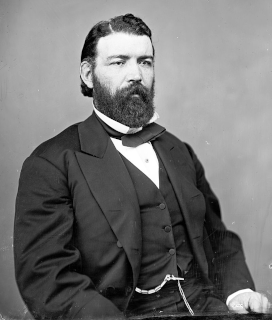
(Pictured: John Morrissey, U.S. Representative from New York, circa 1870s, source Library of Congress)


Leave a comment

Birth of Richard Croker, Leader of New York’s Tammany Hall

Richard Welstead Croker, American politician who is a leader of New York City‘s Tammany Hall and a political boss also known as “Boss Croker, is born in the townland of Ballyva, in the parish of Ardfield, County Cork on November 24, 1843.

Croker is the son of Eyre Coote Croker (1800–1881) and Frances Laura Welsted (1807–1894). He is taken to the United States by his parents when he is just two years old. There are significant differences between this family and the typical family leaving Ireland at the time. They are Protestant and are not land tenants. Upon arrival in the United States, his father is without a profession but has a general knowledge of horses and soon becomes a veterinary surgeon. During the American Civil War, he serves in that same capacity under General Daniel Sickles.

Croker is educated in New York public schools but drops out at age twelve or thirteen to become an apprentice machinist in the New York and Harlem Railroad machine shops. Not long after, he becomes a valued member of the Fourth Avenue Tunnel Gang, a street gang that attacks teamsters and other workers that gather around the Harlem line’s freight depot. He eventually becomes the gang’s leader. He joins one of the Volunteer Fire Departments in 1863, becoming an engineer of one of the engine companies. That is his gateway into public life.

James O’Brien, a Tammany associate, takes notice of Croker after he wins a boxing match against Dick Lynch whereby, he knocks out all of Lynch’s teeth. He becomes a member of Tammany Hall and active in its politics. In the 1860s he is well known for being a “repeater” at elections, voting multiple times at the polls. He is an alderman from 1868–1870 and Coroner of New York City from 1873–1876. He is charged with the murder of John McKenna, a lieutenant of James O’Brien, who is running for United States Congress against the Tammany-backed Abram S. Hewitt. John Kelly, the new Tammany Hall boss, attends the trial and Croker is freed after the jury is undecided. He moves to Harrison, New York by 1880. He is appointed the New York City Fire Commissioner in 1883 and 1887 and city Chamberlain from 1889-1890.

After the death of Kelly, Croker becomes the leader of Tammany Hall and almost completely controls the organization. As head of Tammany, he receives bribe money from the owners of brothels, saloons and illegal gambling dens. He is chairman of Tammany’s Finance Committee but receives no salary for his position. He also becomes a partner in the real estate firm Meyer and Croker with Peter F. Meyer, from which he makes substantial money, often derived from sales under the control of the city through city judges. Other income comes by way of gifts of stock from street railway and transit companies, for example. At the time, the city police are largely still under the control of Tammany Hall, and payoffs from vice protection operations also contribute to Tammany income.

Croker survives Charles Henry Parkhurst‘s attacks on Tammany Hall’s corruption and becomes a wealthy man. Several committees are established in the 1890s, largely at the behest of Thomas C. Platt and other Republicans, to investigate Tammany and Croker, including the 1890 Fassett Committee, the 1894 Lexow Committee, during which Croker leaves the United States for his European residences for three years, and the Mazet Investigation of 1899.

Croker’s greatest political success is his bringing about the 1897 election of Robert Anderson Van Wyck as first mayor of the five-borough “greater” New York. During Van Wyck’s administration Croker completely dominates the government of the city.

In 1899, Croker has a disagreement with Jay Gould‘s son, George Jay Gould, president of the Manhattan Elevated Railroad Company, when Gould refuses his attempt to attach compressed-air pipes to the Elevated company’s structures. He owns many shares of the New York Auto-Truck Company, a company which would benefit from the arrangement. In response to the refusal, he uses Tammany influence to create new city laws requiring drip pans under structures in Manhattan at every street crossing and the requirement that the railroad run trains every five minutes with a $100 fine for every violation. He also holds 2,500 shares of the American Ice Company, worth approximately $250,000, which comes under scrutiny in 1900 when the company attempts to raise the price of ice in the city.

After Croker’s failure to carry the city in the 1900 United States presidential election and the defeat of his mayoralty candidate, Edward M. Shepard, in 1901, he resigns from his position of leadership in Tammany and is succeeded by Lewis Nixon. He departs the United States in 1905.

Croker operates a stable of thoroughbred racehorses during his time in the United States in partnership with Michael F. Dwyer. In January 1895, they send a stable of horses to England under the care of trainer Hardy Campbell, Jr. and jockey Willie Simms. Following a dispute, the partnership is dissolved in May but Croker continues to race in England. In 1907, his horse Orby wins Britain’s most prestigious race, The Derby. Orby is ridden by American jockey John Reiff whose brother Lester had won the race in 1901. Croker is also the breeder of Orby’s son, Grand Parade, who wins the Derby in 1919.

Croker returns to Ireland in 1905 and dies on April 29, 1922, at Glencairn House, his home in Stillorgan outside Dublin. His funeral, celebrated by South African bishop William Miller, draws some of Dublin’s most eminent citizens. The pallbearers are Arthur Griffith, the President of Dáil Éireann; Laurence O’Neill, the Lord Mayor of Dublin; Oliver St. John Gogarty; Joseph MacDonagh; A.H. Flauley, of Chicago; and J.E. Tierney. Michael Collins, Chairman of the Provisional Government of the Irish Free State, is represented by Kevin O’Shiel; the Lord Lieutenant of Ireland, Edmund Bernard FitzAlan-Howard, 1st Viscount FitzAlan of Derwent, is represented by his under-secretary, James MacMahon.

In 1927, J. J. Walsh claims that just before his death Croker had accepted the Provisional Government’s invitation to stand in Dublin County in the imminent 1922 Irish general election.


2 Comments

Birth of Michael Corcoran, Union Army General

Michael Corcoran, Irish American general in the Union Army during the American Civil War and a close confidant of President Abraham Lincoln, is born in Carrowkeel, near Ballymote, County Sligo, on September 21, 1827. As its colonel, he leads the 69th Infantry Regiment (New York) to Washington, D.C. and is one of the first to serve in the defense of Washington by building Fort Corcoran. He then leads the 69th into action at the First Battle of Bull Run. After promotion to brigadier general, he leaves the 69th and forms the Corcoran Legion, consisting of at least five other New York regiments.

Corcoran is the only child of Thomas Corcoran, an officer in the British Army, and Mary McDonagh. Through his mother, he claims descent from Patrick Sarsfield, hero of the Williamite War in Ireland and leader of the Wild Geese. In 1846 he takes an appointment to the Revenue Police, enforcing the laws and searching for illicit stills and distilling activities in Creeslough, County Donegal. He also joins a guerrilla group called the Ribbonmen.

On August 30, 1849, Corcoran emigrates from Sligo to the United States and settles in New York City where he finds work as a clerk in the tavern owned by John Heaney, whose niece, Elizabeth, he marries in 1854.

Corcoran enlists as a Private in the 69th New York Militia. By 1859 he is appointed colonel of the regiment. The regiment is a state militia unit at the time composed of citizens, not soldiers, and is involved in the maintenance of public order. On October 11, 1860, he refuses to march the regiment on parade for the 19-year-old Prince of Wales, who is visiting New York City at the time, protesting the British imposition of the Irish Famine. He is removed from command and a court martial is pending over that matter when the Civil War begins.

Corcoran also becomes involved in Democratic politics at Tammany Hall. He becomes district leader, a member of the judicial nominations committee, an elected school inspector for his ward, and a member of the Fourteenth Ward General Committee. He is one of the founders of the Fenian Brotherhood in America.

With the outbreak of war, the court martial is dropped and Corcoran is restored to his command because he had been instrumental in bringing other Irish immigrants to the Union cause. He leads the 69th to Washington, D.C. and serves for a while in the Washington defenses building, Fort Corcoran. In July 1861 he leads the regiment into action at the First Battle of Bull Run and is taken prisoner.

While Corcoran is imprisoned, the United States makes threats to execute captured Confederate privateers. Corcoran and several other Union prisoners are selected by lot for execution if the United States carries out its threats against the privateers. This event is known as the Enchantress Affair, but no executions are ever carried out by either side. Corcoran is then offered a parole under the conditions that he does not take up arms against the Confederacy. Intending to resume his place in the Union army upon his release he refuses the offer of parole. He is appointed Brigadier General of volunteers in July and exchanged in August 1862. His role in the Enchantress Affair and his refusal for parole gains him some attention and upon his release he is invited to dinner with President Abraham Lincoln.

In April 1863 Corcoran is involved in an incident that ends with Corcoran shooting and killing Edgar A. Kimball, commander of the 9th New York Volunteer Infantry Regiment. Corcoran attempts to pass through the 9th New York’s area without giving the required password after receiving the challenge from a sentry. When Kimball intervenes on the side of the sentry, Corcoran shoots him. Corcoran is not charged with a crime or reprimanded and continues to serve.

Corcoran returns to the army and sets about recruiting more Irish volunteers. He raises and takes command of what becomes known as the Corcoran Legion. Placed in command of the 1st Division, VII Corps he is engaged in the Battle of Deserted House and takes part in the Battle of Suffolk. In late 1863 he is placed in command of a division in the XXII Corps and returns to serve in the Washington defenses. While riding alone in Fairfax, Virginia he is thrown from a runaway horse and suffers a fractured skull. He dies at the age of 36 at the William Gunnell House on December 22, 1863.

New York City Mayor Michael Bloomberg unveils Ireland’s national monument to the Fighting 69th in Ballymote on August 22, 2006. The monument is sculpted by Philip Flanagan. The inscription around the top of the monument reads “Michael Corcoran 1827–1863” Around the base is inscribed “New York Ballymote Creeslough Bull Run.” Underneath the monument is a piece of steel from the World Trade Center, donated by the family of Michael Lynch, who died in the tower on September 11, 2001. Lynch’s family are also from County Sligo.


Leave a comment

Death of William R. Grace, Irish American Politician

File source: http://commons.wikimedia.org/wiki/File:William_Russell_Grace.jpg

William Russell Grace, Irish American politician, the first Roman Catholic mayor of New York City, and the founder of W. R. Grace and Company, dies in New York City on March 21, 1904.

Grace is born on May 10, 1832, in Ireland in Riverstown near the Cove of Cork to James Grace and Eleanor May Russell (née Ellen) while the family is away from home. He is raised on Grace property at Ballylinan in Queens County, now County Laois, near the town of Athy. He is a member of a prominent and well-to-do family. In 1846, he sails for New York against the wishes of his father and works as a printer’s devil and a shoemaker’s helper before returning to Ireland in 1848.

His nephew, Cecil Grace, attempts a crossing of the English Channel in December 1910 in an airplane, flying from Dover to Calais. However, in coming back he becomes disoriented and over Dover flies northeast over the Goodwin Sands toward the North Sea and is lost.

Grace and his father travel to Callao, Peru, in 1851, seeking to establish an Irish agricultural community. While his father returns home, William remains and begins work with the firm of John Bryce and Co., as a ship chandler. In 1854, the company is renamed Bryce, Grace & Company, in 1865, to Grace Brothers & Co., and ultimately to W. R. Grace and Company.

On September 11, 1859, Grace is married to Lillius Gilchrist, the daughter of George W. Gilchrist, a prominent ship builder of Thomaston, Maine, and Mary Jane (née Smalley) Gilchrest. Together, they have eleven children.

Opposing the famous Tammany Hall, Grace is elected as the first Irish American Catholic mayor of New York City in 1880. He conducts a reform administration attacking police scandals, patronage and organized vice, reduces the tax rate, and breaks up the Louisiana State Lottery Company. Defeated in the following election, he is re-elected in 1884 on an Independent ticket but loses again at the following election. During his second term, he receives the Statue of Liberty as a gift from France.

Grace is a renowned philanthropist and humanitarian, at one point contributing a quarter of the aid delivered to Ireland aboard the steamship Constellation during the Irish Famine of 1879. In 1897, he and his brother, Michael, found the Grace Institute for the education of women, especially immigrants.

William R. Grace dies on March 21, 1904, at his residence, 31 East 79th Street, in New York City. His funeral is held at St. Francis Xavier Church on West 16th Street, and he is buried at the Holy Cross Cemetery in Brooklyn. At the time of his death his estate is valued at $25,000,000.


Leave a comment

Birth of William O’Dwyer, 100th Mayor of New York City

william-o-dwyer

William O’Dwyer, Irish American politician and diplomat who serves as the 100th Mayor of New York City, holding that office from 1946 to 1950, is born in Bohola, County Mayo on July 11, 1890.

O’Dwyer studies at St. Nathy’s College, Ballaghaderreen, County Roscommon. He emigrates to the United States in 1910, after abandoning studies for the priesthood. He sails to New York City as a steerage passenger on board the liner Philadelphia and is inspected at Ellis Island on June 27, 1910. He first works as a laborer, then as a New York City police officer, while studying law at night at Fordham University Law School. He receives his degree in 1923 and then builds a successful practice before serving as a Kings County (Brooklyn) Court judge. He wins election as the Kings County District Attorney in November 1939 and his prosecution of the organized crime syndicate known as Murder, Inc. makes him a national celebrity.

After losing the mayoral election to Fiorello La Guardia in 1941, O’Dwyer joins the United States Army for World War II, achieving the rank of brigadier general as a member of the Allied Commission for Italy and executive director of the War Refugee Board, for which he receives the Legion of Merit. During that time, he is on leave from his elected position as district attorney and replaced by his chief assistant, Thomas Cradock Hughes, and is re-elected in November 1943.

In 1945, O’Dwyer receives the support of Tammany Hall leader Edward V. Loughlin, wins the Democratic nomination, and then easily wins the mayoral election. He establishes the Office of City Construction Coordinator, appointing Park Commissioner Robert Moses to the post, works to have the permanent home of the United Nations located in Manhattan, presides over the first billion-dollar New York City budget, creates a traffic department and raises the subway fare from five cents to ten cents. In 1948, he receives The Hundred Year Association of New York‘s Gold Medal Award “in recognition of outstanding contributions to the City of New York.” In 1948, he receives the epithets “Whirling Willie” and “Flip-Flop Willie” from U.S. Representative Vito Marcantonio of the opposition American Labor Party while the latter is campaigning for Henry A. Wallace.

Shortly after his re-election to the mayoralty in 1949, O’Dwyer is confronted with a police corruption scandal uncovered by the Kings County District Attorney, Miles McDonald. O’Dwyer resigns from office on August 31, 1950. Upon his resignation, he is given a ticker tape parade up Broadway‘s Canyon of Heroes in the borough of Manhattan. President Harry Truman appoints him U.S. Ambassador to Mexico. He returns to New York City in 1951 to answer questions concerning his association with organized crime figures and the accusations follow him for the rest of his life. He resigns as ambassador on December 6, 1952, but remains in Mexico until 1960.

O’Dwyer visits Israel for 34 days in 1951 on behalf of his Jewish constituents. Along with New York’s Jewish community, he helps organize the first Israel Day Parade.

William O’Dwyer dies in New York City on November 24, 1964, in Beth Israel Hospital, aged 74, from heart failure. He is interred at Arlington National Cemetery, Section 2, Grave 889-A-RH.