seamus dubhghaill

Promoting Irish Culture and History from Little Rock, Arkansas, USA


Leave a comment

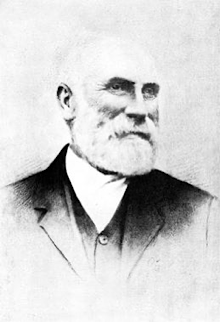
Birth of Andrew Kettle, Agrarian Reformer & Nationalist Politician

Andrew Joseph Kettle, a leading Irish nationalist politician, progressive farmer, agrarian agitator and founding member of the Irish National Land League, is born on September 26, 1833, in Drynam House, Swords, County Dublin.

Kettle is one among six children of Thomas Kettle, a prosperous farmer, and his wife, Alice (née Kavanagh). His maternal grandmother, Mary O’Brien, had smuggled arms to United Irishmen in the district in 1798, while her future husband, Billy Kavanagh, had been a senior figure in the movement. He is educated at Ireland’s most prestigious Catholic boarding schoolClongowes Wood College. His education is cut short when he is called to help full-time on the farm. Though an autodidact and always a forceful writer, he is beset later by an exaggerated sense of his “defective education and want of talking powers.” Fascinated by politics, he enjoys the repeal excitement of 1841–44 and in his late teens speaks once or twice at Tenant Right League meetings in Swords. Through the 1850s and most of the 1860s he sets about expanding the family farm into a composite of fertile holdings in Swords, St. Margaret’s, Artane, and Malahide (c.150 acres). Getting on well with the Russell-Cruise family of Swords, his first landlords, he benefits from a favourable leasehold arrangement on their demesne in the early 1860s. The farm is mostly in tillage, though Kettle also raises some fat cattle and Clydesdale horses, which he eventually sells to Guinness’s.

Kettle first enters politics in 1867, when he disagrees with John Paul Byrne of Dublin Corporation in public and in print over the right of graziers to state aid during an outbreak of cattle distemper. In 1868, he joins an agricultural reform group initiated by Isaac Butt. He becomes friendly with Butt and later claims to have converted him to support tenant-right. His memoirs, which are somewhat egocentric, contain a number of such questionable claims. It is, however, the case that he habitually writes up, for his own use, cogent summaries of the direction of current political tendencies, which sometimes become useful confidential briefs for Butt and later Charles Stewart Parnell. He is among the published list of subscribers to the Home Rule League in July 1870.

In 1872, disappointed by the Landlord and Tenant (Ireland) Act 1870, Kettle organises a Tenants’ Defence Association (TDA) in north County Dublin, soon sensing the need for a central body to coordinate the grievances of similar groups around the country. The Dublin TDA effectively acts as this central body, under his guidance as honorary secretary. At the 1874 United Kingdom general election in Ireland, the Dublin TDA decides to challenge the electoral control of certain corporation interests in County Dublin. Kettle secures the cautious approval of Cardinal Paul Cullen for any candidate supporting the principle of denominational education. He is also one of a deputation to ask Parnell to fight the constituency, which the latter loses. He becomes closely acquainted with Parnell, who frequently attends Dublin TDA meetings after his election for Meath in April 1875.

Taking a sombre view of the threat of famine in the west of Ireland after evidence of crop failure appears in early summer 1879, Kettle calls a conference of TDA delegates at the European Hotel in Bolton Street, Dublin, in late May. After a heated debate in which a proposal for a rent strike is greatly modified, Parnell comes to seek Kettle’s advice on whether to become involved in the evolving land agitation in County Mayo. Kettle urges him to go to the Westport meeting set for June 8, 1879, and claims later to have stressed in passing that “if you keep in the open you can scarcely go too far or be too extreme on the land question.” If the incident is correctly recounted, this is a most important statement, which virtually defines Parnell’s oratorical strategy throughout the land war. In October 1879, Kettle agrees to merge the TDA with a new Irish National Land League, set up at a meeting in the Imperial Hotel, Dublin, chaired by Kettle. As honorary secretary of the Land League, Kettle frankly admits that he is able to attend meetings without “the necessity of working.” His attendance is, however, among the most regular of all League officers, with him taking part in 73 of 107 meetings scheduled between December 1879 and October 1881.

In March 1880, Kettle disputes Michael Davitt‘s reluctance to use League funds in the general election. He canvasses vigorously together with Parnell in Kildare, Carlow, and Wicklow and is later pressed by his party leader into standing for election in County Cork, though aware that the local tenant movement has already prepared their own candidates. His association with Parnell antagonises the catholic hierarchy in Munster, who issues a condemnation of his candidacy. The hurly-burly of this election creates the persistent impression that Kettle is anti-clerical in politics, and he is defeated by 151 votes.

On a train journey to Ballinasloe in early April 1880, Kettle confides to Parnell his idea that land purchase can be facilitated by the recovery of tax allegedly charged in excess on Ireland by the British government since the act of union. At League meetings in June and July 1880, he advances his “catastrophist” plan: to cease attempts to prevent the development of an irresistible crisis among the Irish smallholding population, by diverting the application of League funds from general relief solely to the aid of evicted tenants, who might be temporarily housed “encamped like gypsies and the land lying idle,” in the belief that the British government will thereby be compelled to introduce radical remedial legislation. Smallholders do not have enough faith in either League or parliamentary politicians to listen.

At a meeting of the League executive in London and in Paris, before and after Davitt’s arrest on February 3, 1881, Kettle presents his plan that the parliamentary party should, if faced with coercive legislation, withdraw from Westminster, “concentrate” in Ireland, and call a general rent strike. Republicans on the League executive continually find themselves embarrassed by Kettle’s radical calls to action motivated solely by the project of agrarian reform. Parnell is later supposed to have lamented party failure to execute the plan at this juncture.

Kettle is arrested in June 1881 for calling for a collective refusal of rent. After two weeks in Naas jail he is transferred to Kilmainham Gaol, where in October he is, with some misgivings, one of the signatories to the No Rent Manifesto. Discharged from Kilmainham in late December 1881 owing to poor health, he returns principally to work on the family farm for most of the 1880s, though he claims to have formulated a draft solution for the plight of the agricultural labourer and “pushed it through” in correspondence with Parnell. He reemerges in 1890 to defend Parnell after the divorce scandal breaks. Attempting to establish a new ”centre” party independent of extreme Catholic and Protestant interests, he stands for election as a Parnellite at the 1891 County Carlow by-election, where he is comprehensively beaten, having endured weeks of insinuating harangues by Tim Healy, and raucous mob insults to the din of tin kettles bashed by women and children at meetings around the county. He is intermittently involved in County Dublin politics in the 1890s and 1900s and maintains a brusque correspondence on matters of the day in the national press.

Kettle dies on September 22, 1916, at his residence, St. Margaret’s, County Dublin, anguished by the death on September 9 of his brilliant son, Tom Kettle, near the village of Ginchy during the Battle of the Somme. He is buried at St. Colmcille’s cemetery, Swords.

Kettle marries Margaret McCourt, daughter of Laurence McCourt of Newtown, St. Margaret’s, County Dublin, farmer and agricultural commodity factor. They have five sons and six daughters.


Leave a comment

Charles Gavan Duffy Buried at Glasnevin Cemetery

Charles Gavan Duffy, Young Ireland leader, Irish nationalist, journalist, poet, and Australian politician, is buried in Glasnevin Cemetery, Glasnevin, Dublin, on March 8, 1903. He is the 8th Premier of Victoria and one of the most colourful figures in Victorian political history.

Duffy is born on April 12, 1816, in Dublin Street, Monaghan, County Monaghan. Both of his parents die while he is still a child and his uncle, Fr. James Duffy, who is the Catholic parish priest of Castleblayney, becomes his guardian for a number of years. He is educated at St. Malachy’s College in Belfast and is admitted to the Irish Bar in 1845. He becomes a leading figure in Irish literary circles.

Duffy, along with Thomas Osborne Davis and John Blake Dillon, founds The Nation and becomes its first editor. Davis and Dillon later become Young Irelanders. All three are members of Daniel O’Connell‘s Repeal Association. This paper, under Duffy, transforms from a literary voice into a “rebellious organisation.”

In August 1850, Duffy forms the Tenant Right League to bring about reforms in the Irish land system and protect tenants’ rights, and in 1852 is elected to the House of Commons for New Ross. By 1855, the cause of Irish tenants seems more hopeless than ever. Broken in health and spirit, Duffy publishes a farewell address to his constituency, declaring that he has resolved to retire from parliament, as it is no longer possible to accomplish the task for which he has solicited their votes.

In 1856, Duffy emigrates with his family to Australia, settling in the newly formed Colony of Victoria. A public appeal is held to enable him to buy the freehold property necessary to stand for the colonial Parliament. He is immediately elected to the Legislative Assembly for Villiers and Heytesbury in the Western District in 1856. He later represented Dalhousie and then North Gippsland. With the collapse of the Victorian Government‘s Haines Ministry during 1857, another Irish Catholic, John O’Shanassy, unexpectedly becomes Premier with Duffy his second-in-charge.

In 1871, Duffy leads the opposition to Premier Sir James McCulloch‘s plan to introduce a land tax, on the grounds that it unfairly penalised small farmers. When McCulloch’s government is defeated on this issue, he becomes Premier and Chief Secretary.  The majority of the colony is Protestant, and he is accused of favouring Catholics in government appointments. In June 1872, his government is defeated in the Assembly on a confidence motion allegedly motivated by sectarianism.

When Graham Berry becomes Premier in 1877, he makes Duffy Speaker of the Legislative Assembly, a post he holds without much enthusiasm until 1880, when he quits politics and retires to the south of France. Duffy remains interested in both the politics of his adoptive country and of Ireland. He is knighted in 1873 and is made KCMG in 1877.

Duffy spends his last years in Nice and dies at the age of 86 on February 9, 1903, at his home there, 12 Boulevard Victor Hugo. He is buried at Glasnevin Cemetery, Glasnevin, Dublin on March 8. 1903. The length of his career, the breadth of his experience, and his voluminous labours as a chronicler make him an important figure in the history of Ireland and the Irish diaspora in the nineteenth century. He also deserves attention as the most prominent and articulate Ulster catholic nationalist of his time. There are Duffy papers in the Royal Irish Academy and National Library of Ireland.


Leave a comment

Birth of John Martin, Irish Nationalist Activist

John Martin, Irish nationalist activist, is born on September 8, 1812, into a landed Presbyterian family, the son of Samuel and Jane (née Harshaw) Martin, in Newry, County Down, in what is now Northern Ireland. He shifts from early militant support for Young Ireland and the Repeal Association, to non-violent alternatives such as support for tenant farmers’ rights and eventually as the first Home Rule MP, for Meath (1871–75).

Martin first meets John Mitchel while attending Dr. Henderson’s private school in Newry. He receives an Arts degree at Trinity College Dublin in 1832 and proceeds to study medicine but has to abandon this in 1835 when his uncle dies, and he has to return to manage the family landholding.

In 1847 Martin is moved by the Great Famine to join Mitchel in the Repeal Association but subsequently leaves it with Mitchel. He contributes to Mitchel’s journal, United Irishman, and then following Mitchel’s arrest on May 27, 1848, he continues with his own anti-British journal, The Irish Felon, and establishes “The Felon Club.” This leads to a warrant for his arrest, and he turns himself in on July 8, 1848. He is sentenced on August 18, 1848, to ten years transportation to Van Diemen’s Land.

Martin arrives on the Elphinstone with Kevin Izod O’Doherty in Hobart, Tasmania, in November 1849. He accepts a “ticket of leave” which allows him to live in relative freedom at Bothwell, provided he promises not to escape.

While in Tasmania, Martin continues to meet in secret with his fellow exiles Kevin Izod O’Doherty, Thomas Francis Meagher, William Smith O’Brien, and John Mitchel. He and Mitchel live together before the arrival of Mitchel’s wife, Jenny. He chooses not to join Mitchel when Mitchel revokes his ticket of leave and escapes. Instead, he remains in Tasmania until he is granted a “conditional pardon” in 1854. This allows him to leave for Paris, and he returns to Ireland on being granted a full pardon in 1856.

On return to Ireland Martin becomes a national organiser for the Tenant Right League. He begins to write for The Nation in 1860. He forms the National League with others in January 1864 – it is mainly an educational organisation but Fenians disrupt its meetings. He remains in contact with Mitchel in Paris through 1866. He opposes the Fenians’ support of armed violence, yet, together with Alexander Martin Sullivan in December 1867, he heads the symbolic funeral march honouring the Manchester Martyrs as it follows the MacManus route to Glasnevin Cemetery, Dublin. He is briefly arrested for these activities, but the charges are dropped.

Martin is in the United States in December 1869 when he is nominated by Isaac Butt and his nationalists as the Irish nationalist Home Rule candidate to oppose Reginald Greville-Nugent, who is supported by the Catholic clergy, in the Longford by-election. Greville-Nugent initially wins the vote, but the result is nullified by Judge Fitzgerald on the grounds that voters had been illegally influenced in the non-secret voting process. In the May 1870 re-run, Butt’s second candidate, Edward Robert King-Harman, like Martin a Protestant landlord, is also defeated, but this time legally.

Contradictions and factionalism are symptomatic of the struggle for influence and leadership at the time between the waning Church of Ireland and the rising Irish Catholic Church. Hence a secular Protestant land-owning, non-violent elite reformist nationalist who desires Home Rule like Martin, can find himself both sympathetic to and at odds with a militant organisation like the Fenians with their Jacobin– and American-influenced ideas of revolutionary republicanism and different social roots. Until Charles Stewart Parnell, the Isaac Butt-originated Home Rule forces could not obtain the support of the Catholic Church under the anti-Fenian Cardinal Paul Cullen or manage to achieve more than short-term tactical alliances with Fenians, leading to a split and uncoordinated opposition to British rule. Protestants such as Martin and John Mitchel, with their early political roots in Young Ireland, are, whatever their political ideals, not part of the majority Catholic mainstream, which consists largely of tenants rather than landlords.

In the January 1871 by-election, Martin is elected by a margin of 2–1 to the seat of Meath in the British parliament as the first Home Rule MP, representing first Isaac Butt’s Home Government Association and from November 1873 the Home Rule League. This is unusual for a Protestant in a Catholic constituency, and is a measure of the popular esteem Martin is held in. He retains his seat in the 1874 United Kingdom general election as one of 60 Home Rule members. He is commonly known as “Honest John Martin.” In parliament he speaks strongly for Home Rule for Ireland and opposes Coercion Bills.

Martin dies in Newry, County Down, on March 29, 1875, homeless and in relative poverty, having forgiven tenant fees during preceding years of inflation and low farm prices. His parliamentary seat of County Meath is taken up by Charles Stewart Parnell.

Martin marries Henrietta Mitchel, the youngest sister of John Mitchel, on November 25, 1868, after twenty years of courtship. She shares her husband’s politics, and after his death campaigns for home rule believing this to be a continuation of the Young Ireland mandate. After the split in the party, she sides with Charles Stewart Parnell. She dies at her home in Dublin on July 11, 1913, and is buried in Newry.


Leave a comment

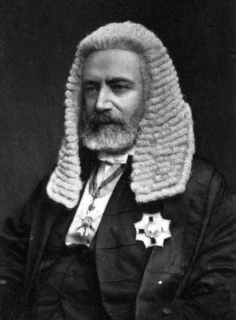
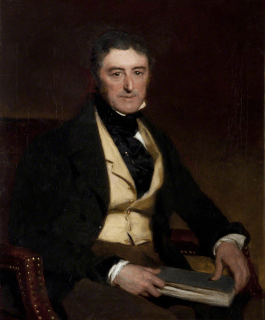
Birth of William Sharman Crawford, Irish Politician

William Sharman Crawford, Irish politician with liberal and radical views, is born William Sharman on September 3, 1780 in at Moira Castle in County Down.

Sharman is the eldest son of Colonel William Sharman, for many years a member of the Parliament of Ireland for Lisburn, who dies in 1803 leaving him large estates. In 1805 he marries a wealthy heiress, Mabel Fridiswid Crawford, whose surname and arms he adds to his own.

Sharman Crawford supports Catholic Emancipation and the rights of tenants. He is also a member of the landed gentry. He is High Sheriff of Down for 1811. He is a member of the Parliament of the United Kingdom for Dundalk in 1835–37 and for Rochdale in 1841–52. He greatly increases the prosperity of the tenants on his large estates by extending and confirming the Ulster custom of tenant-right. The main objective of his long parliamentary career is to give legal effect to this right and extend it to other parts of Ireland.

In 1848 with James MacKnight, editor of the liberal Londonderry Standard, Sharman Crawford forms the Ulster Tenant Right Association which is supported by a group of radical Presbyterian ministers. He also supports MacKnight in forming, with Charles Gavan Duffy, editor of the Young Ireland newspaper The Nation, the all-Ireland Tenant Right League.

Sharman Crawford is the father of James Sharman Crawford, member of the Parliament of the United Kingdom for Down, (1874-78), Arthur Sharman Crawford, unsuccessful candidate for Down in 1884 and John Sharman Crawford, unsuccessful candidate for Down in 1880. His daughter is Mabel Sharman Crawford, adventurer, feminist and writer.

Sharman Crawford dies unexpectedly and peacefully at Crawfordsburn, County Down on October 17, 1861. He is buried in the family vault at Kilmore, County Down, where there is a monumental inscription. A great stone obelisk is erected in his memory on a hill at Rademon Estate, near Crossgar, County Down.


Leave a comment

Death of Charles Gavan Duffy

charles-gavin-duffy

Charles Gavan Duffy, Irish nationalist, journalist, poet, and Australian politician, dies on February 9, 1903, in Nice, France. He is the 8th Premier of Victoria and one of the most colourful figures in Victorian political history.

Duffy is born on April 12, 1816, in Dublin Street, Monaghan, County Monaghan. Both of his parents die while he is still a child and his uncle, Fr. James Duffy, who is the Catholic Parish Priest of Castleblayney, becomes his guardian for a number of years. He is educated at St. Malachy’s College in Belfast and is admitted to the Irish Bar in 1845. Duffy becomes a leading figure in Irish literary circles.

Duffy, along with Thomas Osborne Davis and John Blake Dillon, founds The Nation and becomes its first editor. Davis and Dillon later become Young Irelanders. All three are members of Daniel O’Connell‘s Repeal Association. This paper, under Duffy, transforms from a literary voice into a “rebellious organisation.”

In August 1850, Duffy forms the Tenant Right League to bring about reforms in the Irish land system and protect tenants’ rights, and in 1852 is elected to the House of Commons for New Ross. By 1855, the cause of Irish tenants seems more hopeless than ever. Broken in health and spirit, Duffy publishes a farewell address to his constituency, declaring that he has resolved to retire from parliament, as it is no longer possible to accomplish the task for which he has solicited their votes.

In 1856, emigrates with his family to Australia, settling in the newly formed Colony of Victoria. A public appeal is held to enable him to buy the freehold property necessary to stand for the colonial Parliament. He is immediately elected to the Legislative Assembly for Villiers and Heytesbury in the Western District in 1856. He later represented Dalhousie and then North Gippsland. With the collapse of the Victorian Government‘s Haines Ministry during 1857, another Irish Catholic, John O’Shanassy, unexpectedly becomes Premier with Duffy his second-in-charge.

In 1871, Duffy leads the opposition to Premier Sir James McCulloch‘s plan to introduce a land tax, on the grounds that it unfairly penalises small farmers. When McCulloch’s government is defeated on this issue, Duffy becomes Premier and Chief Secretary.  The majority of the colony is Protestant, and Duffy is accused of favouring Catholics in government appointments. In June 1872, his government is defeated in the Assembly on a confidence motion allegedly motivated by sectarianism.

When Graham Berry becomes Premier in 1877, he makes Duffy Speaker of the Legislative Assembly, a post he holds without much enthusiasm until 1880, when he quits politics and retires to the south of France. He remains interested in both the politics of his adoptive country and of Ireland. He is knighted in 1873 and is made KCMG in 1877. Sir Charles Gavan Duffy dies in Nice, France, at the age of 86 in 1903.


Leave a comment

Founding of the Tenant Right League

The Tenant Right League, an organisation which aims to secure reforms in the Irish land system, is founded in Dublin on August 9, 1850, at a meeting attended by representatives of the Tenant Protection Societies. Formed by Charles Gavan Duffy and Frederick Lucas, the League unites for a time Protestant and Catholic tenants, Duffy calling his movement The League of North and South.

The political background to the movement is the Encumbered Estates Act and the resultant change in land ownership at landlord level. In the North of Ireland, Protestant and Presbyterian ministers fear that the new landlords will destroy the “Ulster custom” of tenancy, which compensates tenants for any improvement undertaken. Concurrently, in the South of Ireland politically minded young Catholic priests are agitating for the adoption there of the Ulster custom as a measure of reform.

Support for the League initially comes from the Ulster Tenant Right Association led by William Sharman Crawford. The support is short-lived because of the involvement of Catholic clergymen from the south. As a constitutional movement, the League seeks to secure the adoption and enforcement of the Three Fs, namely fair rent, fixity of tenure, and free sale. All of these would aid Irish tenant farms, all of whom lack them.

For the larger tenant farmers fixity of tenure is the priority. On the other hand, the league never has the support of smaller tenants, whose prime concern is fair rents. The founders strive to establish a parliamentary party of Irish members who will oppose any government not prepared to grant “Tenant-right” also known as the Ulster Custom.

The Tenant Right League meets with considerable success under its national organiser, John Martin. It has the support of the surviving members of the Repeal Association in the British House of Commons as well as a number of English Radicals. It is agreed, all around, that a Land Act embodying the three F’s would be a real gain. In the 1852 general election, some fifty Tenant Right candidates, including Gavan Duffy, Lucas and John Sadleir, are returned to parliament, where they sit as the Independent Irish Party.

The League’s success is short lived and is ultimately destroyed and weakened when a number of prominent members break away and established the Catholic Defence Association. Supporters of the league are also intimidated by hostile landlords. The most serious blows to its success come when Lucas decides to take his complaint about the Archbishop of Dublin Paul Cullen to Rome, which alienates clerical support. Lucas dies in October 1855 shortly after the failure of his mission, a month later Gavan Duffy emigrates to Australia.

The League finally dissolves in 1859, and the Independent Irish Party disappears by 1860. The demand for tenants’ rights is however continued by Bishop Thomas Nulty of County Meath and taken up again as a popular cause by the Irish National Land League in 1879, when the “Three Fs” are anchored in the Land Law (Ireland) Act 1881, previously pursued rigorously by Michael Davitt.


Leave a comment

Birth of Charles Gavin Duffy in County Monaghan

charles-gavin-duffy

Charles Gavan Duffy, Irish nationalist, journalist, poet, and Australian politician, is born on April 12, 1816, in Dublin Street, Monaghan Town, County Monaghan. Duffy is the 8th Premier of Victoria and one of the most colourful figures in Victorian political history.

Both of his parents die while he is still a child and his uncle, Fr. James Duffy, who is the Catholic Parish Priest of Castleblayney, becomes his guardian for a number of years. He is educated at St. Malachy’s College in Belfast and is admitted to the Irish Bar in 1845. Duffy becomes a leading figure in Irish literary circles.

Duffy, along with Thomas Osborne Davis and John Blake Dillon, founds The Nation and becomes its first editor. Davis and Dillon later become Young Irelanders. All three are members of Daniel O’Connell‘s Repeal Association. This paper, under Duffy, transforms from a literary voice into a “rebellious organisation.”

In August 1850, Duffy forms the Tenant Right League to bring about reforms in the Irish land system and protect tenants’ rights, and in 1852 is elected to the House of Commons for New Ross. By 1855, the cause of Irish tenants seems more hopeless than ever. Broken in health and spirit, Duffy publishes a farewell address to his constituency, declaring that he has resolved to retire from parliament, as it is no longer possible to accomplish the task for which he has solicited their votes.

In 1856, emigrates with his family to Australia, settling in the newly formed Colony of Victoria. A public appeal is held to enable him to buy the freehold property necessary to stand for the colonial Parliament. He is immediately elected to the Legislative Assembly for Villiers and Heytesbury in the Western District in 1856. He later represented Dalhousie and then North Gippsland. With the collapse of the Victorian Government‘s Haines Ministry during 1857, another Irish Catholic, John O’Shanassy, unexpectedly becomes Premier with Duffy his second-in-charge.

In 1871, Duffy leads the opposition to Premier Sir James McCulloch‘s plan to introduce a land tax, on the grounds that it unfairly penalised small farmers. When McCulloch’s government is defeated on this issue, Duffy becomes Premier and Chief Secretary.  The majority of the colony is Protestant, and Duffy is accused of favouring Catholics in government appointments. In June 1872, his government is defeated in the Assembly on a confidence motion allegedly motivated by sectarianism.

When Graham Berry becomes Premier in 1877, he makes Duffy Speaker of the Legislative Assembly, a post he holds without much enthusiasm until 1880, when he quits politics and retires to the south of France. Duffy remains interested in both the politics of his adoptive country and of Ireland. He is knighted in 1873 and is made KCMG in 1877. Sir Charles Gavan Duffy dies in Nice, France, at the age of 86 in 1903.