seamus dubhghaill

Promoting Irish Culture and History from Little Rock, Arkansas, USA


Leave a comment

Birth of Arthur William Conway, UCD President

arthur-william-conway

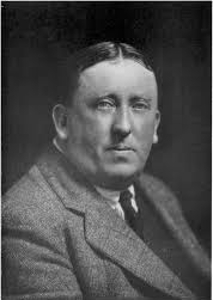
Arthur William Conway FRS, President of University College Dublin between 1940 and 1947, is born in Wexford, County Wexford, on October 2, 1875.

Conway receives his early education at St. Peter’s College, Wexford and proceeds to enter old University College, Dublin in 1892. He receives his BA degree from the Royal University of Ireland in 1896 with honours in Latin, English, Mathematics, and Natural Philosophy. In 1897, he receives his MA degree with highest honours in mathematics and proceeds to Corpus Christi College, Oxford, becoming University Scholar there in 1901. Also in 1901, he is appointed to the professorship of Mathematical Physics in the old University College and holds the Chair until the creation of the new college in 1909. He also teaches for a short time at St. Patrick’s College, Maynooth.

Conway marries Agnes Christina Bingham on August 19, 1903. They have three daughters and one son.

One of Conway’s students is Éamon de Valera, whom he introduces to quaternions which originate in Ireland. De Valera warms to the subject and engages in research of this novelty of abstract algebra. Later, when de Valera becomes Taoiseach, he calls upon Conway while forming the Dublin Institute for Advanced Studies.

Conway is remembered for his application of biquaternion algebra to the special theory of relativity. He publishes an article in 1911, and in 1912 asserts priority over Ludwik Silberstein, who also applies biquaternions to relativity. This claim is backed up by George Temple in his book 100 Years of Mathematics. In 1947 Conway puts quaternions to use with rotations in hyperbolic space. The next year he publishes quantum mechanics applications which are referred to in a PhD thesis by Joachim Lambek in 1950.

In 1918, Conway is the Irish Parliamentary Party candidate in South Londonderry and in the National University of Ireland, coming in second in both.

Conway continues his scholarship in the field of mathematics and theoretical physics and makes a special study of William Rowan Hamilton. With John Lighton Synge, he edits the first volume of Hamilton’s mathematical papers, and, with A. J. McConnell, he edits the second volume of Hamilton’s mathematical papers. Conway is also active in college life, being appointed Registrar, a position he occupies until his election as president in 1940. He retires in 1947 from the presidency of UCD. In 1953, some of his writings are edited by J. McConnell for publication by the Dublin Institute for Advanced Studies.

He is elected President of the Royal Irish Academy from 1937 to 1940.


Leave a comment

Birth of Novelist Liam O’Flaherty

liam-oflaherty

Liam O’Flaherty, novelist, short story writer, and a major figure in the Irish literary renaissance, is born on August 28, 1896, in the remote village of Gort na gCapall on Inis Mór, one of the Aran Islands of County Galway. He is involved for a time in left-wing politics, as is his brother Tom Maidhc O’Flaherty (also a writer), and their father, Maidhc Ó Flaithearta, before them.

At the age of twelve, O’Flaherty goes to Rockwell College and later University College Dublin and the Dublin Diocesan teacher training college Holy Cross College. It is intended he enter the priesthood, but he joins the Irish Guards in 1917 under the name Bill Ganly. Serving on the Western Front, he finds trench life devastatingly monotonous and is badly injured in September 1917 during the Battle of Langemarck. It is speculated that shell shock is responsible for the mental illness which becomes apparent in 1933.

He returns from the front a socialist. Having become interested in Marxism as a schoolboy, atheistic and communistic beliefs evolve in his 20s and he is a founding member of the Communist Party of Ireland. Two days after the establishment of the Irish Free State, O’Flaherty and other unemployed Dublin workers seize the Rotunda Concert Hall in Dublin and hold it for four days in protest at “the apathy of the authorities.” Free State troops force their surrender.

O’Flaherty then leaves Ireland and moves first to England where, destitute and jobless, he takes to writing. In 1925 he scores immediate success with his best-selling novel The Informer about a rebel with confused ideals in the Irish War of Independence, which wins him the 1925 James Tait Black Memorial Prize for fiction. Four years later his next short novel Return of the Brute, set in the World War I trenches, proves another success. He then travels to the United States, where he lives in Hollywood for a short time. The well-known director John Ford, a cousin, later makes a film of O’Flaherty’ first novel. The novel is also the source of a 1929 film of the same name directed by Arthur Robison.

Many of his works have the common theme of nature and Ireland. He is a distinguished short story writer, and some of his best work in that genre is in Irish. The collection Dúil, published towards the end of his life, contains Irish language versions of a number of stories published elsewhere in English. This collection, now widely admired, has a poor reception at the time, and this seems to discourage him from proceeding with an Irish language novel he has in hand.

In a letter written to The Sunday Times in later years he confesses to a certain ambivalence regarding his work in Irish and speaks of other Irish writers who receive little praise for their work in the language. This gives rise to some controversy. His First Flight, a short story which symbolizes the nervousness one experiences before doing something new, is regarded as one of his most famous works. In 1923, O’Flaherty publishes his first novel, Thy Neighbour’s Wife, thought to be one of his best. Over the next couple of years, he publishes other novels and short stories. In 1933 he suffers the first of two mental breakdowns.

He travels in the United States and Europe, and the letters he writes while travelling have now been published. He has a love of French and Russian culture. Before his death he leaves the Communist Party and returns to the Roman Catholic faith. O’Flaherty dies in Dublin on September 7, 1984, and many of his works are subsequently republished. He is remembered today as a powerful writer and a strong voice in Irish culture.


Leave a comment

St. Vincent’s Hospital Opens on St. Stephen’s Green, Dublin

st-vincents-hospital-dublin

St. Vincent’s Hospital, a teaching hospital currently located at Elm Park, south of the city of Dublin, opens on July 23, 1834, at its original location on St. Stephen’s Green, Dublin. The hospital is founded by Mother Mary Aikenhead, foundress of the Roman Catholic order Religious Sisters of Charity. It is open to all who can afford its services, irrespective of their religious persuasion.

The hospital subsequently moves to its current site in Elm Park in 1970, and in 1999 is renamed St. Vincent’s University Hospital (SVUH), to highlight its position as a principal teaching hospital of University College Dublin (UCD).

Today St. Vincent’s University Hospital serves as a regional centre for emergency medicine and medical care at an inpatient and outpatient level. Many patients from regional and tertiary hospitals are referred to SVUH for specialist care, and it is the national referral centre for liver transplantation and adult cystic fibrosis. Tied closely to the University, it serves as a training ground for doctors, nurses, radiographers and physiotherapists, teaching students from UCD’s undergraduate degree courses.

The hospital provides in excess of forty medical, surgical, and allied specialities, and has 479 in-patient suites, incorporating 7-day, 5-day, and day care. A major multimillion-euro extension building is completed in 2005 and officially opens in 2006. This development contains a new emergency department, endoscopy department, outpatient clinics, intensive care unit, diagnostic laboratories and operating theatres, as well as a state-of-the-art radiology department (incorporating Multislice CT-Scanners, Nuclear Medicine and MRI).

The on-campus Education & Research Centre serves as home to a number of research groups allied to clinical departments within the hospital including the Centre for Colorectal Disease, the National Liver Transplant Unit, and the Department of Rheumatology, and maintains close academic links to nearby UCD.


Leave a comment

Birth of Katie Taylor, Olympic Boxing Champion

katie-taylor

Katie Taylor, Irish sportswoman who has represented Ireland in both boxing and association football, is born in Bray, County Wicklow, on July 2, 1986. As of this writing, she is the Irish, European, World, and Olympic boxing champion in the 60 kg division. Regarded as the outstanding Irish athlete of her generation, she is the flag bearer for Ireland at the 2012 London Olympics opening ceremony before going on to win an Olympic gold medal in the lightweight division.

Taylor first begins boxing in 1998 at the age of eleven. Her father coaches her and her two older brothers, Lee and Peter, at St. Fergal’s Boxing Club, which operates out of a former boathouse in Bray. At 15, she fights the first officially sanctioned female boxing match in Ireland at the National Stadium and defeats Alanna Audley from Belfast.

Between 1999 and 2005 Taylor attends St. Kilian’s Community School in Bray with her three older siblings. In addition to boxing and playing association football, Taylor also plays Gaelic football and camogie with her local GAA clubs, Bray Emmets and Fergal Ógs. Several American colleges reportedly offer her athletic scholarships while she is still a pupil at St. Killian’s. She opts, however, to attend University College Dublin. Although UCD is well known for sports scholarships, Taylor qualifies via her Leaving Cert results. As her sporting career begins to take off, however, she chooses not to complete her studies at UCD.

Taylor qualifies for the 2012 Summer Olympics in London, the first time women’s boxing has been considered for inclusion. Crowds gather on the streets of her hometown to watch her progress on giant screens erected especially for the occasion.

Taylor’s first appearance at the 2012 Summer Olympics comes on August 6, after a first-round bye. She achieves an impressive 26-15 victory over Great Britain‘s Natasha Jonas, booking her place in the semi-final and guaranteeing her, at least, an Olympic bronze medal.

In the semi-final on August 8, 2012, she proves far too good for Tajikistan‘s Mavzuna Chorieva and wins in a 17-9 victory, booking her place in the final and guaranteeing her of at least a silver medal.

Taylor defeats Russia‘s Sofya Ochigava in the final bout by 10-8 on August 9, 2012, winning the Olympic gold medal and becoming the first ever Olympic female lightweight champion.

On her return to Dublin with the rest of the Olympic squad she gets into the cockpit of the plane and leans out the window waving an Irish flag.


Leave a comment

Birth of Irish Novelist Maeve Binchy

maeve-binchy

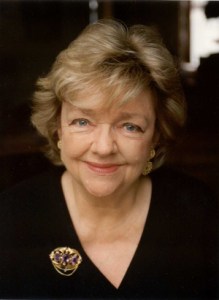
Maeve Binchy Snell, known as Maeve Binchy, Irish novelist, playwright, short story writer, columnist, and speaker best known for her sympathetic and often humorous portrayal of small-town life in Ireland, is born on May 28, 1939, in Dalkey, County Dublin.

Binchy is the oldest of four children born to William and Maureen (née Blackmore) Binchy. Educated at St. Anne’s, Dún Laoghaire, and later at Holy Child Convent, Killiney, she goes on to study at University College Dublin, where she earns a bachelor’s degree in history. She works as a teacher of French, Latin, and history at various girls’ schools.

A 1963 trip to Israel profoundly affects both her career and her faith. One Sunday, attempting to find the location of the Last Supper, she climbs a mountainside to a cavern guarded by an Israeli soldier. She weeps with despair and the soldier asks, “What’ya expect ma’am – a Renaissance table set for 13?” She replies, “Yes! That’s just what I did expect.” This experience causes her to renounce her Catholic faith and eventually turn to atheism.

In 1968, Binchy joins the staff at The Irish Times, and works there as a writer, columnist, the first Women’s Page editor, and the London editor reporting for the paper from London before returning to Ireland.

Binchy, tall and rather stout, never considers herself to be attractive. She ultimately encounters the love of her life, children’s author Gordon Snell, while recording a piece for Woman’s Hour in London. Their friendship blossoms into a cross-border romance, with her in Ireland and him in London, until she eventually secures a job in London through The Irish Times. They are married in 1977 and eventually return to live in Dalkey, not far from where she had grown up.

In all, Binchy publishes 16 novels, four short-story collections, a play, and a novella. A 17th novel, A Week in Winter, is published posthumously. Her literary career begins with two books of short stories, Central Line (1978) and Victoria Line (1980). She publishes her debut novel Light a Penny Candle in 1982.

Most of Binchy’s stories are set in Ireland, dealing with the tensions between urban and rural life, the contrasts between England and Ireland, and the dramatic changes in Ireland between World War II and the present day. Her books have been translated into 37 languages.

In 2002, Binchy suffers a health crisis related to a heart condition, which inspires her to write Heart and Soul. The book about a heart failure clinic in Dublin and the people involved with it, reflects many of her own experiences and observations in the hospital.

Binchy dies on July 30, 2012, at the age of 73, in a Dublin hospital with her husband at her side. She had suffered from various maladies, including painful osteoarthritis, which results in a hip operation. A month before her death she suffers a severe spinal infection and finally succumbs to a heart attack. Just ahead of that evening’s Tonight with Vincent Browne and TV3‘s late evening news, Vincent Browne and then Alan Cantwell, who respectively anchor these shows, announce to Irish television viewers that Binchy has died earlier in the evening.

Despite being an atheist, Binchy is given a traditional Requiem Mass which takes place at the Church of the Assumption, in her hometown of Dalkey. She is later cremated at Mount Jerome Cemetery and Crematorium.


Leave a comment

Executions of Edward Daly, Michael O’Hanrahan, Joseph Mary Plunkett, & William Pearse

plunkett-daly-ohanrahan-pearse

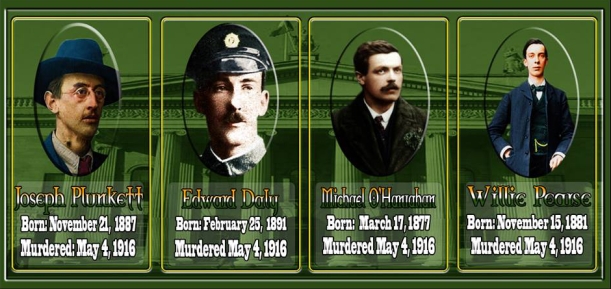
The executions of leaders and participants of the 1916 Easter Rising by the British continue as Edward Daly, Michael O’Hanrahan, Joseph Mary Plunkett, and William Pearse are executed by firing squad in the Stonebreakers Yard at Kilmainham Gaol in Dublin on May 4, 1916.

Edward Daly is born in Limerick in 1891 to a family that has a history of republican activity. His uncle, John Daly, had taken part in the rebellion of 1867. Edward Daly leads the First Battalion during the 1916 Easter Rising, which raids the Bridewell and Linenhall Barracks, eventually seizing control of the Four Courts. A close friend of Tom Clarke, their ties are made even stronger by the marriage of Clarke to Daly’s sister.

Michael O’Hanrahan is born in Wexford in 1877. As a young man, O’Hanrahan shows great promise as a writer, becoming heavily involved in the promotion of the Irish language. He founds the first Carlow branch of the Gaelic League, and publishes two novels, A Swordsman of the Brigade and When the Norman Came. Like many of the other executed leaders, he joins the Irish Volunteers from their inception and is second in command to Thomas MacDonagh at Jacob’s Biscuit Factory during the Rising, although this position is largely usurped by the arrival of John MacBride.

Joseph Mary Plunkett is born in Dublin in 1887, the son of a papal count. Plunkett is initially educated in England, though he returns to Ireland and graduates from University College Dublin in 1909. After his graduation, Plunkett spends two years traveling due to ill health, returning to Dublin in 1911. Plunkett shares Thomas MacDonagh’s enthusiasm for literature and is an editor of the Irish Review. Along with MacDonagh and Edward Martyn, he helps to establish an Irish national theatre. He joins the Irish Volunteers in 1913, subsequently gaining membership of the Irish Republican Brotherhood in 1914. Plunkett travels to Germany to meet Roger Casement in 1915. During the planning of the Rising, Plunkett is appointed Director of Military Operations, with overall responsibility for military strategy. Plunkett is stationed in the General Post Office during the Rising. Seven hours prior to his execution, Plunkett marries his sweetheart, Grace Gifford, in the prison chapel.

William “Willie” Pearse, the younger brother of Patrick, is born in Dublin in 1881. Willie shares his brother’s passion for an independent Ireland. He assists Patrick in running St. Enda’s School. The two brothers are extremely close and fight alongside each other in the General Post Office. He is not one of the planners of the revolt, nor is he one of its commanders. Willie is merely one of the soldiers involved with the Dublin actions. No other participant in Dublin whose actions or responsibilities are similar to Willie’s is executed in the days following the Rising, save perhaps John MacBride, whose earlier service with the Boers probably marks him for death. It seems likely that the sole reason Willie is executed by the British government is for the crime of being Patrick’s brother. It is repugnant British excesses such as this that soon reverse the Irish people’s initially negative opinion of the 1916 Easter Rising.


Leave a comment

Executions of Patrick Pearse, Thomas Clarke, & Thomas MacDonagh

pearse-clarke-mac-donagh

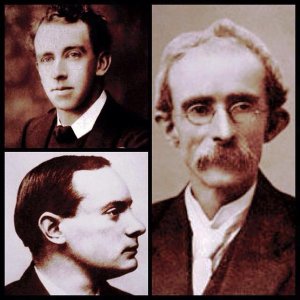
Patrick Pearse, Thomas Clarke, and Thomas MacDonagh are executed by firing squad in the Stonebreakers’ Yard at Kilmainham Gaol in Dublin on May 3, 1916. Pearse, Clarke, and MacDonagh are three of the seven signatories of the Proclamation of the Irish Republic.

Just three days after the end of the 1916 Easter Rising, the first military courts martial sits on May 2, 1916. Pearse, Clarke, and MacDonagh are immediately sentence to death. The three are taken that evening to the disused Kilmainham Gaol and are shot at dawn the following morning.

Patrick Pearse is born in Dublin in 1879, becoming interested in Irish cultural matters in his teenage years. In 1898, Pearse becomes a member of the Executive Commmittee of the Gaelic League. He graduates from the Royal University of Ireland in 1901 with a degree in Arts and Law. Pearse’s literary output is constant, and he publishes extensively in both Irish and English, becoming the editor of An Claidheamh Soluis, the newspaper of the Gaelic League. He is a keen believer in the value of education, and establishes two schools, Coláiste Éanna and Coláiste Íde, devoted to the education of Irish children through the Irish language.  Pearse is one of the founding members of the Irish Volunteers and the author of the Proclamation of the Irish Republic. He is Commander in Chief of the Irish forces and headquartered in the General Post Office (GPO) during the 1916 Easter Rising.

Thomas Clarke is born on the Isle of Wight in 1857, the son of a soldier in the British army. During his time in America as a young man, he joins Clan na Gael, later enduring fifteen years (1883-1898) of penal servitude for his role in a bombing campaign in London. In 1907, having returned from a second sojourn in America, his links with Clan na Gael in America copper-fastens his importance to the revolutionary movement in Ireland. He holds the post of Treasurer to the Irish Republican Brotherhood (IRB) and is a member of the Supreme Council from 1915. Clarke is the first signatory of the Proclamation of the Irish Republic through deference to his seniority. Clarke is also stationed at the GPO during Easter Week. Clarke tells his wife during his final night that he is relieved he is going to be executed because his greatest dread is that he would be sent back to prison.

Thomas MacDonagh is a native of Tipperary, born in 1878. He spends the early part of his career as a teacher. He moves to Dublin to study and is the first teacher on the staff at St. Enda’s School, the school he helps to found with Patrick Pearse. MacDonagh is well versed in literature, his enthusiasm and erudition earning him a position in the English department at University College Dublin. His play When the Dawn is Come is produced at the Abbey Theatre. He is appointed director of training for the Irish Volunteers in 1914, later joining the Irish Republican Brotherhood (IRB). MacDonagh is appointed to the IRB military committee in 1916. He is commander of the Second Battalion of Volunteers that occupies Jacob’s Biscuit Factory and surrounding houses during the Rising.

Immediately after the executions, Irish Parliamentary Party leader John Redmond warns British Prime Minister Herbert Asquith that “if any more executions take place in Ireland the position will become impossible for any constitutional party or leader.”

Asquith himself warns Sir John Maxwell that “anything like a large number of executions would…sow the seeds of lasting trouble in Ireland.”

These warnings fall upon deaf ears as thirteen additional executions take place in the following days.


Leave a comment

Birth of Father Ted, Dermot John Morgan

dermot-john-morgan

Dermot John Morgan, Irish comedian and actor who achieves international renown for his role as Father Ted Crilly in the Channel 4 sitcom Father Ted, is born in Dublin on March 31, 1952.

Educated at Oatlands College, Stillorgan, and University College, Dublin (UCD), Morgan comes to prominence as part of the team behind the highly successful RTÉ television show The Live Mike. Morgan makes his debut in the media on the Morning Ireland radio show produced by Gene Martin. Between 1979 and 1982 Morgan, who has been a teacher at St. Michael’s College, Ailesbury Road, plays a range of comic characters who appear between segments of the show, including Father Trendy, an unctuous trying-to-be-cool Catholic priest given to drawing ludicrous parallels with non-religious life in two-minute ‘chats’ to camera.

Morgan’s success as Father Trendy and other characters leads him to leave teaching and become a full-time comedian.

Morgan’s biggest Irish broadcasting success occurs in the late 1980s on the Saturday morning radio comedy show Scrap Saturday, which mocks Ireland’s political, business, and media establishment. The show’s treatment of the relationship between the ever-controversial Taoiseach Charles Haughey and his press secretary P.J. Mara prove particularly popular. When RTÉ axes the show in the early 1990s a national outcry ensues. Morgan lashes the decision, calling it “a shameless act of broadcasting cowardice and political subservience.”

Already a celebrity in Ireland, Morgan’s big break comes in Channel 4‘s Irish sitcom Father Ted, which runs for three series from April 21, 1995 until May 1, 1998. Writers Graham Linehan and Arthur Mathews audition many actors for the title role, but Morgan’s enthusiasm wins him the part.

Father Ted centres on three disparate characters. Father Ted Crilly, played by Morgan, lives a frustrated life trapped on the fictional Craggy Island. Irish TV comedy actor Frank Kelly plays Father Jack Hackett, a foul-mouthed and apparently brain-damaged alcoholic, while child-minded Father Dougal McGuire is played by comedian Ardal O’Hanlon. The three priests are looked after by their housekeeper, Mrs. Doyle, played by Pauline McLynn, with whom Morgan had worked on Scrap Saturday. Father Ted enjoys widespread popularity and critical acclaim. In 1998, the show wins a BAFTA award for the best comedy, Morgan wins a BAFTA for best actor, and McLynn is named best actress.

On February 28, 1998, one day after recording the last episode of Father Ted, Morgan has a heart attack while hosting a dinner party at his home in southwest London. He is rushed to hospital but dies soon afterwards. Morgan’s Requiem Mass in St. Therese’s Church in Mount Merrion, south Dublin, is attended by the President of Ireland Mary McAleese, her predecessor, Mary Robinson, and by political and church leaders, many of whom had been the targets of his humour in Scrap Saturday. He is cremated at Glasnevin Cemetery and his ashes are buried in the family plot in Deansgrange Cemetery.


Leave a comment

Laying of the Foundation Stone of Nelson Pillar

nelson-pillar

Construction of Nelson Pillar, a large granite pillar topped by a statue of Horatio Nelson in the middle of O’Connell Street (formerly Sackville Street) in Dublin, begins with the laying of the foundation stone on February 15, 1808, by the Lord Lieutenant the Duke of Richmond.

News of Nelson’s victory at Trafalgar reaches Dublin on November 8, 1805, and is greeted with boisterous celebrations in the streets, alongside mourning for the death of the hero. Within a month the Lord Mayor of Dublin, James Vance, calls a meeting of nobility, clergy, bankers, merchants, and citizens to plan a monument in Nelson’s memory, which is to be funded by public subscription.

The duke, dressed in a general’s uniform and accompanied by the Duchess in deep mourning for the dead hero, arrive at the foundation stone laying in a state coach drawn by six horses. The procession from Dublin Castle to the site includes Horse Yeomanry and Foot Yeomanry, sailors, officers of the Army and the Navy, subscribers, the committee, the Provost and Fellows of Trinity College, the Lord Mayor, the Common Council, sheriffs, aldermen, and peers according to their degrees.

The pillar is a Doric column that rises 121 feet from the ground and is topped by a 13-foot-tall statue of Nelson carved in Portland stone, giving it a total height of 134 feet, some 35 feet shorter than Nelson’s Column in London. The diameter of the column is 13 feet at the bottom and 10 feet at the top. All of the outer and visible parts of the pillar are granite from the quarry of Goldenhill, Manor Kilbride, County Wicklow. The interior is black limestone.

The pillar is completed by August 1809 and the statue of Nelson is hoisted into place. The statue is the work of Thomas Kirk, a young Cork-born sculptor then at the beginning of a successful career. The statue adds £630 to the cost of the pillar, which totals almost £7,000.

The monument is opened to the public on Trafalgar Day, October 21, 1809, the fourth anniversary of the battle. It offers the citizens of Dublin an unprecedented perspective on their city. For the payment of ten pence, they can climb the 168 steps of the inner stone staircase to the viewing platform.

nelson-pillar-bombing

On October 29, 1955, a group of University College Dublin students lock themselves inside the pillar and try to melt the statue with flame throwers. From the top they hang a poster of Kevin Barry, a Dublin Irish Republican Army (IRA) volunteer who is executed by the British during the Irish War of Independence. Gardaí force their way inside with sledgehammers. They take the students’ names and addresses and bring them downstairs. Rather than arrest the students, the Gardaí merely confiscate their equipment and tell everyone to leave quietly. None are ever charged.

At 1:32 AM on March 8, 1966, a bomb destroys the upper half of the pillar, throwing the statue of Nelson into the street. The bomb is planted by a group of former Irish Republican Army (IRA) volunteers in what is believed to mark the commemoration the 50th anniversary of the Easter Rising.

Six days after the original damage, on the morning of Monday, March 14, 1966, Irish Army engineers blow up the rest of the pillar after judging the structure to be too unsafe to restore. This planned demolition causes more damage on O’Connell Street than the original blast, breaking many windows.

The rubble from the monument is taken to the East Wall dump and the lettering from the plinth is moved to the gardens of Butler House, Kilkenny.


Leave a comment

Birth of Dr. Douglas Hyde, First President of Ireland

douglas-hyde

Dr. Douglas Hyde, Gaelic scholar and the first President of Ireland, is born at Longford House in Castlerea, County Roscommon, on January 17, 1860. In 1867, his father is appointed prebendary and rector of Tibohine, and the family moves to neighbouring Frenchpark, in County Roscommon. He is home schooled by his father and his aunt due to a childhood illness. While a young man, he becomes fascinated with hearing the old people in the locality speak the Irish language.

Rejecting family pressure to follow previous generations with a career in the Church, Hyde instead becomes an academic. He enters Trinity College, Dublin, where he gains a great facility for languages, learning Latin, Greek, Hebrew, French, and German, but his great passion in life is the preservation of the Irish language.

After spending a year teaching modern languages in Canada, Hyde returns to Ireland. For much of the rest of his life he writes and collects hundreds of stories, poems, and folktales in Irish, and translates others. His work in Irish helps to inspire many other literary writers, such as W.B. Yeats and Lady Gregory.

In 1892, Hyde helps establish the Gaelic Journal and in November of that year writes a manifesto called The necessity for de-anglicising the Irish nation, arguing that Ireland should follow her own traditions in language, literature, and even in dress.

In 1893, Hyde founds the Gaelic League (Conradh na Gaeilge) along with Eoin MacNeill and Fr. Eugene O’Growney and serves as its first president. Many of the new generation of Irish leaders who play a central role in the fight for Irish independence in the early twentieth century, including Patrick Pearse, Éamon de Valera, Michael Collins, and Ernest Blythe first become politicised and passionate about Irish independence through their involvement in the Gaelic League. Hyde does not want the Gaelic League to be a political entity, so when the surge of Irish nationalism that the Gaelic League helps to foster begins to take control of many in the League and politicize it in 1915, Hyde resigns as president.

Hyde takes no active part in the armed upheaval of the 1910s and 1920s, but does serve in Seanad Éireann, the upper house of the Irish Free State’s Oireachtas, as a Free State senator in 1925-26. He then returns to academia, as Professor of Irish at University College Dublin, where one of his students is future Attorney General and President of Ireland Cearbhall Ó Dálaigh.

In 1938, Hyde is unanimously elected to the newly created position of President of Ireland, a post he holds until 1945. Hyde is inaugurated on June 26, 1938, in the first inaugural ceremony in the nation’s history. Despite being placed in a position to shape the office of the presidency via precedent, Hyde by and large opts for a quiet, conservative interpretation of the office. In April 1940 he suffers a massive stroke and plans are made for his lying-in-state and state funeral, but to the surprise of everyone he survives, albeit paralysed and confined to a wheelchair. One of Hyde’s last presidential acts is a visit to the German ambassador Eduard Hempel on May 3, 1945 to offer his condolences on the death of Adolf Hitler, a visit which remains a secret until 2005.

Hyde leaves office on June 25, 1945, opting not to nominate himself for a second term. He opts not return to his Roscommon home due to his ill-health, but rather moves into the former Secretary to the Lord Lieutenant’s residence in the grounds of Áras an Uachtaráin, where he lived out the remaining four years of his life.

Hyde dies in Dublin on July 12, 1949 at age 89. As a former President of Ireland he is accorded a state funeral which, as a member of the Church of Ireland, takes place in Dublin’s Church of Ireland St. Patrick’s Cathedral. Since contemporary rules of the Roman Catholic Church in Ireland at the time prohibit Roman Catholics from attending services in non-Catholic churches, all but one member of the Catholic cabinet remain outside the cathedral grounds while Hyde’s funeral takes place. Hyde is buried in Frenchpark, County Roscommon at Portahard Church.