Griffith purchases and drains the bogland at Pollagh, part of the Bog of Allen. A peat fueled power station is built which drives an excavator, with excess peat being taken by the Grand Canal for sale in Dublin. The site is sold to the Turf Development Board in 1936 who uses it as a basis for all of their later peat fueled power stations. The area is now a nature reserve.
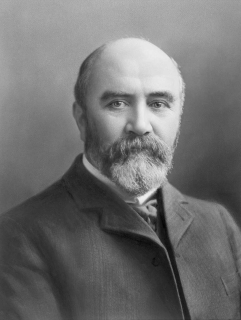
Griffith receives a knighthood in 1911 and becomes vice-president of the Royal Dublin Society in 1922. He serves as Honorary Professor of Harbour Engineering in Trinity College, his alma mater, and receives an honorary M.A.I. degree from the University of Dublin in 1914. From 1922 he is an elected member of the Seanad Éireann, the Irish senate, until its abolition in 1936. In the 1930s he and his niece, Sarah Purser, endow the Purser Griffith Travelling Scholarship and the Purser Griffith Prize to the two best performing students in European Art History at University College Dublin.
Griffith dies at Rathmines Castle in Dublin on October 21, 1938, having rightly earned the epithet ‘Grand Old Man of Irish engineering.’ A portrait in oils by his niece Sarah Purser, RHA, hangs in the Museum Building in Trinity College Dublin.
Cyril James Cusack, Irish actor who appears in numerous films and television productions in a career lasting more than 70 years, dies in Chiswick, London, England on October 7, 1993. In 2020, he is listed at number 14 on The Irish Times‘s list of Ireland’s greatest film actors.
Cusack is born in Durban, Natal, South Africa, on November 26, 1910. His mother, Alice Violet (née Cole), is an English Cockney actress and chorus girl, and his father, James Walter Cusack, is an Irish mounted policeman in the Colony of Natal, South Africa. His parents separate when he is young and his mother takes him to England, and then to Ireland. His mother and her partner, Brefni O’Rorke, join the O’Brien and Ireland Players.
Cusack makes his first stage performance at the age of seven. He is educated at Newbridge College in Newbridge, County Kildare, then reads law at University College Dublin. He leaves without a degree and joins the Abbey Theatre in 1932. Between then and 1945, he performs in over 60 productions, particularly excelling in the plays of Seán O’Casey. He also performs Irish playwright Teresa Deevy‘s plays Katie Roche and The King of Spain’s Daughter. In 1932 he also joins the Gate Theatre company, appearing with them in many notable productions over the years. In 1947, he forms his own company and stages productions in Dublin, Paris and New York.
In 1963, Cusack joins the Royal Shakespeare Company in London and appears there for several seasons. By this stage he has established a successful career in films, which had started at the age of eight. Also in 1963, he wins a Jacob’s Award for his performance in the Telefís Éireann production of Triptych. He receives honorary degrees in 1977 and 1980 from the National University of Ireland (NUI) and the University of Dublin respectively.
Cusack, who is bilingual in English and Irish, has a leading role in the controversial Irish language film Poitín (1977). He is also offered the role of the First Doctor in Doctor Who.
Cusack’s last stage performance is in Anton Chekhov‘s Three Sisters (1990), in which three of his daughters play the sisters.
Cusack is twice married, firstly to Mary Margaret “Maureen” Kiely (1920–1977), on April 5, 1945. Together they have five children: Paul (1946), Sinéad (1948), Sorcha (1949), Niamh (1959), and Pádraig (1962). He and his second wife, Mary Rose Cunningham (1979–1993), have one daughter, Catherine (1968).
In later life, Cusack becomes a campaigner for conservative causes in Ireland, notably in his opposition to abortion, where he becomes a frequent letter-writer to the main liberal Irish newspaper, The Irish Times. Regarding his Catholic faith, he comments “Religion promotes the divine discontent within oneself, so that one tries to make oneself a better person and draw oneself closer to God.” His religious credentials come under scrutiny following his death and the revelation that he had been unfaithful in his first marriage, with a long-term mistress, Mary Rose Cunningham. He marries Cunningham following his first wife’s death.
On October 7, 1993, Cusack dies at the age of 82 at home in Chiswick, Greater London, from amyotrophic lateral sclerosis (ALS). His acting career had lasted 75 years.
In 1883, Ridgeway is elected Professor of Greek at Queen’s College, Cork, then Disney Professor of Archaeology at Cambridge in 1892. He also holds tenure as Gifford lecturer in Religion at the University of Aberdeen from 1909 to 1911 from which is published The Evolution of Religions of Ancient Greece and Rome.
Ridgeway contributes articles to the Encyclopedia Biblica (1903), Encyclopædia Britannica (1911) and writes The Origin of Metallic Currency and Weight Standards (1892), and The Early Age of Greece (1901) which are significant works in Archaeology and Anthropology.
Wilson becomes interested in astronomy and travels to Oran in 1870 to photograph the solar eclipse. In 1871 he acquires a reflecting telescope of 12 inches (30.5 cm) aperture and sets it up in a dome in the gardens of Daramona House. He uses it to experiment on the photography of the moon with wet plates and also begins to study solar radiation using thermopiles. In 1881, he replaces the original telescope with a Grubb reflector of 24 inches (61 cm) aperture and a new dome and mounting that has an electrically controlled clock drive. The new telescope is mounted in a two-story tower attached to the house with an attached physical laboratory, darkroom and machine shop.
Wilson’s main research effort, in partnership with P.L. Gray, is to determine the temperature of the sun using a “differential radio-micrometer” of the sort developed by C.V. Boys in 1889, which combines a bolometer and galvanometer into one instrument. The result of their measurements is an effective temperature of about 8000 °C for the sun which, after correction to deal with absorption in the earth’s atmosphere, give a value of 6590 °C, compared to the modern value of 6075 °C.
Some of Wilson’s other astronomical projects include observations on the transit of Venus, determination of stellar motion, observations of sunspots and a trip to Spain to photograph a solar eclipse. He takes a great many excellent photographs of celestial bodies such as nebulae. His astronomical findings are published in a series of memoirs such as Experimental Observations on the Effective Temperature of the Sun.
Wilson dies on March 6, 1908 at Daramona at the relatively young age of 56, and is buried in the family plot in Steete churchyard. He had married Caroline Ada in 1886, the daughter of Capt. R.C. Granville, and they have a son and two daughters. His son donates his telescope to the University of London, where it is used for research and teaching, finally becoming a feature in Liverpool museum.
In 2017, award-winning artist Vera Klute is commissioned by the National Gallery of Ireland to create a portrait of Hynes as part of the 2015 Hennessey Portrait Prize. The bust, made of porcelain, concrete and timber (with a dimension of 164cm x 54cm x 45cm), is unveiled to the public in April 2017 and is currently on display as part of the Gallery’s National Portrait Collection.
In 1998 Hynes wins the Tony Award for Direction for The Beauty Queen of Leenane, the first woman to receive the award. She is a recipient of many other Theatre Awards, including The Irish Times/ESB Irish Theatre Award for Best Director (2002) and a The Irish Times Special Tribute Award for her contribution to Irish Theatre in February 2005.
Coghill is the son of John Coghill of Knaresborough, North Yorkshire, judge of the prerogative court and one of the masters in chancery. His mother is the daughter of Tobias Cramer, of Ballyfoyle, County Kilkenny. Two elder sisters and a younger brother, James, survive infancy. He spends his childhood in Dublin.
Coghill occupies a prominent place in the life of Dublin, and is remarkable for his early display of ability. At the age of fourteen he enters the University of Dublin, graduating at the age of eighteen as a Bachelor of Laws. At the age of nineteen he is returned to Parliament and at the age of 26 he becomes judge of the prerogative court.
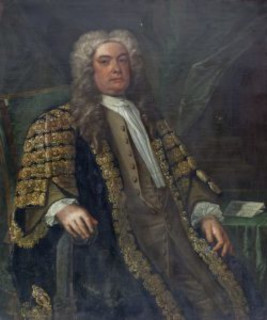
In Parliament, from 1692 to 1713 Coghill is a representative of the borough of Armagh, and from 1713 until his death in 1739, a representative of the University of Dublin. He is politically close to William Conolly, speaker of the Irish House of Commons, who dies in 1729. Upon Conolly’s death he succeeds him as a commissioner of the revenue. Over the following years he plays a prominent role in parliament, particularly on financial matters. He also builds up a close relationship with John Perceval, the British Prime Minister‘s chief advisor on Irish affairs.
Coghill becomes Chancellor of the Exchequer in 1735 and is regarded as an honest and able supporter of Irish interests. Outside parliament he is very active on boards, commissions and trusts, takes a hand in the building of Dr. Steevens’ Hospital and is pro-vice-chancellor of Trinity College Dublin. He lives in Belvedere House, now in the grounds of St. Patrick’s College, Dublin. He suffers from gout for a large part of his life.
From his father, Coghill, who never married, had inherited a lease from the Corporation of lands in Clonturk, where he erects a house which is afterwards known as Drumcondra House. He moves into Drumcondra House and lives there with his unmarried sister Mary until his death in 1738. He is buried in the family vault in St. Andrew’s Church, Dublin.
Upon Coghill’s death Mary is left, for her lifetime, his lands in the barony of Coolock, rents from his properties in Clonturk, all his household goods, and his coach, chariot and horses. In 1743, she erects the parish church of Clonturk, now Drumcondra Church, and places in it a statue of her brother by the Dutch sculptor Peter Scheemakers.
Nominated by the Labour Party and supported by the Green Party and the Workers’ Party, Robinson becomes Ireland’s first woman president in 1990 by mobilizing a liberal constituency and merging it with a more conservative constituency opposed to the Fianna Fáil party. As president, she adopts a much more prominent role than her predecessors and she does much to communicate a more modern image of Ireland. Strongly committed to human rights, she is the first head of state to visit Somalia after it suffers from civil war and famine in 1992 and the first to visit Rwanda after the genocide in that country in 1994.
Shortly before her term as president expires, Robinson accepts the post of United Nations High Commissioner for Human Rights (UNHCHR). As high commissioner, she changes the priorities of her office to emphasize the promotion of human rights at the national and regional levels. She was the first UNHCHR to visit China, and she also helps to improve the monitoring of human rights in Kosovo. In 2001 she serves as secretary-general of the World Conference against Racism held in Durban, South Africa. In 1998 she is elected chancellor of Trinity College, a post she holds until 2019.
After stepping down as UNHCHR, Robinson founds the nongovernmental organization Realizing Rights: The Ethical Globalization Initiative (2002–2010). Its central concerns include equitable international trade, access to health care, migration, women’s leadership and corporate responsibility. She is also a founding member of the Council of Women World Leaders, serves as honorary president of Oxfam International, a private organization that provides relief and development aid to impoverished or disaster-stricken communities worldwide, and is a member of the Club of Madrid, which promotes democracy. She also holds various posts at the United Nations, and in 2010, she establishes the Mary Robinson Foundation—Climate Justice, which operates until 2019.
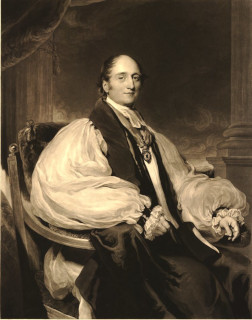
Beresford employs Lewis Nockalls Cottingham, one of the most skilled architects at that time, to restore St. Patrick’s Cathedral, Armagh. Cottingham removes the old, stunted spire and shores up the belfry stages while he rebuilds the piers and arches under it. The arcade walls which had fallen away as much as 21 inches from the perpendicular on the south side and 7 inches on the north side, are straightened by means of heated irons, and the clerestory windows which had long been concealed, are opened out and filled with tracery.
Beresford dies on July 18, 1862, at Woburn, Bedfordshire, England, the home of his niece, in the parish of Donaghadee and is buried in the cathedral. There is a memorial to him in the south aisle at St. Patrick’s Cathedral, Armagh.
In 1979, McGuinness is elected as an independent candidate to Seanad Éireann at a by-election on December 11, 1979, as a Senator for the University of Dublin constituency, following the resignation of Senator Conor Cruise O’Brien, taking her seat in the 14th Seanad. She is re-elected at the 1981 elections to the 15th Seanad, and in 1983 to the 17th Seanad, where she serves until 1987, losing her seat to David Norris. She is appointed to the Council of State on May 2, 1988, by President Patrick Hillery and serves until 1990.
McGuinness is appointed a judge of the Circuit Court in 1994, the first woman to hold that office in Ireland. In 1996, she is appointed to the High Court and remains there until her appointment to the Supreme Court in January 2000.
In November 2005, McGuinness is appointed Adjunct Professor at the Faculty of Law, National University of Ireland, Galway. She is also appointed President of the Law Reform Commission in 2005 and holds that position until 2011.
In April 2009, McGuinness is awarded a “Lord Mayor’s Award” by Lord Mayor of DublinEibhlin Byrne “for her contribution to the lives of children and families in the city through her pioneering work.” In September 2010, she is named as one of the “People of the Year” for “her pioneering, courageous and long-standing service to Irish society.” In November 2012, she wins the Irish Tatler Hall of Fame Award.
In addition to her judicial career, McGuinness serves on the Employment Equality Agency, Kilkenny Incest Investigation, the Forum for Peace and Reconciliation, the National Council of the Forum on End of Life in Ireland and the Irish Universities Quality Board. In June 2011, she becomes patron of the Irish Refugee Council. In November 2011, she is appointed Chairperson of the “Campaign for Children.”
In January 2014, McGuinness is appointed by Minister for Communications, Energy and Natural Resources, Pat Rabbitte, to chair the expert panel to oversee the preparation of reports on the best underground route options to compare with the Grid Link and Grid West high voltage power lines in Ireland. In March 2015, McGuinness receives an Alumni Award from Trinity College Dublin.
McGuinness is married to broadcaster and writer Proinsias Mac Aonghusa from 1954 until his death in 2003 and has three children. She resides in Blackrock, Dublin.
Ussher is born in Dublin on January 4, 1581. Early in life he is determined to pursue a career with the Church of England, a resolve quite similar to that of the Biblical Judge, Samuel.
A gifted polyglot, Ussher enters Dublin Free School and then the newly founded Trinity College, Dublin on January 9, 1594, at the age of thirteen (not an unusual age at the time). He receives his Bachelor of Arts degree by 1598 and is a fellow and MA by 1600. In May 1602, he is ordained in the Trinity College Chapel as a deacon (and possibly priest on the same day) in the ProtestantChurch of Ireland by his uncle Henry Ussher, the Archbishop of Armagh and Primate of All Ireland.
At the age of 26, Ussher becomes Professor and Chairman of the Department of Divinity at the University of Dublin, and he holds his professorship from 1609 to 1621. In 1625, he becomes Archbishop of Armagh, an office he apparently holds until his death. In 1628, King James I makes him a Privy Councillor.
Ussher is considered well-read and well-versed in history, a subject that soon becomes his primary focus. He writes several histories of the doings of the Irish and English churches dating back to Roman times. He also makes himself an expert in Semitic languages, an expertise that informs his argument in favor of the Masoretic Text of the Bible in preference to the Septuagint.
Ussher’s Confessions appear in 1643, followed in 1646 by his fifth work, Here I Stand. His most famous work, the dating of the creation as calculated from the Biblical record, appears in writing in the 1650s.
In 1656, Ussher goes to stay in the Countess of Peterborough’s house in Reigate, Surrey. On March 19, he feels a sharp pain in his side after supper and takes to his bed. His symptoms seem to have been those of a severe internal haemorrhage. Two days later, on March 21, 1656, he dies at the age of 75. His last words are reported as: “O Lord, forgive me, especially my sins of omission.” His body is embalmed and is to have been buried in Reigate, but at Oliver Cromwell‘s insistence he was given a state funeral on April 17 and is buried in the chapel of St. Erasmus in Westminster Abbey.
Ussher’s extensive library of manuscripts, many of them Middle Eastern originals, become part of the collection at the University of Dublin.