seamus dubhghaill

Promoting Irish Culture and History from Little Rock, Arkansas, USA


Leave a comment

Birth of William Thompson, Naturalist

William Thompson, Irish naturalist celebrated for his founding studies of the natural history of Ireland, especially in ornithology and marine biology, is born on December 2, 1805, in the booming maritime city of Belfast.

Thompson is the eldest son of William Thompson, a prosperous linen merchant, and Elizabeth Thompson (née Callwell). He has at least two older sisters and several younger brothers. His mother’s father is Robert Callwell, a printer, book-collector, partner in the Commercial Bank, Belfast, and one of the owners of the Northern Star newspaper.

After attending the Royal Belfast Academical Institution (RBAI) from 1818, Thompson is apprenticed in the linen business of William Sinclair in 1821. When his apprenticeship ends, he goes with his cousin George Langtry, later a wealthy shipowner, on a four-month tour (May–September 1826) of the Low Countries, the Rhine, Switzerland, and Italy. On his return to Belfast, he sets up his own business in linen bleaching. Despite early success, losses are incurred. As family and economic circumstances change, he increasingly concentrates on his natural history studies. By 1831 he has given up business. A self-taught naturalist, related by ties of kinship or friendship to most of the liberal and cultivated families of the “northern Athens,” he is shy and fastidious, but is persuaded in 1826 to join the Belfast Natural History Society by its founder, his friend James Lawson Drummond. He reads his first scientific paper, The Birds of the Copeland Islands, to the society on August 13, 1827. In that year he becomes a member of the Belfast Natural History Society’s council, and in 1833 he is chosen as one of the society’s vice-presidents. He is president from 1843 until his death.

Thompson becomes the most important naturalist in mid nineteenth-century Ireland. From 1827 to 1852 he contributes almost eighty papers on Irish natural history to the Magazine of Zoology and Botany and the Proceedings of the Zoological Society of London. From 1836 to 1851 he contributes to The Magazine of Natural History. Invited to travel to the Levant and the Aegean Sea in April–July 1841 with Edward Forbes, professor of natural history at the University of Edinburgh, on HMS Beacon, he observes twenty-three species of birds on migratory flights and publishes “Notice of migratory birds” in The Annals of Natural History. His authoritative observations add considerably to knowledge of the still-to-be-ascertained details of migratory patterns. Indeed, some people refuse to believe, even at that date, that birds do migrate. He publishes other papers in the same journal during 1841–43. At a meeting of the British Association for the Advancement of Science in Glasgow in 1840 his Report on the fauna of Ireland (Vertebrata) attracts favourable notice. He presents and publishes a second and final part enumerating the invertebrates at the Cork meeting of the British Association in August 1843. The two reports form the most complete catalogue of Irish fauna yet published. Thanks to an assiduous correspondence with a network of informants, as well as his own extensive observations, he adds perhaps more than 800 species to Irish fauna lists.

Thompson’s chief work, The Natural History of Ireland, becomes the standard text in Irish zoology in the nineteenth century. The first three volumes, published between 1849 and 1851, deal with birds, particularly their habits and habitats rather than physical descriptions. He is one of the first naturalists to note the effects of industrialisation and other human activities on birdlife. He leaves instructions for his manuscripts on the remaining vertebrates and all the invertebrates to be prepared for publication by Robert Patterson and James Ramsey Garrett. Robert Ball and George Dickie also assist. His notes, though detailed and comprehensive, all require checking, and are found on tiny scraps of paper, even scribbled on the flaps of old envelopes. James Thompson of Macedon, Belfast, painstakingly gums them all into blank notebooks to facilitate the work of his brother’s literary executors, who preface the posthumous publication in 1856 with a lengthy memoir of their friend.

From about 1820 to 1852 Thompson lives with his mother at 1 Donegall Square West, Belfast, commuting from Holywood House, Holywood, County Down, during the summer. His daily routine begins with research, correspondence, or writing for publications for four hours after breakfast. After a two- or three-hour exercise period and dinner, he returns to work for a further two to three hours. He is president of the Belfast Literary Society (1837–39) and also an enthusiastic patron of the visual arts in the city. He enjoys hunting, wildfowling, shooting in Scotland, and gardening, though his health deteriorates from the 1840s.

Early in 1852 Thompson travels to London to make arrangements for that year’s Belfast meeting of the British Association. On February 15 he becomes ill, having suffered a minor stroke. He dies, unmarried, at his Jermyn Street lodgings on the day he is due to return home, February 17, 1852. He is buried in Clifton Street Cemetery, Belfast. He bequeaths his collection to the Belfast Natural History Society, and in March 1852 the Society adds a memorial Thompson Room to its museum, paid for by subscription.

Thompson is a corresponding member of natural history societies in Boston and Philadelphia and has many friends. He is known to assist many other researchers in Ireland, Britain, and the Continent. One of those who thinks highly of his work is Charles Darwin, with whom he corresponds. He also helps many local people, including the poet Francis Davis, with money and practical assistance. He is much loved, and his friends are deeply saddened by his death. His niece, Sydney Mary Thompson, later known by her married surname, Christen, who is born in Belfast, is an amateur naturalist, geologist, and artist, one of the first women to achieve distinction in geology.

(From: “Thompson, William” by Andrew O’Brien and Linde Lunney, Dictionary of Irish Biography, http://www.dib.ie, October 2009)


Leave a comment

Death of Thomas Addis Emmet, Lawyer & Politician

Thomas Addis Emmet, Irish and American lawyer and politician, dies at his home in New York on November 14, 1827, following a seizure while in court. He is a senior member of the revolutionary republican group Society of United Irishmen in the 1790s and Attorney General of New York 1812–1813.

Emmett is born in the Hammond’s Marsh area of Cork, County Cork, on April 24, 1764, the son of Dr. Robert Emmet from County Tipperary (later to become State Physician of Ireland) and Elizabeth Mason of County Kerry, both of whose portraits are today displayed at Cork’s Crawford Art Gallery. He is the elder brother of Robert Emmet, who is executed for leading the Irish Rebellion of 1803, becoming one of Ireland’s most famous republican martyrs. His sister, Mary Anne Holmes, holds similar political beliefs.

Emmet is educated at Trinity College, Dublin and is a member of the committee of the College Historical Society. He later studies medicine at the University of Edinburgh and is a pupil of Dugald Stewart in philosophy. After visiting the chief medical schools on the continent, he returns to Ireland in 1788. However, the sudden death of his elder brother, Christopher Temple Emmet (1761–1788), a student of great distinction, induces him to follow the advice of Sir James Mackintosh to forsake medicine for the law as a profession.

Emmet is a man of liberal political sympathies and becomes involved with a campaign to extend the democratic franchise for the Irish Parliament and to end discrimination against Catholics. He is called to the Irish bar in 1790 and quickly obtains a practice, principally as counsel for prisoners charged with political offenses. He also becomes the legal adviser of the Society of the United Irishmen.

When the Dublin Corporation issues a declaration of support of the Protestant Ascendancy in 1792, the response of the United Irishmen is their nonsectarian manifesto which is largely drawn up by Emmet. In 1795 he formally takes the oath of the United Irishmen, becoming secretary in the same year and a member of the executive in 1797. As by this time the United Irishmen had been declared illegal and driven underground, any efforts at peaceful reform of government and Catholic emancipation in Ireland are abandoned as futile, and their goal is now the creation of a non-sectarian Irish republic, independent from Britain and to be achieved by armed rebellion. Although Emmet supports this policy, he believes that the rebellion should not commence until French aid has arrived, differing from more radical members such as Lord Edward FitzGerald.

British intelligence infiltrates the United Irishmen and manages to arrest most of their leaders on the eve of the rebellion. Though not among those taken at the house of Oliver Bond on March 12, 1798, Emmet is arrested about the same time and is one of the leaders imprisoned initially at Kilmainham Gaol and later in Scotland at Fort George until 1802. Upon his release he goes to Brussels where he is visited by his brother Robert in October 1802 and is informed of the preparations for a fresh rising in Ireland in conjunction with French aid. However, at that stage France and Britain are briefly at peace, and the Emmets’ pleas for help are turned down by Napoleon.

Emmet receives news of the failure of his brother’s rising in July 1803 in Paris, where he is in communication with Napoleon. He then emigrates to the United States and joins the New York bar where he obtains a lucrative practice.

After the death of Matthias B. Hildreth, Emmet is appointed New York State Attorney General in August 1812 but is removed from office in February 1813 when the opposing Federalist Party obtains a majority in the Council of Appointment.

Emmet’s abilities and successes become so acclaimed, and his services so requested that he becomes one of the most respected attorneys in the nation, with United States Supreme Court Justice Joseph Story declaring him to be “the favourite counsellor of New York.” He argues the case for Aaron Ogden in the landmark United States Supreme Court case of Gibbons v. Ogden, 22 U.S. 1 (1824) relating to the Commerce and Supremacy clauses of the United States Constitution.

Emmet dies on November 14, 1827, while conducting a case in court regarding the estate of Robert Richard Randall, the founder of Sailors’ Snug Harbor, a home for needy seamen in Staten Island, New York. He is buried in St. Mark’s Church in-the-Bowery churchyard in the East Village, New York City, where a large white marble monument marks his grave.


3 Comments

Birth of Irish Historian Gerard Anthony Hayes-McCoy

Gerard Anthony Hayes-McCoy, an Irish historian regarded as one of the leading Irish historians of his generation, is born in Galway, County Galway, on August 15, 1911.

Hayes-McCoy is born to Thomas Hayes-McCoy and Mary Kathleen Hayes-McCoy (née Wallace). His grandfather, Thomas Hayes-McCoy, is a Dubliner who as a child came to Galway in 1834 and is later a well-known Parnellite. His maternal grandfather, Thomas Burke, is a Galway artist. He grows up on Eyre Square where his father runs a gentleman’s hairdressing business. His two older siblings are Ignatius and Marguerite. The latter receives a PhD-degree in History at University College Galway (UCG), and later teaches at the Galway Technical School.

Hayes-McCoy receives his early education from the Patrician Brothers, Galway. His earliest notebook of 1927 and a manuscript history of Poland of the same year, now at the National Library of Ireland (NLI), testify to an early interest in history and heritage. From 1928 to 1932 he is a student scholarship holder at University College Galway, graduating in 1932 with a Bachelor of Commerce, and a Bachelor of Arts, with first-class honours in both, and a specialisation in “History, Ethics, Politics” for the latter. Mary Donovan O’Sullivan is one of his professors of history, and Liam Ó Briain, professor of Romance languages, is a stimulating influence. At this time, Hayes-McCoy is a member of the Republican Club, a committee member of the Literary and Debating Society, and in 1931 he is one of the founding members of a new Irish Students’ Association.

Hayes-McCoy pursues his PhD at the University of Edinburgh, and then spends two years at the Institute of Historical Research, London, in the Tudor seminar of J. E. Neale, rewriting his PhD and eventually publishing it as Scots mercenary forces in Ireland, 1565–1603 (Dublin and London, 1937), with a foreword by Eoin MacNeill. This is characterised by meticulous archival research, and it anticipates by sixty years the much-vaunted New British History of the late twentieth century by tracing the interconnections between events in England, Ireland, and Scotland.

In the absence of an academic post, Hayes-McCoy becomes an assistant keeper in the Art and Industrial Division at the National Museum of Ireland (1939–1959), with a responsibility for the Military History, and the Irish War of Independence collections. One of his first tasks is to prepare a standing exhibition on Irish history before 1916. His research, long-standing personal interest in the military, and his curatorial experience, helps form an expert knowledge of historical Irish warfare. This leads to his role in co-founding The Military History Society of Ireland in 1949 whose journal, The Irish Sword, he edits. He describes the vagaries of setting up such a body, its reception, and the historiographical considerations attendant on it, in a paper published posthumously in The Irish Sword.

On August 19, 1941, Hayes-McCoy marries Mary Margaret “May” O’Connor, daughter of C.J. and M.B. O’Connor of New Ross/Enniscorthy. They have three daughters and two sons: Mary, Ann, Ian, Robert, Felicity. The family home is in Dublin.

Earning high reputation by continued research and by publishing leads to Hayes-McCoy’s receipt of the D.Litt. degree from the National University, and to his membership in the Royal Irish Academy in 1950. In his professional career, apart from the broad spectrum of press publications, he publishes prolifically. The works that are judged most influential, are his Scots mercenary forces in Ireland 1565–1603 (1937), the papers “The early history of guns in Ireland” (1938–1939), “Strategy and tactics in Irish warfare, 1593–1601” (1941), “The army of Ulster, 1593–1601” (1951), the controversial “Gaelic society in Ireland in the late sixteenth century” (1963), and the monographs “Irish battles” (London 1969), and “A history of Irish flags from earliest times” (Dublin 1979). A member of the Irish Manuscripts Commission, his most notable contribution is the publication “Ulster and other Irish maps, c.1600” (Dublin 1964).

In 1946, Hayes-McCoy is appointed to a committee of eight historians to advise on setting up the Bureau of Military History, a body established for the creation and compilation of material on the history of the Irish movements for independence, 1913–1921, specifically from witness statements. The committee is also to further offer guidance and oversee progress of the Bureau in coordination with the Ministry of Defence. It subsequently expresses concerns about the state’s role and methods in the collection of statements.

Having begun writing for the press at an early stage, Hayes-McCoy’s public position at the Museum encourages him to go further. He has broad involvement with local history groups to whom he presents papers, and also works for newspapers and for radio and television. To the national and Galway press he usually contributes articles on military aspects of Irish history, as well as book reviews, but he also uses them as a platform to engage with what he sees are flaws in the education of history in Ireland which during his lifetime is constrained by a certain degree of political and cultural state control.

During the 1940s and 1950s, Hayes-McCoy becomes involved in a number of paratheatrical events of national significance one of which – the “Pageant of St.Patrick” for which he writes the script (An Tóstal 1954) – is realised on an immense scale. He scripts these works to begin with and is later principally engaged as historical consultant. In that capacity, he collaborates in 1955 and 1956 with Micheál Mac Liammóir and Denis Johnston on their scripts for pageants on St. Patrick and on the Táin Bó Cuailgne, at times finding it difficult to square the historical liberties taken by these artists with his own role.

On Irish radio and television Hayes-McCoy is most active in the mid-1960s, editing and contributing to Thomas Davis lectures series, writing scripts for a series of thirty children’s programmes on all aspects of Irish history, and preparing/contributing on air to the television series “Irish battles” and “The long winter.” As well as writing for RTÉ, Ireland’s national broadcaster, he contributes scripts to BBC Northern Ireland‘s schools radio programmes.

In 1959, Hayes-McCoy succeeds to the chair of his former history professor at UCG with the full remit of lecturing, administering examinations to undergraduates, and supervising postgraduate theses. Among his students who continue in the field of history are Nicholas Canny, Martin Coen, Patrick Melvin, Peter Toner, Tony Claffey, and Breandán Ó Bric. After his appointment to UCG, the family home remains in Dublin, and he commutes to Galway weekly during term time.

In the early 1960s, Hayes-McCoy becomes a spokesperson for the movement rekindled by the Old Galway Society to preserve the landmark “Lion’s Tower” in the city. The ultimate failure of the campaign informs his regret, expressed a year later, that Ireland is forgetful about its past and that “we don’t bother to find out about it or to maintain our ancient heritage,” and, on a perceived spirit of conformity, “take my own city of Galway, it is now more prosperous than it was, but it is no longer distinctive. I do not believe that it is essential for progress that we should lose our heritage.”

While at one time member and secretary of the London Sinn Féin office and informed by a pride of country and place, Hayes-McCoy’s professional and private outlook are marked by a distrust of nationalism or of any antagonising national agendas compromising genuine scholarship. In a paper drafted on tendencies in modern historical studies, he criticises the two historiographical extremes, each to be avoided, each unfortunately characteristic of the moment – extreme de-bunking and extreme “adding for effect.” “A history is a record of fact; to add pseudo-facts is as grave a sin as to leave out real facts that may change the colour of the whole.”

Hayes-McCoy’s abiding pastime is drawing. Among his papers in the James Hardiman Library, NUI Galway are approximately 40 items with predominantly maritime subjects, and he has a special regard for the history of ships, and a romantic liking of the sea. He also has a lifelong interest in Robert Louis Stevenson, Sir Walter Scott, and their works, and in the Pre-Raphaelite movement.

Hayes-McCoy’s middle age is marked by intermittent ill health. He dies on November 27, 1975, in his room at the Great Southern Hotel, Eyre Square, Galway.

Hayes-McCoy’s papers are held at the James Hardiman Library, National University of Ireland, Galway.


Leave a comment

Birth of Ophthalmologist Arthur Jacob

Arthur Jacob, Irish ophthalmologist, is born on June 13, 1790, at Knockfin, near Maryborough, Queens County (now Portlaoise, County Laois). He is known for founding several hospitals, a medical school, and a medical journal. He contributes to science and academia through his 41-year term as Professor of Anatomy at the Royal College of Surgeons in Ireland (RCSI) and as the first Irish ocular pathologist. He is elected President of RCSI in 1837 and 1864.

Jacob is the second son of John Jacob, M.D. (1754–1827), surgeon to the Queen’s County infirmary, Maryborough, by his wife Grace (1765–1835), only child of Jerome Alley of Donoughmore. He studies medicine with his father and at Dr. Steevens’s Hospital, Kilmainham, Dublin, under Abraham Colles. Having graduated M.D. at the University of Edinburgh in 1814, he sets out on a walking tour through the United Kingdom, crossing the English Channel at Dover, and continuing his walk from Calais to Paris.

Jacob studies at Paris until Napoleon‘s return from Elba. He subsequently pursues his studies in London under Sir Benjamin Collins Brodie, Sir Astley Cooper, and Sir W. Lawrence. In 1819 he returns to Dublin and becomes demonstrator of anatomy under Dr. James Macartney at Trinity College Dublin. Here his anatomical research gains for him a reputation, and he collects a museum, which Macartney afterwards sells to the University of Cambridge.

On leaving Macartney, Jacob joins with Robert James Graves and others in founding the Park Street School of Medicine. In 1826 he is elected Professor of Anatomy and Physiology at Royal College of Surgeons in Ireland (RCSI) and holds the chair until 1869. He is elected President of RCSI in 1837 and 1864. He founds an Ophthalmic Hospital in Pitt (now Balfe) Street in 1829 and in 1832, in conjunction with Charles Benson and others, he founds the Baggot Street Hospital, Baggot Street, and later practices there after the opening of a dedicated eye ward. His younger rival, Sir William Wilde, subsequently founds the competing St. Mark’s Ophthalmic Hospital in Lincoln Place (beside Trinity College) in 1844.

In 1839, with Dr. Henry Maunsell, Jacob starts the Dublin Medical Press, a weekly journal of medical science, and edits forty-two volumes from 1839 to 1859, in order “to diffuse useful knowledge… to instil honourable principles, and foster kind feelings in the breast of the student” among other desirable aims. He also contributes to the Dublin Journal of Medical Science. He takes an active part in founding the Royal Medical Benevolent Fund Society of Ireland and the Irish Medical Association.

At the age of seventy-five Jacob retires from the active pursuit of his profession. His fame rests on his anatomical and ophthalmological discoveries.

In December 1860 a medal bearing Jacob’s likeness is struck and presented to him, and his portrait, bust, and library are later placed in the Royal College of Surgeons in Ireland. He dies at Newbarnes, Barrow-in-Furness, Cumbria, England, on September 21, 1874. He is buried at Mount Jerome Cemetery, Dublin.

In 1819 Jacob announces the discovery, which he had made in 1816, of a previously unknown membrane of the eye, in a paper in the Philosophical Transactions of the Royal Society. The membrane has been known since as membrana Jacobi and forms the retina. Apart from his discovery of the membrana Jacobi, he describes Jacob’s ulcer, and revives cataract surgery through the cornea with a curved needle, Jacob’s needle. To the Cyclopædia of Anatomy he contributes an article on the eye, and to the Cyclopædia of Practical Medicine treatises on Ophthalmia and Amaurosis.

In 1824 Jacob marries Sarah, daughter of Coote Carroll, of Ballymote, County Sligo. The marriage produces five sons. She dies on January 6, 1839.

(Pictured: Photograph of a marble bust of Arthur Jacob on the main staircase of the Royal Victoria Eye and Ear Hospital, Dublin, Ireland)


Leave a comment

Birth of Thomas Addis Emmet, Lawyer, Politician & Revolutionary

Thomas Addis Emmet, Irish and American lawyer and politician, is born in the Hammond’s Marsh area of Cork, County Cork, on April 24, 1764. He is a senior member of the revolutionary republican group Society of United Irishmen in the 1790s and Attorney General of New York 1812–1813.

Emmet is a son of Dr. Robert Emmet from County Tipperary (later to become State Physician of Ireland) and Elizabeth Mason of County Kerry, both of whose portraits are today displayed at Cork’s Crawford Art Gallery. He is the elder brother of Robert Emmet, who is executed for leading the Irish Rebellion of 1803, becoming one of Ireland’s most famous republican martyrs. His sister, Mary Anne Holmes, holds similar political beliefs.

Emmet is educated at Trinity College, Dublin and is a member of the committee of the College Historical Society. He later studies medicine at the University of Edinburgh and is a pupil of Dugald Stewart in philosophy. After visiting the chief medical schools on the continent, he returns to Ireland in 1788. However, the sudden death of his elder brother, Christopher Temple Emmet (1761–1788), a student of great distinction, induces him to follow the advice of Sir James Mackintosh to forsake medicine for the law as a profession.

Emmet is a man of liberal political sympathies and becomes involved with a campaign to extend the democratic franchise for the Irish Parliament and to end discrimination against Catholics. He is called to the Irish bar in 1790 and quickly obtains a practice, principally as counsel for prisoners charged with political offenses. He also becomes the legal adviser of the Society of the United Irishmen.

When the Dublin Corporation issues a declaration of support of the Protestant Ascendancy in 1792, the response of the United Irishmen is their nonsectarian manifesto which is largely drawn up by Emmet. In 1795 he formally takes the oath of the United Irishmen, becoming secretary in the same year and a member of the executive in 1797. As by this time the United Irishmen had been declared illegal and driven underground, any efforts at peaceful reform of government and Catholic emancipation in Ireland are abandoned as futile, and their goal is now the creation of a non-sectarian Irish republic, independent from Britain and to be achieved by armed rebellion. Although Emmet supports this policy, he believes that the rebellion should not commence until French aid has arrived, differing from more radical members such as Lord Edward FitzGerald.

British intelligence infiltrates the United Irishmen and manages to arrest most of their leaders on the eve of the rebellion. Though not among those taken at the house of Oliver Bond on March 12, 1798, Emmet is arrested about the same time and is one of the leaders imprisoned initially at Kilmainham Gaol and later in Scotland at Fort George until 1802. Upon his release he goes to Brussels where he is visited by his brother Robert in October 1802 and is informed of the preparations for a fresh rising in Ireland in conjunction with French aid. However, at that stage France and Britain are briefly at peace, and the Emmets’ pleas for help are turned down by Napoleon.

Emmet receives news of the failure of his brother’s rising in July 1803 in Paris, where he is in communication with Napoleon Bonaparte. He then emigrates to the United States and joins the New York bar where he obtains a lucrative practice.

After the death of Matthias B. Hildreth, Emmet is appointed New York State Attorney General in August 1812 but is removed from office in February 1813 when the opposing Federalist Party obtains a majority in the Council of Appointment.

Emmet’s abilities and successes become so acclaimed, and his services so requested that he becomes one of the most respected attorneys in the nation, with United States Supreme Court Justice Joseph Story declaring him to be “the favourite counsellor of New York.” He argues the case for Aaron Ogden in the landmark United States Supreme Court case of Gibbons v. Ogden, 22 U.S. 1 (1824) relating to the Commerce and Supremacy clauses of the United States Constitution.

Emmet dies on November 14, 1827, while conducting a case in court regarding the estate of Robert Richard Randall, the founder of Sailors’ Snug Harbor, a home for needy seamen in Staten Island, New York. He is buried in St. Mark’s Church in-the-Bowery churchyard in the East Village, New York City, where a large white marble monument marks his grave.


Leave a comment

Death of Samuel Henry Butcher, Scholar & Politician

Samuel Henry Butcher, Anglo-Irish classical scholar and politician, dies in London on December 29, 1910.

Butcher is born in Dublin on April 16, 1850, the son of Samuel Butcher, Bishop of Meath, and Mary Leahy. John Butcher, 1st Baron Danesfort, is his younger brother. He is educated at Marlborough College in Wiltshire and then receives a place at Trinity College, Cambridge, attending between 1869 and 1873 where he is Senior Classic and Chancellor’s medalist. He is elected fellow of Trinity in 1874.

Butcher leaves Trinity on his marriage, in 1876, to Rose Julia Trench (1840-1902), the daughter of Archbishop Richard Chenevix Trench. The marriage produces no children.

From 1876 to 1882 Butcher is a fellow of University College, Oxford, and tutors there. From 1882 to 1903 he is Professor of Greek at the University of Edinburgh succeeding Prof. John Stuart Blackie. During this period, he lives at 27 Palmerston Place in Edinburgh‘s West End. He is succeeded at the University of Edinburgh by Prof. Alexander William Mair.

Butcher is one of the two Members of Parliament for Cambridge University, between 1906 and his death, representing the Liberal Unionist Party. He is President of the British Academy from 1909 to 1910.

Butcher dies in London on December 29, 1910, and his body is returned to Scotland and interred at the Dean Cemetery in Edinburgh with his wife. His grave has a pale granite Celtic cross and is located near the northern path of the north section in the original cemetery.

Butcher’s many publications include, in collaboration with Andrew Lang, a prose translation of Homer‘s Odyssey which appears in 1879 and the OCT edition of Demosthenes, Orationes, vol. I (Or. 1-19, Oxford, 1903), II.i (Or. 20–26, Oxford, 1907).


Leave a comment

Birth of Thomas Andrews, Chemist & Physicist

Thomas Andrews FRS FRSE, chemist and physicist who does important work on phase transitions between gases and liquids, is born in Belfast on December 19, 1813. He is a longtime professor of chemistry at Queen’s University Belfast.

Andrews’ father is a linen merchant. He attends the Belfast Academy and the Royal Belfast Academical Institution, where at the latter of which he studies mathematics under James Thomson. In 1828 he goes to the University of Glasgow to study chemistry under Professor Thomas Thomson, then studies at Trinity College, Dublin, where he gains distinction in classics as well as in science. Finally, at University of Edinburgh in 1835, he is awarded a doctorate in medicine.

Andrews begins a successful medical practice in his native Belfast in 1835, also giving instruction in chemistry at the Academical Institution. In 1842, he marries Jane Hardie Walker (1818–1899). They have six children, including the geologist Mary Andrews. In 1845 he is appointed vice-president of the newly established Queen’s University Belfast, and professor of chemistry there. He holds these two offices until his retirement in 1879 at age 66.

Andrews first becomes known as a scientific investigator with his work on the heat developed in chemical actions, for which the Royal Society awards him a Royal Medal in 1844. Another important investigation, undertaken in collaboration with Peter Guthrie Tait, is devoted to ozone.

Andrews’ reputation mainly rests on his work with liquefaction of gases. In the 1860s he carries out a very complete inquiry into the gas laws, expressing the relations of pressure, temperature, and volume in carbon dioxide. In particular, he establishes the concepts of critical temperature and critical pressure, showing that a substance passes from vapor to liquid state without any breach of continuity.

In Andrews’ experiments on phase transitions, he shows that carbon dioxide may be carried from any of the states we usually call liquid to any of those we usually call gas, without losing homogeneity. The mathematical physicist Josiah Willard Gibbs cites these results in support of the Gibbs free energy equation. They also set off a race among researchers to liquify various other gases. In 1877-78 Louis Paul Cailletet is the first to liquefy oxygen.

Andrews dies in Belfast on November 26, 1885, and is buried in the Borough Cemetery in the city.


Leave a comment

Birth of James Logan, 14th Mayor of Philadelphia

James Logan, a Scotch-Irish colonial American statesman, administrator, and scholar who serves as the fourteenth mayor of Philadelphia and holds a number of other public offices, is born in Lurgan, County Armagh, in what is now Northern Ireland, on October 20, 1674. He serves as colonial secretary to William Penn and is a founding trustee of the College of Philadelphia, the predecessor of the University of Pennsylvania.

Logan is born to Ulster Scots Quaker parents Patrick Logan (1640–1700) and Isabella, Lady Hume (1647–1722), who marry in early 1671 in Midlothian, Scotland. His father has a Master of Arts degree from the University of Edinburgh, and originally is an Anglican clergyman before converting to Quakerism, or the Society of Friends. Although apprenticed to a Dublin linen-draper, he receives a good classical and mathematical education, and acquires a knowledge of modern languages not common at the period. The Williamite War in Ireland (1688–1691) obliges him to follow his parents, first to Edinburgh, and then to London and Bristol, England where, in 1693, he replaces his father as schoolmaster. In 1699, he comes to the colony of Pennsylvania aboard the Canterbury as William Penn’s secretary.

Later, Logan supports proprietary rights in Pennsylvania and becomes a major landowner in the growing colony. After advancing through several political offices, including commissioner of property (1701), receiver general (1703), clerk (1701), and member (1703) of the provincial council, he is elected mayor of Philadelphia in 1722. During his tenure as mayor, he allows Irish Catholic immigrants to participate in the city’s first public Mass. He later serves as the colony’s chief justice from 1731 to 1739, and in the absence of a governor of Pennsylvania, becomes acting governor from 1736 to 1738.

As acting governor, Logan opposes Quaker pacifism and war tax resistance, and encourages pacifist Quakers to give up their seats in the Pennsylvania General Assembly so that it can make war requisitions. On October 9, 1736, he responds to requests from Native American leaders to control the sale of alcohol, which is creating serious social problems, by prohibiting the sale of rum in indigenous communities, but as the penalty 1s only a fine of ten pounds and the law is poorly enforced, it does not have a significant effect.

During his tenure as acting governor, Logan plays an active role in the territorial expansion of the colony. Whereas William Penn and his immediate successors had pursued a policy of friendly relations with the Leni Lenape (Delaware) peoples, Logan and other colony proprietors (notably the indebted brothers John, Richard and Thomas Penn) pursue a policy of land acquisition. Such efforts to expand are spurred by increased immigration to the colony and fears that the New York Colony is infringing on Pennsylvania’s northern borders in the Upper Delaware river valley. In addition, many proprietors (including Logan and the Penn brothers) had engaged in extensive land speculation, selling off lands occupied by the Lenape to new colonists before concluding an official treaty with the tribe.

As part of his efforts to expand Pennsylvania, Logan signs the Walking Treaty of 1737, commonly referred to as the Walker Purchase, with the Lenape, forcing the tribe to vacate lands in the Upper Delaware and Lehigh valleys under the auspices of the tribe having sold the lands to William Penn in 1686, a treaty whose ratifying document is considered by some sources to have been a fabrication. Under the terms of the treaty, the Lenape agree to cede as much territory as a man could walk in one and one-half days to the Pennsylvania colony. However, Logan uses the treaty’s vague wording, the Lenape’s unclear diplomatic status, and a heavily influenced “walk” to claim a much larger territory than is originally expected by the Lenape. In addition, he negotiates with the powerful Iroquois Confederacy to allow for the treaty to take place. As a result, the Iroquois (nominally the diplomatic overlords and protectors of the Lenape people) rebuff Lenape attempts to have the Iroquois intervene on their behalf. The net result of the Walker Treaty increases the colony’s borders by over 1,200,000 acres but leads to the diplomatic isolation of the Lenape people and a breakdown in relations between the Pennsylvania colony and the tribe.

Meanwhile, Logan engages in various mercantile pursuits, especially fur trading, with such success that he becomes one of the wealthiest men in the colonies. He writes numerous scholarly papers published by the American Philosophical Society and European journals. He is also a natural scientist whose primary contribution to the emerging field of botany is a treatise that describes experiments on the impregnation of plant seeds, especially corn. He tutors John Bartram, the American botanist, in Latin and introduces him to Carl Linnaeus.

Logan’s mother comes to live with him in Philadelphia in 1717. She dies on January 17, 1722, at Stenton, Logan’s country home. His daughter, Sarah, marries merchant and statesman Isaac Norris. Logan dies at the age of 77 on October 31, 1751, at Stenton, near Germantown, at the age of 77, and is buried at the site of Arch Street Friends Meeting House (built in 1804).

In Philadelphia, the Logan neighborhood and the landmark Logan Circle are named for him. His 1730 estate “Stenton” (now a National Historic Landmark, operated as a museum) is located in Logan area.


Leave a comment

Birth of Samuel Henry Butcher, Scholar & Politician

Samuel Henry Butcher, Anglo-Irish classical scholar and politician, is born in Dublin on April 16, 1850.

Butcher is the son of Samuel Butcher, Bishop of Meath, and Mary Leahy. John Butcher, 1st Baron Danesfort, is his younger brother. He is educated at Marlborough College in Wiltshire and then receives a place at Trinity College, Cambridge, attending between 1869 and 1873 where he is Senior Classic and Chancellor’s medalist. He is elected fellow of Trinity in 1874.

Butcher leaves Trinity on his marriage, in 1876, to Rose Julia Trench (1840-1902), the daughter of Archbishop Richard Chenevix Trench. The marriage produces no children.

From 1876 to 1882 Butcher is a fellow of University College, Oxford, and tutors there. From 1882 to 1903 he is Professor of Greek at the University of Edinburgh succeeding Prof. John Stuart Blackie. During this period, he lives at 27 Palmerston Place in Edinburgh‘s West End. He is succeeded at the University of Edinburgh by Prof. Alexander William Mair.

Butcher is one of the two Members of Parliament for Cambridge University, between 1906 and his death, representing the Liberal Unionist Party. He is President of the British Academy from 1909 to 1910.

Butcher dies in London on December 29, 1910, and his body is returned to Scotland and interred at the Dean Cemetery in Edinburgh with his wife. His grave has a pale granite Celtic cross and is located near the northern path of the north section in the original cemetery.

Butcher’s many publications include, in collaboration with Andrew Lang, a prose translation of Homer‘s Odyssey which appears in 1879 and the OCT edition of Demosthenes, Orationes, vol. I (Or. 1-19, Oxford, 1903), II.i (Or. 20–26, Oxford, 1907).


Leave a comment

Birth of Actor Patrick Malahide

patrick-malahide

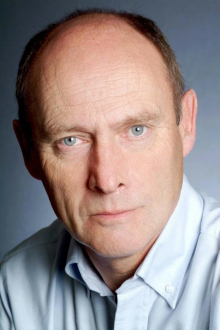
Patrick Gerald Duggan, British actor known professionally as Patrick Malahide, is born in Reading, Berkshire, England on March 24, 1945. He is known for his roles as Detective Sergeant Albert Chisholm in the TV series Minder and Balon Greyjoy in the TV series Game of Thrones. His stage name comes from Malahide Castle, where his mother once worked as a cook.

Duggan is the son of Irish immigrants. His mother works as a cook while his father is a school secretary. He was educated at Douai School, Woolhampton, Berkshire. He studies experimental psychology for two years at the University of Edinburgh but leaves school feeling unsatisfied and decides to try his hand at acting. Prior to making it as an actor, he sells bone china to U.S. soldiers stationed in Germany.

Duggan makes his television debut in 1976 in an episode of The Flight of the Heron, followed by single episodes of Sutherland’s Law and The New Avengers (1976) and ITV‘s Playhouse (1977). He then appears in an adaptation of The Eagle of the Ninth, and his first film is Sweeney 2 in the following year. In 1979 he begins a nine-year stint as Detective Sergeant Albert “Cheerful Charlie” Chisholm in the popular TV series Minder.

Duggan’s television appearances include dramas The Singing Detective (1986) and Middlemarch (1994), and he plays Ngaio Marsh‘s Inspector Roderick Alleyn in The Inspector Alleyn Mysteries (1993–1994). His films include Comfort and Joy (1984), A Month in the Country (1987) and Captain Corelli’s Mandolin (2001). In 1999, he makes a small appearance in the introduction to the James Bond film The World Is Not Enough as a Swiss banker named Lachaise working in Bilbao. He plays Mr. Ryder in the 2008 film adaptation of Brideshead Revisited, and from 2012 to 2016 portrays Balon Greyjoy, the father of Theon Greyjoy, in the TV series Game of Thrones. He portrays Magnus Crome in the 2018 film Mortal Engines.