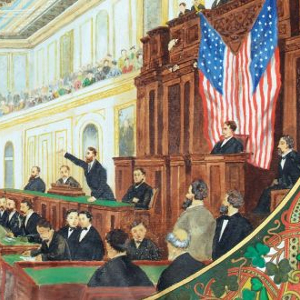
Only the fourth international leader to be invited to address the House, Parnell reports on the conditions of the Irish potato famine and its causes. “The present famine, as all other famines in Ireland, has been the direct result of the system of land tenure which is maintained there,” Parnell said, “And while we have been compelled by the frightful condition of our people . . . I feel it to be equally my duty to point out to you the cause which keeps Ireland in a condition of chronic poverty.”
After his 32-minute speech, the House adjourns for the evening. The Tribune judges Parnell’s address to be lackluster stating “the whole affair was tame and spiritless.” One Representative tells the Tribune reporter that the address failed because it lacked substance by “not going [even] skin deep into the subject of the Irish question.”
During Parnell’s highly successful tour, in addition to speaking before the House of Representatives, he has an audience with American PresidentRutherford B. Hayes and speaks in 62 cities in the United States and Canada, where he is so well received in Toronto that Timothy Healy dubs him “the uncrowned king of Ireland.”
House Receptions are not associated with other informal, social receptions and lunches provided for foreign leaders on behalf of congressional leadership or individual committees. In the post-World War II era, the practice of using one-chamber receptions is eventually discontinued. The last House Reception of a foreign leader is held for Mexican PresidentJosé López Portillo in 1977.
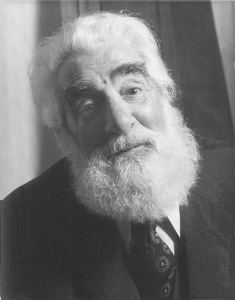
Brambell is the youngest of three sons born to Henry Lytton Brambell, a cashier at the Guinness Brewery, and his wife, Edith Marks, a former opera singer. His first appearance is as a child, entertaining the wounded troops during World War I. Upon leaving school he works part-time as a reporter for The Irish Times and part-time as an actor at the Abbey Theatre before becoming a professional actor for the Gate Theatre. He also does repertory at Swansea, Bristol and Chesterfield. In World War II, he joins the British military forces entertainment organisation Entertainments National Service Association (ENSA).
It is this ability to play old men that leads to his casting in his best remembered role, as Albert Steptoe, the irascible father in Steptoe and Son. This begins as a pilot on the BBC’s Comedy Playhouse, and its success leads to a full series being commissioned, running from 1962 to 1974 including a five-year hiatus. There are two feature film spin-offs, a stage show, and an American incarnation entitled Sanford and Son, some episodes of which are almost exact remakes of the original British scripts.
The success of Steptoe and Son makes Brambell a high-profile figure on British television, and earns him the supporting role of Paul McCartney‘s grandfather in The Beatles‘ first film, A Hard Day’s Night (1964). In 1965, Brambell tells the BBC that he does not want to do another series of Steptoe and Son and, in September that year, he goes to New York City to appear in the Broadway musical Kelly at the Broadhurst Theatre, however, it closes after just one performance.
Apart from his role as the older Steptoe, Brambell achieves recognition in many films. His performance in The Terence Davies Trilogy wins him critical acclaim, far greater than any achieved for Steptoe and Son. Although he appears throughout the full 94-minute piece, Brambell does not speak a single word.
After the final series of Steptoe and Son is made in 1974, Brambell has some guest roles in films and on television. He and Harry H. Corbett also undertake a tour of Australia in 1977 in a Steptoe and Son stage show.
Brambell dies of cancer in Westminster, London, on January 18, 1985, at the age of 72. He is cremated on January 25, 1985 at Streatham Park Cemetery, where his ashes are scattered.
(Pictured: Henry Wilfrid Brambell and John Lennon in The Beatles’ first motion picture, A Hard Day’s Night)
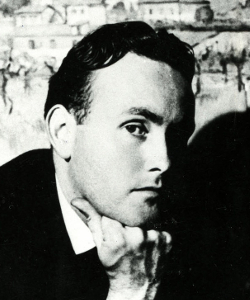
Hill is born at Southampton, Hampshire, on December 6, 1916, the son of a wealthy sugar trader. He first works as a theatre designer in Leningrad in the 1930s and later as an historian. In World War II he registers as a conscientious objector and works on a farm.
Hill’s long association with Ireland begins when he visits Glenveagh Castle in County Donegal to paint the portrait of the Irish American art collector Henry McIlhenny, whose grandfather had emigrated to the United States from the nearby village of Milford, and who subsequently made a fortune from his patent gas meter.
Hill begins to enjoy increased success as a portrait painter from the 1960s. His subjects include many notable composers, musicians, politicians and statesmen, such as broadcaster Gay Byrne, Jerusalem mayor Teddy Kollek and The Prince of Wales. He is also an enthusiastic art collector and traveller, with a wide range of friends such as Bryan Guinness and Isaiah Berlin. Greta Garbo visits Hill in the 1970s, a visit which forms inspiration for Frank McGuinness‘ 2010 play Greta Garbo Came to Donegal.
An exhibition of his work and personal art collection can be seen at the House and associated Glebe Gallery at Churchill, near Letterkenny. Another collection of his work is held at Mottisfont Abbey. Many of his landscapes portray scenes from Tory Island, where he has a painting hut for years, and starts and then mentors the artists’ community there, teaching the local fishermen how to paint. This leads to the informal but busy “Tory School” of artists such as James Dixon and Anton Meenan, who find that they have the time to paint and use their wild surroundings as a dramatic subject.
Hill is made a CBE in 1997. A Retrospective exhibition is arranged for and by him at the Royal Hibernian Academy in 1998. On January 13, 1999, he is made an honorary Irish citizen by the President of Ireland Mary McAleese.
Arthur Derek Hill dies at the age of 83 at a London hospital on July 30, 2000. He is buried in Hampshire in the South of England with his parents. Memorial services are held for him in Dublin at St. Patrick’s Cathedral, as well as St. James’s Church, Piccadilly, London, and his local Church in Trentagh, County Donegal.
Mayne attends school at Regent House School, a school for students aged 4 to 18. While at Regent he discovers his skill and love for the game of rugby. He also enjoys cricket and golf and becomes a marksman with the rifle club. He goes on to Queen’s University Belfast to study law. At university he takes up boxing and becomes the Irish Universities Heavyweight Champion in August 1936. He also wins the Scrabo Golf Club President’s cup in 1937. He graduates from Queen’s University in 1939.
During 1938, Mayne travels to Africa on the 1938 British Lions Tour to South Africa. He plays on a team that tours around Africa playing other local clubs. While traveling, it is discovered that Mayne has a wild side and on various occasions finds himself in trouble. His “go to” is to trash the hotel rooms of his teammates. The team includes some of the best players from around Ireland and Britain.
In 1939, with outbreak of World War II, Mayne joins the Supplementary Reserves in Newtownards and receives a commission in the Royal Artillery. He serves in several units in Ireland and England, generally with light and heavy anti-aircraft units. He volunteers for the No. 11 (Scottish) Commando unit which is sent to the Middle East. There he sees action during the Syria-Lebanon campaign. Specifically, during the Battle of the Litani River, he draws attention from Captain David Stirling who is forming the new Special Air Service (SAS). Sterling recruits Mayne for the new SAS while he is in jail for striking his commanding officer.
From November 1941 to the end of 1942, Mayne is involved in several raids behind enemy lines with the SAS. He uses jeeps to go to various Axis bases and begin blowing up planes and fuel dumps. It is claimed that he personally destroyed 100 planes during these missions. In addition to serving in the Middle East, he serves as well in Sicily, Italy, Belgium, the Netherlands, Germany, Norway and France. In most of these locations he works with the resistance behind the enemy lines. In France he helps to train the French Resistance.
By the end of the war, Mayne has been promoted to the rank of Lieutenant Colonel and has also received the British Army’s Distinguished Service Order with three bars, which means he received the award four times. After the war he joins the British Antarctic Survey in the Falkland Islands. He returns home to Newtownards when back issues, which started while he was serving in the Middle East, become more difficult for him.
Mayne is initiated into Eklektikos Lodge No. 542 in Newtownards in 1945. He is a very enthusiastic mason and joins a second lodge in Newtownards, Friendship Lodge No. 447. On the evening of December 13, 1955, he attends a meeting of Friendship Lodge and then joins some of his masonic brothers at a local bar. At about 4:00 AM on December 14, he is found dead in his Riley RM roadster in Mill Street, Newtownards, having reportedly collided with a farmer’s vehicle.
At his funeral hundreds of mourners turn out to pay their respects and to see him interred in a family plot in the town’s old Movilla Abbey graveyard. After his death his masonic jewel is preserved for many years by an old school friend before it is presented to Newtownards Borough Council where it is displayed in the Mayoral Chamber of the Council Offices.
Purcell is the son of auctioneer Pierce Purcell and his second wife Catherine (née Hoban) of 4 Ashbrook Terrace, South Circular Road, Dublin. He is baptised six days after his birth at St. Kevin’s Church, Harrington Street. Within a few months, the Purcell family moves to 12 Mercer Street Lower. He is educated at Synge Street CBS. He loses the tip of his right index finger while making cigarette vending machines and also loses his entire left index finger due to an accident while he is an apprentice carpenter, a feature which he exploits for dramatic effect in the film Mutiny on the Bounty (1962).
Purcell begins his show business career at the age of 12 in Dublin’s Gaiety Theatre. Later, he tours Ireland in a vaudeville act with Jimmy O’Dea. Stage-trained in the classics in Dublin, he moves into films in 1934. He appears in Captain Boycott (1947) and as the elderly sailor whose death maroons the lovers-to-be in the first sound film version of The Blue Lagoon (1949). He plays a member of Captain Ahab‘s crew in Moby Dick (1956), Dan O’Flaherty in episode one, The Majesty of the Law, of The Rising of the Moon (1957), a gamekeeper in The List of Adrian Messenger (1963), and a barman in The Mackintosh Man (1973). The last two films are directed by John Huston.
Purcell is the subject of This Is Your Life in 1958 when he is surprised by Eamonn Andrews at the BBC Television Theatre. He also gains some recognition as a singer. Shortly after World War II, songwriter Leo Maguire composes “The Dublin Saunter” for him. He performs the song live for many years and later records it for the Glenside label, but the recording is not a hit. However, over time it becomes one of the most favourite songs about Dublin, receiving countless airplays on radio programmes.
At 12:25 PM on December 11, 1971, when the Shankill Road is packed with Saturday shoppers, a green car pulls up outside the Balmoral Furniture Company at the corner of Carlow Street and Shankill Road. The shop is locally known as “Moffat’s” although Balmoral Furniture Company is its official name. One of the occupants gets out of the car and leaves a box containing a bomb on the step outside the front door. The person gets back into the car, and it speeds away. The bomb explodes moments later, bringing down most of the building on top of those inside the shop and on passersby outside.
Four people are killed as a result of the massive blast, including two babies, Tracey Munn (age 2 years) and Colin Nichol (age 17 months), who both die instantly when part of the wall crashes down upon the pram they are sharing. Two employees working inside the shop are also killed, Hugh Bruce (age 70 years) and Harold King (age 29 years). Unlike the other three victims, who are Protestant, King is a Catholic. Bruce, a former soldier and a Corps of Commissionaires member, is the shop’s doorman and is nearest to the bomb when it explodes. Nineteen people are injured in the bombing, including Tracey’s mother. The building, which was built in the Victorian era, has load-bearing walls supporting upper floors on joists. It is unable to withstand the blast and collapses, adding to the devastation and injury count.
The bombing causes bedlam in the crowded street. Hundreds of people rush to the scene where they form human chains to help the British Army and Royal Ulster Constabulary (RUC) free those trapped beneath the rubble by digging with their bare hands. Peter Taylor describes the scene as “reminiscent of the London Blitz” in World War II.
The Balmoral Furniture Company bombing is one of the catalysts that spark the series of tit-for-tat bombings and shootings by loyalists, republicans and the security forces that make the 1970s the bloodiest decade in the 30-year history of The Troubles.
(Pictured: Fireman is shown removing the body of one of the victims of the bombing at the Balmoral Furniture Showroom, December 11, 1971)
Ellis Island, the gateway to America, shuts it doors on November 12, 1954, after processing more than 12 million immigrants, including an estimated two million Irish, since opening in 1892. Today, an estimated 40 percent of all Americans can trace their roots through Ellis Island, located in New York Harbor off the New Jersey coast and named for merchant Samuel Ellis, who owned the land in the 1770s.
On January 2, 1892, 15-year-old Annie Moore, from County Cork, becomes the first person to pass through the newly opened Ellis Island, which President Benjamin Harrison designates as America’s first federal immigration center in 1890. Prior to the opening of Ellis Island the processing of immigrants has been handled by individual states.
Not all immigrants who sail into New York have to go through Ellis Island. First- and second-class passengers submit to a brief shipboard inspection and then disembarked at the piers in New York or New Jersey, where they pass through customs. People in third class, though, are transported to Ellis Island, where they undergo medical and legal inspections to ensure they do not have a contagious disease or some condition that might make them a burden to the government. Only two percent of all immigrants are denied entrance into the United States.
Immigration to Ellis Island peaks between 1892 and 1924, during which time the 3.3-acre island is enlarged with landfill and additional buildings are constructed to handle the massive influx of immigrants. During the busiest year of operation, 1907, over 1 million people are processed at Ellis Island.
With the United States’ entrance into World War I, immigration declines and Ellis Island is used as a detention center for suspected enemies. Following the war, Congress passes quota laws and the Immigration Act of 1924, which sharply reduces the number of newcomers allowed into the country and also enables immigrants to be processed at U.S. consulates abroad. After 1924, Ellis Island switches from a processing center to serving other purposes, such as a detention and deportation center for illegal immigrants, a hospital for wounded soldiers during World War II and a Coast Guard training center. In November 1954, the last detainee, a Norwegianmerchant seaman, is released and Ellis Island officially closes.
Beginning in 1984, Ellis Island undergoes a $160 million renovation, the largest historic restoration project in U.S. history. In September 1990, the Ellis Island Immigration Museum opens to the public and today is visited by almost 2 million people every year.
In the House of Commons of the United Kingdom on November 5, Churchill bemoans the fact that the Irish ports had been returned to the Free State government in 1938:
“The fact that we cannot use the South and West Coasts of Ireland to refuel our flotillas and aircraft and thus protect the trade by which Ireland as well as Great Britain lives, is a most heavy and grievous burden and one which should never have been placed on our shoulders, broad though they be.”
De Valera responds to Churchill’s statement two days later, on November 7:
“I would have refrained from making any comment upon it were it not that it has been followed by an extensive Press campaign by Britain itself, and re-echoed in the United States of America, the purport of the campaign being that we should surrender or lease our ports to Britain for the conduct of the war…
We have chosen the policy of neutrality in this war because we believed that it was the right policy for our people. It is the policy which has been accepted, not merely by this House, but by our people as a whole, and nobody who realises what modern war means, and what it means particularly for those who have not sufficient air defences, will have the slightest doubt that that policy was the right one, apart altogether from any questions of sympathy on one side or the other…
There can be no question of the handing over of these ports so long as this State remains neutral. There can be no question of leasing these ports. They are ours. They are within our sovereignty, and there can be no question, as long as we remain neutral, of handing them over on any condition whatsoever. Any attempt to bring pressure to bear on us by any side—by any of the belligerents—by Britain—could only lead to bloodshed.”
Collins makes the decision to become an astronaut after watching John Glenn‘s Mercury-Atlas 6 flight. He applies for the second group of astronauts that same year but is not accepted. Disappointed, but undaunted, Collins enters the USAF Aerospace Research Pilot School as the Air Force begins to research space. That year, NASA once again calls for astronaut applications, and Collins is more prepared than ever. In 1963 he is chosen by NASA to be part of the third group of astronauts.
Collins makes two spaceflights. The first, on July 18, 1966, is the Gemini 10 mission, where Collins performs a spacewalk. The second is the Apollo 11 mission on July 20, 1969, the first lunar landing in history. Collins, accompanied by Neil Armstrong and Edwin “Buzz” Aldrin, remains in the Command Module while his partners walk on the moon’s surface. Collins continues circling the moon until July 21, when Armstrong and Aldrin rejoin him. The next day, he and his fellow astronauts leave lunar orbit. They land in the Pacific Ocean on July 24. Collins, Armstrong and Aldrin are all awarded the Presidential Medal of Freedom by Richard Nixon. However, Aldrin and Armstrong end up receiving a majority of the public credit for the historic event, although Collins is also on the flight.
Collins leaves NASA in January 1970, and one year later, he joins the administrative staff of the Smithsonian Institution in Washington, D.C. In 1980, he enters the private sector, working as an aerospace consultant. In his spare time, Collins says he stays active and spends his days “worrying about the stock market” and “searching for a really good bottle of cabernet under ten dollars.”
Collins and his wife, Patricia Finnegan, have three children. The couple lived in both Marco Island, Florida, and Avon, North Carolina until her death in April 2014.
On April 28, 2021, Collins dies of cancer at his home in Naples, Florida, at the age of 90. Buzz Aldrin, who becomes the last survivor of Apollo 11, says that “wherever [Collins has] been or will be, you will always have the Fire to Carry us deftly to new heights and the future.”
O’Duffy does an apprenticeship as an engineer in Wexford before working as an engineer and architect in Monaghan. In 1919 he becomes an auctioneer. He is a leading member of the Gaelic Athletic Association in Ulster in the 1910s. In 1912 he is appointed secretary of the Ulster provincial council. He is also a member of Harps’ Gaelic Football Club.
Professionally, O’Duffy becomes the second Commissioner of the Garda Síochána, the police force of the new Irish Free State, after the Civic Guard Mutiny and the subsequent resignation of Michael Staines. He holds this post until 1933, when he is dismissed by Éamon de Valera. In his political life O’Duffy is an early member of Sinn Féin, founded by Arthur Griffith. He is elected as a Teachta Dála (TD) for his home county of Monaghan during the 1921 election.
After a split in 1923 he becomes associated with Cumann na nGaedheal and becomes head of a veteran’s group then known as the Army Comrades Association. O’Duffy changes its name to “National Guard” and begins to stage fascist-style rallies and adopts a fascist salute. Its members begin to wear blue uniform shirts and become known as the Blueshirts. When government opposition groups form Fine Gael in September 1933, he becomes its first president, reaching the apex of his political power.
Subsequently, the government bans O’Duffy’s National Guard, as well as the group he creates to replace it, the Young Ireland Association, which he in turn replaces with the League of Youth, but their blue shirts indicate its continued fascist ideology. Fine Gael’s other leaders soon tire of his inflammatory rhetoric and the frequent violent behavior of the Blueshirts but are still surprised when their opposition causes him to resign his party leadership in September 1934. He is then ousted as leader of the Blueshirts as well but does retain a small loyal following.
Eoin O’Duffy takes no further part in Irish politics and dies in Dublin on November 30, 1944. In spite of his later politics, he is given a state funeral for his earlier contributions to the Irish government. He is buried in Dublin’s Glasnevin Cemetery.





 In a statement before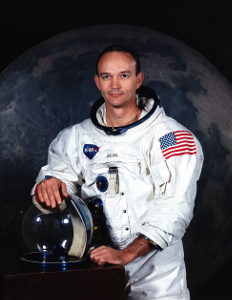

 seamus dubhghaill