Born in New York City on April 23, 1926, to Irish immigrants Margaret and Patrick Donleavy, Donleavy receives his education at various schools in the United States. He declares himself to be an atheist at the age of 14. He serves in the United States Navy during World War II. After the war ends, he moves to Ireland. In 1946 he begins studying at Trinity College, Dublin, but leaves in 1949 before taking a degree. Also in 1946, he marries Valerie Heron, and the couple has two children: Philip (born 1951) and Karen (born 1955). They divorce in 1969 and he remarries in 1970 to Mary Wilson Price. That union also ends in divorce in 1989.
Donleavy’s first published work is a short story entitled A Party on Saturday Afternoon, which appears in the Dublin literary periodical, Envoy, A Review of Literature and Art in 1950. He gains critical acclaim with his first novel, The Ginger Man (1955), which is one of the Modern Library 100 best novels. The novel, of which his friend and fellow writer Brendan Behan is the first person to read the completed manuscript, is banned in Ireland and the United States by reason of obscenity. Lead character Sebastian Dangerfield is in part based on Trinity College companion Gainor Crist, an American Navy veteran also studying at Trinity College on the G.I. Bill, whom Donleavy once describes in an interview as a “saint,” though of a Rabelaisian kind.
In 2011, it is reported that Donleavy had not fathered his two children with Mary Wilson Price. A DNA test in the early 1990s confirms that Rebecca is the daughter of brewing scion Kieran Guinness, and Rory is the son of Kieran’s older brother Finn, whom Price marries after her divorce from Donleavy. “My interest is only to look after the welfare of the child,” Donleavy tells The Times, “And after a certain stage, you can’t worry about their parentage.”
J.P. Donleavy dies of an apparent stroke in Mullingar, County Westmeath on September 11, 2017, at the aged of 91.
James (Joseph) Hanley, British novelist, short story writer, and playwright of Irish descent, is born in Kirkdale, Liverpool, Lancashire on September 3, 1897. He publishes his first novel, Drift, in 1930. The novels and short stories about seamen and their families that he writes in the 1930s and 1940s include Boy (1931), the subject of an obscenity trial. He comes from a seafaring family and spends two years at sea himself. After World War II there is less emphasis on the sea in his works. While frequently praised by critics, his novels do not sell well. In the late 1950s, 1960s, and early 1970s he writes plays, mainly for the BBC, for radio and then for television, and also for the theatre. He returns to the novel in the 1970s. His last novel, A Kingdom, is published in 1978, when he is 80 years old.
Hanley is born to a working class family. Both his parents are born in Ireland, his father Edward Hanley around 1865, in Dublin, and his mother, Bridget Roache, in Queenstown, County Cork, around 1867. Both are well established in Liverpool by 1891, when they are married. Hanley’s father works most of his life as a stoker, particularly on Cunard Line liners, and other relatives have also gone to sea. He grows up living close to the docks. He leaves school in the summer of 1910 and works for four years in an accountants’ office. Then early in 1915 at the age of 17, he goes to sea for the first time. Thus life at sea is a formative influence and much of his early writing is about seamen.
In April 1917, Hanley jumps ship in Saint John, New Brunswick, Canada, and shortly thereafter joins the Canadian Expeditionary Force in Fredericton, New Brunswick. He fights in France in the summer of 1918, but is invalided out shortly thereafter. After the war he works as a railway porter in Bootle and devotes himself to a prodiguous range of autodidactic, high cultural activities – learning the piano, regularly attending concerts, reading voraciously and, above all, writing. However, it is not until 1930 that his novel Drift is accepted.
Hanley moves from Liverpool to near Corwen, North Wales in 1931, where he meets Dorothy Enid “Timothy” Thomas, neé Heathcote, a descendant of Lincolnshire nobility. They live together and have a child, Liam Powys Hanley, in 1933, but do not marry until 1947. In July 1939, as World War II is approaching, he moves to London to write documentaries and plays for the BBC. He moves back to Wales during the early years of the war, settling in Llanfechain on the other side of the Berwyn range from Corwen. In 1963, the Hanleys move to North London to be close to their son.
In 1937 Hanley publishes an autobiographical work, Broken Water: An Autobiographical Excursion, and while this generally presents a true overall picture of his life, it is seriously flawed, incomplete and inaccurate. Chris Gostick describes it as “a teasing palimpsest of truth and imagination.”
Hanley’s brother is the novelist Gerald Hanley and his nephew is the American novelist and playwright William Hanley. Hanley’s wife also publishes three novels, as Timothy Hanley. She dies in 1980. James Hanley himself dies in London on November 11, 1985 and is buried in Llanfechain, Wales.
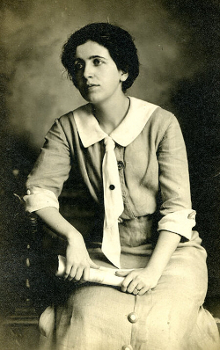
Flynn’s family moves to New York in 1900, where she is educated in the local public schools. She grows up being regaled by tales of Irish revolutionaries. According to their oral tradition all four of her great-grandfathers, Flynn, Gurley, Conneran, and Ryan, are members of the Society of United Irishmen, with grandfather Flynn being one of the leaders in County Mayo when the French fleet lands there during the Irish Rebellion of 1798. Her parents introduce her to socialism. When she is only fifteen, she gives her first public speech, “What Socialism Will Do for Women,” at the Harlem Socialist Club.
In 1907, Flynn becomes a full-time organizer for the Industrial Workers of the World. Over the next few years, she organizes campaigns among garment workers in Pennsylvania, silk weavers in New Jersey, restaurant workers in New York, miners in Minnesota, Missoula, Montana, and Spokane, Washington and textile workers in Massachusetts. She is arrested ten times during this period but is never convicted of any criminal activity. It is a plea bargain, on the other hand, that results in her expulsion from the IWW in 1916, along with fellow organizer Joe Ettor.
A founding member of the American Civil Liberties Union (ACLU) in 1920, Flynn plays a leading role in the campaign against the conviction of Nicola Sacco and Bartolomeo Vanzetti. She is particularly concerned with women’s rights, supporting birth control and women’s suffrage. She also criticizes the leadership of trade unions for being male-dominated and not reflecting the needs of women.
Between 1926 and 1936, Flynn lives in southwest Portland, Oregon with birth control activist, suffragette, and WobblyMarie Equi where she is an active and vocal supporter of the 1934 West Coast Longshoremen’s Strike. In 1936, she joins the Communist Party and writes a feminist column for its journal, the Daily Worker. Two years later, she is elected to the national committee. Her membership in the Party leads to her ouster from the board of the ACLU in 1940.
During World War II, Flynn plays an important role in the campaign for equal economic opportunity and pay for women and the establishment of day care centers for working mothers. In 1942, she runs for the United States Congress at-large in New York and receives 50,000 votes. In July 1948, a dozen leaders of the Communist Party are arrested and accused of violating the Smith Act by advocating the overthrow of the U.S. government by force and violence. After they are convicted in the Foley Square trial they appeal to the Supreme Court, which upholds their conviction in Dennis v. United States.
Flynn launches a campaign for their release but, in June 1951, is herself arrested in the second wave of arrests and prosecuted under the Smith Act. After a nine-month trial, she is found guilty and serves two years in Federal Prison Camp, Alderson near Alderson, West Virginia. She later writes a prison memoir, The Alderson Story: My Life as a Political Prisoner.
After her release from prison, Flynn resumes her activities for leftist and Communist causes. She runs for the New York City Council as a Communist in 1957, garnering a total of 710 votes. She becomes national chairwoman of the Communist Party of the United States in 1961 and makes several visits to the Soviet Union.
During World War II, Bing serves in the Royal Corps of Signals, attaining the rank of major. A 1943 experiment with parachutes at the GSO2 Airborne Forces Development Centre leaves him disfigured and he bears the scars for many years.
At the 1945 general election, Bing stands for Labour in Hornchurch, winning the seat. He is re-elected in 1950 and 1951, serving until 1955. He serves briefly as a junior whip in 1945-1946 but this is widely thought to have been the unintended result of confusion on the part of Clement Attlee, who confuses him for another Labour MP of a similar name.
On the backbenches, Bing is, according to his Times obituary, “the unrestrained leader of a small group of radicals, never fully trusted by their colleagues and known as ‘Bing Boys.'” He takes a particular interest in the cases of Timothy Evans and John Christie, and he supports the campaign to overturn the conviction of Evans, which is ultimately successful. He supports Communist China and takes a keen interest in Northern Ireland, the brewers’ monopoly and parliamentary procedure.
Bing also builds a practice in West Africa. He becomes close to Kwame Nkrumah, the first post-colonial president of Ghana and is appointed Ghana’s attorney-general, a post he holds until 1961. When Nkrumah is ousted in 1966, Bing is arrested and ill-treated, before being sent home some months later. His memoir of Nkrumah’s Ghana, Reap the Whirlwind, is published in 1968.
Geoffrey Henry Cecil Bing dies in London on April 24, 1977, at the age of 67.
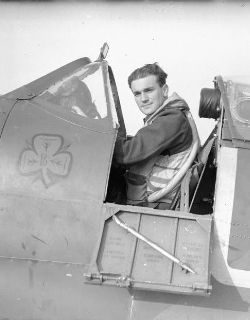
Finucane, born on October 16, 1920 in Rathmines, Dublin, is credited with 28 aerial victories, five probably destroyed, six shared destroyed, one shared probable victory, and eight damaged. Included in his total are twenty-three Messerschmitt Bf 109s, four Focke-Wulf Fw 190s and one Messerschmitt Bf 110. Official records differ over the exact total. After the war, two of Finucane’s victories that had been credited as probables had, in fact, been destroyed, but are not officially included. His total victory count could be as high as 32.
On July 15, Finucane is killed at the age of 21 while leading the Hornchurch Wing in a fighter “Ramrod” operation targeting a German Army camp at Étaples, France. He takes off with his wing at 11:50 AM. The attack is timed to hit the Germans at lunchtime. Crossing the beach at Le Touquet, they target machine gun positions. His plane is hit in the radiator at 12:22 PM. His wingman, Alan Aikman, notifies him of the white plume of smoke and Finucane acknowledges it with a thumbs up. Standard regulations insist the wing carry on the mission even if the leader is in trouble. Radio silence is maintained so the enemy radio-interception services do not become aware that a person of importance has been hit.
Finucane flies slowly out to sea, talking calmly to Aikman as he glides along in his stricken fighter. Finally, some 8 miles off Le Touquet on the French coast, he breaks radio silence and sends his last message. Aikman, flying alongside Finucane, sees him pull back the canopy, and before taking off his helmet, say “This is it Butch.” It is a well–executed landing, but the waves are difficult to predict and the Spitfire‘s nose strikes the water and disappears in a wall of spray. Before he hits the water, witnesses Aikman and Keith Chisholm of 452 Squadron see him release, or perhaps tighten, his parachute release harness and straps. If Finucane did release them, it is possible he could have been thrown forward onto the gun-sight and killed, or knocked unconscious and drowned. The exact circumstances remain unknown.
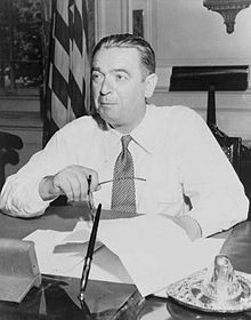
O’Dwyer studies at St. Nathy’s College, Ballaghaderreen, County Roscommon. He emigrates to the United States in 1910, after abandoning studies for the priesthood. He sails to New York City as a steerage passenger on board the liner Philadelphia and is inspected at Ellis Island on June 27, 1910. He first works as a laborer, then as a New York City police officer, while studying law at night at Fordham University Law School. He receives his degree in 1923 and then builds a successful practice before serving as a Kings County (Brooklyn) Court judge. He wins election as the Kings County District Attorney in November 1939 and his prosecution of the organized crime syndicate known as Murder, Inc. makes him a national celebrity.
After losing the mayoral election to Fiorello La Guardia in 1941, O’Dwyer joins the United States Army for World War II, achieving the rank of brigadier general as a member of the Allied Commission for Italy and executive director of the War Refugee Board, for which he receives the Legion of Merit. During that time, he is on leave from his elected position as district attorney and replaced by his chief assistant, Thomas Cradock Hughes, and is re-elected in November 1943.
In 1945, O’Dwyer receives the support of Tammany Hall leader Edward V. Loughlin, wins the Democratic nomination, and then easily wins the mayoral election. He establishes the Office of City Construction Coordinator, appointing Park CommissionerRobert Moses to the post, works to have the permanent home of the United Nations located in Manhattan, presides over the first billion-dollar New York City budget, creates a traffic department and raises the subway fare from five cents to ten cents. In 1948, he receives The Hundred Year Association of New York‘s Gold Medal Award “in recognition of outstanding contributions to the City of New York.” In 1948, he receives the epithets “Whirling Willie” and “Flip-Flop Willie” from U.S. Representative Vito Marcantonio of the opposition American Labor Party while the latter is campaigning for Henry A. Wallace.
Shortly after his re-election to the mayoralty in 1949, O’Dwyer is confronted with a police corruption scandal uncovered by the Kings County District Attorney, Miles McDonald. O’Dwyer resigns from office on August 31, 1950. Upon his resignation, he is given a ticker tape parade up Broadway‘s Canyon of Heroes in the borough of Manhattan. President Harry Truman appoints him U.S. Ambassador to Mexico. He returns to New York City in 1951 to answer questions concerning his association with organized crime figures and the accusations follow him for the rest of his life. He resigns as ambassador on December 6, 1952, but remains in Mexico until 1960.
O’Dwyer visits Israel for 34 days in 1951 on behalf of his Jewish constituents. Along with New York’s Jewish community, he helps organize the first Israel Day Parade.
As a child, Murphy is a loner with mood swings and an explosive temper. He grows up in Texas, around Farmersville, Greenville, and Celeste, where he attends elementary school. His father drifts in and out of the family’s life and eventually deserts them. He drops out of school in fifth grade and gets a job picking cotton for a dollar a day to help support his family. After his mother dies of endocarditis and pneumonia in 1941, he works at a radio repair shop and at a combination general store, garage and gas station in Greenville.
After the attack on Pearl Harbor, Murphy’s older sister helps him to falsify documentation about his birthdate in order to meet the minimum-age requirement for enlisting in the military. Turned down by the Navy and the Marine Corps, he enlists in the Army. He first sees action in the 1943 Allied invasion of Sicily. Then, in 1944, he participates in the Battle of Anzio, the liberation of Rome, and Operation Dragoon, the invasion of Southern France. He fights at Montélimar and leads his men on a successful assault at the L’Omet quarry near Cleurie in northeastern France in October.
Murphy receives every military combat award for valor available from the U.S. Army, as well as French and Belgian awards for heroism. He receives the Medal of Honor for valor that he demonstrates at the age of 19 for single-handedly holding off an entire company of German soldiers for an hour at the Colmar Pocket in France in January 1945, then leading a successful counterattack while wounded and out of ammunition.
After the war, Murphy embarks on a 21-year acting career. He plays himself in the 1955 autobiographical film To Hell and Back, based on his 1949 memoirs of the same name, but most of his roles are in westerns. He makes guest appearances on celebrity television shows and stars in the series Whispering Smith. He is a fairly accomplished songwriter. He breeds American Quarter Horses in California and Arizona and becomes a regular participant in horse racing.
Suffering from what would today be described as posttraumatic stress disorder (PTSD), Murphy sleeps with a loaded handgun under his pillow. He looks for solace in addictive sleeping pills. In his last few years, he is plagued by money problems but refuses offers to appear in alcohol and cigarette commercials because he does not want to set a bad example.
Todd spends a few of his childhood years in India, where his father, an officer in the British Army, serves as a physician. Later his family moves to Devon, and he attends Shrewsbury School. Upon leaving school, he trains for a potential military career at Royal Military Academy Sandhurst before beginning his acting training at the Italia Conti Academy of Theatre Arts in London. This change in career leads to estrangement from his mother. When he learns at age 19 that she has committed suicide, he does not grieve long for her, he admits in later life.
After the war, Todd is unsure what direction to take in his career. His former agent, Robert Lennard, has become a casting agent for Associated British Picture Corporation and advises him to try out for the Dundee Repertory Company. He does so, performing in plays such as Claudia, where he appears with Claudia Grant-Bogle. Lennard arranges for a screen test and Associated British offers him a long-term contract in 1948. He is cast in the lead in For Them That Trespass (1949), directed by Alberto Cavalcanti. The film is a minor hit and his career is launched.
Having portrayed the role of Yank in the Dundee Repertory stage version of John Patrick‘s play The Hasty Heart, Todd is subsequently chosen to appear in the 1948 London stage version of the play, this time in the leading role of Cpl. Lachlan McLachlan. This leads to his being cast in that role in the Warner Bros. film adaptation of the play, which is filmed in the United Kingdom, alongside Ronald Reagan and Patricia Neal. He is nominated for the Academy Award for Best Actor for the role in 1949.
Todd’s career in films rapidly declines in the 1960s as the counter-culture movement in the Arts becomes fashionable in England, with social-realist dramas commercially replacing the more middle-class orientated dramatic productions that Todd’s performance character-type had previously excelled in.
In retirement, Todd lives in the village of Little Ponton and later in Little Humby, eight miles from Grantham, Lincolnshire. Suffering from cancer, he dies at his home on December 3, 2009. He is buried between his two sons, Seamus and Peter, at St. Guthlac’s Church in Little Ponton, Lincolnshire, England.
Herbert is born in Dublin on February 1, 1859, to Protestants Edward Herbert and Fanny Herbert (née Lover). At age three and a half, shortly after the death of his father, he and his mother move to live with his maternal grandparents in London, England, where he received encouragement in his creative endeavours. His grandfather is the Irish novelist, playwright, poet and composer Samuel Lover. The Lovers welcome a steady flow of musicians, writers and artists into their home. He joins his mother in Stuttgart, Germany in 1867, a year after she marries a German physician, Carl Schmidt of Langenargen. In Stuttgart he receives a strong liberal education at the Eberhard-Ludwigs-Gymnasium, which includes musical training.
Herbert initially plans to pursue a career as a medical doctor. Although his stepfather is related by blood to the German royal family, his financial situation is not good by the time Herbert is a teenager. Medical education in Germany is expensive, and so he focuses instead on music. He initially studies the piano, flute and piccolo but ultimately settles on the cello, beginning studies on that instrument with Bernhard Cossmann from age 15 to age 18. He then attends the Stuttgart Conservatory. After studying cello, music theory and composition under Max Seifritz, he graduates with a diploma in 1879.
Although Herbert enjoys important careers as a cello soloist and conductor, he is best known for composing many successful operettas that premiere on Broadway from the 1890s to World War I. He is also prominent among the Tin Pan Alley composers and is later a founder of the American Society of Composers, Authors, and Publishers (ASCAP). A prolific composer, Herbert produces two operas, a cantata, 43 operettas, incidental music to 10 plays, 31 compositions for orchestra, nine band compositions, nine cello compositions, five violin compositions with piano or orchestra, 22 piano compositions and numerous songs, choral compositions and orchestrations of works by other composers, among other music.
In the early 1880s, Herbert begins a career as a cellist in Vienna, Austria, and Stuttgart, Germany, during which he begins to compose orchestral music. Herbert and his opera singer wife, Therese Förster, move to the United States in 1886 when both are engaged by the Metropolitan Opera. He continues his performing career, while also teaching at the National Conservatory of Music of America, conducting and composing. His most notable instrumental compositions are his Cello Concerto No. 2 in E minor, Op. 30 (1894), which enters the standard repertoire, and his Auditorium Festival March (1901). He leads the Pittsburgh Symphony Orchestra from 1898 to 1904 and then founds the Victor Herbert Orchestra, which he conducts throughout the rest of his life.
Herbert begins to compose operettas in 1894, producing several successes, including The Serenade (1897) and The Fortune Teller (1898). Some of the operettas that he writes after the turn of the 20th century are even more successful: Babes in Toyland (1903), Mlle. Modiste (1905), The Red Mill (1906), Naughty Marietta (1910), Sweethearts (1913) and Eileen (1917). After World War I, with the change of popular musical tastes, he begins to compose musicals and contributes music to other composers’ shows. While some of these are well-received, he never again achieves the level of success that he enjoyed with his most popular operettas.
A healthy man throughout his life, Herbert dies suddenly of a heart attack at the age of 65 on May 26, 1924, shortly after his final show, The Dream Girl, began its pre-Broadway run in New Haven. He is survived by his wife and two children, Ella Victoria Herbert Bartlett and Clifford Victor Herbert. He is entombed in Woodlawn Cemetery in The Bronx, New York City.
Fagan is the eldest of the five children of Sir James Fagan, a surgeon at the Belfast Royal Hospital and an inspector of Irish reformatories, and Mary Catherine Fagan, née Hughes. He attends Clongowes Wood College near Clane, County Kildare and then moves to England. Initially interested in a career in the church, he begins studying law at Trinity College, Oxford in 1892 but leaves in 1893 without a degree. He works for a time in the Indian Civil Service but abandons this career for the stage.
Fagan begins his career as an actor with the company of Sir Frank Benson for two years, then joining, from 1895 to 1899, the company of Herbert Beerbohm Tree at Her Majesty’s Theatre. There he appears in Katherine and Petruchio, A Man’s Shadow, Julius Caesar, The Musketeers and Carnac Sahib. He starts writing plays in 1899, with The Rebels, for the time forsaking acting. In 1913 he returns to the stage touring as the Rt Hon. Denzil Trevena in his own play, The Earth. He next writes The Fourth of August (1914) and Doctor O’Toole (1917). In 1917 he produces his first play, his own adaptation of the Brieux play Damaged Goods at St. Martin’s Theatre. He next produces The Wonder Tales and The Little Brother at the Ambassadors Theatre in London.
Fagan takes over the Court Theatre in London’s Sloane Square as a Shakespearean playhouse in 1920. The Times calls his revivals of Twelfth Night, The Merchant of Venice, Henry the Fourth (Part Two) and A Midsummer Night’s Dream “memorable for their freshness, sanity and distinction, and [deserving of] a place in theatrical history.” At the Court, he revives Damaged Goods and, in 1921, with the assistance of the author, produces George Bernard Shaw‘s Heartbreak House, with Edith Evans as “Lady Utterwood.” In 1922 he produces his play The Wheel at the Apollo Theatre. Its success allows him to repay his creditors. Even more successful is his adaptation of Treasure Island at the Savoy Theatre with Arthur Bourchier as “Long John Silver,” which opens December 26, 1922. It is revived every Christmas until the outbreak of World War II.
Fagan is persuaded by Jane Ellis, the actress who with Alfred Ballard founds the Oxford Playhouse “Red Barn” in 1923, to be its first manager. His first production at the Oxford Playhouse is a restaging of Shaw’s Heartbreak House and numbered Shaw among the audience. He produces The Cherry Orchard, at various theatres, to favourable reviews, popularising Anton Chekhov in Britain. From November 16, 1925, with Dennis Eadie, he presents Juno and the Paycock at the Royalty Theatre, thus bringing Seán O’Casey to the attention of London’s theatre-going public. O’Casey’s The Plough follows the next year.
Fagan receives little support from the University of Oxford or the play-going public and resigns in 1929. His successor is Stanford Holme, who broadens its appeal and, despite the straitened times, makes it financially viable. In 1929, he is a director of the Festival Theatre, Cambridge, where his friend Terence Gray is director. He also produces many works for the Irish Players.
Beginning in the 1920s, several of Fagan’s plays are adapted for film. He moves to Hollywood in 1929 for the filming by Paramount Pictures of his play The Wheel as The Wheel of Life. Other film work includes his co-adaptation of the screenplay for the 1932 film Smilin’ Through, and he co-writes Paramount’s Forgotten Commandments the same year. His play Bella Donna is filmed four times, including posthumously in 1946, and a 1936 film, The Improper Duchess is based on his 1931 play of the same name.
James Bernard Fagan dies in Hollywood, California, on February 17, 1933, at the age of 59 of a heart attack following a bout of influenza.