The last sketch by artist Jack B. Yeats, drawn while he lay dying in a Dublinnursing home, sells at auction in London on February 8, 2011, for £5,760. Roundabout Ponies far exceeds its estimate of £1,500- £2,000 at the inaugural Irish Sale at Bonhams, the New Bond Street fine art auctioneers.
The pen-and-ink drawing on writing paper, which measures just over 5 inches by 4 inches, is sold by a family who had inherited it from the matron of the Portobello Nursing Home. The artist had presented the sketch to Teresa O’Sullivan, with whom he had become friendly, two days before he died on March 28, 1957.
Bonhams says the picture had attracted considerable interest because it was the last work done by Yeats and described it as “a little gem [which] exhibits the unique artistic vitality he had right to the end.”
The sketch is bought by an unnamed “private London buyer.” The auction is the first test of the international demand for Irish art in 2011 and the overall results are disappointing. Among the unsold works are the two highest-priced paintings: The Cat Among the Stars, an oil-on-board, also by Jack B. Yeats, and Image of Francis Bacon No. 18, a watercolour by Louis le Brocquy.
Commenting afterwards, Penny Day, the County Laois-born head of Irish Art at Bonhams, says, “We have made a start in the toughest time imaginable and have had mixed results, but I am pretty confident we will be able to sell all the pictures that did not sell in the auction with post-sale deals.”
(From: “Jack B Yeats’ deathbed sketch sells for three times it estimate” by Michael Parsons, The Irish Times, February 10, 2011)
Beatty is the youngest of three sons born to Hetty and John Beatty, a banker and stockbroker. After studying engineering at the Columbia School of Mines and Princeton University, he helps to develop porphyry copper ores in the United States, first as a consulting engineer and later as a director on the boards of several copper-mining firms. In 1913 he relinquishes his mining interests in the United States and settles in Great Britain, becoming a naturalized British subject in 1933. In 1921 he forms a prospecting company that initiates the development of the Copperbelt region of Northern Rhodesia (now Zambia). For this, he becomes known as the “King of Copper.”
An early family anecdote recalls that, as a young boy, Beatty catches the collection bug, bidding at auction for mining samples. In 1931 an announcement in London‘s The Times casts him as a great collector. Between 1939 and 1949 he acquires over 140 nineteenth-century paintings to display in the Picture Gallery of his London home. These are now part of the collection of the National Gallery of Ireland.
Beatty supports the war effort, contributing a large number of raw materials to the Allies. He receives a belated knighthood by Queen Elizabeth II in the 1954 Birthday Honours list for his contribution to the wartime effort. By the late 1940s, however, he has become disillusioned with Britain. Political deviations from his free-market values, coupled with increased foreign exchange restrictions impacted both his personal and collecting interests in Britain.
In 1950, at the age of 75, Beattys over the reins of Selection Trust to his son Chester Jr. and relocates to Dublin. He purchases a large townhouse for himself on Ailesbury Road, in the Ballsbridge area of Dublin and a site on Shrewsbury Road for the construction of the Chester Beatty Library, which houses the collection, opening on August 8, 1953. The library is moved to its current location at Dublin Castle in 2000.
Beatty spends the remainder of his life between Dublin and the south of France. He is made a Freeman of the City of Dublin in 1954 and is the first person granted honorary citizenship of Ireland in 1957. He continues to collect in the 1950s and 1960s, acquiring important Ethiopian manuscripts and Japanese printed material during that period.
Beatty dies in Monte Carlo in Monaco on January 19, 1968. His Irish estate is valued at £7 million. He is accorded a state funeral by the Irish government, the first private citizen in Irish history to receive such an honour. He is buried in Glasnevin Cemetery in Dublin.
Robert William Gary Moore, Northern Irish musician, most widely recognised as a singer, songwriter, and virtuoso rock and blues guitarist, dies of a heart attack on February 6, 2011, in Estepona, Spain.
In a career dating back to the 1960s, Moore plays with musicians including Phil Lynott and Brian Downey during his teenage years, leading him to memberships of the Irish bands Skid Row and Thin Lizzy, and British band Colosseum II. Moore shares the stage with such blues and rock musicians as B. B. King, Albert King, Jack Bruce, Albert Collins, George Harrison, and Greg Lake, as well as having a successful solo career. He guests on a number of albums recorded by high-profile musicians.
Moore is born in Belfast, Northern Ireland on April 4, 1952. He starts performing at a young age, having picked up a battered acoustic guitar at the age of eight. He gets his first quality guitar at the age of 14, learning to play the right-handed instrument in the standard way despite being left-handed.
At the age of 16, aiming to become a musician, he moves to Dublin. Moore’s greatest influence in the early days is guitarist Peter Green of Fleetwood Mac who is a mentor to Moore when performing in Dublin. Other early musical influences are artists such as Albert King, Elvis Presley, Eric Clapton, The Shadows, and The Beatles. Later, having seen Jimi Hendrix and John Mayall’s Bluesbreakers in his hometown of Belfast, his own style develops into a blues-rock sound that becomes the dominant form of his career in music.
In Dublin, Moore joins the group Skid Row with Noel Bridgeman and Brendan “Brush” Shiels. It is with this group that he earns a reputation in the music industry, and his association with Phil Lynott begins.
Moore moves to England in 1970 and in 1973, under the name “The Gary Moore Band,” he releases his first solo album, Grinding Stone. Grinding Stone receives “Album of the Year” accolades on KTAC-FM/Seattle–Tacoma, Washington, in 1974.
In 1974 he joins Thin Lizzy after the departure of founding member Eric Bell. From 1975 to August 1978, he is a member of Colosseum II. In 1977, Moore rejoins Thin Lizzy, first as a temporary replacement for Brian Robertson, and on a permanent basis a year later.
Gary Moore dies of a heart attack in his sleep at the age of 58 during the early hours of February 6, 2011. At the time, he is on holiday with a girlfriend at the Kempinski Hotel in Estepona, Spain. Moore is laid to rest in St. Margaret’s Churchyard, Rottingdean, East Sussex, England, in a private ceremony with only family and close friends in attendance.
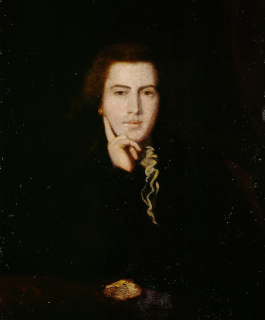
Drennan is born on May 23, 1754, in Belfast, the son the son of ReverendThomas Drennan (1696–1768), minister of Belfast’s First Presbyterian Church on Rosemary Street. Thomas Drennan is an educated man from the University of Glasgow and is ordained to the congregation of Holywood, County Down in 1731. Drennan is heavily influenced by his father, whose religious convictions serve as the foundation for his own radical political ideas. His sister, Martha, marries fellow future United Irishman Samuel McTier in 1773.
In 1769 Drennan follows in his father’s footsteps by enrolling in the University of Glasgow where he becomes interested in the study of philosophy. In 1772 he graduates in arts and then in 1773 he commences the study of medicine at Edinburgh. After graduating in 1778 he sets up practice in Belfast, specialising in obstetrics. He is credited with being one of the earliest advocates of inoculation against smallpox and of hand washing to prevent the spread of infection. He also writes much poetry, coining the phrase “Emerald Isle” and is the founder and editor of a literary periodical, Belfast Magazine. He moves to Newry in 1783 but eventually moves to Dublin in 1789 where he quickly becomes involved in nationalist circles.
Like many other UlsterPresbyterians, Drennan is an early supporter of the American Colonies in the American Revolution and joins the Volunteers who had been formed to defend Ireland for Britain in the event of French invasion. The Volunteer movement soon becomes a powerful political force and a forum for Protestant nationalists to press for political reform in Ireland eventually assisting Henry Grattan to achieve legislative independence for the Irish parliament in 1782. However, Drennan, like many other reformers, quickly becomes dismayed by the conservative and sectarian nature of the Irish parliament and in 1791 he co-founds the Society of United Irishmen with Wolfe Tone and Thomas Russell.
Drennan writes many political pamphlets for the United Irishmen and is arrested in 1794 for seditious libel, a political charge that is a major factor in driving the United Irishmen underground and into becoming a radical revolutionary party. Although he is eventually acquitted, he gradually withdraws from the United Irishmen but continues to campaign for Catholic Emancipation.
On February 8, 1800, Drennan marries Sarah Swanwick, “an English lady of some wealth” from Shropshire. They have one daughter and four sons.
Drennan settles in Belfast in 1807. In 1810 he co-founds the non-denominational Royal Belfast Academical Institution. As a poet, he is best remembered for his poem The Wake of William Orr, written in memory of a United Irishman executed by the British. Despite his links with revolutionary republicans, he gradually becomes alienated from the post-Union nationalism of the period. His abiding concern for Liberalism and post union realities make him contemplate his political ideas anew.
Drennan dies in Belfast on February 5, 1820. He directs that his coffin be carried by an equal number of Catholics and Protestants with clergy from different denominations in attendance.
The Provisional Congress of the Confederate States is a congress of deputies and delegates called together from the Southern States which become the governing body of the Provisional Government of the Confederate States from February 4, 1861, to February 17, 1862. It sits in Montgomery until May 21, 1861, when it adjourns to meet in Richmond, Virginia, on July 20, 1861. It adds new members as other states secede from the Union and directs the election on November 6, 1861, at which a permanent government is elected.
The Second Session of the Provisional Congress is held at Montgomery from April 29, 1861, to May 21, 1861. It includes the members of the First Session with the additions of Virginia and Arkansas. John Tyler, the tenth president of the United States (1841–1845), serves as a delegate from Virginia in the Provisional Confederate States Congress until his death in 1862.
North Carolina and Tennessee join the Third Session of the Provisional Congress, which is held at Richmond from July 20, 1861, to August 31, 1861. Membership remains unchanged for the Fourth Session on September 3, 1861.
The Fifth Session of the Provisional Congress is held at Richmond from November 18, 1861, to February 17, 1862. All previous members are present with the additions of Missouri and Kentucky. One non-voting member is present from the Arizona Territory.
Doonican is the youngest of eight children of Agnes (née Kavanagh) and John Doonican. He is from a musical family and plays in his school band from the age of six. His father dies in 1941, so he has to leave De La Salle College Waterford to get factory jobs fabricating steel and making orange and grapefruit boxes. He begins to perform in his hometown, often with his friend Bruce Clarke, and they have their first professional engagement as a duo in 1947. He appears in a summer season at Courtown, County Wexford. He is soon featured on Irish radio, sometimes with Clarke, and appears in Waterford’s first-ever television broadcast.
In 1951 Doonican moves to England to join the Four Ramblers, who tour and perform on BBC Radio shows broadcast from factories, and on the Riders of the Range serials. He also begins performing at United States Air Force bases. The Ramblers support Anthony Newley on tour and, recognising Doonican’s talent and potential as a solo act, persuades him to leave the singing group and go solo. He is auditioned for radio as a solo act and appears on the radio show Variety Bandbox. Soon he has his own radio show and is performing in concerts and cabaret. In the late 1950s, he becomes one of the artists managed by Eve Taylor, the self-described “Queen Bee of Show Business,” who remains his manager until her death.
After seeing Doonican in cabaret in London in 1963, impresario Val Parnell books him to appear on Sunday Night at the Palladium. As a result of his performance, Bill Cotton, then Assistant Head of Light Entertainment at BBC Television, offers Doonican his own regular show. The TV shows are produced by Yvonne Littlewood and run for over 20 years. The shows feature his relaxed crooner style, sitting in a rocking chair wearing cardigans or jumpers, sometimes performing comedic Irish songs as well as easy listening and country material on which he accompanies himself on acoustic guitar. Being variety shows, his TV programmes give a number of other performers, such as Dave Allen, early exposure. Regular guests include Bernard Cribbins, Bob Todd, the Norman Maen Dancers, the Mike Sammes Singers, and the Kenny Woodman Orchestra. At its height The Val Doonican Show, which features both American and British acts, has 20 million viewers. In the United States, The Val Doonican Show airs on ABC on Saturday evenings from June 5 to August 14, 1971.
Behind the scenes, Doonican is described as “a perfectionist who knew his limitations but always aimed to be ‘the best Val Doonican possible.'” He is sometimes compared to American singer Perry Como, though he claims his main influence is Bing Crosby. He appears on Royal Variety Performance three times. On December 31, 1976, he performs his hit song “What Would I Be” on BBC One‘s A Jubilee of Music, celebrating British pop music for Queen Elizabeth II‘s impending Silver Jubilee.
Doonican wins the BBC Television Personality of the Year award in 1966. He is the subject of This Is Your Life in 1970. Eamonn Andrews meets him at the 18th green of the South Herts Golf Club as Doonican plays a round of golf. He writes two volumes of autobiography, The Special Years (1980) and Walking Tall (1985).
Doonican officially retires in 1990 but is still performing in 2009. He has a second home in Spain and is a keen golfer and a talented watercolour painter. Another hobby he enjoys is cooking. In June 2011, he is recognised by the Mayor of Waterford bestowing on him “The Freedom of the City.”
O’Brien is born on December 15, 1930, the youngest child of farmer Michael O’Brien and Lena Cleary at Tuamgraney, County Clare, a place she would later describe as “fervid” and “enclosed.” Her father inherits a “thousand acres or more” and “a fortune from rich uncles,” but is a “profligate” hard drinker who gambles away his inheritance, the land sold off or bartered to pay debts. From 1941 to 1946 she is educated by the Sisters of Mercy at the Convent of Mercy boarding school at Loughrea, County Galway – a circumstance that contributes to a “suffocating” childhood. In 1950, having studied at night at pharmaceutical college and worked in a Dublin pharmacy during the day, she is awarded a licence as a pharmacist. She reads such writers as Leo Tolstoy, William Makepeace Thackeray, and F. Scott Fitzgerald.
In Dublin, O’Brien purchases Introducing James Joyce, with an introduction written by T. S. Eliot, and says that when she learned that James Joyce‘s A Portrait of the Artist as a Young Man was autobiographical, it made her realise where she might turn, should she want to write herself. “Unhappy houses are a very good incubation for stories”, she says. In London she starts work as a reader for Hutchinson, a publishing firm, where on the basis of her reports she is commissioned, for £50, to write a novel. She publishes her first book, The Country Girls, in 1960. This is the first part of a trilogy of novels (later collected as The Country Girls Trilogy), which includes The Lonely Girl (1962) and Girls in Their Married Bliss (1964). Shortly after their publication, these books are banned and, in some cases, burned in her native country due to their frank portrayals of the sex lives of their characters. She is accused of “corrupting the minds of young women.” She later says, “I felt no fame. I was married. I had young children. All I could hear out of Ireland from my mother and anonymous letters was bile and odium and outrage.”
In the 1960s, O’Brien is a patient of R. D. Laing. “I thought he might be able to help me. He couldn’t do that – he was too mad himself – but he opened doors,” she later says. Her novel A Pagan Place (1970) is about her repressive childhood. Her parents were vehemently against all things related to literature. Her mother strongly disapproved of her daughter’s career as a writer. Once when her mother found a Seán O’Casey book in her daughter’s possession, she tried to burn it.
O’Brien is a panel member for the first edition of BBC One‘s Question Time in 1979. In 2017 she becomes the sole surviving member.
In addition to the Irish PEN Award, O’Brien’s awards include The Yorkshire Post Book Award in 1970 for A Pagan Place, and the Los Angeles Times Book Prize in 1990 for Lantern Slides. In 2006, she is appointed adjunct professor of English Literature at University College Dublin.
In 2019, O’Brien is awarded the David Cohen Prize for Literature at a ceremony in London. The £40,000 prize, awarded every two years in recognition of a living writer’s lifetime achievement in literature, has been described as the “UK and Ireland Nobel in literature.” Judge David Park says, “In winning the David Cohen Prize, Edna O’Brien adds her name to a literary roll call of honour.”
(Pictured: Edna O’Brien speaking at the 2016 Hay Festival, photo by Andrew Lih and licensed under the Creative Commons Attribution-Share Alike 3.0 Unported license)
The Duchies of Milan and Mantua are strategically important as the key to southern Austria. The French take possession of both in early 1701 but Emperor Leopold then sends Prince Eugene to recapture them. He is an extremely capable general who easily out manoeuvres his French counterparts, winning battles at Carpi and Chieri, after which his army takes up winter quarters in the pro-French Duchy of Mantua. Lack of funds and supplies from Vienna means Eugene has to improvise; since campaigning in the winter months is not usually done, he hopes to take the French by surprise.
Eugene has a contact inside Cremona, a priest named Cuzzoli. On the night of January 31, 1702, he admits a party of Imperial grenadiers by means of a hidden culvert and they seize control of the St. Margaret Gate. Once open, approximately 4,000 troops led by Prince Eugene in person take the French by surprise, many being killed as they emerge from their barracks, and François de Neufville captured in his quarters.
A second and larger force under Charles Thomas, Prince of Vaudémont intends to storm the Po gate and the Citadel but is late in arriving. This gives the garrison time to destroy a vital bridge and prepare, the assault being repulsed by two units of the Irish Brigade, the Régiment de Dillon and the Régiment de Bourke. The defenders now regroup and counterattack. With daylight and a French relief force arriving, Prince Eugene orders his troops to withdraw, the Austrians having suffered an estimated 1,600 casualties, the French around 1,100.
The two Irish units lose an estimated 350 out of 600 men engaged. Their commander, Major Daniel O’Mahoney, is later presented to Louis XIV and knighted by the Stuart exile James III. He goes on to have a distinguished career, fighting in Spain and Sicily. He ends as a Lieutenant-General and dies in Ocaña, Spain in 1714.
François de Neufville is soon released but his capture is commemorated in verse; Par la faveur de Bellone, et par un bonheur sans égal, nous avons conservé Crémone et perdu notre général (By the favour of Bellone, and a happiness without equal, we saved Crémone and lost our general).
The battle is also commemorated as a march entitled ‘The Battle of Cremona’ later used in the Irish Brigade.




 seamus dubhghaill