seamus dubhghaill

Promoting Irish Culture and History from Little Rock, Arkansas, USA


Leave a comment

Death of Red Hugh O’Donnell

Hugh Roe O’Donnell (Aodh Rua ÓDomhnaill), sixteenth century Irish nobleman also known as Red Hugh O’Donnell, dies at Simancas Castle in Valladolid, Spain, on September 10, 1602. Evidence suggests he might have been poisoned by an English spy.

O’Donnell is born on October 30, 1572, in Lifford (which is in present-day County Donegal) and is the son of Hugh McManus O’Donnell, the Gaelic Lord of Tyrconnell, a territory which takes in most of the present-day county of Donegal except for the Inishowen peninsula. His mother, Aodh MacManus’ second wife, is the formidable and extremely well-connected Scottish lady, Fionnuala Nic Dhomhnaill, known to history as the Iníon Dubh or The Dark Daughter. A daughter of James Mac Donald she had been raised at the Scottish court.

In 1587, at the age of fifteen, O’Donnell marries Rose O’Neill, the daughter of Hugh O’Neill, Earl of Tyrone, a nephew of Turlough Lynagh O’Neill who is recognised by the Irish as The O’Neill. He is, therefore, a bridge between two traditional enemies, the O’Donnell’s and the O’Neills.

The English Lord Deputy of Ireland, Sir John Perrot, recognises the importance of the young O’Donnell prince and decides to secure him as a hostage thus giving him power over the O’Donnell clan and preventing them from forming a treaty with the O’Neills. In 1587, when he is sixteen, O’Donnell and two friends, a MacSweeney and an O’Gallagher, are persuaded to board a ship at Rathmullan which has been disguised as a Spanish wine barque. Once onboard they are carried off to Dublin Castle as prisoners. The O’Donnell’s offer to pay a large ransom and the Iníon Dubh also gives up 25 Spaniards rescued from the Armada. The English agree to this but as soon as the Spaniards are handed over, they are beheaded. The agreement is not kept.

Perrot has his hostage but a most reluctant one. The young man continuously seeks ways to escape. His first opportunity comes at Christmas in 1590 when a rope is smuggled in to the prince. He escapes and flees into the Wicklow Mountains. He seeks shelter with Phelim O’Toole who has him returned to the English as he fears the anger of the infamous Perrot.

A year later, at Christmas in 1591, O’Donnell makes his second attempt at escape, this time by crawling through the Dublin Castle sewers. With him are Henry and Art O’Neill, two sons of Shane O’Neill (Shane the Proud). This time the escapees make their way to the Glenmalure stronghold of Fiach McHugh O’Byrne. Unfortunately, the winter is very severe and Art O’ Neill dies from exposure just as the O’Byrne rescue party finds them. Both Red Hugh and Henry O’Neill suffer severe frostbite but are safely returned to Ulster.

While O’Donnell is held prisoner by the English, his father becomes senile. In 1592, when O’Donnell is sufficiently recovered, he is inaugurated as the O’Donnell and England, for her treachery, has an avowed and implacable enemy.

O’Donnell aids the Maguires of Fermanagh against the English and when his father-in-law, Hugh O’Neill, initiates the Nine Years’ War by leading his clan against the English at the Battle of Clontibret (1595) and Battle of the Yellow Ford (1598), O’Donnell is at his side.

In 1595 O’Donnell ambushes an English force in the Curlew Mountains, killing 500 of them including their commander. However, the tide is turning against the Irish now. England is flooding the country with armies and many of the leading Gaelic families are beginning to make deals with them.

In 1601 the Spanish land in Kinsale and the English besiege them. O’Neill and O’Donnell march south from Ulster and Ballymote Castle in Sligo in an attempt to break the siege. This turns into a debacle causing the Irish to scatter and the Spanish to surrender. O’Neill marches back north and O’Donnell is sent to Spain to ask for more troops from Phillip III. In Spain, he is treated like a royal. He petitions aid from the King who gives him a promise of another Spanish force.

As a year passes and O’Donnell does not receive any news from Philip III of Spain, he leaves again for Valladolid, but he dies on September 10, 1602, while en route. He is attended on his deathbed by Archbishop of Tuam Fláithrí Ó Maolchonaire and two friars from Donegal named Father Muiris mac Donnchadh Ulltach Ó Duinnshléibhe and Father Muiris mac Seaán Ulltach Ó Duinnshléibhe. The Anglo-Irish double-agent, James “Spanish” Blake, is alleged to have poisoned O’Donnell.

It is, however, unlikely that O’Donnell is poisoned. A more probable cause of death is the tapeworm that Simancas documents of the time state to be the cause of his demise. His Last Will and Testament, written in his dying moments with his loyal retinue, is an extremely evocative and moving document. One original is preserved in Simancas and the other in the Chancellery archive in Valladolid.

O’Donnell is buried in the chapter of the Franciscan monastery in Valladolid. Though the building is demolished in 1837, the exact location of the tomb may have been discovered following a Spanish archaeological dig in May 2020.

O’Donnell is succeeded as chieftain of his clan and prince of Tyrconnell by his brother Rory.

(Pictured: Statue of Gaelic Chieftain Red Hugh O’Donnell in County Donegal)


Leave a comment

Sinn Féin Joins Northern Ireland Peace Process

Sinn Féin, the political wing of the Irish Republican Army (IRA), joins the Northern Ireland peace process on September 9, 1997 that aims to determine the future of Northern Ireland, after renouncing violence as a political tool.

The move paves the way for Sinn Féin’s first face-to-face talks with British Cabinet ministers since 1921, when the country was partitioned. Sinn Féin leader Gerry Adams, chief negotiator Martin McGuinness and party secretary Lucilita Bhreatnach agree behind closed doors at Stormont Castle in east Belfast to abide by the guiding principles underlying the Northern Ireland all-party talks.

These principles were set up in January 1996 by former United States Senator George J. Mitchell, former Canadian Chief of the Defence Staff Gen. John de Chastelain and former Prime Minister of Finland Harri Holkeri. They are generally referred to as the “Mitchell Principles,” and require negotiators to affirm their commitment to the tenets listed below:

  • Democratic and peaceful means of resolving political issues. Total disarmament of all paramilitary organizations. The disarmament must be verifiable to the satisfaction of an independent commission.
  • Renounce for themselves and oppose any effort by others to use force or threaten to use force to influence the course or outcome of all-party negotiations.
  • Abide by the terms of any agreement reached in all-party negotiations and to resort to democratic and exclusively peaceful methods in trying to alter any aspect of that outcome with which they may disagree.
  • Urge that “punishment” killings and beatings stop, and take effective steps to prevent such actions.

Sinn Féin pledges to honor the Mitchell Principles exactly 51 days after the IRA stopped its decades-old violent campaign against British rule of Northern Ireland. “This is a watershed. There is an expectation and understanding out there of the importance of this moment,” Adams says.

Paul Murphy, minister for political development in the province, says the Sinn Féin pledge marks a new phase in the peace process. “The significance I am sure is that we are now entering a new era … in the sense that the gun is going out of politics in Northern Ireland and that here Sinn Féin is ascribing to those principles of nonviolence, of democratic government.”

“I believe people outside these buildings, outside Stormont, are of the view that enough is enough, and that change must come,” Murphy adds. “But that change must be change which encompasses everybody’s aspirations and which will last for generations.”

The pledge to honor the Mitchell Principles means that the ten parties involved can proceed with round-table talks on the future of Northern Ireland on Monday, September 15, as planned.

However, two mainstream Protestant parties that favor continued British rule of Northern Ireland, the Democratic Unionist Party (DUP) and the UK Unionist Party (UKUP), plan to boycott the talks. In addition, the powerful Ulster Unionist Party (UUP), is expected to decide on Saturday, September 13, whether to attend the crucial new round of negotiations.

In a statement, the Ulster Unionists call Sinn Féin’s commitment “a charade.” “The subscription of Sinn Féin to the Mitchell Principles will completely lack credibility. Actions matter much more than words,” the statement says.

The London and Dublin governments agree that sovereignty in Northern Ireland can only be changed through the ballot box. While Protestants generally are determined to remain British, most Catholics favor making Northern Ireland part of Ireland.

(From: “Sinn Fein gains access to Northern Ireland talks” on CNN.com, http://www.cnn.com, September 9, 1997)


Leave a comment

The Battle of Castiglione

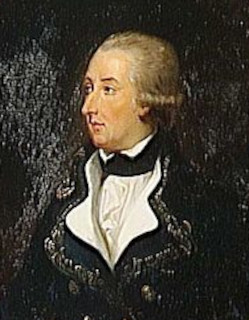
arthur-dillon

Arthur Dillon‘s regiment of the Irish Brigade of France fights at the Battle of Castiglione on September 8, 1706. The battle takes place near Castiglione delle Stiviere in Lombardy, Italy during the War of the Spanish Succession. The French army of 12,000 attacks a Hessian corps of 10,000 that is besieging the town, forcing them to retreat with heavy losses.

By the end of 1705, France and its allies control most of Northern Italy, as well as the Savoyard territories of Villefranche and the County of Savoy, now in modern-day France. The main French objective for 1706 is to capture the Savoyard capital of Turin. To prevent Imperial forces in Lombardy intervening, Louis Joseph, Duke of Vendôme, attacks at Calcinato on April 19 and drives them into the Trentino valley. On May 12, Marshall La Feuillade and an army of 48,000 men reach Turin, completing their blockade of the city on 19 June 19. The Imperial commander Prince Eugene of Savoy returns from Vienna and takes the remaining troops into the Province of Verona to await the German contingents. By early July, there are 30,000 Imperial soldiers around Verona facing 40,000 French spread between the Mincio and Adige rivers.

The French position looks very strong but defeat at Ramillies in May means Vendôme and any available troops are sent to Northern France. The siege of Turin continues and although the Hessians have not yet arrived, by mid-July Prince Eugene can no longer delay marching to its relief. Count of Médavy and 23,000 men are left to guard the Alpine passes.

The Hessians finally cross the Alps in July, under the command of Frederick of Hesse-Kassel. As they arrive too late to join Prince Eugene’s march to Turin, the Hessians are tasked with preventing Médavy disrupting his supply routes. On August 19, Frederick sends 2,000 men under Major-General Wetzel to Goito, a small town with a bridge across the Mincio and the French garrison evacuates the town. Castiglione is strongly defended and they have to wait for the heavy artillery to arrive from Arco. Frederick leaves 1,500 men outside the town with the rest positioned near Medole, allowing him to monitor Médavy’s main force at Cremona and the crossing at Goito.

The withdrawal from Goito is part of a plan by Médavy to assemble a field army without alerting Frederick by removing garrisons from key strongpoints like Cremona. He puts together a force of 8,000 infantry and 4,000 cavalry, crosses the Oglio river at Marcaria and attacks on September 8. Dividing his corps leaves Frederick outnumbered. The first assaults are repulsed but a cavalry charge led by the Irish exile Arthur Dillon catches the Hessian left wing as they are changing position and the line collapses. Médavy then turns his attention to those outside Castiglione, many of whom surrender. French casualties are estimated as 1,000 killed or wounded, the Hessians losing around 1,500 killed or wounded plus 2,500 captured.

The remainder fall back on Valeggio sul Mincio. In a letter of September 11 to John Churchill, 1st Duke of Marlborough, Frederick claims his forces were reduced by sickness but although they initially drove the French back, lack of artillery forced him to retreat.

Médavy’s victory leaves the strategic position unaltered. The Battle of Turin on September 7 had broken the siege and after Ramillies France can no longer spare the resources to continue fighting in Italy. Castiglione slightly improves their bargaining position but French garrisons in Lombardy are isolated and cannot be reinforced, their surrender being only a matter of time.

To the fury of the English and Dutch, in March 1707 Emperor Joseph signs the Convention of Milan withdrawing all French troops from Northern Italy in return for free passage back to France.

(Pictured: Arthur Dillon, Colonel of Dillon’s Regiment in the Irish Brigade of France)


Leave a comment

Birth of Maureen Toal, Stage & Television Actress

Maureen Toal, Irish stage and television actress whose professional career lasts for more than sixty years, is born on September 7, 1930 in Fairview, Dublin.

Toal begins performing at the Abbey Theatre in Dublin in 1946, when she is just sixteen years old. She becomes a fixture at the theatre, portraying Bessie Burgess in Seán O’Casey‘s The Plough and the Stars and the Widow Quinn in John Millington Synge‘s The Playboy of the Western World. She also appears in several one woman shows, including Baglady, which is written by Irish playwright Frank McGuinness.

Another playwright, John B. Keane, writes the role of Mame Fadden in his play, The Change in Mame Fadden, specifically for Toal. Hugh Leonard also pens characters in his plays A life and Great Big Blonde with the intention of casting Toal in the parts. She is best known to Irish television audiences for her role as Teasy McDaid on RTÉ One‘s Glenroe during the 1990s.

In 1952, Toal marries fellow Irish actor Milo O’Shea. They divorce in 1974.

The University College Dublin awards Toal an honorary doctorate in literature in 2010.

Toal dies in her sleep at her home in Sandycove, Dublin, on August 24, 2012, two weeks before her 82nd birthday. She is survived by her sons, Steven and Colm O’Shea, two sisters, one brother, and three grandchildren.


Leave a comment

Death of Oliver Bond, Member of the Society of United Irishmen

Oliver Bond, Irish merchant and a member of the Leinster directorate of the Society of United Irishmen, dies in prison in Dublin on September 6, 1798 following the Irish Rebellion of 1798.

Born in St. Johnston, County Donegal around 1760, Bond is the son of a dissenting minister and is connected with several respectable families. In his early years, he works as an apprentice haberdasher in Derry before relocating to Dublin.

In the capital, Bond is in business as a merchant in the woollen trade, and becomes wealthy. Initially, he is based in Pill Lane (now Chancery Street), before moving to 9 Lower Bridge Street in 1786. In 1791, he marries Eleanor ‘Lucy’ Jackson, daughter of the iron founder Henry Jackson, who like Bond is to become a leading United Irishman.

Bond is an early member in the movement planning for a union in Ireland across religious lines to press for reform of the Parliament of Ireland and for an accountable government independent of the Privy Council of the United Kingdom and cabinet. When, following the Belfast example, the Society of United Irishmen forms in Dublin in November 1791, Bond becomes a member.

Bond is secretary of the meeting, with the barrister Simon Butler presiding, when in February 1793 the society passes resolutions which, in addition to the call for Catholic emancipation and parliamentary reform, condemn as unconstitutional the repressive measures of the government, and deplore war against the new French Republic. A result is a summons to appear before the bar of the Irish House of Lords in Dublin where, in consequence of the their defiant performance, Bond and Butler are charged and convicted of libel, fined and confined for six months in Newgate Prison.

Despairing of their efforts to secure full emancipation and advance parliamentary reform, and in anticipation of French assistance, the United Irishmen resolve on an insurrection to depose the Crown‘s Dublin Castle executive and the Protestant Ascendancy Lords and Commons, and to establish Ireland as an independent republic. Bond becomes a member of the United Irishmen’s northern executive committee and of the Leinster directorate, the meetings of which are generally held at his house on Lower Bridge Street.

There, on February 19, 1798, the famous resolution is passed: “We will pay no attention to any measure which the Parliament of this kingdom may adopt, to divert the public mind from the grand object we have in view; as nothing short of the entire and complete regeneration of our country can satisfy us.”

Through the treachery of Thomas Reynolds, Bond’s house is surrounded by military on the morning of March 12, 1798, and fourteen members of the Leinster Directory are seized. The insurrection goes forward in their absence to defeat in the early summer. Following suppression of the rebellion, Bond goes to trial. The efforts of his defence counsel, John Philpot Curran, to discredit Reynold’s testimony are unavailing. On July 27, 1798, Bond is convicted of treason and sentenced to hang.

It is mainly to prevent Bond’s execution that Thomas Addis Emmet and other state prisoners enter a compact with government whereby (without incriminating further individuals) they agree to testify on the activities of Union Irishmen before a parliamentary committee, and to accept permanent exile. With the endorsement of Charles Cornwallis, 1st Marquess Cornwallis, the Commander-in-Chief, Ireland, Bond’s sentence is commuted. He survives, however, but five weeks, dying in prison of apoplexy at the age of 36 on September 6, 1798.

Bond is buried in the cemetery of St. Michan’s Church, Dublin. The “enlightened republican” principles of Bond are eulogised by his political associate and fellow-prisoner, William James MacNeven. Bond’s widow Lucy moves with her family from Ireland to the United States, and dies in Baltimore, Maryland in 1843.

The Oliver Bond flats in The Liberties area of Dublin are named after him.


Leave a comment

Birth of British Labour Politician Kevin McNamara

Joseph Kevin McNamara KSG, British Labour Party politician who serves as a Member of Parliament (MP) for almost 40 years, is born on September 5, 1934.

McNamara is educated by the Irish Christian Brothers at St. Mary’s College, Crosby and he studies for an LLB at the University of Hull. He is head of department in History at St. Mary’s Grammar School (now called St. Mary’s College) in Kingston upon Hull from 1958–64 and a law lecturer at Hull College of Commerce from 1964–66.

After unsuccessfully contesting Bridlington in 1964, McNamara is elected to the House of Commons as Member of Parliament (MP) for Kingston upon Hull North, in a by-election in January 1966 following the death of sitting Labour MP Henry Solomons. Labour’s hold of a former marginal seat with a significantly increased majority is widely considered to have helped to convince Prime Minister Harold Wilson to call the 1966 election to seek a larger majority.

McNamara retains his seat at the 1966 general election, and at subsequent elections until the constituency is abolished for the February 1974 general election, when he transfers to the new Kingston upon Hull Central constituency. When that constituency is abolished for the 1983 election, he is re-elected for the re-created Kingston upon Hull North constituency.

McNamara campaigns in his last years in parliament on many issues, protesting against the Act of Succession which prohibits a Roman Catholic or the spouse of a Roman Catholic to be the British monarch. He steps down at the 2005 general election, with the local Constituency Labour Party choosing Diana Johnson to stand in his place.

During the 2005 general election campaign McNamara claims some of the policies regarding illegal travelers’ sites of the leader of the Conservative Party, Michael Howard, had a “whiff of the gas chambers” about them. Howard’s grandmother died at Auschwitz.

McNamara is known throughout his parliamentary career as a supporter of Irish nationalism and favours a United Ireland. After entering parliament, he soon becomes interested in reports of discrimination against the Catholic minority in Northern Ireland and supports the Campaign for Democracy in Ulster (CDU). He serves as a frontbench spokesman for the Labour Party, including Shadow Secretary of State for Northern Ireland under Neil Kinnock, 1987–94, an appointment that is widely criticised by Unionists.

After Tony Blair becomes Labour leader, he replaces McNamara as Northern Ireland spokesman with Mo Mowlam. In 1997, he helps persuade the newly elected Labour government to donate £5,000 (thereby matching the contribution of the Irish government) for the erection of a memorial in Liverpool to the victims of the Great Irish Famine. He also supports Republicanism in the United Kingdom and joins the All-Party Parliamentary Republic Group.

McNamara is a Roman Catholic and a Knight of the Pontifical Order of Saint Gregory the Great. He is married to Nora McNamara, and is the father of four sons and a daughter.

In 2006, McNamara receives the honorary degree of Doctor of Laws from the University of Hull in recognition of his long service in politics. He graduates with a Ph.D from the University of Liverpool in 2007 having completed a thesis on the MacBride Principles at the Institute of Irish Studies, where he gives the 2008 John Kennedy Lecture in Irish Studies, Perhaps It Will All Go Away – an Examination of the British Response to the Civil Rights Movement in Northern Ireland.

In 2017, McNamara is diagnosed with pancreatic cancer while on holiday in Spain. He dies on August 6, 2017 at Formby, England, at the age of 82.


Leave a comment

Birth of John Dillon, Last Leader of the Irish Parliamentary Party

John Dillon, a Member of Parliament (MP) for over 35 years and the last leader of the Irish Parliamentary Party (IPP) in the struggle to secure Home Rule by parliamentary means, is born in Blackrock, Dublin on September 4, 1851. Through the 1880s he is perhaps the most important ally of the greatest 19th-century Irish nationalist, Charles Stewart Parnell, but, following Parnell’s involvement as co-respondent in a divorce case, he repudiates Parnell for reasons of political prudence.

Dillon is the son of the former “Young IrelanderJohn Blake Dillon (1814–1866). Following the premature death of both his parents, he is partly raised by his father’s niece, Anne Deane. He is educated at Catholic University School, at Trinity College, Dublin and at the Catholic University of Leuven in Belgium. He afterwards studies medicine at the Royal College of Surgeons in Dublin, then ceases active involvement in medicine after he joins Isaac Butt‘s Home Rule League in 1873

Dillon is a member of the British House of Commons during 1880–1883 and 1885–1918. For his vigorous work in the Irish National Land League, which seeks fixed tenure, fair rents, and free sale of Irish land, he is imprisoned twice between May 1881 and May 1882. He is Parnell’s fellow inmate in Kilmainham Gaol in Dublin from October 1881. For six months in 1888 he is imprisoned for aiding William O’Brien, author of the “plan of campaign” against high rent charges by English absentee landlords in Irish farming districts.

When Parnell is named co-respondent in Captain William Henry O’Shea’s divorce suit in 1890, Dillon and O’Brien at first affirm their support of him, but they finally decide that he will thenceforth be a liability as party leader. The party then splits, the anti-Parnellite majority forming the Irish National Federation, of which Dillon serves as chairman from 1896. In 1900, however, he agrees to join a reunited party under the Parnellite John Redmond.

During the prime ministry of Arthur James Balfour (1902–1905), Dillon comes to believe that the British Conservative government intends to grant Irish reforms without independence, thereby “killing Home Rule by kindness.” In 1905 he advises Irishmen to vote for Liberal Party candidates for Parliament, and, after the Liberals had taken office that year, he supports their reform program.

Throughout World War I Dillon vehemently opposes the extension of British military conscription to Ireland, both because that measure would strengthen the agitation by the more extreme nationalist Sinn Féin party and because he never accepted the view that British imperial interests necessarily coincided with those of Ireland. After the Easter Rising in Dublin in 1916, he protests against the harsh measures that ensue and, in the House of Commons, makes a passionate speech in defense of the Irish rebels.

Upon Redmond’s death on March 6, 1918, Dillon, who had broken with him over Irish support for the British war effort, succeeds him as Irish Parliamentary Party leader. By that time, however, the party has been discredited and in the 1918 Irish general election Sinn Féin wins easily. On losing his House of Commons seat to Éamon de Valera, the future president of the Republic of Ireland, he retires from politics.

Dillon dies in a London nursing home at the age of 76, on August 4, 1927. He is buried four days later in Glasnevin Cemetery in Dublin. There is a street named after him in Dublin’s Liberties area, beside the old Iveagh Markets. One of his six children is James Mathew Dillon (1902–1986), a prominent Irish politician and leader of the National Centre Party and of Fine Gael (1957–1966) and also serves as Minister for Agriculture (1954-1957).


Leave a comment

Birth of William Sharman Crawford, Irish Politician

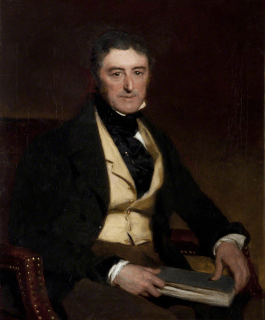
William Sharman Crawford, Irish politician with liberal and radical views, is born William Sharman on September 3, 1780 in at Moira Castle in County Down.

Sharman is the eldest son of Colonel William Sharman, for many years a member of the Parliament of Ireland for Lisburn, who dies in 1803 leaving him large estates. In 1805 he marries a wealthy heiress, Mabel Fridiswid Crawford, whose surname and arms he adds to his own.

Sharman Crawford supports Catholic Emancipation and the rights of tenants. He is also a member of the landed gentry. He is High Sheriff of Down for 1811. He is a member of the Parliament of the United Kingdom for Dundalk in 1835–37 and for Rochdale in 1841–52. He greatly increases the prosperity of the tenants on his large estates by extending and confirming the Ulster custom of tenant-right. The main objective of his long parliamentary career is to give legal effect to this right and extend it to other parts of Ireland.

In 1848 with James MacKnight, editor of the liberal Londonderry Standard, Sharman Crawford forms the Ulster Tenant Right Association which is supported by a group of radical Presbyterian ministers. He also supports MacKnight in forming, with Charles Gavan Duffy, editor of the Young Ireland newspaper The Nation, the all-Ireland Tenant Right League.

Sharman Crawford is the father of James Sharman Crawford, member of the Parliament of the United Kingdom for Down, (1874-78), Arthur Sharman Crawford, unsuccessful candidate for Down in 1884 and John Sharman Crawford, unsuccessful candidate for Down in 1880. His daughter is Mabel Sharman Crawford, adventurer, feminist and writer.

Sharman Crawford dies unexpectedly and peacefully at Crawfordsburn, County Down on October 17, 1861. He is buried in the family vault at Kilmore, County Down, where there is a monumental inscription. A great stone obelisk is erected in his memory on a hill at Rademon Estate, near Crossgar, County Down.


2 Comments

Death of Mathematician Sir William Rowan Hamilton

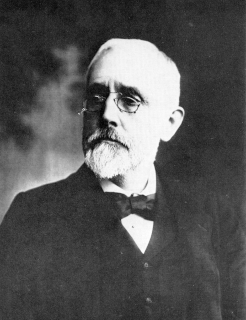
Sir William Rowan Hamilton, Irish mathematician, Andrews Professor of Astronomy at Trinity College, Dublin, and Royal Astronomer of Ireland, who makes important contributions to classical mechanics, optics, and algebra, dies in Dublin on September 2, 1865, following a severe attack of gout.

Hamilton is born in Dublin on August 4, 1805, the fourth of nine children born to Sarah Hutton (1780–1817) and Archibald Hamilton (1778–1819). He is part of a small but well-regarded school of mathematicians associated with Trinity College, Dublin, which he enters at age eighteen. He is said to have shown immense talent at a very early age. Astronomer Bishop Dr. John Brinkley remarks of the 18-year-old Hamilton, “This young man, I do not say will be, but is, the first mathematician of his age.”

Trinity College awards him two Optimes, or off-the-chart grades. He studies both classics and mathematics and is appointed Professor of Astronomy just prior to his graduation. He then takes up residence at Dunsink Observatory where he spends the rest of his life.

Although Hamilton regards himself as a pure mathematician rather than a physicist, his work is of major importance to physics, particularly his reformulation of Newtonian mechanics, now called Hamiltonian mechanics. This work has proven central to the modern study of classical field theories such as electromagnetism, and to the development of quantum mechanics. In pure mathematics, he is best known as the inventor of quaternions.

Hamilton’s scientific career includes the study of geometrical optics, classical mechanics, adaptation of dynamic methods in optical systems, applying quaternion and vector methods to problems in mechanics and in geometry, development of theories of conjugate algebraic couple functions, solvability of polynomial equations and general quintic polynomial solvable by radicals, the analysis on Fluctuating Functions, linear operators on quaternions and proving a result for linear operators on the space of quaternions, which is a special case of the general theorem which today is known as the Cayley–Hamilton theorem. He also invents Icosian calculus, which he uses to investigate closed edge paths on a dodecahedron that visit each vertex exactly once.

Hamilton retains his faculties unimpaired to the very last, and steadily continues the task of finishing the Elements of Quaternions which occupies the last six years of his life. He dies in Dublin on September 2, 1865, following a severe attack of gout precipitated by excessive drinking and overeating. He is buried in Mount Jerome Cemetery in Dublin.


Leave a comment

The Battle of Chantilly

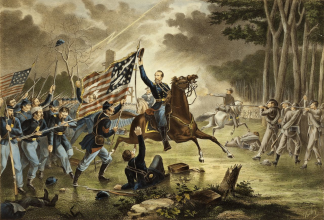
The predominately Irish 6th Louisiana Infantry Regiment fights at the Battle of Chantilly (or Ox Hill, the Confederate name), which takes place on September 1, 1862, in Fairfax County, Virginia, as the concluding battle of the northern Virginia campaign of the American Civil War. Thomas J. “Stonewall” Jackson‘s corps of the Army of Northern Virginia attempts to cut off the line of retreat of the Union Army of Virginia following the Second Battle of Bull Run but is attacked by two Union divisions. During the ensuing battle, Union division commanders Isaac Stevens and Philip Kearny are both killed, but the Union attack halts Jackson’s advance.

On the morning of September 1, 1862, Union Maj. Gen. John Pope orders Maj. Gen. Edwin Vose Sumner of the II Corps, Army of the Potomac, to send a brigade north to reconnoiter. The army’s cavalry is too exhausted for the mission. But at the same time, he continues his movement in the direction of Washington, D.C., sending Maj. Gen. Irvin McDowell‘s III Corps to Germantown (on the western border of modern-day Fairfax, Virginia), where it can protect the important intersection of Warrenton Pike and Little River Turnpike that the army needs for the retreat. He also sends two brigades from Maj. Gen. Jesse L. Reno‘s IX Corps, under the command of Brig. Gen. Isaac Stevens, to block Jackson. Maj. Gen. Philip Kearny’s division from the III Corps follows later that afternoon.

Jackson resumes his march to the south, but his troops are tired and hungry and make poor progress as the rain continues. They march only three miles and occupy Ox Hill, southeast of Chantilly Plantation, and halt, while Jackson himself takes a nap. All during the morning, Confederate cavalry skirmish with Union infantry and cavalry. At about 3:00 PM, Stevens’s division arrives at Ox Hill. Despite being outnumbered, Stevens chooses to attack across a grassy field against Brig. Gen. Alexander Lawton‘s division in the Confederate center. The Union attack is initially successful, routing the brigade of Colonel Henry Strong and driving in the flank of Captain William Brown, with Brown killed during the fighting. The Union division is driven back following a counterattack by Brig. Gen. Jubal Early‘s brigade. Stevens is killed during this attack at about 5:00 PM by a shot through his temple.

A severe thunderstorm erupts about this time, resulting in limited visibility and an increased dependence on the bayonet, as the rain soaks the ammunition of the infantry and makes it useless. Kearny arrives about this time with his division to find Stevens’s units disorganized. Perceiving a gap in the line he deploys Brig. Gen. David B. Birney‘s brigade on Stevens’s left, ordering it to attack across the field. Birney manages to maneuver close to the Confederate line but his attack stalls in hand-to-hand combat with Maj. Gen. A.P. Hill‘s division. Kearny mistakenly rides into the Confederate lines during the battle and is killed. As Kearny’s other two brigades arrive on the field, Birney uses the reinforcements as a rear guard as he withdraws the remainder of the Union force to the southern side of the farm fields, ending the battle.

That night, Maj. Gen. James Longstreet arrives to relieve Jackson’s troops and to renew the battle the following morning. The lines are so close that some soldiers accidentally stumble into the camps of the opposing army. The Union army withdraws to Germantown and Fairfax Court House that night, followed over the next few days by retreating to the defenses of Washington D.C. The Confederate cavalry attempts a pursuit but fails to cause significant damage to the Union army.

The fighting is tactically inconclusive. Although Jackson’s turning movement is foiled and he is unable to block the Union retreat or destroy Pope’s army, National Park Service historians count Chantilly as a strategic Confederate victory because it neutralizes any threat from Pope’s army and clears the way for Lee to begin his Maryland campaign. The Confederates claim a tactical victory as well because they hold the field after the battle. Two Union generals are killed, while one Confederate brigade commander is killed. Pope, recognizing the attack as an indication of continued danger to his army, continues his retreat to the fortifications around Washington, D.C. Lee begins the Maryland Campaign, which culminates in the Battle of Antietam, after Pope retreats from Virginia. The Army of the Potomac, under Maj. Gen. George B. McClellan, absorbs the forces of Pope’s Army of Virginia, which is disbanded as a separate army.

The site of the battle, once rural farmland, is now surrounded by suburban development in Fairfax County. A 4.8-acre (19,000 m²) memorial park, the Ox Hill Battlefield Park, is located off of State Route 608 (West Ox Road) and lies adjacent to the Fairfax Towne Center shopping area and includes most of the Gen. Isaac Stevens portion of the battle, about 1.5% of the total ground. The park is under the jurisdiction of the Fairfax County Park Authority. In January 2005, the Authority approves a General Management Plan and Conceptual Development Plan that sets forth a detailed history and future management framework for the site.

A small yard located within the nearby Fairfax Towne Center has been preserved to mark the area crossed by Confederate troops to get to the Ox Hill battlefield.

(Pictured: Color lithograph “General Kearney’s gallant charge,” published by John Smith, 804 Market St., Philadelphia. From the Library of Congress.)