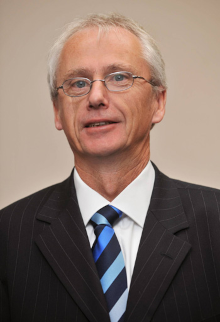
Rafferty is the third son of Irish miner and lorry driver Joseph Rafferty and his Scottish wife Mary Skeffington. His abusive alcoholic father dies when Gerry is only sixteen years old. He grows up in a council house on the town’s Glenburn estate and attends St. Mirin’s Academy. Inspired by his Scottish mother, who teaches him both Irish and Scottish folk songs, and the music of Bob Dylan and the Beatles, he starts writing his own material. In 1963 he leaves St. Mirin’s Academy and works in a butcher’s shop and as a civil service clerk while also playing with the local group Maverix on weekends.
In the mid-1960s Rafferty earns money busking on the London Underground. In 1966 he meets fellow musician Joe Egan and they are both members of the pop band the Fifth Column. In 1969 he becomes the third member of the folk-pop outfit the Humblebums, which also features comedian Billy Connolly and Tam Harvey. He and Connelly record two well-received albums on the Transatlantic Records label as a duo.
Rafferty releases his first solo album, Can I Have My Money Back?, in 1972. That same year he and Egan form the group Stealers Wheel. Stealers Wheel has a huge hit with the jaunty and witty song “Stuck in the Middle with You,” which peaks at #6 on the Billboard pop charts. Stealers Wheel has a lesser Top 40 hit with “Star” ten months later and eventually breaks up in 1975.
In 1978 Rafferty hits pay dirt with his second solo album, City to City, which soars to #1 on the Billboard album charts and sells over five million copies worldwide. The album also begets the hit song “Baker Street.” This haunting and poetic ballad is an international smash that goes to #2 in the United States, #3 in the United Kingdom, #1 in Australia, and #9 in the Netherlands.
Rafferty’s third album, Night Owl, likewise does well. Moreover, he has additional impressive chart successes with the songs “Right Down the Line,” “Home and Dry,” “Days Gone Down,” and “Get It Right Next Time.” Alas, a handful of albums he records throughout the 1980s and 1990s all prove to be commercial flops. He sings the vocal on the song “The Way It Always Starts” for the soundtrack of the movie Local Hero.
Rafferty is married to Carla Ventilla from 1970 to 1990. He records his last album, Another World, in 2000 and releases the compilation CD, Life Goes On, in 2009.
Rafferty has problems with alcoholism that directly contributes to his untimely death. In November 2010, he is admitted to the Royal Bournemouth Hospital where he is put on a life support machine and treated for multiple organ failure. After being taken off life support, he rallies for a short time, and doctors believe he might recover. He dies, however, of liver failure at the home of his daughter Martha in Stroud, Gloucestershire, on January 4, 2011.
The Limerick Soviet exists for a two-week period from April 15 to April 27, 1919, and is one of a number of self-declared Irish soviets that are formed around Ireland between 1919 and 1923. At the beginning of the Irish War of Independence, a general strike is organised by the Limerick Trades and Labour Council, as a protest against the British Army‘s declaration of a “Special Military Area” under the Defence of the Realm Act 1914, which covers most of Limerick city and a part of the county. The soviet runs the city for the period, prints its own money and organises the supply of food.
From January 1919 the Irish War of Independence develops as a guerrilla conflict between the Irish Republican Army (IRA) (backed by Sinn Féin‘s Dáil Éireann), and the British government. On April 6, 1919, the IRA tries to liberate Robert Byrne, who is under arrest by the Royal Irish Constabulary (RIC) in a hospital, being treated for the effects of a hunger strike. In the rescue attempt Constable Martin O’Brien is fatally wounded, and another policeman is seriously injured. Byrne is also wounded and dies later the same day.
In response, on April 9 British Army Brigadier Griffin declares the city to be a Special Military Area, with RIC permits required for all wanting to enter and leave the city as of Monday, April 14. British Army troops and armoured vehicles are deployed in the city.
On Friday, April 11 a meeting of the United Trades and Labour Council, to which Byrne had been a delegate, takes place. At that meeting Irish Transport and General Workers’ Union (ITGWU) representative Sean Dowling proposes that the trade unions take over Town Hall and have meetings there, but the proposal is not voted on. On Saturday, April 12 the ITGWU workers in the Cleeve’s factory in Lansdowne vote to go on strike. On Sunday, April 13, after a twelve-hour discussion and lobbying of the delegates by workers, a general strike is called by the city’s United Trades and Labour Council. Responsibility for the direction of the strike is devolved to a committee that describes itself as a soviet as of April 14. The committee has the example of the Dublin general strike of 1913 and “soviet” (meaning a self-governing committee) has become a popular term after 1917 from the soviets that had led to the Russian Soviet Federative Socialist Republic.
A transatlantic air race is being organised from Bawnmore in County Limerick at the same time but is cancelled. The assembled journalists from England and the United States take up the story of an Irish soviet and interview the organisers. The Trades Council chairman John Cronin is described as the “father of the baby Soviet.” Ruth Russell of the Chicago Tribune remarks on the religiosity of the strike committee, observes “the bells of the nearby St. Munchin’s Church tolled the Angelus and all the red-badged guards rose and blessed themselves.” The Sinn Féin Mayor of Limerick, Phons O’Mara, tells Russell there is no prospect of socialism, as “There can’t be, the people here are Catholics.”
The general strike is extended to a boycott of the troops. A special strike committee organises food and fuel supplies, prints its own money based on the British shilling, and publishes its own newspaper called The Worker’s Bulletin. The businesses of the city accept the strike currency. Cinemas open with the sign “Working under authority of the strike committee” posted. Local newspapers are allowed to publish once a week as long as they have the caption “Published by Permission of the Strike Committee.” Outside Limerick there is some sympathy in Dublin, but not in the main Irish industrial area around Belfast. The National Union of Railwaymen does not help.
On April 21 The Worker’s Bulletin remarks that “A new and perfect system of organisation has been worked out by a clever and gifted mind, and ere long we shall show the world what Irish workers are capable of doing when left to their own resources.” On Easter Monday 1919, the newspaper states “The strike is a worker’s strike and is no more Sinn Féin than any other strike.”
Liam Cahill argues, “The soviet attitude to private property was essentially pragmatic. So long as shopkeepers were willing to act under the soviet’s dictates, there was no practical reason to commandeer their premises.” While the strike is described by some as a revolution, Cahill adds, “In the end the soviet was basically an emotional and spontaneous protest on essentially nationalist and humanitarian grounds, rather than anything based on socialist or even trade union aims.”
After two weeks the Sinn Féin Lord Mayor of Limerick, Phons O’Mara, and the Catholic bishopDenis Hallinan call for the strike to end, and the Strike Committee issues a proclamation on April 27, 1919, stating that the strike is over.
(Pictured: Photograph of Members of the 1919 Limerick Soviet, April 1919, Limerick City)
Hopkirk is raised as a Catholic, and educated at Clongowes Wood College in County Kildare from 1945 to 1949 before attending Trinity College, Dublin until 1953. His academic career, however, is held back by his dyslexia. He first learns the basics of car control at the age of nine, when a local clergyman leaves him his invalid carriage in his will. He later graduates to a motorcycle with a sidecar, which is added at the insistence of his father who feels it would be safer, and upon attending Trinity to study engineering, acquires an Austin 7 “Chummy” Tourer which he uses to make his rally debut. Now bitten by the car bug, he drops out of university to start working for Dublin‘s Volkswagen assembler’s retail operation in Ballsbridge, where he purchases a string of used Volkswagen Beetles to enter in competitions.
Hopkirk’s first win comes in 1953 at the Cairncastle hillclimb at the wheel of a VW Beetle. He is offered a free Beetle for the 1953 Circuit of Ireland by Isaac Agnew of Belfast. It is the first of many Circuit entries. The following year he leads the Circuit on the first day of the competition.
Hopkirk starts his winning career in professional racing and rally driving in 1955, taking a class win at that year’s Circuit of Ireland Rally, and clinching his first Hewison Trophy, awarded to the most successful Irish rally driver of the year. He goes on to win the Trophy for three consecutive years. By this time he has graduated to a Triumph TR2. His success in the Triumph is noticed by the Standard Motor Company, who offers him his first factory drive in a Standard Ten at the 1956 RAC Rally in March of that year, where he takes the early lead before suffering problems later on. Two months later he takes a Standard Eight to third place in the Tulip Rally in the Netherlands, his first trip outside of Britain and Ireland. However he loses his drive with Standard in 1958, after overdriving his car at the Alpine Rally in an effort to make up time lost due to a puncture on the Stelvio Pass, damaging the engine and forcing him to retire from the competition.
In 1959 Hopkirk joins the Rootes Group as a works driver, initially picking up a drive in a Hillman Husky at the Safari Rally after reigning F1 World Champion Mike Hawthorn, who is originally meant to drive the car, is killed in a road accident. Later that year he places third overall and takes a class win at the Alpine Rally in a Sunbeam Rapier, and he leads the 1960 Safari Rally until his Rapier suffers a differential failure. He takes two Circuit of Ireland Rally wins in 1961 and 1962 and another third at the Alpine Rally in 1961. While at Rootes he also takes part in circuit racing, winning his class in a Rapier in the touring car race supporting the 1960 British Grand Prix.
Hopkirk finishes third at the 1962 Monte Carlo Rally in a Sunbeam Rapier. However, he becomes frustrated by the Rapier’s lack of reliability, culminating in all three works cars blowing their engines within the space of a kilometre at that year’s Acropolis Rally. After being impressed by a test drive of Pat Moss‘ Austin-Healey 3000, he sets his mind on a move, joining the British Motor Corporation and making his debut in a 3000 at the Liège-Sofia-Liège rally in August. In his second competition with the 3000, the RAC Rally, he finishes in second despite having to complete two miles of a special stage with a shredded tyre after a puncture. He first competes in a Mini at the 1963 Monte Carlo Rally, where he finishes sixth. That season he also finishes second on the Tulip Rally, sixth on Liège-Sofia-Liège, and fourth on the RAC Rally. In addition he takes the Mini to third place in the Tour de France Automobile‘s Touring Category behind two 3.8-litre Jaguars, winning his class and the overall on handicap.
Hopkirk also travels to Australia during his career to drive for the BMC Works Team in the annual Bathurst 500 race for standard production cars at the Mount Panorama Circuit. He drives at Bathurst in a Morris Cooper S from 1965 to 1967, obtaining a best result of 6th outright and 3rd in class in the 1965 Armstrong 500 when paired with Mäkinen. In 1965, he wins a Coupe d’Argent at the Alpine Rally. He wins the 1965 and 1967 Circuit of Ireland Rally, the 1966 and 1967 Alpine Rally, and the 1967 Rally Acropolis.
Hopkirk is elected as a life member of the British Racing Drivers’ Club in 1967, and is also president of the Historic Rally Car Register, and a patron of disability charity WheelPower.
In 1968 Hopkirk finishes second at the second edition of the Rally de Portugal. The following year, he finishes second in the Circuit of Ireland Rally and the RAC Rally, then fourth at the 1970 London to Mexico World Cup Rally with teammates Tom Nash and Neville Johnston in a Triumph 2.5 PI. He elects to step away from full-time competition at the end of that year, coinciding with British Leyland head Lord Stokes‘ decision to close down BL’s competition department.
In 1977, with co-driver Taylor Mike, Hopkirk takes part once again in a revived edition of the London-Sydney Marathon, the Singapore Airlines London to Sydney Rally, this time driving a Citroën CX 2400, taking third place overall in front of another CX driven by Claude Laurent and Jean-Claude Ogier.
In 1982, Hopkirk wins the RAC Golden 50, a historical anniversary race celebrating the 50th RAC Rally, with co-driver Brian Culcheth in the Mini Cooper with which Timo Mäkinen had won the 1965 Monte Carlo Rally. In 1990, he wins the Pirelli Classic Marathon with co-driver Alec Poole. In 1994, he enters the Monte Carlo Rally again, driving a current Mini Cooper, very similar to the original car, but now produced by Rover Group. He and his co-pilot Ron Crellin finish the race in 60th place against much more modern and powerful machines.
In 2010, Hopkirk is among the first four inductees into the Rally Hall of Fame, along with Timo Mäkinen, Rauno Aaltonen and Erik Carlsson.
Lynagh joins the Provisional Irish Republican Army in the early 1970s. In December 1973 he is badly injured in a premature bomb explosion, arrested, and spends five years in the Maze Prison. While imprisoned, he studies and becomes a great admirer of Mao Zedong. After his release from prison in 1979 he is elected as a Sinn Féincouncillor for Monaghan and holds this position until he is killed.
After his release from prison Lynagh becomes active in the IRA again, active with the Provisional IRA East Tyrone Brigade. He quickly becomes a unit commander and gradually builds up his ruthless reputation. After a series of Ulster loyalist attacks against Irish nationalist politicians in late 1980 and early 1981, he is suspected of involvement in an attack on the Stronge estate near Middletown, County Armagh, where the IRA murdered the retired Ulster Unionist PartyStormont speaker, Sir Norman Stronge, and his son James, a Royal Ulster Constabulary (RUC) officer, before burning down their home, Tynan Abbey, and shooting their way out through a police cordon.
Lynagh is known as “The Executioner” by the Royal Ulster Constabulary. He is arrested and interrogated many times by the Garda Síochána in County Monaghan but is never charged. During this period, he devises a Maoist military strategy, aimed at escalating the war against the British state in Northern Ireland. The plan envisages the destruction of police stations and British Army military bases in parts of Northern Ireland to create “liberated” areas that will be thereby rendered under the domination of the IRA. In 1984 he starts co-operating with Pádraig McKearney who shares his views. The strategy begins materialising with the destruction of an RUC police station in Ballygawley in December 1985 which kills two police officers, and in The Birches in August 1986.
Lynagh is killed by the British Army’s Special Air Service on May 8, 1987 during an attack on the isolated rural part-time police station at the small County Armagh village of Loughgall, the third such attack that he had taken part in. During the incident the IRA detonates a 200-lb. bomb, and attacks the station with automatic weapons, and in the process are ambushed by the British Army which is lying in wait for them, having been forewarned of the IRA operation. All eight of the IRA attacking force are killed in the exchange of fire, the British forces involved incurring no fatalities. The incident subsequently becomes known as the Loughgall ambush.
At the time of his death, Lynagh is living in a flat on Dublin Street in Monaghan. He is buried at St. Joseph’s Cemetery (Latlurcan Cemetery) in Monaghan. During his funeral, as his coffin is carried through the village of Emyvale, Irish Garda Síochána officers are attacked by the crowd of mourners after they pursue three gunmen who had fired a volley over his coffin.
Patrick John Hillery, Irish politician and the sixth President of Ireland, dies in Glasnevin, Dublin, at the age of 84 on April 12, 2008, following a short illness. He serves two terms in the presidency and, though widely seen as a somewhat lacklustre President, is credited with bringing stability and dignity to the office. He also wins widespread admiration when it emerges that he has withstood political pressure from his own Fianna Fáil party during a political crisis in 1982.
Following Ireland’s successful entry into the European Economic Community in 1973, Hillery is rewarded by becoming the first Irishman to serve on the European Commission, serving until 1976 when he becomes President. In 1976 the Fine Gael–Labour Party National Coalition under Liam Cosgrave informs him that he is not being re-appointed to the Commission. He considers returning to medicine; however, fate takes a turn when Minister for DefencePaddy Donegan launches a ferocious verbal attack on President Cearbhall Ó Dálaigh, calling him “a thundering disgrace” for referring anti-terrorist legislation to the courts to test its constitutionality. When a furious President Ó Dálaigh resigns, a deeply reluctant Hillery agrees to become the Fianna Fáil candidate for the presidency. Fine Gael and Labour decide it is unwise to put up a candidate in light of the row over Ó Dálaigh’s resignation. As a result, Hillery is elected unopposed, becoming President of Ireland on December 3, 1976.
When Hillery’s term of office ends in September 1983, he indicates that he does not intend to seek a second term, but he changes his mind when all three political parties plead with him to reconsider. He is returned for a further seven years without an electoral contest. After leaving office in 1990, he retires from politics.
Hillery’s two terms as president, from 1976 to 1990, end before the 1998 Good Friday Agreement, which sets terms for an end to violence in Northern Ireland. But he acts at crucial moments as an emollient influence on the republic’s policies toward the north and sets a tone that helps pave the way for eventual peace.
Patrick Hillery dies on April 12, 2008, in his Dublin home following a short illness. His family agrees to a full state funeral for the former president. He is buried at St. Fintan’s Cemetery, Sutton, near Dublin. In the graveside oration, TánaisteBrian Cowen says Hillery was “A humble man of simple tastes, he has been variously described as honourable, decent, intelligent, courteous, warm and engaging. He was all of those things and more.”
The family is originally from the Marrowbone area, on the Oldpark Road in North Belfast. The family has to move when Storey is very young due to Ulster loyalist attacks on the district, moving to Manor Street, an interface area also in North Belfast. His uncle is boxing trainer Gerry Storey and his father, also called Bobby, is involved in the defence of the area in the 1970s when Catholics are threatened by loyalists.
Storey is one of four children. He has two brothers, Seamus and Brian, and a sister Geraldine. Seamus and his father are arrested after a raid on their home which uncovers a rifle and a pistol. While his father is later released, Seamus is charged. He escapes from Crumlin Road Prison with eight other prisoners in 1971, and they are dubbed the Crumlin Kangaroos.
On his mother Peggy’s side of the family there is also a history of republicanism, but Storey says the dominant influences on him are the events happening around him. These include the McGurk’s Bar bombing in the New Lodge, some of those killed being people who knew his family, and also Bloody Sunday. This then leads to his attempts to join the IRA. He leaves school at fifteen and goes to work with his father selling fruit. At sixteen, he becomes a member of the IRA.
On April 11, 1973, his seventeenth birthday, Storey is interned and held at Long Kesh internment camp. He had been arrested 20 times prior to this but was too young for internment. In October 1974, he takes part in the protest at Long Kesh against living conditions where internees set fire to the “cages” in which they are being held. He is released from internment in May 1975. He is arrested on suspicion of a bombing at the Skyways Hotel in January 1976 and a kidnapping and murder in the Andersonstown district of Belfast in March 1976, but is acquitted by the judge at his trial. He is arrested leaving the courthouse and charged with a shooting-related incident. He is released after the case cannot be proven, only to be charged with shooting two soldiers in Turf Lodge. Those charges are dropped in December 1977. The same month he is arrested for the murder of a soldier in Turf Lodge, but the charges are again dropped. In 1978 he is charged in relation to the wounding of a soldier in Lenadoon, but is acquitted at trial due to errors in police procedure.
On December 14, 1979, he is arrested in Holland Park, London, with three other IRA volunteers including Gerard Tuite, and charged with conspiring to hijack a helicopter to help Brian Keenan escape from Brixton Prison. Tuite escapes from the same prison prior to the trial, and the other two IRA volunteers are convicted, but Storey is acquitted at the Old Bailey in April 1981. That August, after a soldier is shot, he is arrested in possession of a rifle and is convicted for the first time, being sentenced to eighteen years’ imprisonment.
Storey is one of the leaders of the Maze Prison escape in 1983, when 38 republican prisoners break out of the H-Blocks, the largest prison escape in British penal history and the largest peacetime prison escape in Europe. He is recaptured within an hour and sentenced to an additional seven years’ imprisonment. Released in 1994, he is again arrested in 1996 and charged with having personal information about a British Army soldier, and Brian Hutton, the Lord Chief Justice of Northern Ireland. At his trial at Crumlin Road Courthouse in July 1998, he is acquitted after his defence proves the personal information had previously been published in books and newspapers.
Having spent over twenty years in prison, much of it on remand, Storey’s final release is in 1998, and he again becomes involved in developing republican politics and strategy, eventually becoming the northern chairman of Sinn Féin.
On September 9, 2015, Storey is arrested and held for two days in connection with the killing of former IRA volunteer Kevin McGuigan the previous month. He is subsequently released without any charges, and his solicitor John Finucane states Storey will be suing for unlawful arrest.
Storey dies in England on June 21, 2020, following an unsuccessful lung transplant surgery. Sinn Féin president Mary Lou McDonald describes him as “a great republican” in her tribute. His funeral procession in Belfast on June 30 is attended by over 1,500 people including McDonald, deputy First MinisterMichelle O’Neill, and former Sinn Féin president Gerry Adams, but is criticised for breaking social distancing rules implemented in response to the COVID-19 pandemic which, at the time operating in Northern Ireland, limited funeral numbers to no more than 30 mourners.
In the 2017 film Maze, dramatising the 1983 prison break, directed by Stephen Burke, Storey is portrayed by Irish actor Cillian O’Sullivan.
Russell is the second son of Thomas Russell and Mary Armstrong. His father, the son of a small farmer, becomes an employee of Thomas Bell and Co., a prosperous firm of linen drapers. The family relocates to Dublin, where his father has a new offer of employment, when he is eleven years old.
Following his time at the Metropolitan School of Art, Russell becomes an accounts clerk in a drapery store but leaves in 1897 to organize agricultural cooperatives. Eventually he becomes editor of the periodicals Irish Homestead (1905–23) and The Irish Statesman (1923–30). In 1894 he publishes the first of many books of verse, Homeward: Songs by the Way, which establishes him in what is known as the Irish Literary Revival. His first volume of Collected Poems appears in 1913 and a second in 1926. He maintains a lifelong interest in theosophy, the origins of religion, and mystical experience. Candle of Vision: Autobiography of a Mystic (1918) is the best guide to his religious beliefs.
At the turn of the 20th century, Russell is considered by many to be the equal of Yeats, but he does not continue to grow and develop as Yeats does. He is prolific and versatile, but many critics find his poetry facile, vague, and monotonous, with “rather too much of the Celtic Twilight” in it.
Russell, who had become increasingly unhappy in the Irish Free State which, according to Yeats, he called “a country given over to the Devil,” moves to England soon after his wife’s death in 1932. Despite his failing health he goes on a final lecture tour in the United States but returns home utterly exhausted. He dies of cancer in Bournemouth, England, on July 17, 1935. His body is brought back to Ireland, and he is interred in Mount Jerome Cemetery, Dublin.
The Provisional IRA had been attacking British Army patrols and convoys with land mines and roadside bombs since the beginning of its campaign in the early 1970s. The deadliest attack was the Warrenpoint ambush of August 1979, when 18 soldiers were killed by two large roadside bombs near Warrenpoint, County Down. In July 1983, four soldiers of the local Ulster Defence Regiment (UDR) were killed when their vehicle struck an IRA land mine near Ballygawley, County Tyrone. It was the UDR’s biggest loss of life up until then.
On the morning of April 9, 1990, two UDR armoured landrovers are traveling from Abercorn Barracks to Downpatrick. An IRA unit has planted a 1,000-pound improvised land mine in a culvert under the Ballydugan Road, just outside the town. The unit waits in woodland overlooking the road, about 350 feet away. As the landrovers drive over the culvert, the IRA detonates the bomb by command wire. The huge blast blows the vehicle into a field and gouges a large crater in the road, 50 feet wide and 15 feet deep. A witness describes “a scene of utter carnage.” Four soldiers are killed: Michael Adams (23), John Birch (28), John Bradley (25), and Steven Smart (23). It is the biggest loss of life suffered by the UDR since the 1983 Ballygawley land mine attack. The soldiers in the other landrover suffer severe shock and are airlifted to hospital. According to police, a civilian driver also suffers shock, and another receives cuts and bruises.
The bombers escape on a motorcycle which had been stolen in Newry a week earlier, and is later found abandoned in Downpatrick. The IRA issues a statement saying the attack was carried out by members of its South Down Brigade.
A 23 year-old man is later sentenced to 15 years in prison for the attack. He had driven a scout car for the bombers when it was planted the day before the attack.
Pery is born into one of Limerick’s most politically influential families, elder son of the Rev. Stackpole Pery and Jane Twigge. His maternal grandfather is William Twigg, Archdeacon of Limerick.
A trained barrister, Pery becomes a member of the Irish House of Commons for the Wicklow Borough constituency in 1751. On the dissolution of the house following the death of George II, he is elected for the constituency of Limerick City and serves from 1761 until 1785, becoming Speaker of the House in 1771. In 1783, he stands also for Dungannon, however chooses to sit for Limerick City. He is considered one of the most powerful politicians in Ireland in his time, leading a faction which includes his nephew, the future Earl of Limerick, and his relatives by marriage, the Hartstonges. Following his resignation, he is created Viscount Pery, of Newtown Pery, near the City of Limerick, in the Peerage of Ireland, entitling him to a seat in the Irish House of Lords. As he has no male heirs, his title becomes extinct on his death on February 24, 1806.
Pery is also noted for his part in the history of the architecture of Limerick. In 1765, he commissions the engineer Davis Ducart to design a town plan for land that he owns on the southern edge of the existing city, which leads to the construction of the Georgian area of the city later known as Newtown Pery. He is also commemorated in the naming of Pery Square.
Pery marries Patricia (Patty) Martin of Dublin in 1756, who dies a year later, and secondly Elizabeth Vesey, daughter of John Vesey, 1st Baron Knapton, and Elizabeth Brownlow. He and Elizabeth have two daughters:
Smyth is a Freemason. He is raised on March 6, 1865, in Washington Lodge No. 1 in Wilmington, Delaware.
Smyth enlists in 1861 in the Union Army in an Irish American three-months regiment, the 24th Pennsylvania, and quickly makes the rank of captain. He is later commissioned as major of the 1st Delaware Infantry, a three-years regiment. He serves at the battles of Fredericksburg (following which he is promoted to lieutenant colonel and then to colonel) and Chancellorsville. During the Gettysburg campaign, he commands the 2nd Brigade, 3rd Division of the II Corps. During the Battle of Gettysburg, his men help defend Cemetery Ridge and advance to the area of the Bliss farm to oust enemy sharpshooters. He is wounded on the third day of the battle and relinquishes command briefly.
Smyth retains brigade command during the reorganization of II Corps before General Ulysses S. Grant‘s Overland Campaign. He leads the second brigade of the first division from March 25 to May 17, 1864. When Col. Samuel S. Carroll is wounded, Smyth is transferred to his command, the third brigade of second division, the Gibraltar Brigade. In October 1864, he is promoted to brigadier general during the Siege of Petersburg. He retains command of his brigade throughout the siege.
Between July 31, 1864, and August 22, 1864, and between December 23, 1864, and February 25, 1865, Smyth commands the 2nd division of the corps. On April 7, 1865, near Farmville, Virginia, he is shot through the mouth by a Confederatesniper, with the bullet shattering his cervical vertebrae and paralyzing him. He dies two days later at Burke’s Tavern; the same day Confederate General Robert E. Lee and his army surrender at Appomattox Court House.