seamus dubhghaill

Promoting Irish Culture and History from Little Rock, Arkansas, USA


Leave a comment

Opening of Ireland’s First Passenger Railway

Ireland’s first passenger railway, the Dublin and Kingstown Railway (D&KR), opens on October 9, 1834. It links Westland Row in Dublin with Kingstown Harbour (Dún Laoghaire) in County Dublin. The D&KR is also notable for a number of other achievements besides being Ireland’s first passenger railway. It operates an atmospheric railway for ten years, claims the first use of a passenger tank engine and is the first railway company to build its own locomotives.

Construction begins on a new harbour at Dunleary village in 1817 that soon begins to attract traffic due to silting problems elsewhere around Dublin Bay. Proposals for canal or rail infrastructure links to Dublin are variously proposed through to the 1830s. James Pim takes the initiative and commissions a plan by Alexander Nimmo which is presented as a petition to the House of Commons on February 28, 1831 for a rail line from near Trinity College Dublin to the west pier at the Royal Harbour of Kingstown under a company to be known as the D&KR. A bill is presented and is progressing but is scuppered by a prorogation of parliament and an election. A fresh bill receives Royal assent on September 6, 1831.

A meeting of D&KR subscribers on November 25, 1831 at the Dublin Chamber of Commerce includes the submission of a long report which indicates that Westland Row is to be the Dublin terminus and that the enterprise is initially to focus on passenger traffic with a high train frequency.

The construction contract is awarded to William Dargan, with Charles Blacker Vignoles as engineer. The construction contract is signed on May 7, 1833 and is completed in about 18 months. The railway proves expensive to build with the final cost being a little under £60,000 per mile. Thomas Grierson, the Dublin, Wicklow and Wexford Railway (DW&WR) chief engineer comments in a presentation to the Institution of Civil Engineers of Ireland in 1887 that speed of construction is remarkably short and leads to “many failures in masonry, bridges, etc.”

On October 4, 1834 the first recorded train with invited passengers is hauled by the engine Vauxhall and runs as far as the Williamstown Martello Tower at what is now Blackrock Park before returning. The engine Hibernia on October 9, 1834 hauls another train of invited passengers composed of eight carriages the entire length of the line and back. Plans are made to introduce a service on October 22, 1834 but storms and flooding damage the line including wrecking the bridge over the River Dodder and this leads to delays for repairs. A timetabled regular service is introduced from January 1835.

On June 30, 1856 the Dublin and Wicklow Railway (D&WR) takes over operation of the line from the D&KR with the D&KR continuing to lease out the line. The D&WR had formerly been known as the Waterford, Wicklow, Wexford and Dublin Railway (WWW&DR or 3WS). It changes its name to the Dublin Wicklow and Wexford Railway (DW&WR) in May 1860 and is ultimately renamed the Dublin and South Eastern Railway (D&SER) in 1907, a name which is retained until the amalgamation of the D&KR and D&SER with the Great Southern Railways on January 1, 1925. As of 1974, its independent existence of over 90 years by a railway company is only exceeded in the British Isles by the Great Western Railway and the Londonderry and Lough Swilly Railway.

(Pictured: Sketch of Second Class Carriage on the Dublin and Kingstown Railway by E. Heyden, with Patent Spiral spring Buffer, as invented by T.F. Bergin)


Leave a comment

Kerrygold Butter Launched on the World Market

Kerrygold Pure Irish Butter, created by Sir Anthony O’Reilly, is launched on the world market on October 8, 1962.

O’Reilly is the CEO of what is then called An Bord Bainne (Irish for “The Irish Dairy Board”). His aim is to create a premium brand worthy of the rich quality of Irish milk. The name for the brand is chosen in 1962 from a total of 60 suggestions. Some of the names proposed include Shannon Gold, Tub-o-gold, Golden Farm, Butter-cup, and even Leprechaun.

Surprisingly, Kerrygold is first launched in the UK, not in Ireland. The butter is launched in October 1962 in Manchester. It is available in London three years later.

In 1964, the butter begins exporting to overseas markets. It is not until 1973 that the brand is even made available for sale in Ireland. Kerrygold eventually expands its offerings to include other dairy products, such as its Dubliner Cheese (named after the city of Dublin, although it is made in Cork).

Kerrygold advertising campaigns become legendary. The most well-known is the “Who’s taking the horse to France?” commercial, which first airs in 1994.

Today, the golden foil packaging of Kerrygold butter is recognized around the world in 60 countries. Kerrygold is the number one branded butter in Germany, and in the United States, it is the number one imported butter brand and the number three overall butter brand.

In 2017, Kerrygold is banned in Wisconsin for not complying with a 1970 state law making it unlawful to sell any butter in the state unless it has been tested by industry experts and issued a grade. Some critics suggest that the law is only proposed to protect the state’s own dairy industry. Fans of Kerrygold butter in Wisconsin are forced to travel across state lines to stock up due to the ban.

Two lawsuits are filed challenging the constitutionality of the state’s butter grading law.

Ornua, the rebranded An Bord Bainne, confirms in November 2017 its Kerrygold butter is back on store shelves in Wisconsin as the company now complies with the state’s law requiring butter sold in Wisconsin to pass a government-mandated grading test.


Leave a comment

The Funeral of Liam Cosgrave

The funeral of Liam Cosgrave, Taoiseach from 1973 to 1977, takes place in Dublin on October 7, 2017. In accordance with the wishes of the Cosgrave family, it is not a state funeral. The Requiem Mass takes place at the Church of the Annunciation in Rathfarnham with burial afterwards at Goldenbridge Cemetery in Inchicore, Dublin. Taoiseach Leo Varadkar, members of the Government, and former Taoisigh are in attendance at the ceremony in Rathfarnham. Cosgrave died on October 4, 2017, at the age of 97.

Born on April 13, 1920, Cosgrave has a 40-year political career and is part of the government which sees Ireland become a Republic in 1949. He also oversees Ireland joining the United Nations, addresses the United States Congress in 1976 and signs the Sunningdale Agreement in Northern Ireland which leads to a short-lived power-sharing executive in Belfast in 1972.

Following tributes from across the political spectrum in Ireland, the Cosgrave family, his three children, Mary, Liam and Ciaran, are offered a state funeral. At their request the funeral Mass and burial has some trappings of state, but it is a private service. His wife Vera died in 2016.

Ten military policemen carry the coffin of Cosgrave as his funeral begins in Dublin. Current Taoiseach Leo Varadkar and his predecessors Enda Kenny and Bertie Ahern are among those who attend the funeral Mass at the Church of the Annunciation in Rathfarnham. Members of the judiciary, Army and police also pay their respects.

Cosgrave is buried in Goldenbridge Cemetery, Inchicore, beside his father W.T. Cosgrave, a key figure in the foundation of the Irish Free State and an officer in the 1916 Easter Rising.

Cosgrave is Taoiseach from 1973-1977, some of the most turbulent years of the Northern Ireland Troubles. He has been described as a consistent and courageous voice against terrorism. He is at the head of government on the worst day of atrocities in the Troubles – the Dublin and Monaghan bombings on May 17, 1974, when loyalists kill 33 people, including a pregnant woman at full term.


Leave a comment

The Treaty of Windsor (1175)

The Treaty of Windsor, a territorial agreement made during the time of the Norman invasion of Ireland, is signed in Windsor, Berkshire on October 6, 1175, by King Henry II of England and the High King of Ireland, Rory O’Connor (Ruaidrí Ua Conchobair). The witnesses are Richard of Ilchester, Bishop of Winchester; Geoffrey Ridel, Bishop of Ely; Lorcán Ua Tuathail, Archbishop of Dublin; William de Mandeville, 3rd Earl of Essex; Justiciar Richard de Luci; Geoffrey de Purtico, Reginald de Courtenea (Courtenay) and three of Henry’s court chaplains.

Under the Treaty, O’Connor recognizes King Henry II as his overlord and agrees to collect tribute for him from all parts of Ireland. Henry agrees that O’Connor can be king of the areas not conquered by the Normans. But O’Connor cannot control the territories of which he is nominally king. Henry and his barons annex further land without consulting O’Connor.

Overall, the agreement leaves O’Connor with a kingdom consisting of Ireland outside the provincial kingdom of Leinster (as it was then), Dublin and a territory from Waterford Dungarvan, as long as he paid tribute to Henry II, and owed fealty to him. All of Ireland is also subject to the new religious provisions of the papal bull Laudabiliter and the Synod of Cashel (1172).

O’Connor is obliged to pay one treated cow hide for every ten cattle. The other “kings and people” of Ireland are to enjoy their lands and liberties so long as they remain faithful to the kings of England and are obliged to pay their tribute in hides through O’Connor.

The Annals of Tigernach record that: “Cadla Ua Dubthaig came from England from the Son of the Empress, having with him the peace of Ireland, and the kingship thereof, both Foreigner and Gael, to Ruaidhrí Ó Conchobhair, and to every provincial king his province from the king of Ireland, and their tributes to Ruaidhrí.” The Annals also list the ongoing violence in Ireland at the time. The text reveals a misunderstanding of the scope of the treaty and the matters agreed by the two kings that soon prove fatal to the peace of Ireland. Henry sees O’Connor as his subordinate within the feudal system, paying him an annual rent on behalf of all his sub-kings. O’Connor sees himself as the restored High King of Ireland, subject only to a very affordable annual tribute to Henry.

The treaty breaks down very quickly, as O’Connor is unable to prevent Norman knights from carving out new territories on a freelance basis, starting with assaults on Munster and Ulaid in 1177. For his part Henry is by now too distant to suppress them and is preoccupied with events in France. In 1177 he replaces William FitzAldelm with his 10-year-old son Prince John and names him as Lord of Ireland.


Leave a comment

Birth of Irish Tenor Frank Patterson

Frank Patterson, internationally renowned Irish tenor following in the tradition of singers such as Count John McCormack and Josef Locke, is born on October 5, 1938, in Clonmel, County Tipperary. He is known as “Ireland’s Golden Tenor.”

As a boy Patterson performs with his local parish choir and is involved in maintaining the annual tradition of singing with the “Wrenboys.” He sings in the local St. Mary’s Choral Society and at a production of The Pirates of Penzance performed with both his parents. His interests extend beyond music and as a boy he represents Marlfield GAA hurling club, plays tennis at Hillview and golf at the Mountain Road course. He quits school at an early stage to work in the printing business of his mother’s family. He moves to Dublin in 1961 to enroll at the National Academy of Theatre and Allied Arts where he studies acting while at the same time receiving vocal training from Hans Waldemar Rosen. In 1964, he enters the Feis Ceoil, a nationwide music competition, in which he wins several sections including oratorio, lieder and the German Gold Cup.

Patterson gives classical recitals around Ireland and wins scholarships to study in London, Paris and in the Netherlands. While in Paris, he signs a contract with Philips Records and releases his first record, My Dear Native Land. He works with conductors and some of the most prestigious orchestras in Europe including the London Symphony Orchestra and Orchestre de Paris. He also gains a reputation as a singer of Handel, Mozart, and Bach oratorios and German, Italian and French song. He has a long-running programme on RTÉ titled For Your Pleasure.

In the early 1980s Patterson moves to the United States, making his home in rural Westchester County, New York. A resurgence of interest in Irish culture encourages him to turn towards a more traditional Irish repertoire. He adds hymns, ballads, and traditional as well as more popular tunes to his catalogue. In March 1988 he is featured host in a St. Patrick’s Day celebration of music and dance at New York City‘s famous Radio City Music Hall. He also gives an outdoor performance before an audience of 60,000 on the steps of the United States Capitol in Washington, D.C. with the National Symphony Orchestra.

Patterson is equally at home in more intimate settings. His singing in the role of the Evangelist in Bach’s St. John Passion is given fine reviews. Further recordings follow, of Beethoven arrangements, Irish songs, Berlioz songs, Purcell songs and others, all on the Philips label.

Patterson performs sold-out concerts from London’s Royal Albert Hall to New York’s Carnegie Hall, and with his family he presents two concerts at the White House, for presidents Ronald Reagan in 1982 and Bill Clinton in 1995. He records over thirty albums in six languages, wins silver, gold and platinum discs and is the first Irish singer to host his own show in Radio City Music Hall in New York.

Rising to greater prominence with the new popularity of Celtic music in the 1990s, Patterson sees many of his past recordings reissued for American audiences, and in 1998 he stars in the PBS special Ireland in Song. His last album outsells Pavarotti.

In recognition of his musical achievements, he is awarded an honorary doctorate from Salve Regina University in Newport, Rhode Island in 1990, an honorary doctorate in fine arts from Manhattan College in 1996 and the Gold Medal of the Éire Society of Boston in 1998.

In 1999, Patterson learns he has a brain tumour. He has several operations in the following year and his condition appears to stabilise. He is diagnosed with a recurrence of his illness on May 7, 2000. He briefly recuperates and resumes performing. His last performance is on June 4, 2000, at Regis College in the Boston suburb of Weston, Massachusetts. Shortly thereafter he is admitted to the Memorial Sloan Kettering Cancer Center in New York where he lapses into a coma and dies on June 10, 2000, at the age of 61.

At his death accolades and tributes came from, among others, President of Ireland Mary McAleese, Taoiseach Bertie Ahern and Opposition leader John Bruton who said he had “the purest voice of his generation.”


Leave a comment

Birth of Edmond Malone, Shakespearean Scholar

Edmond Malone, Shakespearean scholar and editor of the works of William Shakespeare, is born on October 4, 1741 in Dublin.

Malone is born to Edmond Malone Sr. (1704–1774), MP of the Irish House of Commons and judge of the Court of Common Pleas in Ireland, and Catherine Collier, the niece of Robert Knight, 1st Earl of Catherlough. He has two sisters, Henrietta and Catherine, and an older brother, Richard (later Lord Sunderlin). His father is a successful lawyer and politician in England, but his practice fails and he returns to Ireland. Little is known of his childhood and adolescence except that in 1747 he is sent to Dr. Ford’s preparatory school in Molesworth Street, Dublin. The next record of his education is ten years later, in 1757, when he enters Trinity College, Dublin. He receives his BA degree on February 23, 1762.

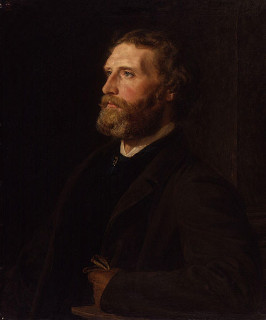
After practicing in Ireland as a lawyer and journalist, Malone settles in London in 1777. There he numbers among his literary friends Samuel Johnson, Horace Walpole, and the ballad collector Thomas Percy, the Bishop of Dromore. He also is an associate of the statesmen Edmund Burke and George Canning and of the dean of English painters, Sir Joshua Reynolds, who paints his portrait and whose literary works he collects and publishes (1797). The portrait now resides in the National Portrait Gallery, London.

In the following months Malone sends a steady stream of notes and corrections to George Steevens, who, by then the inheritor, from Samuel Johnson, of the editor’s mantle for the Jacob Tonson edition of Shakespeare’s collected works, is busy preparing a second edition. His main contribution appears in the first volume as “An Attempt to Ascertain the Order in Which the Plays Attributed to Shakspeare Were Written.”

Malone’s three supplemental volumes (1780–1783) to Steevens’ edition of Johnson’s Shakespeare, containing apocryphal plays, textual emendations, and the first critical edition of the sonnets, are landmarks in Shakespearean studies. His “Historical Account of the Rise and Progress of the English Stage, and of the Economy and Usages of the Ancient Theatres in England” (1800) is the first treatise on English drama based on original sources. His own edition of Shakespeare in 11 volumes appears in 1790. A new octavo edition, unfinished at his death, is completed by James Boswell, the son of Samuel Johnson’s biographer, and published in 1821 in 21 volumes. This work, which includes a memoir of Malone, is the standard edition of Shakespeare’s writings for more than a century.

Malone dies at the age of 70 in London on May 25, 1812.

(Pictured: Portrait of Edmond Malone by Joshua Reynolds (1778), National Portrait Gallery)


Leave a comment

Death of Seán Ó Riada, Composer & Arranger

Seán Ó Riada, Irish composer and arranger of Irish traditional music, dies in London, England on October 3, 1971. Through his incorporation of modern and traditional techniques he becomes the single most influential figure in the revival of Irish traditional music during the 1960s.

Ó Riada is born John Reidy in Cork, County Cork on August 1, 1931. He receives his primary education at St. Finbarr’s College, Farranferris. He moves to St. Munchin’s College in Limerick where he completes his Leaving Certificate in 1948. He plays violin, piano, and organ, and studies Greek and Latin classics at University College Cork, with Aloys Fleischmann and graduates in 1952. While at College, Ó Riada is the auditor of the UCC Philosophical Society.

Ó Riada’s career begins in 1954 as a music director at Radio Éireann, after which he works at the Abbey Theatre from 1955 to 1962. He lectures in music at University College Cork from 1963 until his death in 1971. He leaves a lasting influence as founder and director of the ensemble Ceoltóirí Chualann beginning in 1961. Ó Riada becomes a household name in Ireland through his participation in Ceoltóirí Chualann, compositions, writings, and broadcasts. His best-known pieces in the classical tradition include Nomos No. 1: Hercules Dux Ferrariae (1957), but he becomes particularly famous for his film scores Mise Éire (1959) and Saoirse? (1960).

In 1963 Ó Riada is appointed lecturer in music at University College Cork. He moves to Ballyvourney, and not Cúil Aodha (a common misconception) in West Cork, an Irish-speaking area, where he establishes Cór Chúil Aodha, a male voice choir.

He becomes involved in Irish politics and is a friend of several influential leaders. Ó Riada drinks regularly at a local pub which still advertises itself as being his local. He develops cirrhosis of the liver. He is flown to King’s College Hospital in London for treatment and dies there on October 3, 1971, two months after his 40th birthday. He is buried in St. Gobnait‘s graveyard, Baile Bhuirne, County Cork. Willie Clancy plays at his funeral.

Two schools are named “Scoil Uí Riada” after him – a Gaelscoil in Kilcock, County Kildare, and another in Bishopstown, Cork City. In 2008, a life-sized statue is erected in the grounds of Sépéil Naomh Gobnait, Cúil Aodha.


Leave a comment

Birth of Rev. William Corby, Chaplain & Notre Dame President

The Rev. William Corby, American priest of the Congregation of Holy Cross and Union Army chaplain in the American Civil War attached to the Irish Brigade, is born in Detroit, Michigan on October 2, 1833. He serves twice as president of the University of Notre Dame.

Corby is born to Daniel Corby, an Irish immigrant, and his wife Elizabeth, a Canadian. He attends public school until age 16, then joins his father’s real estate business. In 1853, he enrolls in the 10-year-old college of Notre Dame in South Bend, Indiana, and begins study for the priesthood three years later. Following ordination, he teaches at Notre Dame and serves as a local parish priest.

Corby leaves his position at Notre Dame and joins the predominately Catholic Irish Brigade in 1861. He spends the next three years as chaplain of the 88th New York Volunteer Infantry, which is one of the five original regiments in the Irish Brigade. He is perhaps best known for giving general absolution to the Irish Brigade on the second day of the Battle of Gettysburg. Of the Brigade’s original 3,000 men, only about 500 remain. Of the men Corby absolves that day, 27 are killed, 109 are wounded, and 62 are listed as missing. The scene of Corby blessing the troops is depicted in the 1891 painting Absolution under Fire by Paul Wood, and dramatized in the 1993 film Gettysburg. His memoir of the Irish Brigade becomes a best-seller.

Following his service in the Civil War, Corby returns to Notre Dame and serves as its vice-president (1865–1866) and twice as its president (1866–1872, 1877-1881). Under his first administration, enrollment at Notre Dame increases to more than 500 students. In 1869 he opens the law school, which offers a two-year course of study, and in 1871 he begins construction of Sacred Heart Church, today the Basilica of the Sacred Heart, Notre Dame. The institution is still small, and he teaches in the classroom and knows most students and faculty members. In 1869, the entire student body and the faculty present him with the gift of a black horse and, when he leaves the presidency three years later, they present him with a matching carriage.

Corby becomes president again following the short term of Fr. Patrick Colovin. When he returns to the presidency, Notre Dame has not yet become a significant academic institution. His presidency sees the April 1879 fire that destroys the old Main Building of the school. He sends all students home and promises that they will return to a “bigger and better Notre Dame.” He overcomes the $200,000 fire loss and rebuilds the Main Building, which now stands with its “Golden Dome.” During his administration, he also constructs Washington Hall, in which he takes much pride, and starts the construction of St. Edward’s Hall for the minims program.

In addition to his presidency, Corby is also serving as the Holy Cross Provincial, when Rev. Edward Sorin, who had become Superior General of the Congregation, writes to him to tell him that he will have to relinquish one of his positions. He wants to remain president but is overruled by Sorin. Famous throughout the U.S. Catholic world as chaplain for the Irish Brigade, known as the “Fighting Irish,” it may be that the nickname followed Corby back to Notre Dame, where it stuck.

Corby dies at the age of 64 on December 28, 1897 in South Bend, Indiana. He is buried in Holy Cross Cemetery, Notre Dame, Indiana.

A statue by Samuel Murray, depicting Corby with right hand raised in the gesture of blessing, stands upon the same boulder at the Gettysburg Battlefield on which the priest stood while blessing the troops that second morning of the battle. It is the first statue of a non-general erected on the Gettysburg Battlefield, and is dedicated in 1910.

Corby is widely remembered among military chaplains and celebrated by Irish American fraternal organizations. Corby Hall at Notre Dame is named for him, and a copy of the Gettysburg statue stands outside the building. An organization of Notre Dame alumni is named The William Corby Society.

(Pictured: Statue of Father William Corby by Samuel Murray, Gettysburg Battlefield, Gettysburg, Pennsylvania)


Leave a comment

Birth of Neil Blaney, Fianna Fáil Politician

Neil Terence Columba Blaney, Irish politician first elected to Dáil Éireann in 1948 as a Fianna Fáil Teachta Dála (TD) representing Donegal East, is born on October 1, 1922 in Fanad, County Donegal. He serves as Minister for Posts and Telegraphs (1957), Minister for Local Government (1957–1966) and Minister for Agriculture and Fisheries (1966–1970). He is Father of the Dáil from 1987 until his death.

Blaney is the second eldest of a family of eleven. His father, from whom he got his strong republican views and his first introduction to politics, had been a commander in the Irish Republican Army (IRA) in Donegal during the Irish War of Independence and the Irish Civil War. He is educated locally at Tamney on the rugged Fanad Peninsula and later attends St. Eunan’s College in Letterkenny. He later works as an organiser with the Irish National Vintners and Grocers Association.

Blaney is first elected to Dáil Éireann for the Donegal East constituency in a by-election in December 1948, following the death of his father from cancer. He also becomes a member of the Donegal County Council. He remains on the backbenches for a number of years before he is one of a group of young party members handpicked by Seán Lemass to begin a re-organisation drive for the party following the defeat at the 1954 general election. Within the party he gains fame by running the party’s by-election campaigns throughout the 1950s and 1960s. His dedicated bands of supporters earn the sobriquet “the Donegal Mafia,” and succeed in getting Desmond O’Malley and Gerry Collins elected to the Dáil.

Following Fianna Fáil’s victory at the 1957 general election, Éamon de Valera, as Taoiseach, brings new blood into the Cabinet in the shape of Blaney, Jack Lynch, Kevin Boland and Mícheál Ó Móráin. Blaney is appointed Minister for Posts and Telegraphs however he moves to the position of Minister for Local Government at the end of 1957 following the death of Seán Moylan. He retains the post when Lemass succeeds de Valera as Taoiseach in 1959. During his tenure it becomes possible to pay rates by installment and he also introduces legislation which entitles non-nationals to vote in local elections.

In 1966 Lemass resigns as Taoiseach and Fianna Fáil leader. The subsequent leadership election sees Cork politician Jack Lynch become party leader and Taoiseach. In the subsequent cabinet reshuffle Blaney is appointed Minister for Agriculture and Fisheries.

In 1969, when conflict breaks out in Northern Ireland, Blaney is one of the first to express strong Irish republican views, views which contradict the policy of the Irish Government, in support of Northern nationalists. From around late 1968 onwards, he forms and presides over an unofficial Nationalist group in Leinster House popularly known as “the Letterkenny Table.” The group is dominated by Blaney up until his death.

There is general surprise when, in an incident known as the Arms Crisis, Blaney, along with Charles Haughey, is sacked from Lynch’s cabinet amid allegations of the use of the funds to import arms for use by the IRA. Lynch asked for their resignations but both men refuse, saying they did nothing illegal. Lynch then advises President de Valera to sack Haughey and Blaney from the government. Haughey and Blaney are subsequently tried in court but are acquitted. However, many of their critics refuse to recognise the verdict of the courts. Although Blaney is cleared of wrongdoing, his ministerial career is brought to an end.

Lynch subsequently moves against Blaney so as to isolate him in the party. When Blaney and his supporters try to organise the party’s national collection independently, Lynch acts and in 1972 Blaney is expelled from Fianna Fáil for “conduct unbecoming.”

Following his expulsion from Fianna Fáil, Kevin Boland tries to persuade Blaney to join the Aontacht Éireann party he is creating but Blaney declines. Instead, he contests all subsequent elections for Independent Fianna Fáil – The Republican Party, an organisation that he built up. Throughout the 1970s there are frequent calls for his re-admittance to Fianna Fáil but the most vocal opponents of this move are Fianna Fáil delegates from County Donegal.

At the 1979 European Parliament elections Blaney tops the poll in the Connacht–Ulster constituency to the annoyance of Fianna Fáil. He narrowly loses the seat at the 1984 election but is returned to serve as a Member of the European Parliament (MEP) in the 1989 election where he sits with the regionalist Rainbow Group. He also canvasses for IRA hunger striker Bobby Sands in the Fermanagh and South Tyrone by-election, in which Sands is elected to Westminster.

Blaney holds his Dáil seat until his death from cancer at the age of 73 on November 8, 1995 in Dublin.


Leave a comment

Death of Michael Flannery, Irish Republican Founder of NORAID

Michael Flannery, Irish republican who fought in the Irish War of Independence and the Irish Civil War, dies in New York City on September 30, 1994. He supports the Provisional Irish Republican Army during The Troubles and is a founder of the Irish Northern Aid Committee (NORAID).

Flannery is born in Cangort, near Brosna, on the border of County Offaly and County Tipperary, on January 7, 1903.

In 1916 Flannery joins the Irish Volunteers alongside his brother Peter, although he does not take part in the Easter Rising. However, he does participate in the Irish War of Independence. Following the outbreak of the Irish Civil War, he fights as part of the Anti-Treaty IRA until his capture by the National Army on November 11, 1922, in Roscrea, County Tipperary. He is imprisoned for nearly a year and a half in Dublin’s Mountjoy Prison (C Wing). While there he witnesses the execution of Anti-Treaty IRA leaders Richard Barrett, Joe McKelvey, Liam Mellows and Rory O’Connor from his cell window. Following a 28-day hunger strike, he is placed in the Curragh Camp until May 1, 1924, when he is finally released, a full year after the end of the civil war.

In February 1927 Flannery immigrates to the United States, settling in Jackson Heights, Queens, New York City. In 1928 he marries Margaret Mary Egan, a Tipperary-born research chemist, who had been educated at University College Dublin and University of Geneva.

Following the creation of Fianna Fáil and their entry into the Irish Parliament Dáil Éireann, Flannery becomes affiliated with Sinn Féin, who had voted to retain their abstentionist policy towards the Dáil and their refusal to acknowledge it as the legitimate government of Ireland. Sinn Féin tasks him with drumming up support for the party in New York. However, following the start of the Great Depression he finds it difficult to focus on politics in the face of mounting poverty. By 1933 finding support for Sinn Féin and the IRA becomes particularly tough when Fianna Fáil expands greatly the range of people eligible for military pensions, which under the previous government had been biased against members of the Anti-Treaty IRA. For the next 40 years Flannery works for the Metropolitan Life Insurance Company.

Upon the onset of The Troubles in Northern Ireland, Flannery is once again drawn into the world of Irish Republicanism. In a response to the mounting violence, he sets up the Irish Northern Aid Committee, or as it became better known as, NORAID. The official purpose of NORAID is to provide funds to the families of imprisoned Irish Republicans and victims of violence. However, opponents level the accusation against the organisation that it is also providing funding directly to the Provisional Irish Republican Army, and perhaps even also supplying firearms.

In 1970 Flannery travels around America and sets up 62 chapters of NORAID. In 1971 he says, “The more coffins sent back to Britain, the sooner this will be all over,” referring to British soldiers.

In 1982 Flannery is indicted, with four other members of NORAID, for arms smuggling, but all defendants are acquitted after their legal defence is able to successfully argue their actions had been sanctioned the CIA.

Four months after the verdict of the arms trial, Flannery is named as Grand Marshal of the Saint Patrick’s Day Parade in New York City. His appointment causes considerable controversy within the Irish American community and several high-profile figures boycott the parade that year, including the Archbishop of New York Terence Cooke.

In 1986 Flannery quietly resigns from NORAID following the decision by Sinn Féin to drop its abstentionist policy in the Republic of Ireland and to recognise Dáil Éireann as the legitimate governing body of Ireland.

Flannery opposes the Northern Ireland peace process, believing that Sinn Féin and the Provisionals have “sold out,” and believes the removal of British troops from Northern Ireland is the only starting point upon which negotiations can begin.

Flannery dies at the age of 92 in New York City on September 30, 1994. He is buried in Mount Saint Mary’s Cemetery in Flushing, Queens, New York.