seamus dubhghaill

Promoting Irish Culture and History from Little Rock, Arkansas, USA


Leave a comment

Death of Adam Loftus, First Provost of Trinity College, Dublin

adam-loftus

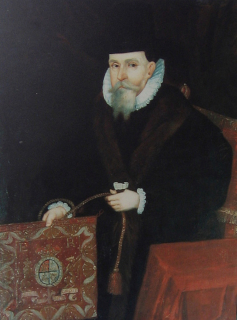
Adam Loftus, Archbishop of Armagh, and later Dublin, and Lord Chancellor of Ireland from 1581, dies in Dublin on April 5, 1605. He is also the first Provost of Trinity College, Dublin.

Loftus is born in 1533, the second son of a monastic bailiff, Edward Loftus, in the heart of the English Yorkshire Dales. He embraces the Protestant faith early in his development. He is an undergraduate at Trinity College, Cambridge, where he reportedly attracts the notice of the young Queen Elizabeth, as much by his physique as through the power of his intellect. Although this encounter may never have happened, Loftus certainly meets with the Queen more than once, and she becomes his patron for the rest of her reign. At Cambridge Loftus takes holy orders as a Catholic priest and is appointed rector of Outwell St. Clement in Norfolk. He comes to the attention of the Catholic Queen Mary, who names him vicar of Gedney, Lincolnshire. On Elizabeth’s accession in 1558 he declares himself Anglican.

Loftus makes the acquaintance of the Queen’s favourite Thomas Radclyffe, 3rd Earl of Sussex and serves as his chaplain in Ireland in 1560. In 1561 he becomes chaplain to Alexander Craike, Bishop of Kildare and Dean of St. Patrick’s Cathedral in Dublin. Later that year he is appointed rector of Painstown in Meath and evidently earns a reputation as a learned and discreet advisor to the English authorities in Dublin. In 1563, he is consecrated Archbishop of Armagh at the unprecedented age of 28 by Hugh Curwen, Archbishop of Dublin.

Following a clash with Shane O’Neill, the real power in Ulster during these years, he comes to Dublin in 1564. To supplement the meager income of his troubled archbishopric he is temporarily appointed to the Deanery of St. Patrick’s Cathedral by the queen in the following year. He is also appointed president of the new commission for ecclesiastical causes. This leads to a serious quarrel with the highly respected Bishop of Meath, Hugh Brady.

In 1567 Loftus, having lobbied successfully for the removal of Hugh Curwen, who becomes Bishop of Oxford, and having defeated the rival claims of the Bishop of Meath, is appointed Archbishop of Dublin, where the queen expects him to carry out reforms in the Church. On several occasions he temporarily carries out the functions of Lord Keeper of the Great Seal, and in August 1581 he is appointed Lord Chancellor of Ireland after an involved dispute with Nicholas White, Master of the Rolls in Ireland. He is constantly occupied in attempts to improve his financial position by obtaining additional preferment and is subject to repeated accusations of corruption in public office.

In 1582 Loftus acquires land and builds a castle at Rathfarnham, which he inhabits from 1585. In 1569–1570 the divisions in Irish politics take on a religious tinge with the First Desmond Rebellion in Munster and Pope Pius V‘s 1570 papal bull Regnans in Excelsis. The bull questions Elizabeth’s authority and thereafter Roman Catholics are suspected of disloyalty by the official class unless they are discreet.

Loftus takes a leading part in the execution of Dermot O’Hurley, Archbishop of Cashel. When O’Hurley refuses to give information, Francis Walsingham suggests he should be tortured. Although the Irish judges repeatedly decide that there is no case against O’Hurley, on June 19, 1584, Loftus and Sir Henry Wallop write to Walsingham “We gave warrant to the knight-marshal to do execution upon him, which accordingly was performed, and thereby the realm rid of a most pestilent member.”

Between 1584 and 1591 Loftus has a series of clashes with Sir John Perrot on the location of an Irish University. Perrot wants to use St. Patrick’s Cathedral, Dublin as the site of the new University, which Loftus seeks to preserve as the principal place of Protestant worship in Dublin, as well as a valuable source of income for himself. The archbishop wins the argument with the help of his patron, Queen Elizabeth I, and Trinity College, Dublin is founded at its current location, named after his old college at Cambridge, leaving the Cathedral unaffected. Loftus is named as its first Provost in 1593.

The issue of religious and political rivalry continues during the two Desmond Rebellions (1569–83) and the Nine Years’ War (1594–1603), both of which overlap with the Anglo-Spanish War (1585–1604), during which some rebellious Irish nobles are helped by the Papacy and by Elizabeth’s arch-enemy Philip II of Spain. Due to the unsettled state of the country Protestantism makes little progress, unlike in Celtic Scotland and Wales at that time. It comes to be associated with military conquest and is therefore hated by many. The political-religious overlap is personified by Loftus, who serves as Archbishop and as Lord Chancellor of Ireland. An unlikely alliance forms between Gaelic Irish families and the Norman “Old English“, who had been enemies for centuries but who now mostly remain Roman Catholic.

Adam Loftus dies in Dublin on April 5, 1605, and is interred in the building he had helped to preserve for future generations, while many of his portraits hang today within the walls of the University which he helped found. Having buried his wife Jane (Purdon) and two sons (of their 20 children) in the family vault at St. Patrick’s, Loftus dies at his Episcopal Palace in Kevin Street “worn out with age” and joins his family in the same vault. His zeal and efficiency are commended by James I upon the king’s accession.


Leave a comment

Shaw’s “Too True to Be Good” Premieres in New York City

george-bernard-shaw-2

Too True to Be Good (1932), a comedy written by playwright George Bernard Shaw premieres at the Guild Theatre in New York City on April 4, 1932. Subtitled “A Collection of Stage Sermons by a Fellow of the Royal Society of Literature,” it moves from surreal allegory to the “stage sermons” in which characters discuss political, scientific and other developments of the day. The second act of the play contains a character, Private Napoleon Meek, based on Shaw’s friend T. E. Lawrence.

The play explicitly deals with the existential crisis that hit Europe after the end of World War I, especially the emergence of a “modernist” culture fueled by uncertainties created by Freudian psychology and Albert Einstein‘s new physics. The whole of the second and third acts of the play have often been interpreted as a dream of escape occurring in the mind of the feverish Patient (hence the talking Microbe‘s comment that the “real” action is over), and the Patient repeatedly says that what is happening is a dream.

The play is an early example of the formal experimentation with allegory and the absurd that become a feature of Shaw’s later work, having much in common with the later play The Simpleton of the Unexpected Isles, which is also set in an obscure island at the edge of the British Empire. Its absurdist elements later lead to its being viewed as a precursor to the work of Samuel Beckett and Harold Pinter.

The idea that microbes, specifically bacteria, are somehow made sick by human illnesses is a belief that Shaw repeatedly promotes, claiming that disease produces mutations in bacteria, misleading doctors into the belief that “germs” cause disease. The play dramatises his theory that life-energy itself cures illness.

The play is first staged on Monday, February 29, 1932, at Boston‘s Colonial Theatre, by the Theatre Guild. After the April performance in New York it is followed in the same year by a production in Malvern, Worcestershire starring Beatrice Lillie, Claude Rains, and Leo G. Carroll.

The play receives a Broadway revival in 1963, directed by Albert Marre and starring Robert Preston, Lillian Gish, David Wayne, Cedric Hardwicke, Cyril Ritchard, Glynis Johns, and Eileen Heckart. This production features incidental music by Mitch Leigh, who later works with Marre on Man of La Mancha. It has also been presented at the Shaw Festival four times: in 1974, 1982, 1994, and 2006.


Leave a comment

Easter Rising “Remembrance Wall” Unveiled

glasnevin-memorial-wall

A “Remembrance Wall” showing the names of all those who died during the 1916 Easter Rising is unveiled at Glasnevin Cemetery in Dublin on April 3, 2016. The memorial wall bears the names of all those who died, Irish and British, military and civilian, in the rebellion 100 years earlier.

Almost 500 people are killed in the uprising, with 268 of them being civilians caught up in the violence. The names are displayed chronologically without distinction between the different categories. The inclusion of the names of 119 British soldiers on the wall, some of whom are buried in Glasnevin, causes some controversy and a number of protesters gather outside the cemetery to demonstrate as the interfaith service takes place inside. A significant Garda Síochána presence monitors the protest events.

The Glasnevin Trust insists the memorial is an attempt to present the historical facts, without hierarchy or judgement. Chairman of Glasnevin Trust John Green tells the service the wall reflects modern Ireland. “Behind each and every one of these lost lives is a story of heartbreak, no matter what side the person served on or indeed for those innocently caught up in the conflict,” he says. “One hundred years on we believe this memorial reflects the time we live in, with the overwhelming majority of the Irish people wishing to live in peace and in reconciliation. But it is for each visitor to take from the wall what they wish.”

Senior church figures from a range of faiths and humanist representatives are among those to speak at the ceremony. Inspiration for the project is drawn from an international memorial near Arras in France that lists the names of 580,000 people killed in fighting on the western front in World War I. Taoiseach Enda Kenny lays a wreath during the event, which is part of the official State programme commemorating the uprising.

Conradh na Gaeilge expresses its disappointment about a spelling mistake on the new memorial wall. The wall is titled Éirí Amach na Cásca but the word Éirí (meaning Rising) appears with a fada on the first i, instead of on the E. Julian de Spáinn of Conradh na Gaeilge says the mistake illustrates a laziness toward the Irish language and he cannot understand why those involved did not ensure that the Irish is as accurate and correct as the English spelling on the wall.


Leave a comment

Birth of Irish-German Actor, Michael Fassbender

michael-fassbender

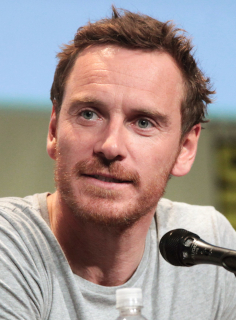
Michael Fassbender, Irish-German actor, is born in Heidelberg, Baden-Württemberg, West Germany on April 2, 1977.

Fassbender’s mother, Adele, is from Larne, County Antrim, while his father, Josef Fassbender, is German. According to Fassbender family lore, his mother is the great-grand-niece of Michael Collins, the Irish leader during the Irish War of Independence. When he is two years old, his parents move to Killarney, County Kerry, where they run the West End House, a restaurant where his father works as a chef. His parents move to Kerry as they want their children to grow up in the countryside rather than the industrial backdrop of their previous residence in Germany. He is raised Catholic and serves as an altar boy at the church his family attends. He has an older sister, Catherine, who is a neuropsychologist.

Fassbender attends Fossa National School and St. Brendan’s College, both in Killarney. He decides that he wants to be an actor at age 17 when he is cast in a play by Donal Courtney. At 19, he moves to London to study at the Drama Centre London, a constituent school of Central Saint Martins. In 1999, he drops out of the Drama Centre and tours with the Oxford Stage Company to perform the play Three Sisters. Before he finds work as an actor, he works as a bartender and postman. Other jobs include labour work, market research for the Royal Mail and working for Dell computers.

Fassbender’s feature film debut is in the fantasy war epic 300 (2007) as a Spartan warrior. His earlier roles include various stage productions, as well as starring roles on television such as in the HBO miniseries Band of Brothers (2001) and the Sky One fantasy drama Hex (2004–05). He first comes to prominence for his role as Provisional Irish Republican Army (IRA) activist Bobby Sands in Hunger (2008), for which he wins a British Independent Film Award. Subsequent roles include in the independent film Fish Tank (2009), as a Royal Marines lieutenant in Inglourious Basterds (2009), as Edward Rochester in the 2011 film adaptation of Jane Eyre, as Carl Jung in A Dangerous Method (2011), as the sentient android David 8 in Prometheus (2012) and its sequel, Alien: Covenant (2017), and in the musical comedy-drama Frank (2014) as an eccentric musician loosely inspired by Frank Sidebottom.

In 2011, Fassbender debuts as the Marvel Comics supervillain Magneto in X-Men: First Class and goes on to share the role with Ian McKellen in X-Men: Days of Future Past (2014), before reprising it again in X-Men: Apocalypse (2016) and Dark Phoenix (2019). Also in 2011, his performance as a sex addict in Shame earns him the Volpi Cup for Best Actor at the Venice International Film Festival and is nominated for Golden Globe and BAFTA Awards. In 2013, his role as slave owner Edwin Epps in the slavery epic 12 Years a Slave is similarly praised, earning him his first Oscar nomination for Best Supporting Actor. In 2013, he appears in another Ridley Scott film, The Counselor. In 2015, he portrays the title role in the Danny Boyle-directed biopic Steve Jobs (2015) and played Macbeth in Justin Kurzel‘s adaptation of William Shakespeare‘s play. For the former, he receives Academy Award, BAFTA, Golden Globe and SAG nominations. In 2015, he produces the western Slow West, in which he also stars.

In December 2014, Fassbender begins dating Swedish actress Alicia Vikander, whom he met on the set of The Light Between Oceans. The two marry in a private ceremony on October 14, 2017, in Ibiza, Spain. As of 2017, they reside in Lisbon, Portugal.


2 Comments

Death of Francis Arthur Fahy, Songwriter & Poet

francis-arthur-fahy

Francis Arthur Fahy, Irish nationalist, songwriter and poet, dies on April 1, 1935. He is probably best remembered as the composer of the evergreen “The Ould Plaid Shawl”. He collaborates with various composers, including Alicia Adélaide Needham, an associate of the Royal Academy of Music.

Fahy is born in Kinvara, County Galway, on September 29, 1854 into a family of seventeen, eight of whom survive. His father, Thomas, comes from the Burren area and his mother, Celia Marlborough, is born near Gort, County Galway.

In 1896, Fahy becomes president of the emerging Conradh na Gaeilge (Gaelic League) in London, a position he holds until 1908. He is also a long time member of the London Irish Literary Society. Described as a small, brisk man, his enthusiasm and energy knows no bounds. His most memorable poems and songs include “The Ould Plaid Shawl,” “The Queen of Connemara,” the original “Galway Bay,” and “The Tide Full In.” His publications include The Child’s Irish Song Book (1881), The Irish Reciter (1882), Irish History in Rhyme (1882) and Irish Songs and Poems (1887).

Fahy retires from the Civil Service at the age of 65. He dies at the age of 81 on April 1, 1935.


Leave a comment

Birth of Patrick Magee, Actor & Director

patrick-magee

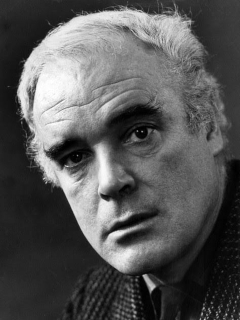
Patrick George McGee, Northern Irish actor and director of stage and screen known professionally as Patrick Magee, is born on March 31, 1922, in Armagh, County Armagh, Northern Ireland. He is known for his collaborations with Samuel Beckett and Harold Pinter, as well as creating the role of the Marquis de Sade in the original stage and screen productions of Marat/Sade. He also appears in numerous horror films and in two Stanley Kubrick films, A Clockwork Orange and Barry Lyndon.

McGee is born into a middle-class family at 2 Edward Street in Armagh. The eldest of five children, he is educated at St. Patrick’s Grammar School, Armagh. He changes the spelling of his surname to Magee when he begins performing, most likely to avoid confusion with another actor.

Magee’s first stage experience in Ireland is with Anew McMaster’s touring company, performing the works of William Shakespeare. It is here that he first works with Pinter. He is then brought to London by Tyrone Guthrie for a series of Irish plays. He meets Beckett in 1957 and soon records passages from the novel Molloy and the short story From an Abandoned Work for BBC Radio. Impressed by “the cracked quality of Magee’s distinctly Irish voice,” Beckett requests copies of the tapes and writes Krapp’s Last Tape especially for the actor. First produced at the Royal Court Theatre in London on October 28, 1958, the play stars Magee and is directed by Donald McWhinnie. A televised version is later broadcast by BBC Two on November 29, 1972.

In 1964, Magee joins the Royal Shakespeare Company, after Pinter, directing his own play, The Birthday Party, specifically requests him for the role of McCann. In 1965 he appears in Peter Weiss‘s Marat/Sade, and when the play transfers to Broadway he wins a Tony Award. He also appears in the 1966 RSC production of Staircase opposite Paul Scofield.

Magee’s early film roles include Joseph Losey‘s The Criminal (1960) and The Servant (1963), the latter an adaptation scripted by Pinter. He also appears as Surgeon-Major James Henry Reynolds in Zulu (1964), Séance on a Wet Afternoon (1964), Anzio (1968), and in the film versions of Marat/Sade (1967) and The Birthday Party (1968). He is perhaps best known for his role as the victimised writer Frank Alexander, who tortures Alex DeLarge with Ludwig van Beethoven‘s music, in Stanley Kubrick’s film A Clockwork Orange (1971). His other role for Kubrick is as Redmond Barry’s mentor, the Chevalier de Balibari, in Barry Lyndon (1975).

McGee also appears in Young Winston (1972), The Final Programme (1973), Galileo (1975), Sir Henry at Rawlinson End (1980), The Monster Club and Chariots of Fire (1981) but is most often seen in horror films. These include Roger Corman‘s The Masque of Red Death (1964), and the Boris Karloff vehicle Die, Monster, Die! (1965) for AIP; The Skull (1965), Tales from the Crypt (1972), Asylum (1972), and And Now the Screaming Starts! (1973) for Amicus Productions; Demons of the Mind (1972) for Hammer Film Productions; and Walerian Borowczyk‘s Docteur Jekyll et les femmes (1981).

Patrick McGee dies of a heart attack at his flat in Fulham, London on August 14, 1982, at the age of 60, according to obituaries in The Herald and The New York Times. On July 29, 2017, a blue plaque is unveiled in Edward Street, Armagh to mark Patrick McGee’s birthplace.


Leave a comment

The Doolough Tragedy

doolough-tragedy-memorial

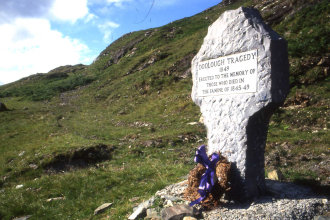
The Doolough Tragedy is an event that took place during the Great Famine close to Doo Lough in southwest County Mayo.

On Friday, March 30, 1849 two officials of the Westport Poor Law Union arrive in Louisburgh to inspect those people in receipt of outdoor relief to verify that they should continue to receive it. The inspection, for some reason, does not take place and the two officials go on to Delphi Lodge, a hunting lodge, 19 kilometres (12 miles) south of Louisburgh where they intend to spend the night. The people who had gathered for the inspection, or later did so, are consequently instructed to appear at Delphi Lodge at 7:00 the following morning if they wish to continue receiving relief. For much of the night and day that follows seemingly hundreds of destitute and starving people have to undertake what for them, given their existing state of debilitation, is an extremely fatiguing journey, in very bad weather.

A letter-writer to The Mayo Constitution reports shortly afterwards that the bodies of seven people, including women and children, are subsequently discovered on the roadside between Delphi and Louisburgh overlooking the shores of Doo Lough and that nine more never reach their homes. Local folklore maintains the total number that perished because of the ordeals they had to endure is far higher.

A cross and an annual Famine Walk between Louisburgh and Doolough commemorates this event. The monument in Doolough valley has an inscription from Mahatma Gandhi: “How can men feel themselves honoured by the humiliation of their fellow beings?”

(Pictured: The memorial to the victims in Doolough valley, photo by Felix O, June 2009, CC BY-SA 2.0)


Leave a comment

City of Londonderry Established by Royal Charter

walls-of-londonderry

A charter incorporates Derry as the city of Londonderry on March 29, 1613 and also creates the new county of Londonderry. Despite the official name, the city is more usually known as simply Derry, which is an anglicisation of the Old Irish Daire, which in modern Irish is spelled Doire, and translates as “oak-grove/oak-wood.” The name derives from the settlement’s earliest references, Daire Calgaich (“oak-grove of Calgach”). The name is changed from Derry in 1613 during the Plantation of Ulster to reflect the establishment of the city by the London guilds.

Ulster is finally brought under the control of Elizabeth I’s government at the beginning of the 17th century following a long struggle between the Tudor monarchy and the Gaelic chieftains. This follows the defeat of the chieftains at the Siege of Kinsale in 1601 after a war lasting nine years. Although the Gaelic chieftains are allowed to remain on their land, their positions have been weakened. A group of them leave Ireland for the continent in 1607, never to return. The “Flight of the Earls”, as it is known, is seen as treason by James I’s government and their lands are confiscated. This important event opens the way for James I to further increase his control over Ulster by settling tens of thousands of settlers from England, Scotland and Wales on the confiscated lands.

Surveying and planning for the plantation take place during 1608 and 1609 and the plantation proper begins in 1610. The towns of Derry and Coleraine, as well as much of the lands that are to become County Londonderry, are granted to the City of London Corporation, which is charged with planting them.

The Society of the Governor and Assistants, London, of the New Plantation in Ulster, within the realm of Ireland, known after the Restoration as the Irish Society, is formed in 1609 by the City of London, to manage the estates which it has been obliged very reluctantly to take on. The Irish Society takes charge of the overall management of the Irish estates, with direct control of the new city of Derry and of the town of Coleraine.

The City of London livery companies are required to take on estates in the surrounding County of Londonderry. The Great Twelve livery companies bear the heaviest financial burden. The county is divided among them into twelve “proportions,” distributed by the drawing of lots. The Great Twelve are in turn supported by a number of minor companies, so that thirty livery companies in all have Irish estates derived from their participation in James I’s scheme for the plantation of Ulster.

However, the first phase of the existence of the Irish Society is short-lived. The Great Parchment Book is compiled in the late 1630s when Charles I claims the estates as forfeit after a politically motivated case in Star Chamber rules that the Londoners have not fulfilled their obligations of plantation.

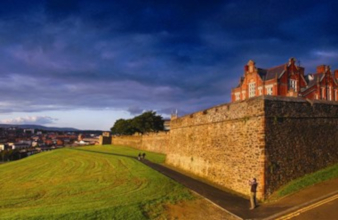
The City of Londonderry is very much a product of the plantation and plays a pivotal role in safeguarding the plantation. Its walls, which are still intact today, repulse sieges in 1641, 1649 and 1689.

By the end of the 17th century, Ulster, which had been the most Gaelic part of Ireland, has become the most “British.” The plantation creates Ulster we know today with its socio-economic base, its religious and political diversity, and its shared heritage.

The archives of the Irish Society and the City of London livery companies are held by the City of London at London Metropolitan Archives and Guildhall Library respectively.


1 Comment

The Siege of Kilkenny Ends

map-of-kilkenny

The Siege of Kilkenny ends on March 28, 1650 with the city and residents surrendering to Oliver Cromwell.

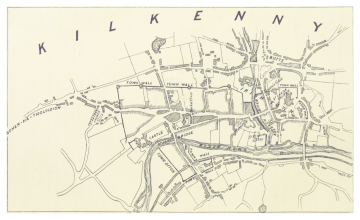
The Siege of Kilkenny takes place in what historian Patrick Little considers to be the most controversial period of the Cromwellian conquest of Ireland. The English ParliamentariansNew Model Army, commanded by Oliver Cromwell, takes the city of Kilkenny from the Irish Confederates but suffers more losses than they had in the Siege of Drogheda in September 1649.

After taking Cashel and setting his headquarters there, Cromwell marches to Kilkenny to issue a summons of surrender to the Irish Confederates holding the town. The envoy he sends there is captured and kept as a hostage. Upon this happening, Cromwell, absent siege weapons, has to return to Cashel to acquire them after being met with hostility. Cromwell is relying on an officer by the name of Tickle to betray the townspeople and relay the locations of the wall’s weakest points. Tickle’s treachery is uncovered by James Butler, 3rd Earl of Ormond and owner of Kilkenny Castle. Bulter intercepts the letters sent between Cromwell and Tickle which lead to Tickle’s execution.

Butler, learning of Cromwell’s intent, establishes 700 men and 100 horsemen to repel the puritan army. Facing this formidable force Cromwell decides to retreat to Cashel. In the space of time it takes Cromwell to acquire siege weapons and return to Kilkenny, a plague has struck. The plague is believed to have originated in Galway on a Spanish ship. Lord Castlehaven appoints James Walsh as Governor of the Castle and Sir Walter Butler as Governor of Kilkenny. In addition to this he provides 1,200 men to the Kilkenny cause. By the time Cromwell returns, the plague has decimated Kilkenny city. About 300 out of the original Garrison of 1,200 men remain to watch their posts.

On March 22, Cromwell arrives and stands a mile before Kilkenny with his men. Guns are set up on the adjacent hill and from the Black quarry, Cromwell issues a summons of surrender to Butler, Walsh and the Aldermen of Kilkenny. While the letters are traded back and fort, Cromwell sends a detachment to take Irishtown and they are defeated. A refusal letter is issued to Cromwell shortly thereafter. The artillery battery located on the adjacent hill begins to pound the south wall. A breach is made around noon and Cromwell gives orders to assault using the recently destroyed entry point, but after two attempts his men disobey as they have suffered heavy losses in the last battle. Soon after, Cromwell receives invitation from the mayor and townsmen of Irishtown asking him to stay in the town and in return he will allow his troops safe entry. Instead of replying, Cromwell sends a detachment of men led by Colonel Ewer to capture Irishtown, which is guarded by the townsmen. The townsmen flee their posts at the first sight of Colonel Ewer and his men. This results in the capturing of St. Canice’s Cathedral and parts of Irishtown. The Governor of Irishtown, Sir James Butler, surrenders not long after admitting that there is nothing he can do.

On March 27, the troops continue to attack Kilkenny to no success other than managing to breach the walls of the Franciscan abbey, causing more people to desert their posts. Governor Walsh arrives on horseback to drive Cromwell’s men from the wall. At the same time, small groups of Cromwell’s men attempt to cross St. Johns bridge to set fire to the front gates but they are killed by the garrison guards. It is at this point when reinforcements of 1,500 men from Henry Ireton arrive. Finally, Walsh calls for surrender under orders from Lord Castlehaven that were given previously. The orders are not to allow the townspeople to be exposed and massacred.

On March 28, 1650 the town of Kilkenny is handed over to Cromwell. The garrison and its leaders are marched out into the town where they are complimented by Cromwell for the gallantry in battle. Cromwell also admits that if it was not for the townspeople’s treachery, he would have passed Kilkenny and left it alone.


1 Comment

“Typhoid Mary” Placed in Quarantine

typhoid-mary

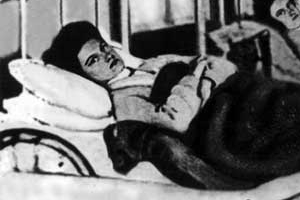
Mary Mallon, better known as Typhoid Mary, the first person in the United States identified as an asymptomatic carrier of the pathogen associated with typhoid fever, is placed in quarantine on March 27, 1869, where she remains for the rest of her life.

Mallon is presumed to have infected 51 people, three of whom die, over the course of her career as a cook. She is twice forcibly isolated by public health authorities and dies after a total of nearly three decades in isolation.

Mallon is born on September 23, 1869, in Cookstown, County Tyrone in what is now Northern Ireland. She immigrates to the United States in 1883 at the age of fifteen and lives with her aunt and uncle.

From 1900 to 1907, Mallon works as a cook in the New York City area for seven families. In 1900, she works in Mamaroneck, New York, where, within two weeks of her employment, residents develop typhoid fever. In 1901, she moves to Manhattan, where members of the family for whom she works develop fevers and diarrhea, and the laundress dies. Mallon then goes to work for a lawyer but leaves after seven of the eight people in that household become ill.

In 1906, Mallon takes a position in Oyster Bay, Long Island, and within two weeks ten of the eleven family members are hospitalized with typhoid. She changes jobs again and similar occurrences happen in three more households. She works as a cook for the family of a wealthy New York banker, Charles Henry Warren. When the Warrens rent a house in Oyster Bay for the summer of 1906, Mallon goes along as well. From August 27 to September 3, six of the eleven people in the family come down with typhoid fever. The disease at that time is “unusual” in Oyster Bay, according to three medical doctors who practice there. Mallon is subsequently hired by other families and outbreaks follow her.

In late 1906, one family hires a typhoid researcher named George Soper to investigate. Soper publishes the results on June 15, 1907, in the Journal of the American Medical Association. He believes Mallon might be the source of the outbreak, but she repeatedly turns him away.

The New York City Health Department sends physician Sara Josephine Baker to talk to Mallon. A few days later, Baker arrives at Mallon’s workplace with several police officers, who take her into custody.

Mallon attracts so much media attention that she is called “Typhoid Mary” in a 1908 issue of the Journal of the American Medical Association. Later, in a textbook that defines typhoid fever, she is again called “Typhoid Mary.”

The New York City Health Inspector determines her to be a carrier. Under sections 1169 and 1170 of the Greater New York Charter, Mallon is held in isolation for three years at a clinic located on North Brother Island.

Upon her release, Mallon is given a job as a laundress. In 1915, Mallon starts another major outbreak, this time at Sloane Hospital for Women in New York City. Twenty-five people are infected and two die. She again leaves, but the police are able to locate and arrest her when she brings food to a friend on Long Island. After arresting her, public health authorities return her to quarantine on North Brother Island on March 27, 1915.

Mallon spends the rest of her life in quarantine at the Riverside Hospital. Six years before her death, she is paralyzed by a stroke. She dies in North Brother Island, East River, New York, on November 11, 1938, of pneumonia. An autopsy finds evidence of live typhoid bacteria in her gallbladder. Mallon’s body is cremated, and her ashes are buried at Saint Raymond’s Cemetery in the Bronx.