seamus dubhghaill

Promoting Irish Culture and History from Little Rock, Arkansas, USA


Leave a comment

Birth of John Lynch, Actor & Novelist

john-lynch

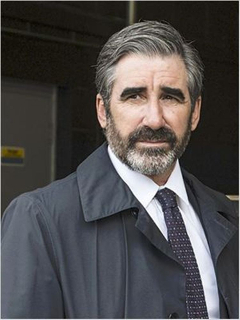
John Lynch, actor and novelist, is born in Corrinshego, County Armagh, Northern Ireland on December 26, 1961. He wins the AFI (AACTA) Award for Best Actor in a Leading Role for the 1995 film Angel Baby. His other film appearances include Cal (1984), The Secret Garden (1993), In the Name of the Father (1993) and Sliding Doors (1998).

Lynch is the eldest of five children of an Irish father and an Italian mother from Trivento in the Province of Campobasso. His younger sister Susan and his nephew Thomas Finnegan are also actors. He attends St. Colman’s College, Newry and begins acting in Irish language-medium plays at school during the early years of the conflict in Northern Ireland.

Lynch has appeared in numerous films related to Northern Ireland’s problems such as Cal (1984) with Helen Mirren, In the Name of the Father (1993) with Daniel Day-Lewis, The Railway Station Man (1992) with Julie Christie and Donald Sutherland, Nothing Personal (1995) and Some Mother’s Son (1996), also with Mirren, as well as the Irish-themed film Evelyn (2002).

Lynch stars as a supporting actor in Derek Jarman‘s Edward II (1991), as Lord Craven in Agnieska Holland‘s film of The Secret Garden (1993), as Tadhg in The Secret of Roan Inish (1994), and as Gerry in Sliding Doors (1998).

Lynch plays the part of football legend George Best in the 2000 film Best. He plays the lead in the Australian feature Angel Baby, winning the Australian Film Institute award for best leading actor and the Australian Film Critics Association award for best actor of 1995. He is nominated for a Satellite Film Award for the film Moll Flanders in 1996. He works with acclaimed Belgian director Marion Hänsel on her adaptation of Booker-nominated author Damon Galgut‘s novel, The Quarry (1998), which wins Best Film at the Montreal World Film Festival. He wins Best Actor for the lead role in Best at the Fort Lauderdale Film Festival in 2000.

Lynch is nominated for a British Academy of Film and Television Arts (BAFTA) for Cal, as well as for an Irish Film and Television Award for his role in The Baby War. He stars in Five Day Shelter as Stephen, which wins a European Film Award and is in competition at the Rome Film Festival. He plays the lead in Craig Vivieros’ first feature film, the prison drama Ghosted. He plays the role of Wollfstan in Black Death and appears in the 2012 film version of Michael Morpurgo‘s novel, Private Peaceful.

Lynch is also a novelist. His first novel, Torn Water, is published in November 2005 by the 4th Estate, a literary imprint of HarperCollins Publishers LLC, and his second, Falling Out of Heaven, is published on May 13, 2010, by the same publisher.

Leave a comment

Birth of Sir John Parnell, 2nd Baronet

john-parnell

Sir John Parnell, 2nd Baronet, an Anglo-Irish Member of Parliament, is born on December 25, 1744.

A Church of Ireland landowner, his family had originally migrated to Ireland from Congleton in Cheshire. Although not from an Irish Roman Catholic background, Parnell, the only son of Sir John Parnell, 1st Baronet, is renowned in Irish history for his efforts to bring about a more emancipated country. He is the great-grandfather of Charles Stewart Parnell, known as the uncrowned king of Ireland and best known for opposing the Acts of Union 1800 between the two kingdoms of Great Britain and Ireland.

From a line of politically astute ancestors who had moved to Ireland in the 17th century, Parnell rises to the highest positions in Irish politics as Commissioner of the Revenue (1780), Chancellor of the Exchequer of Ireland (1787), and Lord of the Treasury (1793).

Parnell first serves in the Parliament of Ireland as one of the members for Bangor, from 1767 to 1768. He later sits for Queen’s County from 1783 until the Union with Great Britain creates the United Kingdom of Great Britain and Ireland in 1801. After the Union, he gains a seat in the Parliament of the United Kingdom for a short time as member for Queen’s County but dies suddenly in London in December 1801.

Henry Grattan describes Parnell as “an honest, straightforward, independent man, possessed of considerable ability and much public spirit; as Chancellor of the Exchequer, he was not deficient, and he served his country by his plan to reduce the interest of money. He was amiable in private, mild in disposition, but firm in mind and purpose. His conduct at the Union did him honour, and proved how warmly he was attached to the interests of his country, and on this account, he was dismissed.”

(Pictured: Oil painting on canvas, The Right Hon. Sir John Parnell, 2nd Bt (1744–1801) by Pompeo Girolamo Batoni (Lucca 1708 – Rome 1787))


Leave a comment

Birth of Patrick MacGill, Poet & Novelist

patrick-macgill

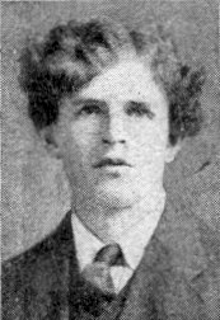
Patrick MacGill, journalist, poet and novelist, is born on December 24, 1889, in Glenties, County Donegal. He is known as “The Navvy Poet” because he works as a navvy before he begins writing.

During World War I, MacGill serves with the London Irish Rifles (1/18th Battalion, London Regiment) and is wounded at the Battle of Loos on October 28, 1915. He is recruited into Military Intelligence and writes for MI 7b between 1916 and the Armistice in 1918. He writes a memoir-type novel called Children of the Dead End.

Patrick MacGill dies on November 22, 1963, the same day that U.S. President John F. Kennedy is assassinated in Dallas, Texas.

In early 2008, a docu-drama starring Stephen Rea is made about the life of Patrick MacGill, which is released in Ireland in 2009 as Child of the Dead End. One of the film’s locations is the boathouse of Edinburgh Canal Society at Edinburgh on the Union Canal, and one of its rowing boats.

An annual literary MacGill Summer School is held in Glenties in mid-July each year in his honour. A statue in his honour is on the bridge where the main street crosses the river in Glenties. He has three children, Christine, Patricia and Sheila MacGill.


Leave a comment

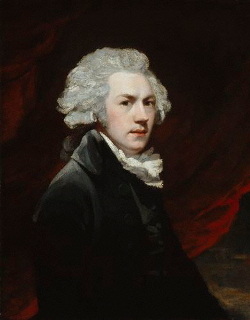
Birth of Martin Archer Shee, Portrait Painter

martin-archer-shee

Sir Martin Archer Shee, portrait painter and president of the Royal Academy of Arts, is born in Dublin on December 23, 1769.

Shee is born into an old Irish Catholic family, the son of Martin Shee, a merchant, who regards the profession of a painter as an unsuitable occupation for a descendant of the Shees. He nevertheless studies art in the Royal Dublin Society and comes to London. There, in 1788, he is introduced by Edmund Burke to Joshua Reynolds, on whose advice he studies in the schools of the Royal Academy of Arts.

In 1789 Shee exhibits his first two pictures, the “Head of an Old Man” and “Portrait of a Gentleman.” Over the next ten years he steadily increases in practice. In 1798 he is chosen an associate of the Royal Academy and in 1800 he is elected a Royal Academician. He moves to George Romney‘s former house at 32 Cavendish Square and sets up as his successor.

Shee continues to paint with great readiness of hand and fertility of invention, although his portraits are eclipsed by more than one of his contemporaries, and especially by Thomas Lawrence. His earlier portraits are carefully finished, easy in action, with good drawing and excellent discrimination of character. They show an undue tendency to redness in the flesh painting, a defect which is still more apparent in his later works, in which the handling is less square, crisp and forcible. In addition to his portraits, he executes various subjects and historical works, such as Lavinia, Belisarius, his diploma picture “Prospero and Miranda,” and the “Daughter of Jephthah.”

In 1805 Shee publishes a poem consisting of Rhymes on Art, and a second part follows in 1809. Lord Byron speaks well of it in his English Bards and Scotch Reviewers. He publishes another small volume of verse in 1814, entitled The Commemoration of Sir Joshua Reynolds, and other Poems, but this is less successful. He also produces a tragedy, Alasco, set in Poland. The play is accepted at Covent Garden, but is refused a licence, on the grounds that it contains treasonable allusions, and Shee angrily resolves to make his appeal to the public. He carries out his threat in 1824, but Alasco is still on the list of unacted dramas in 1911. He also publishes two novels – Oldcourt (1829, in three volumes) and Cecil Hyde (1834).

On the death of Sir Thomas Lawrence in 1830, Shee is chosen president of the Royal Academy in his stead and shortly afterwards receives a knighthood. In 1831 he is elected a Fellow of the Royal Society. In an examination before the parliamentary committee of 1836 concerning the functions of the Royal Academy, he ably defends its rights. He continues to paint until 1845, when illness makes him retire to Brighton. He is deputised for at the Academy by J. M. W. Turner, who had appointed him a trustee of the projected Turner almshouse.

From 1842–1849, Shee is the first president of the Royal Birmingham Society of Artists.

Martin Archer Shee dies in Brighton, Sussex, England on August 13, 1850, and is buried in the western extension to St. Nicholas’ Churchyard in Brighton. His headstone remains but has been laid flat and moved to the perimeter of the site.


Leave a comment

The Flight of the Wild Geese

flight-of-the-wild-geese

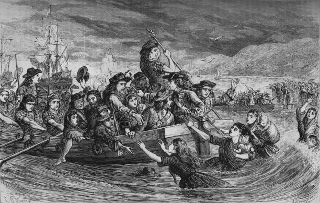
Patrick Sarsfield sails to France on December 22, 1691, leading 19,000 of his countrymen to enter the French service in the first phase of the military denuding of Ireland known as the Flight of the Wild Geese, as agreed in the Treaty of Limerick on October 3, 1691, following the end of the Williamite War in Ireland.

More broadly, the term “Wild Geese” is used in Irish history to refer to Irish soldiers who leave to serve in continental European armies in the 16th, 17th and 18th centuries, or even, poetically, Irish soldiers in British armies as late as World War I.

Irish recruitment for continental armies dries up after it is made illegal in 1745. In 1732 Sir Charles Wogan indicates in a letter to Jonathan Swift, Dean of St. Patrick’s Cathedral, Dublin, that 120,000 Irishmen have been killed and wounded in foreign service “within these forty years.” Swift later replies, “I cannot but highly esteem those gentlemen of Ireland who, with all the disadvantages of being exiles and strangers, have been able to distinguish themselves by their valour and conduct in so many parts of Europe, I think, above all other nations.”

It was some time before the British armed forces begin to tap into Irish Catholic manpower. In the late eighteenth century, the Penal Laws are gradually relaxed and in the 1790s the laws prohibiting Catholics bearing arms are abolished.

Thereafter, the British begin recruiting Irish regiments for the Crown Forces – including such famous units as the Connaught Rangers. Several more Irish units are created in the 19th century. By 1914 specifically Irish infantry regiments in the British Army comprise the Prince of Wales’s Leinster Regiment, the Royal Dublin Fusiliers, the Irish Guards, the Royal Irish Regiment, the Royal Inniskilling Fusiliers, the Royal Irish Rifles, the Royal Irish Fusiliers, the Connaught Rangers and the Royal Munster Fusiliers. With the creation of the Irish Free State in 1922 five of the above regiments are disbanded, with most of the remainder undergoing a series of amalgamations between 1968 and 2006. The United Kingdom still retains three Irish regiments: the Irish Guards, the Royal Irish Regiment, and the London Irish Rifles.

Sarsfield is honored to this day in the crest of County Limerick. The Flight of the Wild Geese is remembered in the poetic words… “War-battered dogs are we, Fighters in every clime, Fillers of trench and of grave, Mockers, bemocked by time. War-dogs, hungry and grey, Gnawing a naked bone, Fighters in every clime, Every cause but our own.”

(Pictured: ‘Irish Troops Leaving Limerick’, 1692, (Cassell Petter & Galpin, London, Paris & New York, c1880), Artist Unknown)


Leave a comment

Founding of the Progressive Democrats

progressive-democratsProgressive Democrats is founded on December 21, 1985 by Desmond O’Malley, Mary Harney, and politicians who had split from Fianna Fáil and Fine Gael. The party is a member of the European Liberal Democrat and Reform Party (ELDR). Its youth wing is the Young Progressive Democrats.

The Progressive Democrats take liberal positions on divorce, contraception, and other social issues. The party also supports economic liberalisation, advocating measures such as lower taxation, fiscal conservatism, privatisation, and welfare reform. It enjoys an impressive début at the 1987 general election, winning 14 seats in Dáil Éireann and capturing almost 12 per cent of the popular vote to temporarily surpass the Labour Party as Ireland’s third-largest political party.

Although the Progressive Democrats never again win more than 10 seats in the Dáil, they form coalition governments with Fianna Fáil during the 26th Dáil (1989–92), the 28th Dáil (1997–2002), the 29th Dáil (2002–07) and the 30th Dáil (2007–09). These successive years as the government’s junior coalition partner gives the party an influence on Irish politics and economics disproportionate to its small size. In particular, the party has been credited with shaping the low-tax, pro-business environment that contributes to Ireland’s Celtic Tiger economic boom during the 1990s and 2000s, as well as blame for contributing to the subsequent Irish financial and economic crisis.

On November 8, 2008 the party begins the process of disbanding and is formally dissolved on November 20, 2009. The two Progressive Democrat politicians elected to the 30th Dáil, Mary Harney and Noel Grealish, continue to support the government as independent Teachta Dálas (TD), and Mary Harney also continues as Minister for Health and Children.


Leave a comment

Birth of Kuno Meyer, Scholar of Celtic Philology

kuno-meyer

Kuno Meyer, German scholar distinguished in the field of Celtic philology and literature, is born in Hamburg, Germany on December 20, 1858. He was considered first and foremost a lexicographer among Celtic scholars but is known by the general public in Ireland rather as the man who introduced them to Selections from Ancient Irish Poetry (1911). His brother was the distinguished classical scholar, Eduard Meyer.

Meyer studies in Hamburg at the Gelehrtenschule des Johanneums. He spends two years in Edinburgh, Scotland, as a teenager (1874–1876) learning English. From 1879, he attends Leipzig University, where he is taught Celtic scholarship by Ernst Windisch. He receives his doctorate for his thesis Eine irische Version der Alexandersage, an Irish version of the Romance of Alexander, in 1884.

Meyer then takes up the post of lecturer in Teutonic languages at the new University College, Liverpool, the precursor of the University of Liverpool, which is established three years earlier.

Meyer continues to publish on Old Irish and more general topics on the Celtic languages, as well as producing textbooks for German. In 1896, he founds and edits, jointly with Ludwig Christian Stern, the prestigious Zeitschrift für celtische Philologie. He also cofounds Archiv für celtische Lexicographie in 1898 with Whitley Stokes, producing three volumes from 1900 to 1907.

In 1903, Meyer founds the School of Irish Learning in Dublin, and the next year creates its journal Ériu of which he is the editor. Also in 1904, he becomes Todd Professor in the Celtic Languages at the Royal Irish Academy. In October 1911, he follows Heinrich Zimmer as Professor of Celtic Philology at Friedrich Wilhelm University in Berlin. The following year, a volume of Miscellany is presented to him by pupils and friends in honour of his election, and he is made a freeman of both Dublin and Cork.

At the outbreak of World War I, Meyer leaves Europe for the United States, where he lectures at Columbia University, University of Illinois at Urbana-Champaign, and elsewhere. A pro-German speech he gives in December 1914 to Clan na Gael on Long Island causes outrage in Britain and some factions among the Irish, and as a result, he is removed from the roll of freemen in Dublin and Cork and from his Honorary Professorship of Celtic at Liverpool. He also resigns as Director of the School of Irish Learning and editor of Ériu. Harvard University also had extended an invitation to Meyer to lecture on campus, but it subsequently cancels the invitation in the fall of 1914 on account of Meyer’s propagandist activity.

Meyer nevertheless accepts candidacy for the post of exchange professor at Harvard, at the recommendation of German professors there. However, when the April 1915 issue of The Harvard Advocate awards first prize to an anti-German satirical poem “Gott mit Uns” written by an undergraduate, Meyer sends the university and the press a letter of protest, rebuking the faculty members who served as judges for failure to exercise neutrality. Meyer also declines his candidacy from the exchange professorship in the letter. In a reply, President Abbott Lawrence Lowell says, in explaining Harvard’s policy, that freedom of speech includes pro-German and pro-Allied voices alike.

Meyer is injured in a railway collision in 1915 and meets 27-year-old Florence Lewis while he is recovering in a California hospital. They marry shortly afterwards. He returns to Germany in 1917 and dies in Leipzig on October 11, 1919.

Posthumously, in 1920, Meyer’s name is restored, both by Dublin and Cork, in their Rolls of Honorary Freemen. The restoration occurs on April 19, 1920, in Dublin, where Sinn Féin had won control of the City Council three months earlier, rescinding the decision taken in 1915 by the Irish Parliamentary Party. The restoration in Cork follows on May 14, 1920.


Leave a comment

Sinking of the SS Isolda

isoldaThe Irish lightship tender SS Isolda, which is resupplying lighthouses off the coast of County Wexford, is bombed and sunk by a German Focke-Wulf Fw 200 Condor on December 19, 1940 despite Irish neutrality. Six sailors are killed.

The lightships provide a vitally important service to maritime traffic for over two centuries. People live aboard these ships that anchor stationary at sea, providing a beacon in the dark for vessels that navigate the more treacherous parts of the Irish coast. These ships are faithfully assisted by ships that resupply them and facilitate crew changes. The SS Isolda is one such ship.

Danger in the waters around Ireland greatly increase during World War II. The Battle for the Atlantic is raging and Ireland’s location near important shipping lanes places Irish vessels right in the middle of a conflict zone. As a result, many casualties are incurred on Irish ships despite their position of neutrality.

The SS Isolda is a lightship tender owned by the Commissioners of Irish Lights. The lightship service is considered neutral and the ship has “Lighthouse Service” painted in large letters on both sides of the hull.

On December 19, 1940 she sails out from Rosslare Harbour heading to re-supply nearby lightships with relief crews and Christmas provisions. After placing the first crew at the lightship Barrels she then heads towards her next stop, the lightship Coningbeg. She does not make it very far as three miles out she is attacked from the air.

A German Condor flies over and drops the first bomb on the ship. The plane circles around and drops a second bomb, sealing the ships fate. Realising the SS Isolda is doomed, Captain Albert Bestic gives orders to abandon ship. Back on shore observers at the army lookout post at Carnsore Point look on helplessly at the carnage. The next day the German High Command admits that it is a German aircraft that had bombed the SS Isolda.

Survivors are picked up by boat and brought into Kilmore Quay, County Wexford. Six of the crew die and seven are wounded. Captain Bestic is among the survivors. This is not his first brush with death as he survived the sinking of the ill-fated RMS Lusitania 25 years earlier when it was torpedoed by a German U-boat.

(From: “Remembering the SS Isolda and her crew | Lost December 19th 1940” by Ann Robinson, December 19, 2017, http://coastmonkey.ie/ss-isolda-1940 | Pictured: The Ship – SS Isolda being bombed – Painting By Kenneth King)


Leave a comment

Killing of Gangster & Bootlegger Jack “Legs” Diamond

jack-legs-diamond

Jack “Legs” Diamond, gangster, bootlegger, and associate of Arnold Rothstein, is gunned down in Albany, New York on December 18, 1931, while in a drunken stupor following a court case acquittal.

Born to an Irish immigrant family on July 10, 1897, in Philadelphia, Diamond becomes a leading figure in organized crime during the Prohibition era. He establishes liquor-smuggling enterprises in New York City and upstate New York, where he lives for a time after shooting and killing men in his Hotsy Totsy club.

After his mother’s death, Diamond moves with his father and brother to Brooklyn, New York. Growing up impoverished, he turns to street gangs and becomes involved in theft and violent crime as a teen. He later begins to work for gangsters Arnold Rothstein and Jacob “Little Augie” Orgen.

The Prohibition era begins in 1920. With alcohol smuggling a profitable underworld enterprise, Diamond organizes truck heists to seize liquor for his speakeasies. In 1923, he orders the murder of mob boss Nathan “Kid Dropper” Kaplan and usurps power in the world of organized crime for himself, aligning himself with mobsters like Lucky Luciano and Dutch Schultz. Diamond and Schultz would later become rivals.

Diamond sets up shop as an extremely violent and murderous figure. He earns his “Legs” nickname either due to his quickness when running from a scene of larceny or because of his prodigious dancing skills. He also marries Alice Schiffer in 1926. She remains devoted to him through his strings of crime and mistresses, which includes a notable affair with Ziegfeld Follies showgirl Kiki Roberts.

After a 1929 incident where Diamond publicly kills men in his Hotsy Totsy nightclub, authorities are unable to make the case stick due to the harassment and murder of witnesses. Looking to lie low, Diamond moves to Acra in upstate New York, where he sets up a huge beer-smuggling business.

During the course of his mob career, Diamond is shot on many occasions, receiving hospital treatment and recovering each time, earning the nickname “Clay Pigeon.”

In April 1931, near Catskill, New York, Diamond and colleagues hijack a truck with applejack liquor driven by Gordon Parks, whom they kidnap and torture. Parks survives and manages to reach the police. Diamond is arrested for the attack but later is acquitted in a December trial.

Diamond celebrates his acquittal days later with Roberts and returns drunk to his Albany residence. Early that morning, on December 18, 1931, he is shot and killed. He is buried at Mt. Olivet Cemetery in Maspeth, Queens on December 23. There is no church service or graveside ceremony. Two hundred family and spectators attend Diamond’s interment; however, no criminal figures are spotted.

The mystery remains as to who is behind the killing. Biographer William Kennedy speculates that Diamond was taken out by Albany police via an order from political leader Dan O’Connell. Others say rival gangsters were behind the murder.

On July 1, 1933, Diamond’s widow, Alice Kenny Diamond, is found shot to death in her Brooklyn apartment. It is speculated that she is shot by Diamond’s enemies to keep her quiet.

(From: “Jack ‘Legs’ Diamond Biography” by the Editors of Biography.com, April 2, 2014)


Leave a comment

Harrods Bombing

harrods-bombing

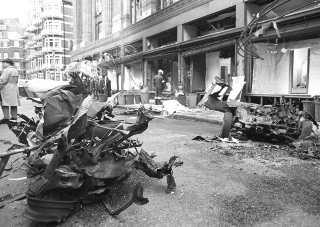
A Provisional Irish Republican Army (PIRA) car bomb kills six and injures ninety outside London‘s Harrods department store, a large, upmarket department store in the affluent Knightsbridge district near Buckingham Palace on December 17, 1983. The IRA Army Council claims that it has not authorised the attack and expresses regret for the civilian casualties. After the bombing, the IRA changes its tactic to focus on military targets on the mainland.

Harrods had been the target of an earlier IRA bomb on December 21, 1974, which was placed in the northeast corner of the first floor. There was a very short warning, and the store was in the process of being cleared when it exploded. It was also the target of a much smaller IRA bomb almost ten years later, in January 1993, which injured four people.

From 1973 the Provisional IRA has carried out waves of bombing attacks on commercial targets in London and elsewhere in England as part of its “economic war.” The goal is to damage the economy and cause disruption, which would put pressure on the British government to withdraw from Northern Ireland. On December 10, 1983, the IRA carries out its first attack in London in some time when a bomb explodes at the Royal Artillery Barracks, injuring three British soldiers.

One week later, on the afternoon of December 17, IRA members park a car bomb near the side entrance of Harrods, on Hans Crescent. The bomb contains 25 to 30 lbs. of explosives and is set to be detonated by a timer. It is left in a 1972 blue Austin 1300 GT four-door sedan. At 12:44 PM a man using an IRA codeword phones the central London branch of the Samaritans charity. The caller says there is a car bomb outside Harrods and another bomb inside Harrods and gives the car’s registration plate. According to police, he does not give any other description of the car.

The bomb explodes at about 1:21 PM, as four police officers in a car, an officer on foot and a police dog-handler near the suspect vehicle. Three officers and three bystanders are killed, and 90 others are injured, including 14 police officers. The blast damages 24 cars and all five floors on the side of Harrods, sending a shower of glass down onto the street. The police car absorbs much of the blast and this likely prevents further casualties.

Five people die at the scene of the bombing and a sixth later dies in the hospital. The bystanders who die are Philip Geddes (24), a journalist who had heard about the alert and went to the scene, Jasmine Cochrane-Patrick (25) and Kenneth Salvesen (28), a United States citizen. The Metropolitan Police Service officers killed are Sergeant Noel Lane (28) and Constable Jane Arbuthnot (22). A third officer, Inspector Stephen Dodd (34), dies in the hospital from his injuries on December 24. Constable Jon Gordon survives but loses both legs and part of a hand in the blast.

At the time of the explosion, a second warning call is made by the IRA. The caller says that a bomb has been left in the C&A department store at the east end of Oxford Street. Police clear the area and cordon it off, but this claim is found to be false. In the aftermath of the attack, hundreds of extra police and mobile bomb squads are drafted into London. Aleck Craddock, chairman of Harrods, reports that £1 million in turnover has been lost as a result of the bombing. Despite the damage, Harrods re-opens three days later, proclaiming it will not be “defeated by acts of terrorism.” Denis Thatcher, the husband of British Prime Minister Margaret Thatcher, visits the store and tells reporters “no damned Irishman is going to stop me going there.”