The new Embassy in New Zealand brings to six the number of new Embassies or Consulates announced by the Government in the recent weeks. The new Missions announced on Budget Day are an Embassy in Santiago, Chile; an Embassy in Bogotá, Colombia; an Embassy in Amman, Jordan; a Consulate General in Vancouver, Canada; and a Consulate General in Mumbai, India.
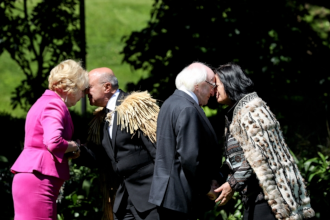
The President along with his wife Sabina Higgins meet with Governor-General Reddy and Sir David Gascoigne on the first day of their State visit to New Zealand.
According to a statement released by the President’s office, “the decision to establish an embassy reflects an exceptionally close partnership between Ireland and New Zealand in international affairs, including at the United Nations.” New Zealand also announces plans to open an embassy in Ireland.
Diplomatic relations between Ireland and New Zealand are established in 1965. Ireland’s Ambassador to Australia is also accredited to New Zealand. Niamh McMahon serves as Ireland’s Honorary Consul in Auckland, New Zealand.
The President visits Wellington, Christchurch, Auckland and Waitangi while in New Zealand, a country in which there are almost 14,000 Irish born people and one in six people claim Irish heritage.
President Higgins also meets with the prime minister-elect of New Zealand, Jacinda Ardern, who becomes the third woman to lead a government in her country.
(Pictured: President Michael D. Higgins and Sabina Higgins receive a traditional Maori welcome from Governor-General of New Zealand Dame Patsy Reddy and Sir David Gascoigne, Government House, Wellington)
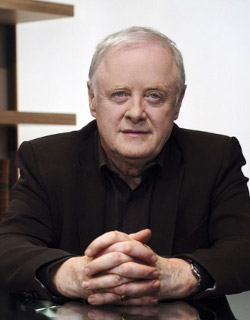
The ninth of ten children born to Anthony and Elizabeth Robinson, Robinson moves with his family to England in his early teens. He briefly trains to become a Catholic priest at St. Mary’s Missionary College of the Holy Ghost Fathers at Castlehead, Grange-over-Sands, Lancashire. He begins a career in accounting in 1965 as a clerk with the Matchbox toy company. While with the firm, he progresses through various accounting roles to become Chief Management Accountant in 1974. During that time he also qualifies as an Associate Chartered Management Accountant.
In 1974, Robinson leaves Matchbox to work for Lex Vehicle Leasing as a management accountant. He rises through the company and is ultimately appointed finance director. In 1980, he joins the UK franchise of Coca-Cola, owned at the time by Grand Metropolitan. In 1983 he is appointed managing director of Grand Metropolitan’s international services division. In 1987 he leads the successful £163m management buyout of the loss-making contract services and catering division of Compass Group, known as Compass Caterers. He joins Granada as CEO in 1991 and ousts Granada’s chairman, David Plowright, in 1992, which leads John Cleese to call Robinson “an upstart caterer.”
Robinson steers the company through various mergers, and hostile takeovers including London Weekend Television (1993) and Forte Group (1996). In 1999 he is the subject of a biography, Lord of the Dance, written by business journalist William Kay, and published by Orion Business Books. In 2005 he makes an unsuccessful attempt to oust Doug Flynn as CEO of Rentokil Initial and install himself as Executive chairman for a 5% stake in the company, then valued at £56M.
Robinson’s first foray into broadcasting is a revival of the BBC‘s Troubleshooter series, originally fronted by Sir John Harvey-Jones in the early 1990s. Titled I’ll Show Them Who’s Boss and co-produced by the Open University, in 2004 he goes into struggling businesses to try to turn them round by advice and mentoring.
In January 2007 following a similar format, he presents a three-part series, Can Gerry Robinson Fix the NHS? as he attempts to reduce waiting lists at Rotherham General Hospital. He returns a year later for a sequel, Can Gerry Robinson Fix the NHS? One Year On. In December 2009, he presents a programme in a similar format entitled Can Gerry Robinson Fix Dementia Care Homes?.
In June 2009 Robinson presents a special edition of The Money Programme entitled Gerry Robinson’s Car Crash investigating the history and future of the British motor industry. He regularly appears on British TV as a celebrity businessman. In July 2009 he starts a TV series called Gerry’s Big Decision, in which he reviews struggling companies and decides whether it is worth investing his own money to save them. From January 14 through February 18, 2011 he presents BBC Two show Can’t Take It with You, which helps people to write their wills.
Robinson also serves as chairman of the Arts Council England for six years from 1998, in which capacity he is one of the many victims of a spoof by British comedian Ali G. He has divorced and remarried and has four children. He lives in Raphoe, County Donegal and has established a botanical garden with a narrow-gauge railway – the Difflin Lake Railway – which is open to the public. He was knighted in the 2004 New Year Honours list.
Jack Lynch, in full John Mary Lynch, is born on August 15, 1917, in Cork, County Cork. He serves as Taoiseach of Ireland from 1966 to 1973 and from 1977 to 1979.
Lynch studies law and enters the civil service with the Department of Justice in 1936. He eventually decides on a legal career, is called to the bar in 1945, resigns from the civil service, and practices on the Cork circuit. He already enjoys a national reputation as a sports hero as he had won five All-Ireland medals as a Cork hurler and another as a footballer.
Lemass’s retirement in 1966 causes an internal party conflict over the succession that leads to Lynch’s selection as a compromise candidate, a position he reluctantly accepts. In November 1966 he becomes leader of Fianna Fáil and Taoiseach. In June 1969 he becomes the only Fianna Fáil leader other than de Valera to win an overall majority in a general election.
In 1969–1973 Lynch plays an important role when civil unrest leads to the collapse of the government of Northern Ireland and poses a threat to the stability of the Irish state. He fires two cabinet ministers who are suspected of involvement in smuggling arms to the Provisional Irish Republican Army (IRA). He also creates a consensus in Irish party politics on a policy of conciliation and cooperation with the British government in seeking a solution to the Northern Ireland problem based on establishing power-sharing between the unionist majority and the Roman Catholic minority.
In 1972 Lynch wins an 83% majority in a referendum on Ireland’s entry into the European Economic Community and, on January 1, 1973, Ireland becomes a member. Although he is defeated in the 1973 Irish general election, he again demonstrates his remarkable popularity at the polls in 1977 when Fianna Fáil wins their largest and their last overall majority. In December 1979, however, discouraged by challenges to his authority from party colleagues, he resigns his leadership and soon after retires from politics. He serves on a number of corporate boards after his retirement.
Lynch dies in the Royal Hospital, Donnybrook, Dublin on October 20, 1999, at the age of 82. He is honoured with a state funeral which is attended by the President Mary McAleese, Taoiseach Bertie Ahern, former Taoisigh John Bruton, Albert Reynolds and Charles Haughey, and various political persons from all parties. The coffin is then flown from Dublin to Cork where a procession through the streets of the city draws some of the biggest crowds in the city’s history. Following the Requiem Mass celebrated in his home parish of the Cathedral of St. Mary and St. Anne, his friend and political ally, Desmond O’Malley, delivers the graveside oration, paying tribute to Lynch’s sense of decency. He is buried in St. Finbarr’s Cemetery, Cork.
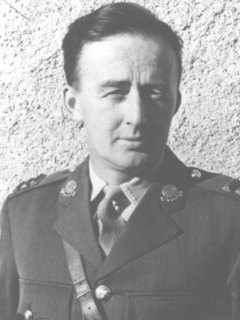
Kelly is the eldest of ten children born into a staunchly Irish republican family. His father, also named James Kelly, had stood for Sinn Féin in local elections in 1918, topping the poll. An ancestor from the late 18th century, Robert Kelly, was a member of the Society of United Irishmen, and was supposedly a Officer Commanding of the United Irishmen in the East Cavan/South Monaghan area. Kelly joins the Irish Army in 1949. By 1960 he has been promoted to captain and appointed to the intelligence section at army headquarters.
Kelly is a central figure in the Arms Trial, having travelled to Hamburg to arrange the purchase of arms. It emerges later that Neil Blaney had ordered him to do so outside normal legal channels, but before the weapons arrive the GardaSpecial Detective Unit has heard of the plan and informs TaoiseachJack Lynch, aborting the importation and resulting in criminal charges for the plotters. Although in his summation the judge says it is no defence for Kelly to say that he believed that the government had authorised the importation of arms, Kelly is acquitted.
Although he is acquitted, Kelly suffers financially because he had felt compelled to resign from the Army even before the prosecution is brought. He prints and publishes a personal memoir in paperback format called Orders for the Captain? in 1971.
Kelly never denies that he had been involved in extra-legal arms purchase talks but contends that he had been ordered to do so by some ministers. A typical version of the events is found in a 1993 hostile biography of Charles Haughey, claiming: “As early as October 1969, to the certain knowledge of Charles Haughey, James Gibbons, the Department of Justice, the Special Branch and Army Intelligence, there were meetings with leading members of the Irish Republican Army (IRA), when they were promised money and arms. The critical encounter took place in Bailieborough [sic], County Cavan, on Saturday, 4 October 1969. It had been arranged by Captain James Kelly, an army intelligence officer, and Cathal Goulding. Kelly, at that stage, was already the subject of several security reports to the Secretary of the Department of Justice, Peter Berry, from the Special Branch, implicating Kelly with subversives and with promises of money and of arms.” Kelly never objects to such versions of the events of 1969.
Following the Arms Trial, Kelly joint-founds Aontacht Éireann, a political party directly born out of the scandal. He is elected vice-chairman of the party and stands in Dáil elections for them unsuccessfully on two occasions in 1973 and 1977 in the Cavan-Monaghan constituency. Aontacht Éireann meets with little success at the polls and by 1980 he has joined Fianna Fáil, becoming a member of its national executive. Following the first applications of the 1987 Extradition (European Convention on the Suppression of Terrorism) Act, he resigns from the party in 1989 in opposition to the extradition of Provisional IRA prisoners to the United Kingdom. He also serves twice as President of the “1916-1921” Club.
Kelly is heavily involved in the Northern Ireland peace process. In 1989 he publishes his own draft on how a peace process could proceed. His document called The Courage of the Brave is launched in Conway Mill, Belfast on August 24, 1989. Present on the platform party at the launch of the document are Fianna Fáil Councillor Macarten McCormack, Ernest Cowan, Chairman of Kentstown Fianna Fáil who had served with Captain Kelly on the Fianna Fáil National Executive, Robert C. Linnon, National President, Irish American Unity Conference, Kate Lavery, representing John J. Finucane, National President, American Irish Political Education Committee and Father Des Wilson of Belfast.
Kelly dies on July 16, 2003, and is buried in Glasnevin Cemetery in Dublin. The epitaph on his grave is “Put not your trust in princes,” which is a quote from Niccolò Machiavelli.
Brendan Bowyer, Irish singer best known for fronting the Royal Showband and The Big Eight and who had five number one hits in Ireland, is born in Waterford, County Waterford on October 12, 1938.
Bowyer is also renowned for having The Beatles open for the Royal Showband at a concert on April 2, 1962 at the Pavilion Theatre, Liverpool, England, some six months before the release of The Beatles debut single “Love Me Do” in October 1962. He is regarded as one of the first headlining Elvis impersonators. Elvis Presley himself is a big fan of Bowyer’s performances and often attends his concerts in the Stardust Resort and Casino in Las Vegas, Nevada during the 1970s.
Bowyer begins his career with the Royal Showband in 1957. His ability to tailor American rock and roll music to the tastes of Irish audiences, and his athletic, spirited on-stage performances make him a popular vocalist of the 1960s Irish showband era. On September 6, 1963, he and the Royal Showband become the first Irish artists to top the Irish Singles Chart, with the hit “Kiss Me Quick,” which stays at the number one position for seven weeks. They return to the top position later that year with “No More,” and repeat the feat in 1964 with “Bless You.”
Bowyer takes part in the 1965 Irish National Song Contest for a chance to represent Ireland at the Eurovision Song Contest in Naples with the song “Suddenly in Love,” but can only manage fifth place. The Royal Showband’s greatest success is to come in 1965 with “The Hucklebuck,” which spends a further seven weeks at the top of the Irish Singles Chart, and is a hit in Australia, but fails to appear in the UK Singles Chart. “Don’t Lose Your Hucklebuck Shoes” returns the band to the number one position later in 1965.
In the summer of 1971 Bowyer, along with singer Tom Dunphy, leave the Royal Showband and form the Big Eight Showband. The band spends the summers playing the ballroom circuit in Ireland but also spends six months of the year in Las Vegas. Within a short time, the band makes the decision to relocate to Las Vegas permanently. He is based in Las Vegas from then on, though he makes frequent trips back to Ireland. In 1977 he makes a brief return to the Irish charts with his tribute, “Thank You Elvis.”
Having enjoyed a semi-retirement phase, Bowyer returns to the spotlight, touring Ireland each year, some for months on end, with his daughter Aisling Bowyer, and a six piece band. They perform his showband era hits, dance numbers, nationalist songs, modern contemporary songs and concert hits.
A covers album, Follow On, is released in 2001, where Bowyer performs some of the most popular Irish songs, such as “Summer in Dublin,” “What’s Another Year,” “Past the Point of Rescue,” and “I Don’t Like Mondays.”
In 2005, Bowyer and Aisling headline the entertainment list for the Tall Ships Festival in Waterford, performing in the open air to an estimated crowd of 12,000. In 2015, Bowyer is the star of the “Ireland’s Showbands – Do You Come Here Often?” concert series.
Bowyer dies at the age of 81 in Las Vegas, Nevada on May 28, 2020.
On the foundation of the Sunday Tribune in 1980, Kennedy joins it as the paper’s political correspondent. The paper’s publisher, John Mulcahy, had become familiar with her when she had contributed to his journal Hibernia. When the Tribune briefly ceases production, she moves to the Sunday Press.
In 1982, Kennedy’s telephone, along with those of two other journalists, is tapped by former Minister for JusticeSeán Doherty. Early in 1987, Kennedy successfully sues the incumbent Charles Haughey-led Fianna Fáil government for illegally tapping her phone. The revelation in 1992 that Haughey had ordered the phone taps leads to his resignation as Taoiseach.
Kennedy stands in the 1987 Irish general election as a candidate for the newly formed Progressive Democrats party in Dún Laoghaire. She comes third in the poll, winning 9.4% of the first-preference vote. She is one of fourteen Progressive Democrats TDs elected to Dáil Éireann in that election — a feat the party never achieves again. She is appointed the party’s spokesperson for foreign affairs. She stands again in the 1989 Irish general election and wins 9% of the first-preference vote but fails to retain her seat.
Following her election defeat, Kennedy returns to The Irish Times, then edited by Conor Brady, whom she had worked with at the Tribune when he was the editor. She avoids party-political journalism for several years, but she returns to covering politics in the early 1990s and becomes The Irish Times‘ political editor in 1999. She becomes the newspaper’s first female editor upon the departure of Conor Brady in October 2002. One of her rivals for the editor’s chair is the paper’s high-profile columnist, Fintan O’Toole.
Kennedy is paid more than the editor of Britain’s top non-tabloid newspaper The Daily Telegraph, which has a circulation of about nine times that of The Irish Times. Later columnist Fintan O’Toole tells the Sunday Independent, “We as a paper are not shy of preaching about corporate pay and fat cats but with this there is a sense of excess. Some of the sums mentioned are disturbing. This is not an attack on Ms. Kennedy, it is an attack on the executive level of pay. There is double standard of seeking more job cuts while paying these vast salaries.”
In September 2006, Kennedy approves the publication of an article in The Irish Times giving confidential details of investigations being made into payments purported to have been made in 1993 to Taoiseach Bertie Ahern. She refuses, upon request of the investigating Mahon Tribunal, to provide details of the source of the printed information. She responds that the documents have since been destroyed. Her refusal causes the Tribunal to seek High Court orders compelling her to provide details of the source. On October 23, 2007, the High Court grants the orders compelling her to go before the Tribunal and answer all questions. In its judgment, the High Court, criticising her decision to destroy the documents, says it is an “astounding and flagrant disregard of the rule of law.” In 2009, however, the Supreme Court of Ireland overturns this ruling, holding that the High Court had not struck the correct balance between the journalists’ right to protect their source and the tribunal’s right to confidentiality.
Kennedy announces on March 12, 2011, her intention to retire from The Irish Times by September, after a nine-year term as editor. She actually retires in June, and is succeeded by news editor, Kevin O’Sullivan, who succeeds her as editor on June 23, 2011.
In August 2012, Kennedy is appointed Adjunct Professor of Journalism at the University of Limerick. She has been awarded five honorary doctorates from Irish universities.
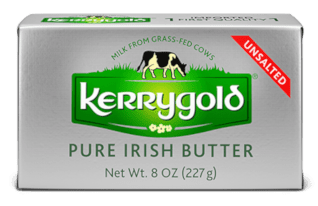
Kerrygold Pure Irish Butter, created by Sir Anthony O’Reilly, is launched on the world market on October 8, 1962.
O’Reilly is the CEO of what is then called An Bord Bainne (Irish for “The Irish Dairy Board”). His aim is to create a premium brand worthy of the rich quality of Irish milk. The name for the brand is chosen in 1962 from a total of 60 suggestions. Some of the names proposed include Shannon Gold, Tub-o-gold, Golden Farm, Butter-cup, and even Leprechaun.
Surprisingly, Kerrygold is first launched in the UK, not in Ireland. The butter is launched in October 1962 in Manchester. It is available in London three years later.
In 1964, the butter begins exporting to overseas markets. It is not until 1973 that the brand is even made available for sale in Ireland. Kerrygold eventually expands its offerings to include other dairy products, such as its Dubliner Cheese (named after the city of Dublin, although it is made in Cork).
Kerrygold advertising campaigns become legendary. The most well-known is the “Who’s taking the horse to France?” commercial, which first airs in 1994.
Today, the golden foil packaging of Kerrygold butter is recognized around the world in 60 countries. Kerrygold is the number one branded butter in Germany, and in the United States, it is the number one imported butter brand and the number three overall butter brand.
In 2017, Kerrygold is banned in Wisconsin for not complying with a 1970 state law making it unlawful to sell any butter in the state unless it has been tested by industry experts and issued a grade. Some critics suggest that the law is only proposed to protect the state’s own dairy industry. Fans of Kerrygold butter in Wisconsin are forced to travel across state lines to stock up due to the ban.
Two lawsuits are filed challenging the constitutionality of the state’s butter grading law.
Ornua, the rebranded An Bord Bainne, confirms in November 2017 its Kerrygold butter is back on store shelves in Wisconsin as the company now complies with the state’s law requiring butter sold in Wisconsin to pass a government-mandated grading test.
As a boy Patterson performs with his local parish choir and is involved in maintaining the annual tradition of singing with the “Wrenboys.” He sings in the local St. Mary’s Choral Society and at a production of The Pirates of Penzance performed with both his parents. His interests extend beyond music and as a boy he represents Marlfield GAAhurling club, plays tennis at Hillview and golf at the Mountain Road course. He quits school at an early stage to work in the printing business of his mother’s family. He moves to Dublin in 1961 to enroll at the National Academy of Theatre and Allied Arts where he studies acting while at the same time receiving vocal training from Hans Waldemar Rosen. In 1964, he enters the Feis Ceoil, a nationwide music competition, in which he wins several sections including oratorio, lieder and the German Gold Cup.
Patterson gives classical recitals around Ireland and wins scholarships to study in London, Paris and in the Netherlands. While in Paris, he signs a contract with Philips Records and releases his first record, My Dear Native Land. He works with conductors and some of the most prestigious orchestras in Europe including the London Symphony Orchestra and Orchestre de Paris. He also gains a reputation as a singer of Handel, Mozart, and Bach oratorios and German, Italian and French song. He has a long-running programme on RTÉ titled For Your Pleasure.
Patterson is equally at home in more intimate settings. His singing in the role of the Evangelist in Bach’s St. John Passion is given fine reviews. Further recordings follow, of Beethoven arrangements, Irish songs, Berlioz songs, Purcell songs and others, all on the Philips label.
Patterson performs sold-out concerts from London’s Royal Albert Hall to New York’s Carnegie Hall, and with his family he presents two concerts at the White House, for presidents Ronald Reagan in 1982 and Bill Clinton in 1995. He records over thirty albums in six languages, wins silver, gold and platinum discs and is the first Irish singer to host his own show in Radio City Music Hall in New York.
Rising to greater prominence with the new popularity of Celtic music in the 1990s, Patterson sees many of his past recordings reissued for American audiences, and in 1998 he stars in the PBS special Ireland in Song. His last album outsells Pavarotti.
In 1999, Patterson learns he has a brain tumour. He has several operations in the following year and his condition appears to stabilise. He is diagnosed with a recurrence of his illness on May 7, 2000. He briefly recuperates and resumes performing. His last performance is on June 4, 2000, at Regis College in the Boston suburb of Weston, Massachusetts. Shortly thereafter he is admitted to the Memorial Sloan Kettering Cancer Center in New York where he lapses into a coma and dies on June 10, 2000, at the age of 61.
Seán Ó Riada, Irish composer and arranger of Irish traditional music, dies in London, England on October 3, 1971. Through his incorporation of modern and traditional techniques he becomes the single most influential figure in the revival of Irish traditional music during the 1960s.
Ó Riada’s career begins in 1954 as a music director at Radio Éireann, after which he works at the Abbey Theatre from 1955 to 1962. He lectures in music at University College Cork from 1963 until his death in 1971. He leaves a lasting influence as founder and director of the ensemble Ceoltóirí Chualann beginning in 1961. Ó Riada becomes a household name in Ireland through his participation in Ceoltóirí Chualann, compositions, writings, and broadcasts. His best-known pieces in the classical tradition include Nomos No. 1: Hercules Dux Ferrariae (1957), but he becomes particularly famous for his film scores Mise Éire (1959) and Saoirse? (1960).
In 1963 Ó Riada is appointed lecturer in music at University College Cork. He moves to Ballyvourney, and not Cúil Aodha (a common misconception) in West Cork, an Irish-speaking area, where he establishes Cór Chúil Aodha, a male voice choir.
He becomes involved in Irish politics and is a friend of several influential leaders. Ó Riada drinks regularly at a local pub which still advertises itself as being his local. He develops cirrhosis of the liver. He is flown to King’s College Hospital in London for treatment and dies there on October 3, 1971, two months after his 40th birthday. He is buried in St. Gobnait‘s graveyard, Baile Bhuirne, County Cork. Willie Clancy plays at his funeral.
Two schools are named “Scoil Uí Riada” after him – a Gaelscoil in Kilcock, County Kildare, and another in Bishopstown, Cork City. In 2008, a life-sized statue is erected in the grounds of Sépéil Naomh Gobnait, Cúil Aodha.
Blaney is the second eldest of a family of eleven. His father, from whom he got his strong republican views and his first introduction to politics, had been a commander in the Irish Republican Army (IRA) in Donegal during the Irish War of Independence and the Irish Civil War. He is educated locally at Tamney on the rugged Fanad Peninsula and later attends St. Eunan’s College in Letterkenny. He later works as an organiser with the Irish National Vintners and Grocers Association.
Blaney is first elected to Dáil Éireann for the Donegal East constituency in a by-election in December 1948, following the death of his father from cancer. He also becomes a member of the Donegal County Council. He remains on the backbenches for a number of years before he is one of a group of young party members handpicked by Seán Lemass to begin a re-organisation drive for the party following the defeat at the 1954 general election. Within the party he gains fame by running the party’s by-election campaigns throughout the 1950s and 1960s. His dedicated bands of supporters earn the sobriquet “the Donegal Mafia,” and succeed in getting Desmond O’Malley and Gerry Collins elected to the Dáil.
Following Fianna Fáil’s victory at the 1957 general election, Éamon de Valera, as Taoiseach, brings new blood into the Cabinet in the shape of Blaney, Jack Lynch, Kevin Boland and Mícheál Ó Móráin. Blaney is appointed Minister for Posts and Telegraphs however he moves to the position of Minister for Local Government at the end of 1957 following the death of Seán Moylan. He retains the post when Lemass succeeds de Valera as Taoiseach in 1959. During his tenure it becomes possible to pay rates by installment and he also introduces legislation which entitles non-nationals to vote in local elections.
In 1966 Lemass resigns as Taoiseach and Fianna Fáil leader. The subsequent leadership election sees Cork politician Jack Lynch become party leader and Taoiseach. In the subsequent cabinet reshuffle Blaney is appointed Minister for Agriculture and Fisheries.
In 1969, when conflict breaks out in Northern Ireland, Blaney is one of the first to express strong Irish republican views, views which contradict the policy of the Irish Government, in support of Northern nationalists. From around late 1968 onwards, he forms and presides over an unofficial Nationalist group in Leinster House popularly known as “the Letterkenny Table.” The group is dominated by Blaney up until his death.
There is general surprise when, in an incident known as the Arms Crisis, Blaney, along with Charles Haughey, is sacked from Lynch’s cabinet amid allegations of the use of the funds to import arms for use by the IRA. Lynch asked for their resignations but both men refuse, saying they did nothing illegal. Lynch then advises President de Valera to sack Haughey and Blaney from the government. Haughey and Blaney are subsequently tried in court but are acquitted. However, many of their critics refuse to recognise the verdict of the courts. Although Blaney is cleared of wrongdoing, his ministerial career is brought to an end.
Lynch subsequently moves against Blaney so as to isolate him in the party. When Blaney and his supporters try to organise the party’s national collection independently, Lynch acts and in 1972 Blaney is expelled from Fianna Fáil for “conduct unbecoming.”
Following his expulsion from Fianna Fáil, Kevin Boland tries to persuade Blaney to join the Aontacht Éireann party he is creating but Blaney declines. Instead, he contests all subsequent elections for Independent Fianna Fáil – The Republican Party, an organisation that he built up. Throughout the 1970s there are frequent calls for his re-admittance to Fianna Fáil but the most vocal opponents of this move are Fianna Fáil delegates from County Donegal.






 seamus dubhghaill