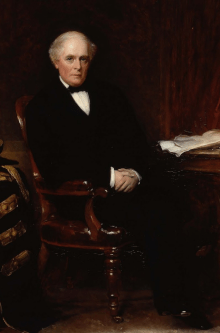
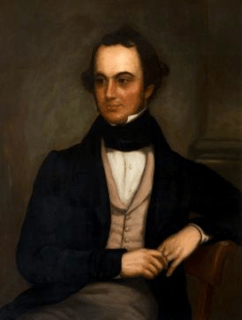
Corrigan is born in Thomas Street, Dublin, on December 2, 1802, the son of a dealer in agricultural tools. He is educated in St. Patrick’s College, Maynooth, which then has a department for secular students apart from the ecclesiastical seminary. He is attracted to the study of medicine by the physician in attendance and spends several years as an apprentice to the local doctor, Edward Talbot O’Kelly. He studies medicine in Dublin later transferring to Edinburgh Medical School where he receives his degree as MD in August 1825.
Corrigan returns to Dublin in 1825 and sets up a private practice at 11 Ormond Street. As his practice grows, he moves to 12 Bachelors Walk in 1832, and in 1837 to 4 Merrion Square West. Apart from his private practice, he holds many public appointments; he is a physician to St. Patrick’s College, Maynooth, the Sick Poor Institute, the Charitable Infirmary Jervis Street (1830–43) and the House of Industry Hospitals (1840–66). His work with many of Dublin’s poorest inhabitants leads to him specialising in diseases of the heart and lungs, and he lectures and publishes extensively on the subject. He is known as a very hard-working physician, especially during the Great Famine. At the 1870 Dublin City by-election he is elected a LiberalMember of Parliament for Dublin City. In parliament he actively campaigns for reforms to education in Ireland and the early release of Fenian prisoners. He does not stand for re-election in 1874. His support for temperance and Sunday closing of pubs apparently antagonises his constituents and alcohol companies.
In 1847, Corrigan is appointed physician-in-ordinary to the Queen in Ireland. Two years later he is given an honorary MD from Trinity College Dublin (TCD). In 1846 his application to become a fellow of the Royal College of Physicians of Ireland (RCPI) is blocked. In 1855 he gets around this opposition by sitting the college’s entrance exam with the newly qualified doctors. He becomes a fellow in 1856, and in 1859 is elected president, the first Catholic to hold the position. He is re-elected president an unprecedented four times. There is a statue of him in the Graves’ Hall of the college by John Henry Foley.
Corrigan is President of the Royal Zoological Society of Dublin, the Dublin Pathological Society, and the Dublin Pharmaceutical Society. From the 1840s he is a member of the senate of the Queen’s University and in 1871 becomes its vice-chancellor. In 1866 he is created a baronet, of Cappagh and Inniscorrig in the County of Dublin and of Merrion Square in the City of Dublin, partly as a reward for his services as Commissioner of Education for many years. He is a member of the board of Glasnevin Cemetery and a member of the Daniel O’Connell Memorial Committee. Armand Trousseau, the French clinician, proposes that aortic heart disease should be called Corrigan’s disease.
Corrigan marries Joanna Woodlock, the daughter of a wealthy merchant, and sister of the Bishop Dr. Bartholomew Woodlock, in 1827. They have six children, three girls and three boys. His eldest son, Captain John Joseph Corrigan, Dragoon Guards, dies on January 6, 1866, and is interred at the Melbourne General Cemetery, Melbourne, Australia.
Corrigan dies at Merrion Square, Dublin, on February 1, 1880, having suffered a stroke the previous December. He is buried in the crypt of St. Andrew’s Church, Westland Row, Dublin. His grandson succeeds him to the baronetcy.
The Corrigan Ward, a cardiology ward in Beaumont Hospital, Dublin, is named in his honour. Part of his family crest is also part of the Beaumont Hospital crest.
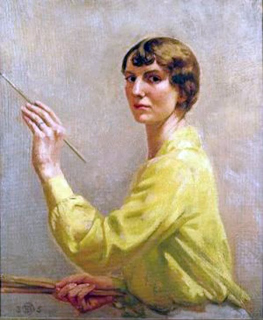
Brigid GanlyHRHA, Irish painter and sculptor, is born Rosaleen Brigid O’Brien on January 29, 1909, in Dublin.
Ganly is one of five children born to Dermod O’Brien and his wife Mabel Smiley. Her father is a painter. His grandfather is the Irish republicanWilliam Smith O’Brien. She grows up in Country Limerick at a farm in Cahirmoyle until the family moves to Fitzwilliam Square in Dublin. She goes on to attend the Metropolitan School of Art where she has the opportunity to study under Patrick Tuohy, Seán Keating and Oliver Sheppard. She is a talented sculptor and wins several awards, including the Taylor scholarship in 1929, for her allegorical male nude, Pity. She spends time in Paris in 1951 where she trains with André Lhote. She travels to Greece where Lhote continues to influence her work.
Ganly also studies painting in the Royal Hibernian Academy School where she has Margaret Clarke and Seán O’Sullivan as teachers. She is made an associate of the Royal Hibernian Academy in 1928 and becomes a member in 1935, though in 1969 she resigns her membership in protest at the lack of young artists being given the opportunity to exhibit. In 1972 she is made an honorary member and returns.
Ganly is a representational artist and while known as a portrait artist, she also paints landscapes, interiors and may be best known for her still lifes. Some of her best works are portraits of her husband, her sister Ethel, her father, and her friend Sheila Pim. She illustrates the book-jackets of Pym’s works. She has many exhibitions, with the RHA and the Water Colour Society of Ireland. There is a retrospective of her life in 1998 in the Hugh Lane Gallery and her works are in the collections there. She is also in the collections of the Waterford Municipal Gallery, Crawford Art Gallery, Cork and in The National Self-Portrait Collection of Ireland. She is part of the 2014 exhibition “Irish Women Artists: 1870-1970.”
Ganly’s sister-in-law is Kitty Wilmer O’Brien with whom she often exhibits. She marries Andrew Ganly, a dental surgeon and writer, in 1936. He dies in 1982. They have two children, Eoghan and Phillida.
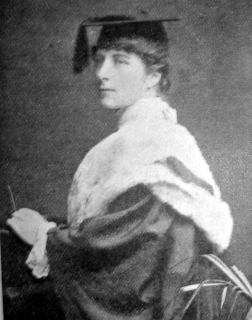
Davidson is the sixth of ten children of clerk of petty session, Edward Ellice Davidson, and Lucy Rising Davidson (née Doe). Her mother dies in 1888, and it is presumed that she receives a private education but as the family are not affluent, the details are unclear. She goes on to attend the Dublin Metropolitan School of Art (DMSA) from 1895 to 1905. While at the DMSA, she wins prizes in 1895 and 1896 and is awarded a scholarship and free studentship at the Royal Dublin Society (RDS) in 1897, the same year her father dies. She completes her studies in 1905. In the early 1910s, she is living in Rathmines and spends some time in England and Wales.
Davidson is commissioned by Switzer’s department store on Grafton Street to draw costumes in 1899. In 1909, her painting After Rain is exhibited by the Dublin Sketching Club, with her continuing to show work there until 1920. She exhibits The Bonfire with the Water Colour Society of Ireland in 1912, becoming a committee member in 1934 and continuing to exhibit with them until 1954. In 1914, she is one of the artists included in a sale of paintings to aid Belgian refugees. She is first exhibited at the Royal Hibernian Academy (RHA) in 1914, with The Student. Her painting exhibited by the RHA in 1916, The Harbour, St. Ives, demonstrates an influence from Stanhope Forbes and the Newlyn School, with a bright palette and contrasting illumination, which become characteristic of her work. She illustrates C. H. Bretherton’s collection of humorous poems and recollections about London Zoo, A Zoovenir (1919).
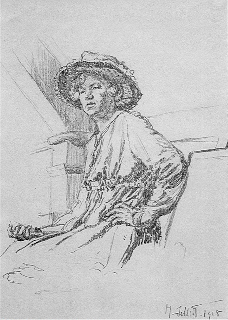
Davidson holds a joint exhibition with Mainie Jellett in 1920, at Mill’s Hall, Merrion Row, Dublin. Jellett produces a pencil portrait of Davison (pictured above), which shows her in a straw hat she frequently wears. The RHA exhibits Davidson’s oil painting, The Flax Pullers, in 1921. This work shows an influence from Paul Henry and French Impressionism in her use of colour-blocking. In the early 1920s, she travels to Switzerland, Belgium, and France, producing works such as Fish Market, Bruges. She lives in Paris in the late 1920s, exhibiting at the Salon de la Societé Nationale in 1924 and 1930. She places a self-portrait in her depiction of a peasant gathering, The Country Races. Reproductions of her drawing of Leinster House and Christ Church Cathedral by Bulmer Hobson are included in A Book of Dublin (1929). Her landscape, Low Tide, Wicklow, which is exhibited at the RHA in 1934, and Boats at Wicklow, Dusk show her ability to depict reflections in water. She continues to paint scenes of rural life, including Cottages – Keel, Achill, which shows an influence from Jack Butler Yeats in her use of space and colour. The fact that her family is not wealthy likely influences her choice of poorer people as her subjects, depicting them in a sympathetic manner. Her work is part of the painting event in the art competitions at the 1928 Summer Olympics.
Davidson’s paintings are exhibited at the Contemporary Picture Galleries, Dublin in 1930, alongside Yeats, Evie Hone, and Harry Kernoff. She is a member of the Picture Hire Club, 24 Molesworth Street, Dublin from 1941 to 1942, and is a frequent contributor to the Munster Fine Arts Club. Her work is exhibited at the Salon des Beaux Arts, Paris, the Royal Academy of Arts, London, and in Amsterdam. A large number of her works from the 1930s show the Irish-speaking area of Galway, Claddagh, such as Night in Claddagh, exhibited with the RHA in 1933. Her Irish landscapes, such as Claddagh Cottages, are included in the Oireachtas Art Exhibitions from 1932 to 1946. From around 1934, she is a member of the Society of Dublin Painters, exhibiting with them from 1939 to 1954. She influences the Society’s move toward the avant-garde in the 1940s. She is elected associate to the RHA in 1940 and continues to exhibit there until her death. Her 1946 work, Gorta, shows influence from Zola, Rilke, Dostoyevsky and Picasso.
Davidson teaches drawing at her studio at 1 Earlsfort Terrace, Dublin. Her pupils include Bea Orpen, Anne Yeats, and Mo Irwin. She also is a teacher at a number of Dublin schools, such as Belgrave school, Rathmines, Wesley College, St. Stephen’s Green, and Castle Park School, Dalkey. She travels to Abbeyleix, County Laois, once a week to teach at Glenbawn boarding school.
As well as painting, Davidson writes a number of plays, short stories, and monologues under a pseudonym, “Ulick Burke.” In 1927, a collection of her poems and Donegal rhymes is published. In 1931, Hilton Edwards directs her stage play Bride, at the Gate Theatre. Her short story, Her Only Son, is published in The Bell under a pseudonym in 1942. In 1935, she is a founder-member of the Torch Theatre, Dublin. She designs scenery, and is the co-director with Hugh Hyland in 1936, under the stage name “Jennifer Maude.”
Davidson dies at her home at 4 Wilton Terrace, Dublin on March 29, 1954. She is buried in an unmarked grave in Mount Jerome Cemetery. The National Gallery of Ireland (NGI) holds her 1938 portrait of Yeats, as well as her crayon drawing of Sarah Purser. She is a regular attendee at Purser’s “Second Tuesdays” gatherings. The Abbey Theatre holds her portrait of Joseph Holloway. She bequeaths The Golden Shawl to the Hugh Lane Gallery, which is a large self-portrait. Two of her works are included in the NGI’s 1987 exhibition, Irish Women Artists from the Eighteenth Century to the Present Day.
Byrne is born on March 20, 1780, at Ballylusk, Monaseed, County Wexford, the eldest son of Patrick Byrne, a middling Catholic farmer, and Mary (née Graham). He joins the United Irishmen in the spring of 1797 and, although only seventeen, becomes one of the organisation’s most active agents in north Wexford.
When rebellion engulfs his home district on May 27, 1798, Byrne assumes command of the local Monaseed corps and rallies them at Fr. John Murphy‘s camp on Carrigrew Hill on June 3. They fight at the rebel victory at Tubberneering on June 4 and the unsuccessful attempt to capture Arklow five days later. After the dispersal of the main rebel camp at Vinegar Hill on June 21, he accompanies Murphy to Kilkenny but begins the retreat to Wexford four days later. Heavily attacked at Scollagh Gap, he is one of a minority of survivors who spurn the proffered amnesty and join the rebel forces in the Wicklow Mountains. He is absent when the main force defeats a cavalry column at Ballyellis on June 30 but protects the wounded who are left in Glenmalure when the rebels launch a foray into the midlands the following week. He takes charge of the Wexfordmen who regain the mountains and fight a series of minor actions in the autumn and winter of 1798 under the militant Wicklow leader Joseph Holt. On November 10, he seizes an opportunity to escape into Dublin, where he works as a timber-yard clerk with his half-brother Edward Kennedy.
Byrne is introduced to Robert Emmet in late 1802 and immediately becomes a prominent figure in his insurrection plot. He is intended to command the many Wexford residents of the city during the planned rising of 1803. On July 23, 1803, he assembles a body of rebels at the city quays, which disperse once news is received that the rising has miscarried. At Emmet’s request, he escapes to Bordeaux in August 1803 and makes his way to Paris to inform Thomas Addis Emmet and William James MacNeven of the failed insurrection. In his Paris diary, the older Emmet recalls passing on “the news brought by the messenger” to Napoleon Bonaparte‘s military advisors.
Byrne enlists in the newly formed Irish Legion in December 1803 as a sub-lieutenant and is promoted to lieutenant in 1804 but only sees garrison duty. The regiment eventually moves to the Low Countries, and is renamed the 3rd Foreign Regiment in 1808, the year he is promoted to captain. He campaigns in Spain until 1812, participating in counterinsurgency against Spanish guerillas. He fights in Napoleon’s last battles and is appointed Chevalier de la Légion d’Honneur on June 18, 1813. With Napoleon’s defeat in 1815, the former Irish Legion, with its undistinguished and somewhat unfortunate history, is disbanded.
Though a supporter of Napoleon during the Hundred Days, Byrne is not involved in his return, yet he is included in an exclusion order from France which he successfully appeals. In November 1816, he swears the oath of loyalty to the now Royal Order of the Legion of Honour and becomes a naturalised French subject by royal decree on August 20, 1817. He becomes a half-pay captain but is recalled for active service in 1828 and serves as a staff officer in the French expeditionary force in Morea in support of Greek independence (1828–1830). His conduct on this campaign leads to his promotion as chef de bataillon (lieutenant-colonel) of the 56th Infantry Regiment in 1830.
After five years of service in garrisons around France, including counterinsurgency duty in Brittany, Byrne retires from the army in 1835. On December 24, 1835, he marries a Scottish woman, Frances “Fanny” Horner, at the British Embassy Chapel in Paris. They live in modest circumstances in various parts of Paris and remain childless. Though it is unclear when he is awarded the Chevalier de St Louis, having initially applied for it unsuccessfully in 1821, this distinction is mentioned in his tomb inscription, under his Legion of Honour. John Mitchel, who visits him regularly in Paris in the late 1850s, recalls Byrne sporting the rosette of the Médaille de Sainte Hélène, awarded in 1857 to surviving veterans of Napoleon’s campaigns.
An early list of Irish Legion officers describes Byrne as an upright and disciplined man, with little formal instruction but aspiring to improve himself. He becomes fully fluent in French but also learns Spanish and his language skills are a useful asset in various campaigns. Because of his suspected Bonapartist leanings, he is under police surveillance for some time after the Bourbon Restoration. He does, however, cultivate a wide social circle in Paris over the years. Various references throughout his writings testify to an inquisitive and cultured mind. He intended publishing a lengthy criticism of Gustave de Beaumont‘s Irlande, sociale, politique et religieuse (1840), claiming that it misrepresented the 1798 rebellion, but he withdraws it after meeting the author, not wishing to prejudice the reception of such an important French work on “the sufferings of Ireland.”
A lifelong nationalist, Byrne acts as Paris correspondent of The Nation in the 1840s and is a well-known figure in the Irish community there. He works in the 1850s on his notably unapologetic and candid Memoirs, an early and significant contribution to the Irish literature of exile. This autobiography is acclaimed by nationalists when published posthumously by his wife in 1863, with a French translation swiftly following in 1864. His detailed testimony of key battles of the 1798 rebellion in the southeast and Emmet’s conspiracy are written with the immediacy of an eyewitness and make them an invaluable contribution to that period of Irish history.
Byrne dies on January 24, 1862, in Paris, and is buried in Montmartre Cemetery. On November 25, 1865, John Martin writes of him: “In truth he was a beautiful example of those natures that never grow old. A finer, nobler, gentler, kindlier, gayer, sunnier nature never was than his, and to the last he had the brightness and quickness and cheeriness of youth”.
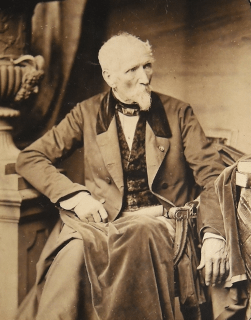
Byrne’s engaging and dispassionate Memoirs have ensured his special status among Irish nationalists. Because of his longevity he is the only United Irishman to have been photographed. His wife had sketched him in profile in middle age, and the photograph taken almost three decades later shows the same, strong features though those of a frail, but dignified man of 79 years.
(From: “Byrne, Miles” by Ruan O’Donnell and Sylvie Kleinman, Dictionary of Irish Biography, http://www.dib.ie, October 2009, last revised August 2024 | Pictured: Photograph of Miles Byrne taken in Paris in 1859)
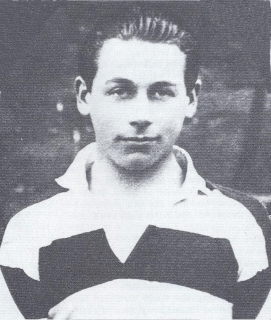
Barry is the fourth of seven children born to Thomas Barry, dairyman, and Mary Barry (née Dowling), both originally from northeast County Carlow. His father dies of heart disease on February 8, 1908, at the age of 56. His mother then moves the family to the family’s farm at Tombeagh, Hacketstown, County Carlow, while retaining the family’s townhouse on Fleet Street. As a child he goes to the National School in Rathvilly. In 1915, he is sent to live in Dublin and attends the O’Connell Schools for three months, before enrolling in the Preparatory Grade at St. Mary’s College, Rathmines, in September 1915. He remains at that school until May 31, 1916, when it is closed by its clerical sponsors. With the closure of St. Mary’s College, he transfers to Belvedere College, a Jesuit school in Dublin. He joins the Irish Volunteers, the forerunner of the IRA, while still at Belvedere College, and enters University College Dublin (UCD) in 1919 to study medicine.
As a member of 1st Battalion, Dublin Brigade of the Irish Volunteers, he takes part in a successful raid for arms on the military post in King’s Inns, Dublin, on June 1, 1920. Within only six minutes the raiders secure rifles, light machine guns, and large quantities of ammunition, and depart the site with no casualties. He also takes part in an abortive attempt to burn Aughavanagh House, Aughrim, County Wicklow in July 1920, and an attack on a British ration party in Church Street, Dublin, on September 20, with the aim of seizing arms. The final operation fails. Gunfire breaks out, three soldiers of around Barry’s own age are killed or fatally wounded, and he becomes the first Volunteer to be captured in an armed attack since 1916.
During interrogation, Barry is threatened with a bayonet and is mistreated. A general court-martial on October 20, which he refuses to recognise, condemns him to death for murdering the three soldiers, although one of the bullets taken from Private Marshall Whitehead’s body is a .45 calibre, while all witnesses state that Barry was armed with a .38 Mauser Parabellum. Despite widespread appeals on grounds of both clemency and expediency, the cabinet in London and officials in Dublin decide separately against a reprieve, probably because of its likely effect on the morale of soldiers and police.
On October 28, the Irish Bulletin, the official propaganda newspaper produced by Dáil Éireann‘s Department of Publicity, publishes Barry’s statement alleging torture. The headline reads English Military Government Torture a Prisoner of War and are about to Hang him. The Irish Bulletin declares Barry to be a prisoner of war, suggesting a conflict of principles is at the heart of the conflict. The British do not recognise a war and treat all killings by the Irish Republican Army (IRA) as murder. The public learns on this day that the date of execution has been fixed for November 1.
He was hanged in Mountjoy Prison, Dublin, on November 1, after hearing two Masses in his cell. The timing of the execution, only seven days after the death by hunger strike of Terence MacSwiney, the republican Lord Mayor of Cork, brings public opinion to a fever-pitch. He is buried in unconsecrated ground on the jail property. His comrade and fellow student Frank Flood is buried alongside him four months later. A plain cross marks their graves and those of Patrick Moran, Thomas Whelan, Thomas Traynor, Patrick Doyle, Thomas Bryan, Bernard Ryan, Edmond Foley and Patrick Maher who are hanged in the same prison before the Anglo-Irish Treaty of July 1921 which ends hostilities between Irish republicans and the British. The graves go unidentified until 1934. They become known as the Forgotten Ten by republicans campaigning for the bodies to be reburied with honour and proper rites. On October 14, 2001, the remains of the ten men are given a state funeral and moved from Mountjoy Prison to be re-interred at Glasnevin Cemetery in Dublin.
Barry is the first person to be tried and executed for a capital offence under the Restoration of Order in Ireland Act 1920, passed twelve weeks earlier. Together with his youth, this makes him a republican martyr celebrated in many ballads and verses. The best-known, set to a tune popular with British servicemen, is recorded by the American singer Paul Robeson, among others. A memorial stained-glass window by Richard King of the Harry Clarke Studio is later installed in the former UCD council chamber (afterward called the Kevin Barry Room), Earlsfort Terrace, Dublin.
She studies in the school of Old Irish established by Professor Osborn Bergin and is strongly influenced by the Irish Australian professor O’Daly. She later teaches Latin through Irish at Ballingeary and becomes proficient in French, German, Italian and Spanish.
She spends the last £100 of her scholarship on a dowry for her marriage to Sean MacGearailt, later first Accountant General of Revenue in the Irish civil service, with whom she lives originally in Glasnevin and then in Dalkey.
She is a founder member of the radical Craobh an Chéitinnigh, the Keating branch of Conradh na Gaeilge, composed mainly of Dublin-based Kerry people and regarded, by themselves at least, as the intellectual focus of the League.
In August 1904, some six years after the establishment of the earliest women’s hurling teams, the rules of camogie (then called camoguidheacht), first appears in Banba, a journal produced by Craobh an Chéitinnigh. Camogie had come to public attention when it was showcased at the annual Oireachtas (Conradh na Gaeilge Festival) earlier that year, and it differed from men’s hurling in its use of a lighter ball and a smaller playing-field. Ní Chinnéide and Cáit Ní Dhonnchadha, like Ní Chinnéide, an Irish-language enthusiast and cultural nationalist, are credited with having created the game, with the assistance of Ní Dhonnchadha’s scholarly brother Tadhg Ó Donnchadha, who drew up its rules. She is on the first camogie team to play an exhibition match in Navan, County Meath, in July 1904, becomes an early propagandist for the game and, in 1905, is elected president of the infant Camogie Association.
She first visits the Blasket Islands in 1932 with her daughter Niamh, who dies tragically young. In the summer of 1934, she puts the idea into Peig Sayers‘s head to write a memoir. According to a later interview with Ní Chinnéide “she knew and admired her gift for easy conversation, her gracious charm as a hostess, her talent for illustrating a point she was making by a story out of her own experience that was as rich in philosophy and thought as it was limited geographically.” Peig answers that she has “nothing to write.” She had learned only to read and write in English at school and most of it has been forgotten.
Ní Chinnéide suggests Peig should dictate her memoir to her son Micheal, known to everyone on the island as An File (“The Poet”), but Peig “only shook her head doubtfully.” At Christmas, a packet arrives from the Blaskets with a manuscript, she transcribes it word for word and the following summer brings it back to the Blaskets to read it to Peig. She then edits the manuscript for the Talbot Press. Peig becomes well known as a prescribed text on the Leaving Certificate curriculum in Irish.
Ní Chinnéide has an acting part in the first modern play performed in Irish on the stage, Casadh an tSugáin by Douglas Hyde in 1901. She is later author of children’s plays staged by An Comhar Drámuidhachta at the Oireachtas and the Peacock Theatre, of which Gleann na Sidheóg and An Dúthchas (1908) are published. She is a broadcaster in Irish on 2RN, a wholly owned subsidiary of Raidió Teilifís Éireann, after its foundation in 1926 and author of a translation of Grimms’ Fairy Tales (1923). She is president of the Gaelic Players Dramatic group during the 1930s and a founder of the Gaelic Writers Association in 1939.
She soon becomes interested in writing children’s plays, including Gleann na Sidheóg (Fairy Glen, 1905) and Sidheoga na mBláth (Flower Fairies, 1909. Although there is little information available on the staging of her first play, by the time her second children’s play, Sidheóga na mBláth, is published in An Claidheamh Soluis in December 1907, “Éire Óg” (“Young Ireland”) branches of Conradh na Gaeilge have been established in conjunction with adults’ branches. Patrick Pearse in particular voices the expectation that this play will be staged by many “Éire Óg” branches “before the New Year is very old,” thus indicating the immediate take up of such plays. Indeed, a week after the play’s publication, it is staged in the Dominican College in Donnybrook, Dublin, where Ní Chinnéide had spent several years as an Irish teacher.
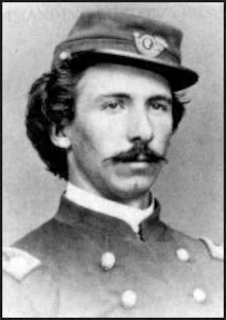
Guiney is the second and eldest surviving son of James Roger Guiney, who is descended from Jacobites, and Judith Macrae. His father, impoverished after a failed runaway marriage, brings with him on his second voyage to New Brunswick his favourite child Patrick, not yet six years old. After some years, his mother and younger brother, William, rejoin her husband, recently crippled by a fall from his horse. They settle in Portland, Maine. The young Guiney works as a wheel boy in a rope factory, and at the age of fourteen apprenticed to a machinist in Lawrence, Massachusetts, but stays only a year and a half before returning to Portland.
Guiney hopes to better himself through education and attends the public grammar school. He matriculates at the College of the Holy Cross in Worcester, Massachusetts. His depleting finances cause him to leave after about a year, despite the fact that the college president offers to make some arrangement for him to stay, which his honor would not allow him to accept. His book-loving father having meanwhile died, he goes to study for the Bar under Judge Walton, and is admitted in Lewiston, Maine, in 1856, taking up the practice of criminal law.
Familiar with the manual of arms, Guiney enlists for example’s sake as a private, refusing a commission from GovernorJohn A. Andrew until he has worked hard to help recruit the 9th Massachusetts Infantry Regiment. By June 1861, he is a captain. In July 1862, the first colonel having died from a wound received in action, Lieutenant Colonel Guiney succeeds him to the command. He wins high official praise, notably for courage and presence of mind at the Battle of Gaines’ Mill in Hanover County, Virginia. Here, after three successive color-bearers had been shot down, he himself reportedly seizes the flag, throws aside coat and sword-belt, rises white-shirted and conspicuous in the stirrups, inspires a final rally, and turns the fortune of the day.
The 9th Massachusetts is present at Gettysburg, Pennsylvania, in second brigade first division V Corps on July 1, 1863. Col Jacob B. Sweitzer the brigade commander, detaches Guiney’s regiment for picket duty. Consequently, the regiment misses the second day’s fighting at the Battle of Gettysburg.
In 1864, through the Battle of the Wilderness, Guiney frequently has been in command of his brigade, the second brigade, first division, V Corps. After many escapes from dangerous combats without serious injury, he is shot in the face by a sharpshooter at the Battle of the Wilderness on May 5, 1864. The Minié ball destroys his left eye, and inflicts, it is believed, a fatal wound. During an interval of consciousness, however, he insists on an operation which saves his life. He is honorably discharged and mustered out of the U.S. Volunteers on June 21, 1864, just before the mustering out of his old regiment.
On February 21, 1866, PresidentAndrew Johnson nominates Guiney for the award of the honorary grade of brevetbrigadier general, to rank from March 13, 1865, for gallant and meritorious services during the war. The U.S. Senate confirms the award on April 10, 1866.
Kept alive for years by nursing, Guiney runs unsuccessfully for the United States Congress on a sort of “Christian Socialist” platform, is elected assistant district attorney (1866–70), and acts as consulting lawyer (no longer being able to plead) on many locally celebrated cases.
Guiney’s last exertions are devoted to the defeat of the corruption and misuse of the Probate Court of Suffolk County, Massachusetts, of which he had become registrar (1869–77). He dies suddenly on March 21, 1877, in Boston and is found kneeling against an elm in the little park near his home. General Guiney is Commandant of the Loyal Legion, Major-General Commandant of the Veteran Military League, member of the Charitable Irish Society of Boston, and one of the founders and first members of the Catholic Union of Boston. He also publishes some literary criticism, a few graphic prose sketches and some verse.
The youngest daughter of Captain Henry Butler, a grandson of the Edmund Butler, 11th Viscount Mountgarret, and Clara Butler (née Taylor) of the Newarke, Leicester, England. Her father is himself an enthusiastic painter, known for his publication South African sketches: illustrative of the wildlife of a hunter on the frontier of Cape Colony (1841). Her early artistic efforts are mainly copies of romantic subjects, but the influence of the London artist Paul Jacob Naftel, with whom she begins corresponding in the early 1880s, proves to be crucial to her artistic development. Studies with William Frank Calderon, an expert in animal painting, are also significant. She subsequently spends the summers of 1894 and 1895 in Newlyn, Cornwall, England, with the Irish artist Norman Garstin, who introduces her to contemporary French painting.
In 1885, Butler makes her first visit to the continent, traveling through France, Switzerland, and Italy. From 1905 to 1914 she travels regularly to Europe, most particularly Aix-les-Bains and Wiesbaden, during which time she produces genre views of French and German villages. After 1914 her life at the family home is interrupted only by visits to London exhibitions. She is best known for her paintings of Kilmurry and its environs, many of which display an interest in botany. Much of her work is dominated by detailed representations of animals and birds, often drawn from photographs and stuffed specimens.
Butler’s career as an exhibitor begins in 1882 with the Irish Fine Arts Society, later known as the Water Colour Society of Ireland (WCSI), with which she has a long association. She exhibits regularly with the society from 1892 onward and is a member of its committee for many years. She is also closely associated with the Dudley Museum and Art Gallery in London. Her work is first shown there in 1888, and on this evidence, she is elected to their society. The purchase by the Chantrey bequest for the Tate Gallery of The Morning Bath for £50 in 1896 is a high point in her career. The first painting by a woman to be selected by the council, its purchase is followed by almost consistently good press reviews for her work. The Athenaeum of May 5, 1897, writes: “The young lady knows how to look at her subjects with the eyes of a well-trained artist.”
Butler also comes to the attention of the American artistic press. She contributes to the portfolio of drawings given by the Society of Lady Artists to Princess May on her marriage to the Duke of York in 1893, while in 1922 her work is included in the portfolio presented to Princess Mary on her marriage. Her patrons include Queen Alexandra, and the grand duke of Hesse, who purchases two of her paintings after she is invited to exhibit in Hesse Darmstadt in 1911. In 1914 she is made a member of the Union Internationale des Beaux Arts, and in 1921 her paintings are shown in Japan. She regularly exhibits with the Belfast Ramblers, the Royal Ulster Academy, the Royal Academy of Arts (RA), the Royal Hibernian Academy (RHA), the Society of Lady Artists, and the Royal Watercolour Society, of which she is made an associate member in 1896, and a full member in 1937.
In her later years, severe rheumatism prevents Butler from painting. She has a keen interest in music. She survives all five of her siblings, and inherits Kilmurry, where she dies on October 11, 1941. She is buried at Thomastown, County Kilkenny. Her paintings are represented in the collections of the National Gallery of Ireland, Dublin City Gallery the Hugh Lane, the Ulster Museum, and the Tate, London.
(From: “Butler, Mildred Anne” by Frances Clarke, Dictionary of Irish Biography, http://www.dib.ie, October 2009)
Donnelly is the son of Timothy Donnelly, a master plumber, and Mary Brennan. He is the sixth of eight surviving children. The 1911 Census lists him living with his family at 34 Wexford Street. Apprenticed as a plumber, he becomes involved in the Irish Volunteers. During the Easter Rising of 1916 he is the commander of C Company of Éamon de Valera‘s command in Boland’s Mill.
Donnelly is Vice-Commandant of the 3rd Battalion of the Dublin Brigade of the IRA during the Irish War of Independence. On February 10, 1921, he is arrested. Four days later he escapes from Kilmainham Gaol along with Ernie O’Malley and Frank Teeling. Returning to his command in the IRA, he is appointed chief of the Irish Republican Police (IRP) in mid-1921 as part of an attempt to enforce law and order in those areas of the country where the Royal Irish Constabulary (RIC) have been forced out.
Donnelly founds the National Association of the Old IRA in an attempt to mend some of the rifts in the Republican Movement. He is a member of the provisional National Executive of the Republican Prisoners’ Release Association.
On March 2, 1940, Donnelly is one of the founders of Córas na Poblachta and serves as its president. He becomes a founding member of Clann na Poblachta in 1946.
As one of the most senior surviving veterans of the Easter Rising, Donnelly plays a prominent role in the 50th anniversary commemorations in 1966. He dies in Dublin on December 7 of that year.
Following his local education, Lanyon becomes an apprentice civil engineer with Jacob Owen in Portsmouth. When Owen is made senior Engineer and Architect of the Irish Board of Works and moves to Dublin, Lanyon follows. In 1835 he marries Owen’s daughter, Elizabeth Helen. They have ten children, including Sir William Owen Lanyon, an army officer and future administrator of the Transvaal in southern Africa.
Lanyon is county surveyor in County Kildare briefly, a post he exchanges for its equivalent in County Antrim, based in Belfast, when the incumbent, Thomas Jackson Woodhouse, resigns in 1836. By 1842, he has built the Antrim coast road between Larne and Portrush, through spectacular natural surroundings. He designs the lofty three-arched Glendunviaduct on this route near Cushendun, an early example of his versatile talent for monumental display as well as the Ormeau Bridge over the River Lagan. He remains county surveyor of Antrim until 1861 when he resigns from the post to concentrate on private work and other interests.
Lanyon’s other business interests include being director of the Blackstaff Flax Spinning Company and chairman of several railway companies. He is made director of the Northern Counties Railway in 1870 but resigns in 1887 because of ill-health. Alongside his business activities he is an active Freemason and serves as Provincial Deputy Grand Master of Belfast and North Down between 1863 and 1868, Provincial Deputy Grand Master of Antrim between 1868 and 1883 and Provincial Grand Master of Antrim between 1883 and 1889.
Lanyon lives at The Abbey, a grand house in Whiteabbey, County Antrim, which eventually becomes a sanitorium during World War I and is now part of Whiteabbey Hospital. His wife dies in 1858, and his son William dies from cancer at the age of 44 in 1887. He dies at The Abbey on May 31, 1889, and is buried in Knockbreda Cemetery, Belfast, in a tomb also of his design.