seamus dubhghaill

Promoting Irish Culture and History from Little Rock, Arkansas, USA


Leave a comment

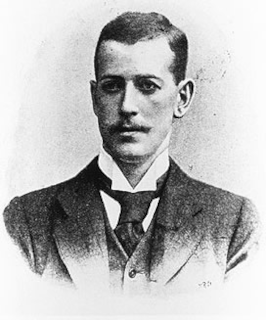
Birth of John Boland, Politician & Olympic Medalist

John Mary Pius Boland, Irish Nationalist politician, is born at 135 Capel Street, Dublin, on September 16, 1870. He serves as a Member of Parliament (MP) in the House of Commons of the United Kingdom of Great Britain and Ireland and as a member of the Irish Parliamentary Party for South Kerry (1900–1918). He is also noteworthy as a gold medalist tennis player at the first modern Olympics in Athens in 1896.

Boland is born to Patrick Boland (1840–1877), businessman, and Mary Donnelly. Following the death of his mother in 1882, he is placed with his six siblings under the guardianship of his uncle Nicholas Donnelly, auxiliary bishop of Dublin.

Boland is educated at two private Catholic schools, one Irish, the second English, and both of whose existence and evolution are influenced by John Henry Newman – the Catholic University School, Dublin, and The Oratory School, Birmingham. His secondary education at the two schools helps give him the foundation and understanding to play an influential role in the politics of Great Britain and Ireland at the beginning of the 20th century, when he is a member of the Irish Parliamentary Party which pursues constitutional Home Rule.

In 1892 Boland graduates with a BA from London University. He studies for a semester in Bonn, Germany, where he is a member of Bavaria Bonn, a student fraternity that is member of the Cartellverband. He studies law at Christ Church, Oxford, graduating with a BA in 1896 and MA in 1901. Although called to the Bar in 1897, he never practises.

Boland is the first Olympic champion in tennis for Great Britain and Ireland at the first modern Olympics, which takes place in Athens in 1896. He visits his friend Thrasyvoulos Manos in Athens during the Olympics, and Manos, a member of the organising committee, enters Boland in the tennis tournament. Boland promptly wins the singles tournament, defeating Friedrich Traun of Germany in the first round, Evangelos Rallis of Greece in the second, Konstantinos Paspatis of Greece in the semifinals, and Dionysios Kasdaglis of Greece in the final.

Boland then enters the doubles event with Traun, the German runner whom he had defeated in the first round of the singles. Together, they win the doubles event. They defeat Aristidis and Konstantinos Akratopoulos of Greece in the first round, have a bye in the semifinals, and defeat Demetrios Petrokokkinos of Greece and Dimitrios Kasdaglis in the final. When the Union Flag and the German flag are run up the flagpole to honour Boland and Traun’s victory, Boland points out to the man hoisting the flags that he is Irish, adding “It’s a gold harp on a green ground, we hope.” The officials agree to have an Irish flag prepared.

Following a visit to Kerry, Boland becomes concerned about the lack of literacy among the native population, as he also has a keen interest in the Irish language.

In 1908, Boland is appointed a member of the commission for the foundation of the National University of Ireland (NUI). From 1926 to 1947, he is General Secretary of the Catholic Truth Society. He receives a papal knighthood, becoming a Knight of St. Gregory in recognition for his work in education, and in 1950 he is awarded an honorary doctorate of Laws by the NUI.

Boland marries Eileen Moloney (1876–1937), daughter of an Australian Dr. Patrick Moloney, at SS Peter and Edward, Palace-street, Westminster, on October 22, 1902. They have one son and five daughters. His daughter Honor Crowley (née Boland) succeeds her husband, Frederick Crowley, upon his death sitting as Fianna Fáil TD for South Kerry from 1945 until her death in 1966. His daughter Bridget Boland is a playwright who writes The Prisoner.

Boland dies at the age of 87 at his home in London on Saint Patrick’s Day, March 17, 1958.


Leave a comment

Death of John Blake Dillon, Founding Member of Young Ireland

John Blake Dillon, Irish writer and politician who is one of the founding members of the Young Ireland movement, dies in Killiney, County Dublin on September 15, 1866.

Dillon is born on May 5, 1814, in the town of Ballaghaderreen, on the border of counties Mayo and Roscommon. He is a son of Anne Blake and her husband Luke Dillon (d. 1826), who had been a land agent for his cousin Patrick Dillon, 11th Earl of Roscommon. His niece is Anne Deane, who helps to raise his family after his death.

Dillon is educated at St. Patrick’s College, Maynooth, leaving after only two years there, having decided that he is not meant for the priesthood. He later studies law at Trinity College, Dublin, and in London, before being called to the Irish Bar. It is during his time at Trinity College that he first meets and befriends Thomas Davis.

While working for The Morning Register newspaper Dillon meets Charles Gavan Duffy, with whom he and Davis found The Nation in 1842, which is dedicated to promoting Irish nationalism and all three men become important members of Daniel O’Connell‘s Repeal Association, which advocates the repeal of the Act of Union 1800 between Great Britain and Ireland.

The young wing of the party, of which they are key members with William Smith O’Brien and Thomas Francis Meagher, come to be known as Young Ireland and advocate the threat of force to achieve repeal of the Act of Union. This is in contrast to the committed pacifism of O’Connell’s “Old Ireland” wing. This posturing eventually leads to the Young Ireland rebellion of 1848 where a countryside devastated by the Great Famine fails to rise up and support the rebels.

According to fellow Irish nationalist, Justin McCarthy, “…it has been said of him that while he strongly discouraged the idea of armed rebellion and had no faith in the possibility of Ireland’s succeeding by any movement of insurrection, yet when Smith O’Brien risked Ireland’s chances in the open field, he cast his lot with his leader and stood by his side in Tipperary.”

After the failure of Young Ireland’s uprising, Dillon flees Ireland, escaping first to France and, eventually, to the United States, where he serves the New York Bar.

Dillon returns to Ireland on amnesty in 1855 and in 1865 is elected as a Member of Parliament for Tipperary. By now he advocates a Federal union of Britain and Ireland and denounces the violent methods advocated by the Irish Republican Brotherhood or Fenian movement.

Dillon dies of cholera on September 15, 1866, in Killiney, County Dublin, at the age of 52, and is buried in Glasnevin Cemetery in Dublin.

Dillon is the father of John Dillon and grandfather of James Dillon.


Leave a comment

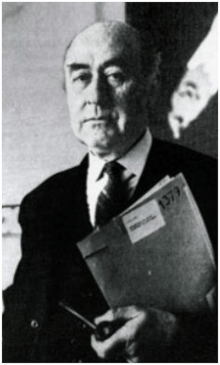
Birth of Niall Ó Dónaill, Irish Language Lexicographer

Niall Ó Dónaill, Irish language lexicographer, is born in Ailt an Eidhinn, Loughanure, County Donegal, on August 27, 1908.

Ó Dónaill is the olderst of the six children of Tarlach Ó Dónaill and Éilis Nic Ruairí from Grial, Loughanure. They own a little land and a few cows. His father spends June to November working in Scotland and dies when he is 13 years old. He himself spends summers working in the tunnels in Scotland.

Ó Dónaill receives his education at Scoil Loch an Iúir in Loughanure before gaining a scholarship to St. Eunan’s College in Letterkenny. Another scholarship takes him to University College Dublin to study Irish, English and History. During his time in university Ó Dónaill spends his summers teaching at Coláiste Bhríde in Rann na Feirste, County Donegal.

Ó Dónaill writes the book Bruigheann Féile which is based on stories of pastimes in the Gaeltacht town Loughanure and its surrounding area. His book Na Glúnta Rosannacha is first published in 1952.

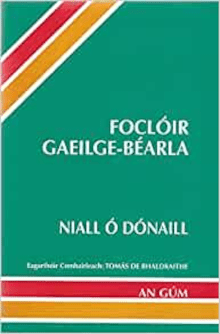
Ó Dónaill is most famous for his work as editor of the 1977 Irish-English dictionary Foclóir Gaeilge-Béarla, which is still widely used today.

In June 1982 Ó Dónaill is awarded a Doctor of Letters (D.Litt) by Trinity College Dublin. He is awarded Gradam an Oireachtais at Oireachtas na Gaeilge in 1980.

Ó Dónaill dies in Dublin on February 10, 1995.


Leave a comment

Birth of Robert Lloyd Praeger, Writer & Librarian

Robert Lloyd Praeger, Irish naturalist, writer and librarian, is born on August 25, 1865 in Holywood, County Down, in what is now Northern Ireland.

From a Unitarian background, Praeger is raised in Holywood and attends the school of the Reverend McAlister and then the nearby Sullivan Upper School.

Praeger works in the National Library of Ireland in Dublin from 1893 to 1923. He co-founds and edits The Irish Naturalist, and writes papers on the flora and other aspects of the natural history of Ireland. He organises the Lambay Survey in 1905-06 and, from 1909 to 1915, the wider Clare Island Survey. He is an engineer by qualification, a librarian by profession and a naturalist by inclination.

Praeger is awarded the Veitch Memorial Medal of the Royal Horticultural Society (RHS) in 1921. He becomes the first President of both An Taisce and the Irish Mountaineering Club in 1948, and serves as President of the Royal Irish Academy (RIA) for 1931–34.

Praeger is instrumental in developing advanced methodologies in Irish botany by inviting Knud Jessen, the acclaimed Danish expert in Glacial and Post-Glacial flora, to undertake research and teaching in Ireland. This leads to the establishment of ‘paleoecology‘ as a distinct field of study in Ireland.

A vice-county system is adopted by Praeger dividing Ireland into forty vice-counties based on the counties. However, the boundaries between them does not always correspond to the administrative boundaries and there are doubts as to the correct interpretation of them.

Praeger dies on May 5, 1953 and is buried in Dean’s Grange Cemetery, Dublin, together with his wife Hedwig. His younger sister Rosamond Praeger is a sculptor and botanical artist.

(Pictured: Portrait of Robert Lloyd Praeger by Sarah Cecilia Harrison, National Museums Northern Ireland)


Leave a comment

Birth of Mervyn Wall, Novelist & Playwright

Mervyn Wall, novelist and playwright who writes under the pseudonym of Eugene Welply, is born in Dublin on August 23, 1908. He attends Belvedere College and works as a civil servant from 1934-48. He is a member of the Irish Academy of Letters.

Wall is probably the last survivor of the remarkably gifted generation which emerged from University College Dublin (UCD) in the 1930s. It includes Brian O’Nolan, Donagh MacDonagh, Cyril Cusack, Liam Redmond, Denis Devlin, Niall Sheridan, and the shortlived poet Charles Donnelly who dies in the Spanish Civil War. Brian O’Nolan/Flann O’Brien’s novel At Swim-Two-Birds contains portraits of many of these people, under fictitious names, and evokes the whole ambience of intellectual student life in Dublin at the time.

Like other literary civil servants of the period, Wall often takes a satirical view of bureaucracy. Unlike Brian O’Nolan, however, he can play the bureaucrats at their own game and by most accounts he is a highly efficient public servant in his own right. His late novel Hermitage (1982) has some sharp sidelights on the world of Green Tape.

Wall makes his mark mainly as a novelist, but he begins as a playwright and has at least two works performed in the Abbey Theatre. His first real success comes in 1946 with The Unfortunate Fursey, in which he creates a mythical monk who is tormented by the Devil. The picaresque humour and fantasy of the story are enjoyed by the public as essentially good-natured farce, but it is possible that he also intends it as oblique satire on the Irish clergy in general, at a time when any open criticism of them might invite trouble. Fergus Linehan later turns it into a successful musical.

The first Fursey book has successors, and all of them are published in a single volume in 1985, entitled The Complete Fursey. During the 1950s Wall writes two “serious” novels of social criticism, Leaves for the Burning and No Trophies Raise, in which his satirical sense takes a more direct route. They are praised at the time by respected critics and are still well worth rereading.

Apart from his writing, Wall has a distinguished career in Radio Éireann, where he and his colleagues, the novelist Francis MacManus and the poet Roibeard O Farachain, make up a literary and administrative trio nicknamed “Frank, Incense and Mer” by a staff wit. He later becomes secretary of the Arts Council, a sometimes-difficult job which he handles with tact and fairness.

Wall is himself a witty, observant, sometimes catty man in a generation famous for its wit. He and his wife Fanny, who is known as a leading music critic, are for decades an almost indispensable duo in Dublin cultural and social life, although Wall, in spite of his various public roles, is at heart a home loving and industrious man who never seeks publicity.

Wall dies on May 19, 1997, just eight months after his wife, in St. Michael’s Hospital, Dún Laoghaire, after a short illness.

If and when a fullscale cultural history of Ireland in the 1940s and 1950s comes to be written, Wall’s place in it should be assured. As a successful, long term civil servant, he learned how to work the system in favour of literature and the arts in an age when patronage of them was thin on the ground.


Leave a comment

Birth of John Keegan “Leo” Casey, the Poet of the Fenians

John Keegan “Leo” Casey, Irish poet, orator and republican known as the Poet of the Fenians, is born in Mount Dalton, County Westmeath on August 22, 1846. He is famous as the writer of the song “The Rising of the Moon” and as one of the central figures in the Fenian Rising of 1867. He is imprisoned by the English and dies on Saint Patrick’s Day in 1870.

Casey is born to a teacher during the height of the Great Famine of 1846. Eight years later he moves to Gurteen, near Ballymahon in County Longford, when his father is given the post of headmaster at the local school. His work would come to be closely associated with Ballymahon.

As a teenager Casey works as an assistant to his father and is expected to follow him into teaching. However, he is disillusioned by the insufficiently nationalistic nature of the curriculum and spends a great deal of time writing poetry. It is at this time, reputedly at the age of fifteen, that he writes his best-known song, “The Rising of the Moon,” which commemorates the Irish Rebellion of 1798.

Following the increasing popularity of his songs and ballads at nationalist gatherings, Casey moves to Dublin in the 1860s and becomes active in the Fenian movement. He is a major contributor to The Nation newspaper, for which he assumes his pen name of ‘Leo.’

In 1866, at the age of 20, Casey publishes a collection of poems, entitled A Wreath of Shamrocks. Most of the poems therein had already been published elsewhere, primarily in The Nation. The further fame engendered by the success of the book leads him to be sought after as a speaker. He addresses mass rallies in Dublin, Liverpool and London that year, in the lead up to the Fenian Rising in 1867.

When the uprising fails, Casey is imprisoned without trial for eight months in Mountjoy Prison. He is released on the understanding that he would leave for Australia and not return to Ireland. However, he chooses to stay on in Summerhill, Dublin in disguise, living as a Quaker and continuing to write and publish in secret.

Casey marries Mary Josephine Briscoe in January 1868 and they have a son Michael, who dies shortly after birth in October 1869. Casey’s health had been broken by the treatment he had received in prison. He falls from a cab on or near O’Connell Bridge in the centre of Dublin in 1870. He dies from his injuries on St. Patrick’s Day, March 17, 1870.

Following his death, Casey is buried in Glasnevin Cemetery. The newspapers report that between fifty and one hundred thousand mourners walk in his funeral procession.


Leave a comment

Birth of George Francis FitzGerald, Academic & Physicist

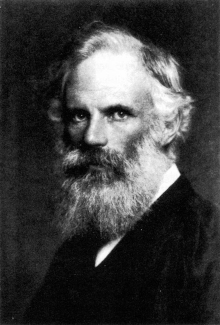
Professor George Francis FitzGerald FRS FRSE, Irish academic and physicist, is born at No. 19, Lower Mount Street in Dublin on August 3, 1851. He is known for his work in electromagnetic theory and for the Lorentz–FitzGerald contraction, which becomes an integral part of Albert Einstein‘s special theory of relativity.

FitzGerald is born to the Reverend William FitzGerald and his wife Anne Frances Stoney. He is the nephew of George Johnstone Stoney, the Irish physicist who coins the term “electron.” After the particles are discovered by J. J. Thomson and Walter Kaufmann in 1896, FitzGerald is the one to propose calling them electrons. He is also the nephew of Bindon Blood Stoney, an eminent Irish engineer. His cousin is Edith Anne Stoney, a pioneer female medical physicist.

Professor of Moral Philosophy at Trinity College Dublin and vicar of St. Anne’s, Dawson Street, at the time of his son’s birth, William FitzGerald is consecrated Bishop of Cork, Cloyne and Ross in 1857 and translates to Killaloe and Clonfert in 1862. George returns to Dublin and enters TCD as a student at the age of sixteen, winning a scholarship in 1870 and graduating in 1871 in Mathematics and Experimental Science. He becomes a Fellow of Trinity in 1877 and spends the rest of his career there, serving as Erasmus Smith’s Professor of Natural and Experimental Philosophy from 1881 to 1901.

Along with Oliver Lodge, Oliver Heaviside and Heinrich Hertz, FitzGerald is a leading figure among the group of “Maxwellians” who revise, extend, clarify, and confirm James Clerk Maxwell‘s mathematical theories of the electromagnetic field during the late 1870s and the 1880s.

In 1883, following from Maxwell’s equations, FitzGerald is the first to suggest a device for producing rapidly oscillating electric currents to generate electromagnetic waves, a phenomenon which is first shown to exist experimentally by the German physicist Heinrich Hertz in 1888.

In 1883, FitzGerald is elected Fellow of the Royal Society. In 1899, he is awarded a Royal Medal for his investigations in theoretical physics. In 1900, he is made an honorary fellow of the Royal Society of Edinburgh.

FitzGerald is better known for his conjecture in his short letter to the editor of Science. “The Ether and the Earth’s Atmosphere” explains that if all moving objects were foreshortened in the direction of their motion, it would account for the curious null-results of the Michelson–Morley experiment. He bases this idea in part on the way electromagnetic forces are known to be affected by motion. In particular, he uses some equations that had been derived a short time before by his friend the electrical engineer Oliver Heaviside. The Dutch physicist Hendrik Lorentz hits on a very similar idea in 1892 and develops it more fully into Lorentz transformations, in connection with his theory of electrons.

The Lorentz–FitzGerald contraction hypothesis becomes an essential part of the Special Theory of Relativity, as Albert Einstein publishes it in 1905. He demonstrates the kinematic nature of this effect, by deriving it from the principle of relativity and the constancy of the speed of light.

FitzGerald suffers from many digestive problems for much of his shortened life. He becomes very ill with stomach problems. He dies on February 22, 1901, at his home, 7 Ely Place in Dublin, the day after an operation on a perforated ulcer. He is buried in Mount Jerome Cemetery.

A crater on the far side of the Moon is named after FitzGerald, as is a building at Trinity College Dublin.


Leave a comment

Birth of David James O’Donoghue, Biographer & Editor

David James O’Donoghue, Irish biographer, editor, and bookseller, is born in Chelsea, London, England on July 22, 1866.

O’Donoghue is born to Irish parents and grows up in the Hans Town area of Chelsea. He is the son of John O’Donoghue, a bricklayer from Kilworth, County Cork, and Bridget Griffin, who is from County Tipperary. He is the third of nine children, and has four brothers, Thomas, John, James, and Edmund, and four sisters, Mary, Ellen, Katherine, and Agnes. He is first an upholsterer‘s apprentice from the age of sixteen before becoming a journalist and author.

O’Donoghue attends a Catholic school and furthers his education at the British Museum. He begins his journalistic work by writing for the Dublin papers upon subjects relating to Irish music, art, and literature. A founder-member of the Irish Literary Society in London, he is also vice president of the National Literary Society, Dublin, and the compiler of a biographical dictionary, The Poets of Ireland (1891–93; revised edition, 1912), with entries on 2,000 authors. His published works also include Irish Poetry of the Nineteenth Century (1894), Humor of Ireland (1894), List of 1300 Irish Artists (1894), The Life and Writings of James Clarence Mangan (1897), Bibliographical Catalogue of Collections of Irish Music (1899), and Geographical Distribution of Irish Ability (1906).

O’Donoghue publishes an edition of James Fintan Lalor‘s writings (1895) and an edition of William Carleton‘s Traits and Stories of the Irish Peasantry (four volumes, 1896–97). He edits the works of Samuel Lover (six volumes, 1898–99) and the prose works (1903) and poems (1904) of James Clarence Mangan. He writes biographies on William Carleton (1896), Richard Pockrich (1899), and Robert Emmet (1902).

In 1896 O’Donoghue moves to Dublin. In 1909 he becomes librarian of University College Dublin. He is co-editor of Catalogue of the Gilbert Library (in Dublin; 1918). William Butler Yeats writes of him in his Autobiographies of William Butler Yeats (1938).

O’Donoghue dies suddenly on June 27, 1917, at his home on Auburn Avenue, Donnybrook, Dublin. He is buried in Dublin’s Glasnevin Cemetery.


Leave a comment

Birth of Astronomer William Edward Wilson

William Edward Wilson, Irish astronomer, is born at Greenisland, County Antrim, on July 19, 1851. He is the only son of John and Frances Wilson of Daramona House, Streete, County Westmeath, and is privately educated.

Wilson becomes interested in astronomy and travels to Oran in 1870 to photograph the solar eclipse. In 1871 he acquires a reflecting telescope of 12 inches (30.5 cm) aperture and sets it up in a dome in the gardens of Daramona House. He uses it to experiment on the photography of the moon with wet plates and also begins to study solar radiation using thermopiles. In 1881, he replaces the original telescope with a Grubb reflector of 24 inches (61 cm) aperture and a new dome and mounting that has an electrically controlled clock drive. The new telescope is mounted in a two-story tower attached to the house with an attached physical laboratory, darkroom and machine shop.

Wilson’s main research effort, in partnership with P.L. Gray, is to determine the temperature of the sun using a “differential radio-micrometer” of the sort developed by C.V. Boys in 1889, which combines a bolometer and galvanometer into one instrument. The result of their measurements is an effective temperature of about 8000 °C for the sun which, after correction to deal with absorption in the earth’s atmosphere, give a value of 6590 °C, compared to the modern value of 6075 °C.

Some of Wilson’s other astronomical projects include observations on the transit of Venus, determination of stellar motion, observations of sunspots and a trip to Spain to photograph a solar eclipse. He takes a great many excellent photographs of celestial bodies such as nebulae. His astronomical findings are published in a series of memoirs such as Experimental Observations on the Effective Temperature of the Sun.

Wilson is elected a fellow of the Royal Astronomical Society in 1875 and a Fellow of the Royal Society in 1896. He receives an honorary doctorate (D.Sc.) from the University of Dublin in June 1901. He serves as High Sheriff of Westmeath for 1894.

Wilson dies on March 6, 1908 at Daramona at the relatively young age of 56, and is buried in the family plot in Steete churchyard. He had married Caroline Ada in 1886, the daughter of Capt. R.C. Granville, and they have a son and two daughters. His son donates his telescope to the University of London, where it is used for research and teaching, finally becoming a feature in Liverpool museum.


Leave a comment

Birth of Joseph Campbell, Poet & Lyricist

Joseph Campbell, Irish poet and lyricist, is born in Belfast on July 15, 1879. He writes under the Gaelic form of his name Seosamh Mac Cathmhaoil (also Seosamh MacCathmhaoil), as Campbell is a common anglicisation of the old Irish name MacCathmhaoil. He is now remembered best for words he supplied to traditional airs, such as “My Lagan Love” and “Gartan Mother’s Lullaby.” His verse is also set to music by Arnold Bax and Ivor Gurney.

Campbell is born into a Catholic and Irish nationalist family from County Down. He is educated at St. Malachy’s College, Belfast. After working for his father he teaches for a while. He travels to Dublin in 1902, meeting leading nationalist figures. His literary activities begin with songs, as a collector in Antrim, County Antrim and working with the composer Herbert Hughes. He is then a founder of the Ulster Literary Theatre in 1904. He contributes a play, The Little Cowherd of Slainge, and several articles to its journal Uladh edited by Bulmer Hobson. The Little Cowherd of Slainge is performed by the Ulster Literary Theatre at the Clarence Place Hall in Belfast on May 4, 1905, along with Lewis Purcell’s The Enthusiast.

Campbell moves to Dublin in 1905 and, failing to find work, moves to London the following year where he is involved in Irish literary activities while working as a teacher. He marries Nancy Maude in 1910, and they move shortly thereafter to Dublin, and then later to County Wicklow. His play Judgement is performed at the Abbey Theatre in April 1912.

Campbell takes part as a supporter in the Easter Rising of 1916, doing rescue work. The following year he publishes a translation from Irish of the short stories of Patrick Pearse, one of the leaders of the Rising.

Campbell becomes a Sinn Féin Councillor in Wicklow in 1921. Later in the Irish Civil War he is on the Republican side, and is interned in 1922-23. His marriage breaks up, and he emigrates to the United States in 1925 where he settles in New York City. He lectures at Fordham University, and works in academic Irish studies, founding the University’s School of Irish Studies in 1928, which lasts four years. He is the editor of The Irish Review (1934), a short lived “magazine of Irish expression.” The business manager is George Lennon, former Officer Commanding of the County Waterford Flying Column during the Irish War of Independence. The managing editor is Lennon’s brother-in-law, George H. Sherwood.

Campbell returns to Ireland in 1939, settling at Glencree, County Wicklow. He dies at Lacken Daragh, Enniskerry, County Wicklow on June 6, 1944.