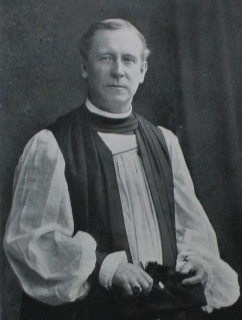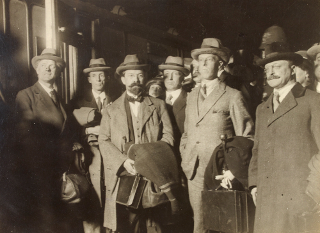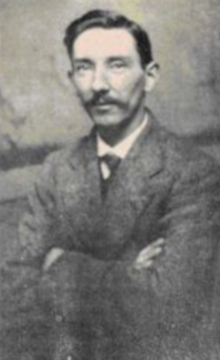
Bernard graduates with a BA in mathematics from Trinity College Dublin in 1880, is elected a Fellow there in 1884, and is later a member of the council of the university, where he holds the office of King’s Lecturer of Divinity from 1888 to 1902.
Bernard is appointed treasurer of St. Patrick’s Cathedral, Dublin, by the DeanHenry Jellett in 1897. On Jellett´s death, in December 1901, Bernard becomes a favorite to succeed him as Dean, a position to which he is elected by the chapter of the cathedral on February 6, 1902. He serves as such until 1911, when he is appointed Bishop of Ossory, Ferns and Leighlin. In 1915 he is appointed Church of Ireland Archbishop of Dublin, serving until 1919.
A prolific scholar, in many fields, including Church history, theology and philosophy, Bernard is the president of the Royal Irish Academy from 1916 to 1921 and Provost of Trinity College Dublin from 1919 to 1927. He is a member of the Board of National Education in Ireland, in which capacity he serves as examiner of mathematics in the 1880s. He is regarded as an unrepentant Unionist, representing their interests as a delegate to the 1917–18 Irish Convention.
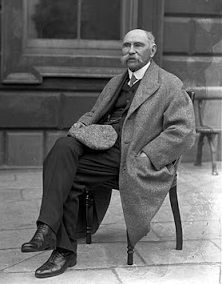
Hyde is born at Longford House in Castlerea, County Roscommon, on January 17, 1860. In 1867, his father is appointed prebendary and rector of Tibohine, and the family moves to neighbouring Frenchpark, in County Roscommon. He is home schooled by his father and his aunt due to a childhood illness. While a young man, he becomes fascinated with hearing the old people in the locality speak the Irish language.
Rejecting family pressure to follow previous generations with a career in the Church, Hyde instead becomes an academic. He enters Trinity College, Dublin, where he gains a great facility for languages, learning Latin, Greek, Hebrew, French, and German, but his great passion in life is the preservation of the Irish language.
After spending a year teaching modern languages in Canada, Hyde returns to Ireland. For much of the rest of his life he writes and collects hundreds of stories, poems, and folktales in Irish, and translates others. His work in Irish helps to inspire many other literary writers, such as W.B. Yeats and Lady Gregory.
In 1892, Hyde helps establish the Gaelic Journal and in November of that year writes a manifesto called The necessity for de-anglicising the Irish nation, arguing that Ireland should follow her own traditions in language, literature, and even in dress.
In 1893, Hyde founds the Gaelic League (Conradh na Gaeilge) along with Eoin MacNeill and Fr. Eugene O’Growney and serves as its first president. Many of the new generation of Irish leaders who play a central role in the fight for Irish independence in the early twentieth century, including Patrick Pearse, Éamon de Valera, Michael Collins, and Ernest Blythe first become politicised and passionate about Irish independence through their involvement in the Gaelic League. Hyde does not want the Gaelic League to be a political entity, so when the surge of Irish nationalism that the Gaelic League helps to foster begins to take control of many in the League and politicize it in 1915, Hyde resigns as president.
In 1938, Hyde is unanimously elected to the newly created position of President of Ireland, a post he holds until 1945. He is inaugurated on June 26, 1938, in the first inaugural ceremony in the nation’s history. He sets a precedent by reciting the Presidential Declaration of Office in Irish. His recitation, in Roscommon Irish, is one of a few recordings of a dialect of which Hyde is one of the last speakers. Upon inauguration, he moves into the long vacant Viceregal Lodge in Phoenix Park, since known as Áras an Uachtaráin.
Despite being placed in a position to shape the office of the presidency via precedent, Hyde by and large opts for a quiet, conservative interpretation of the office.
In April 1940 Hyde suffers a massive stroke and plans are made for his lying-in-state and state funeral, but to the surprise of everyone he survives, albeit paralysed and confined to a wheelchair. One of Hyde’s last presidential acts is a visit to the German ambassador Eduard Hempel on May 3, 1945, to offer his condolences on the death of Adolf Hitler, a visit which remains a secret until 2005.
Hyde leaves office on June 25, 1945, opting not to nominate himself for a second term. He opts not return to his Roscommon home due to his ill-health but rather moves into the former Secretary to the Lord Lieutenant’s residence in the grounds of Áras an Uachtaráin, where he lived out the remaining four years of his life.
Hyde dies in Dublin on July 12, 1949, at age 89. As a former President of Ireland, he is accorded a state funeral which, as a member of the Church of Ireland, takes place in Dublin’s Church of Ireland St. Patrick’s Cathedral. Since contemporary rules of the Roman Catholic Church in Ireland at the time prohibit Roman Catholics from attending services in non-Catholic churches, all but one member of the Catholic cabinet remains outside the cathedral grounds while Hyde’s funeral takes place. Hyde is buried in Frenchpark, County Roscommon at Portahard Church.
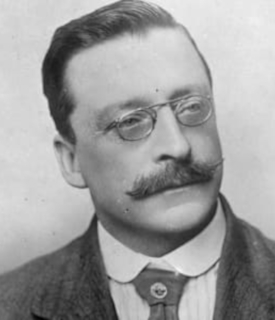
Arthur Joseph Griffith, writer, newspaper editor and politician who founded the political party Sinn Féin, is born in Dublin on March 31, 1871. He leads the Irish delegation at the negotiations that produce the 1921 Anglo-Irish Treaty and serves as President of Dáil Éireann from January 1922 until his death in August 1922.
After a short spell in South Africa, Griffith founds and edits the Irish nationalist newspaper The United Irishman in 1899. In 1904, he writes The Resurrection of Hungary: A Parallel for Ireland, which advocates the withdrawal of Irish members from the Parliament of the United Kingdom and the setting up of the institutions of government at home, a policy that becomes known as Sinn Féin (ourselves). On November 28, 1905, he presents “The Sinn Féin Policy” at the first annual Convention of the National Council. The occasion is marked as the founding date of the Sinn Féin party. Although the organization is still small at the time, Griffith takes over as president of Sinn Féin in 1911.
Griffith is arrested following the Easter Rising of 1916, despite not having taken any part in it. On his release, he works to build up Sinn Féin, which wins a string of by-election victories. At the party’s Ardfheis (annual convention) in October 1917, Sinn Féin becomes an unambiguously republican party, and Griffith resigns the presidency in favour of the 1916 leader Éamon de Valera, becoming vice-president instead. Griffith is elected as a member of parliament (MP) in June 1918, and is re-elected in the 1918 general election, when Sinn Féin wins a huge electoral victory over the Irish Parliamentary Party and refusing to take their seats at Westminster, set up their own constituent assembly, Dáil Éireann.
In the Dáil, Griffith serves as Minister for Home Affairs from 1919 to 1921, and Minister for Foreign Affairs from 1921 to 1922. In September 1921, he is appointed chairman of the Irish delegation to negotiate a treaty with the British government. After months of negotiations, he and the other four delegates sign the Anglo-Irish Treaty, which creates the Irish Free State, but not as a republic. This leads to a split in the Dáil. After the Treaty is narrowly approved by the Dáil, de Valera resigns as president and Griffith is elected in his place. The split leads to the Irish Civil War.
Griffith enters St. Vincent’s Nursing Home, Leeson Street, Dublin, during the first week of August 1922, following an acute attack of tonsillitis. He is confined to his room by his doctors, who had observed signs of what they thought might be a subarachnoid hemorrhage. It is difficult to keep him quiet and he resumes his daily work in the government building. When about to leave for his office shortly before 10:00 AM on August 12, 1922, he pauses to retie his shoelace and falls down unconscious. He regains consciousness but collapses again with blood coming from his mouth. Three doctors render assistance, but to no avail. Father John Lee of the Marist Fathers administers extreme unction, and Griffith expires as the priest recites the concluding prayer. The cause of death, cerebral hemorrhage, is also reported as being due to heart failure. He dies at the age of 51, ten days before Michael Collins‘ assassination in County Cork and two months after the outbreak of the Irish Civil War. He is buried in Glasnevin Cemetery four days later.
Sterling’s post in Ireland ends on March 7, 1934, when he becomes U.S. minister to Bulgaria, a position he remains in until 1936. In 1937, he is appointed to minister roles for both Latvia and Estonia, however he does not accept the post. In 1938, he becomes U.S. minister to Sweden and remains in that role until 1941.
Cumann na mBan is an Irish republican women’s paramilitary organisation formed in Dublin on April 2, 1914, merging with and dissolving Inghinidhe na hÉireann and, in 1916, it becomes an auxiliary of the Irish Volunteers. Although it is otherwise an independent organisation, its executive is subordinate to that of the Volunteers.
On January 7, 1922 the Anglo-Irish Treaty is approved by the Second Dáil by a close vote of 64–57. On February 5 a convention is held to discuss this, and 419 Cumann na mBan members vote against as opposed to 63 in favour. In the ensuing Civil War, its members largely support the anti-Treaty Republican forces. Over 400 of its members are imprisoned by the forces of the Provisional government which becomes in December 1922 the Irish Free State. Some of those who support the Treaty change the name of their branches to Cumann na Saoirse, while others retain their name but give allegiance to the Free State Government.
Cumann na mBan continues to exist after the Treaty, forming (alongside Sinn Féin, the Irish Republican Army, Fianna Éireann and other groups) part of the Irish republican milieu. The government of the Irish Free State bans the organisation in January 1923 and opens up Kilmainham Gaol as a detention prison for suspect women.
Its membership strength is adversely affected by the many splits in Irish republicanism, with sections of the membership resigning to join Fianna Fáil, Clann na Poblachta and other parties. Máire Comerford, a lifelong member from 1914, reflects in later years that it became a “greatly weakened organisation” that “gathered speed downhill” from the founding of Fianna Fáil in 1926.
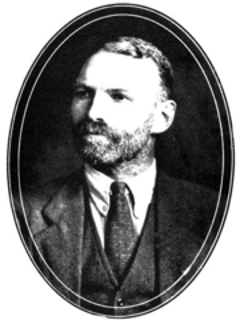
O’Brien moves with his family to Dublin in 1897 and quickly becomes involved in the Irish Socialist Republican Party (ISRP). He is described as “a very significant figure in the ISRP” by ISRP historian David Lynch. He is a member of the Socialist Party of Ireland, serving on its executive.
An important figure in the Labour Party in Ireland in its formative days, O’Brien resists James Larkin‘s attempt to gain control of the Party on release from prison. Taking Larkin to court over his occupation of ITGWU headquarters, the Larkin-O’Brien feud results in a split within the labour and trade union movements, and the formation of the Irish Congress of Trade Unions.
In 1930, O’Brien seeks to have Leon Trotsky granted asylum in Ireland, but the head of the Free State government, W. T. Cosgrave, refuses to allow it.
Active in politics and the trade union movement into his 60s, O’Brien retires in 1946 and dies on October 31, 1968.
The Anglo-Irish Treaty, commonly known as “The Treaty” and officially the “Articles of Agreement for a Treaty Between Great Britain and Ireland,” is an agreement between the government of the United Kingdom of Great Britain and Ireland and representatives of the Irish Republic that concludes the Irish War of Independence. It provides for the establishment of the Irish Free State within a year as a self-governing dominion within the “community of nations known as the British Empire,” a status “the same as that of the Dominion of Canada.” It also provides Northern Ireland, which had been created by the Government of Ireland Act 1920, an option to opt out of the Irish Free State, which it exercises.
The agreement is signed in London on December 6, 1921, by representatives of the Government of the United Kingdom, which includes Prime MinisterDavid Lloyd George, who is head of the British delegates, and by representatives of the Irish Republic including Michael Collins and Arthur Griffith. The Irish representatives have plenipotentiary status (negotiators empowered to sign a treaty without reference back to their superiors) acting on behalf of the Irish Republic, though the British government declines to recognise that status. As required by its terms, the agreement is ratified by “a meeting” of the members elected to sit in the House of Commons of Southern Ireland and separately by the British Parliament.
Éamon de Valera calls a cabinet meeting to discuss the treaty on December 8, where he comes out against the treaty as signed. The cabinet decides by four votes to three to recommend the treaty to Dáil Éireann on December 14. Though the treaty is narrowly ratified, the split leads to the Irish Civil War, which is won by the pro-treaty side.
During the subsequent Irish War of Independence (1919-1921) O’Connor is made Director of Engineering of the Irish Republican Army (IRA) – a military organisation descended from the Irish Volunteers.
O’Connor does not accept the Anglo-Irish Treaty of 1921, which establishes the Irish Free State and abolishes the Irish Republic declared in 1916, which he and his comrades had sworn to uphold. On March 26, 1922, the anti-treaty officers of the IRA hold a convention in Dublin in which they reject the Treaty compromise and repudiate the authority of the Dáil, the elected Irish Parliament. Asked by a journalist if this means they are proposing a military dictatorship in Ireland, O’Connor replies, “you can take it that way if you want.”
On April 14, 1922, O’Connor, with 200 other hardline anti-treaty IRA men under his command, takes over the Four Courts building in the centre of Dublin in defiance of the new Irish government. They want to provoke the British troops, who are still in the country, into attacking them, which they believe will restart the war with Britain and re-unite the IRA against their common enemy. Michael Collins tries desperately to persuade O’Connor and his men to leave the building before fighting breaks out.
On June 28, 1922, after the Four Courts garrison has kidnapped JJ “Ginger” O’Connell, a general in the new Free State Army, Collins shells the Four Courts with borrowed British artillery. O’Connor surrenders after two days of fighting and is arrested and held in Mountjoy Prison. This incident sparks the Irish Civil War as fighting breaks out around the country between pro and anti-treaty factions.
On December 8, 1922, along with Liam Mellows, Richard Barrett and Joe McKelvey, three other republicans captured with the fall of the Four Courts, Rory O’Connor is executed by firing squad in reprisal for the anti-treaty IRA’s killing of Free State member of parliament Sean Hales. The execution order is given by Kevin O’Higgins, who less than a year earlier had appointed O’Connor to be best man at his wedding, symbolising the bitterness of the division that the Treaty has caused. O’Connor, one of 77 republicans executed by the Cumann na nGaedheal government of the Irish Free State, is seen as a martyr by the Republican movement in Ireland.
As a historian of sixteenth- and seventeenth-century Ireland, Bagwell works for nearly sixty years to produce his two three-volume works, Ireland under the Tudors (1885–90) and Ireland under the Stuarts (1909–16), using manuscript sources throughout. He is the first to treat this period in a systematic and scholarly fashion. For this solid work he is made Member of the Royal Irish Academy (MRIA) and honoured by the University of Dublin and the University of Oxford in 1918. He also writes the historical entry on “Ireland” for the Encyclopædia Britannica (Chicago 1911).
A one-time liberal, Bagwell is a founder member (1885) of the Irish Loyal and Patriotic Union, renamed the Irish Unionist Alliance (IUA) in 1891. A “diehard” unionist, he is one of the most prominent and respected southern unionists. A tireless political publicist, he is an assiduous letter-writer to the newspapers, a didactic pamphleteer, and a regular speaker at political meetings throughout Ireland. He opposes the majority report of the Irish Convention (1917) and is one of the original signatories of the “Call to unionists” that splits the IUA.
Bagwell serves as a Commissioner on National Education between 1905 and 1918 and a member of the Patriotic Union (Southern Unionists). He holds the position of High Sheriff of Tipperary in 1869. He is a Justice of the Peace for County Tipperary, and later for County Waterford, and holds the office of Deputy Lieutenant of Tipperary. He is also Special Local Government Commissioner between 1898 and 1903 and President of the Borstal Association of Ireland.
Bagwell marries Harriet Philippa Joscelyn, fourth daughter of P. J. Newton of Dunleckney Manor, County Carlow, on January 9, 1873. The couple has one son, John Philip Bagwell, and three daughters, Emily Georgiana, Margaret and Lilla Minnie.
Richard Bagwell dies one hundred years ago today on December 4, 1918 at Marlfield, having suffered from gout for many years.
Keating is born on January 2, 1902, in Castlemaine, County Kerry. He receives his education in local schools, including the Christian Brothers’ School in Tralee. Tralee is also the place where Keating does his apprenticeship. During this time, he becomes a skillful Gaelic football player in his native Kerry.
Keating joins Fianna Éireann in 1918. In 1920, during the Irish War of Independence, he joins the Boherbee B Company, 3rd Battalion, 1st Kerry Brigade, Irish Republican Army (IRA). He first brings a firearm of a Liverpool Irish soldier of the British Army into a public house in which he works. On April 21, 1921, Royal Irish Constabulary (RIC) Constable Denis O’Loughlin is shot dead in Knightly’s public house in Tralee. Keating, Jimmy O’Connor and Percy Hanafin are suspected of the killing and are forced to go on the run. On June 1, Keating is involved in an ambush between Castlemaine and Milltown which claims the lives of five RIC men. On July 10, a day before the truce between the IRA and British forces, his unit is involved in a gun battle with the British Army near Castleisland. This confrontation results in the deaths of four British soldiers and five IRA volunteers.
Keating remains an IRA member for a long time after the Civil War. He is arrested several times during the 1930s on various charges. He is active in London during the 1939/1940 IRA bombing campaign.
In 1933, Keating is involved in an attempt to assassinate the leader of the Irish Blueshirts, Eoin O’Duffy, during a visit to County Kerry. The attack is to happen at Ballyseedy, where Free State forces had carried out the Ballyseedy Massacre during the Irish Civil War. However, the plot fails when the person travelling with O’Duffy refuses to divulge in which car O’Duffy would be riding.
Keating subsequently returns to Dublin and works as a barman in several public houses. He retires and returns to his native Kerry in 1978, living out the rest of his life with relatives in Knockbrack. Until his death he refuses to accept a state pension because he considers the 26-county Republic of Ireland an illegitimate state which usurps the 1916 Irish Republic.
“All the talk you hear these days is of peace. But there will never be peace until the people of the 32 counties elect one parliament without British interference.”
In 2002, Keating refuses the state’s standard €2,500 award to centenarians from PresidentMary McAleese. After former IRA volunteer George Harrison dies in November 2004, Keating becomes patron of Republican Sinn Féin until his own death. At the time of his death at the age of 105 on October 2, 2007, he is the oldest man in Ireland. He is buried in Kiltallagh Cemetery, Castlemaine.