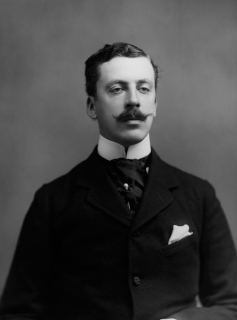
Hamilton is born in Hamilton Place, Piccadilly, London, on November 30, 1869. Styled Marquess of Hamilton between 1885 and 1913, he is a British peer and Unionist politician. He serves as the first Governor of Northern Ireland, a post he holds between 1922 and 1945. He is a great-grandfather of Diana, Princess of Wales.
In early 1901 he accompanies his father on a special diplomatic mission to announce the accession of King Edward to the governments of Denmark, Sweden and Norway, Russia, Germany, and Saxony.
Hamilton dies at his London home on September 12, 1953, and is buried at Baronscourt in County Tyrone.
(Pictured: “James Albert Edward Hamilton, 3rd Duke of Abercorn” by Alexander Bassano, Collodion Negative, 1894, Photographs Collection, National Portrait Gallery, London)
The move paves the way for Sinn Féin’s first face-to-face talks with British Cabinet ministers since 1921, when the country was partitioned. Sinn Féin leader Gerry Adams, chief negotiator Martin McGuinness and party secretary Lucilita Bhreatnach agree behind closed doors at Stormont Castle in east Belfast to abide by the guiding principles underlying the Northern Ireland all-party talks.
Democratic and peaceful means of resolving political issues. Total disarmament of all paramilitary organizations. The disarmament must be verifiable to the satisfaction of an independent commission.
Renounce for themselves and oppose any effort by others to use force or threaten to use force to influence the course or outcome of all-party negotiations.
Abide by the terms of any agreement reached in all-party negotiations and to resort to democratic and exclusively peaceful methods in trying to alter any aspect of that outcome with which they may disagree.
Urge that “punishment” killings and beatings stop, and take effective steps to prevent such actions.
Sinn Féin pledges to honor the Mitchell Principles exactly 51 days after the IRA stopped its decades-old violent campaign against British rule of Northern Ireland. “This is a watershed. There is an expectation and understanding out there of the importance of this moment,” Adams says.
Paul Murphy, minister for political development in the province, says the Sinn Féin pledge marks a new phase in the peace process. “The significance I am sure is that we are now entering a new era … in the sense that the gun is going out of politics in Northern Ireland and that here Sinn Féin is ascribing to those principles of nonviolence, of democratic government.”
“I believe people outside these buildings, outside Stormont, are of the view that enough is enough, and that change must come,” Murphy adds. “But that change must be change which encompasses everybody’s aspirations and which will last for generations.”
The pledge to honor the Mitchell Principles means that the ten parties involved can proceed with round-table talks on the future of Northern Ireland on Monday, September 15, as planned.
However, two mainstream Protestant parties that favor continued British rule of Northern Ireland, the Democratic Unionist Party (DUP) and the UK Unionist Party (UKUP), plan to boycott the talks. In addition, the powerful Ulster Unionist Party (UUP), is expected to decide on Saturday, September 13, whether to attend the crucial new round of negotiations.
In a statement, the Ulster Unionists call Sinn Féin’s commitment “a charade.” “The subscription of Sinn Féin to the Mitchell Principles will completely lack credibility. Actions matter much more than words,” the statement says.
The London and Dublin governments agree that sovereignty in Northern Ireland can only be changed through the ballot box. While Protestants generally are determined to remain British, most Catholics favor making Northern Ireland part of Ireland.
(From: “Sinn Fein gains access to Northern Ireland talks” on CNN.com, http://www.cnn.com, September 9, 1997)
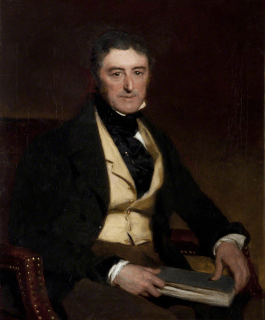
William Sharman Crawford, Irish politician with liberal and radical views, is born William Sharman on September 3, 1780 in at Moira Castle in County Down.
Sharman is the eldest son of Colonel William Sharman, for many years a member of the Parliament of Ireland for Lisburn, who dies in 1803 leaving him large estates. In 1805 he marries a wealthy heiress, Mabel Fridiswid Crawford, whose surname and arms he adds to his own.
Sharman Crawford supports Catholic Emancipation and the rights of tenants. He is also a member of the landed gentry. He is High Sheriff of Down for 1811. He is a member of the Parliament of the United Kingdom for Dundalk in 1835–37 and for Rochdale in 1841–52. He greatly increases the prosperity of the tenants on his large estates by extending and confirming the Ulster custom of tenant-right. The main objective of his long parliamentary career is to give legal effect to this right and extend it to other parts of Ireland.
Sharman Crawford is the father of James Sharman Crawford, member of the Parliament of the United Kingdom for Down, (1874-78), Arthur Sharman Crawford, unsuccessful candidate for Down in 1884 and John Sharman Crawford, unsuccessful candidate for Down in 1880. His daughter is Mabel Sharman Crawford, adventurer, feminist and writer.
Sharman Crawford dies unexpectedly and peacefully at Crawfordsburn, County Down on October 17, 1861. He is buried in the family vault at Kilmore, County Down, where there is a monumental inscription. A great stone obelisk is erected in his memory on a hill at Rademon Estate, near Crossgar, County Down.
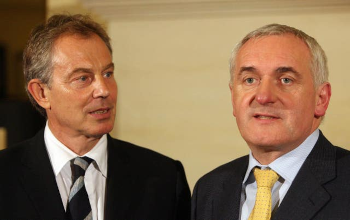
Leading the way in a return to the past is Ahern’s Dublin government, which has introduced the toughest anti-terrorist legislation in the history of the Irish Republic. He concedes that the measures are draconian but says that his government is determined to do everything in its power, “working closely with the British government to defeat and suppress this murderous conspiracy against the people of Ireland.”
Prime Minister Blair promises that he too plans to introduce extreme measures. “We will bring in similar measures to those proposed by the Irish government, so we will then have the toughest anti-terrorist measures for the whole of Ireland, the Republic and Northern Ireland, that we have ever seen.”
With no plans to recall the British parliament, it is thought that existing legislation will be applied, since it already includes measures similar to those announced by the Irish government.
Oppressive British legislation has sustained British rule in Ireland for decades. This includes internment without trial, non-jury courts, entry and search of homes without a warrant, seven-day detention with unrecorded and unsupervised interrogation, denial of access to lawyers, exclusion orders and more. Most of these are still in use in 1998.
The Ahern package includes withdrawal of a suspect’s right to silence — refusal to answer questions can be used as evidence that a suspect is a member of an illegal organisation, the seizure of property that has been used for storing weapons or making bombs, and the creation of a new offence of directing an unlawful organisation. This is expected to carry the penalty of life imprisonment.
Omagh is 75% nationalist, with good cross-community relations, and has largely escaped the worst of the conflict. Although Republican dissidents have carried out a spate of similar bombings in the previous year, the towns targeted are mainly Unionist and further east.
The group that claims responsibility for the Omagh bombing is the Real IRA, which was formed in protest at the IRA’s 1997 cease-fire. Irish police have insisted that the Real IRA is the military wing of the recently formed 32 County Sovereignty Movement (32CSM), although this is denied by that organisation.
Although both the INLA and the Real IRA have declared a unilateral cease-fire since the Omagh bombing, media focus has settled on Bernadette Sands McKevitt, sister of the 1980s IRA hunger strikerBobby Sands, who is a leading figure in the 32 County Sovereignty Movement. Sands-McKevitt has condemned the Omagh bombing, but her home in Blackrock, County Louth, has since been targeted by local townspeople who have staged protests against her and her family. She has also been denied a visa to enter the United States on a speaking tour.
The Omagh bombing could not have come at a better time for Britain. With the war formally over and Sinn Féin penned, the bombing delivers an opportunity to smash the Republican left once and for all and wrench it from any semblance of ongoing support in Ireland.
All nationalist opponents of the Good Friday Agreement must now cope with being stained by the blood of Omagh. With the massive referendum vote in favour of peace to back them up, the British and Irish governments can be satisfied that the Good Friday Agreement now looks more in place than at any other time. As one nationalist describes the situation, “If the Good Friday Agreement was a defeat for the cause of Irish nationalism, the Omagh bombing has turned it into a rout.”
(From: “Blair, Ahern make the most of Omagh bomb” by Dave Riley, Green Left (www.greenleft.org), August 26, 1998)
From a Unitarian background, Praeger is raised in Holywood and attends the school of the Reverend McAlister and then the nearby Sullivan Upper School.
Praeger works in the National Library of Ireland in Dublin from 1893 to 1923. He co-founds and edits The Irish Naturalist, and writes papers on the flora and other aspects of the natural history of Ireland. He organises the Lambay Survey in 1905-06 and, from 1909 to 1915, the wider Clare Island Survey. He is an engineer by qualification, a librarian by profession and a naturalist by inclination.
Praeger is instrumental in developing advanced methodologies in Irish botany by inviting Knud Jessen, the acclaimed Danish expert in Glacial and Post-Glacial flora, to undertake research and teaching in Ireland. This leads to the establishment of ‘paleoecology‘ as a distinct field of study in Ireland.
A vice-county system is adopted by Praeger dividing Ireland into forty vice-counties based on the counties. However, the boundaries between them does not always correspond to the administrative boundaries and there are doubts as to the correct interpretation of them.
Praeger dies on May 5, 1953 and is buried in Dean’s Grange Cemetery, Dublin, together with his wife Hedwig. His younger sister Rosamond Praeger is a sculptor and botanical artist.
(Pictured: Portrait of Robert Lloyd Praeger by Sarah Cecilia Harrison, National Museums Northern Ireland)
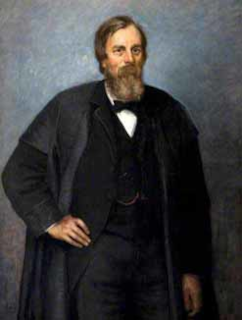
Purser is the son of John Tertius Purser (1809–1893), the general manager of the well known A Guinness, Son & Co. brewery, and Anna Benigna Fridlezius (1803-1881). He is educated in a wealthy family, which includes artists, as his cousin Sarah Purser, or engineers, as his brother-in-law John Purser Griffith. He is the brother of mathematician Frederick Purser. He receives his early education at the private boarding school run by his uncle, Dr. Richard W. Biggs, at Devizes, Wiltshire. He completes his schooling at Devizes and begins his university studies at Trinity College, Dublin, graduating BA in mathematics in 1856. He is the best mathematician of his year at the University and in 1855 he gains the Lloyd Exhibition.
Purser becomes a tutor to the four sons of William Parsons, 3rd Earl of Rosse (1800-1867) in 1857. Lord Rosse’s 72-inch reflecting telescope, built in 1845 and colloquially known of as the “Leviathan of Parsonstown,” is the world’s largest telescope when it is built and continues to hold this distinction until the early 20th century. As well as acting as tutor to the children, Purser does become involved in Lord Rosse’s interest in astronomy but never does any observing.
In 1863, Purser is appointed professor of mathematics at Queen’s College, Belfast, a position he maintains until his retirement in 1901.
Purser never marries. When his father dies on April 5, 1893, Rathmines Castle passes to him. He dies at Rathmines Castle on October 18, 1903, a very wealthy man. In his will he leaves £100,000 to his brother Frederick Purser, £40,000 to his sister Anna Griffith and £5,000 to each of her children. In addition to the money, he owns property in Blessington Street, Essex Street and Eustace Street which he leaves to his brother-in-law John Purser Griffith. Other properties and interests that he owns he divides between his brother Frederick and his sister Anna. After his death, his sister Anna and her husband John Purser Griffith move into Rathmines Castle although, at this time, its ownership has gone to Frederick Purser. After Frederick dies in August 1910, the Castle and his considerable wealth passes to Anna.
(Pictured: Portrait of John Purser painted by the artist Sarah Purser, daughter of Tertius Purser’s brother Benjamin Purser. The portrait hangs in Queen’s College, Belfast.)
John Joseph “Rinty” Monaghan, world flyweightboxing champion from Belfast, is born on August 21, 1918. He becomes famous in the post-war period, eventually rising to become undisputed world champion and a hero to many people in his home city.
Born in Lancaster Street in north Belfast, Monaghan attends St. Patrick’s Christian Brothers’ School in Donegall Street. A noted fighter at boys’ level, he entereds the paid ranks in his mid-teens. After a short period of wartime service, he resumes his career and his burgeoning reputation draws huge crowds from all parts of Belfast. In particular, bouts at Belfast’s King’s Hall are the highlight with that venue normally packed to the rafters.
In October 1947, the National Boxing Association world crown becomes Monaghan’s after outpointing American Salvador “Dado” Marino at Harringay Stadium for the vacant title. The mantle of undisputed champion of the world rests on his shoulders after he defeats the tough Scottish fighter Jackie Paterson on March 23, 1948. Paterson is to prove one of his major adversaries.
By the time that a long-standing chest complaint forces his retirement as champion in 1950, Monaghan’s trophy cabinet contains the British, European, Commonwealth and World crowns. Of the 66 official bouts he fights during his illustrious career, he wins 51, draws 6 and loses 9. He endears himself to his supporters after his fights by singing “When Irish Eyes Are Smiling” to the King’s Hall audience, which joins in the singing.
Monaghan’s nickname “Rinty” comes from his fondness for dogs. According to his daughter Martha, he brought home injured dogs so often that his grandmother called him Rin Tin Tin, after the film dog, and shortened it to Rinty.
Monaghan marries Frances Thompson in 1938 and moves to nearby Sailortown. He has three daughters, Martha, Rosetta and Collette, and one son, Sean. In later life he has a variety of jobs but remains true to his working-class roots and stays in Belfast. He dies at his home in Little Corporation St. on March 3, 1984, at the relatively young age of 65. He is buried in Belfast City Cemetery.
To mark the influence of this “home-town hero”, the Ulster History Circle and Belfast City Council provide a plaque in Monaghan’s honour at the King’s Hall that is unveiled, in the presence of many of his family circle and friends, on May 3, 2007.
Belfast City Council erects a statue to Monaghan at Cathedral Gardens on August 20, 2015. The 10-foot high bronze statue on a granite plinth is designed by Alan Beattie Herriot and features Monaghan holding a microphone and singing “When Irish Eyes Are Smiling.”
In 1987 Clarke plays collegiate golf at Wake Forest University in the United States. He is a junior member of Dungannon Golf Club, whose junior section also includes three others who are current PGA Golf Professionals: Alistair Cardwell, Barry Hamill and Gary Chambers. He represents his school, Royal School Dungannon, together with Cardwell and Chambers.
A stalwart of the European Tour since 1991, Clarke is no stranger to firsts. In the 1999 Smurfit European Open he becomes the first player on the European Tour to shoot 60 for a second time, having achieved it first in the 1992 European Monte Carlo Open. In 2002 he becomes the first player to win the English Open three times and in 2003 becomes the first player outside Tiger Woods to capture more than one World Golf Championships title.
Three weeks after the untimely death of his wife, Heather, to cancer in August 2006, Clarke is picked as one of the wild cards for the Ryder Cup at K Club. In an emotionally charged week he produces one of his most memorable performances, winning all three of his matches.
Clarke assures his place in history by earning a place in the renowned ‘Who’s Who‘ guide for 2008, and in 2005 he even appears on an Irish postage stamp. A difficult 2007, where he juggles looking after his two sons with his golf regime, sees him slip down the rankings, but he begins to find his form again in South Africa before the winter break.
In 2010 Clarke beats a world-class field in the J. P. McManus Invitational Pro-Am at Adare Manor in Ireland where he has a one-shot victory over Luke Donald. He secures his spot in the 139th Open Championship at the Old Course at St. Andrews by finishing second in the Barclays Scottish Open. He finishes 30th in the European Tour Race. He rounds off 2010 in great style with the announcement of his engagement to Alison Campbell.
In February 2015, Clarke is named as Europe’s Ryder Cup captain and dedicates the next 18 months to the role. Ultimately, Europe is beaten 17-11 by the United States at Hazeltine National Golf Club.
A dedicated worker for charity, Clarke sets up his own Darren Clarke Foundation, which not only helps further the development of junior golf in Ireland, but also now raises money for Breast Cancer Awareness.
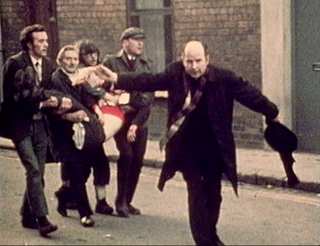
During his time in Derry, Daly takes part in the civil rights marches. He has first-hand experience of the Battle of the Bogside in 1969, the early years of the Troubles, internment, and the events of Bloody Sunday, in which British soldiers fire on unarmed protesters on January 30, 1972, killing 14 people. He becomes a public figure after he is witnessed using a blood-stained handkerchief as a white flag in an attempt to escort 17-year-old Jackie Duddy, a wounded protester, to safety. Duddy dies of his injuries soon after and Daly administers the last rites. He later describes the events as “a young fella who was posing no threat to anybody being shot dead unjustifiably.”
Daly gives an interview to the BBC in which he insists, contrary to official reports, that the protesters were unarmed. He testifies as such to the Widgery Tribunal, though he also testifies that he had seen a man with a gun on the day, to the anger of some of those involved. The Widgery Report largely exonerates the British Army, perpetuating the controversy. Years later, he says that the events of Bloody Sunday were a significant catalyst to the violence in Northern Ireland, and that the shootings served to greatly increase recruitment to the Irish Republican Army (IRA).
Prior to Bloody Sunday, Daly is sympathetic to the “old” IRA, of which his father was a member, but the events of Bloody Sunday leave him of the opinion that “violence is completely unacceptable as a means to a political end,” which leads to tension with the Provisional Irish Republican Army throughout his career.
Daly is appointed Bishop of Derry in 1974, a position he holds until he is forced to retire in October 1993 after suffering a stroke. He continues in the role of chaplain to Derry’s Foyle Hospice until February 2016.
Daly makes headlines in 2011 when he says there needs to be a place in the modern Catholic Church for married priests. He addresses the controversial issue in his book about his life in the Church, A Troubled See. Allowing clergymen to marry would ease the church’s problems, he says.
Daly is awarded the Freedom of the City by Derry City Council in 2015 in a joint ceremony with Bishop James Mehaffey, with whom he had worked closely while the two were in office. He is “hugely pleased to accept [the award], particularly when it is being shared with my friend and brother, Bishop James.” The city’s mayor, Brenda Stevenson, announces that the joint award is in recognition of the two bishops’ efforts towards peace and community cohesion.
Daly dies on August 8, 2016, at Altnagelvin Area Hospital in Derry, having been admitted after a fall several weeks previously. He had also been diagnosed with cancer. He is surrounded by family and local priests.
Daly’s remains are taken to St. Eugene’s Cathedral, where he lay in state with mourners able to file past. His coffin is sealed at midday on August 11, 2016, and buried after Requiem Mass in the grounds of St. Eugene’s Cathedral alongside his predecessor as Bishop of Derry, Neil Farren. The bells of the cathedral toll for one hour on the morning of Daly’s death while many local people arrived to pay tribute. The mayor of Derry, Hilary McClintock, opens a book of condolence in the city’s guildhall for members of the public to sign. The funeral, conducted by the incumbent Bishop of Derry Donal McKeown, is attended by multiple religious and political leaders from across Ireland and retired leaders from throughout his career. A message from Pope Francis is read aloud at the beginning of the service. Hundreds of members of the public also attend the funeral, some lining the route from the cathedral to the gravesite. His coffin is greeted with applause as it is carried out of the cathedral for burial.
(Pictured: Father Edward Daly, waving a blood-stained white handkerchief as he escorts a mortally-wounded protester to safety during the events of Bloody Sunday (1972) in Derry, Northern Ireland, an image which becomes one of the most recognisable moments of the Troubles)
Nationalist residents of Belfast’s Lower Ormeau Road vote overwhelmingly on August 4, 2000, against allowing Orange Order parades through the flashpoint district. Results indicate that over 90% of those polled in a secret vote on the mainly nationalist lower Ormeau area of south Belfast want such parades rerouted.
The nationalist residents’ group, the Lower Ormeau Concerned Community (LOCC), which organised the ballot, says the majority of the 600 people who voted want the parades rerouted. In a statement it says it welcomes the result as “an overwhelming and democratic expression of our community’s desire to live free from sectarian harassment”.
LOCC spokesman Gerard Rice says, “We do not claim to speak for loyalist residents.” He adds that the loyal orders will now have to listen to the people of the area. “The whole point in this exercise was not to vindicate our position, but to set out clearly an informed position as to what exactly the opinion in our community is and has been for many years,” he tells BBC Radio Ulster.
“The Orange Order and other loyal institutions have said for many, many years that really people living on the Ormeau Road want parades. That they are actually a colourful event that people can enjoy. We have said that many people within our community would say parades by the loyal institutions were seen as sectarian, coat trailing exercises, the institutions were seen as anti-Catholic and sectarian organisations. Now we can actually say that 95.9% of our community believe that to be true.”
However, the Belfast County Grand Master of the Orange Order rejects the results of the poll. Dawson Baillie says the vote was unrepresentative because it did not include the staunchly loyalist Donegall Pass area and the Ballynafeigh district above the Ormeau Bridge. “We believe that it’s our right and everyone’s right to walk down a main thoroughfare. We’re not going into side streets on the right-hand side of that part of the Ormeau Road or the left-hand side. We go straight down the main thoroughfare. Our parade at any given point would take no more than three to four minutes to pass.”
Unionists question the validity of the poll as it excludes nearby loyalist areas. Dawn Purvis of the Progressive Unionist Party says the poll would not help to resolve the situation. “You don’t get people to enter into talks on the basis of no parade. You get people to enter into talks on the basis of an accommodation,” she says. “If that poll had been held to show what concerns the people of Lower Ormeau have over loyal order parades, that would have been better, that would have been a way forward, trying to address the concerns of the residents of the Lower Ormeau Road. LOCC have not been forthcoming with those concerns, so the talks haven’t moved forward.”
Reverend Martin Smyth, the Belfast SouthMP, says it had been “a stage-managed exercise” to show how well the group could conduct their business in that area and “to gather support from those who don’t want a procession down that road.”
However, Rice rejects the suggestions that it is unrepresentative because loyalist areas had been left out. Another LOCC representative, John Gormley, says they would welcome equivalent ballots from the loyalist part of the Ormeau area.
Local parish priest Father Anthony Curran says he is satisfied with the conduct of the vote. “A large number of people seem to have come out, a very broad section of the community, elderly young middle-aged, sick. They came free from fear and intimidation.”
A similar poll was last conducted in the Lower Ormeau area in 1995 by management consultants Coopers & Lybrand, when a large majority voted against allowing loyalist marches in the area.