Brakey Orange Hall had been destroyed in an arson attack on July 13, 2000, but had since been rebuilt and reopened in 2004. Further extensions and improvements have been made since, with the latest recently completed in time for the occasion.
Approximately 50 local people, many of the men in their orange lapels and other regalia, pack the little hall to honour their guest. Placing the visit in a wider context, McAleese says the “journey of peace-building and peace-making” since the signing of the Belfast Agreement ten years earlier must continue, and calls for a new culture of tolerance and acceptance in both parts of Ireland.
McAleese is welcomed by Cavan County Grand Master Henry Latimer, who praises the financial support for Orange halls in Border counties provided by the Government. He outlines to the President and her husband, Dr. Martin McAleese, the close bond between local communities and Orange halls and the facilities provided for meetings, classes and social events. “Given the widespread nature of such activity, it demonstrates why when halls are damaged, attacked, destroyed or [placed] beyond use for periods of time, the community activity of its related hinterland suffers and is curtailed,” he adds.
McAleese hails the occasion as an example of fresh understanding in relationships between different traditions. “We have taken the first important steps towards ending the bitter culture of ‘either-or,’ of them versus us,” she says. She calls on Irish people everywhere “to build a new culture . . . each accepting that there are different perspectives and practices.”
McAleese praises Latimer as a good Cavan man, a good Irishman and a good Orangeman. The burning of Orange halls, she says, are “intemperate acts of vandalism” which are “a throw-back to another time.”
Appealing for an end to attacks on Orange halls and GAA clubs by arsonists McAleese adds, “I invite them all to stop and think how wonderfully transformed all our lives would be if we were all made as welcome in each other’s homes as I have been made welcome here.”
McAleese receives a bouquet of flowers and a piece of Cavan crystal to mark her visit. She later attends other engagements throughout Cavan.
(From: “President makes first official visit by Irish head of state to an Orange hall” by Dan Keenan, The Irish Times, November 28, 2008)
The Representation of the People Act 1918, passed on February 6, 1918, extends the franchise in parliamentary elections, also known as the right to vote, to women aged 30 and over who reside in the constituency or occupied land or premises with a rateable value above £5, or whose husbands do.
In March 1918, the Liberal Party MP for Keighley dies, causing a by-election on April 26. There is doubt as to whether women are eligible to stand for parliament. Nina Boyle makes known her intention to stand as a candidate for the Women’s Freedom League at Keighley and, if refused, to take the matter to the courts for a definitive ruling. After some consideration, the returning officer states that he is prepared to accept her nomination, thus establishing a precedent for women candidates. However, he rules her nomination papers invalid on other grounds: one of the signatories to her nomination is not on the electoral roll and another lives outside the constituency. The Lords of Appeal in Ordinary are asked to consider the matter and conclude that the Great Reform Act 1832 had specifically banned women from standing as parliamentary candidates and the Representation of the People Act had not changed that.
Parliament hurriedly passes the Parliament (Qualification of Women) Act in time to enable women to stand in the general election of December 1918. The act consists of only 27 operative words: “A woman shall not be disqualified by sex or marriage for being elected to or sitting or voting as a Member of the Commons House of Parliament.”
The first woman to take her seat in the House of Commons is Nancy Astor on December 1, 1919. She is elected as a Coalition Conservative MP for Plymouth Sutton on November 28, 1919, taking the seat her husband had vacated.
The Articles of Confederation is approved, after much debate between July 1776 and November 1777, by the Second Continental Congress and sent to the states for ratification. The Articles come into force on March 1, 1781, after being ratified by all thirteen states. A guiding principle of the Articles is to preserve the independence and sovereignty of the states. The weak central government established by the Articles receives only those powers which the former colonies had recognized as belonging to king and parliament.
The document provides clearly written rules for how the states’ “league of friendship” is to be organized. During the ratification process, the Congress looks to the Articles for guidance as it conducts business, directs the war effort, conducts diplomacy with foreign nations, addresses territorial issues and deals with Native American relations. Little changes politically once the Articles of Confederation go into effect, as ratification does little more than legalize what the Continental Congress had already been doing. That body is renamed the Congress of the Confederation however most Americans continue to call it the Continental Congress, since its organization remains the same.
As the Confederation Congress attempts to govern the continually growing American states, delegates discover that the limitations placed upon the central government render it ineffective at doing so. As the government’s weaknesses become apparent, especially after Shays’ Rebellion, some prominent political thinkers in the fledgling nation begin asking for changes to the Articles. Their hope is to create a stronger national government.
Initially, some states meet to deal with their trade and economic problems. However, as more states become interested in meeting to change the Articles, a meeting is set in Philadelphia on May 25, 1787. This becomes the Constitutional Convention. It is quickly agreed that changes will not work, and instead the entire Articles needs to be replaced. On March 4, 1789, the government under the Articles is replaced with the federal government under the Constitution of the United States. The new Constitution provides for a much stronger federal government by establishing a chief executive (the President), courts, and taxing powers.
Máiría Cahill is elected to Seanad Éireann on November 13, 2015 after winning a by-election held to fill the seat left vacant after the resignation of the Labour Party‘s Jimmy Harte. She wins 122 of the 188 valid votes cast in an election in which only Teachta Dálas (TDs) and Senators can cast a vote.
Cahill is born in 1981 into a prominent republican extended family in West Belfast. Her great-uncle Joe Cahill is one of the founders and chief of staff of the Provisional Irish Republican Army (IRA) in the 1970s. She is a cousin of both Siobhán O’Hanlon, a prominent republican activist in the IRA and later in Sinn Féin until her death in 2006, and her sister Eilis O’Hanlon, a political commentator for the Irish Independent and critic of both the IRA and Sinn Féin. She also claims her grandfather recruited Gerry Adams into the IRA.
Cahill is elected National Secretary of Ógra Shinn Féin and works for Sinn Féin between 1998 and 2001. She quits Sinn Féin in 2001 when she moves to the United States. She later returns and works on two election campaigns for the party before growing disillusioned at her treatment and leaving for good.
In February 2015, Cahill receives a James Larkin Thirst for Justice award from the Irish Labour Party. In November 2015, she receives a Special Recognition Award in the Irish Tatler‘s Woman of the Year Awards.
In October 2015, Labour Party leader Joan Burton announces Cahill has joined the party and she, along with her deputy Alan Kelly, will put her forward as the party’s nominee in a by-election to Seanad Éireann’s Industrial and Commercial Panel. The by-election has been occasioned by the resignation of Senator Jimmy Harte due to illness. Cahill secures the party’s nomination unopposed and wins the election in November 13 on the first count, with 122 first preferences out of 188 valid votes from Oireachtas members.
Cahill is criticised by Senator David Norris for failing to satisfactorily answer questions on her links to dissident republican groups and for failing to take part in media debates with other candidates. Norris later states that she is “an interesting and vital voice in Seanad Éireann.”
In a March 2016 interview with Catherine Shanahan of the Irish Examiner, Kathleen Lynch, a former Labour party TD and Minister of state, states she has no idea as to why Cahill was chosen as the party’s by-election candidate. Cahill does not contest the 2016 Seanad elections.
Cahill is co-opted into a Social Democratic and Labour Party (SDLP) council seat in Lisburn and Castlereagh council in July 2018. She has to withdraw from the local election campaign in April 2019, due to a law requiring candidates to publish their home addresses. Cahill is unable to do so due to threats made against her. The British Government subsequently apologises.
Mary Patricia McAleese (née Leneghan) is inaugurated as the eighth President of Ireland on November 11, 1997. She succeeds Mary Robinson, making her the second female president of Ireland and the first woman in the world to succeed another woman as president. She is the first president to come from Northern Ireland.
Leneghan marries Martin McAleese, an accountant and dentist in 1976. They have three children, Emma, born 1982, and twins Justin and SaraMai, born in 1985.
In 1987, McAleese returns to her Alma Mater, Queen’s University Belfast, to become Director of the Institute of Professional Legal Studies. In 1994, she becomes the first female Pro-Vice-Chancellor of the university.
McAleese wins the presidency with 45.2% of first preference votes. In the second and final count against Banotti, McAleese wins 55.6% of preferences. Within weeks of her November 1997 inauguration, she makes her first official overseas trip to Lebanon.
McAleese describes the theme of her presidency as “building bridges.” The first individual born in Northern Ireland to become President of Ireland, McAleese is a regular visitor to Northern Ireland throughout her presidency, where she is on the whole warmly welcomed by both communities, confounding critics who had believed she would be a divisive figure. While on an official visit to the United States in 1998, Archbishop of BostonCardinalBernard Francis Law tells her he is “sorry for Catholic Ireland to have you as President.” She tells the cardinal that she is the “President of Ireland and not just of Catholic Ireland.”
McAleese’s initial seven-year term of office ends in November 2004, but she stands for a second term in the 2004 presidential election. She is re-elected on October 1, 2004, being the only validly nominated candidate.
McAleese is an experienced broadcaster, having worked as a current affairs journalist and presenter in radio and television with Radio Telefís Éireann. She has a longstanding interest in many issues concerned with justice, equality, social inclusion, anti-sectarianism and reconciliation.
Pearse is born on August 24, 1878, at 27 Great Brunswick Street (now Pearse Street) in Dublin, the eldest child of James Pearse and Margaret Pearse (née Brady), who serves as a Teachta Dála (TD) in the 1920s. She is educated at the Holy Faith Convent in Glasnevin. After leaving school, she trains as a teacher. She helps to found St. Enda’s School with her brothers Patrick and Willie. Following the executions of her brothers in the aftermath of the Easter Rising, she continues to run St. Enda’s, along with Fergus De Búrca, until 1933.
Illness forces Pearse into the Linden Convalescent Home in Blackrock, County Dublin when she is in her 80s. In 1967, when she is 89 years old, her condition is described to be deteriorating. However, in 1968 during the months leading up to her 90th birthday, she leaves the Linden Convalescent Home for a short while in order to spend her birthday at St. Endas in Rathfarnham. The president of Ireland at the time, Éamon de Valera, visits her at St. Endas to congratulate her on her upcoming 90th birthday.
Margaret Pearse dies, unmarried, at the Linden Convalescent Home in Blackrock, County Dublin, on November 7, 1968, and is given a state funeral. President de Valera, the church and the state all pay tribute to her at the funeral. She is buried beside her parents and sister at Glasnevin Cemetery. The Taoiseach, Jack Lynch, says that Margaret Mary Pearse is the last remaining member of the noble Pearse family. He says her life, like her patriotic brothers, was dedicated to Ireland.
As per her mother’s wishes, Pearse bequeaths St. Enda’s to the people of Ireland as a memorial to her brother’s sacrifice. The school is now home to the Pearse Museum.
Although he is a fierce advocate of his homeland, Cruise O’Brien is a strong critic of Irish Republican Army violence and of what he considers the romanticized desire for reunification with Northern Ireland. His collection of essays Maria Cross: Imaginative Patterns in a Group of Modern Catholic Writers (1952; written under the pseudonym Donat O’Donnell) impresses UN Secretary-GeneralDag Hammarskjöld, who in 1961 appoints him UN special representative in the Congo, later the Democratic Republic of the Congo. He orders UN peacekeeping forces into the breakaway Katanga province, and the resulting scandal forces him out of office. Despite UN objections, he writes To Katanga and Back (1963) to explain his actions.
After serving as vice-chancellor of the University of Ghana (1962–65) and Albert Schweitzer Professor of Humanities at New York University (1965–69), Cruise O’Brien enters Irish politics. He holds a Labour Party seat in Dáil Éireann from 1969 to 1977 and then in the Senate from 1977 to 1979, representing Trinity College, of which he is pro-chancellor (1973–2008).
In 1979 Cruise O’Brien is named editor in chief of the British Sunday newspaper The Observer, but he leaves after three tumultuous years. He remains an active newspaper columnist, especially for the Irish Independent until 2007. His books include States of Ireland (1972) and On the Eve of the Millennium (1995), as well as perceptive studies of Charles Stewart Parnell, Edmund Burke, and Thomas Jefferson.
Conor Cruise O’Brien dies at the age of 91 on December 18, 2008, in Howth, Dublin.
Mowlam is a lecturer in the Political Science Department at the University of Wisconsin–Milwaukee in 1977 and at Florida State University in Tallahassee from 1977 to 1979. During her time in Tallahassee, someone breaks into her apartment. She suspects that it is Ted Bundy, the serial killer and rapist who is thought to have murdered at least 35 young women and attacked several others. She returns to England in 1979 to take up an appointment at the University of Newcastle upon Tyne.
Having failed to win selection for the 1983 general election, Mowlam is selected as Labour candidate for the safe seat of Redcar after James Tinn stands down. She takes the seat in the 1987 general election, becoming the Labour spokesperson on Northern Ireland later that year. Together with Shadow Chancellor John Smith, she is one of the architects of Labour’s “Prawn Cocktail Offensive” dedicated to reassuring the UK’s financial sector about Labour’s financial rectitude.
Mowlam joins the Shadow Cabinet when John Smith becomes leader of the Labour Party in 1992, holding the title of Shadow Secretary of State for National Heritage. During this time, she antagonises both monarchists and republicans by calling for Buckingham Palace to be demolished and replaced by a “modern” palace built at public expense. Later, her willingness to speak her mind, often without regard to the consequences, is seen as her greatest strength by her supporters.
Following Smith’s death in 1994, Mowlam, alongside Peter Kilfoyle, becomes a principal organiser of Tony Blair‘s campaign for the Labour leadership. After his victory, Blair makes her Shadow Secretary of State for Northern Ireland. She initially resists being appointed to the position, preferring an economic portfolio, but, after accepting it, she throws her weight into the job.
Mowlam oversees the negotiations which lead to the 1998 Good Friday Agreement. She is successful in helping to restore an Irish Republican Army (IRA) ceasefire and including Sinn Féin in multi-party talks about the future of Northern Ireland. In an attempt to persuade the Ulster loyalists to participate in the peace process, she pays an unprecedented and potentially dangerous visit to loyalist prisoners in HM Prison Maze, meeting convicted murderers face-to-face and unaccompanied.
Mowlam witnesses the Good Friday Agreement signing in 1998, which leads to the temporary establishment of a devolved power-sharing Northern Ireland Assembly. However, an increasingly difficult relationship with Unionist parties means her role in the talks is ultimately taken over by Tony Blair and his staff.
Mowlam’s deteriorating relationship with Unionists is the key reason she is replaced by Peter Mandelson as Northern Ireland Secretary in October 1999. Her move to the relatively lowly position of Minister for the Cabinet Office possibly involves other factors, notably her health and her popularity. On September 4, 2000, she announces her intention to retire from Parliament and relinquishes her seat at the 2001 general election.
Five months before the 1997 general election, Mowlam is diagnosed with a brain tumor, a fact that she tries to keep private. She appears to suffer from balance problems as a result of her radiotherapy. According to her husband, she falls on July 30, 2005, receiving head injuries and never regaining consciousness. Her living will, in which she asks not to be resuscitated, is honoured. On August 12, 2005, Mowlan is moved to Pilgrims Hospice in Canterbury, Kent, where she dies seven days later, on August 19, 2005, aged 55.
Mowlam is an atheist and is cremated in Sittingbourne on September 1, 2005 at a non-religious service conducted by Reverend Richard Coles, formerly of the 1980s band The Communards. Half of her ashes were scattered at Hillsborough Castle, the Secretary of State for Northern Ireland’s official residence, and the other half in her former parliamentary constituency of Redcar.
Drumm is born to a staunchly Irish republican family. Drumm’s mother has been active in the Irish War of Independence and the Irish Civil War. Drumm grows up in the village of Killean, County Armagh, where she plays camogie. She is active in the republican movement after meeting her husband, a republican prisoner. She begins to speak at many rallies and protest meetings and is soon elected as Vice President of Sinn Fein. She becomes involved in the Northern Ireland Civil Rights Association in the 1960s and works to rehouse Irish Catholics forced from their homes by loyalist intimidation.
Drumm is jailed twice for seditious speeches. After she is released from HM Prison Armagh, raids on her house by the security forces escalate. She is widely demonised in the British media and is already a target for assassination when she is admitted to Belfast’s Mater Hospital for eye treatment in October 1976.
While recovering from the operation, Drumm is shot at point blank range on October 28, 1976, in a joint operation by the Ulster Volunteer Force and the Ulster Defence Association who are dressed as doctors enabling them to enter and leave the hospital undisturbed. No one has ever been convicted of her murder.
Drumm’s speeches and quotations can be found on murals across Northern Ireland, including:
“The only people worthy of freedom are those who are prepared to go out and fight for it every day, and die if necessary.”
“We must take no steps backward, our steps must be onward, for if we don’t, the martyrs that died for you, for me, for this country will haunt us forever.”
Lynch is born on August 15, 1917, in Blackpool, on the north side of Cork, County Cork. He is educated at St. Vincent’s Convent on Peacock Lane, and later at the North MonasteryChristian Brothers School. He sits his Leaving Certificate in 1936, after which he moves to Dublin and works with the Dublin District Milk Board, before returning to Cork to take up a position in the Circuit Court Office.
Lemass’s retirement in 1966 causes an internal party conflict over the succession that leads to Lynch’s selection as a compromise candidate, a position he reluctantly accepts. In November of that year, he becomes leader of Fianna Fáil and Taoiseach. In June 1969 he becomes the only Fianna Fáil leader other than de Valera to win an overall majority in a general election. In 1969–1973 Lynch plays an important role when civil unrest leads to the collapse of the government of Northern Ireland and poses a threat to the stability of the Irish state. He fires two cabinet ministers who are suspected of involvement in smuggling arms to the Provisional Irish Republican Army (IRA). He also creates a consensus in Irish party politics on a policy of conciliation and cooperation with the British government in seeking a solution to the Northern Ireland problem based on establishing power-sharing between the unionist majority and the Roman Catholic minority.
In 1972 Lynch wins an 83 percent majority in a referendum on Ireland’s entry into the European Economic Community. On January 1, 1973, Ireland becomes a member. Although he is defeated in the 1973 elections, he again demonstrates his remarkable popularity at the polls in 1977 when Fianna Fáil wins their largest and their last overall majority. In December 1979, however, discouraged by challenges to his authority from party colleagues, he resigns his leadership and soon after retires from politics. He serves on a number of corporate boards after his retirement.
In 1992 Lynch suffers a severe health setback, and in 1993 suffers a stroke in which he nearly loses his sight. Following this he withdraws from public life, preferring to remain at his home with his wife Máirín where he continues to be dogged by ill-health.
Lynch dies in the Royal Hospital, Donnybrook, Dublin on October 20, 1999, at the age of 82. He is honoured with a state funeral which is attended by the President of IrelandMary McAleese, Taoiseach Bertie Ahern, former Taoisigh John Bruton, Albert Reynolds and Charles Haughey, and various political persons from all parties. The coffin is then flown from Dublin to Cork where a procession through the streets of the city draws some of the biggest crowds in the city’s history. After the Requiem Mass celebrated in his home parish of the Cathedral of St. Mary and St. Anne, Lynch’s friend and political ally, Desmond O’Malley, delivers the graveside oration, paying tribute to Lynch’s sense of decency. He is buried in St. Finbarr’s Cemetery in Cork.

 President Mary McAleese makes the first official visit by an Irish head of state to an Orange Order hall when she visits Brakey Orange Hall, just outside Bailieborough, County Cavan on November 28, 2008.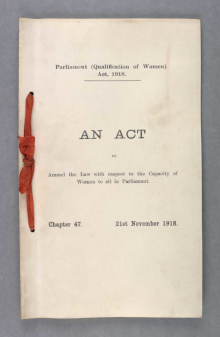




 seamus dubhghaill