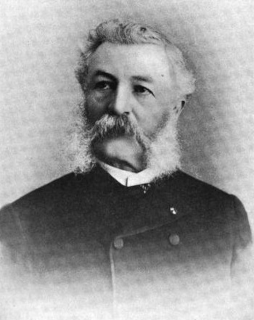
District Inspector Michael Fallon, accompanied by three other police in a motor car, are ambushed on the Conor Pass between Cloghane and Dingle, County Kerry. The D.I. is returning from an inspection of the barracks at Cloghane when the party is ambushed by members of the Irish Republican Army (IRA) West Kerry No.1 Brigade who are billetted at Fibough, in the Slieve Mish Mountains. The IRA volunteers include J. Dowling, Paddy Paul Fitzgerald, Dan Jeffers and Mick McMahon among their number.
Constables George Roach 62449 and Michael Linehan 63592 are killed outright. D.I. Fallon and Constable Joseph Campbell 67905, the driver, are both wounded. The IRA removes the bodies from the car and takes away the rifles and revolvers of the police. They then take Constable Campbell prisoner, dropping him off about three miles down the road.
Constable Linehan is 34 years old and single, and is originally from Cork. He has twelve years police service. His funeral takes place at St. Mary’s Catholic Church, Limerick, with burial in Mount St. Lawrence Cemetery. A hearse cannot be obtained so the constabulary, in relays, carry the coffin from the church to the cemetery.
Constable Roach has thirteen years service and is from County Clare. He is also a single man.
Compensation awards for gunshot injuries are later made to D.I. Fallon of £850 and to Constable Campbell of £600.
(From: “Constables George Roach and Michael Linehan, killed on the Connor Pass 1920” by Peter Mc, The Royal Irish Constabulary Forum (www.irishconstabulary.com), March 7, 2011)
Potter receives his commission as District Inspector on April 27, 1901, having completed his cadetship at the Depot, Phoenix Park, Dublin. His first assignment is to Castlepollard, County Westmeath. During the 1909 ITGWU strike in Cork, he is temporarily posted there from Dublin and is also involved in policing the August 14 marches in Portadown. Having had charge of No. 4 Company at the Depot, he is assigned to Cahir in 1912.
On April 23, 1921, District Inspector Potter is captured by the 3rd Tipperary Brigade, IRA, following the Hyland’s Cross Ambush. This occurs near Curraghcloney, close to the village of Ballylooby. The ambush party is initially made up of a combination of the 1st and 2nd Flying Columns 3rd Tipperary Brigade. This is the largest force assembled to date by the Tipperary IRA in anticipation of a major battle. However, the convoy of military lorries that is expected never materialises. Dan Breen and Con Moloney return to Battalion Headquarters, while Seán Hogan‘s Column withdraws northward in the direction of the Galtee Mountains.
As Dinny Lacey‘s No.1 Column prepares to leave towards the south, a small party of British soldiers accompanying two horse-drawn carts unexpectedly approaches from Clogheen and are immediately fired upon. Amid some confusion Lacey’s scattered men withdraw southwards towards the Knockmealdown Mountains. One British soldier, Frank Edward Conday, is fatally wounded and two others from the relieving party are wounded.
By chance, Potter, who is returning by car from police duties at Ballyporeen, drives into a section of the withdrawing No.1 Column. Although in civilian attire, he is recognised by one of the IRA Volunteers and taken prisoner. As part of a new strategy, he is held as a hostage for the safe release of Thomas Traynor, an IRA volunteer and father of ten young children, then under sentence of death at Mountjoy Gaol. The IRA offers to release Potter in exchange for Traynor’s release. Traynor is executed. Traynor has since been honoured by the Irish state as one of “The Forgotten Ten.”
The Column, under sporadic fire from soldiers, alerted at the nearby Clogheen barracks, follow the contours of the mountains to the village of Newcastle. Losing their pursuers, they stay for a period of time at the townland of Glasha. Here Potter is detained in an out-building of a farm which is regularly used by the IRA as a safe house. From there the party is guided into the Nire Valley by a contingent of local Waterford Volunteers and on to the Comeragh Mountains.
Accounts from Rathgormack, County Waterford suggest he is kept for at least one night at a nearby Ringfort before being taken down the hill to a field then owned by Powers of Munsboro, where he meets his ultimate fate. At 7:00 PM, on April 27, following news of Traynor’s execution by hanging, he is shot to death, and hastily buried in a shallow grave on the banks of the River Clodiagh. A diary he kept during his period of captivity and some personal effects and farewell letters, are returned anonymously to his wife. It is the first confirmation she has that he has been killed. The artifacts are later lost when his son’s ship is torpedoed in 1942, during World War II.
(Pictured: Photo of District Inspector Gilbert Potter R.I.C. that appeared in the Press during his time in captivity)
Browne is born in Basel, Switzerland, the son of Count Ulysses von Browne (b. Limerick 1659) and his wife Annabella Fitzgerald, a daughter of the House of Desmond. Both families had been exiled from Ireland in the aftermath of the Nine Years’ War.
Browne’s early career is helped by family and marital connections. His father and his father’s brother, George (b. Limerick 1657), are created Counts of the Holy Roman Empire by Emperor Charles VI in 1716 after serving with distinction in the service of the Holy Roman Emperors. The brothers enjoy a lengthy, close friendship with John Churchill, 1st Duke of Marlborough, who is primarily responsible for their establishment in the Imperial Service of Austria. On his father’s death he becomes third Earl of Browne in the Jacobite peerage. His wife, Countess Marie Philippine von Martinitz, has valuable connections at court and his sister, Barbara (b. Limerick 1700), is married to Freiherr Francis Patrick O’Neillan, a Major General in the Austrian Service. So, by the age of 29 Browne is already colonel of an Austrian infantry regiment.
Browne justifies his early promotion in the field, and in the Italian campaign of 1734 he greatly distinguishes himself. In the Tirolese fighting of 1735, and in the Turkish war, he wins further distinction as a general officer.
Browne is a lieutenant field marshal in command of the Silesian garrisons when in 1740 Frederick II and the Prussian army overruns the province. His careful employment of such resources as he possesses materially hinders the king in his conquest and allows time for Austria to collect a field army. He is present at Mollwitz, where he receives a severe wound. His vehement opposition to all half-hearted measures brings him frequently into conflict with his superiors but contributes materially to the unusual energy displayed by the Austrian armies in 1742 and 1743.
In the following campaigns Browne exhibits the same qualities of generalship and the same impatience of control. In 1745 he serves under Count Traun and is promoted to the rank of Feldzeugmeister. In 1746 he is present in the Italian campaign and the battles of Piacenza and Rottofreddo. He and an advanced guard force their way across the Apennine Mountains and enter Genoa. He is thereafter placed in command of the invasion of France mounted in winter 1746-47, leading to the Siege of Antibes, but he is obliged to break off the invasion and return to Italy in February 1747 after Genoa rises in rebellion against the Austrian garrison he had left behind. In early 1747 he is appointed commander of all imperial forces in Italy, replacing Antoniotto Botta Adorno. At the end of the war, he is engaged in the negotiations on troop withdrawals from Italy, which leads to the convention of Nice on January 21, 1749. He becomes commander-in-chief in Bohemia in 1751, and field marshal two years later.
Browne is still in Bohemia when the Seven Years’ War opens with Frederick’s invasion of Saxony in 1756. His army, advancing to the relief of Pirna, is met, and, after a hard struggle, defeated by the king at the Battle of Lobositz, but he draws off in excellent order, and soon makes another attempt with a picked force to reach Pirna, by wild mountain tracks. He never spares himself, bivouacking in the snow with his men, and Thomas Carlyle records that private soldiers made rough shelters over him as he slept.
Brown actually reaches the Elbe at Bad Schandau, but as the Saxons are unable to break out, he retires, having succeeded, however, in delaying the development of Frederick’s operations for a whole campaign. In the campaign of 1757, he voluntarily serves under Prince Charles Alexander of Lorraine who is made commander-in-chief. On May 6 of that year, while leading a bayonet charge at the Battle of Prague, Browne, like Kurt Christoph, Graf von Schwerin, on the same day, meets his death. He is carried mortally wounded into Prague, and there dies on June 26, 1757.
By 1860, a twenty-year-old Keogh volunteers, along with over one thousand of his countrymen, to rally to the defence of Pope Pius IX following a call to arms by the Catholic clergy in Ireland. By August 1860, Keogh is appointed second lieutenant of his unit in the Battalion of St. Patrick, Papal Army under the command of General Christophe Léon Louis Juchault de Lamoricière. Once the fighting is over and duties of the Pontifical Swiss Guard become more mundane, Keogh sees little purpose in remaining in Rome. In March 1862, with civil war raging in America, he resigns his commission in the Company of St. Patrick and sets out for New York City, arriving on April 2.
Perhaps the strongest testimony to Keogh’s bravery and leadership ability comes at the Battle of the Little Bighorn, also known as Custer’s Last Stand, on June 25, 1876. The senior captain among the five companies wiped out with General George Armstrong Custer that day, and commanding one of two squadrons within the Custer detachment, Keogh dies in a “last stand” of his own, surrounded by the men of Company I. When the sun-blackened and dismembered dead are buried three days later, Keogh’s body is found at the center of a group of troopers. The slain officer is stripped but not mutilated, perhaps because of the “medicine” the Indians see in the Agnus Dei (“Lamb of God”) he wears on a chain about his neck or because many of Sitting Bull‘s warriors are believed to be Catholic. Keogh’s left knee has been shattered by a bullet that corresponds to a wound through the chest and flank of his horse, indicating that horse and rider may have fallen together prior to the last rally.
The badly injured animal is found on the fatal battlefield and nursed back to health as the 7th Cavalry’s regimental mascot, which he remains until his death in 1890. This horse, Comanche, is considered the only U.S. military survivor of the battle, though several other badly wounded horses are found and destroyed at the scene. Keogh’s bloody gauntlet and the guidon of his Company I are recovered by the army three months after Little Bighorn at the Battle of Slim Buttes.
Originally buried on the battlefield, Keogh’s remains are disinterred and taken to Auburn, New York as he had requested in his will. He is buried at Fort Hill Cemetery on October 26, 1877, an occasion marked by citywide official mourning and an impressive military procession to the cemetery.
Tongue River Cantonment in southeastern Montana is renamed after him to be Fort Keogh. The fort is first commanded by Nelson A. Miles. The 55,000-acre fort is today an agricultural experiment station. Miles City, Montana is located two miles from the old fort.
The Battle of Vinegar Hill, an engagement during the Irish Rebellion of 1798, takes place on June 21, 1798 when over 13,000 British soldiers launch an attack on Vinegar Hill outside Enniscorthy, County Wexford, the largest camp and headquarters of the Wexford United Irishmen. It marks a turning point in the rebellion, as it is the last attempt by the United Irishmen to hold and defend ground against the British military. The battle is actually fought in two locations: on Vinegar Hill itself and in the streets of nearby Enniscorthy.
By June 18, the British have surrounded County Wexford with between 13,000 and 18,000 troops and are ready to pour into Wexford to crush the insurgency. The United Irishmen leadership issues a call to all its fighters to gather at Vinegar Hill to meet the army in one great, decisive battle. The number assembled is estimated at between 16,000 and 20,000, but the majority lack firearms and have to rely on pikes as their main weapon. The camp also includes many thousands of women and children who are staying there for protection against the rampaging military.
The British plan, as formulated by General Gerard Lake, envisages the complete annihilation of the United Irishmen, women and children by encircling the hill and seizing the only escape route to the west, the bridge over the River Slaney. Lake divides his force into four columns to accomplish this. Three columns, under Generals David Dundas, James Duff and Francis Needham are to assault Vinegar Hill, while the fourth column, under General Johnson, is to storm Enniscorthy and its bridge.
The battle begins shortly before dawn with an artillery bombardment of Irish positions on the hill. Advance units quickly move against the United Irishmen outposts under cover of the bombardment and move artillery closer as forward positions are secured. The tightening ring forces the United Irishmen into an ever-shrinking area and increases exposure to the constant bombardment, including new experimental delayed-fuse shells resulting in hundreds of dead and injured. At least two mass charges are launched by the United Irishmen which fail to break the lines of the military and the situation on Vinegar Hill soon becomes desperate for the United Irishmen.
Meanwhile, a detachment of light infantry under the command of General Johnson attacks the town of Enniscorthy but meets with fierce resistance. Buildings in the town have been fortified and the initial attack is driven back with the loss of munitions and men. A second attack commences with reinforcements including cavalry, which retake the lost cannon and ammunition while also incurring considerable casualties. The United Irishmen are slowly driven out of the town but manage to hold the Slaney bridge and prevent the British from crossing.
When British troops crest the eastern summit of Vinegar Hill, the rebels begin to slowly withdraw through a gap in the British lines later known as “Needham’s Gap”, so-named because the late arrival of General Needham’s troops prevented a total encirclement of the hill. Although the bulk of the United Irishmen army escape, many are left behind and killed in the routing phase of the battle from both cavalry and infantry attack, but also from the advanced field guns which are switched to grapeshot to maximize casualties.
In addition to conventional casualties, there are also instances of British troops raping the women accompanying the United Irishmen and in Enniscorthy, United Irishmen wounded are burned to death when soldiers set fire to a building used as a casualty station. These atrocities may have been perpetrated in revenge for the execution by the United Irishmen of numbers of mostly Protestantloyalist prisoners of war in the preceding weeks. The United Irishmen abandon much of the supplies they had taken from surrounding areas, and thirteen cannons are captured by the British, a number of which had been taken from the British forces previously.
Meanwhile, the bulk of the United Irishmen force streams uninterrupted towards the Three Rocks camp outside Wexford and, following the decision to abandon the town, split into two separate columns in a new campaign to spread the rebellion beyond Wexford. One immediately sets out to the west, the other northwards towards the Wicklow Mountains to link up with General Joseph Holt‘s forces.
The defeat is therefore not the immediate crushing blow to the Wexford United Irishmen that it has falsely been depicted as, but it does alter the course of the fighting as continued resistance now takes the form of mobile warfare, raids, and large scale, guerilla-type operations.
Casualties for the United Irishmen have been variously reported, with estimates ranging from 400 to around 1,200. Kevin Whelan estimates a figure of between 500 and 1,000 including camp followers, while Archibald McLaren, a British soldier eyewitness, writes that the United Irishmen casualties total about 1,200 men. British casualties are around one hundred.
When the unit is originally mustered out of service, the 90-day enlistment terms having expired, Nugent accepts a commission as a captain in the regular army. He is immediately assigned to the 13th Infantry Regiment whose commanding officer, General William Tecumseh Sherman, personally requests. Taking a leave of absence to return to New York, he assists Thomas Francis Meagher in organizing the Irish Brigade. The newly reformed 69th Infantry Regiment is the first unit assigned to the Irish Brigade and, with Nugent as its colonel, he leads the “Fighting 69th” at the Battles of Seven Pines, Gaines’ Mill, Savage’s Station, White Oak Swamp, Glendale, and Malvern Hill.
Nugent is wounded, shot in the stomach, at the Battle of Fredericksburg and is eventually forced to resign his command. He is appointed acting assistant provost marshal for the southern district of New York, which includes New York City and Long Island, by the U.S. Department of War. An Irishman and Democrat, his appointment is thought to assure the Irish American population that conscription efforts would be carried out fairly. The Irish-American, a popular Irish language newspaper, writes that the selection is a “wise and deservedly popular one.” He does encounter resistance from city officials wanting him to remain uninvolved, however by mid-June he reports to his superior officer and provost marshal general Colonel James Fry that conscription efforts are “nearing completion without serious incident.”
Understanding the seriousness of the situation, Nugent attempts to keep the draft selections quiet and in isolated parts of the city. In Manhattan however, lotteries are placed in the heart of Irish tenement and shanty neighborhoods where the draft is most opposed.
In the ensuing New York City draft riots, Nugent takes command of troops and attempts to defend the city against the rioters. Despite issuing the cancellation of the draft, the riots continue for almost a week. His home on West 86th Street is looted and burned by the rioters during that time, his wife and children barely escaping from their home. Upon breaking into his house, furniture is destroyed, and paintings of Nugent and Meagher are slashed, although Brigadier General Michael Corcoran‘s is left untouched.
On October 28, Nugent is relieved of his post and succeeded by General William Hayes. Returning to active duty, he assumes command of the Irish Brigade in November 1864, shortly after the death of Corcoran, and is present at the Battle of Spotsylvania Court House, the Siege of Petersburg and the Appomattox campaign. As its last commanding officer, he and the Irish Brigade also march in the victory parade held in Washington, D.C. following Robert E. Lee‘s surrender at Appomattox Court House.
Nugent is brevetted Brigadier General for distinguished leadership of the 69th Regiment on March 13, 1865. The veterans of the Irish Brigade are honorably discharged and mustered out three months later. Nugent, however, remains in the regular U.S. Army for the next twenty years, a formidable “Indian fighter” during the America Indian Wars with the 13th and 24th Infantry Regiments. In 1879, he retires at the rank of major and resides in New York where he is involved in the Grand Army of the Republic, the War Veterans’ Association of the 7th Regiment and an honorary member of The Old Guard.
Nugent becomes ill in his old age, complications arising from his wounds suffered at Fredericksburg, and remains bedridden for two months before his death at his McDonough Street home in Brooklyn on June 20, 1901. In accordance with his last wishes, he is buried at Cypress Hills National Cemetery, located in the Cypress Hills neighborhood of Brooklyn.
A British advance force of 400 is defeated at Tuberneering on June 4. This rebel victory punches a hole in the dragnet the military has attempted to throw around County Wexford and also yields them three artillery pieces. The town of Arklow has been evacuated in the ensuing panic but the rebels content themselves with taking the town of Gorey and staying within the Wexford border. On June 5 the rebels attempt to break out of County Wexford across the River Barrow and to spread the rebellion but are halted by a major British victory at the Battle of New Ross. When the rebels finally move against Arklow, the town has been reoccupied by a force of 1,700 men sent from Dublin under Francis Needham, 1st Earl of Kilmorey, who quickly fortifies the town with barricades and has artillery positioned on all the approaches to the town.
The rebel army that forms for attack on the afternoon of June 9 is a combined force of Wexford and Wicklow rebels led by Billy Byrne, Anthony Perry, Conor McEvoy, Edward Fitzgerald, and Fr. Michael Murphy. The British in Arklow consist of approximately 1,000 militia from counties Antrim and Cavan and 150 regular cavalry supported by 250 Yeomanry. They are joined by 315 Durham Fencibles (Princess of Wales’s Fencible Dragoons) arriving an hour before the rebels.
The area surrounding the town and the approaches is covered by scrub and the rebel strategy adopted is to advance under cover attacking the town simultaneously from several points. Before the action begins, the rebels under Esmonde Kyan open fire upon the town with some of the artillery captured at Tuberneering and have some success by scoring a direct hit on a British artillery position, destroying the cannon and killing the attendant crew. The main assault is quickly launched but at all entry points the Irish are thrown back by the musket fire of the well-trained and disciplined militia and volunteers, and canister shot from the 3 pounder battalion gun brought by the fencibles. An attempt by the British to turn the Irish failure into a rout is defeated when pikemen and sharpshooters drive a cavalry charge back across the River Avoca, but an attempt to force a way into the town through the outlying fishing port is bloodily repulsed.
As Irish casualties mount, the lack of ammunition and proper leadership begin to work against them, and after Fr. Murphy is killed leading a charge, their attacks start to fade. As nightfall comes, the rebels begin to withdraw under cover of darkness and collect their wounded. They are not pursued or molested by the garrison who are, unknown to the rebels, down to their last three or four rounds per man and are themselves at the brink of defeat.
While rebel casualties are estimated at about 1,000 no full casualty list seems to exist on the British side, but are probably in the region of 100 dead and wounded. The defeat at Arklow marks the third failure to extend the fight for Irish independence beyond the borders of County Wexford following the other bloody repulses at New Ross and Bunclody. The Irish strategy now changes to a policy of static defence against the encroaching British armies.
Kitchener is credited in 1898 for winning the Battle of Omdurman and securing control of the Sudan for which he is made Baron Kitchener of Khartoum. As Chief of Staff (1900–1902) in the Second Boer War he plays a key role in Lord Roberts’ conquest of the Boer Republics, then succeeds Roberts as commander-in-chief, by which time Boer forces have taken to guerrilla warfare and British forces imprison Boer civilians in concentration camps. His term as Commander-in-Chief (1902–09) of the Army in India sees him quarrel with another eminent proconsul, the Viceroy Lord Curzon, who eventually resigns. He then returns to Egypt as British Agent and Consul General.
In 1914, at the start of World War I, Kitchener becomes Secretary of State for War, a Cabinet Minister. One of the few to foresee a long war, lasting for at least three years, and with the authority to act effectively on that perception, he organises the largest volunteer army that Britain had ever seen, and oversees a significant expansion of materials production to fight on the Western Front. Despite having warned of the difficulty of provisioning for a long war, he is blamed for the shortage of shells in the spring of 1915, one of the events leading to the formation of a coalition government and is stripped of his control over munitions and strategy.
On June 5, 1916, Kitchener is making his way to Russia on HMS Hampshire to attend negotiations with Tsar Nicholas II. At the last minute, Admiral Sir John Jellicoe changes the HMS Hampshire‘s route on the basis of a misreading of the weather forecast and ignoring (or not being aware of) recent intelligence and sightings of GermanU-boat activity in the vicinity of the amended route. Shortly before 7:30 PM the same day, steaming for the Russian port of Arkhangelsk during a Force 9 gale, HMS Hampshire strikes a mine laid by the newly launched German U-boat U-75 and sinks 1.5 miles west of the Orkney. Only twelve men survive. Amongst the dead are Kitchener and all ten members of his entourage. He is seen standing on the quarterdeck during the approximately twenty minutes that it takes the ship to sink. His body is never recovered.
The Nine Years War begins with a conflict over English efforts to maintain a string of garrisons along the southern border of Tyrone’s territory in Ulster. The Irish leader promptly besieges the English garrison at Monaghan Castle, and Sir Henry Bagenal, commander of the English forces, marches out to its relief on May 25 from Dundalk, via Newry. His army is made up of 1,750 troops, including some veterans and certain companies newly arrived from the Spanish campaign in Brittany, but there are many recruits in the ranks. Bagenal’s men are predominantly infantry, armed with muskets and pikes. There is also a small number of horsemen raised in the Pale.
The Battle of Clontibret is essentially a two day running battle, as Bagenal’s column is ambushed on its way to and from the castle at Monaghan town. The Irish fight sharply along the roads about Crossdall, around 4 miles from Monaghan, firing on the English column with calivers from the surrounding woodland. With the loss of 12 dead and 30 wounded the English reach the castle, which is re-supplied and reinforced with one company. Bagenal has misgivings about his supply of powder and lead, much of which had been used on the way, and can afford little for the garrison before he starts back.
Two days later, on May 27, Bagenal sets out for Newry in a column, but by another route, past the townland of Clontibret. The route lay through drumlin country, which abounds with hills, bogs and woods, making it ideal for an ambush. The column comes under fire from the outset, and then falls into a major ambush at a pass near Clontibret. Tyrone’s army, about 4,000 strong, consists of contingents from the O’Neill, MacMahon and Maguire clans, as well as Scottish mercenaries. The Irish also deploy a greatly enlarged force of cavalry and caliver-men. To Bagenal’s puzzlement, the caliver-men are turned out in red coats and acquitted themselves with expertise. Fire from the flanks is heavy, and many English troops are killed or wounded while the Irish cavalry plays around the fringes. Tyrone himself is almost killed in hand-to-hand combat with a Palesman named Seagrave, who leads a cavalry charge on the Irish position. Seagrave has his arm chopped off by Tyrone’s standard bearer O’Cahan, and is killed by Tyrone with a dagger thrust to the groin. Bagenal’s column is slowed to a crawl and, as night falls in the wilderness, the commander calls his men to a halt and camps at the hilltop of Ballymacowen. It seems that hundreds are missing, and there is fear that the Irish will renew the attack under cover of darkness. There is no further attack and, a little after first light, reinforcements from Newry arrive to relieve the column.
According to intelligence received in the days following, Tyrone’s failure to follow up is caused by a lack of powder, ironic given the state of Bagenal’s own supplies. The overall sense in government is of disquiet, and a bad job is made of hushing up the casualty figures. This gives fuel to the rumours of a severe defeat, and many people set greater store on the numbers put about by confederate supporters.
Sir Ralph Lane, the muster-master-general, informs the queen’s principal secretary, William Cecil, 1st Baron Burghley, that “more men were hurt and killed in that late service than was convenient to declare.” The casualty figures for both sides vary depending on sources. Bagenal admits only 31 killed and 109 wounded on the second day of fighting, but his losses are almost certainly higher. The Irish annals claimed up to 700 English killed. Estimates of the confederate losses vary between 100 to 400 killed. Three years later, Bagenal leads an army into another ambush by Tyrone, at the Battle of the Yellow Ford. The English general is killed and his troops are routed with heavy losses.
(From: “Battle of Clontibret,” wikia.org, https://military.wikia.org | Pictured: The marker stone on the northern edge of the battlefield commemorating the Irish victory at Clontibret, 1595)
The IRA in west Mayo is relatively quiet until January 1921, when Michael Kilroy, described as “a puritanical and ascetic blacksmith” takes over command of the Brigade after Thomas Derrig is arrested by the Royal Irish Constabulary. Kilroy forms a relatively large “flying column” of 40 to 50 men to carry out attacks on Crown forces in the area. On May 6 they suffer a reverse at Islandeady, when a police patrol comes upon the IRA men cutting a road. Three volunteers are killed and two captured.
On May 18, 1921, the IRA decides to attack an RIC/Black and Tan convoy at Kilmeena. Two small-unit attacks are made on the RIC barracks in Newport and Westport to try to draw the police out of their well-defended barracks. One RIC man dies in these attacks.
At 3:00 AM the next day, May 19, the column of 41 IRA men take up position close to Knocknabola Bridge. The British convoy, traveling from Newport to Westport, consists of two Crossleylorries and one Ford touring car and a total of about thirty men. The convoy does not arrive until 3:00 PM and its arrival sparks a two-hour fire-fight. In the battle, one RIC man is wounded and later dies. The British regroup around the house of the parish priest, Father Conroy, and launch a counterattack.
Four IRA volunteers are killed. They are Seamus Mc Evilly, Thomas O’Donnell, Patrick Staunton and Sean Collins. Paddy Jordan of the Castlebar battalion is injured and dies later at Bricens Hospital in Dublin. Seven more IRA men are wounded.
The remainder of the column, carrying their wounded, flee over the mountains to Skerdagh, where they have safe houses. However, the police track them there and, in another exchange of fire, another IRA man is killed, Jim Brown from Newport, along with one RIC Constable and a Black and Tan.
The Black and Tans throw the dead and wounded IRA men onto the street outside the RIC barracks in nearby Westport, causing widespread revulsion among the local people and local police. The Marquis of Sligo, no friend of the republican guerrillas, visits the barracks to complain of their treatment of enemy dead. At the funerals of those killed, in Castlebar, the authorities allow only close family to attend and forbid the draping of the Irish tricolour over the coffins.
The local IRA blames their defeat in the ambush on the failure of an IRA unit from Westport to show up in time.
Kilroy’s column manages to get some revenge for the setback at Kilmeena the following month in an action at Carrowkennedy on June 3, where they kill eight policemen and capture sixteen.