seamus dubhghaill

Promoting Irish Culture and History from Little Rock, Arkansas, USA


Leave a comment

Death of Henry Joy McCracken, Founding Member of the United Irishmen

Henry Joy McCracken, Irish Republican, industrialist and a founding member of the Society of United Irishmen, is hanged from gallows erected in front of the Market House on Belfast‘s High Street on July 17, 1798, on land his grandfather had donated to the city.

McCracken is born in Belfast on August 31, 1767, into two of the city’s most prominent Presbyterian industrial families. He is the son of a shipowner, Captain John McCracken and Ann Joy, daughter of Francis Joy, of French Huguenot descent. The Joy family makes their money in linen manufacture and founds the News Letter. He is the older brother of political activist and social reformer Mary Ann McCracken, with whom he shares an interest in Irish traditional culture.

In 1792, McCracken helps organise the Belfast Harp Festival which gathers aged harpists from around Ireland and helps preserve the Irish airs by having them transcribed by Edward Bunting. Bunting, who lodges in the McCracken’s Rosemary Lane home, is a classically trained musician.

McCracken becomes interested in republican politics from an early age and along with other Protestants forms the Society of United Irishmen in 1795 which quickly makes him a target of the authorities. He regularly travels throughout the country using his business as a cover for organising other United Irish societies but is arrested in October 1796 and imprisoned in Kilmainham Gaol in Dublin. While imprisoned with other leaders of the United Irishmen, he falls seriously ill and is released on bail in December 1797.

Following the outbreak of the Irish Rebellion of 1798 in Leinster in May 1798, the County Antrim organisation meets on June 3 to decide on their response. The meeting ends inconclusively with a vote to wait for French aid being passed by a narrow margin. A new meeting of delegates is held in Templepatrick on June 5 where McCracken is elected general for Antrim, and he quickly begins planning military operations.

McCracken formulates a plan for all small towns in Antrim to be seized after which rebels will converge upon Antrim town on June 7 where the county’s magistrates are to hold a crisis meeting. Although the plan meets initial success and McCracken leads the rebels in the attack on Antrim, the Catholic Defenders group whom he expects assistance from are conspicuous by their absence. The mainly Ulster Scots rebels led by McCracken are defeated by the English forces and his army melts away.

Although McCracken initially escapes with James Hope, James Orr, and James Dickey and is supported in his month-long period of hiding by his sister Mary Ann, a chance encounter with men who recognize him from his cotton business leads to his arrest. He is offered clemency if he testifies against other United Irishmen leaders, but he refuses to turn on his compatriots.

McCracken is court martialed and hanged at Corn Market, Belfast, on land his grandfather had donated to the city, on July 17, 1798. According to historian Guy Beiner, his corpse is spared the indignity of decapitation in order not to provoke renewed agitation. He is buried in the Parish Church of St. George in Belfast, but a few years later the grave is demolished.

McCracken’s remains are believed to have been re-interred by Francis Joseph Bigger in 1909 at Clifton Street Cemetery, Belfast, alongside his sister Mary Ann. His illegitimate daughter Maria, whose mother is speculated to have been Mary Bodell, is raised by her aunt Mary Ann McCracken.


Leave a comment

Death of Francis Lenny, Roman Catholic Bishop

Francis Lenny, Irish Roman Catholic bishop in the last third of the 20th century, dies in Mullavilly, County Armagh, Northern Ireland, on July 16, 1978.

Lenny is born in Cookstown, County Tyrone, on September 27, 1928. He is educated at St. Patrick’s Grammar School, Armagh, and St. Patrick’s College, Maynooth. He is ordained priest for the Archdiocese of Armagh on June 21, 1953. Pursuing his studies in ancient classes and canon law in Maynooth and the Dunboyne Institute, in July 1955 he is named secretary to Cardinal John D’Alton, Primate of Ireland, and upon his death in 1963, proceeds in the same position with his successor, Cardinal William Conway.

Lenny is appointed parish priest in Mullavilly in 1972. Less than two years later he is named coadjutor bishop of Armagh, receiving his episcopal consecration with the titular see of Rotdon from Cardinal Conway on June 16, 1974. Financial secretary to the Bishops’ Financial and General Purposes Committee, upon Conway’s death, he becomes vicar capitular of the archdiocese until Tomás Ó Fiaich is named his successor.

Lenny is a well-known canonist, and it is he who transfers a major relic of Saint Oliver Plunkett from Downside Abbey to Ireland in 1975, and is presently preserved in Oldcastle, County Meath, Plunkett’s birthplace.

A man of great charity and deep disposition, Lenny experiences great opposition from members of the Protestant community of Mullavilly, refusing to leave the village despite threats he receives. His bungalow is maliciously set on fire, and he dies at the early age of forty-nine on July 16, 1978, the fourth anniversary of his episcopal consecration, from injuries received complicated by a heart attack. Dressed in chasuble and mitre, he is laid to rest in a simple solid oak coffin following the celebration of a Funeral Mass celebrated at St. Patrick’s Cathedral in Armagh, presided by Archbishop Ó Fiaich which sees the participation of thousands.


Leave a comment

Birth of Seán Lemass, Fianna Fáil Leader & Taoiseach

Seán Francis Lemass, born John Francis Lemass, Irish patriot and Fianna Fáil politician who serves as Taoiseach and Leader of Fianna Fáil from 1959 to 1966, is born at Norwood Lodge, Ballybrack, Dublin on July 15, 1899. He also serves as Tánaiste (1945-48, 1951-54 and 1957-59), Minister for Industry and Commerce (1932-39, 1945-49, 1951-54 and 1957-59), Minister for Supplies (1939-45) and Teachta Dála (TD) (1924-69).

Lemass is the second of nine children born to John T. Lemass and his wife Frances (née Phelan) Lemass. He is educated at O’Connell School, where he is described as studious (his two best subjects being history and mathematics).

Lemass is persuaded to join the Irish Volunteers. He becomes a member of the A Company of the 3rd Battalion of the Dublin Brigade. The battalion adjutant is Éamon de Valera, future Taoiseach and President of Ireland. While out on a journey in the Dublin mountains during Easter 1916, he is informed of the Easter Rising that is taking place in Dublin. On April 25, Seán and his brother Noel are allowed to join the Volunteer garrison at the General Post Office (GPO). He is equipped with a shotgun and was positioned on the roof. He also is involved in fighting on Moore Street. However, the Rising ends in failure and all involved are imprisoned. He is held for a month in Richmond Barracks but, due to his age, he is released. Following this, his father wants his son to continue with his studies and be called to the Irish Bar.

Lemass opposes the establishment of the Irish Free State as a dominion under the Anglo-Irish Treaty of 1921 and becomes a member of the headquarters staff of the Irish Republican Army in the Irish Civil War (1922–23). He plays a key role in persuading de Valera to found a new republican party, Fianna Fáil, in 1926. After de Valera rises to the premiership in 1932, Lemass holds portfolios in all his cabinets for 21 of the next 27 years, notably as Minister of Industry and Commerce and then as Tánaiste.

When de Valera becomes President of Ireland in 1959, Lemass is appointed Taoiseach on June 23, 1959, on the nomination for Dáil Éireann. Under him the country takes a more outward-looking approach, and he especially presses for Ireland’s entry into the European Economic Community (EEC), now the European Communities, embedded in the European Union, and for reconciliation with Northern Ireland. His greatest legacy, Ireland’s membership in the EEC, is not secured until 1973, after his death.

In 1966, Ireland celebrates the 50th anniversary of the 1916 Easter Rising. Éamon de Valera comes within 1% of defeat in that year’s Irish presidential election, less than two months after the celebrations in which he played such a central part. On November 10, 1966, Lemass announces to the Dáil his decision to retire as Fianna Fáil leader and Taoiseach with his usual penchant for efficiency, “I have resigned.” He retires to the backbenches and remains a TD until 1969. On the day of his retirement, Jack Lynch becomes the new leader of Fianna Fáil and Taoiseach.

During the last few years of his leadership, Lemass’s health begins to deteriorate. He had been a heavy pipe smoker all his life, smoking almost a pound of tobacco a week in later life. At the time of his retirement, it is suspected that he has cancer, but this assumption is later disproved. In February 1971, while attending a rugby game at Lansdowne Road, he becomes unwell. He is rushed to hospital and is told by his doctor that one of his lungs is about to collapse.

On Tuesday, May 11, 1971, Lemass dies at the age of 71 in the Mater Hospital in Dublin. He is afforded a state funeral and is buried in Deans Grange Cemetery.


Leave a comment

Birth of Daniel Cohalan, Bishop of Cork

Daniel Cohalan, Irish Roman Catholic clergyman who serves as the Bishop of Cork from 1916 to 1952, is born on July 14, 1858, in Kilmichael, County Cork.

After graduating at St. Patrick’s College, Maynooth, Cohalan is ordained a priest at the Cathedral of St. Mary and St. Anne, Cork on July 25, 1882. His first pastoral appointment is a curate at Kilbrittain, County Cork, from October 1883 to January 1884. He briefly resumes his post-graduate studies at St. Finbarr’s Seminary (now College), Cork, from January to November 1884. His second curacy is at Tracton, County Cork, from November 1884 to September 1896. He returns to St. Patrick’s College, Maynooth, as a professor of Theology from September 7, 1896, to June 7, 1914.

Cohalan is appointed Auxiliary Bishop of Cork and Titular Bishop of Vaga on May 25, 1914. He is consecrated bishop at the Cathedral of St. Mary and St. Anne on June 7, 1914, by John Harty, Archbishop of Cashel and Emly. Two years later, he is appointed Diocesan Bishop of Cork on August 29, 1916.

Cohalan is an outspoken critic during the Irish War of Independence, condemning acts of violence on both sides. In particular, he denounces the policy of reprisals. In July 1920, he pronounces an interdict on the killers of a Royal Irish Constabulary (RIC) sergeant, shot dead in the church porch in Bandon. He declares that anyone killing from ambush will be excommunicated. On December 12, 1920, Cohalan issues a decree saying that “anyone within the diocese of Cork who organises or takes part in ambushes or murder, or attempted murder, shall be excommunicated.” In turn, his life is threatened by the Irish Republican Army (IRA). In August 1928, he condemns the British government which had allowed Terence MacSwiney to die on hunger strike in 1920.

The Bessborough Home in Cork is run by the Sisters of the Sacred Hearts of Jesus and Mary and when the department “sought a change of superior in Bessborough because of the appallingly high death rate, he [Catholic Bishop of Cork Dr. Daniel Cohalan] denounced the request. The replacement of the Bessborough superior was delayed for four years after the department requested it, and many infants died during that time. It seems probable that the bishop’s intervention was elicited by the congregation.” In general, the report finds that the major causes of infant mortality in the homes were respiratory infections and gastroenteritis, while “public attention has focused on marasmus [malnutrition]” suggesting “willful neglect.” However, it says that “the term marasmus is best seen as indicating that a child was failing to thrive, but medical experts suggest that this was due to an underlying, undiagnosed medical condition.”

Cohalan dies in office at the age of 94 at Bon Secours Hospital, Cork, on August 24, 1952. A story, current at the time in Cork, refers to his antipathy towards bishops of the Church of Ireland who styled themselves “Bishop of Cork.” A month before his death, and on his deathbed, word is brought to him of the death of the Church of Ireland Bishop of Cork, Cloyne and Ross, Robert Hearn. The response of Cohalan, known “affectionately” as “Danny Boy”, is reputedly, “now he knows who’s Bishop of Cork.”

Originally buried at St. Finbarr’s College, Farranferris, Cohalan is reinterred in the grounds of St. Mary and St. Anne’s Cathedral, Cork, in 1996. His nephew of the same name, Daniel Cohalan, is Bishop of Waterford and Lismore from 1943 to 1965.


Leave a comment

Birth of Alan Quinlan, Irish Rugby Union Player

Alan Quinlan (Irish: Ailín Ó Caoindealbhain), retired Irish rugby union player, is born in Tipperary, County Tipperary, on July 13, 1974. He plays for Munster and is registered to All-Ireland League side Shannon RFC. He retires from rugby in May 2011.

Quinlan is educated at Abbey CBS in Tipperary and works for a motor dealer after leaving school. He begins his rugby career with Clanwilliam F.C. He moves from Clanwilliam to join Shannon U20s in 1994. He captains the Irish Youth Team against Scotland in 1993. He normally plays as a blindside flanker, but he also plays openside, number eight and second row for Munster.

Quinlan begins playing for Munster in 1996 and captains the youths team before becoming a regular in the first team. In May 2006 he makes a comeback from a cruciate ligament injury earlier in the season to win both the AIB League Division 1 title with Shannon and the Heineken Cup with Munster after a late appearance from the bench in the Heineken Cup Final win over Biarritz in Cardiff. He captains the side from Number Eight in Munster’s upset victory over Ulster in Ravenhill Stadium in the 2007 Celtic League. He is voted Man of the Match as Munster beats Toulouse 16–13 on May 24, 2008 to win the Heineken Cup for a second time. He is part of the squad that wins the 2008–09 Celtic League. In total he holds five league medals with Shannon, as well as two Heineken Cup medals and a Celtic League Medal with Munster. He wins his 201st cap against Leinster, equaling Anthony Foley‘s club record for caps, on October 2, 2010. He becomes Munster’s most capped player ever on October 16, 2010, against Toulon in the Heineken Cup. In the 2009–10 season he represents Munster 21 times, including all eight of their 2010 Heineken Cup matches.

In April 2011, Quinlan officially announces his retirement from professional rugby, to be effective at the end of the 2010/11 season. He plays his last game for Munster on May 6, 2011, against Connacht in the Celtic League, scoring a try to mark the end of his remarkable career and going off to a standing ovation from the Munster and Connacht supporters. He joins the Munster team at the 2011 Celtic League Grand Final trophy presentation, celebrating Munster’s 19–9 victory over old rivals Leinster in Thomond Park.

Quinlan represents Ireland ‘A’ between 1998 and 2001 and makes his senior debut for the Irish national team in October 1999, as a replacement in a test against Romania. He plays his first Six Nations match against Italy in 2001. He is a part of Ireland’s squad at the 2003 Rugby World Cup in Australia and scores two tries in the tournament before dislocating his shoulder scoring a vital try against Argentina in the pool stages, which ends his involvement. He is named in Ireland’s 2007 Rugby World Cup squad but does not make any appearances. Ireland coach Eddie O’Sullivan is widely criticised afterwards for not using his bench. Quinlan takes his caps to a total of 27 by playing in the Autumn Internationals of 2008 against Canada and the All Blacks.

On April 21, 2009, Quinlan is named in the squad for the 2009 British & Irish Lions tour of South Africa. During Munster’s Heineken cup semi-final defeat to Leinster in May 2009, he is cited for making contact with the eye or eye area of Leinster captain Leo Cullen. The offence is deemed at the low range of seriousness and he receives a 12 playing week ban until September 9, 2009. As a result, he misses the Lions tour to South Africa.

Quinlan is a co-commentator for ITV‘s coverage of the 2011 Rugby World Cup. He regularly commentates with RTÉ Sport and Sky Sports on their rugby coverage.

Quinlan marries Irish model Ruth Griffin in Tipperary during the summer of 2008. They have one son named AJ who is born in January 2009. They later split up in June 2010. He releases an autobiography, Quinlan: Red Blooded, in 2010. He is a big golf fan and supports Liverpool.


Leave a comment

Birth of Charles Patrick Meehan, Priest & Historian

Charles Patrick Meehan, priest and historian, is born on July 12, 1812, at 141 Great Britain Street (now Parnell Street), Dublin.

Meehan’s father, a native of Manorhamilton, County Leitrim, is a prosperous farmer at Ballymahon, County Longford. He receives his early education in a hedge school and from a local curate at Ballymahon. In 1828 he enters the Pontifical Irish College in Rome, where he is a brilliant student, acquiring fluency in several languages. As a child he had loved to listen to stories of the Flight of the Earls and the Flight of the Wild Geese, and during his time in Rome he discovers the neglected graves of Hugh O’Neill and Hugh O’Donnell in the church of San Pietro in Montorio. He begins his lifelong research on the seventeenth century by locating and transcribing hitherto unstudied documents held in Roman repositories. Ordained in 1835, he is appointed curate at Rathdrum, County Wicklow in August and five months later is transferred to the parish of Saints Michael and John, Dublin. He is an excellent preacher and a strong advocate of temperance, and zealously discharges his parish duties.

A supporter of Daniel O’Connell and the repeal movement, Meehan is particularly attracted by the ideals of Young Ireland and becomes friendly with the principal writers of The Nation, especially Charles Gavan Duffy and James Clarence Mangan. He is Mangan’s confessor and attends his deathbed in 1849. The Young Irelanders often meet in his presbytery in Lower Exchange Street. From 1842 he contributes occasional verse and translations to The Nation using the pseudonym ‘Clericus’ and the initials ‘C. P. M.’ He defends the Young Irelanders from accusations of irreligion. During the debates on physical force in Conciliation Hall in July 1846 he supports the Young Ireland position and is shouted down by O’Connellites.

He secedes with the Young Irelanders from the Repeal Association and becomes a member of their Irish Confederation on its foundation in January 1847. Later that year he becomes president of the St. Patrick’s Confederate Club and delivers lectures to it on Irish history. A strong believer in the importance of history in creating national pride and awareness, he contributes The Confederation of Kilkenny (1846) and a translation of Daniel O’Daly, The Geraldines, their Rise, Increase and Ruin (1847) to The Nation‘s Library of Ireland historical series. He publishes a translation, with a valuable introduction and notes, of John Lynch‘s Latin life of Francis Kirwan, bishop of Killala 1645–61, as Portrait of a Christian Bishop (1848). In 1848 he resigns his presidency of the St. Patrick’s Confederate Club in the hope of becoming librarian or professor of modern languages at Queen’s College Galway but is unsuccessful.

For the rest of his life Meehan devotes himself to parish work and historical research, occasionally publishing articles and poems in the Hibernian Magazine and Irish Catholic Magazine. He also edits six volumes of the second series of James Duffy‘s Duffy’s Hibernian Magazine (1862–65). Having acquired a vast store of anecdotes and curious information from his research, he is an interesting companion who loves the company of poets and scholars and forms friendships with many young nationalist writers, including Denis Florence MacCarthy, John Keegan Casey and John Francis O’Donnell.

Most of Meehan’s research is devoted to Irish history, but he occasionally tackles other subjects, such as his translation from the Italian of Vincenzo Marchese’s Lives of the most eminent sculptors and architects of the order of St Dominic (2 vols, 1852). Although his work is marked by a strong sympathy for Catholicism and Irish nationalism, he is among the more scholarly historians associated with the Young Ireland movement. He is elected Member of the Royal Irish Academy (MRIA) in February 1865. Gavan Duffy lauds his efforts and ranks him with the great patriotic clerical scholars of the past who had devoted their lives to the study of Irish history.

Meehan repeatedly takes the opportunity to amend and expand his published works, producing revised editions of The Geraldines (as The Geraldines, their Rise, Increase and Ruin (reprinted 1878)), Confederation of Kilkenny (1882), and Lynch’s Life of Kirwan (1884). His other important publications are The Fate and Fortunes of the Earls of Tyrone (Hugh O’Neill) and Tyrconnel (Rory O’Donel), their flight from Ireland and death in exile (1868), and Rise and Fall of the Irish Franciscan Monasteries and Memoirs of the Irish Hierarchy in the Seventeenth Century (1870). He edits the essays of the Young Irelanders in The Spirit of the Nation (1882) and publishes editions of the poetry of Mangan in The Poets and Poetry of Munster (1883), with an important biographical memoir. His last scholarly work is to re-edit Literary Remains of the United Irishmen (1887) to include material left in manuscript by Richard R. Madden.

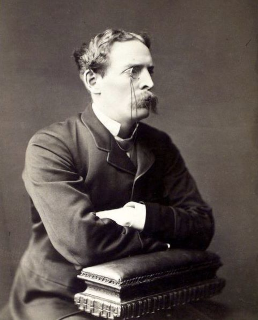
A small man, Meehan always wears a monocle attached to a silk ribbon, a tall silk hat, and a stout blackthorn stick. He suffers badly from indigestion for most of his life, and this aggravates a testy personality and a waspish tongue. He regularly falls out with friends, and few parishioners are foolhardy enough to brave his confessional. He retains strong anti-English views all his life. In the 1880s he encounters the young Arthur Griffith pulling down a union flag from a lamppost in Dublin and astounds the boy by congratulating rather than chastising him. His Young Ireland nationalism and irascible personality ensure that he never progresses beyond the position of curate in his forty-five years at Saints Michael and John. Here, he works alongside Fr. James Healy, a renowned wit, and the two men delight in trading caustic remarks. Healy is present at Meehan’s deathbed and admits to brushing away a tear – the only thing, he remarks, that had been brushed in that room for many years.

Meehan dies on March 14, 1890, at his presbytery in Dublin, and is buried in Glasnevin Cemetery. He is survived by two brothers, one of whom is also a priest. He is commemorated by a mural tablet erected by his parishioners in the church of Saints Michael and John.

(From: “Meehan, Charles Patrick” by James Quinn and Linde Lunney, Dictionary of Irish Biography, http://www.dib.ie)


Leave a comment

Birth of Sir Oliver Napier, First Leader of Northern Ireland’s Alliance Party

Sir Oliver Napier, the first leader of the Alliance Party of Northern Ireland, is born in Belfast on July 11, 1935. In 1974 he serves as the first and only Legal Minister and head of the Office of Legal Reform in the Northern Ireland power-sharing executive set up by the Sunningdale Agreement.

Napier is educated at St. Malachy’s College, Belfast and Queen’s University Belfast before starting work as a solicitor.

Napier joins the Ulster Liberal Party, rising to become Vice President by 1969. That year, he leads a group of four party members who join the New Ulster Movement, accepting the post of joint Chairman of its political committee. The Liberal Party promptly expels him, but, working with Bob Cooper, he uses his position to establish a new political party, the Alliance Party of Northern Ireland, which seeks to become a political force that can command support from across the divided communities of the province, but remain pro-union. This aims to offer an alternative to what he describes as the sectarianism of the Ulster Unionist Party. Despite his faith he is a supporter of the Union.

Napier serves as the party’s joint leader from 1970 until 1972, then as its sole leader from 1973 to 1984. Under his leadership Alliance participates in successive assemblies that seek to solve the debate on the province’s position, including the Northern Ireland Assembly, 1973 in which he is a minister in the power-sharing Executive. In 1979 he comes closer to winning a seat in the Westminster Parliament than any other Alliance candidate up to that point when he is less than a thousand votes behind Peter Robinson‘s winning total in Belfast East in a tight three-way race. This record is beaten in 2010, when Naomi Long ousts Robinson from the same seat. When Napier steps down as leader in 1984 he receives many plaudits for his work. The following year he is knighted and in 1989 he stands down from Belfast City Council, seemingly to retire.

However, in 1995 Napier returns to the political fray when he contests the North Down by-election for the Alliance, standing again in the 1997 United Kingdom general election. In 1996 he is elected to the Northern Ireland Forum for North Down. Prior to his death he is the last prominent member of the Ulster Liberal Party.

Napier serves on the Board of Governors of Lagan College, the first integrated school in Northern Ireland.

Napier dies at the age of 75 on July 2, 2011. He is survived by his wife, Briege, whom he marries in 1961, three sons and five daughters, and 23 grandchildren. A son predeceases him.


1 Comment

Assassination of Kevin O’Higgins, Politician, by the IRA

Kevin Christopher O’Higgins, Irish politician who serves as Vice-President of the Executive Council of the Irish Free State and Minister for Justice from 1922 to 1927, is assassinated by an Irish Republican Army (IRA) unit in Booterstown, County Dublin, on July 10, 1927. He also serves as Minister for Economic Affairs from January 1922 to September 1922 and Minister for External Affairs from June 1927 to July 1927. He serves as a Teachta Dála (TD) from 1921 to 1927 and is a Member of Parliament (MP) for Queen’s County from 1918 to 1921.

A man of intellectual power, O’Higgins is described by William Butler Yeats as “a great man in his pride confronting murderous men.” He is in fact murdered by maverick republicans while on his way to church.

O’Higgins is born in Stradbally, Queen’s County (County Laois since 1922) on June 7, 1892. Educated at University College Dublin, he is apprenticed to his uncle, a lawyer. Following the Easter Rising in 1916, he joins the Sinn Féin nationalist movement and is imprisoned. In 1918, while still in jail, he is elected to Parliament from Queen’s County, and in the next year he becomes assistant to the minister of local government, William Thomas Cosgrave. He goes on to become a prominent member of Cumann na nGaedheal.

O’Higgins supports the Anglo-Irish Treaty with Great Britain that creates the Irish Free State. In 1922 he is appointed Minister for Economic Affairs and Vice-President of the Executive Council. He helps to draft the Constitution of the Irish Free State and secures its passage through Dáil Éireann, lower house of the Oireachtas, the Irish parliament. Working for a united Ireland within the British Commonwealth, he plays an important part in the 1926 Imperial Conference. He also prominently represents the Free State in the League of Nations.

As Minister for Justice, O’Higgins establishes the Garda Síochána police force and takes summary measures to restore order following the civil war between the Free State forces and the Irish Republican Army. His role in the execution of 77 republicans in 1922–23 makes him many enemies, as does his sardonic wit, his inflammatory speeches during the civil war, and his curtailment of the liquor trade.

On Sunday, July 10, 1927, O’Higgins is assassinated at the age of 35 on the Booterstown Avenue side of Cross Avenue in Booterstown, a coastal suburb of Dublin, while on his way to Mass at the Church of the Assumption. The assassination is carried out by three anti-Treaty members of the IRA, Timothy Coughlan, Bill Gannon and Archie Doyle, in revenge for O’Higgins’ part in the executions of the 77 IRA prisoners during the Irish Civil War.

None of the three assassins is ever apprehended or charged, but Coughlan, a member of Fianna Fáil as well as the IRA, is killed in 1928 in Dublin by a police undercover agent whom he is attempting to murder. The other two benefit from the amnesty to IRA members issued by Éamon de Valera, upon his assumption of power in 1932. Gannon, who dies in 1965, joins the Communist Party of Ireland and plays a central role in organising Irish volunteers for the Spanish Civil War. Doyle remains a prominent IRA militant and takes part in various acts in the early 1940s. He lives to an old age, dying in 1980, and continues to take pride in having killed O’Higgins.


Leave a comment

Birth of Michael Carruth, Olympic Boxing Gold Medalist

Michael Carruth, a southpaw Irish Olympic boxer, is born in Dublin on July 9, 1967. He is best known for winning the welterweight gold medal at the 1992 Summer Olympics in Barcelona, Spain. He turns Pro in 1994 but retires in 2000.

Boxing as a lightweight at the 1988 Summer Olympics in Seoul, South Korea, following a bye in the first round, Carruth defeats Satoru Higashi of Japan before being defeated by George Scott of Sweden.

In the 1992 Summer Olympics in Barcelona, Carruth steps up to the welterweight class. Following a bye in the round of 32, he defeats Mikaele Masoe of American Samoa on points in the round of 16. He defeats Andreas Otto of Germany on points in the quarterfinals and Arkhom Chenglai of Thailand in the semi-final. In the final he defeats Juan Hernández Sierra of Cuba on points.

Carruth’s medal is Ireland’s first ever gold medal in boxing, only a couple of hours after teammate Wayne McCullough has to settle for the silver in bantamweight. It is also the first Olympic gold medal for Ireland since Ron Delany won the Men’s 1500m event at the 1956 Summer Olympics in Melbourne, Australia.

Within a few days of Carruth winning his Olympic medal the Government of Ireland announces that he has been instantly promoted to sergeant within the Irish Army in recognition of his achievement at the Olympics. And, on the day of his return to Ireland, local pubs drop the price of beer to that of 1956.

Carruth turns pro in 1994 after taking leave from his job as a soldier in the Irish Army. He is trained by former Irish boxing great Steve Collins. He has limited success as a pro, losing in both of his defining pro bouts: in 1997 against Mihai Leu for the World Boxing Organization (WBO) Welterweight title and in 2000 against Adrian Stone for the International Boxing Organization (IBO) Light Middleweight title. He retires in 2000, after the loss to Stone, with a career professional record of 18-3-0.

In 2006, Carruth competes on the TV series Celebrity Jigs ‘n’ Reels. He serves as an expert boxing analyst for RTÉ‘s Olympic coverage in 2008, 2012 and 2016. In 2020, he appears in the fourth season of the Irish edition of Dancing with the Stars. He and his professional partner, Karen Byrne, are eliminated on February 3, 2020.

During his short spell as senior Westmeath county football team manager, Brendan Hackett appoints Carruth as masseur in 2009.


Leave a comment

Birth of Thomas Butler, 6th Earl of Ossory

Vice Admiral Thomas Butler, 6th Earl of Ossory, KG, PC, PC (Ire), Irish soldier and politician, is born on July 8, 1634, at Kilkenny Castle. He is the eldest son of James Butler, 1st Duke of Ormond, and Elizabeth Preston. He predeceases his father and therefore never becomes duke.

When Butler is born, his father is then the 12th Earl of Ormond but is raised to marquess and duke. His family, the Butler dynasty, is Old English and descends from Theobald Walter, who had been appointed Chief Butler of Ireland by King Henry II in 1177. His mother is a second cousin once removed of his father as she is a granddaughter of Black Tom, 10th Earl of Ormond. Her father, however, is Scottish, Richard Preston, 1st Earl of Desmond, a favourite of James I. Both parents are Protestants. They married on Christmas Day 1629.

Butler is one of ten siblings, eight brothers and two sisters, but five of the sons die in childhood. As the eldest living son, he is the heir apparent and is styled with the corresponding courtesy title, which at first is Viscount Thurles but changed to Earl of Ossory when his father becomes marquess in 1642. His early years are spent in Ireland until 1647 when he accompanies his father to England. In 1648 his father renews his support for the royalist cause and he and his son have to flee to France, arriving in Caen in February 1648. Lady Ormond also moves to Caen, where she arrives on June 23, 1648, with his siblings.

Butler is an accomplished athlete and a good scholar. Having come to London in 1652 he is rightly suspected of sympathising with the exiled royalists, and in 1655 is jailed by Oliver Cromwell. After his release about a year later he goes into exile to the Netherlands where Charles II has his exile court at the time.

On November 17, 1659, while in exile, Butler marries Emilia van Nassau, the second daughter of Louis of Nassau, Lord of De Lek and Beverweerd. They have eleven children, including two sons: James (1665–1745), who becomes the 2nd Duke of Ormonde in 1688; Charles (1671–1758), who becomes the de jure 3rd Duke of Ormonde following his elder brother’s attainder in 1715; Elizabeth (died 1717), who marries William Stanley, 9th Earl of Derby in 1673; Amelia (died 1760), who inherits the estates of her brother Charles and never marries; and Henrietta (died 1724), who marries Henry de Nassau d’Auverquerque, 1st Earl of Grantham.

Butler accompanies Charles II back to England in 1660. In 1661 he becomes a member of both the English and the Irish houses of commons, representing in the former Bristol and Dublin University in the latter.

In 1662 Butler is called to the Irish House of Lords under a writ of acceleration as the Earl of Ossory. His father holds the title “5th Earl of Ossory” as one of his subsidiary titles. The acceleration makes Thomas Butler the 6th Earl of Ossory. This is the only substantive title he ever holds, as he predeceases his father and therefore never succeeds to his father’s titles. His eldest son, however, would later become the 2nd Duke of Ormond and the 7th Earl of Ossory.

Butler holds several military appointments: lieutenant-general of the army in Ireland (appointed in 1665); created an English peer as Lord Butler (in 1666); Lord of the Bedchamber to Charles II (appointed in 1660), a post he holds until his death.

In 1665 a fortunate accident allows Butler to take part in the Battle of Lowestoft against the Dutch, and in May 1672, being now in command of a ship, he fights against the same enemies in the Battle of Solebay, serving with great distinction on both occasions. He is partly responsible for this latter struggle, as on March 12, 1672, before war is declared, he attacks the Dutch Smyrna fleet, an action which he greatly regrets later in life. While visiting France in 1672 he rejects the liberal offers made by Louis XIV to induce him to enter the service of France and returning to England he adds to his high reputation by his conduct during the Battle of Texel in August 1673. From 1677 until 1679, he serves alongside his father as a Lord of the Admiralty.

Butler is intimate with William, Prince of Orange, and in 1677 he joins the allied army in the Netherlands, commanding the British contingent and winning great fame at the siege of Mons in 1678. He acts as deputy for his father, who is Lord Lieutenant of Ireland, and in parliament he defends Ormond’s Irish administration with great vigour. In 1680 he is appointed governor of English Tangier, but his death prevents him from taking up his new duties.

Butler dies on July 30, 1680, at Arlington House in London. He is buried provisionally in Westminster Abbey on July 31, 1680. The ceremony of burial is performed belatedly on November 13, 1680. Some say Butler’s body is later taken to Ireland and reburied in the family vault in St. Canice’s Cathedral, Kilkenny. James, his eldest son, succeeds him as the 7th Earl of Ossory and in 1688 becomes the 2nd Duke of Ormond.

One of Butler’s most intimate friends is John Evelyn, who eulogises him in his Diary.

(Pictured: “Thomas Butler, Earl of Ossory” by Peter Lely, painting, circa 1678, National Portrait Gallery)