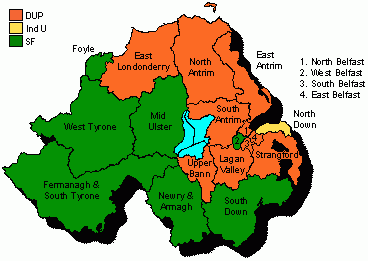
As Sinn Féin maintains a policy of abstentionism in regard to the Parliament of the United Kingdom, the 2017 election marks the first parliament since 1964 without any Irish nationalist MPs who take their seats in the House of Commons in Westminster.
Nationally, the governing Conservative Party falls eight seats short of a parliamentary majority after the election, reduced to four if the absence of Sinn Féin is taken into account. The DUP thus holds the balance of power and announces on June 10 that it will support the Conservative government on a “confidence and supply” basis.
Five seats change hands in Northern Ireland. The SDLP loses its seats in Foyle and South Down to Sinn Féin and the constituency of Belfast South to the DUP. Meanwhile, the UUP loses South Antrim to the DUP and Fermanagh and South Tyrone to Sinn Féin. The number of unionist and nationalist representatives, eleven and seven respectively, remain unchanged from the 2015 United Kingdom general election, although none of the nationalist members are participating in the current Parliament.
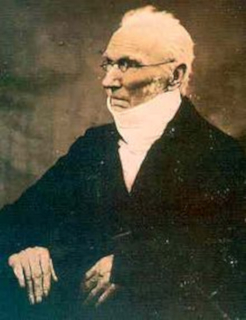
Brontë is the first of ten children born to Hugh Brunty, a farm labourer, and Alice McClory, in Drumballyroney, County Down. At one point in his adult life, he formally changes the spelling of his name from Brunty to Brontë.
Brontë has several apprenticeships until he becomes a teacher in 1798. He moves to England in 1802 to study theology at St. John’s College, Cambridge, and receives his BA degree in 1806. He is then appointed curate at Wethersfield, Essex, where he is ordained a deacon of the Church of England in 1806, and into the priesthood in 1807.
In 1809, Brontë becomes assistant curate at Wellington, Shropshire, and in 1810 his first published poem, Winter Evening Thoughts, appears in a local newspaper, followed in 1811 by a collection of moral verses, Cottage Poems. He moves to the West Riding of Yorkshire in 1811 as assistant curate at Hartshead, where he serves until 1815. In the meantime he is appointed a school examiner at a Wesleyan academy, Woodhouse Grove School, near Guiseley. In 1815 he moves again on becoming perpetual curate of Thornton. At Guiseley, Brontë meets Maria Branwell, whom he marries on December 29, 1812.
Brontë is offered the perpetual curacy of St. Michael and All Angels’ Church, Haworth in June 1819, and he takes the family there in April 1820. His sister-in-law Elizabeth Branwell, who had lived with the family at Thornton in 1815, joins the household in 1821 to help to look after the children and to care for Maria Brontë, who is suffering the final stages of uterine cancer. She decides to move permanently to Haworth to act as housekeeper.
After several attempts to seek a new spouse, Brontë comes to terms with widowhood at the age of 47, and spends his time visiting the sick and the poor, giving sermons, communion, and extreme unction, leaving his children alone with their aunt and a maid, Tabitha Aykroyd (Tabby), who tirelessly recounts local legends in her Yorkshire dialect while preparing the meals.
Brontë is responsible for the building of a Sunday school in Haworth, which he opens in 1832. He remains active in local causes into his old age, and between 1849 and 1850 organises action to procure a clean water supply for the village, which is eventually achieved in 1856.
In August 1846, Brontë travels to Manchester, accompanied by Charlotte, to undergo surgery on his eyes. On August 28 he is operated upon, without anaesthetic, to remove cataracts. Surgeons do not yet know how to use stitches to hold the incision in the eye together and as a consequence the patient is required to lie quietly in a darkened room for weeks after the operation. Charlotte uses her time in Manchester to begin writing Jane Eyre, the book which is to make her famous.
Following the death of his last surviving child, Charlotte, nine months after her marriage, he co-operates with Elizabeth Gaskell on the biography of his daughter. He is also responsible for the posthumous publication of Charlotte’s first novel, The Professor, in 1857. Charlotte’s husband, Arthur Bell Nicholls, who had been Brontë’s curate, stays in the household until he returns to Ireland after Brontë’s death, at the age of 84, on June 7, 1861. Brontë outlives not only his wife (by 40 years) but all six of his children.
In 1908, at the age of ten, de Valois starts attending ballet lessons. At the age of thirteen she begins her professional training at the Lila Field Academy for Children. It is at this time that she changes her name and makes her professional debut as a principal dancer in pantomime at the Lyceum Theatre in the West End.
The success of de Valois’s ballet Job: A Masque for Dancing for the Camargo Society in 1931, followed by her association with Lilian Baylis, director of the Old Vic Theatre, leads to the founding in 1931 of the Vic-Wells Ballet Company and the Sadler’s Wells School. She traces the history of the company, from its founding until it becomes the Royal Ballet in 1956, in Invitation to the Ballet (1937) and Come Dance with Me (1957).
Besides directing the company that she created, de Valois choreographs numerous ballets, including Checkmate (1937) and Don Quixote (1950). By drawing from English tradition for her choreographic material, as in The Rake’s Progress (1935), inspired by William Hogarth’s series of engravings, and The Prospect Before Us (1940), modeled on Thomas Rowlandson’s caricature of the same name, she creates a uniquely national ballet company. Her narrative ballets include prominent roles for male dancers, giving them artistic opportunities often neglected by other choreographers.
In 1963 de Valois retires as director of the Royal Ballet, although she remains head of the school until 1972. She is created a Dame of the British Empire in 1951 and is named Companion of Honour in 1980.
de Valois keeps her private life very distinct from her professional life, making only the briefest of references to her marriage to Dr. Arthur Blackall Connell, a physician and surgeon from Wandsworth, in her autobiographical writings. In April 1964 she is the subject of This Is Your Life, when she is surprised by Eamonn Andrews at the home of the dancer Frederick Ashton in London. She continues to make public appearances until her death in London on March 8, 2001 at the age of 102.
Mac Cába resigns his Dáil seat in March 1925 along with several other TDs, and at the resulting by-election on March 11, 1925, Cumann na nGaedheal candidate Martin Roddy wins his seat. He does not stand for public office again and returns to his post as a schoolteacher.
In the 1930s Mac Cába is involved with the short-lived but widely followed Irish Christian Front, serving as the organisation’s secretary and announcing its creation to the public on August 22, 1936. He is also member of the Blueshirts during this period and later the Irish Friends of Germany during World War II, a would-be Nazi Collaborator group in the event Germany invades Ireland. He chairs their meetings, denies the group is a fifth column and expresses the belief that a German victory would lead to a United Ireland. He is interned in 1940–1941 because of his pro-German sympathies, which he claims results from the desire to “see the very lifeblood squeezed out of England.”
Mac Cába dies in Dublin on May 31, 1972, leaving his wife, son, and three daughters. There is a bronze bust of him in the headquarters of the Educational Building Society, Westmoreland Street, Dublin.
Edwards, known to his friends as Robin and his students as Dudley, is the son of Walter Dudley Edwards, a journalist who comes to Ireland with his wife, Bridget Teresa MacInerney from Clare, and becomes a civil servant. His mother is a supporter of women’s rights and Edwards recalls that he had a ‘Votes for Women’ flag on his pram. His mother is a suffragette and a member of Cumann na mBan, a women’s organisation designed to support the Irish Volunteers. Members of Cumann na mBan gather intelligence, transport arms, nurse wounded men, provide safe houses, and organise support for Irish Republican Army (IRA) men in prison.
Also in 1933, Edwards marries Sheila O’Sullivan, a folklorist and teacher. They have three children, Mary Dudley Edwards a teacher and rights activist, Ruth Dudley Edwards, a historian, crime novelist, journalist and broadcaster, and Owen Dudley Edwards, a historian at the University of Edinburgh.
Along with Theodore William Moody, Edwards founds the Irish Historical Society in 1936, and its journal Irish Historical Studies is first published in 1938.
In 1937 Edwards is awarded a D.Litt by the National University of Ireland and in 1939 is appointed to a statutory lectureship in Modern Irish History at University College Dublin. He succeeds Mary Hayden to the Chair of Modern Irish History in 1944, which he holds until he retires in 1979. His contribution to the discipline of History in Ireland is substantial and includes the setting up of University College Dublin Archives Department, now part of the School of History.
The introduction to Edwards’ book Age of Atrocity records how the leading Irish history journal, Irish Historical Studies, edited by Edwards and Moody, for the first half-century and more of its existence, systematically avoids the theme of violence, killing and atrocity during the 16th and 17th centuries.
Following his wife’s death in April 1985, Robert Dudley Edwards dies on June 5, 1988, in St. Vincent’s Hospital in Dublin after a short illness.
(Pictured: Robert Walter Dudley Edwards (left) and Theodore William Moody (right).)
Gaughan, the eldest of six children, is born in Ballina, County Mayo, on October 5, 1949. He grows up at Healy Terrace and is educated at St. Muredach’s College, Ballina. After finishing his schooling, he emigrates from Ireland to England in search of work.
While in London, Gaughan becomes a member of the Official Irish Republican Army through Official Sinn Féin‘s English wing Clann na hÉireann and becomes an IRA volunteer in a London-based Active Service Unit. In December 1971, he is sentenced at the Old Bailey to seven years imprisonment for his part in an IRA fundraising mission to rob a bank in Hornsey, north London, which yields just £530, and for the possession of two revolvers.
Gaughan is initially imprisoned at Wormwood Scrubs, where he spends two years before being transferred to the top security HM Prison Albany on the Isle of Wight. While at Albany Prison, he requests political status, which is refused, and he is then placed in solitary confinement. He is later transferred to Parkhurst Prison, where four of the Belfast Ten are on hunger strike for political status.
On March 31, 1974, Gaughan, along with current Sinn Féin MLA Gerry Kelly, Paul Holme, Hugh Feeney and fellow Mayoman Frank Stagg, go on hunger strike to support the fight of Dolours and Marion Price to obtain political status and to be transferred to a jail in Ireland. The prisoners’ demands are as follows:
The right to political status
The right to wear their own clothes
A guarantee that they would not be returned to solitary confinement
The right to educational facilities and not engage in penal labour
The setting of a reasonable date for a transfer to an Irish prison
British policy at this time is to force-feed hunger strikers. According to the National Hunger Strike Commemoration Committee, “six to eight guards would restrain the prisoner and drag him or her by the hair to the top of the bed, where they would stretch the prisoner’s neck over the metal rail, force a block between his or her teeth and then pass a feeding tube, which extended down the throat, through a hole in the block.”
After visiting Gaughan in jail, his brother John describes his condition, “His throat had been badly cut by force feeding and his teeth loosened. His eyes were sunken, his cheeks hollow and his mouth was gaping open. He weighed about six stone.”
During his hunger strike, Gaughan’s weight drops from 160 lbs. to 84 lbs. He is force-fed for the first time on April 22, and this occurs 17 times during course of his hunger strike. The last time he is force-fed is the night before his death. After a hunger strike that lasts 64 days, Michael Gaughan dies on Monday, June 3, 1974, at the age of 24.
The cause of Gaughan’s death is disputed. The British government states that he died of pneumonia. The Gaughan family state that he died after prison doctors injured him fatally when food lodged in a lung punctured by a force-feeding tube. His death causes controversy in English medical circles, as some forms of treatment can be classed as assault if given without the express permission of the patient.
The timing of Gaughan’s death comes just one week after the British Government had capitulated to the demands of Ulster loyalist hunger strikers. After his death, the British government’s policy of force-feeding ends and the remaining hunger strikers are given assurances that they will be repatriated to Irish prisons. However, these promises are reneged on by the British government.
Gaughan’s body is initially removed from London and on June 7-8 over 3,000 mourners line the streets of Kilburn and march behind his coffin, which is flanked by an IRA honour guard, to a Requiem Mass held in the Church of the Sacred Heart of Jesus.
Following the Requiem Mass, his body is transported to Dublin, where again it is met by mourners and another IRA honour guard who bring it to the Church of the Immaculate Conception on Merchant’s Quay, where thousands file past as it lay in state. The following day, his body is removed to Ballina, County Mayo. A funeral mass takes place on June 9, at St. Muredach’s Cathedral, and the procession then leads to Leigue Cemetery. Gaughan is given a full IRA funeral and is laid to rest in the republican plot, where Frank Stagg would join him after being reburied in November 1976. His funeral is attended by over 50,000 people and is larger than the funeral of former president Éamon de Valera the following year.
O’Neill, the eldest legitimate son of Conn O’Neill, 1st Earl of Tyrone, is a chieftain whose support the English consider worth gaining. However, he rejects overtures from Thomas Radclyffe, 3rd Earl of Sussex, the Lord Deputy of Ireland, and refuses to help the English against the Scottish settlers on the coast of Antrim. He allies himself instead with the MacDonnells, the most powerful of these immigrants. Nevertheless, Queen Elizabeth I of England is disposed to come to terms with O’Neill who, after his father’s death, is de facto chief of the O’Neill clan. She recognizes his claims to the chieftainship, thus throwing over a kinsman, Brian O’Neill. O’Neill, however, refuses to put himself in the power of Sussex without a guarantee for his safety and his claims are so exacting that Elizabeth determines to restore Brian. An attempt to incite the O’Donnells against him, however, is frustrated.
Elizabeth, who is not prepared to undertake the subjugation of the Irish chieftain, urgently desires peace with O’Neill, especially when the devastation of his territory by Sussex brings him no nearer to submission. Sussex is not supported by the queen, who sends Gerald FitzGerald, 11th Earl of Kildare to arrange terms with O’Neill. The latter agrees to present himself before Elizabeth. Accompanied by Thomas Butler, 10th Earl of Ormond and Kildare, he reaches London on January 4, 1562. Elizabeth temporizes but, finding that O’Neill is in danger of becoming a tool in the hands of Spanish intriguers, permits him to return to Ireland, recognizing him as “the O’Neill,” and chieftain of Tyrone.
There are at this time three powerful contemporary members of the O’Neill family in Ireland — O’Neill, Turlough Lynagh O’Neill, and Matthew Ó Néill, 1st Baron Dungannon. Turlough had schemed to supplant O’Neill during his absence in London. The feud does not long survive O’Neill’s return to Ireland, where he reestablishes his authority and renews his turbulent tribal warfare. Elizabeth at last authorizes Sussex to take the field against O’Neill, but two expeditions fail. O’Neill then lays the entire blame for his lawless conduct on the lord deputy’s repeated alleged attempts on his life. Elizabeth consents to negotiate, and practically all of O’Neill’s demands are conceded.
O’Neill then turns his hand against the MacDonnells, claiming that he is serving the Queen of England in harrying the Scots. He fights an indecisive battle with Sorley Boy MacDonnell near Coleraine in 1564, and in 1565 he routs the MacDonnells and takes Sorley Boy prisoner near Ballycastle. This victory strengthens O’Neill’s position, but the English make preparations for his subjugation.
Failing in an attempt to arrange terms, and also in obtaining the help which he solicited from France, O’Neill is utterly routed by the O’Donnells at the Battle of Farsetmore near Letterkenny and, seeking safety in flight, throws himself on the mercy of his enemies, the MacDonnells. Attended by a small body of gallowglass, and taking his prisoner Sorley Boy with him, he presents himself among the MacDonnells near Cushendun, on the Antrim coast, hoping to propose an alliance. Here, on June 2, 1567, he is killed by the MacDonnells and his headless body is buried at Crosskern Church at Ballyterrim above Cushendun. His body is possibly later moved to Glenarm Abbey. Unbeknownst to O’Neill, The Scots had already come to an agreement with Henry Sidney and William Piers, Seneschal of Clandeboye, commander of the English garrison at Carrickfergus. The English Government tries to pass this off as a “drunken brawl” turned savage. Piers travels to Cushendun to take O’Neill’s head and send it to Dublin Castle.
Born in Birmingham to a working class family on February 15, 1883, Ward initially pursues a career as a civil servant before concentrating on writing full-time. He works as a poet, songwriter and comedy sketch writer for music hall performers before creating the Sax Rohmer persona and pursuing a career writing fiction.
Like his contemporaries Algernon Blackwood and Arthur Machen, Ward claims membership to one of the factions of the qabbalisticHermetic Order of the Golden Dawn. He also claims ties to the Rosicrucians, but the validity of his claims has been questioned. His doctor and family friend Dr R. Watson Councell may have been his only legitimate connection to such organisations.
Ward’s first published work comes in 1903, when the short story “The Mysterious Mummy” is sold to Pearson’s Weekly. His main literary influences are Edgar Allan Poe, Arthur Conan Doyle and M. P. Shiel.
Ward gradually transitions from writing for music hall performers to concentrating on short stories and serials for magazine publication. In 1909 he marries Rose Elizabeth Knox. He publishes his first book Pause! anonymously in 1910.
After penning Little Tich in 1911 as ghostwriter for the famous music hall entertainer of the same name, Ward issues the first Fu Manchu novel, The Mystery of Dr. Fu-Manchu, serialised from October 1912 to June 1913. It is an immediate success. The Fu Manchu stories, together with his more conventional detective series characters — Paul Harley, Gaston Max, Red Kerry, Morris Klaw and the Crime Magnet — make him one of the most successful and well-paid authors of the 1920s and 1930s. In the 28 years from 1931 to 1959, he adds no fewer than 10 new books to the Fu Manchu series.
Other works by Ward include The Orchard of Tears (1918), The Quest of the Sacred Slipper (1919), Tales of Chinatown (1922) and Brood of the Witch-Queen as well as numerous short stories.
Ward’s work is banned in Nazi Germany, causing him to complain that he could not understand such censorship, stating “my stories are not inimical to Nazi ideals.”
After World War II, Ward and his wife move to New York, only returning to London shortly before his death. He dies on June 1, 1959 at the age of 76, due to an outbreak of Influenza A virus subtype H2N2.
Waddell is the tenth and youngest child of Hugh Waddell, a Presbyterian minister and missionary who is lecturing in the Imperial University. She spends the first eleven years of her life in Japan before her family returns to Belfast. Her mother dies shortly afterwards, and her father remarries. Hugh Waddell himself dies and leaves his younger children in the care of their stepmother. Following the marriage of her elder sister Meg, she is left at home to care for her stepmother, whose health is deteriorating by this time.
Waddell is educated at Victoria College for Girls and Queen’s University Belfast, where she studies under Professor Gregory Smith, graduating in 1911. She follows her BA with first class honours in English with a master’s degree, and in 1919 enrolls in Somerville College, Oxford, to study for her doctorate. A traveling scholarship from Lady Margaret Hall in 1923 allows her to conduct research in Paris. It is at this time that she meets her life-long friend, Maude Clarke.
Waddell is best known for bringing to light the history of the medieval goliards in her 1927 book The Wandering Scholars and translating their Latin poetry in the companion volume Medieval Latin Lyrics. A second anthology, More Latin Lyrics, is compiled in the 1940s but not published until after her death. Her other works range widely in subject matter. For example, she also writes plays. Her first play is The Spoiled Buddha, which is performed at the Opera House, Belfast, by the Ulster Literary Society. Her The Abbe Prevost is staged in 1935. Her historical novel Peter Abelard is published in 1933. It is critically well received and becomes a bestseller.
A serious debilitating neurological disease puts an end to her writing career in 1950. She dies in London on March 5, 1965, and is buried in Magherally churchyard, County Down, Northern Ireland. A prize-winning biography of her by the Benedictine nun DameFelicitas Corrigan is published in 1986.
Keane is born on Church Street in Listowel on July 21, 1928, the son of a national school teacher, William B. Keane, and his wife Hannah (née Purtill). He is educated at Listowel National School and then at St. Michael’s College, Listowel. He works as a chemist’s assistant for A.H. Jones who dabbles in buying antiques. He has various jobs in the UK between 1951 and 1955 working as a street cleaner and a bartender, living in a variety of places including Northampton and London. It is while he is in Northampton that Keane is first published in an unnamed women’s magazine for which he receives £15.
After returning from the United Kingdom, Keane is a pub owner in Listowel from 1955.
Keane marries Mary O’Connor at Knocknagoshel Church on January 5, 1955 and they have four children: Billy, Conor, John and Joanna. He is an Honorary Life Member of the Royal Dublin Society from 1991, serves as president of Irish PEN and is a founder member of the Society of Irish Playwrights as well as a member of Aosdána. He is named the patron of the Listowel Players after the Listowel Drama Group fractures. He remains a prominent member of the Fine Gael party throughout his life, never being shy of political debate.
Keane cites many literary influences including Bryan MacMahon and George Fitzmaurice, fellow Kerry writers and playwrights. His personal influences are numerous but, most notably he thanks his father and his wife, Mary. He is grateful for his father’s help with early editing, allowing him access to his personal library, and encouraging him to continue his work until he is successful. He is also influenced by the local population and the patrons of his pub from which he bases some of his characters.
Keane dies on May 30, 2002 of complications from prostate cancer, which he had been battling for eight years. His death comes on the eve of the annual Listowel Writers’ Festival, a week-long event at which he had long been a dominating and avuncular presence.
Keane’s nephew is the investigative journalist Fergal Keane. His son John is a journalist with the Kilkenny People while his son Billy regularly writes a column for the Irish Independent.



 seamus dubhghaill