seamus dubhghaill

Promoting Irish Culture and History from Little Rock, Arkansas, USA


Leave a comment

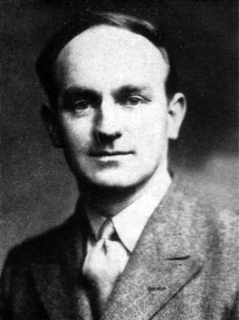
Death of Irish Writer Michael McLaverty

Michael McLaverty, Irish writer of novels and short stories, dies on March 22, 1992, in County Down, Northern Ireland.

McLaverty is born on July 5, 1904, at Magheross, near Carrickmacross, County Monaghan, the son of Michael McLaverty, a waiter, and Kathleen McLaverty (née Brady). His father works in a hotel in the town until they move to Rathlin Island, and later to Belfast, when he is five years old. He attends St. Malachy’s College in the city, where an inspiring teacher instills in him a love of William Shakespeare‘s writings. He entered Queen’s University Belfast (QUB) in October 1924 and studies physics. He obtains a B.Sc. in 1928 and immediately takes his H.Dip.Ed., completing his teaching practice in St. Mary’s University College, Strawberry Hill, London. The following year he begins teaching at St. John’s Primary School in Colinward Street, west Belfast. He is admitted to the degree of M.Sc. at QUB in 1933.

In 1933, McLaverty marries Mary Conroy (formerly Giles), a young widow and fellow teacher at St. John’s. They have two sons and two daughters.

During his time at St. John’s, McLaverty writes his first five novels and fifteen short stories. In the 1930s he has developed a distinctive style in precise, unsentimental, but compassionate short stories. By the late 1930s, however, he switches his energies from short stories to the novel. Call My Brother Back (1939) contrasts the traditional world of Rathlin Island with the northern troubles in a family context. Another novel, Lost Fields (1941), and his collection of short stories, The White Mare (1943), explore the Belfast of his childhood and deal with the underlying tensions in Irish rural life. In the period 1949–55 he publishes five other novels: Three Brothers (1948), Truth in the Night (1951), School for Love (1954), The Choice (1958), and Brightening Day (1965). These novels deal with ordinary people and the dilemmas they encounter in their families and communities. His writings are influenced by Anton Chekhov, Leo Tolstoy, Katherine Mansfield, Gerard Manley Hopkins, and the Irish short story writers Liam O’Flaherty and Daniel Corkery.

As headmaster of St. Thomas’s intermediate school, a large school for boys in Ballymurphy, off the Falls Road, McLaverty gives his first job to the young Seamus Heaney, in whom he cultivates an interest in the writings of Chekhov and Tolstoy and the Irish writers Mary Lavin and Patrick Kavanagh. He deems Heaney to be the only genius he has ever met, and his work and success are a great source of pride and joy to him. His encouragement of the young John McGahern is of as much benefit to McLaverty himself, as their short but intense correspondence give him the energy to resume his writings.

Between his resignation from St. Thomas’s in 1963 and the early 1970s he teaches part-time at St. Joseph’s training college and St. Dominic’s High School, one of Belfast’s best-known grammar schools. In 1981 his old alma mater recognises his contribution to literature by awarding him an honorary master’s degree. In the same year he wins the American Irish literary fellowship, a prestigious literary award of $10,000, in recognition of his “impressive body of work as a short story writer and novelist.”

McLaverty dies on March 22, 1992, in County Down, Northern Ireland.

(From: “McLaverty, Michael” by Éamonn Ó Ciardha, Dictionary of Irish Biography, http://www.dib.ie, October 2009)


Leave a comment

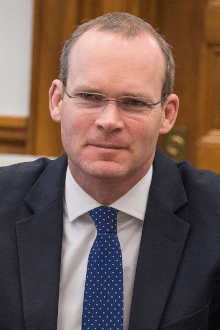
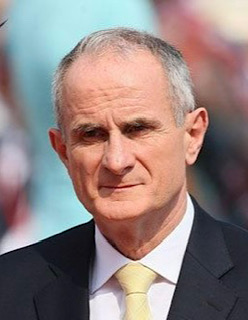
Birth of Simon Coveney, Minister of Foreign Affairs & Deputy Leader of Fine Gael

Simon Coveney, Fine Gael politician who has served as Minister for Foreign Affairs and Deputy Leader of Fine Gael since 2017 and Minister for Defence since 2020, is born in Cork, County Cork, on June 16, 1972.

Coveney is born to Hugh Coveney, a chartered quantity surveyor and later a TD, and Pauline Coveney. His uncle is Archbishop Patrick Coveney. His brother, Patrick, is chief executive of the food corporation Greencore. He is educated locally in Cork, before later attending Clongowes Wood College, County Kildare. He is expelled from the college in Transition Year but ultimately is invited back to complete his full six years there. He repeats his Leaving Certificate in Bruce College in Cork. He subsequently attends University College Cork and Gurteen College, County Tipperary, before completing a BSc in Agriculture and Land Management from Royal Agricultural College, Gloucestershire.

A keen fan of all competitive sport, Coveney plays rugby for Garryowen, Cork Constitution and Crosshaven Rugby Club. In 1997-98, he leads the “Sail Chernobyl Project” which involves sailing a boat 30,000 miles around the world and raising €650,000 for charity. He is a qualified sailing instructor and lifeguard. He spends several years working as an agriculture adviser and farm manager.

Coveney is first elected to Dáil Éireann in a 1998 by-election as a Fine Gael candidate for Cork South-Central. He holds Shadow Ministries in the areas of Drugs and Youth Affairs, Communications, Marine and Natural Resources, and Transport. He chairs the Fine Gael Policy Development Committee prior to the 2011 Irish general election.

Coveney is a member of Cork County Council and the Southern Health Board from 1999 to 2003.

Coveney is elected to the European Parliament in 2004 and is a member of the EPP-ED group. He is a member of the Committee on Foreign Affairs and the Internal Market and Consumer Protection Committee. He is the author of the European Parliament’s Annual Report on Human Rights in the World for the year 2004 and again for 2006.

Coveney is named Tánaiste by Leo Varadkar, replacing Frances Fitzgerald, on November 30, 2017, a position he holds until June 27, 2020. He also serves as Minister for Housing, Planning and Local Government as well as Minister for Agriculture, Food and the Marine. For the six-month period ending June 2013, he chairs the EU Council of Agriculture & Fisheries Ministers where he is at the forefront regarding EU efforts in respect of Common Agricultural (CAP) as well as Common Fisheries (CFP) Policy reforms. Under his chairmanship both dossiers are progressed significantly, with a reform package for CFP agreed in May 2013 and a reform package for CAP agreed at the end of the Irish Presidency in July. The Defence portfolio is added to his brief on July 11, 2014.

In July 2008, Simon marries his long-time girlfriend Ruth Furney, an IDA Ireland employee. They have three daughters and currently live in Carrigaline, County Cork.


Leave a comment

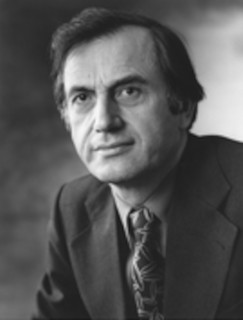
Birth of Physicist Daniel Joseph Bradley

Daniel Joseph Bradley, physicist and Emeritus Professor of Optical Electronics at Trinity College, Dublin, is born on January 18, 1928, in Derry, County Londonderry, Northern Ireland.

Bradley is one of four surviving children of John and Margaret Bradley, Lecky Road, Derry. He leaves school to work as a telegraph boy but returns to education at St. Columb’s College. Following training as a teacher at St. Mary’s Training College, Belfast, he qualifies in 1947. While teaching in a primary school in Derry he studies for a degree in mathematics as an external student at the University of London and is awarded a degree in 1953.

Moving to London where he teaches mathematics in a grammar school, Bradley decides to register for an evening course at Birkbeck College. His first choice is mathematics but as he already has a degree in the subject the admissions staff suggests that he study physics. In 1957, after four years of part-time study, he is awarded a Bachelor of Science degree in physics by Birkbeck, achieving the highest marks in his final exams in the University of London overall. He next joins Royal Holloway College as an assistant lecturer and simultaneously enrolls as a PhD student, working on Fabry–Pérot interferometer etalon-based high-resolution spectroscopy supervised by Samuel Tolansky. He receives a PhD in 1961.

Bradley is a pioneer of laser physics, and his work on the development of ultra-fast pulsed lasers adds a new and vitally important element to the capabilities of this new type of light source. In particular, working on dye lasers, he produces pulses of light as short as one picosecond (one picosecond is to a second as a second is to 31,800 years). His work paves the way for the completely new field of non-linear optical interactions. In addition, he inspires a new generation of laser scientists in Ireland and the UK, many of whom are international leaders in their fields.

Appointed to a lectureship in the physics department at Imperial College London, Bradley sets up a research programme in UV solar spectroscopy using rocket technology to reach high altitudes.

In 1963 Bradley begins work in laser physics but returns to Royal Holloway College as a reader one year later. In 1966 he is appointed professor and head of department at Queen’s University, Belfast. There he quickly establishes a space research group of international standing to do high-resolution solar spectroscopy. He attracts significant funding from a variety of agencies, allowing him to build his department into one of the world’s leading laser research centres, involving a total of 65 scientists. However, he leaves Belfast because of fears for his family’s safety as political violence escalates in the early 1970s amidst The Troubles.

Bradley returns to Imperial College London in 1973 to a chair in laser physics and heads a group in optical physics, laser physics and space optics. He is head of the Physics department from 1976 to 1980 but is frustrated by cutbacks and a rule governing the ratio of senior to junior positions, one consequence of which is that he is unable to maintain a long-established chair in optical design. He is also critical of the college administration’s handling of some departmental grant applications. He resigns in 1980 and moves to Dublin.

Among Bradley’s many lasting contributions to laser research in the UK is the setting up of one of the world’s leading research facilities for laser research, the Central Laser Facility at the Rutherford Appleton Laboratory (RAL).

Arriving at Trinity College, Dublin, Bradley decides the time is ripe to move on from laser research and development into laser applications. In 1982, with Dr. John Kelly, a chemist, and Dr. David McConnell, a geneticist, he forms a team which wins funding for a project using laser techniques to explore the structure of organic molecules like DNA and proteins. Unfortunately, however, his work at Trinity is cut short by ill health and he retires in 1984. His research on semiconductor lasers is carried on and this work on developing widely tuneable lasers for optical communications systems continues.

A member of the Royal Irish Academy, Bradley is Fellow Emeritus of Trinity College Dublin, and holds fellowships of the Royal Society, The Optical Society of America and Institute of Physics. Through time the ravage of his illness restricts his travelling and eventually he is cared for in a residential home in Dublin, where he passes away on February 7, 2010.


Leave a comment

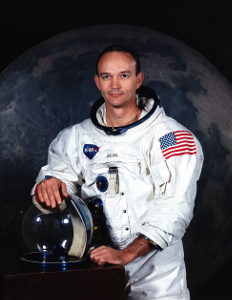
Birth of Astronaut & Test Pilot Michael Collins

Michael Collins, Irish American former astronaut and test pilot who is part of the Gemini 10 and Apollo 11 missions, is born in Rome, Italy, on October 31, 1930. The Apollo 11 mission includes the first lunar landing in history. His Irish roots can be traced to the town of Dunmanway in County Cork, from which his grandfather, Jeremiah Collins, emigrates in the 1860s.

Collins is born in Rome where his father, United States Army Major General James Lawton Collins, is stationed at the time. After the United States enters World War II, the family moves to Washington, D.C., where Collins attends St. Albans School. During this time, he applies and is accepted to the United States Military Academy in West Point, New York, and decides to follow his father, two uncles, brother and cousin into the armed services.

In 1952, Collins graduates from West Point with a Bachelor of Science degree. He joins the United States Air Force that same year and completes flight training at Columbus Air Force Base in Mississippi. His performance earns him a position on the advanced day fighter training team at Nellis Air Force Base, flying the F-86 Sabres. This is followed by an assignment to the 21st Fighter-Bomber Wing at the George Air Force Base, where he learns how to deliver nuclear weapons. He also serves as an experimental flight test officer at Edwards Air Force Base in California, testing jet fighters.

Collins makes the decision to become an astronaut after watching John Glenn‘s Mercury-Atlas 6 flight. He applies for the second group of astronauts that same year but is not accepted. Disappointed, but undaunted, Collins enters the USAF Aerospace Research Pilot School as the Air Force begins to research space. That year, NASA once again calls for astronaut applications, and Collins is more prepared than ever. In 1963 he is chosen by NASA to be part of the third group of astronauts.

Collins makes two spaceflights. The first, on July 18, 1966, is the Gemini 10 mission, where Collins performs a spacewalk. The second is the Apollo 11 mission on July 20, 1969, the first lunar landing in history. Collins, accompanied by Neil Armstrong and Edwin “Buzz” Aldrin, remains in the Command Module while his partners walk on the moon’s surface. Collins continues circling the moon until July 21, when Armstrong and Aldrin rejoin him. The next day, he and his fellow astronauts leave lunar orbit. They land in the Pacific Ocean on July 24. Collins, Armstrong and Aldrin are all awarded the Presidential Medal of Freedom by Richard Nixon. However, Aldrin and Armstrong end up receiving a majority of the public credit for the historic event, although Collins is also on the flight.

Collins leaves NASA in January 1970, and one year later, he joins the administrative staff of the Smithsonian Institution in Washington, D.C. In 1980, he enters the private sector, working as an aerospace consultant. In his spare time, Collins says he stays active and spends his days “worrying about the stock market” and “searching for a really good bottle of cabernet under ten dollars.”

Collins and his wife, Patricia Finnegan, have three children. The couple lived in both Marco Island, Florida, and Avon, North Carolina until her death in April 2014.

On April 28, 2021, Collins dies of cancer at his home in Naples, Florida, at the age of 90. Buzz Aldrin, who becomes the last survivor of Apollo 11, says that “wherever [Collins has] been or will be, you will always have the Fire to Carry us deftly to new heights and the future.”

On January 30, 2023, Collins’ ashes are interred in Arlington National Cemetery.