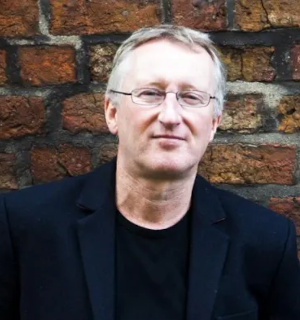
Bateman attends Bangor Grammar School leaving at the age of 16 when he is hired by Annie Roycroft to join the County Down Spectator as a “cub” reporter, then columnist and deputy editor. A collection of his columns is published as Bar Stool Boy in 1989.
Bateman has been writing novels since his debut, Divorcing Jack, in 1994. Divorcing Jack wins a Betty Trask Award in the same year and is adapted into a 1998 film starring David Thewlis. Several of his novels feature the semi-autobiographical Belfast journalist, Dan Starkey.
Bateman’s book Murphy’s Law is adapted from the BBC television series Murphy’s Law (2001–2007), featuring James Nesbitt. He explains on his website that “Murphy’s Law was written specifically for James Nesbitt, a local actor who became a big TV star through Cold Feet. The ninety-minute pilot for Murphy’s Law on BBC One was seen by more than seven million people, and led to three TV series, on which I was the chief writer.”
Bateman’s eight-part series Scúp is written in English and translated into Irish. It is produced by Stirling Productions and BBC Northern Ireland. A second series has since been commissioned.
French attends Trinity College Dublin, and trains in acting. She settles in Ireland and has lived in Dublin since 1990. She and her husband have two daughters.
French is enthralled by both acting and writing since her childhood but eventually focuses more on acting. She grows up reading mystery and crime novels. She trains as a professional actor at Trinity, and she works in theatre, film, and voice-over.
In her later 30s, her passion for writing is rekindled. She begins writing her debut novel in the months-long lulls between castings. In the Woods is published in 2007 to international acclaim and receives rave reviews from many publications. Publishers Weekly praises her, saying she “expertly walks the line between police procedural and psychological thriller in her debut” and that “Ryan and Maddox are empathetic and flawed heroes, whose partnership and friendship elevate the narrative beyond a gory tale of murdered children and repressed childhood trauma.” It receives several literary prizes, is a bestseller in hardcover and paperback, and has been termed a “dream debut.” In 2014, Flavorwire includes it in their 50 of the Greatest Debut Novels Since 1950. As of 2015 more than one million copies of In the Woods have been sold.
French’s second novel, The Likeness (2008), presents the story of the first novel’s co-lead, Cassie Maddox. It quickly achieves high positions on bestseller lists in various countries and stays on The New York Times Best Seller list for several months. In its reviews of the novel, Kirkus Reviews praises its mix of “police procedures, psychological thrills and gothic romance beautifully woven into one stunning story.” In an interview with The Guardian, French states that Donna Tartt‘s The Secret History was an influence on The Likeness, opening up the “landscape of friendship as something worthy of exploration and something that could be powerful enough to trigger a murder.”
French’s first six novels are part of the Dublin Murder Squad series. After publishing The Trespasser in 2016, she publishes two standalone novels. Both The Witch Elm and The Searcher also take place in Ireland.
In 2015, Euston Films & Veritas acquire TV production rights. Sarah Phelps writes the screenplay, which she bases on both In the Woods and The Likeness, for the eight-episode series of Dublin Murders, commissioned by the BBC for BBC One and Starz, with RTÉ later joining the project. Filming commences in 2018 in Belfast and Dublin and continues in Dublin to late February 2019. Broadcast begins on BBC One on October 14, 2019, on RTÉ One on October 16, 2019, and on Starz on November 10, 2019.
The Brady funeral is making its way along the Andersonstown Road toward Milltown Cemetery when the corporals’ car appears from the opposite direction. The car drives straight towards the front of the funeral, which is headed by several black taxis. It drives past a Sinn Féin steward who signals it to turn. Mourners at the funeral say they believed they were under attack from Ulster loyalists, as three days earlier, loyalist Michael Stone had attacked an IRA funeral and killed three people. The car then mounts a pavement, scattering mourners, and turns into a small side road. When this road is blocked, it then reverses at speed, ending up within the funeral procession. Corporal Wood attempts to drive the car out of the procession but his exit route is blocked by a black taxi.
An angry crowd surrounds the car, smashes the windows and attempts to drag the soldiers out. Wood produces a Browning Hi-Power 9mm handgun. He climbs partly out of a window and fires a shot in the air, which briefly scatters the crowd. The crowd then surges back, with some of them attacking the car with a wheel-brace and a stepladder snatched from a photographer. The corporals are eventually pulled from the car and punched and kicked to the ground.
The attack is witnessed by the media and passersby. JournalistMary Holland recalls seeing one of the men being dragged past a group of journalists. “He didn’t cry out; just looked at us with terrified eyes, as though we were all enemies in a foreign country who wouldn’t have understood what language he was speaking if he called out for help.”
The men are taken to nearby Casement Park sports ground, just opposite. Here they are beaten, stripped to their underpants and socks, and searched by a small group of men. The BBC and The Independent write that the men were “tortured.” A search reveals that the men are British soldiers. Their captors find a military ID on Howes which is marked “Herford,” the site of a British military base in Germany, but it is believed they misread it as “Hereford,” the headquarters of the Special Air Service (SAS).
Redemptoristpriest Father Alec Reid, who plays a significant part in the peace process leading to the 1998 Good Friday Agreement, intervenes and attempts to save the soldiers, and asks people to call an ambulance. “I got down between the two of them and I had my arm around this one and I was holding this one up by the shoulder….They were so disciplined, they just lay there totally still and I decided to myself they were soldiers. There was a helicopter circling overhead and I don’t know why they didn’t do something, radio to the police or soldiers to come up, because there were these two of their own soldiers.”
One of the captors warns Father Reid not to interfere and orders two men to take him away.
The two soldiers are placed in a taxi and driven fewer than 200 yards to a waste ground near Penny Lane (South Link), just off the main Andersonstown Road. There they are taken out of the vehicle and shot dead. Wood is shot six times and Howes is shot five times. Each also has multiple injuries to other parts of their bodies. The perpetrators quickly leave the scene. Father Reid hears the shots and rushes to the waste ground. He believes one of the soldiers is still breathing and attempts to give him mouth-to-mouth resuscitation. Upon realizing that the soldiers are dead, he gives them the last rites. According to photographer David Cairns, although photographers have their films taken by the IRA, he is able to keep his by quickly leaving the area after taking a photograph of Reid kneeling beside the almost naked body of Howes, administering the last rites. Cairns’ photograph is later named one of the best pictures of the past 50 years by Life magazine.
The whole incident is filmed by a British Army helicopter hovering overhead. An unnamed soldier of the Royal Scots says his eight-man patrol is nearby and sees the attack on the corporals’ car but are told not to intervene. Soldiers and police arrive on the scene three minutes after the corporals had been shot. A British Army spokesman says the army did not respond immediately because they needed time to assess the situation and were wary of being ambushed by the IRA. The large funeral procession also prevents them getting to the scene quickly.
Shortly after, the IRA releases a statement:
“The Belfast Brigade, IRA, claims responsibility for the execution of two SAS members who launched an attack on the funeral cortege of our comrade volunteer Kevin Brady. The SAS unit was initially apprehended by the people lining the route in the belief that armed loyalists were attacking them and they were removed from the immediate vicinity. Our volunteers forcibly removed the two men from the crowd and, after clearly ascertaining their identities from equipment and documentation, we executed them.”
Two men, Alex Murphy and Harry Maguire, are sentenced to life imprisonment for murder, but are released in 1998 under the terms of the Good Friday Agreement. Several other men receive lesser sentences for their part in the corporals killings.
(Pictured: Catholic priest Father Alec Reid administers the last rights to Corporal David Howes, one of two British soldiers brutally beaten and murdered in Belfast)
The BBC‘s Northern Ireland correspondent says the historic trip is intended as a gesture to reassure the province’s unionists, while at the same time trying not to alienate the nationalist population.
The Queen is invited to Armagh by the authorities to present the royal charter renewing Armagh’s status as a city.
In her speech, the Queen addresses all the people of Northern Ireland. She says, “For many difficult years the people of Northern Ireland have shown courage and compassion of an extraordinary kind. Today as they begin to look towards a more peaceful future, Armagh with its two great cathedrals standing so close together presents a powerful symbol of the strength spirit and hopes of people across Northern Ireland.”
Cardinal Cahal Daly says the Queen’s visit is a tribute to the progress made in the peace process since the IRA ceasefire came into effect on August 31, 1994.
Archbishop Robin Eames says, “Look how far we’ve come in a year. It’s a message of symbolism. Be patient, we’ve a long, long way to go but today is one little part of that jigsaw.”
Hendron says, “Things are different now. People must stand up and be counted. You can’t hide in your home. There are two communities here and I think it’s important to go out and shake hands with people like the Queen and from my point of view, she’s very welcome.”
Bardwell is born to Irish parents William Hone and Mary Collise and moves to Ireland at the age of two. Her father’s family are of the Anglo-IrishHone family. She has a difficult childhood growing up in Leixlip, County Kildare. She is educated at Alexandra College and briefly studies in Switzerland. She works in a variety of jobs in Ireland and later Scotland, where, in 1948, she meets poet Michael Bardwell. The couple has two children and later separate.
Bardwell becomes a part of the literary scene of Soho in London, where she socialises with fellow writers, including Anthony Cronin, Francis Bacon, Patrick Kavanagh and Anthony Burgess. In the 1950s, she meets Fintan McLachlan, with whom she has three children, including the composer, John McLachlan. The family moves back to Dublin, where she works as a reviewer for Hibernia magazine and as a poetry editor.
From 1970 onward, Bardwell’s work is published regularly, starting with her first volume of poetry, The Mad Cyclist, which is later followed by her first novel, Girl on a Bicycle. She writes a number of plays and short stories, such as Outpatients, and her works are produced for RTÉ and the BBC. In 1984, she writes a musical play, No Regrets, based on the life of Édith Piaf. It opens at the Gaiety Theatre starring Anne Bushnell, and later tours across Ireland.
Bardwell’s work is heavily influenced by her difficult upbringing and her experiences in London and Dublin. In her memoir, A Restless Life, she describes her life as “a crescendo of madness.” She is considered an important poet by her contemporaries, who include Patrick Kavanagh, John Jordan, Paul Durcan, Macdara Woods and Michael Hartnett. On the publication of her fourth collection of poetry, The White Beach, Eilean Ni Chuilleanain states “it is good to see her work of the decades collected – it has inspired many Irish poets, male and female, and should be much more widely known,” adding that her work is “witty, full of sharp intimate honesty, full of truth and surprises.”
In 1975, Bardwell co-founds the long running literary magazine Cyphers with Eiléan Ní Chuilleanáin and Macdara Woods, and acts as a co-editor until 2012. She is the recipient of the Marten Toonder Award in 1993, and the Dede Korkut Short Story Award from Turkish PEN in 2010.
In later life, Bardwell moves to Annamakarraig in County Monaghan and later to Cloonagh in County Sligo, where in 1993 she co-founds the Scríobh Literary Festival. She is a member of the Irish artists’ association Aosdána and acts as one of Patrick Kavanagh’s literary executors.
Bardwell dies at the age of 94 in Sligo, County Sligo, on June 28, 2016.
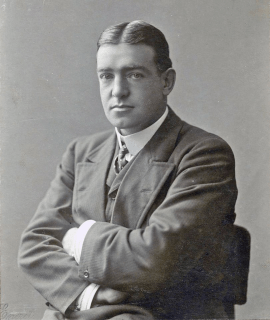
Shackleton is the second of ten children and the first of two sons. His father, Henry Shackleton, tries to enter the British Army, but his poor health prevents him from doing so. He becomes a farmer instead, settling in Kilkea. Shackleton’s mother, Henrietta Letitia Sophia Gavan, is descended from the Fitzmaurice family. His brother Frank achieves notoriety as a suspect, later exonerated, in the 1907 theft of the so-called Irish Crown Jewels, which have never been recovered.
The Shackleton family moves to Sydenham, London when he is ten. His first experience of the polar regions is as third officer on Captain Robert Falcon Scott‘s Discovery Expedition of 1901–04, from which he is sent home early on health grounds, after he and his companions Scott and Edward Adrian Wilson set a new southern record by marching to latitude 82°S. During the Nimrod Expedition of 1907–09, he and three companions establish a new record Farthest South latitude at 88°S, only 97 geographical miles from the South Pole, the largest advance to the pole in exploration history. Also, members of his team climb Mount Erebus, the most active Antarctic volcano. For these achievements, he is knighted by King Edward VII on his return home.
After the race to the South Pole ends in December 1911, with Roald Amundsen‘s conquest, Shackleton turns his attention to the crossing of Antarctica from sea to sea, via the pole. To this end, he makes preparations for what becomes the Imperial Trans-Antarctic Expedition, 1914–17. Disaster strikes this expedition when its ship, Endurance, becomes trapped in pack ice and is slowly crushed before the shore parties can be landed. The crew escapes by camping on the sea ice until it disintegrates, then by launching the lifeboats to reach Elephant Island and ultimately South Georgia island, a stormy ocean voyage of 720 nautical miles and Shackleton’s most famous exploit.
In 1921, Shackleton returns to the Antarctic with the Shackleton–Rowett Expedition on a 125-ton Norwegian sealer, named Foca I, which he renames Quest. When the party arrives in Rio de Janeiro, he suffers a suspected heart attack. He refuses a proper medical examination, so Quest continues south, and on January 4, 1922, arrives at South Georgia. In the early hours of the next morning, Shackleton summons the expedition’s physician, Alexander Macklin, to his cabin, complaining of back pains and other discomfort. According to Macklin’s own account, he tells Shackleton he has been overdoing things and should try to “lead a more regular life,” to which Shackleton answers, “You are always wanting me to give up things, what is it I ought to give up?” “Chiefly alcohol, Boss,” replies Macklin. A few moments later, at 2:50 AM on January 5, 1922, he suffers a fatal heart attack. At his wife’s request, he is buried there.
Away from his expeditions, Shackleton’s life is generally restless and unfulfilled. In his search for rapid pathways to wealth and security, he launches business ventures which fail to prosper, and he dies heavily in debt. Upon his death, he is lauded in the press but is thereafter largely forgotten, while the heroic reputation of his rival Scott is sustained for many decades. Later in the 20th century, Shackleton is “rediscovered”. He rapidly becomes a role model for leadership as one who, in extreme circumstances, kept his team together in a survival story described by cultural historian Stephanie Barczewski as “incredible.”
David Kelly, Irish actor who has regular roles in several film and television works from the 1950s onwards, dies on February 12, 2012, in Goatstown, Dublin, following a short illness. One of the most recognisable voices and faces of Irish stage and screen, he is known for his roles as Rashers Tierney in Strumpet City, Cousin Enda in Me Mammy, the builder Mr. O’Reilly in Fawlty Towers, Albert Riddle in Robin’s Nest, and Grandpa Joe in the film Charlie and the Chocolate Factory (2005). Another notable role is as Michael O’Sullivan in Waking Ned.
One of Kelly’s first television appearances is on RTÉ in O’Dea’s Your Man (1964) in which he plays the part of Ignatius opposite Jimmy O’Dea. He goes on to become a familiar face on British television with the BBC comedy Me Mammy, opposite Milo O’Shea and Anna Manahan. He goes on to often-memorable guest roles on such series as Oh, Father! and Never Mind the Quality, Feel the Width, and particularly during the 1970s with a long-running role as the one-armed dishwasher Albert Riddle in the Man About the House spin-off Robin’s Nest. He also has a regular long running role alongside Bruce Forsyth in both series of the comedy Slinger’s Day from 1986 to 1987, and, in 1991, he appears in the first series of the BBC sitcom 2point4 Children as the cafe-owner Paddy.
Kelly gains some of his greatest recognition in 1975, playing inept builder Mr. O’Reilly on the second episode of Fawlty Towers (“The Builders”).
Kelly is in the voice cast of The Light Princess, a partly animated, hour-long family fantasy that airs on the BBC in 1978.
In Ireland, Kelly may be most famous for his portrayal of the character “Rashers” Tierney in the 1980 RTÉ miniseries Strumpet City, which stars Peter O’Toole, Cyril Cusack and Peter Ustinov. He goes on to have starring roles in television shows such as Emmerdale Farm in the 1980s and Glenroe in the 1990s, as well as playing the grandfather in Mike Newell‘s film Into the West (1992).
Following his appearance as Michael O’Sullivan in the 1998 film Waking Ned, Kelly plays roles in such films as Tim Burton‘s Charlie and the Chocolate Factory (2005), in which he plays Grandpa Joe, and Agent Cody Banks 2: Destination London (2004). He plays title character Frank Kovak in the mystery film The Kovak Box, in a rare villainous role. In 2007, he appears in Stardust, which features Robert De Niro and Michelle Pfeiffer, and which is also his final film. He also does extensive radio work, including a guest appearance on the BBC Radio 4 series Baldi.
Kelly is married to actress Laurie Morton, who survives him, along with children David and Miriam. He dies at age 82 after a short illness on February 12, 2012. The Irish Times refers to him as the “grand old man of Irish acting.” A Catholic funeral mass takes place on February 16, 2012, at the Church of the Miraculous Medal, in his hometown of Dublin. He is cremated at Mount Jerome Cemetery and Crematorium.
Anna Margaret Ross (née McKittrick), Irish writer known by her pen nameAmanda McKittrick Ros, dies on February 2, 1939, at Larne, County Antrim, Northern Ireland. She publishes her first novel, Irene Iddesleigh, at her own expense in 1897. She writes poetry and a number of novels. Her works are not read widely, and her eccentric, over-written, “purple” circumlocutory writing is alleged by some critics to be some of the worst prose and poetry ever written.
Ros is born in Drumaness, County Down, on December 8, 1860, the fourth child of Eliza Black and Edward Amlave McKittrick, Principal of Drumaness High School. She is christened Anna Margaret at Third Ballynahinch Presbyterian Church on January 27, 1861. In the 1880s she attends Marlborough Teacher Training College in Dublin, is appointed Monitor at Millbrook National School, Larne, County Antrim, finishes her training at Marlborough and then becomes a qualified teacher at the same school.
During Ros’s first visit to Larne, she meets Andrew Ross, a widower of 35, who is station master there. She marries him at Joymount Presbyterian Church, Carrickfergus, County Antrim, on August 30, 1887.
Ros writes under the pen name Amanda McKittrick Ros, possibly in an attempt to suggest a connection to the noble de Ros family of County Down. She is strongly influenced by the novelist Marie Corelli. She writes, “My chief object of writing is and always has been, to write, if possible, in a strain all my own. This I find is why my writings are so much sought after.” She imagines “the million and one who thirst for aught that drops from my pen,” and predicts that she will “be talked about at the end of a thousand years.”
Ros’s “admirers” include Aldous Huxley, Siegfried Sassoon, C. S. Lewis and Mark Twain. The publication of her novel Irene Iddesleigh is financed by her husband in 1897 as a gift to her on their tenth wedding anniversary. Twain considers the novel “one of the greatest unintentionally humorous novels of all time.” A reader sends a copy of the novel to humorist Barry Pain, who in an 1898 review calls it “a thing that happens once in a million years,” and sarcastically terms it “the book of the century.” He reports that he is initially entertained, but soon “shrank before it in tears and terror.” Ros retorts in her preface to Delina Delaney by branding Pain a “clay crab of corruption,” suggesting that he is so hostile only because he is secretly in love with her. But Ros claims to make enough money from her second novel, Delina Delaney, to build a house, which she names Iddesleigh.
In Ros’s last novel, Helen Huddleson, all the characters are named after various fruits: Lord Raspberry, Cherry Raspberry, Sir Peter Plum, Christopher Currant, the Earl of Grape, Madame Pear. Of Pear, Ros writes, “she had a swell staff of sweet-faced helpers swathed in stratagem, whose members and garments glowed with the lust of the loose, sparkled with the tears of the tortured, shone with the sunlight of bribery, dangled with the diamonds of distrust, slashed with sapphires of scandals…”
Ros believes that her critics lack sufficient intellect to appreciate her talent and is convinced that they conspire against her for revealing the corruption of society’s ruling classes, thereby disturbing “the bowels of millions.”
Andrew Ross dies in 1917, and Ros marries Thomas Rodgers, a County Down farmer, in 1922.
Belfast Public Libraries have a large collection of manuscripts, typescripts and first editions of Ros’s work. Manuscript copies include Irene Iddesleigh, Sir Benjamin Bunn and Six Months in Hell. Typescript versions of all the above are held together with Rector Rose, St. Scandal Bags and The Murdered Heiress among others. The collection of first editions covers all her major works including volumes of her poetry, Fumes of Formation and Poems of Puncture, together with lesser-known pieces such as Kaiser Bill and Donald Dudley: The Bastard Critic. The collection includes hundreds of letters addressed to Ros, many with her own comments in the margins. Also included are typed copies of her letters to newspapers, correspondence with her admiring publisher T. S. Mercer, an album of newspaper cuttings and photographs, and a script for a BBC broadcast from July 1943.
A few enthusiasts have kept Ros’s legend alive. A biography, O Rare Amanda!, is published in 1954. A collection of her most memorable passages is published in 1988 under the title Thine in Storm and Calm. In 2007 her life and works are fêted at a Belfast literary festival.
Denis Johnston, the Irish playwright, writes a radio play entitled Amanda McKittrick Ros which is broadcast on BBC Home Service radio on July 27, 1943, and subsequently. The play is published in The Dramatic Works of Denis Johnston vol. 3. He acquires a collection of papers from Ros including the unfinished typescript of Helen Huddleson. These can now be seen as part of the Denis Johnston collection in the library of the Ulster University at Coleraine, Northern Ireland.
On February 1, 1998, up to 40,000 people march from the nationalistCreggan estate to the Bogside area of Derry to commemorate the 26th anniversary of Bloody Sunday and to remember the 14 people who died after paratroopers opened fire during disturbances 26 years earlier. Organisers say it is one of the biggest Bloody Sunday marches to date.
Jean Heggarty, whose brother Kevin was among those killed on January 31, 1972, pays tribute to the families’ quest for truth. “The families have never doubted the truth would survive. Due to their determination 26 years later, Tony Blair stated in the House of Commons that he would establish the truth,” she says.
John Kelly, whose brother Michael was killed, says, “The families have had a long struggle but what Tony Blair has said has really surprised us. I think we are in a more jovial mood after that announcement.”
The Sinn Féin chief negotiator, Martin McGuinness, calls for prosecutions to result from the new Bloody Sunday inquiry. He says those commanding the paratroopers on the day should be called to account for their actions.
McGuinness includes in his remarks General Sir Robert Ford, who was Commander of Land Forces in Northern Ireland at the time of the killings. “I think the role of General Ford in particular is going to come under the microscope,” he says. “If people such as General Ford are found to be complicit in the killings then I think they should be subjected to proceedings in the courts. The implications of all that are enormous for the British establishment.”
In the immediate aftermath of the shootings, General Ford told the BBC that his men had returned only three shots after having between 10 and 20 rounds fired at them.
(From: “Special Report: Remembering Bloody Sunday,” BBC News, news.bbc.co.uk, February 1, 1998 | Pictured: In driving rain, relatives lay wreaths at the Bloody Sunday memorial)
Jimmy Magee, Irish sports broadcaster known as The Memory Man, is born on January 31, 1935, in New York City. He spends over half a century in sports broadcasting, and presents radio and television coverage of the Olympic Games since 1968 and the FIFA World Cup since 1966. By the time of his retirement he is the longest-serving sports commentator in the English-speaking world.
Magee is born to Patrick (Paddy) Magee and his wife Rose (née Mackin). The family returns to Ireland shortly after his birth. He and his three siblings are subsequently raised in Cooley, County Louth. As a child he is influenced by the sports commentary of the legendary Gaelic games broadcaster Michael O’Hehir. He recalls commentating as a seven-year-old for his next-door neighbour on a variety of imaginary games that the young Magee is also playing in. He also speaks of making up his own radio commentary in a field at a young age.
After being educated locally, Magee secures a full-time clerical post with Dundalk, Newry and Greenore Railway. While still working at the Railway he begins his broadcasting career. He starts out as a reporter for the Radio Éireann programme Junior Sports Magazine. Other contributors on the programme are Jim Tunney and Peter Byrne, former football correspondent with The Irish Times. On leaving his Railway job, he presents a number of sponsored radio programmes before concentrating on sport. He is a producer, presenter and script writer for Radio Éireann’s sponsored programmes in the 1950s and 1960s.
Magee and his wife Marie are married on October 11, 1955, and have five children: Paul, a soccer player with Shamrock Rovers F.C. (winning the League of Ireland Cup in 1977), who died of motor neuron disease, in May 2008, Linda (b. 1959), June (b. 1961), Patricia (b. 1962), and Mark (b. 1970).
Magee’s column or quiz appears in every single publication of the Sunday World since the first edition in 1973.
Magee is also a staple of RTÉ’s coverage of the Olympic Games. Beginning at the 1968 Summer Olympics in Mexico City, he attends the eleven subsequent Olympic games as a commentator with RTÉ. In 2012, he commentates on the boxing for RTÉ at the 2012 Summer Olympics in London, including Katie Taylor‘s gold medal-winning fight. At the 2016 Summer Olympics, he provides commentary on the football.
From 1987 to 1998 Magee hosts Know Your Sport, a sports-themed quiz show, along with George Hamilton. His broadcasting career also sees him provide commentary for over 200 international football games, 30 European Cup finals, multiple Tour de France cycle races, World Athletic Championships and boxing. He also narrates numerous videos on sport in general such as The Purple and Gold, Meath Return to Glory, etc.
A freelancer, Magee works for Channel 4 in 1994 and signs for UTV in 1995 on a three-year contract where a lifetime ambition of commentating on All-Ireland Finals is achieved. He commentates on three finals in both hurling and football.
Magee launches his memoir, Memory Man, in 2012. Some of his one-liners in commentaries have become famous or infamous, what are affectionately known in the broadcasting industry as Colemanballs after the famed commentating clangers of BBC broadcaster David Coleman.
In the emotionally trying year of 1989, Magee’s mother and wife die within months of each other, Marie dying at the young age of 54.
Magee dies on September 20, 2017, after a short illness. Many tributes are made to him including TaoiseachLeo Varadkar who says, “His commentaries were legendary and based on a breadth of sporting knowledge that was peerless.” RTÉ Head of Sport Ryle Nugent says, “It’s hard to put it into words, the man meant an inordinate amount to so many people, I think he was the soundtrack to many generations.”
In 1972 Magee wins a Jacob’s Award for his radio sports commentaries. In 1989, he is the subject of a special tribute show on The Late Late Show. At the 2012 Summer Olympics in London, the International Olympic Committee presents him with a replica of its torch.