seamus dubhghaill

Promoting Irish Culture and History from Little Rock, Arkansas, USA


Leave a comment

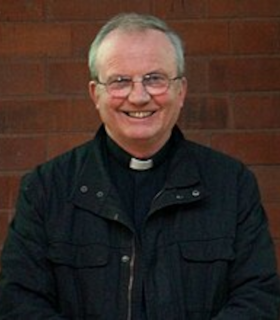
Birth of Dónal McKeown, Roman Catholic Bishop of Derry

Dónal McKeown, Roman Catholic prelate from Northern Ireland who has served as Bishop of Derry since 2014, is born in Belfast on April 12, 1950.

McKeown is one of four children born to James McKeown and his wife Rose (née McMeel), and is baptised in St. Patrick’s Church, Belfast. He is brought up in Randalstown, County Antrim, where he plays Gaelic football and hurling with Kickhams GAC Creggan.

McKeown attends primary school at Mount St. Michael’s Primary School, Randalstown, and secondary school as a boarder at St. MacNissi’s College, Camlough, between 1961 and 1968, completing his O-Levels and A-Levels with special distinctions in Modern Languages. Two of his teachers at St. MacNissi’s College are his future brother bishops, Anthony Farquhar and Patrick Walsh.

McKeown begins studying for the priesthood at St. Malachy’s College, Belfast, in 1968, and obtains a bachelor’s degree with honours in German and Italian from Queen’s University Belfast (QUB). He teaches English at a school in Dieburg, Germany, between 1970 and 1971, and subsequently works as Northern Ireland correspondent for the Catholic media company Katholische Nachrichten-Agentur between 1971 and 1973.

McKeown completes a licentiate in sacred theology at the Pontifical Gregorian University, Rome, between 1973 and 1978, during which he also works for Vatican Radio and as a correspondent for An Saol Mór, an Irish-language programme on RTÉ.

McKeown is ordained to the priesthood on July 3, 1977.

Following ordination, McKeown’s first pastoral assignment is as chaplain at Mater Infirmorum Hospital, before returning to Rome to complete his licentiate. He returns to the Diocese of Down and Connor in 1978, where he is appointed as a teacher at Our Lady and St. Patrick’s College, Knock, while also serving as assistant priest in Derriaghy. He returns to St. MacNissi’s College in 1983, where he continues his involvement with youth ministry and is given responsibility for organising the annual diocesan pilgrimage to Lourdes.

McKeown subsequently returns to St. Malachy’s College in 1987, where he teaches and serves as dean of the adjoining seminary, before succeeding Canon Noel Conway as president in 1995. During his presidency, he completes a Master of Business Administration at the University of Leicester in 2000, specialising in educational management.

McKeown has completed the Belfast Marathon on two occasions: as a priest with a team of 48 from Derriaghy in 1982, and as a bishop fundraising for a minibus for St. Malachy’s College in 2001.

McKeown is appointed auxiliary bishop-elect for the Diocese of Down and Connor and titular bishop of Cell Ausaille by Pope John Paul II on February 21, 2001, the first Irish bishop to be appointed in the third millennium. He is consecrated by the Bishop of Down and Connor, Patrick Walsh, on April 29 in St. Peter’s Cathedral, Belfast.

In response to a 2007 decision by Amnesty International to campaign for the legalisation of abortion in certain circumstances, McKeown supports the decision of Catholic schools in the diocese to disband their Amnesty International support groups, on the grounds that it is no longer appropriate to promote the organisation in their schools.

It is reported in an article in The Irish News that the mention of McKeown as a possible successor to Walsh as Bishop of Down and Connor is actively opposed by some priests in the diocese, who regard him as being “too soft” on the issue of integrated education. This opposition is branded a “Stop Donal” campaign.

McKeown also serves as a member of the Irish Catholic Bishops’ Conference, with responsibility for the promotion of Catholic education, youth ministry, university chaplaincies and the promotion of vocations. His interests include the interface between faith and the empirical sciences, and working with Catholic schools in Norway, Denmark, Lithuania, Poland and Germany.

McKeown also serves as a member of the Irish Catholic Bishops’ Conference and its committee on education and chairs its committees on vocations and youth. He leads the youth of the diocese to World Youth Day in 2002 and 2005 and also travels to Rome with his brother bishops for their quinquennial visit ad limina in 2006. He is also a regular contributor on Thought for the Day on BBC Radio Ulster.

McKeown is appointed Bishop-elect of Derry by Pope Francis on February 25, 2014. He is installed on April 6 in St. Eugene’s Cathedral, Derry.

Following the appointment of Noël Treanor as Apostolic Nuncio to the European Union on November 26, 2022, McKeown is announced as Apostolic Administrator of Down and Connor on January 21, 2023. He serves in this role until the installation of Alan McGuckian, following his appointment as Bishop of Down and Connor on February 2, 2024.

McKeown starts a 33-day journey of prayer toward the Consecration to Jesus Christ through Mary on January 9, 2025. The prayer takes place online each evening at 7:00 p.m. The 33 days of prayer take place the week following the Baptism of the Lord until the Feast of Our Lady of Lourdes on February 11.


Leave a comment

Birth of Brendan Smyth, Priest & Convicted Sex Offender

Brendan Smyth, O.Praem, a Catholic priest and convicted sex offender, is born on June 8, 1927, in Belfast, Northern Ireland. He becomes notorious as a child molester, using his position in the Catholic Church to obtain access to his victims. During a period of over 40 years, he sexually abuses and indecently assaults at least 143 children in parishes in Belfast, Dublin and the United States. His actions are frequently hidden from police and the public by Roman Catholic officials. Controversy surrounding his case contributes to the downfall of the government of the Republic of Ireland in December 1994.

Born John Gerard Smyth, upon joining the Norbertine Roman Catholic religious order in 1945, he changes his name to Brendan. The Norbertines, also known as the “Premonstratensians,” are aware of Smyth’s crimes as early as the late 1970s, yet they do not report him to either the Garda Síochána or the Royal Ulster Constabulary (RUC). He is moved from parish to parish and between dioceses and countries whenever allegations are made. In some cases, the order does not inform the diocesan bishop that Smyth has a history of sexual abuse and should be kept away from children. He abuses children in parishes in Rhode Island and North Dakota and at one time works in Boston and is suspected of similar actions while on pastoral work in Wales and Italy. Norbertine Father Bruno Mulvihill makes several attempts to alert church authorities about the abuse committed by Smyth.

Smyth’s first conviction follows the reporting to police of his abuse of four siblings in Belfast’s Falls Road. After his arrest in 1991, he flees to the Republic of Ireland, where he spends the next three years on the run, staying mostly at Kilnacrott Abbey. This leads to the collapse of the Fianna Fáil–Labour Party coalition government in December 1994 when the poor handling of an extradition request from the RUC by the Irish Attorney General‘s office leads to a further delay of Smyth’s trial. An award-winning UTV Counterpoint programme on the scandal by journalist Chris Moore, followed by a book, accuses the head of the Norbertines and the Archbishop of Armagh of mishandling the case, and the Norbertines of negligence and a failure to tell others of Smyth’s crimes, enabling him to sexually abuse large numbers of children for 40 years.

Smyth dies in prison of a heart attack at the age of 70 on August 22, 1997, after collapsing in the exercise yard, one month into a 12-year prison sentence. The Norbertines hold his funeral before dawn and cover his grave with concrete to deter vandalism. He is buried in Kilnacrott Abbey, which is later put up for sale with 44 acres of land, including the grave.

On October 27, 2005, the title “Reverend” is removed from his gravestone following a campaign by one of Smyth’s victims.

Reviewers of the case differ as to whether there is a deliberate plot to conceal Smyth’s behaviour, incompetence by his superiors at Kilnacrott Abbey, or some combination of factors. Cahal Daly, both as Bishop of Down and Connor, a diocese where some of the abuse takes place, and later as Cardinal Archbishop of Armagh, is recorded as having been privately furious at the Norbertine “incompetence.” Smyth’s activities are investigated by the Northern Ireland Historical Institutional Abuse Inquiry, finding that: “…despite knowing his history of abusing children, the Norbertine religious order moved Smyth to different dioceses where he abused more children…”

In 2010, Daly’s successor as Roman Catholic Archbishop of Armagh, Cardinal Seán Brady, faces “huge pressure to resign” after he admits that in 1975, he witnessed two teenage boys sign oaths of silence after testifying in a Church inquiry against Smyth. Survivor groups see this as evidence of collusion, but Brady says he “did not have the authority” to turn Smyth in. On March 17, 2010, the Deputy First Minister of Northern Ireland, Martin McGuinness, calls for Brady to resign.

In 2013, some of Smyth’s alleged Rhode Island victims between 1965 and 1968, both male and female, call for the Diocese of Providence to investigate Smyth. As of 2019, he is among those listed by the Diocese of Providence as being “credibly accused” of committing sex abuse.

Module 6 of the 2014-2016 Northern Ireland Historical Institutional Abuse Inquiry is dedicated to Smyth’s crimes in Northern Ireland.

A two-part dramatisation of the Smyth case, Brendan Smyth: Betrayal of Trust, is broadcast by the BBC on March 13, 2011, with Ian Beattie in the title role and Richard Dormer as Chris Moore.

(Pictured: Father Brendan Smyth, Our Lady of Mercy, East Greenwich, Rhode Island, USA, c. 1965)


Leave a comment

Birth of Richard Lovell Edgeworth, Politician, Writer & Inventor

Richard Lovell Edgeworth, Anglo-Irish politician, writer and inventor, is born on May 31, 1744, in Pierrepont Street, Bath, Somerset, England.

Edgeworth is the son of Richard Edgeworth senior, and great-grandson of Sir Salathiel Lovell through his mother, Jane Lovell, granddaughter of Sir Salathiel. The Edgeworth family comes to Ireland in the 1580s. He is descended from Francis Edgeworth, appointed joint Clerk of the Crown and Hanaper in 1606, who inherits a fortune from his brother Edward Edgeworth, Bishop of Down and Connor.

A Trinity College, Dublin and Corpus Christi College, Oxford alumnus, Edgeworth is credited for creating, among other inventions, a machine to measure the size of a plot of land. He also makes strides in developing educational methods. He anticipates the caterpillar track with an invention that he plays around with for forty years but never successfully develops. He describes it as a “cart that carries its own road.”

Edgeworth is married four times, including both Honora Sneyd and Frances Beaufort, older sister of Francis Beaufort of the Royal Navy. He is the father of 22 children by his four wives. Beaufort and he install a semaphore line for Ireland. He is a member of the Lunar Society of Birmingham. The Lunar Society evolves through various degrees of organization over a period of years but is only ever an informal group. No constitution, minutes, publications or membership lists survive from any period, and evidence of its existence and activities is found only in the correspondence and notes of those associated with it. Dates given for the society range from sometime before 1760 to it still operating as late as 1813. Fourteen individuals have been identified as having verifiably attended Lunar Society meetings regularly over a long period during its most productive time: these are Matthew Boulton, Erasmus Darwin, Thomas Day, Richard Lovell Edgeworth, Samuel Galton, Jr., James Keir, Joseph Priestley, William Small, Jonathan Stokes, James Watt, Josiah Wedgwood, John Whitehurst and William Withering.

Edgeworth and his family live in Ireland at his estate at Edgeworthstown, County Longford, where he reclaims bogs and improves roads. He sits in Grattan’s Parliament for St. Johnstown (County Longford) from 1798 until the Act of Union 1801 and advocates Catholic Emancipation and parliamentary reform. He is a founder-member of the Royal Irish Academy.

Edgeworth dies in Edgeworthstown on June 13, 1817.

(Pictured: “Portrait of Richard Lovell Edgeworth (1744-1817)” oil on canvas by Hugh Douglas Hamilton)


Leave a comment

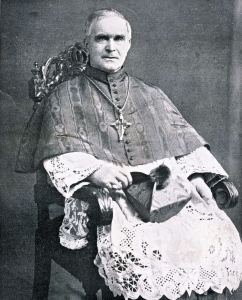
Birth of Cardinal Joseph MacRory in County Tyrone

cardinal-joseph-macrory

Joseph MacRory, an Irish Cardinal of the Roman Catholic Church who serves as Archbishop of Armagh from 1928 until his death in 1945, is born in Ballygawley, County Tyrone, on March 19, 1861.

MacRory is one of ten children of Francis MacRory, a farmer, and his wife, Rose Montague. He studies at St. Patrick’s College, Armagh, and St. Patrick’s Pontifical University, Maynooth. He is ordained to the priesthood on September 13, 1885, and serves as the first president of St. Patrick’s Academy, Dungannon from 1886 to 1887. MacRory teaches Scripture and Modern Theology at St. Mary’s College, Oscott in England until 1889, when he is appointed Professor of Scripture and Oriental Languages at his alma mater of Maynooth College. In 1906, he co-founds the Irish Theological Quarterly. In 1912, he is made Vice-President of Maynooth.

On August 9, 1915, MacRory is appointed Bishop of Down and Connor by Pope Benedict XV and receives his episcopal consecration on November 14 from Cardinal Michael Logue. During his tenure, his life is threatened repeatedly due to the turbulent atmosphere in Belfast. He is a member of the Irish Convention from 1917 to 1918.

MacRory is promoted to Archbishop of Armagh and thus Primate of All Ireland on June 22, 1928, in succession to Patrick O’Donnell. He is elevated to the cardinalate on December 16, 1929, by Pope Pius XI.

MacRory is the papal legate at the 1933 laying of the foundation stone of Liverpool Metropolitan Cathedral in England. He also serves as one of the cardinal electors who participate in the 1939 papal conclave which ultimately selects Pope Pius XII.

MacRory is a strenuous opponent of social injustice, National Socialism, Protestantism, and the Partition of Ireland. It is MacRory who suggests to Eoin O’Duffy that he raise an Irish Brigade to aid Generalissimo Francisco Franco during the Spanish Civil War. In 1940, he voices strong objections to conscription in the North.

MacRory is a supporter of the Gaelic League. Errigal Ciarán GAC, one of the most famous GAA clubs in Ireland, plays at Cardinal MacRory Park in Dunmoyle, County Tyrone, which is built in 1956 in his honour.

After a brief illness, Cardinal MacRory dies on October 13, 1945, at the age of 84 from a heart attack at Ara Coeli, the residence in Armagh. He is interred in St. Patrick’s Cathedral Cemetery, Armagh.