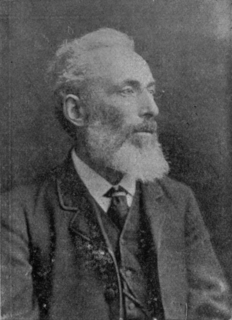
Webb is the first child and only son of the three children of Richard Davis Webb (1805-1872) and Hannah Waring Webb (1810-1862). The family runs a printing shop in Dublin and belongs to a Quaker group that supports reforms such as suffrage, the abolition of slavery and anti-imperialism. The family press prints booklets for many of these causes and, in turn, their regular customers grow to include other similar organisations, including the Irish Protestant Home Rule Association and the Ladies’ Land League, an organisation founded by Fanny and Anna Parnell in 1880 that advocates on behalf of poor tenant farmers.
Webb is interested in literature and history and begins to write A Compendium of Irish Biography. In 1865, he begins to take a more active interest in Irish politics. He is inspired by the Fenians, although he believes in non-violence and the Fenians of that time believe that Ireland can only gain independence through an armed revolution. He is first elected to the House of Commons of the United Kingdom on February 24, 1890, when he wins a by-election for the West Waterford constituency. He is again returned for West Waterford in the 1892 United Kingdom general election, this time as an anti-Parnellite MP. In December 1883, he resigns from the position of Land League treasurer, complaining of Parnell’s “autocratic management of funds.”
Webb’s family takes an interest in the welfare of British colonies and are outspoken opponents of the opium traffic into China. He is a close friend of Dadabhai Naoroji, a key member of the Indian National Congress, who is also a friend of other Irish nationalists including Michael Davitt and Frank Hugh O’Donnell. Naoroji is elected, as a member of the Liberal Party, in 1892, the year of the Liberal landslide to the Finsbury Central Westminster seat. While O’Donnell attempts to involve Naoroji in Irish politics, Webb is invited by Naoroji to preside over the Indian National Congress in 1894.
Webb is a supporter of Anti-Caste, Britain’s first anti-racism journal which fellow Quaker activist Catherine Impey founds in 1888. He is able to rally subscribers and activists for the journal around the world. For example, although he is not a regular subscriber, he and Dadabhai Naoroji co-sign a letter with others to request support for a new association, The Society for the Furtherance of Human Brotherhood.
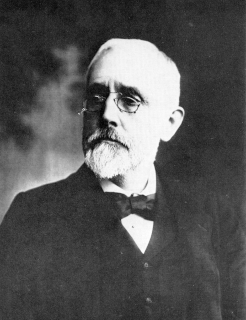
William Ireland de Courcy Wheeler, surgeon, is born on May 9, 1879, in Dublin, fourth son among six sons and four daughters of William Ireland de Courcy Wheeler, a distinguished doctor, and Frances Victoria Wheeler (née Shaw), cousin of George Bernard Shaw.
Wheeler is educated at Trinity College Dublin (TCD) and loses an eye as a result of an accident but overcomes the disability. He wins a moderatorship, a medal, and prizes and graduates BA (1899) in anatomy, natural science, and experimental science and, following postgraduate study in Berne, an MB, B.Ch., and MD (1902). The following year he receives the Dublin University Biological Association’s medal for his paper Deaths under chloroform. He is appointed demonstrator and assistant to the professor of the TCD anatomy department before becoming honorary surgeon (1904–32) to Mercer’s Hospital, Dublin. He is also attached to several other institutions including the Rotunda Hospital and the National Children’s Hospital. An outstanding teacher, he attracts large numbers to his clinical classes and lectures in surgery to postgraduates at TCD.
Ambitious and abounding in self-confidence, Wheeler dedicates all his indomitable energy and time to his work, is a frequent visitor to foreign clinics, becomes a skilled general surgeon and a specialist in orthopaedics, and earns an international reputation. During World War I he serves in the Royal Army Medical Corps (RAMC) and from 1915 converts his private hospital, 33 Upper Fitzwilliam Street, into the Dublin Hospital for Wounded Officers and makes it available to the St. John’s Ambulance brigade and the British Red Cross. He acts as honorary officer in charge and is also surgeon to the Duke of Connaught‘s Hospital for Limbless Soldiers, and honorary surgeon to the forces in Ireland.
In 1916, Wheeler visits the western front, tours the hospitals in Boulogne, and is attached to a casualty clearing station at Remy Siding near Ypres. Returning to Dublin on the request of Robert Jones, he organises the Dublin Military Orthopaedic Centre, Blackrock, where he serves as surgeon (1916–21). His advice is widely sought, and he serves on several committees, including the War Office Council of Consulting Surgeons (1917) and the Ministry of Pensions Medical Advisory Council on Artificial Limbs. Promoted to lieutenant colonel in 1918, he receives the General Service Medal and is twice mentioned in dispatches, having courageously treated wounded soldiers under fire during the 1916 Easter Rising. Appointed surgeon-in-ordinary to the lord-lieutenant, he is knighted in 1919.
Principal founder of the Dublin Hospitals’ Club (1922), Wheeler publishes two textbooks, A Handbook of Operative Surgery (1906) and Selected Papers on Injuries and Diseases of Bone (1928). He contributes numerous authoritative papers on a variety of surgical subjects to professional journals and edits the chapter on general surgery in the Medical Annual from 1916 to 1936. Inspector of examinations for the Medical Research Council of Ireland, he is external examiner to universities in Ireland and Scotland. Interested in hospital policy and nursing, he advocates the federation of the smaller hospitals and is chairman of the City of Dublin Nursing Institute. Fellow (1905) and council member (1906), he follows in his father’s footsteps and is elected president (1922–24) of the Royal College of Surgeons in Ireland. He is also president of the Dublin University Biological Association and of the surgical section of the Royal Academy of Medicine in Ireland and is awarded an honorary ChM from Cairo University in 1928.
Troubled and bewildered by the political situation in Ireland, Wheeler is persuaded by Rupert Guinness, 2nd Earl of Iveagh, to accept the position of visiting surgeon (1932) to the new hospital at Southend-on-Sea, Essex, to which Iveagh had donated £200,000. The departure of such a leading figure in Irish medical circles is widely regretted. His posts in London include surgeoncies to All Saints Hospital for Genito-Urinary Diseases and to the Metropolitan Ear, Nose, and Throat Hospital. The diversity of his interests and his general competence make him a valued member of the editorial staff of several journals including the British Journal of Surgery, the British Journal of Urology, and the American Journal of Surgery, Gynaecology, and Obstetrics. He is also a member of the American Editors Association. He enjoys many affiliations with America, where he is well known and honoured by being elected honorable fellow of the American College of Surgeons and selected as their John B. Murphy orator (1932), and by election as honorary member and president of the Post Graduate Assembly of North America. An active member of the British Medical Association, he is president of the Leinster branch (1925–26) and of the Orthopaedic section (1933), vice-president of the Surgical section (1930, 1932), and chairman of the council and president of the Metropolitan Counties Branch (1938). President of the Irish Medical Schools and Graduates Association, he is awarded their Arnott gold medal in 1935.
During World War II Wheeler serves as consultant surgeon to the Royal Navy in Scotland, with the rank of rear admiral (1939–43) and is posted to Aberdeen. Strong-minded, unconventional, and often controversial, he has a gift for friendship, is charming and good-humoured, and excels in the art of the after-dinner speech. Immensely proud of Dublin’s medical and surgical traditions, he always eagerly returned to Ireland, where he planned to retire and write his memoirs.
Wheeler dies suddenly on September 11, 1943, at his home in Aberdeen and is cremated at the Aberdeen crematorium. As a memorial to his father, he bequeaths his library and that of his father to the Royal College of Surgeons in Ireland, and also leaves a fund for the Sir William Wheeler memorial medal in surgery.
Dillon is a member of the British House of Commons during 1880–1883 and 1885–1918. For his vigorous work in the Irish National Land League, which seeks fixed tenure, fair rents, and free sale of Irish land, he is imprisoned twice between May 1881 and May 1882. He is Parnell’s fellow inmate in Kilmainham Gaol in Dublin from October 1881. For six months in 1888 he is imprisoned for aiding William O’Brien, author of the “plan of campaign” against high rent charges by English absentee landlords in Irish farming districts.
When Parnell is named co-respondent in Captain William Henry O’Shea’s divorce suit in 1890, Dillon and O’Brien at first affirm their support of him, but they finally decide that he will thenceforth be a liability as party leader. The party then splits, the anti-Parnellite majority forming the Irish National Federation, of which Dillon serves as chairman from 1896. In 1900, however, he agrees to join a reunited party under the Parnellite John Redmond.
During the prime ministry of Arthur James Balfour (1902–1905), Dillon comes to believe that the British Conservative government intends to grant Irish reforms without independence, thereby “killing Home Rule by kindness.” In 1905 he advises Irishmen to vote for Liberal Party candidates for Parliament, and, after the Liberals had taken office that year, he supports their reform program.
Throughout World War I Dillon vehemently opposes the extension of British military conscription to Ireland, both because that measure would strengthen the agitation by the more extreme nationalist Sinn Féin party and because he never accepted the view that British imperial interests necessarily coincided with those of Ireland. After the Easter Rising in Dublin in 1916, he protests against the harsh measures that ensue and, in the House of Commons, makes a passionate speech in defense of the Irish rebels.
Upon Redmond’s death on March 6, 1918, Dillon, who had broken with him over Irish support for the British war effort, succeeds him as Irish Parliamentary Party leader. By that time, however, the party has been discredited and in the 1918 Irish general election Sinn Féin wins easily. On losing his House of Commons seat to Éamon de Valera, the future president of the Republic of Ireland, he retires from politics.
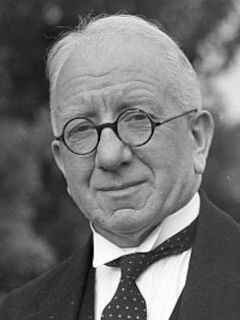
O’Kelly is born on August 25, 1882, on Capel Street in the north inner-city of Dublin. He joins the National Library of Ireland in 1898 as a junior assistant. That same year, he joins the Gaelic League, becoming a member of the governing body in 1910 and General Secretary in 1915.
In 1905 O’Kelly joins Sinn Féin who, at the time, supports a dual monarchy. He is an honorary secretary of the party from 1908 until 1925. In 1906 he is elected to Dublin Corporation, which is Dublin’s city council. He retains the seat for the Inns Quay Ward until 1924.
O’Kelly is elected Sinn Féin MP for Dublin College Green in the 1918 Irish general election. Along with other Sinn Féin MPs he refuses to take his seat in the British House of Commons. Instead, they set up an Irish parliament, called Dáil Éireann, in Dublin. O’Kelly is Ceann Comhairle (Chairman) of the First Dáil. He is the Irish Republic’s envoy to the post-World War I peace treaty negotiations at the Palace of Versailles, but the other countries refuse to allow him to speak as they do not recognise the Irish Republic.
O’Kelly is a close friend of Éamon de Valera, and both he and de Valera oppose the Anglo-Irish Treaty of December 1921. When de Valera resigns as President of the Irish Republic on January 6, 1922, O’Kelly returns from Paris to try to persuade de Valera to return to the presidency but de Valera orders him to return to Paris.
During the Irish Civil War, O’Kelly is jailed until December 1923. Afterwards he spends the next two years as a Sinn Féin envoy to the United States.
In 1926 when de Valera leaves Sinn Féin to found his own republican party, Fianna Fáil, O’Kelly follows him, becoming one of the party’s founding members. In 1932, when de Valera is appointed President of the Executive Council of the Irish Free State, he makes O’Kelly the Minister for Local Government and Public Health. He often tries to publicly humiliate the Governor-General of the Irish Free State, James McNeill, which damages O’Kelly’s reputation and image, particularly when the campaign backfires.
In 1938, many believe that de Valera wants to make O’Kelly the Fianna Fáil choice to become President of Ireland, under the new Irish constitution, Bunreacht na hÉireann. When Lord Mayor of Dublin, Alfie Byrne, says he wants to be president there is an all-party agreement to nominate Douglas Hyde, a Protestant Irish Senator, Irish language enthusiast and founder of the Gaelic League. They believe Hyde to be the only person who might win an election against Alfie Byrne. O’Kelly is instead appointed Minister of Finance and helps create Central Bank in 1942.
O’Kelly leaves the cabinet when he is elected President of Ireland on June 18, 1945, in a popular vote of the people, defeating two other candidates. He is re-elected unopposed in 1952. During his second term he visits many nations in Europe and speaks before the United States Congress in 1959. He retires at the end of his second term in 1959, to be replaced by his old friend, Éamon de Valera. Following his retirement, he is described as a model president by the normally hostile newspaper, The Irish Times. Though controversial, he is widely seen as genuine and honest, but tactless.
O’Kelly’s strong Roman Catholic beliefs sometimes cause problems. Éamon de Valera often thinks that O’Kelly either deliberately or accidentally leaks information to the Knights of Saint Columbanus and the Church leaders. He ensures that his first state visit, following the creation of the Republic of Ireland in 1949, is to the Vatican City to meet Pope Pius XII. He accidentally reveals the Pope’s private views on communism. This angers the Pope and Joseph Stalin and is why he is not given the papal Supreme Order of Christ which is given to many Catholic heads of state.
O’Kelly dies in Blackrock, Dublin on November 23, 1966, at the age of 84, fifty years after the Easter Rising that first brought him to prominence. He is buried in Glasnevin Cemetery, Glasnevin, Dublin.
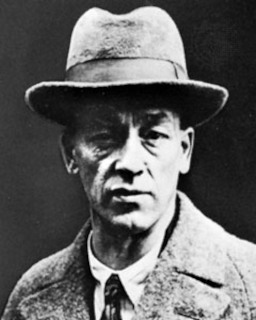
O’Nolan writes prodigiously during his years as a student at University College, Dublin (UCD), where he is an active, and controversial, member of the well-known Literary and Historical Society. He contributes to the student magazine Comhthrom Féinne (Fair Play) under various guises, in particular the pseudonym Brother Barnabas. Significantly, he composes a story during this same period titled “Scenes in a Novel (probably posthumous) by Brother Barnabas”, which anticipates many of the ideas and themes later to be found in his novel At Swim-Two-Birds.
In 1934 O’Nolan and his student friends found a short-lived magazine called Blather. The writing here, though clearly bearing the marks of youthful bravado, again somewhat anticipates O’Nolan’s later work, in this case his Cruiskeen Lawn column as Myles na gCopaleen. Having studied the German language in Dublin, he may have spent at least parts of 1933 and 1934 in Germany, namely in Cologne and Bonn, although details are uncertain and contested.
A key feature of O’Nolan’s personal situation is his status as an Irish government civil servant, who, as a result of his father’s relatively early death, is obliged to support ten siblings, including an elder brother who is an unsuccessful writer. Given the desperate poverty of Ireland in the 1930s to 1960s, a job as a civil servant is considered prestigious, being both secure and pensionable with a reliable cash income in a largely agrarian economy. The Irish civil service is fairly strictly apolitical, prohibiting Civil Servants above the level of clerical officer from publicly expressing political views. This fact alone contributes to his use of pseudonyms, though he had started to create character-authors even in his pre-civil service writings. He rises to be quite senior, serving as private secretary to Seán T. O’Kelly and Seán McEntee.
Although O’Nolan is a well-known character in Dublin during his lifetime, relatively little is known about his personal life. On December 2, 1948, he marries Evelyn McDonnell, a typist in the Department of Local Government. On his marriage he moves from his parental home in Blackrock to nearby Merrion Street, living at several further locations in South Dublin before his death. The couple has no children.
O’Nolan is an alcoholic for much of his life and suffers from ill health in his later years. He suffers from throat cancer and dies from a heart attack in Dublin on the morning of April 1, 1966. He is buried in Deans Grange Cemetery in Dublin.
Stephens’ birth is somewhat shrouded in mystery. He claims to have been born on the same day and same year as James Joyce, February 2, 1882, whereas he is in fact probably the same James Stephens who is on record as being born at the Rotunda Hospital in Dublin, on February 9, 1880, the son of Francis Stephens of 5 Thomas’s Court, Dublin, a vanman and a messenger for a stationer’s office, and his wife, Charlotte Collins. His father dies when he is two years old and, when he was six years old, his mother remarries. He is committed to the Meath Protestant Industrial School for boys in Blackrock for begging on the streets, where he spends much of the rest of his childhood. He attends school with his adoptive brothers Thomas and Richard Collins before graduating as a solicitor‘s clerk. They compete and win several athletic competitions despite James’ tiny 4’10” stature. He is known affectionately as “Tiny Tim.” He is much enthralled by the tales of military valour of his adoptive family and would have become a soldier except for his height.
By the early 1900s Stephens is increasingly inclined to socialism and the Irish language and by 1912 is a dedicated Irish Republican. He is a close friend of the 1916 leader Thomas MacDonagh, who is then editor of The Irish Review and deputy headmaster in St. Enda’s School, the radical bilingual Montessori school run by Patrick Pearse and later manager of the Irish Theatre. He spends much time with MacDonagh in 1911. His growing nationalism brings a schism with his adoptive family, but probably wins him his job as registrar in the National Gallery of Ireland, where he works between 1915 and 1925, having previously had an ill-paid job with the Mecredy firm of solicitors.
Stephens produces many retellings of Irish myths. His retellings are marked by a rare combination of humour and lyricism, with Deirdre and Irish Fairy Tales especially often praised. He also writes several original novels, including The Crock of Gold, Etched in Moonlight and Demi-Gods, based loosely on Irish wonder tales. The Crock of Gold in particular has achieved enduring popularity and has often been reprinted.
Stephens begins his career as a poet under the tutelage of poet and painter Æ (George William Russell). His first book of poems, Insurrections, is published in 1909. His last book, Kings and the Moon (1938), is also a volume of verse. His influential account of the 1916 Easter Rising, Insurrection in Dublin, describes the effect of the deaths by execution of his friend Thomas MacDonagh and others as being “like watching blood oozing from under a door.”
Stephens later lives between Paris, London and Dublin. During the 1930s he is a friend of James Joyce, and they wrongly believe that they share a birthday. Joyce, who is concerned about his ability to finish what later becomes Finnegans Wake, proposes that Stephens assist him, with the authorship credited to JJ & S (for “Jameses Joyce & Stephens”, but also a pun on the popular Jameson Irish Whiskey, made by John Jameson & Sons). The plan is never implemented, as Joyce is able to complete the work on his own.
During the last decade of his life Stephens finds a new audience through a series of broadcasts on the BBC.
In 1979, McGuinness is elected as an independent candidate to Seanad Éireann at a by-election on December 11, 1979, as a Senator for the University of Dublin constituency, following the resignation of Senator Conor Cruise O’Brien, taking her seat in the 14th Seanad. She is re-elected at the 1981 elections to the 15th Seanad, and in 1983 to the 17th Seanad, where she serves until 1987, losing her seat to David Norris. She is appointed to the Council of State on May 2, 1988, by President Patrick Hillery and serves until 1990.
McGuinness is appointed a judge of the Circuit Court in 1994, the first woman to hold that office in Ireland. In 1996, she is appointed to the High Court and remains there until her appointment to the Supreme Court in January 2000.
In November 2005, McGuinness is appointed Adjunct Professor at the Faculty of Law, National University of Ireland, Galway. She is also appointed President of the Law Reform Commission in 2005 and holds that position until 2011.
In April 2009, McGuinness is awarded a “Lord Mayor’s Award” by Lord Mayor of DublinEibhlin Byrne “for her contribution to the lives of children and families in the city through her pioneering work.” In September 2010, she is named as one of the “People of the Year” for “her pioneering, courageous and long-standing service to Irish society.” In November 2012, she wins the Irish Tatler Hall of Fame Award.
In addition to her judicial career, McGuinness serves on the Employment Equality Agency, Kilkenny Incest Investigation, the Forum for Peace and Reconciliation, the National Council of the Forum on End of Life in Ireland and the Irish Universities Quality Board. In June 2011, she becomes patron of the Irish Refugee Council. In November 2011, she is appointed Chairperson of the “Campaign for Children.”
In January 2014, McGuinness is appointed by Minister for Communications, Energy and Natural Resources, Pat Rabbitte, to chair the expert panel to oversee the preparation of reports on the best underground route options to compare with the Grid Link and Grid West high voltage power lines in Ireland. In March 2015, McGuinness receives an Alumni Award from Trinity College Dublin.
McGuinness is married to broadcaster and writer Proinsias Mac Aonghusa from 1954 until his death in 2003 and has three children. She resides in Blackrock, Dublin.
Risteárd Earnán Ó Glaisne is born on September 2, 1927, near Bandon, County Cork, the third of four children of George William Giles and his wife, Sara Jane (née Vickery). Educated at Bandon Grammar School and Trinity College Dublin, he graduates with a BA in 1949 and obtains a master’s degree in 1959. At TCD he is greatly influenced by Daithí Ó hUaithne.
Ó Glaisne first becomes interested in the Irish language at school in Bandon. His headmaster gives him a copy of Liam Ó Rinn‘s Peann agus Pár, along with a book of poems by Ivan Turgenev translated into Irish by Ó Rinn. “I suddenly found myself breaking into a world vastly larger than my own world in Irish,” he recalls. “The quality of mind I encountered made me realise I could never again connect Irish only with poteen and potatoes.”
Ó Glaisne further explores the language by making contact with the few native Irish speakers left in the Bandon area. He gradually comes to the conclusion that he is a member of a nation that has an extremely old and in many ways distinguished culture, of which Irish has been historically an integral part. Deciding that Irish best reflects the society in which he grew up and reflects him as an individual, he adopts it as his first language.
On graduating from TCD Ó Glaisne teaches Irish at Avoca School, Blackrock. He later teaches in St. Andrew’s College, Dublin, and at St. Patrick’s Cathedral Grammar School, where he ends his teaching career in 1989. He took a career break in the mid-1960s to study the French educational system and to travel on the Continent.
To perfect his Irish Ó Glaisne holidays on the Great Blasket Island, where he immerses himself in the rich oral culture. He makes many friends among the islanders, and the friendships continue after they are resettled on the mainland in Dún Chaoin. He regularly visits Corca Dhuibhne to meet friends like Muiris Mhaidhc Léan Ó Guithín, one of the last surviving islanders, and to enjoy the annual Ceiliúradh an Bhlascaoid.
Ó Glaisne holds that Protestants have enjoyed a long association with Irish, pointing to 18th-century followers of John Wesley such as Charles Graham, Gideon Ousley and Tomás Breathnach, who evangelised in Irish. He firmly believes that Protestants can be “every whit as Irish” as Roman Catholics. He urges his co-religionists to identify fully with Ireland.
Ó Glaisne is the founder and editor of Focus (1958-66), a monthly magazine that aims to help Protestants “come to an understanding of their cultural heritage.” He is a regular contributor to programmes on RTÉ and RTÉ Raidió na Gaeltachta, and writes for Comhar, Inniú, An tUltach and The Irish Times.
John Dillon, a Member of Parliament (MP) for over 35 years and the last leader of the Irish Parliamentary Party in the struggle to secure Home Rule by parliamentary means, dies in a Londonnursing home on August 4, 1927. Through the 1880s he is perhaps the most important ally of the greatest 19th-century Irish nationalist, Charles Stewart Parnell, but, following Parnell’s involvement as co-respondent in a divorce case, he repudiates Parnell for reasons of political prudence.
Dillon is a member of the British House of Commons during 1880–1883 and 1885–1918. For his vigorous work in the Irish National Land League, which seeks fixed tenure, fair rents, and free sale of Irish land, he is imprisoned twice between May 1881 and May 1882. He is Parnell’s fellow inmate in Kilmainham Gaol in Dublin from October 1881. For six months in 1888 he is imprisoned for aiding William O’Brien, author of the “plan of campaign” against high rent charges by English absentee landlords in Irish farming districts.
When Parnell is named co-respondent in Captain William Henry O’Shea’s divorce suit in 1890, Dillon and O’Brien at first affirm their support of him, but they finally decide that he will thenceforth be a liability as party leader. The party then splits, the anti-Parnellite majority forming the Irish National Federation, of which Dillon serves as chairman from 1896. In 1900, however, he agrees to join a reunited party under the Parnellite John Redmond.
During the prime ministry of Arthur James Balfour (1902–1905), Dillon comes to believe that the British Conservative government intends to grant Irish reforms without independence, thereby “killing Home Rule by kindness.” In 1905 he advises Irishmen to vote for Liberal Party candidates for Parliament, and, after the Liberals had taken office that year, he supports their reform program.
Throughout World War I Dillon vehemently opposes the extension of British military conscription to Ireland, both because that measure would strengthen the agitation by the more extreme nationalistSinn Féin party and because he never accepted the view that British imperial interests necessarily coincided with those of Ireland. After the Easter Rising in Dublin in 1916, he protests against the harsh measures that ensue and, in the House of Commons, makes a passionate speech in defense of the Irish rebels.
Upon Redmond’s death on March 6, 1918, Dillon, who had broken with him over Irish support for the British war effort, succeeds him as Irish Parliamentary Party leader. By that time, however, the party has been discredited and in the 1918 Irish general election Sinn Féin wins easily. On losing his House of Commons seat to Éamon de Valera, the future president of the Republic of Ireland, he retires from politics.
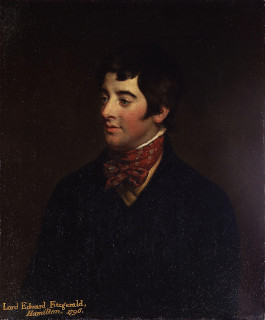
Fitzgerald is first elected to the Parliament of Ireland in 1783. His enthusiasm for the French Revolution leads to dismissal from the army in 1792. Four years later he joins the Society of United Irishmen, a nationalist organization that aspires to free Ireland from English control. This group appoints him to head the military committee formed to plan an uprising and obtain aid from the French revolutionary regime.
Although the French delay in supplying arms and troops, Fitzgerald’s committee proceeds with its plans for a general rebellion. The insurrection is set for May 23, 1798. In March his co-conspirators are seized by government agents, making him the most important United Irish leader still at liberty. On May 9 a reward of £1,000 is offered by Dublin Castle for his apprehension.
FitzGerald’s hiding place in a house in Thomas Street, Dublin is disclosed by a Catholic barrister and informant named Francis Magan. On May 18 Major Henry Sirr leads a military party to the house where FitzGerald is in bed suffering from a fever. Alerted by the commotion, he jumps out of bed and, ignoring the pleas of the arresting officers Captain William Bellingham Swan and Captain Daniel Frederick Ryan to surrender peacefully, FitzGerald stabs Swan and mortally wounds Ryan with a dagger in a desperate attempt to escape. He is secured only after Major Sirr shoots him in the shoulder.
FitzGerald is conveyed to New Prison, Dublin where he is denied proper medical treatment. After a brief detention in Dublin Castle he is taken to Newgate Prison, Dublin where his wound, which had now become infected, becomes mortally inflamed. His wife, whom the government probably has enough evidence to convict of treason, had fled the country, never to see her husband again, but his brother Henry and his aunt Lady Louisa Conolly are allowed to see him in his last moments.
FitzGerald dies at the age of 34 on June 4, 1798, as the rebellion rages outside. He is buried the next day in the cemetery of St. Werburgh’s Church, Dublin. An Act of Attainder confiscating his property is passed as 38 Geo. 3 c. 77 but is eventually repealed in 1819.
(Pictured: Portrait of Edward FitzGerald by Hugh Douglas Hamilton, 1796. National Portrait Gallery, London.)





 seamus dubhghaill