seamus dubhghaill

Promoting Irish Culture and History from Little Rock, Arkansas, USA


Leave a comment

Birth of John Magee, Bishop Emeritus of Cloyne

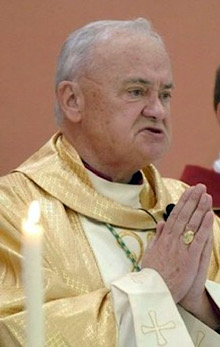
John Magee SPS, a Roman Catholic bishop emeritus in Ireland, is born in Newry, County DownNorthern Ireland, in the Roman Catholic Diocese of Dromore, on September 24, 1936. He is Bishop of Cloyne from 1987 to 2010. Following scandal he resigns from that position on March 24, 2010, becoming a bishop emeritus. He is the only person to have been private secretary to three popes.

Magee’s father is a dairy farmer. He is educated at St. Colman’s College in Newry and enters the St Patrick’s Missionary Society at KilteganCounty Wicklow, in 1954. He also attends University College Cork (UCC) where he obtains a degree in philosophy before going to study theology in Rome, where he is ordained priest on March 17, 1962.

Magee serves as a missionary priest in Nigeria for almost six years before being appointed Procurator General of St. Patrick’s Society in Rome. In 1969, he is an official of the Congregation for the Evangelization of Peoples in Rome, when he is chosen by Pope Paul VI to be one of his private secretaries. On Pope Paul’s death he remains in service as a private secretary to his successor, Pope John Paul I and Pope John Paul II. He is the only man to hold the position of private secretary to three Popes in Vatican history. He also acts as chaplain to the Vatican’s Swiss Guard.

Magee is appointed papal Master of Pontifical Liturgical Celebrations in 1982, and is appointed Bishop of the Diocese of Cloyne on February 17, 1987. He is consecrated bishop on March 17, 1987, Saint Patrick’s Day, by Pope John Paul II at St. Peter’s Basilica in the Vatican.

On April 28, 1981, Magee travels, without the knowledge or approval of the Vatican’s Secretariat of State, to the Long Kesh Detention Centre outside Belfast to meet with Irish Republican Army (IRA) hunger striker Bobby Sands. He seeks, unsuccessfully, to convince Sands to end his hunger strike. Sands dies the following week.

Magee plays a role in the Irish Catholic Bishops’ Conference where he is featured in the modernisation of the liturgy in Ireland. His pastoral approach places heavy emphasis on the promotion of vocations to the priesthood but, after some initial success, the number of vocations in the diocese of Cloyne declines, a trend reflected across the island of Ireland. He appoints Ireland’s first female “faith developer” and entrusts her with the task of transforming an Irish rural diocese into a cosmopolitan pastoral model using techniques borrowed from several urban dioceses in the United States.

Magee involves himself in a dispute with the Friends of St. Colman’s Cathedral, a local conservationist group in Cobh which organises an effective and professional opposition to the Bishop’s plans to re-order the interior of the cathedral, plans similar to previous re-orderings in KillarneyCork and Limerick cathedrals. In an oral hearing conducted by An Bord Pleanála, the Irish Planning Board, it emerges that irregularities have occurred in the planning application that are traced to Cobh Town Council, which accommodates the Bishop’s plans to modify the Victorian interior designed by E. W. Pugin and George Ashlin. On June 2, 2006, when Bishop Magee was in Lourdes, An Bord Pleanála directs Cobh Town Council to refuse the Bishop’s application.

On July 25, 2006, Magee publishes a pastoral letter stating: “As a result of An Bord Pleanála’s decision, the situation concerning the temporary plywood altar still remains unresolved and needs to be addressed. The Diocese will initiate discussions with the planning authorities in an attempt to find a solution, which would be acceptable from both the liturgical and heritage points of view.”

A diocesan official explains that the bishop does not wish to institute a judicial review in the Irish High Court because of the financial implications of such an action and because of the bishop’s desire to avoid a Church-State clash.

Claims that the decision of An Bord Pleanála infringes the constitutional property rights of religious bodies are dismissed when it is revealed that the cathedral is the property of a secular trust established in Irish law. It is estimated that Bishop Magee spent over €200,000 in his bid to re-order the cathedral. The controversy is reported even outside Ireland.

A February 2006 article by Kieron Wood in The Sunday Business Post claims that Magee does not have the backing of the Vatican in his proposals for St. Colman’s. At the oral hearing of An Bord Pleanála he is requested to provide a copy of the letter from the Vatican in which he claims he has been given approval for the modernising of the cathedral. The letter that he produces is a congratulatory message dated December 9, 2003 to the team of architects who worked on the cathedral project from Cardinal Francis Arinze, Prefect of the Dicastery for Divine Worship and the Discipline of the Sacraments. The whole text of this letter is then reproduced in a publication called Conserving Cobh Cathedral: The Case Stated pp. 108–109.

At a meeting of his liturgical advisers and diocesan clergy in November 2006, Bishop Magee speaks of his conversation with the Pope in the course of that ad limina visit at the end of the previous month. He mentions that he has been closely questioned on several aspects of his proposals to re-order St. Colman’s Cathedral. It is obvious, he says, that the Pope has been kept well informed of the entire issue.

Bishop Magee’s contribution to the ad limina visit concerns not only his diocese of Cloyne but also ceremonial matters on behalf of the Conference. He also facilitates the broadcasting, in coincidence with the visit, of a life of Pope John Paul I prepared some months earlier by Italian state television (RAI). In an interview published on the Italian Catholic daily Avvenire on October 26, 2006, Cardinal Secretary of State Tarcisio Bertone criticises the image that the programme presents of Pope John Paul I.

After the ad limina visit, Bishop Magee represents the Irish bishops at a meeting in Rome of the International Commission for Eucharistic Congresses.

In 2007, for the third year in succession, Magee fails to complete his personal schedule of confirmations in Cloyne diocese. On May 12, 2007, he is admitted to the Bon Secours Hospital in Cork to undergo a knee replacement operation. All official engagements are cancelled for the next ten weeks to allow him to recuperate, after which he resumes work.

In December 2008, Magee is at the centre of a controversy concerning his handling of child sexual abuse cases by clergy in the diocese of Cloyne. Calls for his resignation follow. On March 7, 2009, he announces that, at his request, the Pope has placed the running of the diocese in the hands of Dermot Clifford, metropolitan archbishop of the Archdiocese of Cashel and Emly, to whose ecclesiastical province the diocese of Cloyne belongs. Magee remains Bishop of Cloyne, but withdraws from administration in order, he says, to dedicate his full-time to the matter of the inquiry. On March 24, 2010, the Holy See announces that Magee has formally resigned from his duties as Bishop of Cloyne. He is eventually succeeded by Canon William Crean whose appointment comes on November 25, 2012.

The subsequent report of the Irish government judicial inquiry, The Cloyne Report, published on July 13, 2011, finds that Bishop Magee’s second in command, Monsignor Denis O’Callaghan, then the parish priest of Mallow, had falsely told the Government and the HSE in a previous inquiry that the diocese was reporting all allegations of clerical child sexual abuse to the civil authorities.

The inquiry into Cloyne – the fourth examination of clerical abuse in the Church in Ireland – finds the greatest flaw in the diocese is repeated failure to report all complaints. It finds nine allegations out of 15 were not passed on to the Garda.

Speaking in August 2011, Magee says that he felt “horrified and ashamed” by abuse in his diocese. He says he accepts “full responsibility” for the findings. “I feel ashamed that this happened under my watch – it shouldn’t have and I truly apologise,” he says. “I did endeavour and I hoped that those guidelines that I issued in a booklet form to every person in the diocese were being implemented but I discovered they were not and that is my responsibility.”

Magee also offers to meet abuse victims and apologise “on bended knee.” He says he had been “truly horrified” when he read the full extent of the abuse in the report. However, a victim says apologies would “never go far enough.” “It’s too late for us now, the only thing it’s not too late for is that maybe there will be a future where people will be more enlightened, more aware and protect their children better,” she says. Asked about restitution for victims, Magee says it is a matter for the Cloyne Diocese.

Leave a comment

Birth of Seán O’Hegarty, Member of the IRA’s Cork No. 1 Brigade

Seán O’Hegarty, a prominent member of the Irish Republican Army (IRA) in County Cork during the Irish War of Independence, is born on March 21, 1881, in Cork, County Cork. He serves as O/C of the Cork No. 1 Brigade of the IRA after the deaths of Tomás Mac Curtain and Terence MacSwiney.

O’Hegarty comes from a family with strong nationalist roots. His parents are John, a plasterer and stucco worker, and Katherine (née Hallahan) Hegarty. His elder brother is Patrick Sarsfield O’Hegarty, the writer. His parents’ families emigrated to the United States after the Great Famine, and his parents married in Boston. His father is a member of the Irish Republican Brotherhood (IRB). In 1888, his father dies of tuberculosis at the age of 42, and his mother has to work to support the family.

O’Hegarty is educated at the Christian Brothers North Monastery school in Cork. By 1902, he has left school to work as a sorter in the local post office, rising to post office clerk. He is a supporter of the Gaelic revival, Irish traditional music, and Gaelic games. A committed sportsman, in his twenties he is captain of the Post Office HQ’s hurling team. He follows his brother Patrick into Conradh na Gaeilge and eventually the Irish Volunteers and the Irish Republican Brotherhood. He is a member of the Celtic Literary Society by 1905 and founds the Growney branch of Conradh na Gaeilge in 1907. A puritanical character by nature, he is a non-smoker and never drinks.

O’Hegarty is a founder of the local branch of the Irish Volunteers in Cork in December 1913. In June of the following year, he is appointed to the Cork section of the Volunteer Executive, and then to the Military Council. In October, the Dublin government discovers his illegal activities, and he is dismissed. Excluded from Cork under the Defence of the Realm Act (DORA) regulations, he moves to Ballingeary, where he works as a labourer. From there he moves to Enniscorthy, County Wexford, where he lives with Larry de Lacy. On February 24, 1915, he is arrested and tried under the Defence of the Realm Act for putting up seditious posters. But for this and a second charge of “possession of explosives” he is discharged. The explosives belonged to de Lacy.

The Volunteers appoint O’Hegarty as Commandant of Ballingeary and Bandon. During the Easter Rising, he is stationed in Ballingeary when visited by Michael McCarthy of Dunmanway to propose an attack on a Royal Irish Constabulary (RIC) post at Macroom. But their strength is fatally weakened and, having no reserves, they call off the attempt. In 1917, he becomes Vice-commandant of No.1 Cork Brigade. He works as a storekeeper at the workhouse but is intimidating, and clashes with the Poor Law Guardians.

During the Irish War of Independence, O’Hegarty is one of the most active in County Cork. Like others, he is exasperated with Tomás Mac Curtain’s inactivity and refusal to be more bellicose. One such is battalion commander Richard Langford, who joins with O’Hegarty’s unit to make an unauthorized raid on the RIC post at Macroom. Langford is court-martialed, but O’Hegarty continues to rise in the ranks. When a RIC Inspector is murdered, Mac Curtain condemns the shootings and calls for their end. On March 19, 1920, Mac Curtain is shot and killed in his home in Cork. The coroner blames the British establishment in Dublin, but the police never make any attempt to investigate the killings. Shortly after these events General Hugh Tudor begins the policy of official reprisals.

In January 1920, an inquiry is held into corruption alleged against “Hegarty’s Mob” or “Hegarty’s Crowd” running Cork City. O’Hegarty blames the former mayors for the charges of incompetence but remains on good terms with them.

In a raid on Cork City Hall on August 12, 1920, the British manage to net all the top brass of the IRA in Cork. In an incredible failure of intelligence, they do not identify the leadership as their prisoners. They are all released, including Liam Lynch, and O’Hegarty. Only Terence MacSwiney, the new Lord Mayor of Cork, is kept in custody and sent to England.

On February 25, 1921, the Coolavokig ambush is carried out by the 1st Cork Brigade under O’Hegarty at Ballyvourney village, on the road between Macroom and Ballyvourney. The IRA suffers no casualties; however, the number of British casualties has been disputed to this day.

The brigade commanders in the southern division retain a residual lingering resentment of Dublin GHQ’s lack of leadership and supplies. Seán Moylan, commandant of No. 2 Cork Brigade, thinks good communications with No.1 Brigade are to be vital, but little of this is seen via the organizer, Ernie O’Malley, at GHQ. At a meeting set up for April 26, 1921, when the manual of Infantry Training 1914 is produced, the document raises great anger. The meeting ends in uproar when O’Hegarty, who is “a master of invective, tore the communication and its authors to ribbons.”

O’Malley and Liam Lynch, the general, meet with O’Hegarty in the mountains of West Cork, near a deserted farmhouse, just off the main road. In the retreat that follows, the Irish take heavy casualties and leave their wounded to the good care of the British. These are the “Round-ups” in which the Irish sleep outside in order to avoid being at home when the Army calls. They are told by the Brigade to learn the national anthem of England to avoid arrest.

In East Cork brigade, O’Hegarty uncovers a spy ring. He is ruthless in the treatment of Georgina Lindsay and her chauffeur, who give away information to the Catholic clergy, but is remarkably lenient on brigade traitors within. He is allegedly not too bothered about evidence but is reminded that all executions of a traitor have to be approved by Dublin first.

O’Hegarty becomes more and more aggressive toward the establishment, using tough language to impose his will over the area. He attempts to force the civilian Teachtai Dála (TDs) for Cork to stand down, to give way to military candidates, telling the Dáil in December 1921, that any TD voting for the treaty will be guilty of treason. But Éamon de Valera is decided and overrules any interference with the Civil Government. Like the commanders, de Valera rejects the treaty but has already been defeated in the Dáil on a vote by W. T. Cosgrave‘s majority.

On February 1, 1922, O’Hegarty marries Maghdalen Ni Laoghaire, a prominent member of Cumann na mBan.

O’Hegarty is on the IRA’s Executive Council, but when there is a meeting on April 9, 1922, it is proposed that the Army should oppose the elections by force. As a result, Florence O’Donoghue and Tom Hales join him in resigning. In May, he and Dan Breen enter into negotiations with Free Stater Richard Mulcahy. A statement is published in the press asking for unity and acceptance of the Treaty. During this time, the republicans become very demoralized and ill-disciplined, but they have to gain strength before announcing independence from Dublin. The debate amongst the anti-Treaty IRA command is increasingly rancorous.

The bitter divisions split the anti-treatyites into two camps. Two motions are debated at the Army Convention on June 18, 1922. At first, the motion to oppose the treaty by force is passed. These men include Tom Barry, Liam Mellows, and Rory O’Connor, who are all in favour of continuing the fight until the British are driven out of Ireland altogether. However, one brigade’s votes have to be recounted, and then the motion is narrowly defeated. Joe McKelvey is appointed the new chief of staff, but the IRA is in chaos. While he strongly opposes the Anglo-Irish Treaty, O’Hegarty takes a neutral role in the Irish Civil War and tries to avert hostilities breaking out into full-scale civil war. He emerges as a leader of the “Neutral IRA” with O’Donoghue. This is a “loose” confederation of 20,000 men who have taken part in the pre-truce wars but have remained neutral during the Civil War from January 1923. Over 150 persons attend its convention in Dublin on February 4, 1923. By April 1923, O’Malley is imprisoned in Mountjoy Prison. In a letter to Seamus O’Donovan on April 7, he blames Hegarty for all this compromise and “peace talk.”

It has been alleged by the author Gerard Murphy that O’Hegarty had a role in the assassination of the Commander-in-Chief, Michael Collins, in August 1922, along with Florrie O’Donoghue and Joe O’Connor. It is alleged that as members of the 1st Southern Division Cork, they are actually feigning claims of neutrality but remain part of the IRB in order to set up talks towards peace and the cessation of hostilities at the start of the Irish Civil War.

Although probably an atheist during the Irish War of Independence, O’Hegarty returns to the Catholic church later in life. On forming the Neutral Group of the IRA in December 1922, he tries to unify differences in the volunteers between Republicans and the Free Staters. He communicates with the Papal Nuncio during the inter-war years in an attempt to have Bishop of Cork Daniel Cohalan‘s excommunication bill lifted. Instead, he turns to commemoration as a way to earn favour in Rome, with the dedication of a Catholic church at St. Finbarr’s Cemetery. After his wife’s passing, he becomes a close friend with Florence O’Donoghue until his own death.

O’Hegarty dies on May 31, 1963, at Bon Secours Hospital, Cork.


Leave a comment

Death of Liam Clancy, Irish Folk Singer

William “Liam” Clancy, Irish folk singer and actor, dies on December 4, 2009, in Bon Secours Hospital, Cork. He is the youngest and last surviving member of the influential folk group The Clancy Brothers, who are regarded as Ireland’s first pop stars. They record 55 albums, achieve global sales of millions and appear in sold-out concerts at such prominent venues as Carnegie Hall and the Royal Albert Hall.

Clancy is born in Carrick-on-Suir, County Tipperary on September 2, 1935, the ninth and youngest surviving child of Robert Joseph Clancy and Joanna McGrath. He receives a Christian Brothers education before taking a job as an insurance man in Dublin. While there he also takes night classes at the National College of Art and Design.

Clancy begins singing with his brothers, Paddy and Tom Clancy, at fund-raising events for the Cherry Lane Theatre and the Guthrie benefits. The Clancy Brothers and Tommy Makem, begin recording on Paddy Clancy’s Tradition Records label in the late 1950s. Liam plays guitar in addition to singing and also records several solo albums. They record their seminal The Rising of the Moon album in 1959. There are international tours, which include performances at Carnegie Hall and the Royal Albert Hall. The quartet records numerous albums for Columbia Records and enjoys great success during the 1960s folk revival. In 1964, thirty percent of all albums sold in Ireland are Clancy Brothers and Tommy Makem records.

After The Clancy Brothers split up, Liam has a solo career in Canada. In 1975, he is booked to play a festival in Cleveland, Ohio, where Tommy Makem is also playing. The two play a set together and form the group Makem and Clancy, performing in numerous concerts and recording several albums together until 1988. The original Clancy Brothers and Tommy Makem line-up also get back together in the 1980s for a reunion tour and album.

In later life, Liam maintains a solo career accompanied by musicians Paul Grant and Kevin Evans, while also engaging in other pursuits. In 2001, Clancy publishes a memoir titled The Mountain of the Women. He is also in No Direction Home, the 2005 Bob Dylan documentary directed by Martin Scorsese. In 2006, Clancy is profiled in a two-hour documentary titled The Legend of Liam Clancy, produced by Anna Rodgers and John Murray with Crossing the Line Films, which wins the award for best series at the Irish Film and Television Awards in Dublin. His final album, The Wheels of Life, is released in 2009. It includes duets with Mary Black and Gemma Hayes as well as songs by Tom Paxton and Donovan.

Liam Clancy dies from pulmonary fibrosis on December 4, 2009, in Bon Secours Hospital, Cork. He is buried in the new cemetery in An Rinn, County Waterford, where he spent the last number of years of his life, owning a successful recording studio.


Leave a comment

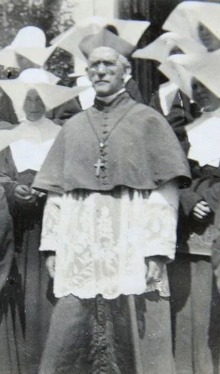
Birth of Daniel Cohalan, Bishop of Cork

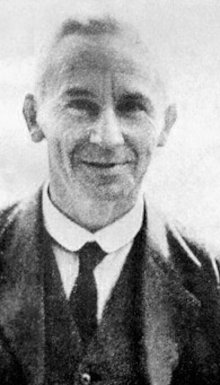
Daniel Cohalan, Irish Roman Catholic clergyman who serves as the Bishop of Cork from 1916 to 1952, is born on July 14, 1858, in Kilmichael, County Cork.

After graduating at St. Patrick’s College, Maynooth, Cohalan is ordained a priest at the Cathedral of St. Mary and St. Anne, Cork on July 25, 1882. His first pastoral appointment is a curate at Kilbrittain, County Cork, from October 1883 to January 1884. He briefly resumes his post-graduate studies at St. Finbarr’s Seminary (now College), Cork, from January to November 1884. His second curacy is at Tracton, County Cork, from November 1884 to September 1896. He returns to St. Patrick’s College, Maynooth, as a professor of Theology from September 7, 1896, to June 7, 1914.

Cohalan is appointed Auxiliary Bishop of Cork and Titular Bishop of Vaga on May 25, 1914. He is consecrated bishop at the Cathedral of St. Mary and St. Anne on June 7, 1914, by John Harty, Archbishop of Cashel and Emly. Two years later, he is appointed Diocesan Bishop of Cork on August 29, 1916.

Cohalan is an outspoken critic during the Irish War of Independence, condemning acts of violence on both sides. In particular, he denounces the policy of reprisals. In July 1920, he pronounces an interdict on the killers of a Royal Irish Constabulary (RIC) sergeant, shot dead in the church porch in Bandon. He declares that anyone killing from ambush will be excommunicated. On December 12, 1920, Cohalan issues a decree saying that “anyone within the diocese of Cork who organises or takes part in ambushes or murder, or attempted murder, shall be excommunicated.” In turn, his life is threatened by the Irish Republican Army (IRA). In August 1928, he condemns the British government which had allowed Terence MacSwiney to die on hunger strike in 1920.

The Bessborough Home in Cork is run by the Sisters of the Sacred Hearts of Jesus and Mary and when the department “sought a change of superior in Bessborough because of the appallingly high death rate, he [Catholic Bishop of Cork Dr. Daniel Cohalan] denounced the request. The replacement of the Bessborough superior was delayed for four years after the department requested it, and many infants died during that time. It seems probable that the bishop’s intervention was elicited by the congregation.” In general, the report finds that the major causes of infant mortality in the homes were respiratory infections and gastroenteritis, while “public attention has focused on marasmus [malnutrition]” suggesting “willful neglect.” However, it says that “the term marasmus is best seen as indicating that a child was failing to thrive, but medical experts suggest that this was due to an underlying, undiagnosed medical condition.”

Cohalan dies in office at the age of 94 at Bon Secours Hospital, Cork, on August 24, 1952. A story, current at the time in Cork, refers to his antipathy towards bishops of the Church of Ireland who styled themselves “Bishop of Cork.” A month before his death, and on his deathbed, word is brought to him of the death of the Church of Ireland Bishop of Cork, Cloyne and Ross, Robert Hearn. The response of Cohalan, known “affectionately” as “Danny Boy”, is reputedly, “now he knows who’s Bishop of Cork.”

Originally buried at St. Finbarr’s College, Farranferris, Cohalan is reinterred in the grounds of St. Mary and St. Anne’s Cathedral, Cork, in 1996. His nephew of the same name, Daniel Cohalan, is Bishop of Waterford and Lismore from 1943 to 1965.


Leave a comment

Birth of Antarctic Explorer Tom Crean

Tom Crean

Thomas “Tom” Crean, Irish seaman and Antarctic explorer, is born on February 25, 1877 in the farming area of Gurtuchrane near the village of Annascaul on the Dingle Peninsula in County Kerry.

Crean leaves the family farm to enlist in the Royal Navy at the age of fifteen. In 1901, while serving on Ringarooma in New Zealand, he volunteers to join Captain Robert Falcon Scott‘s 1901–04 Discovery Expedition to Antarctica, thus beginning his exploring career.

He is a member of three major expeditions to Antarctica during the Heroic Age of Antarctic Exploration, including Captain Scott’s 1911–13 Terra Nova Expedition. This sees the race to reach the South Pole lost to Roald Amundsen and ends in the deaths of Scott and his polar party. During this expedition, Crean’s 35 statute miles solo walk across the Ross Ice Shelf to save the life of Edward Evans leads to him receiving the Albert Medal for Lifesaving.

After his Terra Nova experience, Crean’s third and final Antarctic venture is as second officer on Ernest Shackleton‘s Imperial Trans-Antarctic Expedition, on Endurance. After Endurance becomes beset in the pack ice and sinks, Crean and the ship’s company spend months drifting on the ice before a journey in boats to Elephant Island. He is a member of the crew which makes an open boat journey of 800 nautical miles from Elephant Island to South Georgia, to seek aid for the stranded party.

Crean’s contributions to these expeditions seals his reputation as a polar explorer and earns him a total of three Polar medals. After the Endurance expedition, he returns to the navy. When his naval career ends in 1920 he moves back to County Kerry. In his home town of Annascaul, Crean and his wife Ellen live quietly and unobtrusively and open a pub called The South Pole Inn.

In 1938 Crean becomes ill with a ruptured appendix. He is taken to the nearest hospital in Tralee, but as no surgeon is available to operate, he is transferred to the Bon Secours Hospital in Cork where his appendix is removed. Because of the delay of the operation an infection develops and after a week in the hospital he dies on July 27, 1938, shortly after his sixty-first birthday. He is buried in his family’s tomb at the cemetery in Ballynacourty.

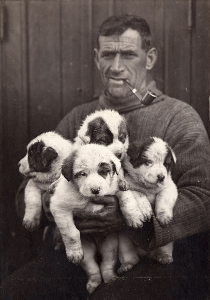
Crean’s name is commemorated in at least two places – 8,630 foot Mount Crean in Victoria Land and the Crean Glacier on South Georgia. A one-man play, Tom Crean – Antarctic Explorer, has been widely performed since 2001 by its author Aidan Dooley, including a special showing at the South Pole Inn, Annascaul, in October 2001. In July 2003, a bronze statue of Crean is unveiled across from his pub in Annascaul. It depicts him leaning against a crate whilst holding a pair of hiking poles in one hand and two of his beloved sled dog pups in the other.


Leave a comment

Birth of Liam Clancy

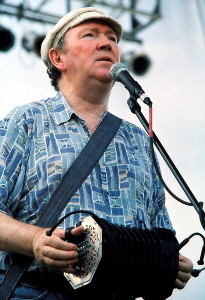
William “Liam” Clancy, Irish folk singer and actor, is born in Carrick-on-Suir, County Tipperary on September 2, 1935. He is the youngest and last surviving member of the influential folk group The Clancy Brothers, who are regarded as Ireland’s first pop stars. They record 55 albums, achieve global sales of millions and appear in sold-out concerts at such prominent venues as Carnegie Hall and the Royal Albert Hall.

Clancy is Robert Joseph Clancy and Joanna McGrath’s ninth and youngest surviving child. He receives a Christian Brothers education before taking a job as an insurance man in Dublin. While there he also takes night classes at the National College of Art and Design.

Clancy begins singing with his brothers, Paddy and Tom Clancy, at fund-raising events for the Cherry Lane Theatre and the Guthrie benefits. The Clancy Brothers and Tommy Makem, begin recording on Paddy Clancy’s Tradition Records label in the late 1950s. Liam plays guitar in addition to singing and also records several solo albums. They record their seminal The Rising of the Moon album in 1959. There are international tours, which include performances at Carnegie Hall and the Royal Albert Hall. The quartet records numerous albums for Columbia Records and enjoys great success during the 1960s folk revival. In 1964, thirty percent of all albums sold in Ireland are Clancy Brothers and Tommy Makem records.

After The Clancy Brothers split up, Liam has a solo career in Canada. In 1975, he is booked to play a festival in Cleveland, Ohio, where Tommy Makem is also playing. The two play a set together and form the group Makem and Clancy, performing in numerous concerts and recording several albums together until 1988. The original Clancy Brothers and Tommy Makem line-up also get back together in the 1980s for a reunion tour and album.

In later life, Liam maintains a solo career accompanied by musicians Paul Grant and Kevin Evans, while also engaging in other pursuits. In 2001, Clancy publishes a memoir titled The Mountain of the Women. He is also in No Direction Home, the 2005 Bob Dylan documentary directed by Martin Scorsese. In 2006, Clancy is profiled in a two-hour documentary titled The Legend of Liam Clancy, produced by Anna Rodgers and John Murray with Crossing the Line Films, which wins the award for best series at the Irish Film and Television Awards in Dublin. His final album, The Wheels of Life, is released in 2009. It includes duets with Mary Black and Gemma Hayes as well as songs by Tom Paxton and Donovan.

Liam Clancy dies from pulmonary fibrosis on December 4, 2009, in Bon Secours Hospital, Cork. He is buried in the new cemetery in An Rinn, County Waterford, where he spent the last number of years of his life, owning a successful recording studio.


Leave a comment

Death of Antarctic Explorer Tom Crean

Tom Crean

Thomas “Tom” Crean, Irish seaman and Antarctic explorer, dies on July 27, 1938 from complications of appendicitis.

Crean was born 1877 in the farming area of Gurtuchrane near the village of Annascaul on the Dingle Peninsula in County Kerry. He leaves the family farm to enlist in the Royal Navy at the age of fifteen. In 1901, while serving on Ringarooma in New Zealand, he volunteers to join Captain Robert Falcon Scott‘s 1901–04 Discovery Expedition to Antarctica, thus beginning his exploring career.

He is a member of three major expeditions to Antarctica during the Heroic Age of Antarctic Exploration, including Captain Scott’s 1911–13 Terra Nova Expedition. This sees the race to reach the South Pole lost to Roald Amundsen and ends in the deaths of Scott and his polar party. During this expedition, Crean’s 35 statute miles solo walk across the Ross Ice Shelf to save the life of Edward Evans leads to him receiving the Albert Medal for Lifesaving.

After his Terra Nova experience, Crean’s third and final Antarctic venture is as second officer on Ernest Shackleton‘s Imperial Trans-Antarctic Expedition, on Endurance. After Endurance becomes beset in the pack ice and sinks, Crean and the ship’s company spend months drifting on the ice before a journey in boats to Elephant Island. He is a member of the crew which makes an open boat journey of 800 nautical miles from Elephant Island to South Georgia, to seek aid for the stranded party.

Crean’s contributions to these expeditions seals his reputation as a polar explorer and earns him a total of three Polar medals. After the Endurance expedition, he returns to the navy. When his naval career ends in 1920 he moves back to County Kerry. In his home town of Annascaul, Crean and his wife Ellen live quietly and unobtrusively and open a pub called The South Pole Inn.

In 1938 Crean becomes ill with a ruptured appendix. He is taken to the nearest hospital in Tralee, but as no surgeon is available to operate, he is transferred to the Bon Secours Hospital in Cork where his appendix is removed. Because of the delay of the operation an infection develops and after a week in the hospital he dies on July 27, 1938, shortly after his sixty-first birthday. He is buried in his family’s tomb at the cemetery in Ballynacourty.

Crean’s name is commemorated in at least two places – 8,630 foot Mount Crean in Victoria Land and the Crean Glacier on South Georgia. A one-man play, Tom Crean – Antarctic Explorer, has been widely performed since 2001 by its author Aidan Dooley, including a special showing at the South Pole Inn, Annascaul, in October 2001. In July 2003, a bronze statue of Crean is unveiled across from his pub in Annascaul. It depicts him leaning against a crate whilst holding a pair of hiking poles in one hand and two of his beloved sled dog pups in the other.