Lynagh joins the Provisional Irish Republican Army in the early 1970s. In December 1973 he is badly injured in a premature bomb explosion, arrested, and spends five years in the Maze Prison. While imprisoned, he studies and becomes a great admirer of Mao Zedong. After his release from prison in 1979 he is elected as a Sinn Féincouncillor for Monaghan and holds this position until he is killed.
After his release from prison Lynagh becomes active in the IRA again, active with the Provisional IRA East Tyrone Brigade. He quickly becomes a unit commander and gradually builds up his ruthless reputation. After a series of Ulster loyalist attacks against Irish nationalist politicians in late 1980 and early 1981, he is suspected of involvement in an attack on the Stronge estate near Middletown, County Armagh, where the IRA murdered the retired Ulster Unionist PartyStormont speaker, Sir Norman Stronge, and his son James, a Royal Ulster Constabulary (RUC) officer, before burning down their home, Tynan Abbey, and shooting their way out through a police cordon.
Lynagh is known as “The Executioner” by the Royal Ulster Constabulary. He is arrested and interrogated many times by the Garda Síochána in County Monaghan but is never charged. During this period, he devises a Maoist military strategy, aimed at escalating the war against the British state in Northern Ireland. The plan envisages the destruction of police stations and British Army military bases in parts of Northern Ireland to create “liberated” areas that will be thereby rendered under the domination of the IRA. In 1984 he starts co-operating with Pádraig McKearney who shares his views. The strategy begins materialising with the destruction of an RUC police station in Ballygawley in December 1985 which kills two police officers, and in The Birches in August 1986.
Lynagh is killed by the British Army’s Special Air Service on May 8, 1987 during an attack on the isolated rural part-time police station at the small County Armagh village of Loughgall, the third such attack that he had taken part in. During the incident the IRA detonates a 200-lb. bomb, and attacks the station with automatic weapons, and in the process are ambushed by the British Army which is lying in wait for them, having been forewarned of the IRA operation. All eight of the IRA attacking force are killed in the exchange of fire, the British forces involved incurring no fatalities. The incident subsequently becomes known as the Loughgall ambush.
At the time of his death, Lynagh is living in a flat on Dublin Street in Monaghan. He is buried at St. Joseph’s Cemetery (Latlurcan Cemetery) in Monaghan. During his funeral, as his coffin is carried through the village of Emyvale, Irish Garda Síochána officers are attacked by the crowd of mourners after they pursue three gunmen who had fired a volley over his coffin.
The family is originally from the Marrowbone area, on the Oldpark Road in North Belfast. The family has to move when Storey is very young due to Ulster loyalist attacks on the district, moving to Manor Street, an interface area also in North Belfast. His uncle is boxing trainer Gerry Storey and his father, also called Bobby, is involved in the defence of the area in the 1970s when Catholics are threatened by loyalists.
Storey is one of four children. He has two brothers, Seamus and Brian, and a sister Geraldine. Seamus and his father are arrested after a raid on their home which uncovers a rifle and a pistol. While his father is later released, Seamus is charged. He escapes from Crumlin Road Prison with eight other prisoners in 1971, and they are dubbed the Crumlin Kangaroos.
On his mother Peggy’s side of the family there is also a history of republicanism, but Storey says the dominant influences on him are the events happening around him. These include the McGurk’s Bar bombing in the New Lodge, some of those killed being people who knew his family, and also Bloody Sunday. This then leads to his attempts to join the IRA. He leaves school at fifteen and goes to work with his father selling fruit. At sixteen, he becomes a member of the IRA.
On April 11, 1973, his seventeenth birthday, Storey is interned and held at Long Kesh internment camp. He had been arrested 20 times prior to this but was too young for internment. In October 1974, he takes part in the protest at Long Kesh against living conditions where internees set fire to the “cages” in which they are being held. He is released from internment in May 1975. He is arrested on suspicion of a bombing at the Skyways Hotel in January 1976 and a kidnapping and murder in the Andersonstown district of Belfast in March 1976, but is acquitted by the judge at his trial. He is arrested leaving the courthouse and charged with a shooting-related incident. He is released after the case cannot be proven, only to be charged with shooting two soldiers in Turf Lodge. Those charges are dropped in December 1977. The same month he is arrested for the murder of a soldier in Turf Lodge, but the charges are again dropped. In 1978 he is charged in relation to the wounding of a soldier in Lenadoon, but is acquitted at trial due to errors in police procedure.
On December 14, 1979, he is arrested in Holland Park, London, with three other IRA volunteers including Gerard Tuite, and charged with conspiring to hijack a helicopter to help Brian Keenan escape from Brixton Prison. Tuite escapes from the same prison prior to the trial, and the other two IRA volunteers are convicted, but Storey is acquitted at the Old Bailey in April 1981. That August, after a soldier is shot, he is arrested in possession of a rifle and is convicted for the first time, being sentenced to eighteen years’ imprisonment.
Storey is one of the leaders of the Maze Prison escape in 1983, when 38 republican prisoners break out of the H-Blocks, the largest prison escape in British penal history and the largest peacetime prison escape in Europe. He is recaptured within an hour and sentenced to an additional seven years’ imprisonment. Released in 1994, he is again arrested in 1996 and charged with having personal information about a British Army soldier, and Brian Hutton, the Lord Chief Justice of Northern Ireland. At his trial at Crumlin Road Courthouse in July 1998, he is acquitted after his defence proves the personal information had previously been published in books and newspapers.
Having spent over twenty years in prison, much of it on remand, Storey’s final release is in 1998, and he again becomes involved in developing republican politics and strategy, eventually becoming the northern chairman of Sinn Féin.
On September 9, 2015, Storey is arrested and held for two days in connection with the killing of former IRA volunteer Kevin McGuigan the previous month. He is subsequently released without any charges, and his solicitor John Finucane states Storey will be suing for unlawful arrest.
Storey dies in England on June 21, 2020, following an unsuccessful lung transplant surgery. Sinn Féin president Mary Lou McDonald describes him as “a great republican” in her tribute. His funeral procession in Belfast on June 30 is attended by over 1,500 people including McDonald, deputy First MinisterMichelle O’Neill, and former Sinn Féin president Gerry Adams, but is criticised for breaking social distancing rules implemented in response to the COVID-19 pandemic which, at the time operating in Northern Ireland, limited funeral numbers to no more than 30 mourners.
In the 2017 film Maze, dramatising the 1983 prison break, directed by Stephen Burke, Storey is portrayed by Irish actor Cillian O’Sullivan.
The Provisional IRA had been attacking British Army patrols and convoys with land mines and roadside bombs since the beginning of its campaign in the early 1970s. The deadliest attack was the Warrenpoint ambush of August 1979, when 18 soldiers were killed by two large roadside bombs near Warrenpoint, County Down. In July 1983, four soldiers of the local Ulster Defence Regiment (UDR) were killed when their vehicle struck an IRA land mine near Ballygawley, County Tyrone. It was the UDR’s biggest loss of life up until then.
On the morning of April 9, 1990, two UDR armoured landrovers are traveling from Abercorn Barracks to Downpatrick. An IRA unit has planted a 1,000-pound improvised land mine in a culvert under the Ballydugan Road, just outside the town. The unit waits in woodland overlooking the road, about 350 feet away. As the landrovers drive over the culvert, the IRA detonates the bomb by command wire. The huge blast blows the vehicle into a field and gouges a large crater in the road, 50 feet wide and 15 feet deep. A witness describes “a scene of utter carnage.” Four soldiers are killed: Michael Adams (23), John Birch (28), John Bradley (25), and Steven Smart (23). It is the biggest loss of life suffered by the UDR since the 1983 Ballygawley land mine attack. The soldiers in the other landrover suffer severe shock and are airlifted to hospital. According to police, a civilian driver also suffers shock, and another receives cuts and bruises.
The bombers escape on a motorcycle which had been stolen in Newry a week earlier, and is later found abandoned in Downpatrick. The IRA issues a statement saying the attack was carried out by members of its South Down Brigade.
A 23 year-old man is later sentenced to 15 years in prison for the attack. He had driven a scout car for the bombers when it was planted the day before the attack.
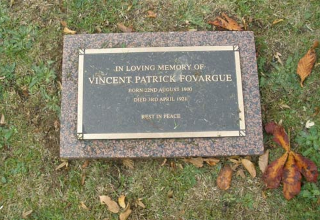
Fovargue is born on August 22, 1900, at 2 Rutland Place, Clontarf, Dublin, to Robert Fovargue, an engineer/fitter, and Elizabeth (Lillie) Larkin.
An intelligence officer with the 4th Battalion of the Dublin Brigade of the IRA in the Ranelagh area, he is captured by the British Army in Dublin. Under interrogation, he allegedly leaks information that results in the arrest of the other members of his unit a few days later. In return for this information, the Intelligence Corps allegedly allow him to escape during a staged ambush in Dublin’s South Circular Road.
This attempted ruse however does not go unnoticed by Michael Collins‘ informants in the Crown’s security forces. On the night of the escape, Detective ConstableDavid Neligan of the Dublin Metropolitan Police‘s “G” Division is on duty in Dublin Castle when he is passed a telephone message on a police form. The message, issued by the British Military Headquarters, states that a “Sinn Féin” suspect named Fovargue had escaped from three Intelligence Corps officers in a car while en route to prison. It gives a description of his appearance and asks that the British Army be notified in the event of his recapture by the Dublin Metropolitan Police.
Joe Kinsella is the I/O of the 4th Battalion. He is temporarily transferred to take care of munitions under Seán Russell for a few weeks and Fovargue is put in his place. In Kinsella’s statement to the BMH, he writes:
“From the outset I personally did not place a lot of trust in him, because on the morning that he took over from me he appeared to me, to be too inquisitive about the movements of Michael Collins and the GHQ staff generally. He wanted to know where they could be located at any time. He said that he had big things in view, and that it would be to the advantage of the movement generally if he was in a position to get in touch with the principal men with the least possible delay. From his attitude I there and then formed the opinion, rightly or wrongly, that he was inclined to overstep his position. I did not feel too happy about him and I discussed him with Sean Dowling. It transpired that my impressions of this man were correct. I told him of two meeting places of Intelligence staff, one of Company Intelligence held at Rathmines Road and one of Brigade Intelligence held at Saville Place. A short time after giving him this information both these places were raided…I was now confirmed in my suspicions that Fovargue was giving away information. He was later shot in England by the IRA.”
Neligan is not fooled by this either, as he explains:
“Now if they had said that this man (who was completely unknown to both of us) had escaped from one I.O. it might have sounded reasonable enough. But to tell us that an unarmed man had escaped out of a motor-car in the presence of three presumably armed men was imposing a strain on our credulity. Both of us thought this story too good to be true.”
The two men retype the message and pass it to Collins the following day. Meanwhile, Fovargue has been sent to England where he adopts the alias of Richard Staunton. Fovargue has in fact been sent to England by Intelligence Corps Colonel Ormonde Winter to infiltrate the IRA in Britain.
Sean Kavanagh, a Kilkenny IRA man, claims that Fovargue is put in a cell with him in Kilmainham in 1921 in order to try to extract information from him.
On April 2, 1921, a boy walking on the golf links of the Ashford Manor Golf Club in Ashford, Middlesex discovers the body of Fovargue, who had been shot through the chest. Discovered near the corpse is a small piece of paper on which had been scribbled in blue pencil the words “Let spies and traitors beware – IRA.”
Myers grows up in England. His father, an Irish GP, dies when he is 15 and away at Ratcliffe College, a Catholicboarding school. His father’s early death creates financial difficulties, though he manages to stay at the school with the help of both the school and the Local Education Authority (LEA). He moves to Ireland to go to university, and graduates from University College Dublin (UCD) in 1969.
Myers subsequently works as a journalist for Irish broadcaster RTÉ, and reports from Northern Ireland during the height of the Troubles. He later works for three of Ireland’s major newspapers, The Irish Times, the Irish Independent, and the Irish edition of The Sunday Times. In 2000, a collection of his An Irishman’s Diary columns is published, with a second volume following in 2007. He is also a presenter of the Challenging Times television quiz show on RTÉ during the 1990s.
In 2001, Myers publishes Banks of Green Willow, a novel, which is met with negative reviews. In 2006, he publishes Watching the Door, about his time as a journalist in Northern Ireland during the 1970s. The book receives positive reviews in The Times, The Guardian, and the New Statesman, while The Independent publishes a more mixed review that wonders whether there is “an element of hyperbole” in Myers’ account.
Myers is a regular contributor to radio programmes on News Talk 106, particularly Lunchtime with Eamon Keane and The Right Hook. He regularly appears on The Last Word on Today FM. He is also a member of the Film Classification Appeals Board, formerly known as the Censorship Board.
In 2005, Myers attracts considerable criticism for his column, An Irishman’s Diary, in which he refers to children of unmarried mothers as “bastards.” Former Minister of StateNuala Fennell describes the column as “particularly sad.” She says the word “bastard” is an example of pejorative language that is totally unacceptable. Myers issues an unconditional apology two days later. The Irish Times editor, Geraldine Kennedy, also apologises for having agreed to publish the article.
In July 2008, Myers writes an article arguing that providing aid to Africa only results in increasing its population, and its problems. This produces strong reactions, with the Immigrant Council of Ireland making an official complaint to the Garda Síochána alleging incitement to hatred. Hans Zomer of Dóchas, an association of NGOs, and another complainant, take a complaint to the Press Council on the grounds that it breaches four principles of the Council’s Code of Practice: accuracy, fairness and honesty, respect for rights, and incitement to hatred.
At the end of July 2017, Myers contributes an article entitled “Sorry, ladies – equal pay has to be earned” to the Irish edition of The Sunday Times about the BBC gender-pay-gap controversy. He further alleges that Claudia Winkleman and Vanessa Feltz are higher paid than other female presenters because they are Jewish. The editor of the Irish edition, Frank Fitzgibbon, issues a statement saying in part “This newspaper abhors anti-Semitism and did not intend to cause offence to Jewish people.” Martin Ivens, editor of The Sunday Times, says the article should not have been published. Ivens and Fitzgibbon apologise for publishing it. After complaints from readers and the Campaign Against Antisemitism, the article is removed from the website. The newspaper announces that Myers will not write for The Sunday Times again. Myers is defended by the chair of the Jewish Representative Council of Ireland, Maurice Cohen, who states, “Branding Kevin Myers as either an antisemite or a Holocaust denier is an absolute distortion of the facts.”
Myers is married to Rachel Nolan and lives in County Kildare. He is the brother-in-law of TV presenter, producer and UK Big Brother housemate Anna Nolan.
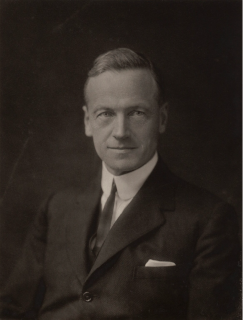
Always a keen traveler, during the following years Guinness makes several expeditions in search of biological specimens and archaeological material. He travels twice to New Guinea and also goes to Greenland and the Bay Islands near Honduras. These voyages are vividly described in his books Walkabout (1936) and Atlantic circle (1938). He still maintains a political profile, however, serving in several different capacities including financial commissioner to Kenya (1932) and chairman of the West India Royal Commission (1938–9). At the outbreak of World War II, he works as chairman of the Polish Relief Fund before being appointed as Joint Parliamentary Secretary at the Ministry of Agriculture on the formation of the Churchill government (1940). In 1941 he becomes Secretary of State for the Colonies and Leader of the House of Lords. Appointed Deputy Resident Minister of State in Cairo (August 1942), he becomes Minister-Resident for the Middle East in January 1944. On November 6, 1944, he is assassinated in Cairo by members of the ‘Stern Gang’, the Jewish terrorist group based in Palestine.
Guinness marries (1903) Lady Evelyn Hilda Stuart Erskine, daughter of the 14th Earl of Buchan. They have two sons and one daughter.
(Pictured: Walter Edward Guinness, 1st Baron Moyne of Bury St. Edmunds, bromide print, 1929, by Walter Stoneman, National Portrait Gallery)
Mary Ellen Cregan is born to Morgan Cregan and Ellen O’Shea. Her father is a stonemason from Limerick. The family are strong believers in the Gaelic revival movement and Cregan herself learns the Irish language and performs songs at Gaelic League concerts. Although she goes to primary school locally, she goes away to secondary school to St. Louis Convent in Carrickmacross, County Monaghan. After finishing school, she becomes a teacher, working in Goresbridge, County Kilkenny from 1911 to 1914.
In September 1914 Cregan goes to Dublin to study music in the Leinster School of Music, under Madame Coslett Heller. It is while she is in Dublin that she becomes friends with the Ryan family, who are strong nationalists as well as interested in the Gaelic League and Sinn Féin. She begins to sing for concerts which are fundraisers for the Irish Volunteers. The last concert is just two weeks before the Easter Rising.
During Easter week Cregan is sent to Tralee with “automatics and ammunition” by Seán Mac Diarmada. While she is carrying a violin case of munitions, she is also carrying details for the wireless technology needed for communicating with the SS Aud, the boat which is carrying more weapons for the rebellion. The communications with the SS Aud go wrong when the car carrying the Volunteers goes off a pier and the occupants are drowned. She is still in the area to assist with the surviving Volunteer, who unfortunately knows nothing of the details for the SS Aud. She is not easily able to get back to Dublin, because owing to the Rising the city is cut off. By the time she gets back, her friends have been arrested.
When Cregan is going to school in Dublin she is also working in a school in Rathmines. Like many of the teachers, she loses her job after the rising because of her connection to the rebels. However, she is able to get new positions over the next few years in both Ballyshannon and Portstewart until she marries. In Ballyshannon she experiences the early expressions of support and sympathy, but Portstewart is a Unionist enclave with many houses flying union flags on polling day in 1918.
Cregan is a member of Cumann na mBan and with them is active during the Irish War of Independence. She is given a medal for her participation. On July 23, 1919, she marries Dr. James Ryan in Athenry, County Galway. His entire family had been deeply involved in the Easter Rising, as well as the Irish War of Independence and the Irish Civil War. They have three children, Eoin, who becomes a Senator, Nuala (Colgan) and Seamus.
The family is initially based in Wexford during the War. The house is often raided when the British soldiers are looking for her husband and Cregan herself is arrested in February 1921 for refusing to put up martial law posters. Later the family sells the house and remains mobile while she works for the Sinn Féin government, and her husband is in prison. It is during this time that she works as a courier to the continent and to London. After the war, they purchase Kindlestown House in Delgany, County Wicklow, where they remain for the rest of their lives.
Cregan’s first book for children is Old John and gains her considerable international success and attention. Sean Eoin is also published in Irish and is illustrated by Jack Butler Yeats. Her work is also aired on the BBC and RTÉ. Rathina wins the Downey Award in the United States in 1943. She also writes two plays: Hunger strike (1933), based on experience of her husband’s involvement in such a strike, which is broadcast on Radio Éireann on May 5, 1936, and Curlew’s call (1940).
Cregan dies on November 9, 1975, in St. Vincent’s Hospital, Dublin, and is buried in Redford cemetery near her home in County Wicklow.
(Pictured: Máirín Cregan and her husband, Dr. James Ryan)
The Black and Tans (Irish: Dúchrónaigh), special constables recruited into the Royal Irish Constabulary (RIC) as reinforcements during the Irish War of Independence, arrive in Ireland on March 25, 1920. Recruitment begins in Great Britain in January 1920 and about 10,000 men enlist during the conflict. The vast majority are unemployed former British soldiers from Britain who had fought in World War I. Some sources count a small number of Irishmen as Black and Tans.
The British administration in Ireland promotes the idea of bolstering the RIC with British recruits. They are to help the overstretched RIC maintain control and suppress the Irish Republican Army (IRA), although they are less well trained in ordinary policing. The nickname “Black and Tans” arises from the colours of the improvised uniforms they initially wear, a mixture of dark green RIC (which appears black) and khaki British Army. They serve in all parts of Ireland, but most are sent to southern and western regions where fighting is heaviest. By 1921, Black and Tans make up almost half of the RIC in County Tipperary, for example.
Few Black and Tans are sent to what becomes Northern Ireland, however. The authorities there raise their own reserve force, the Ulster Special Constabulary (USC). For the most part, the Black and Tans are “treated as ordinary constables, despite their strange uniforms, and they live and work in barracks alongside the Irish police.” They spend most of their time manning police posts or on patrol—”walking, cycling, or riding on Crossley Tenders.” They also undertake guard, escort and crowd control duties. While some Irish constables get along well with the Black and Tans, “it seems that many Irish police did not like their new British colleagues” and se them as “rough.”
Alexander Will, from Forfar in Scotland, is the first Black and Tan to die in the conflict. He is killed during an IRA attack on the RIC barracks in Rathmore, County Kerry, on July 11, 1920.
The Black and Tans gain a reputation for brutality and become notorious for reprisal attacks on civilians and civilian property, including extrajudicial killings, arson and looting. Their actions further sway Irish public opinion against British rule and draw condemnation in Britain.
The Black and Tans are sometimes confused with the Auxiliary Division, a counterinsurgency unit of the RIC, also recruited during the conflict and made up of former British officers. However, sometimes the term “Black and Tans” covers both groups. Some sources say the Black and Tans are officially named the “RIC Special Reserve,” but this is denied by other sources, which say they are not a separate force but “recruits to the regular RIC” and “enlisted as regular constabulary.”
More than a third leave the service before they are disbanded along with the rest of the RIC in 1922, an extremely high wastage rate, and well over half receive government pensions. Over 500 members of the RIC died in the conflict and more than 600 are wounded. Some sources state that 525 police are killed in the conflict, including 152 Black and Tans and 44 Auxiliaries. This figure of total police killed also includes 72 members of the Ulster Special Constabulary killed between 1920 and 1922 and 12 members of the Dublin Metropolitan Police.
Many Black and Tans are left unemployed after the RIC is disbanded and about 3,000 are in need of financial assistance after their employment in Ireland is terminated. About 250 Black and Tans and Auxiliaries, among over 1,300 former RIC personnel, join the Royal Ulster Constabulary. Another 700 joined the Palestine Police Force which is led by former British Chief of Police in Ireland, Henry Hugh Tudor. Others are resettled in Canada or elsewhere by the RIC Resettlement branch. Those who return to civilian life sometimes have problems re-integrating. At least two former Black and Tans are hanged for murder in Britain and another, Scott Cullen, wanted for murder, commits suicide before the police can arrest him.
(Pictured: Sir Hamar Greenwood inspects a group of Black and Tans in 1921)
Sykes joined HM Foreign Service in 1947 and serves at the Foreign Office from 1947 to 1948. He then serves in Nanjing (1948–50), Peking (1950–52) and returns to the UK to serve at the Foreign Office (1952–56). His next overseas postings take him to Brussels (1956–59), Santiago (1959–62) and Athens (1963–66), before returning to the Foreign Office (1967–69).
Sykes’ first posting as an ambassador comes with a posting to Havana (1970–72) before moving to be a Minister at the British Embassy in Washington D.C. (1972–1975). From there he returns to the Foreign Office as Department Under-Secretary between 1975 and 1977. He is then appointed as Ambassador to the Netherlands in 1977.
Sykes is leaving his residence in The Hague at 9:00 a.m. on March 22, 1979, and is getting into his silver Rolls-Roycelimousine when he is shot. He is sitting next to Alyson Bailes. The car door is held by Karel Straub, a 19-year-old Dutch national who works at the embassy. Straub is also shot in the attack. The chauffeur, Jack Wilson, is uninjured and drives Sykes to Westeinde Hospital, where he dies two hours later. Straub is transported by ambulance to the same hospital, where he also dies.
Police report that the shots came from around 10 yards away by two assailants wearing business suits, who escaped on foot following the attack. Suspects for the assassination are Palestinians or Iraqis, although no evidence is ever put forward. It is ultimately confirmed that the IRA had carried out the killings.
The IRA claims responsibility for the assassination in February 1980. In a statement they say of Sykes, “[he was] not just a Brit propagandist, as are all British ambassadors, but because he had been engaged in intelligence operations against our organisation.”
The ‘intelligence operations’ mentioned in the statement relate to a government report written by Sykes following the assassination of Christopher Ewart-Biggs. Ewart-Biggs was the British Ambassador to the Republic of Ireland and was killed by the IRA in 1976. Sykes produces diplomatic security guidelines as part of his report.
Sykes’ position as Ambassador to the Netherlands had been strained due to certain Dutch groups, which were sympathetic to the IRA, and consequent arms smuggling activities.
There is a memorial plaque to Sykes in St. Michael’s Church, Wilsford, Wiltshire.
(Pictured: “Sir Richard Sykes” by Bassano Ltd., half-plate film negative, 20 January 1966, National Portrait Gallery, London)
Seven people are killed in the explosion, including two members of the Royal Ulster Constabulary (RUC), who say they had evacuated people to what was considered to have been a safe area following misleading telephone calls, which had originally placed the device in a nearby street. The Provisional IRA Belfast Brigade admits responsibility for the bomb, which also injures 148 people, but claims that the security forces had deliberately misrepresented the warnings in order to maximise the casualties. This is one of the first car bombs the IRA uses in their armed campaign.
On Monday, March 20, 1972, at 11.45 a.m., a local carpet dealer receives a telephone call warning that a bomb will explode in Belfast city centre’s Church Street which is crowded with shoppers, office workers on lunch breaks, and schoolchildren. British Army troops and the RUC are alerted and immediately begin to evacuate the people into nearby Lower Donegall Street. The second call to The Irish News newspaper seven minutes later also gives Church Street as the location for the device. A final call comes at 11:55 a.m. advising theNews Letter newspaper that the bomb is instead placed outside its offices in Lower Donegall Street where the crowds have been sent. Thus, the warning arrives too late for the security forces to clear the street. Staff working inside the News Letter building are told by the caller that they have 15 minutes in which to leave the building, but they never have a chance to evacuate.
At 11:58 a.m. a 100-pound gelignite bomb explodes inside a green Ford Cortina parked in the street outside the offices of the News Letter, shaking the city centre with the force of its blast, and instantly killing the two RUC constables, Ernest McAllister (31) and Bernard O’Neill (36), who had been examining the vehicle. The remains of the two policemen are allegedly found inside a nearby building. Minutes earlier they had been helping to escort people away from Church Street.
The explosion sends a ball of flame rolling down the street and a pall of black smoke rising upward. The blast wave rips into the crowds of people who had run into Donegall Street for safety, tossing them in all directions and killing another four men outright: Ernest Dougan (39), James Macklin (30), Samuel Trainor (39) and Sydney Bell (65). Trainor is also an off-duty Ulster Defence Regiment (UDR) soldier and a member of the Orange Order. A seriously wounded pensioner, Henry Miller (79) dies in hospital on April 5. Most of the dead are mutilated beyond recognition. With the exception of Constable O’Neill, who is a Catholic, the other six victims are Protestants.
The explosion blows out all the windows in the vicinity, sending shards of glass into people’s bodies as they are hit by falling masonry and timber. The ground floor of the News Letter offices and all buildings in the area suffer heavy damage. The News Letter library in particular sustains considerable damage with many priceless photographs and old documents destroyed. Around the blast’s epicentre, the street resembles a battlefield. About one hundred schoolgirls lay wounded on the rubble-strewn, bloody pavement covered in glass and debris, and screaming in pain and fright. A total of 148 people are injured in the explosion, 19 of them seriously. Among the injured are many of the News Letter staff.
One of the wounded is a child whose injuries are so severe a rescue worker at the scene assumes the child has been killed. A young Czech art student, Blanka Sochor (22), receives severe injuries to her legs. She is photographed by Derek Brind of the Associated Press as a British Paratrooper holds her in his arms. Passerby Frank Heagan witnesses the explosion and comes upon what is left of two binmen who had been “blown to pieces.” He adds that “there was blood everywhere and people moaning and screaming. The street was full of girls and women all wandering around.” The injured can be heard screaming as the ambulances transport them to hospital. Emergency amputations are performed at the scene.
While the security forces and firemen pull victims from the debris in Donegall Street, two more bombs go off elsewhere in the city centre, however, nobody is hurt in either attack. On the same day in Derry, a British soldier, John Taylor, is shot dead by an IRA sniper. In Dublin, Chief of Staff of the Irish Republican Army, Seán Mac Stíofáin, suffers burns to his face and hands after he opens a letter bomb sent to him through the post. Cathal Goulding, head of the Official Irish Republican Army, also receives a letter bomb but escapes injury by having dismantled the device before it exploded.
This is amongst the first car bombs used by the Provisional IRA during The Troubles in its militant campaign to force a British military withdrawal and reunite the six counties of Northern Ireland with the rest of the island of Ireland. It is part of the IRA’s escalation of violence to avenge the Bloody Sunday killings in which 13 unarmed Catholic civilian men were killed by the British Army’s Parachute Regiment when the latter opened fire during an anti-internment demonstration held in Derry on January 30, 1972.
The bombing is carried out by the North Belfast unit of the Provisional IRA’s Third Battalion Belfast Brigade. The OC of the Brigade at that time is the volatile Seamus Twomey, who orders and directs the attack.
On March 23, the IRA admits responsibility for the bomb with one Belfast Brigade officer later telling a journalist, “I feel very bad when the innocent die.” The IRA, however, tempers the admission by claiming that the caller had given Donegall Street as the correct location for the bomb in all the telephone calls and that the security forces had deliberately evacuated the crowds from Church Street to maximise the casualties. The IRA’s official statement claiming responsibility for the blast is released through the Irish Republican Publicity Bureau.
The IRA follows the Donegall Street attack two days later with a car bomb at a carpark adjacent to the Belfast Great Victoria Street railway station and close to the Europa Hotel. Seventy people are treated in hospital for injuries received mainly by flying glass, but there are no deaths. The blast causes considerable damage to two trains, parked vehicles, the hotel, and other buildings in the area.
Although many members of the Provisional IRA are rounded up by police in the wake of the Donegal Street attack, none of the bombers are ever caught nor is anyone ever charged in connection with the bombing.





 seamus dubhghaill