European Movement Ireland (EM Ireland) (Irish: Gluaiseacht na hEorpa in Éirinn) is founded in Dublin on January 11, 1954. EM Ireland is an independent not-for-profit organisation that campaigns for every Irish person to get involved in the European Union (EU) and by doing so, help shape it. It is the oldest Irish organisation dealing with the EU, pre-dating Ireland’s membership of the European Economic Community (EEC) in 1973 by almost twenty years. The organisation is headed by Chief Executive Officer (CEO), Noelle Connell. Julie Sinnamon acts as Chair of the EM Ireland Board.
These seven signatories lay the first stone paving Ireland’s way to full membership of the EU. The aim of the Irish Council is to inform Irish individuals and organisations about the EU. One of its primary objectives is for Ireland to gain membership of the European Communities (EC) (principally the European Economic Community (EEC), as the EU is then known). Former TaoisighGarret FitzGerald and Jack Lynch, and former PresidentMary Robinson back the initiative. After a referendum is held on the Third Amendment of the Irish Constitution, which is overwhelmingly approved by voters in May 1972, Ireland joins the European Communities as a full member state on January 1, 1973.
The Irish Council later becomes European Movement Ireland. Today the organisation claims to act as source of information for Irish citizens regarding the work of the EU and its stated aim is to promote reasoned robust and fair debate about EU in Ireland.
EM Ireland is part of a pan-European network. European Movement International is a lobbying association that coordinates the efforts of associations and national councils with the goal of promoting European integration, and disseminating information about it. It seeks to encourage and facilitate the active participation of citizens and civil society organisations in the European Union as it develops. The European Movement network is represented in over 41 countries and has over 20 international organisations as members. The current President of European Movement is the former MEP from Belgium, Guy Verhofstadt. For a full list of all European Movement offices, and an outline of the history of the international network visit the EM International website at http://www.europeanmovement.eu/
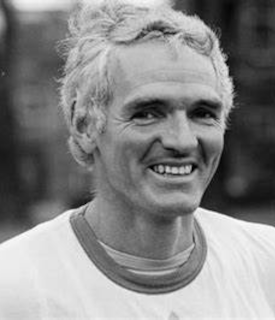
At Villanova, Carroll runs a sub-four-minute mile and in 1964, is the anchor for the team which breaks the 4 x 880-yard relay World Record. In the same year, he also sets the European Indoor record for the 880-yards and competes in the 1964 Summer Olympics in Tokyo, Japan, in the Men’s 800 metres finishing just outside of the qualifying places in heat 5 of the first round with a time of 1:51.1. When running against Bill Crothers in 1964, Sports Illustrated describes him as “one of the best middle-distance runners in the world.”
Carroll represents Ireland in the 400 metres (time: 46.8) and the 800 metres (time: 1:49) in the 1968 Summer Olympics in Mexico City, and continues to win national championships, fourteen in total. He wins a bronze medal in the 800m at the 1969 European Indoor Games in Belgrade.
In 1972, Carroll becomes the spokesman for the Dublin Corporation, now known as Dublin City Council, a post he holds until 1996, when he joins the Dublin Chamber of Commerce as its chief executive.
In 1980, Carroll leads a group which approaches the Business Houses Athletic Association and the Dublin Corporation with the idea for the Dublin Marathon. He is also among the 2,100 people who compete in the race that year. The winner of the Marathon receives the Noel Carroll Memorial Trophy presented each year by one of Carroll’s children.
Carroll dies on October 23, 1998, after suffering a heart attack while training at University College Dublin (UCD). In 2008, his four children take part in the Dublin Marathon to raise money for the Noel Carroll Building, the headquarters of a project in Kolkata, India, run by GOAL, a charity for which Carroll had served as the chairman.
Carroll’s grandson is the Irish rugby international player, Jordi Murphy.
A knee injury during a night training exercise in Omagh makes McDowell ineligible for active military service and he becomes a weapons instructor. The accident also leads to him meeting his future wife, Margaret Telfer, the physiotherapist who treats him in hospital in Bangor, County Down.
McDowell rises to the rank of major and is part of the Allied forces in occupied Austria following the end of the war, taking part in joint patrols in Vienna with Russian, American and French officers. In the post-war period, he is given two years to finish his college course and spends a summer studying law with a tutor before passing the English bar and returning to the British Army.
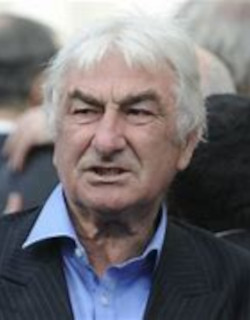
After a further military posting to Edinburgh, McDowell’s legal qualification brings him to the army legal service in the War Office in London. With little prospect of further promotion and every chance of being posted abroad without his young family, he decides to leave the army. He is offered a job as legal adviser in London to James North Ltd, a company which makes protective clothing. With no experience of industry, he asks to be given a managerial role at first. The company suggests a managing position in its operations in Dublin. He slots easily into the city’s old business establishment, joining the Kildare Street Club, becoming a director of Pim’s department store, and setting his career firmly on a commercial rather than a legal path.
McDowell’s involvement with newspapers comes about through the recognition of his business acumen. He is asked by some acquaintances to take a look at the financial troubles of the Evening Mail, which is bought subsequently by The Irish Times, adding to the latter’s own financial difficulties.
McDowell is asked later by The Irish Times to see if Roy Thomson, the Canadian-born British press baron whom he had met while they both looked separately at the Evening Mail, might be interested in taking it over. Thomson passes and the company then asks McDowell himself to take charge as chief executive in 1962. Among his first actions are to close the Evening Mail and the Sunday Review, a short-lived tabloid that is ahead of its time. A year later, another problem is resolved when Douglas Gageby, who had been hired as managing director of The Irish Times shortly before McDowell’s arrival, takes over as editor.
Thus, what had begun as a slightly awkward relationship, turns into a highly successful partnership as Gageby sets about broadening the newspaper’s editorial appeal and McDowell sets it on a successful commercial course. McDowell always credits Gageby and his successors as editor with the success of the newspaper. Although he has a close relationship with editors, especially Gageby, he does not interfere in the editorial running of the newspaper.
By the early 1970s, the circulation of The Irish Times has almost doubled in a decade to 60,000 and it is making money. Some of the directors indicate an interest in selling the company. McDowell proposes instead that it be turned into a trust. It is a period when several newspapers in Ireland and Britain have changed hands or are seen as being vulnerable to takeovers. His aims are to protect the newspaper’s independence, make it as difficult as possible for anyone to take over, and formalise its aims in a guiding trust.
McDowell works on the trust document for many months, going through 28 drafts before he is satisfied with the result. The five directors of the company, including McDowell and Gageby, transfer their shares in the company to a solicitor in the autumn of 1973 in anticipation of announcing the trust at the end of that year. Further delays in finalising the trust terms result in its announcement in April 1974, on the eve of the introduction of capital gains tax. The timing gives rise to suggestions that the directors are taking their cash (£325,000 each) out of the company before the new tax takes effect. McDowell always denies that this is the case, maintaining that the timing is coincidental. He is also adamant that the motivation behind the formation of the trust itself is altruistic.
The formation of the trust leaves the newspaper with a large bank debt, used to buy out the directors/shareholders, at what turns out to be a difficult economic period after the first oil crisis hits the western world in the autumn of 1974. McDowell successfully guides The Irish Times‘ financial fortunes through the subsequent recession and into further periods of growth throughout the 1980s and 1990s.
McDowell stands down as chief executive of the company in 1997 and retires from the chairmanship of The Irish Times Trust in 2001. He is given the title President for Life in recognition of his huge contribution to the newspaper.
McDowell is a private person and never seeks or exploits the public status or limelight that goes with being a newspaper publisher. During his visit to the new The Irish Times offices on Tara Street in June 2008 for the unveiling of a portrait of him by Andrew Festing, he describes the newspaper and his family as the two loves of his life.
McDowell dies unexpectedly at the age of 87 on September 9, 2009. His funeral takes place in Whitechurch Parish Church, Rathfarnham, followed by burial in the adjoining churchyard.
O’Shea’s father, a banker, moves the family to Dublin when he is age 11. He is schooled in CBC Monkstown and is a sports fanatic playing rugby at school and a keen golfer and tennis player in Monkstown. He remains a keen fan of rugby, tennis and golf, playing tennis every Saturday and also giving opinions on Irish sports to radio and newspapers. He goes on to study Economics, English and Philosophy at University College Dublin (UCD) and has a career as a sports journalist in the Evening Press for many years after meeting Tim Pat Coogan while studying.
In 1977, O’Shea begins his charitable organisation with a 10,000 punts donation for a feeding project in Calcutta after which he founds GOAL. The charity has a major sporting backbone. John McEnroe, Pat Cash and Gordon D’Arcy are amongst the sport stars to have become “Goalies”(volunteers).
In its 36 years of operation, GOAL has distributed €790 million and has had over 1,400 volunteers. It has operated in over 50 countries worldwide. O’Shea cites watching the “Goalies” working around the world as the best part of his years involved in the charity. He believes that governments of developed countries should be far more involved in the distribution of aid.
A sometimes controversial figure, O’Shea is known for his forthright public statements, particularly when he feels political correctness is getting in the way of assisting those in need, and a hands on approach to tackling poverty related issues. He has been criticised by some in the INGO community for advocating military invasion and intervention in Sudan by the United States, UK and NATO, under the guise of humanitarian intervention. He has also been critical of perceived inaction by the UN in humanitarian crises in conflict zones and of governmental aid agencies in giving aid directly to allegedly corrupt African governments. He has advocated using private companies to provide aid and military forces to directly force aid on countries. Most other Irish Aid agencies disagree stating that every type of aid channels must be used and have described his policies as recolonisation.
In 2012, O’Shea is asked to slow down by his doctor. In November 2012, former Fianna Fáil politician, Barry Andrews, is appointed chief executive of GOAL.
O’Shea currently gives talks at NUI Galway and interpersonal skills class UCD. He has become involved with the university for a few years where he shares his story. He is an advocate for social (non-profit) entrepreneurs and tries to convince students to go down that path.



 seamus dubhghaill