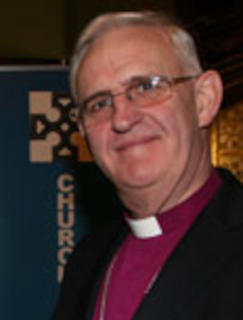
At the Lambeth Conference in 1988, Neill proposes all the approved resolutions in respect of Women in the Episcopate and is chairman of the Church of Ireland General Synod Committee on Ordination of Women (1988–91). He serves on many central committees of the Church of Ireland covering issues such as liturgical reform, education, communications, ministry, Christian unity and synodical structures.
Neill serves as President of the Council of Churches for Britain and Ireland (1990-94) and as President of Churches Together in Britain and Ireland (1999-2002) and is co-founder and chairman of the Church of Ireland/Methodist Church Joint Theological Working Party.
On August 29, 2002, the Church of Ireland announces that the Right Reverend John Neill, Bishop of Cashel and Ossory, is to succeed the Most Reverend Dr. Walton Empey as Archbishop of Dublin. The announcement is made at a meeting of the Church of Ireland Episcopal Electoral College in Christ Church Cathedral, Dublin.
Neill and his wife Betty have three sons, The Reverend Canon Stephen Neill, Rector of Celbridge, Andrew Neill, a member of Garda Síochána, and Peter Neill, a photographer.
At the Athyby-election on June 12, 1741, following the death of Sir Walter Dixon Borrowes, James FitzGerald, styled Lord Ophaly and later 1st Duke of Leinster, is returned. In the course of the election there is a duel between William Paul Warren and Jack Hardy, which leads to Hardy’s right hand and arm being shattered. It is thought that it might have to be amputated.
In 1761 FitzGerald is created Earl of Offaly and Marquess of Kildare in the Peerage of Ireland and in 1766 he is further honoured when he is made Duke of Leinster, becoming by this time the Premier Duke, Marquess and Earl in the Peerage of Ireland.
FitzGerald dies at Leinster House, Dublin, on November 19, 1773, aged 51, and is buried in the city’s Christ Church Cathedral. He is succeeded by his second (but eldest surviving) son, William, Marquess of Kildare. The Duchess of Leinster causes a minor sensation by marrying her lover William Ogilvie in 1774 but continues to be known as The Dowager Duchess of Leinster. She has a further three children by him. She dies in London on March 27, 1814, aged 82.
In 1999, Irish Screen, BBC America and WGBH produce Aristocrats, a six-part limited television series based on the lives of Emily Lennox and her sisters. FitzGerald is portrayed by Ben Daniels.
After some years as curate at St. Paul’s Church, Dublin, Murray is transferred to Arklow and is there in 1798 when the rebellion breaks out. The yeomanry shoots the parish priest in bed and Murray, to escape a similar fate, flees to the city where for two years he serves as curate at St. Andrew’s Chapel on Hawkins Street. As a preacher, he is said to be particularly effective, especially in appeals for charitable causes, such as the schools. He is then assigned to the Chapel of St. Mary in Upper Liffey Street where Archbishop John Troy is the parish priest.
Murray is an uncompromising opponent of a proposal granting the British government a “veto” over Catholic ecclesiastical appointments in Ireland, and in 1814 and 1815, makes two separate trips to Rome concerning the controversy.
Murray becomes Archbishop of Dublin in 1825 and on November 14, 1825, celebrates the completion of St. Mary’s Pro-Cathedral. He enjoys the confidence of successive popes and is held in high respect by the British government. His life is mainly devoted to ecclesiastical affairs, the establishment and organisation of religious associations for the education and relief of the poor. With the outbreak of cholera in the 1830s, in 1834 he and Mother Aikenhead found St. Vincent’s Hospital. He persuades Edmund Rice to send members of the Christian Brothers to Dublin to start a school for boys. The first is opened in a lumber yard on the city-quay. He assists Catherine McAuley in founding the Sisters of Mercy, and in 1831 professes the first three members.
Edward Bouverie Pusey has an interview with Murray in 1841, and bears testimony to his moderation, and John Henry Newman has some correspondence with him prior to Newman’s conversion from the Anglican Church to the Roman Catholic Church in 1845. A seat in the privy council at Dublin, officially offered to him in 1846, is not accepted. He takes part in the synod of the Roman Catholic clergy at Thurles in 1850.
Towards the end of his life, Murray’s eyesight is impaired, and he reads and writes with difficulty. Among his last priestly functions is a funeral service for Richard Lalor Sheil who had died in Italy, and whose body had been brought back to Ireland for burial. Murray dies in Dublin on February 26, 1852, at the age of eighty-four. He is interred in the St. Mary’s Pro-Cathedral, Dublin, where a marble statue of him has been erected in connection with a monument to his memory, executed by James Farrell, president of the Royal Hibernian Academy of Fine Arts.
(Pictured: Portrait of Daniel Murray, Archbishop of Dublin, by unknown 19th century Irish portrait painter)
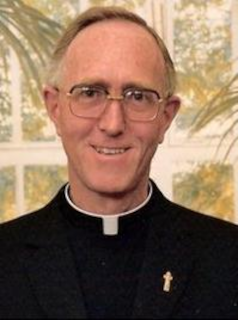
Ryan is Professor of Oriental Languages at University College Dublin before his appointment by Pope Paul VI as Archbishop of Dublin and Primate of Ireland on December 29, 1971. Maintaining his connection and interest in oriental studies, he serves as chairman of the trustees of the Chester Beatty Library from 1978 to 1984.
During his term, Ryan consolidates much of the expansion of the archdiocese which had taken place during the term of his predecessor. He also oversees the fuller implementation of the reforms of Vatican II. He is particularly interested in liturgical reform.
Ryan also takes a traditional stand on social issues, including poverty, family life and opposition to abortion. He strongly promotes the Eighth Amendment of the Constitution of Ireland in 1983, granting the equal right to life to mother and unborn.
As Archbishop, Ryan gives the people of Dublin a public park on a site earmarked by his predecessors for a proposed cathedral. It is named “Archbishop Ryan Park” in his honour. The land, at Merrion Square, is a gift from the archbishop to the city of Dublin.
Ryan is named in the Murphy Report, released in 2009, on sexual abuse of children in Dublin. His actions in respect of complaints against priest Fr. McNamee are described in the report as “an example of how, throughout the 1970s, the church authorities were more concerned with the scandal that would be created by revealing Fr. McNamee’s abuse rather than any concern for the abused.” He also does not act on complaints against other priests who are also subsequently confirmed to be abusers.
In January 2010, after Ryan has been criticised in the Murphy Report the previous year, Dublin City Council seeks public views on renaming “Archbishop Ryan Park.” Later that same year it is renamed “Merrion Square Park” by the City Council.
Lieutenant-GeneralJames FitzGerald, 1st Duke of Leinster, PC (Ire), Irish nobleman, soldier and politician, is born on May 29, 1722. He is styled Lord Offaly until 1744 and known as The Earl of Kildare between 1744 and 1761 and as The Marquess of Kildare between 1761 and 1766.
In 1761 FitzGerald is created Earl of Offaly and Marquess of Kildare in the Peerage of Ireland and in 1766 he is further honoured when he is made Duke of Leinster, becoming by this time the Premier Duke, Marquess and Earl in the Peerage of Ireland.
FitzGerald dies at the age of 51 at Leinster House, Dublin, on November 19, 1773, and is buried in the city’s Christ Church Cathedral. He is succeeded by his second (but eldest surviving) son, William, Marquess of Kildare. The Duchess of Leinster causes a minor sensation by marrying her lover William Ogilvie in 1774, but continues to be known as The Dowager Duchess of Leinster. She has a further three children by him. She dies in London at the age of 82 in March 1814.
In 1999, Irish Screen, BBC America and WGBH produce Aristocrats, a six-part limited television series based on the lives of Emily Lennox and her sisters. FitzGerald is portrayed by Ben Daniels.
(Pictured: James FitzGerald, 1st Duke of Leinster, by Joshua Reynolds, 1753)
After some years as curate at St. Paul’s Church in Dublin, Murray is transferred to Arklow and is there in 1798 when the rebellion breaks out. The yeomanry shoots the parish priest in bed and Murray, to escape a similar fate, flees to the city where for two years he serves as curate at St. Andrew’s Chapel on Hawkins Street. As a preacher, he is said to be particularly effective, especially in appeals for charitable causes, such as the schools. He is then assigned to the Chapel of St. Mary in Upper Liffey Street where Archbishop John Troy is the parish priest.
Murray is an uncompromising opponent of a proposal granting the British government a “veto” over Catholic ecclesiastical appointments in Ireland, and in 1814 and 1815, makes two separate trips to Rome concerning the controversy.
Murray becomes Archbishop of Dublin in 1825 and on November 14, 1825, celebrates the completion of St. Mary’s Pro-Cathedral. He enjoys the confidence of successive popes and is held in high respect by the British government. His life is mainly devoted to ecclesiastical affairs, the establishment and organisation of religious associations for the education and relief of the poor. With the outbreak of cholera in the 1830s, in 1834 he and Mother Aikenhead found St. Vincent’s Hospital. He persuades Edmund Rice to send members of the Christian Brothers to Dublin to start a school for boys. The first is opened in a lumber yard on the city-quay. He assists Catherine McAuley in founding the Sisters of Mercy, and in 1831 professes the first three members.
Edward Bouverie Pusey has an interview with Murray in 1841, and bears testimony to his moderation, and John Henry Newman has some correspondence with him prior to Newman’s conversion from the Anglican Church to the Roman Catholic Church in 1845. A seat in the privy council at Dublin, officially offered to him in 1846, is not accepted. He takes part in the synod of the Roman Catholic clergy at Thurles in 1850.
Towards the end of his life, Murray’s eyesight is impaired, and he reads and writes with difficulty. Among his last priestly functions is a funeral service for Richard Lalor Sheil who had died in Italy, and whose body had been brought back to Ireland for burial. Murray dies in Dublin on February 26, 1852, at the age of eighty-four. He is interred in the St. Mary’s Pro-Cathedral, Dublin, where a marble statue of him has been erected in connection with a monument to his memory, executed by James Farrell, president of the Royal Hibernian Academy of Fine Arts.
(Pictured: Portrait of Daniel Murray, Archbishop of Dublin, by unknown 19th century Irish portrait painter)
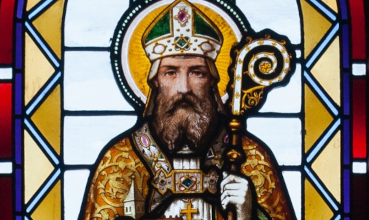
Lorcán Ua Tuathail, also known as Saint Laurence O’Toole, is canonised by Pope Honorius III on December 11, 1225. It will be 750 years before another Irish person is canonised.
O’Toole is born in Castledermot in what is now County Kildare in 1128. His father is Maurice O’Toole, King of Hy Murray. It is common practice in the day for princes of one clan to be given as hostages to another clan, as a guarantee of peace. When he is ten years old O’Toole is given as hostage to Diarmaid Mac Murchada, King of Leinster, who treats him very badly. He is sent in chains to a remote place, where he gets very little to eat and does not have enough clothes to keep him warm in the winter. For two years, even though he is a king’s son, he learns what it is like to be poor and to be oppressed.
After two years, it is agreed that O’Toole is to be released. He is sent to a monastery at Glendalough, and the monks make him welcome. It is agreed that his father is to come and collect him there. But he soon comes to love Glendalough and likes joining the monks in prayer. After his two years as a hostage, he realises that wealth and power are not important. He feels very close to God in Glendalough. He asks his father’s permission to stay there and become a monk, to which his father agrees. At the age of only 26 years old, he is elected Abbot of Glendalough. As the leader of the community, he encourages the monks in their learning. There is always a welcome in the monastery for the poor. When there is a famine in the area, he sells some of the treasures of Glendalough to provide food for those who are hungry.
In 1162 O’Toole becomes the first Irish-born Archbishop of Dublin, then a city ruled by Danes and Norwegians. In those days, many of the people of Dublin do not take their Christian religion very seriously. He encourages them to become real Christians. He brings monks to Dublin from France, and they live at Christ Church Cathedral. They help many people to come back to Mass and the Sacraments. O’Toole himself never forgets his own days of poverty. He continues to care for the poor, especially homeless children. He makes room for them in his own house, and they share the food at his table.
The Normans land in Ireland in 1169. The following year they besiege Dublin under their leader, Richard de Clare, 2nd Earl of Pembroke, also known by the nickname of “Strongbow.” O’Toole meets Strongbow to arrange peace but the Normans attack while the talks are going on. They seize the city and begin killing the citizens and looting their houses. O’Toole saves the lives of many people.
As Archbishop of Dublin, O’Toole participates in the Third Council of the Lateran in Rome in 1179, with some of the other Irish bishops. Pope Alexander III knows that Ireland has been going through a bad time. He knows that many people, including priests, are no longer taking their religion seriously. He entrusts to O’Toole the task of reforming the Church in Ireland.
A new dispute breaks out between Henry II of England and the Irish Kings. In the spring of 1180, O’Toole leaves Ireland to see if he can help settle the dispute. King Henry II does not have much time for bishops. He has already arranged to have the Archbishop of Canterbury, Thomas Becket, murdered. He does not welcome O’Toole. He sees a chance to get rid of O’Toole as Archbishop of Dublin and does not let him return to Ireland. Henry has control of Normandy as well as England. O’Toole follows him there. As long as there is a chance of peace, he would not give up trying.
In 1180, O’Toole becomes seriously ill. The monks at Eu in Normandy look after him in their monastery but on November 14, 1180, at the age of 52, he dies. His tomb is in the crypt under the Collegial Church at Eu. Many people still go there to pray.
Laurence O’Toole is canonized by Pope Honorius III on December 11, 1225.
(From “St. Laurence O’Toole: a spiritual leader for difficult times,” CatholicIreland.net, November 30, 1999)
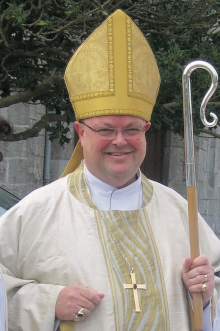
In 2013 Colton completes, and is conferred with, a PhD in Law also at Cardiff University. His academic areas of interest are church law, the law of the Church of Ireland, law within Anglicanism, the interface between the laws of religious communities and the laws of States (particularly in Ireland and Europe), human rights, education law, and charity law. In 2014 he is appointed as an honorary research fellow at the Cardiff School of Law and Politics of Cardiff University, and its Centre for Law and Religion.
Colton is married to Susan Colton, who is deputy principal of a primary school, and they have two adult sons. He is the first Church of Ireland bishop to openly support same-sex marriage. He is involved in education debates and in charity work. He chairs the board of directors of Saint Luke’s Charity, Cork, which focuses on the elderly and dementia sufferers. He is also chairman of the board of governors of Midleton College.
At the episcopal ordination of Bishop Fintan Gavin as Catholic bishop of Cork and Ross in June 2019, Colton presents the crosier at Bishop Gavin’s own request.
As of June 2020, Colton is the longest-serving bishop of Cork, Cloyne and Ross since bishop William Lyon in 1617 and also the longest serving bishop still in office in the Anglican churches of Ireland, England, Scotland and Wales. He is the author of almost a dozen book chapters, mostly in the area of the interface between religion and law.
Simnel is born around 1477. His real name is not known, and contemporary records call him John, not Lambert, and even his surname is suspect. Different sources have different claims of his parentage, but he is most definitely of humble origin. At the age of about ten, he is taken as a pupil by an Oxford-trained priest named Richard Simon who apparently decides to become a kingmaker. He tutors the boy in courtly manners and contemporaries describe the boy as handsome. He is taught the necessary etiquette and is well educated by Simon.
Simon notices a striking resemblance between Lambert and the sons of Edward IV, so he initially intends to present Simnel as Richard, Duke of York, son of King Edward IV, the younger of the vanished Princes in the Tower. However, when he hears rumours (at the time false) that the Edward Plantagenet, 17th Earl of Warwick has died during his imprisonment in the Tower of London, he changes his mind. The real Warwick is a boy of about the same age, having been born in 1475, and has a claim to the throne as the son of George Plantagenet, 1st Duke of Clarence, King Edward IV’s executed brother.
Simon spreads a rumour that Warwick has actually escaped from the Tower and is under his guardianship. He gains some support from Yorkists. He takes Simnel to Ireland where there is still support for the Yorkist cause and presents him to the head of the Irish government, Gerald FitzGerald, 8th Earl of Kildare, Lord Deputy of Ireland. Kildare is willing to support the story and invade England to overthrow King Henry. Simnel is paraded through the streets, carried on the shoulders of “the tallest man of the time,” an individual called D’Arcy of Platten.
On May 24, 1487, Simnel is crowned in Christ Church Cathedral in Dublin as King Edward VI. He is about 10 years old. Lord Kildare collects an army of Irish soldiers under the command of his younger brother, Thomas FitzGerald of Laccagh.
Simnel’s army, mainly Flemish and Irish troops, lands on Piel Island in the Furness area of Lancashire on June 5, 1487, and are joined by some English supporters. However, most local nobles, with the exception of Sir Thomas Broughton, do not join them. They clash with the King’s army on June 16 at the Battle of Stoke Field in Nottinghamshire and are defeated. Lincoln and Thomas FitzGerald are killed. Lovell goes missing and there are rumours that he has escaped to Scotland with Sir Thomas Broughton and hidden to avoid retribution. Simons avoids execution due to his priestly status but is imprisoned for life. Kildare, who had remained in Ireland, is pardoned.
King Henry pardons young Simnel, probably because he recognises that Simnel had merely been a puppet in the hands of adults and puts him to work in the royal kitchen as a spit-turner. When he grows older, he becomes a falconer. Almost no information about his later life is known. He dies sometime between 1525 and 1535. He seems to have married, as he is probably the father of Richard Simnel, a canon of St. Osyth’s Priory in Essex during the reign of Henry VIII.
St. Patrick’s Cathedral is dedicated on March 17, 1191. With its 141-foot spire, it is the tallest church (not cathedral) in Ireland and the largest.
St. Patrick’s Cathedral is founded on the spot where St. Patrick himself is believed to have baptized the first Irish believers into the Christian faith. The sacred well which St. Patrick used has been lost, but the Cathedral is built in the area where the conversions are believed to have taken place.
The first church is constructed here in the 5th century but St. Patrick’s as it stands now is built between 1191 and 1270. In 1311, the Medieval University of Dublin is founded here, and the church begins a place of higher education as well as a place of worship.
Repairs to the cathedral begin in the 1660s and continued in phases over the following decades to save it from falling into complete ruin.
As its status grows, St. Patrick’s begins to rival Christ Church Cathedral in importance. This is where the history of St. Patrick’s Cathedral takes a bit of a complicated turn in term of church definitions. The current cathedral building is often hailed as one of the best examples of medieval architecture in Dublin, however, it is only fair to point out that the structure went through a massive rebuild in the 1860s, mainly financed by money from Benjamin Guinness.
As one of Dublin’s two Church of Ireland cathedrals, St. Patrick’s is actually designated as the “National Cathedral of Ireland.” However, it lacks the one thing that usually makes a church a cathedral – a bishop. The Archbishop of Dublin actually has his seat at Christ Church Cathedral, which is designated as the local cathedral of the Diocese of Dublin and Glendalough. St. Patrick’s is instead headed by a dean who is the ordinary for the cathedral. This office has existed since 1219 with its most famous office holder being Jonathan Swift.
Today St. Patrick’s Cathedral plays host to a number of public national ceremonies. Ireland’s Remembrance Day ceremonies, hosted by the Royal British Legion and attended by the President of Ireland, take place there every November. Its carol service (the Service of Nine Lessons and Carols), celebrated twice in December, including every December 24, is a colourful feature of Dublin life. On Saturdays in autumn the cathedral hosts the graduation ceremonies of Technological University Dublin.
The funerals of two Irish presidents, Douglas Hyde and Erskine Childers, take place in St. Patrick’s Cathedral in 1949 and 1974 respectively. In 2006, the cathedral’s national prominence is used by a group of 18 Afghan migrants seeking asylum, who occupied it for several days before being persuaded to leave without trouble.