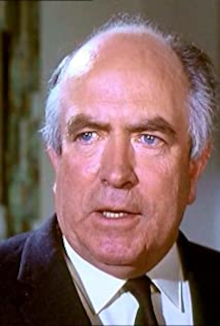
Healy is one of twins, the third son born to Maurice, a Poor Law Union clerk, and Eliza (née Sullivan) Healy. His mother dies during the birth. It is said that the nurse places him in his brother Tim‘s arms and said, “This little boy has no mother now and you will have to be a mother to him.” As he grows up, he becomes very close to his elder brother. The orphaned children are effectively raised by their maternal grandmother, Jane Sullivan. The family moves to Lismore, County Waterford, where he is educated at the local Christian Brothers school. Both brothers marry Sullivans who are first cousins to their husbands and to each other.
Admitted as a solicitor in 1882, Healy practises as such and is returned to parliament four times, first as a member of the Irish Parliamentary Party for Cork City from 1885 to 1900, in which year standing as a Healyite nationalist he is defeated by William O’Brien in a bitter campaign. He is returned again for Cork City in May 1909 to January 1910.
Healy’s force in parliament is land law. He is a close confidant of his brother Tim and although more retiring and stolid than his better-known elder brother, he is considered the more intelligent and often acts as a counterbalance to his brother’s emotionality. On the outbreak of World War I in 1914 a son of each enlists in one of the Irish Divisions.
Maurice (junior) moves to England after the founding of the Irish Free State where he is both a successful lawyer and a broadcaster for the BBC during the early years of World War II. He writes the well-known legal memoir The Old Munster Circuit and the popular Stay Me with Flagons: A Book about Wine and Other Things.
Mary Irvine, Irish judge who is the President of the Irish High Court between 2020 and 2022, is born on December 10, 1956, in Clontarf, Dublin. She first practiced as a barrister. She is a judge of the High Court between 2007 and 2014, a judge of the Court of Appeal from 2014 to 2019 and serves as a judge of the Supreme Court of Ireland from May 2019 until becoming President of the High Court on June 18, 2020. In addition to being the first woman to hold that position, she is the first judge to have held four judicial offices. She is an ex officio member of the Supreme Court and the Court of Appeal.
Irvine is born to John and Cecily Irvine, her father once being deputy director of RTÉ. She is educated at Mount Anville Secondary School, University College Dublin (UCD) and the King’s Inns. She is an international golf player, winning the Irish Girls Close Championship in 1975.
Irvine’s practice also extends to constitutional law. As a junior counsel, she represents the plaintiff in Cahill v. Sutton in 1980 in the Supreme Court with seniors Niall McCarthy and James O’Driscoll. The case establishes the modern Irish law of standing for applicants to challenge the constitutional validity of statutes. She appears with Peter Kelly to argue on behalf the right of the unborn in a reference made by President of IrelandMary Robinson under Article 26 of the Constitution to the Supreme Court in 1995 regarding the Information (Termination of Pregnancies) Bill 1995.
Irvine is appointed as a Judge of the High Court in June 2007. She is in charge of the High Court Personal Injuries list from 2009 to 2014 and subsequently becomes the second Chair of the Working Group on Medical Negligence and Periodic Payments, established by the President of the High Court.
Irvine is appointed to Court of Appeal on its establishment in October 2014. Some of her judgments on the Court of Appeal reduce awards given by lower courts for personal injuries compensation. She writes “most of the key” Court of Appeal judgments between 2015 and 2017 which have the effect of reducing awards arising from subsequent actions in the High Court.
Irvine is appointed to chair a statutory tribunal to conduct hearings and deal with cases related to the CervicalCheck cancer scandal in 2019. However, following her appointment as President of the High Court in 2020, she is unable to continue with the position.
On April 4, 2019, Irvine is nominated by the Government of Ireland as a Judge of the Supreme Court. She is appointed by the President of Ireland, Michael D. Higgins, on May 13, 2019. She writes decisions for the court in appeals involving planning law, the law of tort, intellectual property law, judicial review, and chancery law.
Irvine is appointed by Chief Justice Frank Clarke in 2019 to chair the Personal Injuries Guidelines Committee of the Judicial Council. The purpose of the committee is to review the levels of compensation issues in court cases arising out of personal injuries. Minister of State at the Department of FinanceMichael W. D’Arcy writes a letter to congratulate her on her appointment and outlines his views that personal injuries awards in Ireland should be “recalibrated.” She responds to the letter by saying it is the not the committee’s duty to tailor its findings “in a manner favourable to any particular interest group.”
Following a cabinet meeting on June 12, 2020, it is announced that Irvine will be nominated to succeed Peter Kelly as President of the High Court. A three-person panel consisting of the Chief Justice Frank Clarke (later substituted by George Birmingham), the Attorney GeneralSéamus Woulfe and a management consultant, Jane Williams, reviews applications for the position, before making recommendations to cabinet. The President of the Law Society of Ireland welcomes her appointment, describing her as an “outstandingly able judge.” She is the first woman to hold the role. As she is previously an ordinary judge of three courts, her appointment as President of the High Court makes her the first person to have held four judicial offices. She is appointed on June 18, 2020, and makes her judicial declaration on June 19.
Irvine takes over as president in the midst of the COVID-19 pandemic in the Republic of Ireland. She issues guidelines for lawyers to negotiate personal injuries cases outside of court due to the backlog formed by delays in hearings. She issues a practice direction in July 2020 that face coverings are to be worn at High Court hearings. She criticises barristers and solicitors in October 2020 for not wearing masks in the Four Courts.
In Irvine’s first week as president, she presides over a three-judge division of the High Court in a case taken by a number of members of Seanad Éireann. The plaintiffs seek a declaration that the Seanad should sit even though the nominated members of Seanad Éireann have not been appointed. The court refuses the relief and finds for the State. In 2021, she also presides over a three-judge division on a Seanad Éireann voting rights case, where the plaintiff argues for the extension of voting rights to graduates of all third-level educational institutions and the wider population. The court finds against the plaintiff.
Irvine continues to sit in the Supreme Court following her appointment.
In April 2022, Irvine announces her intention to retire in July 2022. She retires on July 13, 2022, and is succeeded by David Barniville.
Irvine is formerly married to retired judge Michael Moriarty, with whom she has three children. Her only known son, Mark Moriarty, dies suddenly on August 19,2022.
(Pictured: Justice Mary Irvine with the President of Ireland, Michael D. Higgins, on her appointment on the Supreme Court in 2019)
Gregory becomes involved in republican politics, joining Sinn Féin and the Irish Republican Army (IRA) in 1964. In UCD he helps found the UCD Republican Club, despite pressure from college authorities, and becomes involved with the Dublin Housing Action Committee. Within the party he is a supporter of Wicklow Republican Seamus Costello. Costello, who is a member of Wicklow County Council, emphasises involvement in local politics and is an opponent of abstentionism. Gregory sides with the Officials in the 1970 split within Sinn Féin. Despite having a promising future within the party, he resigns in 1972 citing frustration with ideological infighting in the party. Later, Costello, who had been expelled by Official Sinn Féin, approaches him and asks him to join his new party, the Irish Republican Socialist Party. He leaves the party after Costello’s assassination in 1977. He is briefly associated with the Socialist Labour Party.
Gregory contests the 1979 local elections for Dublin City Council as a “Dublin Community Independent” candidate. At the February 1982 general election, he is elected to Dáil Éireann as an Independent TD. On his election he immediately achieves national prominence through the famous “Gregory Deal,” which he negotiates with Fianna Fáil leader Charles Haughey. In return for supporting Haughey as Taoiseach, he is guaranteed a massive cash injection for his inner-city Dublin constituency, an area beset by poverty and neglect.
Although Gregory is reviled in certain quarters for effectively holding a government to ransom, his uncompromising commitment to the poor is widely admired. Fianna Fáil loses power at the November 1982 general election, and many of the promises made in the Gregory Deal are not implemented by the incoming Fine Gael–Labour Party coalition.
Gregory is involved in the 1980s in tackling Dublin’s growing drug problem. Heroin had largely been introduced to Dublin by the Dunne criminal group, based in Crumlin, in the late 1970s. In 1982 a report reveals that 10% of 15- to 24-year-olds have used heroin at least once in the north inner city. The spread of heroin use also leads to a sharp increase in petty crime. He confronts the government’s handling of the problem as well as senior Gardaí, for what he sees as their inadequate response to the problem. He co-ordinates with the Concerned Parents Against Drugs group in 1986, who protest and highlight the activities of local drug dealers and defend the group against accusations by government Ministers Michael Noonan and Barry Desmond that it is a front for the Provisional IRA. He believes that the solution to the problem is multi-faceted and works on a number of policy level efforts across policing, service co-ordination and rehabilitation of addicts. In 1995 in an article in The Irish Times, he proposes what would later become the Criminal Assets Bureau, which is set up in 1996, catalysed by the death of journalistVeronica Guerin. His role in its development is later acknowledged by then Minister for JusticeNora Owen.
Gregory also advocates for Dublin’s street traders. After attending a sit-down protest with Sinn Féin Councillor Christy Burke, and future Labour Party TD Joe Costello on Dublin’s O’Connell Street in defence of a street trader, he, Burke and four others are arrested and charged with obstruction and threatening behaviour. He spends two weeks in Mountjoy Prison after refusing to sign a bond to keep the peace.
Gregory remains a TD from 1982 and, although he never holds a government position, remains one of the country’s most recognised Dáil deputies. He always refuses to wear a tie in the Dáil chamber stating that many of his constituents could not afford them.
Gregory dies on January 2, 2009, following a long battle with cancer. Following his death, tributes pour in from politicians from every party, recognising his contribution to Dublin’s north inner city. During his funeral, politicians from the Labour Party, Fianna Fáil and Fine Gael are told that although they speak highly of Gregory following his death, during his time in the Dáil he had been excluded by many of them and that they were not to use his funeral as a “photo opportunity.” He is buried on January 7, with the Socialist Party‘s Joe Higgins delivering the graveside oration.
Cosgrave is born at 174 James’s Street, Dublin, on June 5, 1880, to Thomas Cosgrave, grocer, and Bridget Cosgrave (née Nixon). He is educated at the Christian Brothers School at Malahide Road, Marino, Dublin, before entering his father’s publican business. He first becomes politically active when he attends the first Sinn Féin convention in 1905.
At an early age, Cosgrave is attracted to the Irish nationalist party Sinn Féin. He becomes a member of the Dublin Corporation in 1909 and is subsequently reelected to represent Sinn Féin interests. He joins the Irish Volunteers in 1913, although he never joins the Irish Republican Brotherhood (IRB) because he does not believe in secret societies. When the group splits in 1914 upon the outbreak of World War I, he sides with a radical Sinn Féin minority against the constitutional nationalists led by John Redmond, who supports the British war effort.
Cosgrave takes part in the 1916 Easter Rising and is afterward interned by the British for a short time. In 1917, he is elected to Parliament for the city of Kilkenny. In the sweeping election victory of Sinn Féin in the 1918 United Kingdom general election, he becomes a member of the First Dáil. He is made Minister for Local Government in the first republican ministry, and during the Irish War of Independence (1919–21) his task is to organize the refusal of local bodies to cooperate with the British in Dublin.
Cosgrave is a supporter of the 1921 Anglo-Irish Treaty settlement with Great Britain, and he becomes Minister of Local Government in Ireland’s provisional government of 1922. He replaces Michael Collins as Chairman of the Provisional Government when the latter becomes commander-in-chief of the National Army in July 1922. He also replaces Arthur Griffith as president of the Dáil after Griffith’s sudden death on August 12, 1922. As the first president of the Executive Council of the Irish Free State, he, who had helped found the political party Cumann na nGaedheal in April 1923 and became its leader, represents Ireland at the Imperial Conference in October 1923. A month earlier he is welcomed as Ireland’s first spokesman at the assembly of the League of Nations.
Cosgrave’s greatest achievement is to establish stable democratic government in Ireland after the Irish Civil War (1922–23). In the Dáil there is no serious opposition, since the party headed by Éamon de Valera, which refuses to take the oath prescribed in the treaty, abstains from attendance. But neither Cosgrave nor his ministry enjoy much popularity. Order requires drastic measures, and taxation is heavy and sharply collected. He seems sure of a long tenure only because there is no alternative in sight.
In July 1927, shortly after a general election, the assassination of Kevin O’Higgins, the vice president, produces a crisis. The Executive Council introduces a Public Safety Act, which legislates severely against political associations of an unconstitutional character and introduces a bill declaring that no candidature for the Dáil should be accepted unless the candidate declares willingness to take a seat in the Dáil and to take the oath of allegiance. The result of this measure is that de Valera and his party decide to attend sessions in the Dáil, and, since this greatly alters the parliamentary situation, Cosgrave obtains leave to dissolve the assembly and hold a general election. The September 1927 Irish general election leaves his party numerically the largest in the Dáil but without an overall majority. He continues in office until de Valera’s victory at the 1932 Irish general election. Cumann na nGaedheal joins with two smaller opposition parties in September 1933 to form a new party headed by Cosgrave, Fine Gael (“Irish Race”), which becomes Ireland’s main opposition party. In 1944 he resigns from the leadership of Fine Gael.
Cosgrave dies on November 16, 1965, at the age of 85. The Fianna Fáil government under Seán Lemass awards him the honour of a state funeral, which is attended by the Cabinet, the leaders of all the main Irish political parties, and Éamon de Valera, then President of Ireland. He is buried in Goldenbridge Cemetery in Inchicore, Dublin. Richard Mulcahy says, “It is in terms of the Nation and its needs and its potential that I praise God who gave us in our dangerous days the gentle but steel-like spirit of rectitude, courage and humble self-sacrifice, that was William T. Cosgrave.”
While Cosgrave never officially holds the office of Taoiseach (prime minister), Ireland considers him to be its first Taoiseach due to having been the Free State’s first head of government.
Cosgrave’s son, Liam, serves as a TD (1943-81), as leader of Fine Gael (1965-77) and Taoiseach (1973-77). His grandson, also named Liam, also serves as a TD and as Senator. His granddaughter, Louise Cosgrave, serves on the Dún Laoghaire–Rathdown County Council (1999-2009).
In October 2014, Cosgrave’s grave is vandalised, the top of a Celtic cross on the headstone being broken off. It is again vandalised in March 2016.
In the Fine Gael–Labour Partycoalition government which takes office after the 1973 Irish general election, Donegan is appointed as Minister for Defence. In October 1976, he makes a speech on an official visit to the opening of new kitchen facilities in an army barracks at Mullingar, County Westmeath in which he describes as a “thundering disgrace” PresidentCearbhall Ó Dálaigh‘s refusal to sign the Emergency Powers Bill 1976. Ó Dálaigh had instead exercised his powers under Article 26 of the Constitution of Ireland to refer it to the Supreme Court. The Taoiseach, Liam Cosgrave, refuses Donegan’s resignation. On October 21, Fianna Fáil proposes a motion in the Dáil calling on the minister to resign, which is defeated. Ó Dálaigh views the refusal to remove the minister as an affront to his office by the government and resigns on October 22, 1976.
In December 1976, Donegan is appointed as Minister for Lands. In February 1977, this office is restructured as the Minister for Fisheries. He serves in cabinet until the government loses office after the 1977 Irish general election.
Donegan retires from politics at the 1981 Irish general election. He dies at his home in County Louth on November 26,2000, following a long illness. Tributes in the Dáil are led by John Bruton as Fine Gael leader. He is buried in his hometown of Monasterboice, County Louth.
Liam Redmond, Irish character actor known for his stage, film and television roles, dies in Dublin on October 28, 1989, following a lengthy illness.
Redmond is born in Limerick, County Limerick, on July 27, 1913, one of four children born to cabinet-maker Thomas and Eileen Redmond. Educated at the Christian Brothers schools in Dublin, he later attends University College Dublin (UCD) and initially reads medicine before moving into drama.
While Director of the Dramatic Society, Redmond meets and marries the society’s secretary, Barbara MacDonagh, sister of Donagh MacDonagh and daughter of 1916 Easter Rising leader Thomas MacDonagh and Muriel Gifford. They have four children.
Redmond is invited to join the Abbey Theatre in 1935 as a producer by William Butler Yeats, the Irish poet. Yeats writes his play Death of Cú Chulainn for Redmond to star as Cú Chulainn, hero of one of Ireland’s foundational myths.
Redmond makes his acting debut at the Abbey Theatre in 1935 in Seán O’Casey‘s The Silver Tassie. His first stage appearance is in 1939 in New York City in The White Steed. After returning to Britain at the outbreak of World War II he is a regular on the London stage. He is one of the founders of the Writers’, Artists’, Actors’ and Musicians’ Association (WAAMA), a precursor of the Irish Actors’ Equity Association. His insistence that “part-time professionals” – usually civil servants who act on the side – should be paid a higher rate than professional actors for both rehearsal time and performance, effectively wiping out this class, raising the wages and fees of working actors.
Colbert is the fourth youngest of thirteen children of Michael Colbert, a farmer, and Honora McDermott. His family moves to the village of Athea when he is three years old. He is educated at the local national school. In 1901, his family is living in the townland of Templeathea West. A younger brother, James, and a cousin, Michael Colbert, later serve as Teachtaí Dála (TDs).
Colbert leaves Athea at the age of 16 and goes to live with his sister Catherine in Ranelagh, County Dublin. He continues his education at a Christian Brothers school in North Richmond Street. He is employed as a clerk in the offices of Kennedy’s Bakery in Dublin. In 1911, he is living with Catherine, two other siblings and two boarders at a house on Clifton Terrace, Rathmines. He is a deeply religious Catholic and refrains from smoking or drinking.
Colbert is sworn into the Irish Republican Brotherhood (IRB) by his cousin Art O’Donnell in Art’s home in 1908. He joins Fianna Éireann at its inaugural meeting in 1909 and rises to Chief Scout. The following year he becomes a drill instructor at St. Enda’s School, founded by Patrick Pearse. In 1912, he becomes head of an IRB circle within the Fianna started by Bulmer Hobson. During 1913 he is one of a number of Fianna who conduct military training at the Forester’s Hall in Rutland Square (now Parnell Square), and in November of that year he joins the Provisional Committee of the newly formed Irish Volunteers.
In the weeks leading up to the Rising, Colbert acts as bodyguard for Thomas Clarke. Before the Rising, because he lives out of the city, he stays with the Cooney family in the city centre. During Easter Week, he fights at Watkin’s Brewery, Jameson’s Distillery and Marrowbone Lane. Thomas MacDonagh surrenders to Brigadier GeneralWilliam Lowe at 3:15 p.m. on Sunday, April 30. MacDonagh then goes around the garrisons under his command to arrange for their surrender.
Colbert surrenders with the Marrowbone Lane Garrison along with the South Dublin Union Garrison, which had been led by Éamonn Ceannt. When the order to surrender is issued, he assumes the command of his unit to save the life of his superior officer, who is a married man.
They are marched to Richmond Barracks, where Colbert is later court-martialed. Transferred to Kilmainham Gaol, he is told on Sunday, May 7, that he is to be shot the following morning. He writes no fewer than ten letters during his time in prison. During this time in detention, he does not allow any visits from his family. Writing to his sister, he says a visit “would grieve us both too much.”
The night before his execution Colbert sends for Mrs. Ó Murchadha, who is also being held prisoner. He tells her he is “proud to die for such a cause. I will be passing away at the dawning of the day.” Holding his Bible, he tells her he is leaving it to his sister. He hands her three buttons from his volunteer uniform, telling her, “They left me nothing else.” He then asks her to say a Hail Mary for the souls of the departed when she hears the volleys of shots in the morning for Éamonn Ceannt, Michael Mallin and himself. The soldier who is guarding the prisoner begins crying according to Mrs. Ó Murchadha, and records him as saying, “If only we could die such deaths.”
The next morning, May 8, 1916, Colbert is shot by firing squad.
Colbert Railway Station in Limerick, Con Colbert Road in Dublin and the Fianna Fáilcumann in the University of Limerick are named in his honor. Colbert Street in his native Athea, County Limerick, is named after him, as is the local community hall. Colbert Avenue and Colbert Park Janesboro, Limerick, are also named after him.
On May 4, 1958, a plaque is erected over a bed in Barringtons Hospital, County Limerick. The plaque has since disappeared.
In May 2016, one hundred years after his execution, a full-scale limestone sculpture of Colbert is unveiled at the gable of his one-time house in Moanleana, County Limerick.
Lee is married to Mary Lee (née Kitson) and they have two children, Alison and Harry, and live in Cabinteely. He famously travels to work at RTÉ using a Segway, once giving it a test ride live on Tubridy Tonight.
Lee joins the civil service as an executive officer in the Central Statistics Office (CSO). Two years later he enters University College Dublin where he studies economics under academics such as Brendan Walsh and Peter Neary.
Prior to his move into broadcasting, Lee lectures at NUI Galway and then works as a journalist with The Sunday Business Post. He is also a Senior Economist at Riada Stockbrokers. He also works as Treasury Economist with FTI and as a research economist with the Central Bank of Ireland.
From 1992 to 2009 Lee worked at RTÉ, the public broadcasting service of Ireland. He is appointed Economics Editor with RTÉ in 1996. He is named Irish Journalist of the Year, along with Charlie Bird, in 1998 after they uncover a major tax evasion and overcharging scandal at National Irish Bank. He has devised, researched and presented several television series, including Moneybox, More to Do, Winds of Change, and Beyond the Berlin Wall. He is thought of as an “economics guru.” He leaves RTÉ in the late 1990s to work for BCP Stockbrokers. He leaves the job and returns to his RTÉ post the next day.
Before embarking on his political career, Lee films a four-part series based on the fall of the Berlin Wall in 2008. It is aired on RTÉ One in November 2009.
Lee is parodied in the 1990s comedy Bull Island, where he is seen “menacingly staring down the lens of a camera,” and is also featured on RTÉ 2fm‘s Nob Nation.
On May 5, 2009, on RTÉ News at One on RTÉ Radio 1, Lee announces that he is resigning as Economic Editor with RTÉ and announces his intention to seek the Fine Gael nomination for the Dublin Southby-election in 2009. He takes a year’s unpaid leave from RTÉ in May 2009. On May 6, 2009, he is chosen as the Fine Gael candidate for the by-election. He is the only candidate for the nomination.
Lee is elected on the first count to represent Dublin South on June 6, 2009. He receives over 53% of the 1st preference vote. In total he receives 27,768 1st preference votes. When elected, he is referred to as a “Celebrity TD.” His RTÉ position is filled by Europe editor Sean Whelan, but only as correspondent. Instead, David Murphy is promoted to Business Editor.
Lee highlights the failure of EMPG, the holding company for U.S. publisher Houghton Mifflin Harcourt, and the potential impact on the Irish taxpayers of the loans given by Anglo Irish Bank to the investors in EMPG on January 13, 2010. He sees this as another example for the urgent need of an investigation into the Irish banking crisis.
On February 8, 2010, Lee announces his resignation from Fine Gael and from Dáil Éireann, due to having “virtually no influence or input” into shaping Fine Gael’s economic policies at a time of economic upheaval. It emerges that on February 2, he met with the Fine Gael leader Enda Kenny and told him of his intention to resign. Kenny then offered Lee the frontbench position as spokesman on economic planning. Speaking to reporters outside Leinster House soon after his announcement, Lee says it would have been dishonest of him to accept the position. “I had absolutely no input for nine months. I think I had to be honest with myself and honest with the electorate about that and not pretend.” Asked if his resignation is a vote of no confidence in Kenny, he says there are “certainly lots of large mutterings at the moment in relation to the leader’s position.” He says he had “minimal involvement” with Fine Gael finance spokesman Richard Bruton.
Kenny notes Lee had been appointed chair of the party’s committee on economic policy and also its forum. “I had anticipated a very important role for [George Lee] in the coming period with Fine Gael.” Kenny’s spokesman later dismisses the proposition that the resignation had implications for his leadership. He cited the public endorsement of Kenny by 20 Dáil deputies over the course of the weekend. Former Fine Gael leader Michael Noonan says he is surprised at the decision. “I thought that George Lee was fitting in well,” adding that he believes he would have been a cabinet member in a Fine Gael-led government.
Lee is criticised after his resignation by Senator Eoghan Harris, who is speaking on the Lunchtime programme of Newstalk Radio. Harris suggests financial considerations and long working hours of politicians are the reasons for Lee’s resignation. Fine Gael TDBrian Hayes, who is Lee’s campaign manager in the Dublin South by-election, says that in discussions with Lee, the latter had complained about “a major reduction in his income” since leaving RTÉ to become a Dáil backbencher. Lee denies that financial considerations had anything to do with his decision to quit politics.
RTÉ receives a letter from Lee confirming his intentions to return after his leave of absence. The Sunday Tribune says on February 14, 2010, that he will have to wait for three months before returning to RTÉ. Exactly a year after leaving RTÉ, he returns to the broadcaster on May 5, 2010. He works as an advisor on the RTÉ business desk. He presents Mind Your Business on RTÉ Radio 1 on Saturday Mornings as a summer replacement for The Business.
When John Murray moves to present his own programme, Lee takes over The Business slot on September 4, 2010, on Saturday mornings on RTÉ Radio 1. In addition to the radio edition, he has presented a televised version on RTÉ One, also titled The Business.
Lee has been Environment Correspondent for RTÉ since June 27, 2019.
Christened as William O’Brien, the seventh child of Arthur O’Brien, clerk, and Mary O’Brien (née Christie), who is from County Meath, Ó Briain takes an interest in the Irish language from an early age and begins learning Irish by himself from a grammar book, as it is not encouraged by his teachers at the Christian Brothers’ O’Connell School nor spoken by his parents. While still at the O’Connell School, he starts using the Irish version of his name. He also attends meetings of the Gaelic League, then attends University College Dublin (UCD) on a scholarship, where he studies French, English and Irish, receiving a BA (1909) and an MA (1910).
UCD decides to start awarding one annual scholarship for overseas travel in 1911, and Ó Briain wins the first one, using it to visit Germany and study under Kuno Meyer and Rudolf Thurneysen. After three years, he returns home, where he rejoins the Gaelic League and begins teaching French at UCD. He also joins the Irish Volunteers then, the following year, Seán T. O’Kelly convinces him to join the Irish Republican Brotherhood (IRB).
Around this time, Ó Briain joins Sinn Féin, and he stands unsuccessfully for the party in Mid Armagh at the 1918 United Kingdom general election in Ireland, taking 5,689 votes. His campaign leads, indirectly, to his arrest and three months in jail in Belfast. In 1920, following his release, he is appointed a judge in the then-illegal republican court system in Galway, and visits both France and Italy to try to source weapons for the Irish Republican Army (IRA). In November 1920, he is arrested in the UCG dining room by Black and Tans, and is imprisoned for thirteen months, first in Galway and then in the Curragh camp in County Kildare, thereby missing the conclusion of the Irish War of Independence. By the time he is released, the Anglo-Irish Treaty has been signed. He supports the treaty and takes no further part in militant activity.
In the newly independent Ireland, Ó Briain remains a professor at Galway. He also stands in the 1925 Seanad election, although he is not successful. He is the founding secretary of the Taibhdhearc na Gaillimhe theatre, also acting in many of its productions, and spends much time translating works from English and the Romance languages into Irish. He stands to become president of UCG in 1945, but is not elected, and in the 1940s and 1950s is best known for his many appearances on television and radio.
From his retirement in 1959, Ó Briain lives in Dublin. In 1974, the National University of Ireland (NUI) confers an honorary doctorate on him. He dies on August 12, 1974, at St. Gabriel’s Hospital, Cabinteely, County Dublin. His funeral to Glasnevin Cemetery is almost a state occasion, with a huge attendance of public figures, and a military firing party at the graveside, where the oration is given by Micheál Mac Líammóir and a lesson is read by Siobhán McKenna. For days after his death, the newspapers carry tributes to his many-sided career and personality. On the one hundredth anniversary of his birth, Proinsias Mac Aonghusa and Art Ó Beoláin write commemorative articles in Feasta.
On September 1, 1921, Ó Briain marries Helen Lawlor, of Dublin, who dies two years before him. The couple’s only child is Eibhlín Ní Bhriain, who is a journalist for The Irish Times and other periodicals.
Living in the nationalist Beechmount neighbourhood of the Falls, he stands for the Falls as a candidate for the Dock Labour Party in a city council by-election in 1956, but loses to Paddy Devlin of the Irish Labour Party, who later becomes his close ally. In 1958, he is elected to Belfast City Council as a member of the Irish Labour Party.
Many sympathetic British Members of Parliament (MPs) are present at a civil rights march in Derry on October 5, 1968, when Fitt and others are beaten by the Royal Ulster Constabulary. Fitt also supports the 1969 candidacy of Bernadette Devlin in the Mid Ulster by-election who runs as an anti-abstentionist ‘Unity‘ candidate. Devlin’s success greatly increases the authority of Fitt in the eyes of many British commentators, particularly as it produces a second voice on the floor of the British House of Commons who challenge the Unionist viewpoint at a time when Harold Wilson and other British ministers are beginning to take notice.
In August 1970, Fitt becomes the first leader of a coalition of civil rights and nationalist leaders who create the Social Democratic and Labour Party (SDLP). By this time Northern Ireland is charging headlong towards near-civil war and the majority of unionists remain hostile.
After the collapse of Stormont in 1972 and the establishment of the Northern Ireland Assembly in 1973 Fitt becomes deputy chief executive of the short-lived Power-Sharing Executive created by the Sunningdale Agreement.
Fitt becomes increasingly detached from both his own party and also becomes more outspoken in his condemnation of the Provisional Irish Republican Army. He becomes a target for republican sympathisers in 1976 when they attack his home. He becomes disillusioned with the handling of Northern Ireland by the British government. In 1979, he abstains from a crucial vote in the House of Commons which brings down the Labour government, citing the way that the government had failed to help the nationalist population and tried to form a deal with the Ulster Unionist Party.
In 1979, Fitt is replaced by John Hume as leader of the SDLP and he leaves the party altogether after he agrees to constitutional talks with British Secretary of StateHumphrey Atkins without any provision for an ‘Irish dimension’ and then sees his decision overturned by the SDLP party conference. Like Paddy Devlin before him, he claims the SDLP has ceased to be a socialist force.
In 1981, he opposes the hunger strikes in the Maze prison in Belfast. His seat in Westminster is targeted by Sinn Féin as well as by the SDLP. In June 1983, he loses his seat in Belfast West to Gerry Adams, in part due to competition from an SDLP candidate. The following month, on October 14, 1983, he is created a UK life peer as Baron Fitt, of Bell’s Hill in County Down. His Belfast home is firebombed a month later and he moves to London.
Gerry Fitt dies in London on August 26, 2005, at the age of 79, after a long history of heart disease.