O’Mahony comes from a distinguished Munster family. One brother, Dermod, had been a colonel and another, Daniel, a captain in the Irish Jacobite army that left Limerick for the continent in 1691 in what is known as the Flight of the Wild Geese. Daniel is also a brother-in-law of another famous officer of the Irish Brigade of France, the Marshal James FitzJames, 1st Duke of Berwick. Holding the rank of major, O’Mahony achieves great fame for his part in the Battle of Cremona, where the Irish Brigade foils Prince Eugene of Savoy‘s surprise attack on the city in 1702, and has steadily risen through the ranks.
During the War of Spanish Succession, many officers and units of the Irish Brigade serve in Spain fighting the Allies’ attempt to place Archduke Charles, son of Habsburg (Austrian) Emperor Leopold I, on the Spanish throne. In the early part of 1707, O’Mahony commands an unsuccessful attempt to capture the town of Alcoy with a force of about 1,800 men. On January 2, 1708, he arrives at the gates of the city again, but this time he commands a force of over 6,000, including the Irish battalions of Dillon, Berwick and Bourke.
By January 4, O’Mahony’s six guns have breached the walls of Alcoy, but the Allied garrison fights well and repulses attempts to take it on the 5th and 7th with much loss of life on the Franco-Spanish side. With no relief in sight, the garrison’s situation is hopeless. O’Mahony accepts the garrison’s surrender on January 9.
Daniel O’Mahony is one of the finest commanders of all The Wild Geese. After Alcoy he serves in Sicily and then back in Spain again. He is created a Count of Castile and promoted to lieutenant general. One of the Count’s sons, James, also reaches the rank of lieutenant general in the Spanish army and the other, Dermod, becomes the Ambassador of Spain to Austria.
(Pictured: The flag of the Duke of Berwick’s regiment of the Irish Brigade of France)
Thompson is the eldest son of William Thompson, a prosperous linen merchant, and Elizabeth Thompson (née Callwell). He has at least two older sisters and several younger brothers. His mother’s father is Robert Callwell, a printer, book-collector, partner in the Commercial Bank, Belfast, and one of the owners of the Northern Star newspaper.
After attending the Royal Belfast Academical Institution (RBAI) from 1818, Thompson is apprenticed in the linen business of William Sinclair in 1821. When his apprenticeship ends, he goes with his cousin George Langtry, later a wealthy shipowner, on a four-month tour (May–September 1826) of the Low Countries, the Rhine, Switzerland, and Italy. On his return to Belfast, he sets up his own business in linen bleaching. Despite early success, losses are incurred. As family and economic circumstances change, he increasingly concentrates on his natural history studies. By 1831 he has given up business. A self-taught naturalist, related by ties of kinship or friendship to most of the liberal and cultivated families of the “northern Athens,” he is shy and fastidious, but is persuaded in 1826 to join the Belfast Natural History Society by its founder, his friend James Lawson Drummond. He reads his first scientific paper, The Birds of the Copeland Islands, to the society on August 13, 1827. In that year he becomes a member of the Belfast Natural History Society’s council, and in 1833 he is chosen as one of the society’s vice-presidents. He is president from 1843 until his death.
Thompson becomes the most important naturalist in mid nineteenth-century Ireland. From 1827 to 1852 he contributes almost eighty papers on Irish natural history to the Magazine of Zoology and Botany and the Proceedings of the Zoological Society of London. From 1836 to 1851 he contributes to The Magazine of Natural History. Invited to travel to the Levant and the Aegean Sea in April–July 1841 with Edward Forbes, professor of natural history at the University of Edinburgh, on HMS Beacon, he observes twenty-three species of birds on migratory flights and publishes “Notice of migratory birds” in The Annals of Natural History. His authoritative observations add considerably to knowledge of the still-to-be-ascertained details of migratory patterns. Indeed, some people refuse to believe, even at that date, that birds do migrate. He publishes other papers in the same journal during 1841–43. At a meeting of the British Association for the Advancement of Science in Glasgow in 1840 his Report on the fauna of Ireland (Vertebrata) attracts favourable notice. He presents and publishes a second and final part enumerating the invertebrates at the Cork meeting of the British Association in August 1843. The two reports form the most complete catalogue of Irish fauna yet published. Thanks to an assiduous correspondence with a network of informants, as well as his own extensive observations, he adds perhaps more than 800 species to Irish fauna lists.
Thompson’s chief work, The Natural History of Ireland, becomes the standard text in Irish zoology in the nineteenth century. The first three volumes, published between 1849 and 1851, deal with birds, particularly their habits and habitats rather than physical descriptions. He is one of the first naturalists to note the effects of industrialisation and other human activities on birdlife. He leaves instructions for his manuscripts on the remaining vertebrates and all the invertebrates to be prepared for publication by Robert Patterson and James Ramsey Garrett. Robert Ball and George Dickie also assist. His notes, though detailed and comprehensive, all require checking, and are found on tiny scraps of paper, even scribbled on the flaps of old envelopes. James Thompson of Macedon, Belfast, painstakingly gums them all into blank notebooks to facilitate the work of his brother’s literary executors, who preface the posthumous publication in 1856 with a lengthy memoir of their friend.
From about 1820 to 1852 Thompson lives with his mother at 1 Donegall Square West, Belfast, commuting from Holywood House, Holywood, County Down, during the summer. His daily routine begins with research, correspondence, or writing for publications for four hours after breakfast. After a two- or three-hour exercise period and dinner, he returns to work for a further two to three hours. He is president of the Belfast Literary Society (1837–39) and also an enthusiastic patron of the visual arts in the city. He enjoys hunting, wildfowling, shooting in Scotland, and gardening, though his health deteriorates from the 1840s.
Early in 1852 Thompson travels to London to make arrangements for that year’s Belfast meeting of the British Association. On February 15 he becomes ill, having suffered a minor stroke. He dies, unmarried, at his Jermyn Street lodgings on the day he is due to return home, February 17, 1852. He is buried in Clifton Street Cemetery, Belfast. He bequeaths his collection to the Belfast Natural History Society, and in March 1852 the Society adds a memorial Thompson Room to its museum, paid for by subscription.
Thompson is a corresponding member of natural history societies in Boston and Philadelphia and has many friends. He is known to assist many other researchers in Ireland, Britain, and the Continent. One of those who thinks highly of his work is Charles Darwin, with whom he corresponds. He also helps many local people, including the poet Francis Davis, with money and practical assistance. He is much loved, and his friends are deeply saddened by his death. His niece, Sydney Mary Thompson, later known by her married surname, Christen, who is born in Belfast, is an amateur naturalist, geologist, and artist, one of the first women to achieve distinction in geology.
(From: “Thompson, William” by Andrew O’Brien and Linde Lunney, Dictionary of Irish Biography, http://www.dib.ie, October 2009)
Emmett is born in the Hammond’s Marsh area of Cork, County Cork, on April 24, 1764, the son of Dr. Robert Emmet from County Tipperary (later to become State Physician of Ireland) and Elizabeth Mason of County Kerry, both of whose portraits are today displayed at Cork’s Crawford Art Gallery. He is the elder brother of Robert Emmet, who is executed for leading the Irish Rebellion of 1803, becoming one of Ireland’s most famous republican martyrs. His sister, Mary Anne Holmes, holds similar political beliefs.
Emmet is a man of liberal political sympathies and becomes involved with a campaign to extend the democratic franchise for the Irish Parliament and to end discrimination against Catholics. He is called to the Irish bar in 1790 and quickly obtains a practice, principally as counsel for prisoners charged with political offenses. He also becomes the legal adviser of the Society of the United Irishmen.
When the Dublin Corporation issues a declaration of support of the Protestant Ascendancy in 1792, the response of the United Irishmen is their nonsectarian manifesto which is largely drawn up by Emmet. In 1795 he formally takes the oath of the United Irishmen, becoming secretary in the same year and a member of the executive in 1797. As by this time the United Irishmen had been declared illegal and driven underground, any efforts at peaceful reform of government and Catholic emancipation in Ireland are abandoned as futile, and their goal is now the creation of a non-sectarian Irish republic, independent from Britain and to be achieved by armed rebellion. Although Emmet supports this policy, he believes that the rebellion should not commence until French aid has arrived, differing from more radical members such as Lord Edward FitzGerald.
British intelligence infiltrates the United Irishmen and manages to arrest most of their leaders on the eve of the rebellion. Though not among those taken at the house of Oliver Bond on March 12, 1798, Emmet is arrested about the same time and is one of the leaders imprisoned initially at Kilmainham Gaol and later in Scotland at Fort George until 1802. Upon his release he goes to Brussels where he is visited by his brother Robert in October 1802 and is informed of the preparations for a fresh rising in Ireland in conjunction with French aid. However, at that stage France and Britain are briefly at peace, and the Emmets’ pleas for help are turned down by Napoleon.
Emmet receives news of the failure of his brother’s rising in July 1803 in Paris, where he is in communication with Napoleon. He then emigrates to the United States and joins the New York bar where he obtains a lucrative practice.
After the death of Matthias B. Hildreth, Emmet is appointed New York State Attorney General in August 1812 but is removed from office in February 1813 when the opposing Federalist Party obtains a majority in the Council of Appointment.
In September 1914 Cregan goes to Dublin to study music in the Leinster School of Music, under Madame Coslett Heller. It is while she is in Dublin that she becomes friends with the Ryan family, who are strong nationalists as well as interested in the Gaelic League and Sinn Féin. She begins to sing for concerts which are fundraisers for the Irish Volunteers. The last concert is just two weeks before the Easter Rising.
During Easter week Cregan is sent to Tralee with “automatics and ammunition” by Seán Mac Diarmada. While she is carrying a violin case of munitions, she is also carrying details for the wireless technology needed for communicating with the SS Aud, the boat which is carrying more weapons for the rebellion. The communications with the SS Aud go wrong when the car carrying the Volunteers goes off a pier and the occupants are drowned. She is still in the area to assist with the surviving Volunteer, who unfortunately knows nothing of the details for the SS Aud. She is not easily able to get back to Dublin, because owing to the Rising the city is cut off. By the time she gets back, her friends have been arrested.
When Cregan is going to school in Dublin she is also working in a school in Rathmines. Like many of the teachers, she loses her job after the rising because of her connection to the rebels. However, she is able to get new positions over the next few years in both Ballyshannon and Portstewart until she marries. In Ballyshannon she experiences the early expressions of support and sympathy, but Portstewart is a Unionist enclave with many houses flying union flags on polling day in 1918.
Cregan is a member of Cumann na mBan and with them is active during the Irish War of Independence. She is given a medal for her participation. On July 23, 1919, she marries Dr. James Ryan in Athenry, County Galway. His entire family had been deeply involved in the Easter Rising, as well as the Irish War of Independence and the Irish Civil War. They have three children, Eoin, who becomes a Senator, Nuala (Colgan) and Seamus.
The family is initially based in Wexford during the War. The house is often raided when the British soldiers are looking for her husband and Cregan herself is arrested in February 1921 for refusing to put up martial law posters. Later the family sells the house and remains mobile while she works for the Sinn Féin government, and her husband is in prison. It is during this time that she works as a courier to the continent and to London. After the war, they purchase Kindlestown House in Delgany, County Wicklow, where they remain for the rest of their lives.
Cregan’s first book for children is Old John and gains her considerable international success and attention. Sean Eoin is also published in Irish and is illustrated by Jack Butler Yeats. Her work is also aired on the BBC and RTÉ. Rathina wins the Downey Award in the United States in 1943. She also writes two plays: Hunger strike (1933), based on experience of her husband’s involvement in such a strike, which is broadcast on Radio Éireann on May 5, 1936, and Curlew’s call (1940).
Cregan dies on November 9, 1975, in St. Vincent’s Hospital, Dublin, and is buried in Redford cemetery near her home in County Wicklow.
(Pictured: Máirín Cregan and her husband, Dr. James Ryan)
The Irish Business Against Litter (IBAL) organisation launches a major anti-litter initiative on October 30, 2001, which will hold every town in Ireland accountable for its cleanliness.
IBAL is a pressure group supported by private business which promotes the equating of environmental cleanliness with economic prosperity. It includes a range of commercial bodies, including Waterford Foods, the Irish Hotels Federation, and major banks, oil companies, building societies, brewers and distillers.
The group’s latest initiative, the “All-Ireland Anti-Litter League,” involves twenty-nine towns being assessed for litter and then ranked in a league-type table.
Towns from 29 counties, including three in Northern Ireland, are to be gauged according to international standards with each town being awarded a litter rating of up to 100 points with 85 points deemed “litter-free status.” Towns are to be assessed for varying levels of rubbish including chewing gum, graffiti, flypostings and weeds.
The founding chairman of IBAL, Tom Cunningham, says the aim is to send a message to the country as a whole, through this pilot project, that “the success of two of our biggest revenue sources – food and tourism – hinge on a perception of hygiene and cleanliness.”
Cunningham says at the launch of the initiative in Dublin‘s Croke Park that this is not a “name and shame campaign” but more a novel means of “energising Local Authorities through a spirit of inter-community rivalry.”
The IBAL chairman speaks of the importance of combatting litter in view of the changing tourist market. He says next year (2002) Ireland will look to Continental markets to compensate for the shortfall in U.S. visitors and that “these tourists are typically litter conscious as we will discover to our cost if we don’t clean up our towns.”
The initiative is planned to run until September 2002, to coincide with the Gaelic Athletic Association (GAA) finals. Results of the first monitoring are expected in January 2002.
(From: “League tables to rate town litter problems” by Maurice Coffey, The Irish Times, http://www.irishtimes.com, October 30, 2001)
Reid is born on April 4, 1818, in Ballyroney, a hamlet near Katesbridge, County Down, in present day Northern Ireland, the son of the Rev. Thomas Mayne Reid, a Presbyterian minister and later a senior clerk of the General Assembly of the Presbyterian Church in Ireland, and his wife, a daughter of the Rev. Samuel Rutherford. He is educated at the Royal Belfast Academical Institution. He rebels against his father’s plans for him and decides not to pursue a career in the church. He briefly runs a school at Ballyroney before emigrating to the United States in 1839. Arriving in New Orleans, Louisiana, he finds a job as a corn factor’s clerk in the corn market. After six months he leaves because he refuses to whip slaves. Travelling across America, he works as a teacher, a clerk and an Indian-fighter, and anonymously publishes his first poem in August 1843. Later that year he meets Edgar Allan Poe in Philadelphia and the two become close friends. Poe later admits that Reid was “a colossal but most picturesque liar,” but was impressed by his brilliant story-telling abilities.
With the outbreak of the Mexican-American War in 1846 Reid enlists in the 1st New York Infantry Regiment and is commissioned second lieutenant. Contributing a series of reports from the front under the pseudonym ‘Ecolier,’ he performs with great bravery in the Battle of Chapultepac on September 13, 1847. Wounded during the battle, he is promoted to first lieutenant three days later. Following his discharge from the army in 1848 he claims to have reached the rank of captain, but this is another of his inventions.
Reid’s first play, Love’s Martyr, is staged at the Walnut Street Theatre, Philadelphia, for five nights in October 1848, and the following year he publishes an embellished account of his experiences in Mexico entitled War Life. All of his works are published under the name ‘Captain Mayne Reid.’ In July 1849 he sails to England with a group of Hungarian radicals but decides against accompanying them to the Continent. Returning briefly to Ireland, he settles in London in 1850 and writes a novel, The Rifle Rangers. It is an immediate success and is followed quickly by The Scalp Hunters (1851), The Desert Home (1852), and The Boy Hunters (1853). While in England in 1851 he meets and falls in love with a 13-year-old girl, Elizabeth Hyde, daughter of his publisher, G. W. Hyde, an English aristocrat. When he discovers her age, he tells her that she is “getting old enough to have a lover, and you must have me.” Two years later he continues with his suit, and this time is successful as they marry in 1853. He is immensely proud of his young bride and later writes a semi-autobiographical novel The Child Wife (1868), based on their relationship.
Establishing a reputation as one of the most popular novelists of his generation, Reid does much to enhance the romantic image of the American West. His internationally successful books include The White Chief (1855), Bush Boys (1856), Oceola (1859), and The Headless Horseman (1865), and his novel about miscegenation, The Quadroon (1856), is later plagiarised by Dion Boucicault for The Octoroon (1859). A champion croquet player, he writes a treatise on the subject in 1863.
Disaster strikes in November 1866 when Reid is declared bankrupt. He had squandered all his money on the construction of “The Ranche,” a Mexican-style hacienda in England. To raise money, he returns to the United States and embarks on a successful lecturing tour. Settling at Newport, Rhode Island, he writes another novel, The Helpless Hand (1868), which is a huge success and alleviates some of his difficulties. His wife hates America, however, and after he is briefly hospitalised in 1870, they decide to return to England.
Ill health, artistic doubts, and financial insecurity plagued Reid’s final years. Diagnosed with acute depression, he is unable to recapture his earlier audience and, despite a pension from the U.S. government, he struggles for money. He dies at Ross-on-Wye in Herefordshire on October 22, 1883, and is buried at Kensal Green Cemetery in London.
Although not regarded as an important novelist, Reid none the less has a significant influence on subsequent writers. The young Vladimir Nabokov is deeply impressed by his adventure stories, and one of his own first works is a poetic recreation of The Headless Horseman in French alexandrine. Both Robert Louis Stevenson and Arthur Conan Doyle are admirers, and politicians as diverse as Theodore Roosevelt and Leon Trotsky also make reference to his varied output. In total, Reid publishes over sixty novels, which are printed in ten languages.
Thomas Pelham, the Chief Secretary for Ireland, introduces a bill for the foundation of a Catholic college, and this is enacted by parliament. It is built to hold up to 500 students for the Catholic priesthood of whom up to 90 are to be ordained each year. It is once the largest seminary in the world.
The town of Maynooth is the seat of the FitzGeralds, Earls of Kildare. The ivy-covered tower attached to St. Mary’s Church of Ireland is all that remains of the ancient college of St. Mary of Maynooth, founded and endowed by Gerald FitzGerald, 8th Earl of Kildare, and dedicated to the Blessed Virgin Mary. On October 7, 1515, Henry VIII grants licence for the establishment of a college. In 1518, the 9th Earl presents a petition to the Archbishop of Dublin, William Rokeby, for a license to found and endow a college at Maynooth, the College of the Blessed Virgin Mary. In 1535 the college is suppressed and its endowments and lands confiscated as part of the Reformation.
The present college is created in the 1790s against the background of the upheaval during the French Revolution and the gradual removal of the penal laws. The college is particularly intended to provide for the education of Catholic priests in Ireland, who until this Act had to go to Continental Europe for their formation and theological education. Many are educated in France, and the church and government are concerned at the Dechristianization of France during the French Revolution, and at the same time at the risk of revolutionary thinking arising from training in revolutionary France. A number of the early lecturers in Maynooth, are exiles from France. Also among the first professors is a layman, James Bernard Clinch, recommended by Edmund Burke. Also relevant is the enactment of the Roman Catholic Relief Act 1793.
The college is legally established on June 5, 1795, by the Maynooth College Act 1795 as The Royal College of St. Patrick, by act of the Parliament of Ireland, to provide “for the better education of persons professing the popish or Roman Catholic religion.” The college is originally established to provide a university education for Catholic lay and ecclesiastical students, the lay college is based in Riverstown House on the south campus from 1802. With the opening of Clongowes Wood College in 1814, the lay college is closed and the college functions solely as a Catholic seminary for almost 150 years.
In 1800, John Butler, 12th Baron Dunboyne, dies and leaves a substantial fortune to the college. Butler had been a Roman Catholic, and Bishop of Cork, who had embraced Protestantism in order to marry and guarantee the succession to his hereditary title. However, there are no children to his marriage, and it is alleged that he had been reconciled to the Catholic Church at his death. Were this the case, a Penal Law demands that the will is invalid, and his wealth is to pass to his family. Much litigation follows before a negotiated settlement in 1808 that leads to the establishment of a Dunboyne scholarship fund.
The land is donated by William FitzGerald, 2nd Duke of Leinster, who had argued in favour of Catholic emancipation in the Irish House of Lords. He lives nearby at Carton House and also at Leinster House. The building work is paid for by the British Government with the parliament continuing to give it an annual grant until the Irish Church Act 1869. When this law is passed the college receives a capital sum of £369,000. The trustees invest 75% of this in mortgages to Irish landowners at a yield of 4.25% or 4.75% per annum. This is considered a secure investment at the time but agitation for land reform and the depression of the 1870s erodes this security. The largest single mortgage is granted to the Earl of Granard. Accumulated losses on these transactions reaches £35,000 by 1906.
The first building to go up on the site is designed by, and named after, John Stoyte. Stoyte House, which can still be seen from the entrance to the old campus, is a well-known building to Maynooth students and stands very close to the very historic Maynooth Castle. Over the next 15 years, the site at Maynooth undergoes rapid construction so as to cater for the influx of new students, and the buildings which now border St. Joseph’s Square (to the rear of Stoyte House) are completed by 1824.
The Rev. Laurence F. Renehan (1797–1857), a noted antiquarian, church historian, and cleric, serves as president of St. Patrick’s from 1845 until 1857. Under Renehan, many of the college’s most important buildings are constructed by Augustus Pugin.
In 1876, the college becomes a constituent college of the Catholic University of Ireland, and later offers Royal University of Ireland degrees in arts and science. Even after the granting of the Pontifical Charter in 1896 the college becomes a recognised college of the National University of Ireland in 1910, and from this time its arts and science degrees are awarded by the National University of Ireland. However, during this time the Pontifical University of Maynooth continues to confer its degrees in theology, because until 1997 theology degrees are prohibited by the Royal University of Ireland and its successor the National University of Ireland.
In 1997, the Universities Act, 1997 is passed by the Oireachtas. Chapter IX of the Act provides for the creation of the separate Maynooth University. This new university is created from the college’s faculties of Arts, Celtic Studies and Philosophy, and Science.
In 1994, W. J. Smyth had been appointed to the position of Master of St. Patrick’s College Maynooth (NUI). In 1997, this position is converted into President of Maynooth University. After his 10-year term ends in 2004, he is replaced by John Hughes as president of Maynooth University and a new line of heads for the college.
By 2016, the number of resident seminarians has dropped from several hundreds to just 40 to 60. In August 2016, it is revealed that, due to frequent use of Grindr by college students, the then Archbishop of DublinDiarmuid Martin decides to transfer the students from his diocese to the Irish Pontifical College in Rome. According to Martin, “there are allegations on different sides,” one of which of an “atmosphere that was growing in Maynooth” of a “homosexual, a gay culture, that students have been using an app called Grindr,” which “would be fostering promiscuous sexuality, which is certainly not in any way the mature vision of sexuality one would expect a priest to understand.” Subsequently, the college trustees order a review of the college’s policy on social media use.
The O’Neills and O’Donnells retain their lands and titles, although with much-diminished extent and authority. However, the countryside is laid bare in a campaign of destruction in 1602, which induces famine in 1603. Hugh O’Neill, Earl of Tyrone, is pardoned under the terms of the Treaty of Mellifont in March 1603 and submits to the crown.
When King James VI and I takes the English throne in 1603, he quickly proceeds to issue pardons for the Irish lords and their rebel forces. Already reigning as king of Scotland, he has a better understanding of the advantages from working with local chiefs in the Scottish Highlands. However, as in other Irish lordships, the 1603 peace involves O’Neill losing substantial areas of land to his cousins and neighbors, who would be granted freeholds under the English system, instead of the looser arrangements under the former Brehon law system. This is not a new policy but is a well-understood and longstanding practice in the Tudor conquest of Ireland.
On September 10, 1602, the Prince of Tyrconnell has already died, allegedly assassinated, in Spain, and his brother succeeds him as 25th Chieftain of the O’Donnell clan. He is later granted the Earldom of Tyrconnell by King James I on September 4, 1603, and restored to a somewhat diminished scale of territories in Tyrconnell on February 10, 1604.
In 1605, the new Lord Deputy of Ireland, Sir Arthur Chichester, begins to encroach on the former freedoms of the two Earls and The Maguire, enforcing the new freeholds, especially that granted in North Ulster to the O’Cahan chief. The O’Cahan had formerly been important subjects of the O’Neills and required protection; in turn, Chichester wants to reduce O’Neill’s authority. O’Cahan has also wanted to remove himself from O’Neill’s overlordship. An option is to charge O’Neill with treason if he does not comply with the new arrangements. The discovery of the Gunpowder Plot in the same year makes it harder for Catholics to appear loyal to both the crown and the papacy. A lengthy legal battle however finds in O’Neill’s favor.
By 1607, O’Neill’s allies the Maguires and the Earl of Tyrconnell are finding it hard to maintain their prestige on lower incomes. They plan to seek Spanish support before news of the Battle of Gibraltar arrives. When their ship drops anchor, O’Neill seems to have joined them on impulse. He had three options:
Flee with his friends and hope for a reinvasion by Spain
Go to London and stay at court until his grievances are redressed
Do nothing and live on a reduced income as a large landowner in Ulster
Fearing arrest, they choose to flee to Continental Europe, where they hope to recruit an army for the invasion of Ireland with Spanish help. However, earlier in 1607 the main Spanish fleet in Europe had been defeated by the Dutch in the Battle of Gibraltar. But the oft-repeated theory that they are all about to be arrested contradicts writer Tadhg Ó Cianáin, the main historical source on the Flight, who says at the start of his account that O’Neill heard news of the ship anchored at Rathmullen on Thursday September 6, and “took his leave of the Lord Justice (Chichester) the following Saturday.” They had been meeting at Slane for several days, and there is no proof that warrants for his arrest have been drawn up, nor is it a hurried departure.
Also, as the Anglo-Spanish War (1585–1604) has been ended by the Treaty of London in 1604, King Philip III of Spain wants to remain at peace with England under its new Stuart dynasty. As a part of the peace proposals, a Spanish princess is to marry James’ son, Henry, though this never happens. Spain had also gone bankrupt in 1598. Tyrone ignores all these realities, remains in Italy, and persists with his invasion plan until his death in exile in 1616.
The earls set sail from Rathmullan, a village on the shore of Lough Swilly in County Donegal, with some of the leading Gaelic families in Ulster. Several leave their wives behind, hoping either to return or retrieve them later. They travel down Lough Swilly on a French ship. Their departure is the end of the old Gaelic order, in that the earls are descended from Gaelic clan dynasties that had ruled their parts of Ulster for centuries. They finally reach the Continent on October 4, 1607.
Their destination is Spain, but they disembark in France. The party proceeds overland to Spanish Flanders, some remaining in Leuven, while the main party continues to Italy. Tadhg Ó Cianáin subsequently describes the journey in great detail. While the party is welcomed by many important officials in the Spanish Netherlands, he makes no mention of any negotiations or planning between the earls and the Spanish to start a new war to regain the earls’ properties.
James I soon plants the O’Neill and O’Donnell lands with Protestant settlers, helping to sow the seeds of the present “Troubles.” O’Donnell dies in Rome in 1608 and O’Neill dies there also in 1616.
Ó Cianáin’s diary is important as the only continuous and contemporaneous account of the Flight. Its original title, Turas na dTaoiseach nUltach as Éirinn – the departure of the Chiefs of Ulster from Ireland – has been changed since the creation of the more dramatic phrase “Flight of the Earls” to the latter’s modern literal translation, Imeacht na nIarlaí.
The Flight of the Earls is a watershed event in Irish history, as the ancient Gaelic aristocracy of Ulster goes into permanent exile. Despite their attachment to and importance in the Gaelic system, the Earls’ ancestors had accepted their Earldoms from the English-run Kingdom of Ireland in the 1540s, under the policy of surrender and regrant. Some historians argue that their flight is forced upon them by the fallout from the Tudor conquest of Ireland, while others that it is an enormous strategic mistake that clears the way for the Plantation of Ulster.
From 1616, a number of bards outside Ulster have a poetic debate in the “Contention of the bards” and one of the arguments celebrates King James’s Gaelic-Irish Milesian ancestry through Malcolm III of Scotland. So, it is debatable whether the Gaelic order has ended or is evolving.
(Pictured: A bronze sculpture commemorating the Flight in Rathmullan, County Donegal)
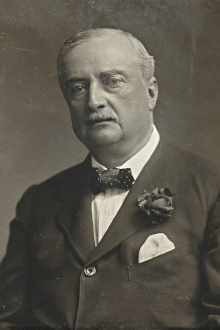
Several of Redmond’s relatives are politicians. He takes over control of the minority IPP faction loyal to Charles Stewart Parnell after Parnell dies in 1891. He is a conciliatory politician who achieves the two main objectives of his political life: party unity and, in September 1914, the passing of the Irish Home Rule Act.
The Irish Home Rule Act grants limited self-government to Ireland, within the United Kingdom. However, implementation of Home Rule is suspended by the outbreak of the World War I. Redmond calls on the National Volunteers to join Irish regiments of the New British Army and support the British and Allied war effort to restore the “freedom of small nations” on the European continent, thereby to also ensure the implementation of Home Rule after a war that is expected to be of short duration. However, after the Easter Rising of 1916, Irish public opinion shifts in favour of militant republicanism and full Irish independence, resulting in his party losing its dominance in Irish politics.
In sharp contrast to Parnell, Redmond lacks charisma. He works well in small committees but has little success in arousing large audiences. Parnell had always chosen the nominees to Parliament. Now they are selected by the local party organisations, giving Redmond numerous weak MPs over whom he has little control. He is an excellent representative of the old Ireland but grows increasingly old-fashioned because he pays little attention to the new forces attracting younger Irishmen, such as Sinn Féin in politics, the Gaelic Athletic Association in sports, and the Gaelic League in cultural affairs.
Redmond never tries to understand the unionist forces emerging in Ulster. He is further weakened in 1914 by the formation of the Irish Volunteers by Sinn Féin members. His enthusiastic support for the British war effort alienates many Irish nationalists. His party has been increasingly hollowed out, and a major crisis, notably the Easter Rising, is enough to destroy it.
Redmond is increasingly eclipsed by ill-health after 1916. An operation in March 1918 to remove an intestinal obstruction appears to progress well initially, but he then suffers heart failure. He dies a few hours later at a Londonnursing home on March 6, 1918.
Condolences and expressions of sympathy are widely expressed. After a funeral service in Westminster Cathedral his remains are interred, as requested in a manner characteristic of the man, in the family vault at the old Knights Templars‘ chapel yard of Saint John’s Cemetery, Wexford, amongst his own people rather than in the traditional burial place for Irish statesmen and heroes in Glasnevin Cemetery. The small, neglected cemetery near the town centre is kept locked to the public. His vault, which has been in a dilapidated state, has been only partially restored by Wexford County Council.
Talbot is born likely in 1630, probably in Dublin. He is one of sixteen children, the youngest of eight sons of William Talbot and his wife Alison Netterville. His father is a lawyer and the 1st Baronet Talbot of Carton, County Kildare. His mother is a daughter of John Netterville of Castletown, Kildare. The Talbots are descended from a Norman family that had settled in Leinster in the 12th century. They adhere to the Catholic faith, despite the founding of the Reformed Church of Ireland under Henry VIII. Little is recorded of Talbot’s upbringing. As an adult he grows to be unusually tall and strong by standards of the time.
Talbot marries Katherine Baynton in 1669, and they have two daughters, Katherine and Charlotte. Katherine dies in 1679. In 1681, he marries Frances Jennings, sister of Sarah Jennings, the future Sarah Churchill, Duchess of Marlborough.
Talbot’s early career is spent as a cavalryman in the Irish Confederate Wars. Following a period on the European continent, he joins the court of James, Duke of York, then in exile following the English Civil War, becoming a close and trusted associate. After the 1660 restoration of James’s older brother, Charles, to the thrones of England, Ireland and Scotland, he begins acting as agent or representative for Irish Catholics attempting to recover estates confiscated after the Cromwellian conquest, a role that defines the remainder of his career. James converts to Catholicism in the late 1660s, strengthening his association with Talbot.
When James takes the throne in 1685, Talbot’s influence increases. He oversees a major purge of Protestants from the Irish Army, which had previously barred most Catholics. James creates him Earl of Tyrconnell and later makes him Viceroy, or Lord Deputy of Ireland. He immediately begins building a Catholic establishment by admitting Catholics to many administrative, political and judicial posts.
Talbot’s efforts are interrupted by James’s 1688 deposition by his Protestant son-in-law William of Orange. He continues as a Jacobite supporter of James during the subsequent Williamite War in Ireland, but also considers a peace settlement with William that would preserve Catholic rights. Increasingly incapacitated by illness, he dies of a stroke on August 14, 1691, shortly before the Jacobite defeat. He is thought to have been buried in St. Mary’s Cathedral, Limerick. By depriving the Jacobites of their most experienced negotiator, his death possibly has a substantial impact on the terms of the Treaty of Limerick that ends the war.
Talbot’s widow, Frances, and his daughter, Charlotte, remain in France, where Charlotte marries her kinsman, Richard Talbot, son of William Talbot of Haggardstown. Their son is Richard Francis Talbot. Talbot’s other daughter, Katherine, becomes a nun. An illegitimate son, Mark Talbot, serves as an officer in France before his death in the Battle of Luzzara in 1702. Talbot’s estate in nearby Carton, renamed Talbotstown, is uncompleted at the time of his death. Tyrconnell Tower on the site is originally intended by him as a family mausoleum to replace the existing vault at Old Carton graveyard but is also left unfinished.
Talbot is controversial in his own lifetime. His own Chief Secretary, Thomas Sheridan, later describes him as a “cunning dissembling courtier […] turning with every wind to bring about his ambitious ends and purposes.” Many 19th and early 20th century historians repeat this view. Recent assessments have suggested a more complex individual whose career was defined by personal loyalty to his patron James and above all by an effort to improve the status of the Irish Catholic gentry, particularly the “Old English” community to which he belonged.
(Pictured: Watercolour portrait of Richard Talbot by John Bulfinch (d.1728) after painting by Sir Godfrey Kneller)






 seamus dubhghaill