seamus dubhghaill

Promoting Irish Culture and History from Little Rock, Arkansas, USA


Leave a comment

Death of U.S. President William McKinley

william-mckinley

William McKinley, the 25th President of the United States, dies on September 14, 1901, eight days after being shot by anarchist Leon Czolgozc and six months into his second term. McKinley leads the nation to victory in the Spanish American War, raises protective tariffs to promote American industry, and maintains the nation on the gold standard in a rejection of free silver.

McKinley is born on January 29, 1843, in Niles, Ohio, the seventh child of William McKinley Sr. and Nancy (née Allison) McKinley. The McKinleys are of English and Scots Irish descent and settled in western Pennsylvania in the 18th century, tracing back to a David McKinley who is born in Dervock, County Antrim, in present-day Northern Ireland.

McKinley is the last president to serve in the American Civil War and the only one to start the war as an enlisted soldier, beginning as a private in the Union Army and ending as a brevet major. After the war, he settles in Canton, Ohio, where he practices law and marries Ida Saxton. In 1876, he is elected to the United States Congress, where he becomes the Republican Party‘s expert on the protective tariff, which he promises will bring prosperity. His 1890 McKinley Tariff is highly controversial which, together with a Democratic redistricting aimed at gerrymandering him out of office, leads to his defeat in the Democratic landslide of 1890.

McKinley is elected Ohio’s governor in 1891 and 1893, steering a moderate course between capital and labor interests. With the aid of his close adviser Mark Hanna, he secures the Republican nomination for president in 1896, amid a deep economic depression. He defeats his Democratic rival, William Jennings Bryan, after a front porch campaign in which he advocates “sound money” and promises that high tariffs will restore prosperity.

Rapid economic growth marks McKinley’s presidency. He promotes the 1897 Dingley Act to protect manufacturers and factory workers from foreign competition, and in 1900, he secures the passage of the Gold Standard Act. He hopes to persuade Spain to grant independence to rebellious Cuba without conflict, but when negotiation fails, he leads the nation into the Spanish American War of 1898. The U.S. victory is quick and decisive. As part of the Treaty of Paris (1898), Spain turns over to the United States its main overseas colonies of Puerto Rico, Guam, and the Philippines. Cuba is promised independence, but at that time remains under the control of the U.S. Army. The United States annexes the independent Republic of Hawaii in 1898, and it became a U.S. territory.

Historians regard McKinley’s 1896 victory as a realigning election, in which the political stalemate of the post–Civil War era gives way to the Republican-dominated Fourth Party System, which begins with the Progressive Era.

McKinley defeats Bryan again in the 1900 presidential election, in a campaign focused on imperialism, protectionism, and free silver. However, his legacy is suddenly cut short when he is shot on September 6, 1901, by Leon Czolgosz, a second-generation Polish American with anarchist leanings. McKinley dies eight days later on September 14, 1901, and is succeeded by his Vice President, Theodore Roosevelt. He is buried at the McKinley National Memorial in Canton, Ohio.

As an innovator of American interventionism and pro-business sentiment, McKinley’s presidency is generally considered above average, though his highly positive public perception is soon overshadowed by Roosevelt.


Leave a comment

The Battle of Connor

grave-of-king-edward-de-bruce

The Battle of Connor is fought on September 10, 1315, in the townland of Tannybrake just over a mile north of what is now the modern village of Connor, County Antrim, Northern Ireland. It is part of the Bruce campaign in Ireland.

Edward Bruce lands in Larne, in modern-day County Antrim, on May 26, 1315. In early June, Donall Ó Néill of Tyrone and some twelve fellow northern Kings and lords meet Bruce at Carrickfergus and swear fealty to him as King of Ireland. Bruce holds the town of Carrickfergus but is unable to take Carrickfergus Castle. His army continues to spread south, through the Moyry Pass to take Dundalk.

Outside the town of Dundalk, Bruce encounters an army led by John FitzThomas FitzGerald, 4th Lord of Offaly, his son-in-law Edmund Butler, Earl of Carrick and Maurice FitzGerald, 4th Baron Desmond. The Scottish push them back towards Dundalk and on June 29 lay waste to the town and its inhabitants.

By July 22 Edmund Butler, the Justiciar in Dublin, assembles an army from Munster and Leinster to join Richard Óg de Burgh, 2nd Earl of Ulster, to fight Bruce. De Burgh refuses to let the government troops into Ulster, fearing widespread damage to his land. Bruce is able to exploit their dispute and defeat them separately.

Bruce slowly retreats north, drawing de Burgh in pursuit. Bruce and his O’Neill allies sack Coleraine, destroying the bridge over the River Bann to delay pursuit. Edward sends word to Fedlim Ó Conchobair that he will support his position as king in Connacht if he withdraws. He sends the same message to rival claimant Ruaidri mac Cathal Ua Conchobair. Cathal immediately returns home, raises a rebellion and declares himself king. De Burgh’s Connacht allies under Felim then follow as Felim leaves to defend his throne. Bruce’s force then crosses the River Bann in boats and attacks. The Earl of Ulster withdraws to Connor.

The armies meet in Connor on September 10, 1315. The superior force of Bruce and his Irish allies defeat the depleted Ulster forces. The capture of Connor permits Bruce to re-supply his army for the coming winter from the stores the Earl of Ulster had assembled at Connor. Earl’s cousin, William de Burgh, is captured, as well as, other lords and their heirs. Most of his army retreats to Carrickfergus Castle, which the pursuing Scots put under siege. The Earl of Ulster manages to return to Connacht.

The government forces under Butler do not engage Bruce, allowing him to consolidate his hold in Ulster. His occupation of Ulster encourages risings in Meath and Connacht, further weakening de Burgh. Despite this, and another Scottish/Irish victory at the Battle of Skerries, the campaign is to be defeated at the Battle of Faughart.

(Pictured: Grave of King Edward Bruce, Faughart, County Louth)


Leave a comment

Birth of James Hope, United Irishmen Leader

james-hope

James “Jemmy” Hope, Society of United Irishmen leader who fights in the Irish Rebellions of 1798 and 1803 against British rule in Ireland, is born in Templepatrick, County Antrim on August 25, 1764.

Hope is born to a Presbyterian family originally of Covenanter stock. He is apprenticed as a linen weaver but attends night school in his spare time. Influenced by the American Revolution, he joins the Irish Volunteers, but upon the demise of that organisation and further influenced by the French Revolution, he joins the Society of the United Irishmen in 1795.

Hope quickly establishes himself as a prominent organiser and is elected to the central committee in Belfast, becoming close to leaders such as Samuel Neilson, Thomas Russell, and Henry Joy McCracken. He is almost alone among the United Irish leaders in targeting manufacturers as well as landowners as the enemies of all radicals. In 1796, he is sent to Dublin to assist the United Irish organisation there to mobilise support among the working classes, and he is successful in establishing several branches throughout the city and especially in The Liberties area. He also travels to counties in Ulster and Connacht, disseminating literature and organizing localities.

Upon the outbreak of the 1798 rebellion in Leinster, Hope is sent on a failed mission to Belfast by Henry Joy McCracken to brief the leader of the County Down United Irishmen, Rev. William Steel Dickson, with news of the planned rising in County Antrim, unaware that Dickson had been arrested only a couple of days before. He manages to escape from Belfast in time to take part in the Battle of Antrim where he plays a skillful and courageous role with his “Spartan Band,” in covering the retreat of the fleeing rebels after their defeat.

Hope manages to rejoin McCracken and his remaining forces after the battle at their camp upon Slemish mountain, but the camp gradually disperses, and the dwindling band of insurgents are then forced to go on the run. He successfully eludes capture, but his friend McCracken is captured and executed on July 17. Upon the collapse of the general rising, he refuses to avail of the terms of an amnesty offered by Charles Cornwallis, 1st Marquess Cornwallis on the grounds that to do so would be “not only a recantation of one’s principles, but a tacit acquiescence in the justice of the punishment which had been inflicted on thousands of my unfortunate associates.”

Hope lives the years following 1798 on the move between counties Dublin, Meath and Westmeath but is finally forced to flee Dublin following the failure of Robert Emmet‘s rebellion in 1803. He returns to the north and evades the authorities attentions in the ensuing repression by securing employment with a sympathetic friend from England. He is today regarded as the most egalitarian and socialist of all the United Irish leadership.

James Hope dies in 1846 and is buried in the Mallusk cemetery, Newtownabbey. His gravestone features the outline of a large dog, which supposedly brought provisions to him and his compatriots when they were hiding following the Battle of Antrim.


Leave a comment

Death of Poet & Barrister Samuel Ferguson

sir-samuel-ferguson

Sir Samuel Ferguson, Irish poet, barrister, antiquarian, artist, and public servant, dies in Howth, County Dublin on August 9, 1886. Ferguson is perhaps the most important Irish poet of the 19th century. Due to his interest in Irish mythology and early Irish history he is seen as a forerunner of William Butler Yeats and the other poets of the Irish Literary Revival.

Ferguson is born in Belfast on March 10, 1810. He lives at a number of addresses, including Glenwhirry, where he acquires the love of nature that informs his later work. He is educated at the Belfast Academy and the Belfast Academical Institution and then moves to Dublin to study law at Trinity College, obtaining his bachelor’s degree in 1826 and his master’s degree in 1832.

Because his father has exhausted the family property, Ferguson is forced to support himself through his student years. He turns to writing and is a regular contributor to Blackwood’s Magazine by the age of 22. He is called to the bar in 1838, but continues to write and publish, both in Blackwood’s and in the newly established Dublin University Magazine.

Ferguson settles in Dublin, where he practises law. In 1848, he marries Mary Guinness, a great-great-niece of Arthur Guinness and the eldest daughter of Robert Rundell Guinness, founder of Guinness Mahon bank. At the time he is defending the Young Irelander poet Richard Dalton Williams.

In addition to his poetry, Ferguson contributes a number of articles on topics of Irish interest to antiquarian journals. In 1863, he travels in Brittany, Ireland, Wales, England, and Scotland to study megaliths and other archaeological sites. These studies are important to his major antiquarian work, Ogham Inscriptions in Ireland, Wales and Scotland, which is edited after his death by his widow and published in 1887.

His collected poems, Lays of the Western Gael is published in 1865, resulting in the award of a degree LL.D. honoris causa from Trinity College. He writes many of his poems in both Irish and English translations. In 1867, Ferguson retires from the bar to take up the newly created post of Deputy Keeper of the Public Records in Ireland. As reward for his services, he receives a knighthood in 1878.

Ferguson’s major work, the long poem Congal is published in 1872 and a third volume, Poems, in 1880. In 1882, he is elected President of the Royal Irish Academy, an organisation dedicated to the advancement of science, literature, and antiquarian studies. His house in North Great George’s St., Dublin, is open to everyone interested in art, literature or music.

Ferguson dies on August 9, 1886, in Howth, just outside Dublin city, and is buried in Donegore near Templepatrick, County Antrim.


1 Comment

Death of Samuel McCaughey, Australian Philanthropist


samuel-mccaughey

Sir Samuel McCaughey, Irish-born pastoralist, politician and philanthropist in Australia, dies in Yanco, New South Wales on July 25, 1919.

McCaughey is born on July 1, 1835, at Tullynewey, near Ballymena, County Antrim, the son of Francis McCaughey, farmer and merchant, and his wife Eliza, née Wilson.

McCaughey comes to Australia with an uncle, Charles Wilson, a brother of Sir Samuel Wilson, and lands at Melbourne in April 1856. He immediately goes to the country and begins working as a jackaroo. Within three months he is appointed an overseer and two years later becomes manager of Kewell station while his uncle is on a visit to England.

In 1860, after his uncle’s return, McCaughey acquires an interest in Coonong station near Urana with two partners. His brother John who comes out later becomes a partner in other stations.

During the early days of Coonong station McCaughey suffers greatly from drought conditions but overcomes these by sinking wells for artesian water and constructing large tanks, making him a pioneer of water conservation in Australia.

In 1871 McCaughey is away from Australia for two years on holiday, and on his return does much experimenting in sheep farming. At first, he seeks the strains that can produce the best wool in the Riverina district. Afterwards, when the mutton trade develops, he considers the question from that angle.

In 1880 Sir Samuel Wilson goes to England and McCaughey purchases two of his stations, Toorale and Dunlop Stations, during his absence. He then owns about 3,000,000 acres. In 1886 he again visits the old world and imports a considerable number of Vermont sheep from the United States and also introduces fresh strains from Tasmania. He ultimately owns several million sheep, earning the nickname of “The Sheep King.”

In 1900 McCaughey purchases North Yanco and, at great cost, constructs about 200 miles of channels and irrigates 40,000 acres. The success of this scheme is believed to have encouraged the New South Wales government to proceed with the dam at Burrinjuck.

McCaughey becomes a member of the New South Wales Legislative Council in 1899, and in 1905 he is made a Knight Bachelor. He suffers from nephritis and dies from heart failure at Yanco on July 25, 1919, and is buried in the grounds of St. John’s Presbyterian Church in Narrandera. He never marries.


Leave a comment

Death of Musician William (Billy) Brown

william-billy-brown

William (Billy) Brown, a musician and artist from Northern Ireland, dies on June 6, 1999 of a heart attack at his home in Johnstown, County Kildare. He is best remembered as a singer, saxophonist, and pianist with The Freshmen, one of Ireland’s most popular showbands of the 1960s and 1970s.

Brown is born in Larne, County Antrim in Northern Ireland. While studying at the Belfast College of Art he joins Billy McFarland’s Showband. Later he forms The Freshmen with some friends. Through Brown’s skillful arrangements, the band is able to reproduce sophisticated vocal harmonies in their covers of songs such as “Papa-Oom-Mow-Mow,” “The Little Old Lady from Pasadena,” and “Carpet Man.”

Brown leaves The Freshmen in the mid-1970s to pursue other musical challenges, albeit with limited success. He later rejoins the band and, in 1977, they have one of their biggest hits with his composition, “Cinderella.” Following the breakup of The Freshmen, he has a minor solo hit in 1980 with his own song, “Look What Jerry Lee Did To Me.”

In his latter years, Brown develops his interest in wildlife, becoming a successful painter of nature scenes, as well as contributing his insights into the natural world on RTÉ 2fm‘s children’s show, Poporama.

Billy Brown dies of a heart attack on June 6, 1999, at his home in Johnstown, County Kildare. In its obituary, the Irish Independent refers to him as “one of the most gifted musicians of his generation.”

In a tribute to Brown following his death, Freshmen founder-member, Maurice Henry, describes his late friend’s pivotal role in the band:

“You could say Billy was The Freshmen and without his talent and innovative musical skills we would certainly not have achieved as much, either as a showband or in our recordings.”


Leave a comment

Birth of William King, Archbishop of Dublin

william-king

William King, Anglican divine in the Church of Ireland and Archbishop of Dublin from 1703 to 1729, is born in County Antrim on May 1, 1650. He is an author and supports the Glorious Revolution. He has considerable political influence in Ireland, including for a time what amounts to a veto on judicial appointments.

King is educated at The Royal School, Dungannon, County Tyrone, and thereafter at Trinity College, Dublin, graduating BA on 23 February 23, 1670, and MA in 1673.

On October 25, 1671, King is ordained a deacon as chaplain to John Parker, Archbishop of Tuam, and on July 14, 1673, Parker gives him the prebend of Kilmainmore, County Mayo. King, who lives as part of Parker’s household, is ordained a priest on April 12, 1674.

King’s support of the Glorious Revolution in 1688 serves to advance his position. He becomes Bishop of Derry in 1691. His years as a bishop are marked by reform and the building of churches and glebe houses, and by the dispensing of charity. His political influence is considerable. He is always consulted on judicial appointments and at times seems to have an effective veto over candidates he considers unsuitable.

He is advanced to the position of Archbishop of Dublin in 1703, a post he holds until his death. He gives £1,000 for the founding of “Archbishop King’s Professorship of Divinity” at Trinity College in 1718. His influence declines after the appointment of Hugh Boulter as Archbishop of Armagh in 1724.

William King dies in May 1729. Much of his correspondence survives and provides a historic resource for the study of the Ireland of his time.


Leave a comment

Birth of Minister William Dool Killen

william-dool-killen

William Dool Killen, a minister of the Presbyterian Church in Ireland and church historian, is born at Church Street, Ballymena, County Antrim, on April 16, 1806.

Killen is the third of four sons and nine children of John Killen (1768–1828), a grocer and seedsman in Ballymena, by his wife Martha, daughter of Jesse Dool, a farmer in Duneane. His paternal grandfather, a farmer at Carnmoney, marries Blanche Brice, a descendant of Edward Brice. A brother, James Miller Killen (1815–1879), is a minister in Comber, County Down. Thomas Young Killen is his father’s great-nephew.

After attending local primary schools, Killen goes to Ballymena Academy around 1816, and in November 1821 enters the collegiate department of the Royal Belfast Academical Institution, under James Thomson. In 1827, he is licensed to preach by the Presbytery of Ballymena, and on November 11, 1829 he is ordained minister at Raphoe, County Donegal.

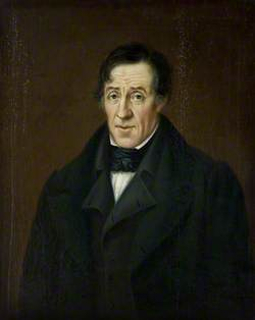
In July 1841 Killen is appointed, by the General Assembly of the Presbyterian Church in Ireland, its professor of church history, ecclesiastical government, and pastoral theology, in succession to James Seaton Reid. He concentrates on history. When Assembly’s College, Belfast is set up in 1853, he becomes one of the professors there. In 1869 he is appointed president of the college, in succession to Henry Cooke, and undertakes fundraising for professorial endowments and new buildings. In 1889 he resigns his chair but continues as president.

During his career Killen receives the degrees of D.D. (1845) and of LL.D. (1901) from the University of Glasgow. His portrait, painted by Richard Hooke, hangs in the Gamble library of the college.

William Dool Killen dies on January 10, 1902, and is buried in Balmoral Cemetery, Belfast, where a monument marks his resting place.


Leave a comment

Birth of Actress Valerie Hobson

valerie-hobson

Valerie Hobson, Irish-born actress who appears in a number of films during the 1930s, 1940s and 1950s, is born Babette Valerie Louise Hobson in Larne, County Antrim, Northern Ireland on April 14, 1917. Her second husband is John Profumo, 5th Baron Profumo, a government minister who becomes the subject of a sensational sex scandal in 1963.

In 1935, still in her teens, Hobson appears as Baroness Frankenstein in Bride of Frankenstein with Boris Karloff and Colin Clive. She plays opposite Henry Hull that same year in Werewolf of London, the first Hollywood werewolf film. The latter half of the 1940s sees Hobson in perhaps her two most memorable roles: as the adult Estella in David Lean‘s adaptation of Great Expectations (1946), and as the refined and virtuous Edith D’Ascoyne in the black comedy Kind Hearts and Coronets (1949).

In 1952 she divorces her first husband, film producer Sir Anthony Havelock-Allan. In 1954, she marries Brigadier John, 5th Baron Profumo, an MP, giving up acting shortly afterwards. Baron Profumo is a prominent politician of Italian descent. Hobson’s last starring role is in the original London production of Rodgers and Hammerstein‘s musical play The King and I, which opens at the Theatre Royal, Drury Lane, on October 8, 1953. She plays Mrs. Anna Leonowens opposite Herbert Lom‘s King. The show runs for 926 performances.

After Profumo’s ministerial career ends in disgrace in 1963, following revelations he had lied to the House of Commons about his affair with Christine Keeler, Hobson stands by him. They worked together for charity for the remainder of her life, though she does miss their more public personas.

Hobson’s eldest son, Simon Anthony Clerveaux Havelock-Allan, is born in May 1944 with Down syndrome. Her middle child, Mark Havelock-Allan, is born on April 4, 1951, and becomes a judge. Her youngest child is the author David Profumo, who writes Bringing the House Down: A Family Memoir (2006) about the scandal. In it, he writes his parents told him nothing of the scandal and that he learned of it from another boy at school.

Valerie Hobson dies on November 13, 1998, at the age of 81 at a Westminster, London Hospital following a heart attack. After her death, her body is cremated in accordance with her wishes. Half her ashes are interred in the family vault in Hersham. The rest are scattered on January 1, 1999, by her sons David Profumo and Mark Havelock-Allan, near the family’s farm in Scotland.

Hobson is portrayed by Deborah Grant in the film Scandal (1989), and by Joanna Riding in Andrew Lloyd Webber‘s stage musical Stephen Ward, which opens at the Aldwych Theatre on December 19, 2013.


Leave a comment

Birth of James White, Science Fiction Writer

james-whiteJames White, author of science fiction novellas, short stories and novels, is born in Belfast, Northern Ireland on April 7, 1928.

White is educated in Belfast at St. John’s Primary School and St. Joseph’s Technical Secondary School. As a teenager he lives with foster parents. He wants to study medicine but financial circumstances prevented this. Between 1943 and 1965 he works for several Belfast tailoring firms and then as assistant manager of a Co-op department store. He marries Margaret “Peggy” Sarah Martin, another science fiction fan, in 1955 and the couple has three children. He later works for the aeroplane builders Short Brothers as a technical clerk, publicity assistant and publicity officer.

White becomes a science fiction fan in 1941, attracted particularly by the works of E. E. “Doc” Smith, which features good aliens as well as evil ones, and of Robert A. Heinlein, many of whose stories concern ordinary people. In 1947 he meets another Irish fan, Walt Willis, and the two help to produce the fan magazines Slant and Hyphen, which feature stories and articles by noted authors including John Brunner, A. Bertram Chandler and Bob Shaw. In 2004 both White and Willis are nominated for the retrospective Hugo Award for Best Fan Writer of 1953, although neither wins. White says that he started writing stories because the Slant team felt that Astounding Stories of Super-Science was too dominated by prophesies of nuclear doom, and his friends dared him to write the kind of story that they all liked to read. Getting published is fairly easy during the 1950s, as the World War II restrictions on paper are ended, and there are at least 12 science magazines in Britain and about 40 in the United States. His first published short story, Assisted Passage, a parody of 1950s Anglo-Australian emigration policies, appears in the January 1953 edition of the magazine New Worlds. Further stories appear in New Worlds during the next few years, but White’s attempt to access the more lucrative American market by submitting stories to Astounding Stories of Super-Science stall after the publication of The Scavengers. As a result, White’s work is little-known outside the UK until the 1960s.

In 1957, Ace Books publishes White’s first novel, The Secret Visitors, which includes locations in Northern Ireland. Ace Books’ science fiction editor, Donald A. Wollheim, thinks the original ending is too tame and suggests that White should insert an all-out space battle just after the climactic courtroom scene. In November of the same year New Worlds publishes White’s novella Sector General, and editor John Carnell requests more stories set in the same universe, founding the series for which White is known best. White gains a steady following for his scientifically accurate stories, which are examples of hard science fiction in New Worlds, despite the magazine’s promotion of literary New Wave science fiction during the 1960s.

White keeps his job with Short Brothers and writes in the evenings, as his stories do not make enough money for him to become a full-time author. In 1980 he teaches a literature course at a Belfast branch of the Workers’ Educational Association. When diabetes has severely impaired his eyesight, he takes early retirement in 1984 and relocates to the north County Antrim resort town of Portstewart, where he continues to write. For many years he is a Council Member of the British Science Fiction Association and, with Harry Harrison and Anne McCaffrey, a Patron of the Irish Science Fiction Association. He is also a strong pacifist.

James White dies of a stroke in Portstewart, Belfast, Northern Ireland on August 23, 1999, while his novels Double Contact and The First Protector are being prepared for publication.