Murphy is the son of James Murphy, a railway employee, and Margaret Sheehan of Little Island, County Cork. He attends Saint Patrick’s School on Gardiner’s Hill. In 1921 he enrolls as a part-time student at the Crawford School of Art, Emmet Place, Cork. In 1922 he finds work as an apprentice stone-carver at John Aloysius O’Connell’s Art Marble Works, Watercourse Road, Blackpool. There he specialises in architectural and foliage carving while continuing his studies at Crawford by night.
He is elected associate of the Royal Hibernian Academy in 1944, elected a full member in 1954, and appointed Royal Hibernian Academy Professor of Sculpture in 1964.
Also in 1944, he married Maighread Higgins, daughter of the Cork sculptor Joseph Higgins, and they go on to have three children – the knitwear designer Bebhinn Marten, the novelist Orla Murphy and the painter and De Dannan member Colm Murphy.
Murphy designs the Church of the Annunciation on Great William O’Brien Street in Blackpool, Cork, for William Dwyer in 1945. The stonework in the church is mostly by Murphy himself. It is officially dedicated on October 7, 1945.
Seamus Murphy dies in Cork on October 2, 1975. He is buried in Rathcooney, County Cork.
Examples of Murphy’s unique carvings of statues, gravestones, monuments and plaques can be seen around Cork and Ireland, including a signed panel of the four evangelists outside the entrance of the church of Our Lady and Saint John in Carrigaline, County Cork.
In 1792 the brothers go to Paris and are swept away by the popular enthusiasms of the French Revolution. They meet leaders such as Jacques Pierre Brissot and Jean-Marie Roland, both of whom are to be executed in 1793. In particular they witness the introduction of the guillotine, on which 1,400 are to die in 1792. On the boat from France to England they meet Daniel O’Connell, then a student, who is disgusted by the increasingly bloodthirsty nature of the revolution. O’Connell remains an advocate of non-violence thereafter.
The brothers join the United Irish movement upon their return to Dublin in January 1793, when it is still legal, and John begins to write articles for the Press, a nationalist paper. However, France declares war on Britain, and by extension on Ireland, in February 1793. The Society’s initial aims of securing Catholic emancipation and universal suffrage are unsuccessful, amounting to the administration’s 1793 Relief Act. Its stance becomes more radical, and in turn the Irish administration fears a group inspired by France, banning it in 1794.
The Sheares brothers principally organise the movement in Cork, while continuing with their legal careers. A Mr. Conway, one of their keenest members in Cork, informs the administration of their activities. During 1793 the brothers also join the Dublin Society of the United Irishmen, where another spy, Thomas Collins, passes on their names. Their other two less famous brothers enlist in the British army and are killed in action. On the arrest of most of the United Irish “Directory” members in March 1798, John is chosen as a replacement on the approach to the outbreak of rebellion. His main act at this point is to decide on the date – May 23.
The Directory fatally stays in Dublin, where the United Irish have less support. Already quietly betrayed by Conway and Collins, John also befriends Captain Warnesford Armstrong from County Down, who claims to be a busy member of the party there. John never verifies this, and Armstrong informs the authorities of the brothers’ whereabouts, also appearing as a witness in the ensuing trial. They are arrested on May 21 and indicted on June 26.
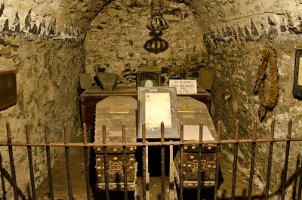
Inevitably the brothers are tried on July 12, as the rebellion is at its height, and are hanged, drawn and quartered two days later outside Newgate Prison. Their lawyer is John Philpot Curran who, with Sir Jonah Barrington, obtain a stay of execution in the hope that Henry will recant, but the brothers are already dead. They are buried at Dublin’s St. Michan’s Church. Visitors are brought to their coffins on a tour of St. Michan’s vaults.
(Pictured: The coffins of the Sheares brothers in the crypt of St. Michan’s Church)
Bob Crowley, scenic and costume theatre designer and theatre director, is born in Cork, County Cork on June 10, 1952. He is the brother of director John Crowley.
Crowley has received multiple Tony Award nominations, and has won seven times, for designing the Broadway productions of Carousel (1994), Aida (2000), The History Boys (2006), Mary Poppins (2007), The Coast of Utopia (2007), Once (2012) and An American in Paris (2015). He receives three other Tony Award nominations in 2015, two for his costumes on The Audience and An American in Paris and one for his scenic designs for Skylight. He is a recipient of the Laurence Olivier Award for Best Set Design and a three-time recipient of the Drama Desk Award for Outstanding Set Design.
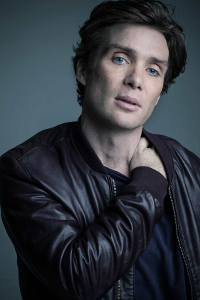
Since making his debut in his home country in the late 1990s, Murphy has also become a presence in British and American cinemas noted by critics for his performances in many independent and mainstream films. He is best known as Jim in 28 Days Later (2002), the Scarecrow in The Dark Knight Trilogy (2005–12), Jackson Rippner in Red Eye (2005), Robert Capa in Sunshine (2007), Robert Fischer in Inception (2010) and Thomas Shelby in the BBC series Peaky Blinders.
Murphy begins his performing career as a rock musician. After turning down a record deal, he makes his professional acting debut in the play Disco Pigs in 1996. While continuing with stage work, he also begins appearing in independent films, first coming to international attention in 2002 as the hero of Danny Boyle‘s post-apocalyptic film 28 Days Later. Murphy’s profile continues to grow in 2005 when he appears in a series of successful films including as the Scarecrow in Christopher Nolan‘s 2005 blockbuster Batman Begins, a role he reprises in The Dark Knight (2008) and The Dark Knight Rises (2012), and in the action-thriller Red Eye (2005). For his performance as a transgender woman in Breakfast on Pluto (2005), Murphy receives a Golden Globe award nomination for Best Actor in a Musical or Comedy.
In 2006, Murphy plays the lead role in Ken Loach‘s Palme d’Or-winning film The Wind That Shakes the Barley. He teams up again with Boyle for the science-fiction film Sunshine (2007), and with Nolan for the highly successful thriller Inception (2010). Since 2013, Murphy has played the lead in the BBC gangster series Peaky Blinders. He continues to work on stage and wins the Drama Desk Award for Outstanding Solo Performance for Misterman in 2011.
O’Grady is born on March 22, 1846, at Castletown, County Cork, the son of Reverend Thomas O’Grady, the scholarly Church of Ireland minister of Castletown Berehaven, County Cork, and Susanna Doe. After a rather severe education at Tipperary Grammar School, O’Grady follows his father to Trinity College, Dublin, where he wins several prize medals and distinguishes himself in several sports.
O’Grady proves too unconventional of mind to settle into a career in the church and earns much of his living by writing for the Irish newspapers. Reading Sylvester O’Halloran‘s General history of Ireland sparks an interest in early Irish history. After an initial lukewarm response to his writing on the legendary past in History of Ireland: Heroic Period (1878–81) and Early Bardic Literature of Ireland (1879), he realizes that the public wants romance, and so follows the example of James Macpherson in recasting Irish legends in literary form, producing historical novels including Finn and his Companions (1891), The Coming of Cuculain (1894), The Chain of Gold (1895), Ulrick the Ready (1896) and The Flight of the Eagle (1897), and The Departure of Dermot (1913).
O’Grady also studies Irish history of the Elizabethan period, presenting in his edition of Sir Thomas Stafford‘s Pacata Hibernia (1896) the view that the Irish people have made the Tudors into kings of Ireland in order to overthrow their unpopular landlords, the Irish chieftains. His The Story of Ireland (1894) is not well received, as it sheds too positive a light on the rule of Oliver Cromwell for the taste of many Irish readers. He is also active in social and political campaigns in connection with such issues as unemployment and taxation.
Until 1898, he works as a journalist for the Daily Express of Dublin, but in that year, finding Dublin journalism in decline, he moves to Kilkenny to become editor of the Kilkenny Moderator. It is here he becomes involved with Ellen Cuffe, Countess of Desart and Captain Otway Cuffe. He engages in the revival of the local woolen and woodworking industries. In 1900 he founds the All-Ireland Review and returns to Dublin to manage it until it ceases publication in 1908. O’Grady contributes to James Larkin‘s The Irish Worker paper.
O’Grady’s works are an influence on William Butler Yeats and George Russell and this leads to him being known as the “Father of the Celtic Revival.” Being as much proud of his family’s Unionism and Protestantism as of his Gaelic Irish ancestry, identities that are increasingly seen as antithetical in the late 1800s, he is described by Augusta, Lady Gregory as a “fenian unionist.”
Advised to move away from Ireland for the sake of his health, O’Grady passes his later years living with his eldest son, a clergyman in England, and dies on the Isle of Wight on May 18, 1928.
O’Grady’s eldest son, Hugh Art O’Grady, is for a time editor of the Cork Free Press before he enlists in World War I early in 1915. He becomes better known as Dr. Hugh O’Grady, later Professor of the Transvaal University College, Pretoria, who writes the biography of his father in 1929.
Edith Anna Œnone Somerville, Irish novelist who habitually signs herself as “E. Œ. Somerville,” is born on May 2, 1858, on the island of Corfu, then part of the United States of the Ionian Islands, a British protectorate where her father is stationed. She writes in collaboration with her cousin “Martin Ross” (Violet Martin) under the pseudonym “Somerville and Ross.” Together they publish a series of fourteen stories and novels, the most popular of which are The Real Charlotte, and The Experiences of an Irish R. M., published in 1899.
In January 1886 she meets her cousin Violet Martin, and their literary partnership begins the following year. Their first book, An Irish Cousin, appears in 1889, under the names Geilles Herring (from the maiden name of her ancestor, the wife of Sir Walter de Somerville of Linton and Carnwath) and Martin Ross, though the pen names are dropped after the first edition. In 1898, Somerville goes to paint at the Etaples art colony, accompanied by Violet. There they profit from their stay by conceiving together the stories later gathered in Some Experiences of an Irish R. M., completed the following year. By the time Violet dies in 1915, they have published fourteen books together. Her cousin’s death stuns Somerville, who continues to write as “Somerville and Ross,” claiming that they keep in contact through spiritualist séances.
Somerville is a devoted sportswoman who in 1903 becomes master of the Carbery West Foxhounds. She is also active in the suffrage movement, corresponding with Dame Ethel Smyth. She is in London still recovering from the shock of Violet’s death when the Easter Rising of 1916 breaks out. On May 9, 1916, she writes a letter to The Times, blaming the British government for the state of affairs in Ireland. After that she tends towards Nationalism, and as an adept musician at parties, she specializes in Irish tunes and Nationalist songs.
She has exhibitions of her pictures in Dublin and in London between 1920 and 1938 and is active as an illustrator of children’s picture books and sporting picture books.
Edith Somerville dies at Castletownshend on October 8, 1949, at the age of 91. She is buried alongside Violet Florence Martin at Saint Barrahane’s Church, Castletownsend, County Cork.
O’Rahilly is educated in Clongowes Wood College. As an adult, he becomes a republican and a language enthusiast. He joins the Gaelic League and becomes a member of An Coiste Gnotha, its governing body. He is well travelled, spending at least a decade in the United States and in Europe before settling in Dublin.
O’Rahilly is a founding member of the Irish Volunteers in 1913, which is organized to work for Irish independence and resist the proposed Home Rule. He serves as the IV Director of Arms. He personally directs the first major arming of the Irish Volunteers, the landing of 900 Mausers at the Howth gun-running on July 26, 1914.
O’Rahilly is not party to the plans for the Easter Rising, nor is he a member of the Irish Republican Brotherhood (IRB), but he is one of the main people who train the Irish Volunteers for the coming fight. The planners of the Rising go to great lengths to prevent those leaders of the Volunteers who are opposed to unprovoked, unilateral action from learning that a rising is imminent, including its Chief-of-Staff Eoin MacNeill, Bulmer Hobson, and O’Rahilly. When Hobson discovers that an insurrection is planned, he is kidnapped by the Military Council leadership.
Learning this, O’Rahilly goes to Patrick Pearse‘s school, Scoil Éanna, on Good Friday. He barges into Pearse’s study, brandishing his revolver as he announces, “Whoever kidnaps me will have to be a quicker shot!” Pearse calms O’Rahilly, assuring him that Hobson is unharmed, and will be released after the rising begins.
O’Rahilly takes instructions from MacNeill and spends the night driving throughout the country, informing Volunteer leaders in Cork, Kerry, Tipperary, and Limerick that they are not to mobilise their forces for planned manoeuvres on Sunday.
O’Rahilly fights with the General Post Office (GPO) garrison during Easter Week. On Friday, April 28, with the GPO on fire, O’Rahilly volunteers to lead a party of men along a route to Williams and Woods, a factory on Great Britain Street, now Parnell Street. A British machine-gun at the intersection of Great Britain and Moore streets cuts him and several of the others down. Wounded and bleeding badly, O’Rahilly slumps into a doorway on Moore Street, but hearing the English marking his position, makes a dash across the road to find shelter in Sackville Lane, now O’Rahilly Parade. He is wounded diagonally from shoulder to hip by sustained fire from the machine-gunner.
The specific timing of O’Rahilly’s death is very difficult to pin down but understanding can be gained from his final thoughts. Despite his obvious pain, he takes the time to write a message to his wife on the back of a letter he received from his son in the GPO. It is this last message to Nancy that artist Shane Cullen etches into his limestone and bronze sculpture. The text reads:
Written after I was shot. Darling Nancy I was shot leading a rush up Moore Street and took refuge in a doorway. While I was there, I heard the men pointing out where I was and made a bolt for the laneway I am in now. I got more [than] one bullet, I think. Tons and tons of love dearie to you and the boys and to Nell and Anna. It was a good fight anyhow. Please deliver this to Nannie O’ Rahilly, 40 Herbert Park, Dublin. Goodbye Darling.
From 1932, Alexander teaches mathematics in Winchester and marries Enid Constance Crichton Neate on December 22, 1934. In 1938 he leaves teaching and becomes head of research at the John Lewis Partnership.
In February 1940 Alexander arrives at Bletchley Park, the British codebreaking centre during the World War II. He joins Hut 6, the section tasked with breaking German Army and Air Force Enigma messages. In 1941, he transfers to Hut 8, the corresponding hut working on Naval Enigma. He becomes deputy head of Hut 8 under Alan Turing and formally becomes the head of Hut 8 in November 1942. In October 1944, Alexander is transferred to work on the Japanese JN-25 code.
In mid-1946, Alexander joins GCHQ, which is the post-war successor organisation to the Government Code and Cypher School (GC&CS) at Bletchley Park. By 1949, he has been promoted to the head of “Section H” (cryptanalysis), a post he retains until his retirement in 1971.
Alexander is twice a winner of the British Chess Championship, in 1938 and 1956. He represents England in the Chess Olympiad six times, in 1933, 1935, 1937, 1939, 1954 and 1958. At the 1939 Olympiad in Buenos Aires, Argentina, Alexander has to leave part-way through the event, along with the rest of the English team, due to the declaration of World War II, as he is required at home for codebreaking duties. He is also the non-playing captain of England from 1964 to 1970. He is awarded the International Master title in 1950 and the International Master for Correspondence Chess title in 1970. He wins the Hastings International Chess Congress 1946/47 with the score 7½/9, a point ahead of Savielly Tartakower. His best tournament result may have been first equal Hastings 1953/54, where he goes undefeated and beats Soviet grandmasters David Bronstein and Alexander Tolush in individual games. He is also the chess columnist of The Sunday Times in the 1960s and 1970s.
Many knowledgeable chess people believe that Alexander had Grandmaster potential, had he been able to develop his chess abilities further. Many top players peak in their late twenties and early thirties, but for Alexander this stretch coincided with World War II, when high-level competitive opportunities were unavailable. After this, his professional responsibilities as a senior cryptanalyst limited his top-class appearances. He defeats Mikhail Botvinnik in one game of a team radio match against the Soviet Union in 1946, at a time when Botvinnik is probably the world’s top player. Alexander makes important theoretical contributions to the Dutch Defence and Petrov’s Defence.
Horan emigrates to Australia with his parents and siblings as a small child. In Melbourne, he attends Bell Street School in Fitzroy and forms a friendship with Jack Blackham. Blackham encourages in Horan a love of cricket. Horan makes his first-class debut for Victoria in the 1874-1875 season.
The first of only two players born in Ireland to play Test cricket for Australia, Horan is the leading batsman in the colony of Victoria during the pioneering years of international cricket. He plays for Australia in the game against England subsequently designated as the first Test match, before touring England with the first representative Australian team, in 1878. Four years later, he tours England for the second time and plays in the famed Ashes Test match at The Oval.
An aggressive middle-order batsman renowned for his leg side play, Horan supplements his batting by bowling medium-pace in the roundarm style common to his era and once captures six wickets in a Test match innings. During a season disrupted by financial disputes and a strike by leading players, he captains Australia in two Test matches of the 1884–85 Ashes series but loses both games. Horan’s form peaks between the ages of 26 and 29 when he scores seven of his eight first-class centuries, including a score of 124 in a Test match on his home ground at the Melbourne Cricket Ground in January 1882.
In 1879, Horan begins writing a weekly newspaper column that continues until his death 37 years later. He establishes himself as the first Australian cricket writer who has played the game at the highest level, thus paving the way for many players to enter the media. Bill O’Reilly, the noted Australian player-writer of the twentieth century, describes him as, “the cricket writer par excellence.”
Horan’s documentation of the early years of Australian cricket are the basis for many works on the subject. Gideon Haigh writes that any, “serious scholar in the field…should probably acquaint himself with Tom Horan.” An anthology of his articles is published for the first time in 1989 when he is posthumously inducted into the Sport Australia Hall of Fame for his writing. In part, his citation reads, “…it was as the first nationally known cricket writer that he made his major contribution to the game.”
Thomas Patrick Horan dies on April 16, 1916, in Malvern, Victoria, Australia.
Ring establishes many championship records, including career appearances (65), scoring tally (33-208), and number of All-Ireland medals won (8), however, these records are subsequently bested by Brendan Cummins, Eddie Keher, and Henry Shefflin respectively. Ring is widely regarded as one of the greatest hurlers in the history of the game, with many former players, commentators, and fans rating him as the number one player of all time.
Born near Cloyne, County Cork, Ring first excels at hurling following encouragement from his local national schoolteachers Michael O’Brien and Jerry Moynihan. He first appears on the Cloyne GAA minor team at the age of twelve before later winning a county minor championship medal with the nearby St. Enda’s team. A Cork Junior Hurling Championship medal with Cloyne follows, however, a dispute with club officials sees Ring join Glen Rovers GAA in Blackpool in 1941. Over the next twenty-six years with the club, Ring wins one Munster Senior Club Hurling Championship medal and fourteen county senior championship medals. As a Gaelic footballer with the Glen’s sister club, St. Nicholas’ GAA, he also wins a county senior championship medal. He retires from club hurling at the age of forty-six following a victory over University College Cork GAA in the 1967 championship quarter final. Over the course of his senior championship career Ring estimates that he played in 1,200 games.
Ring makes his debut on the inter-county scene at the age of sixteen when he is picked on the Cork minor panel for the All-Ireland final. In spite of victory, he is denied an All-Ireland Minor Hurling Championship medal as he is Cork’s last non-playing substitute. Still eligible for the grade in 1938, Ring collects a set of All-Ireland and Munster Minor Hurling Championship medals as a member of the starting fifteen. An unsuccessful year with the Cork junior hurlers follows before he makes his senior debut during the 1939-40 league. Over the course of the next quarter century, Ring wins eight All-Ireland medals, including a record four consecutive championships from 1941 to 1944, a lone triumph in 1946 and three additional consecutive championships from 1952 to 1954. The only player to lift the Liam MacCarthy Cup three times as captain, he is denied a record-breaking ninth All-Ireland medal in 1956, his last All-Ireland final appearance. Ring also wins nine Munster medals, four National Hurling League medals, and is named Hurler of the Year at the age of thirty-eight. He plays his last game for Cork in June 1963. After indicating his willingness to line out for the team once again in 1964, Ring fails to be selected for the Cork team, a move which effectively brings his inter-county career to an end.
After being chosen as a substitute on the Munster GAA inter-provincial team in 1941, Ring is an automatic choice on the starting fifteen for the following twenty-two years. He scores 42-105 as he wins a record eighteen Railway Cup medals during that period, in an era when his skill and prowess draw crowds of up to 50,000 to Croke Park for the annual final on Saint Patrick’s Day. Ring’s retirement from the game is often cited as a contributory factor in the decline of the once prestigious championship.
In retirement from playing Ring becomes involved in team management and coaching. As a mentor to the St. Finbarr’s College senior team, he guides them to their first two All-Ireland and Harty Cup triumphs in 1963 and 1969. At club level Ring is instrumental as a selector with Glen Rovers when they claim their inaugural All-Ireland title in 1973, having earlier annexed the Munster and county senior championship titles. It is with the Cork senior team that he enjoys his greatest successes as a selector. After an unsuccessful campaign in his first season on the selection panel in 1973, Ring is dropped the following year before being reinstated in 1975. Over the next three years Cork claims three successive All-Ireland titles.
Ring is most famous for his scoring prowess, physical strength, and career longevity. He remains the only player to have competed at inter-county level in four different decades. Often the target of public attention for his hurling exploits, in private Ring is a shy and reserved individual. A teetotaller and non-smoker throughout his life, he is also a devout Roman Catholic.
On Friday, March 2, 1979, Ring has a scheduled appointment with his doctor and former teammate Dr. Jim Young in Cork city centre. As he is walking past the Cork College of Commerce on Morrisson’s Island at 3:30 PM he suffers a massive heart attack and collapses. He is taken by ambulance to the South Infirmary Hospital but is pronounced dead on arrival.