seamus dubhghaill

Promoting Irish Culture and History from Little Rock, Arkansas, USA


Leave a comment

The Sinking of the PS Queen Victoria

ps-queen-victoria

PS Queen Victoria, a paddle steamer built for the City of Dublin Steam Packet Company in 1838, hits the rocks near Howth, County Dublin in the early hours of February 15, 1853, with the loss of more than 80 passengers and crew.

Queen Victoria is built by Wilson shipbuilders of Glasgow, Scotland in 1838 for The City of Dublin Steam Packet Company. She has a wooden hull, is 150 feet long and is powered by a two-cylinder steam engine.

The Queen Victoria leaves Liverpool on the night of February 14, 1853, with cargo and approximately 100 passengers. As it approaches the Irish coast at Howth it is hit by a snowstorm. It strikes Howth Head around 2:00 AM on February 15. The captain backs the ship away from the Head in hopes of being able to navigate into the harbor. The damage to the ship is more extensive than the captain thinks, and it quickly begins to fill with water. It drifts, dead in the water, and strikes below the Baily Lighthouse. It sinks 100 yards south of the lighthouse within 15 minutes of the second hit. Approximately 83 passengers and crew perish, including the captain. One lifeboat, with 17 passengers, makes it to shore.

A subsequent Board of Trade inquiry blames the ship’s captain and first officer, as well as the lighthouse crew. A fog bell is supposed to have been installed in the lighthouse in 1846, seven years earlier, but is delayed due to costs of other construction projects. The bell is finally installed in April 1853, as a result of the Queen Victoria shipwreck and the subsequent inquiry.

At least one attempt to raise the ship is made afterwards, which fails, and the ship is salvaged where she lay. The wreck is still in place.

Members of the Marlin Sun Aqua Club, Dublin discover the wreck in 1983. They report their discovery to the authorities and are in part responsible for having the first Underwater Preservation Order placed on a shipwreck in Irish waters. They also carry out the first underwater survey on such a wreck. The wreck is the first to be protected by The National Monuments Act (Historic Wreck), when the order is granted in 1984, thanks to representations made by Kevin Crothers, IUART, and the Maritime Institute of Ireland.

(Pictured: PS Queen Victoria’s shipwreck as depicted in The Nation)


Leave a comment

Death of War Correspondent William Howard Russell

william-howard-russell

Sir William Howard Russell, an Irish reporter with The Times and considered to be one of the first modern war correspondents, dies in London, England on February 11, 1907.

Russell is born in Tallaght, County Dublin on March 28, 1820. As a young reporter, he reports on the First Schleswig War, a brief military conflict between Prussian and Danish troops in Denmark in 1850.

Initially sent by editor John Delane to Malta to cover British support for the Ottoman Empire against Russia in 1854, Russell despises the term “war correspondent” but his coverage of the conflict brings him international renown, and Florence Nightingale later credits her entry into wartime nursing to his reports. The Crimean medical care, shelter and protection of all ranks by Mary Seacole is also publicised by Russell and by other contemporary journalists, rescuing her from bankruptcy.

His dispatches are hugely significant as for the first time the public can read about the reality of warfare. Shocked and outraged, the public’s backlash from his reports leads the Government to re-evaluate the treatment of troops and leads to Florence Nightingale’s involvement in revolutionising battlefield treatment.

On September 20, 1854, Russell covers the battle above the Alma River, writing his missive the following day in an account book seized from a Russian corpse. The story, written in the form of a letter to Delane, is supportive of the British troops and pays particular attention to the battlefield surgeons’ “humane barbarity” and the lack of ambulance care for wounded troops. He later covers the Siege of Sevastopol where he coins the phrase “thin red line” in referring to British troops at Balaclava.

Following Russell’s reports of the appalling conditions suffered by the Allied troops conducting the siege, including an outbreak of cholera, Samuel Morton Peto and his partners build the Grand Crimean Central Railway, which is a major factor leading to the success of the siege.

Russell spends December 1854 in Constantinople on holiday, returning in early 1855. He leaves Crimea in December 1855 to be replaced by the Constantinople correspondent of The Times.

In 1856 Russell is sent to Moscow to describe the coronation of Tsar Alexander II and in the following year is sent to India where he witnesses the final re-capture of Lucknow.

In 1861 Russell goes to Washington, D.C., returning to England in 1863. In July 1865 he sails on the SS Great Eastern to document the laying of the transatlantic telegraph cable and writes a book about the voyage with color illustrations by Robert Dudley. He publishes diaries of his time in India, the American Civil War and the Franco-Prussian War, where he describes the warm welcome given him by English-speaking Prussian generals such as Leonhard Graf von Blumenthal.

Russell retires as a battlefield correspondent in 1882 and founds the Army and Navy Gazette. He is knighted in May 1895 and is appointed a Commander of the Royal Victorian Order (CVO) by King Edward VII on August 11, 1902.

Sir William Howard Russell dies on February 11, 1907, and is buried in Brompton Cemetery, London.


1 Comment

Death of Arthur Guinness

arthur-guinness

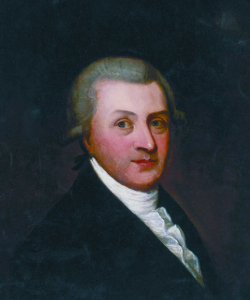
Arthur Guinness, entrepreneur, visionary, philanthropist, brewer, and the founder of the Guinness brewery business, dies at Mountjoy Square, Dublin, on January 23, 1803.

Arthur Guinness is believed to be born in Celbridge, County Kildare on September 25, 1725, into the Protestant Guinness family, part of the Anglo-Irish aristocracy. They claim to descend from the Gaelic Magennis clan of County Down. However, recent DNA evidence suggests descent from the McCartans, another County Down clan, whose spiritual home lay in the townland of “Guiness” near Ballynahinch, County Down.

Guinness’s place and date of birth are the subject of speculation. His gravestone in Oughter Ard, County Kildare, reads that he dies on January 23, 1803, at the age of 78, and that he is born some time in 1724 or very early in 1725. This contradicts the date of September 28, 1725, chosen by the Guinness company in 1991, apparently to end speculation about his birthdate. The place of birth is perhaps his mother’s home at Read homestead at Ardclough, County Kildare.

In 2009 it is claimed that Guinness is born in nearby Celbridge where his parents live in 1725 and where his father later becomes land steward for the Archbishop of Cashel, Dr. Arthur Price. In his will, Dr. Price leaves £100 each to “his servant” Arthur and his father in 1752.

Guinness leases a brewery in Leixlip in 1755, brewing ale. Guinness also purchases a long lease of an adjacent site from George Bryan of Philadelphia in 1756 that is developed as investment property. He leaves his younger brother in charge of the Leixlip enterprise in 1759 and moves on to another at St. James’ Gate, Dublin. He signs a 9,000-year lease for the brewery, effective from December 31, 1759. The lease is presently displayed in the floor at St. James’ Gate. By 1767 he is the master of the Dublin Corporation of Brewers. His first actual sales of porter are listed on tax data from 1778. From the 1780s his second son, Arthur, works at his side and becomes the senior partner in the brewery in 1803.

Guinness’ major achievement is the expansion of his brewery in 1797–1799. Thereafter he brews only porter and employs members of the Purser family who have brewed porter in London from the 1770s. The Pursers become partners in the brewery for most of the 19th century. By the time of his death in 1803, the annual brewery output is over 20,000 barrels. Subsequently Arthur and/or his beer is nicknamed “Uncle Arthur” in Dublin. Guinness’ florid signature is still copied on every label of bottled Guinness.

From 1764, Guinness and his wife Olivia, whom he marries in 1761, live at Beaumont House, which Guinness has built on a 51-acre farm which is now a part of Beaumont Convalescent Home, behind the main part of Beaumont Hospital, between Santry and Raheny in north County Dublin. His landlord is Charles GardinerBeaumont, meaning beautiful hill, is named by Arthur and the later Beaumont parish copies the name. From March 1798 he lives at Mountjoy Square in Dublin, which is then in the process of being built in the style of elegant Georgian architecture. Three of his sons are also brewers, and his other descendants eventually include missionaries, politicians, and authors.

Sir Arthur Guinness dies in Mountjoy Square, Dublin, on January 23, 1803, and is buried in his mother’s family plot at Oughter Ard, County Kildare.

To further honour Arthur Guinness’s legacy, in 2009 Guinness & Co. established the Arthur Guinness Fund (AGF). An internal fund set up by the Company, its aim is to enable and empower individuals with skills and opportunities to deliver a measured benefit to their communities. Guinness has donated more than €7 million to the Fund since its inception. Arthur Guinness is also one of a handful of Irish people commemorated twice on stamps, in 1959 and 2009.


Leave a comment

Birth of James Henry, Scholar & Poet

james-henry

James Henry, Irish classical scholar and poet, is born in Dublin on December 13, 1798.

Henry is the son of a woolen draper, Robert Henry, and his wife Kathleen Elder. He is educated by Unitarian schoolmasters and then at Trinity College, Dublin. At age 11 he falls in love with the poetry of Virgil and gets into the habit of always carrying a copy of the Aeneid in his left breast-pocket.

Henry graduates from Trinity with the gold medal for Classics. He then turns to medicine and practises as a physician in Dublin until 1845. In spite of his unconventionality and unorthodox views on religion and his own profession, he is very successful. He marries Anne Jane Patton, from Donegal, and has three daughters, only one of whom, Katherine, born in 1830, survives infancy.

His accession to a large fortune in 1845 enables him to devote himself entirely to the absorbing occupation of his life – the study of Virgil. Accompanied by his wife and daughter, he visits all those parts of Europe where he is likely to find rare editions or manuscripts of the poet. When his wife dies in Tyrol he continues his work with his daughter, who becomes quite a Virgil expert in her own right, and crosses the Alps seventeen times. After the death of his daughter in 1872 he returns to Dublin and continues his research at Trinity College, Dublin.

As a commentator on Virgil, Henry will always deserve to be remembered, notwithstanding the occasional eccentricity of his notes and remarks. The first fruits of his researches are published at Dresden in 1853 under the quaint title Notes of a Twelve Years Voyage of Discovery in the first six Books of the Eneis. These are embodied, with alterations and additions, in the Aeneidea, or Critical, Exegetical and Aesthetical Remarks on the Aeneis (1873-1892), of which only the notes on the first book are published during Henry’s lifetime. As a textual critic Henry is exceedingly conservative. His notes, written in a racy and interesting style, are especially valuable for their wealth of illustration and references to the less-known classical authors.

Henry is also the author of five collections of verse plus two long narrative poems describing his travels, and various pamphlets of a satirical nature. At its best his poetry has something of the flavour of Robert Browning and Arthur Hugh Clough while at its worst it resembles the doggerel of William McGonagall. His five volumes of verse are all published at his own expense and receive no critical attention either during or after his lifetime.

James Henry dies at Dalkey, County Dublin, on July 14, 1876.


Leave a comment

Death of Thomas “Buck” Whaley

Thomas Whaley, Irish gambler and member of the Irish House of Commons commonly known as Buck Whaley or Jerusalem Whaley, dies on November 2, 1800, in England.

Whaley is born in Dublin on December 15, 1766, the eldest surviving son of the landowner, magistrate and former Member of Parliament Richard Chapell Whaley. At the age of sixteen, he is sent to Europe on the Grand tour, accompanied by a tutor. He settles in Paris for some time, maintaining both a country residence and town house, but is forced to leave Paris when his cheque for the amount of £14,000, to settle gambling debts accrued in one night of gambling, is refused by his bankers. Following his return to Dublin, Whaley, at the age of eighteen, is elected to the Irish House of Commons in 1785 representing the constituency of Newcastle in County Dublin.

While dining with William FitzGerald, 2nd Duke of Leinster at Leinster House, wagers totaling £15,000 are offered that Whaley cannot travel to Jerusalem and back within two years and provide proof of his success. The reasoning of those offering the bets is based on the belief that, as the region was part of the Ottoman Empire and had a reputation for widespread banditry, it will be too dangerous for travelers, and it will be unlikely that Whaley can complete the journey.

Whaley embarks from Dublin on October 8, 1788. He sails first to Deal, Kent, where he is joined by a companion, a Captain Wilson, and then on to Gibraltar. In Gibraltar, his party is joined by another military officer, Captain Hugh Moore. The party sets sail for the port of Smyrna, although Wilson is prevented from travelling any further due to rheumatic fever. The remaining pair make an overland journey from there to Constantinople, arriving in December.

The British ambassador in Constantinople introduces Whaley to the Vizier Cezayirli Gazi Hasan Pasha. Taking a liking to Whaley, Hasan Pasha provides him with permits to visit Jerusalem. Whaley’s party leaves Constantinople on January 21, 1789, by ship and sail to Acre, Israel. He encounters the Wāli of Acre and Galillee, Ahmad Pasha al-Jazzar. Al-Jazzar, notoriously known as “The Butcher” in the region he rules, takes a liking to Whaley and, though he dismisses the documents issued in Constantinople as worthless, he permits Whaley to continue his journey.

Whaley and his companions make their way overland to Jerusalem, arriving on January 28. During his visit, he stays at a Franciscan monastery, the Convent of Terra Sancta. It is a signed certificate from the superior of this institution, along with detailed observations of the buildings of Jerusalem, that provide the proof needed to prove the success of his journey. They stay for little over a month before returning overland to Ireland.

Whaley arrives back in Dublin in the summer of 1789 to great celebrations and collects the winnings of the wager. The trip costs him a total of £8,000, leaving him a profit of £7,000.

Following his Jerusalem exploit, Whaley remains in Dublin for two years and later spends time in London and travelling in Europe, including Paris during the Revolutionary period. Due to mounting debts, he is forced to sell much of his estate in the early 1790s and these financial problems also lead to his departure from Dublin.

Thomas Whaley dies on November 2, 1800, in the Cheshire town of Knutsford, while travelling from Liverpool to London. The cause of death is attributed to rheumatic fever, although a popular story circulated in Ireland is that he is stabbed in a jealous rage by one of two sisters, both of whom are objects of his attentions.


Leave a comment

Death of Hunger Striker Thomas Patrick Ashe

Thomas Patrick Ashe, a member of the Gaelic League, the Irish Republican Brotherhood (IRB), and a founding member of the Irish Volunteers, dies on September 25, 1917, at Mater Misericordiae Hospital in Dublin following a hunger strike.

Ashe is born in Lispole, County Kerry, on January 12, 1885. He enters De La Salle Training College, Waterford in 1905 and begins a teaching career as principal of Corduff National School, Lusk, County Dublin, in 1908.

Ashe plays a major part in the 1916 Easter Rising outside the capital city commanding the Fingal battalion of the Irish Volunteers. He is commandant of the 5th battalion of the Dublin brigade, a force of 60–70 men engaging British forces around north County Dublin during the rising. They are armed only with a few rounds, about a dozen service rifles, a dozen Mausers, and a dozen Martini carbines. Some of Ashe’s men are armed only with a shotgun against the well-equipped army regulars.

Ashe’s battalion wins a major victory in Ashbourne, County Meath, where they engage a much larger force. They capture a significant quantity of arms and up to twenty Royal Irish Constabulary (RIC) vehicles. Eleven RIC members, including County Inspector Alexander Gray, and two volunteers are killed during the 5-1/2-hour battle. Twenty-four hours after the rising collapses, Ashe’s battalion surrenders on the orders of Patrick Pearse. On May 8, 1916, Ashe and Éamon de Valera are court-martialled and sentenced to death. The sentences are commuted to penal servitude for life. Ashe is imprisoned in Frongoch internment camp and Lewes Prison in Lewes, East Sussex, England.

De Valera, Ashe, and Thomas Hunter lead a prisoner hunger strike on May 28, 1917. With accounts of prison mistreatment appearing in the Irish press and mounting protests in Ireland, Ashe and the remaining prisoners are freed on June 18, 1917, by David Lloyd George as part of a general amnesty.

Upon his release, Ashe returns to Ireland and begins a series of speaking engagements. In August 1917, he is arrested and charged with sedition for a speech that he makes in Ballinalee, County Longford, where Michael Collins is also speaking. He is detained at the Curragh but is then transferred to Mountjoy Prison in Dublin. He is convicted and sentenced to two years hard labour. Ashe and other prisoners, including Fionán Lynch and Austin Stack, demand prisoner of war status.

On September 20, 1917, Ashe again goes on hunger strike. He dies at Mater Misericordiae Hospital on September 25, 1917, after being force fed by prison authorities. At the inquest into his death, the jury condemns the staff at the prison for the “inhuman and dangerous operation performed on the prisoner, and other acts of unfeeling and barbaric conduct.” His body lies in state at Dublin City Hall and is buried in Glasnevin Cemetery in Dublin.

The Ashe Memorial Hall built in 1928, housing the Kerry County Museum, in Tralee is named after him while Nelson Street, also in Tralee, is renamed Ashe Street. Ashe is a relative of Catherine Ashe, the paternal grandmother of American actor Gregory Peck, who emigrates to the United States in the 19th century.


Leave a comment

Birth of Ronnie Drew, Singer & Folk Musician

Joseph Ronald “Ronnie” Drew, singer, folk musician and actor who achieves international fame during a fifty-year career recording with The Dubliners, is born in Dún Laoghaire, County Dublin, on September 16, 1934. He is most recognised for his lead vocals on the single “Seven Drunken Nights” and “The Irish Rover” both charting in the U.K. top 10. He is recognisable for his long beard and his voice, which is once described by Nathan Joseph as being “like the sound of coal being crushed under a door.”

Drew is educated at CBS Eblana. Despite his aversion to education, he is considered the most intelligent in his class by schoolfriend and future Irish film censor, Sheamus Smith. Drew also sings as a boy soprano before his voice breaks.

In the 1950s, Drew moves to Spain to teach English and learn Spanish and flamenco guitar. His interest in folk music begins at the age of nineteen. When he returns to Ireland, he performs in the Gate Theatre with John Molloy and soon goes into the music business full-time, after holding a number of short-term jobs.

In 1962, he founds the Ronnie Drew Group with Luke Kelly, Barney McKenna and Ciarán Bourke. They soon change their name to The Dubliners, with John Sheahan joining shortly afterwards to form the definitive line-up and quickly become one of the best-known Irish folk groups. They play at first in O’Donoghue’s Pub in Merrion Row, Dublin where they are often accompanied by Mary Jordan on the spoons and vocalist Ann Mulqueen, a friend of McKenna’s. Mary Jordan’s mother, Peggy Jordan, introduces them to the Abbey Tavern in Howth, which becomes a regular Monday night venue for the emerging group. They also play across the road in the Royal Hotel, at all-night parties in Peggy’s large house in Kenilworth Square in Rathgar, and in John Molloy’s flat at Ely Place.

Drew leaves the Dubliners in 1974, goes to Norway in 1978 and records two songs with the Norwegian group Bergeners. He rejoins The Dubliners in 1979 and leaves for good in 1995, though he does reunite with the group in 2002 for a 40th anniversary celebration. He makes several television appearances with the group between 2002 and 2005.

From 1995 onwards, Drew pursues a solo career. He records with many artists, including Christy Moore, The Pogues, Antonio Breschi, Dropkick Murphys, Eleanor Shanley and others. He does a number of “one-man shows” consisting of stories about people such as Brendan Behan, Patrick Kavanagh and Seán O’Casey, as well as Drew singing their songs.

He fronts a campaign to encourage the use of Dublin’s light-rail infrastructure and, before that, the “My Dublin” ads for radio stations 98FM and FM104. He narrates a retelling of the great Irish Myths and Legends over a six CD set in 2006. He also narrates the stories of Oscar Wilde in his distinctive voice for a series released on CD by the News of the World newspaper. Both were re-released as CD box sets in 2010.

On August 22, 2006, Drew is honoured in a ceremony where his handprints are added to the “Walk of Fame” outside Dublin‘s Gaiety Theatre.

In September 2006, Drew is reported to be in ill-health after being admitted to St. Vincent’s Hospital, Dublin, to undergo tests for suspected throat cancer. On October 25, 2007, Drew, now bald and beardless, appears on Ryan Confidential on RTÉ 1 to give an interview about his role in The Dubliners, his life since leaving the band and being diagnosed with throat cancer. Later in 2007, he appears on The Late Late Show, where he speaks about the death of his wife and his ongoing treatment for cancer.

Ronnie Drew dies in St. Vincent’s Hospital, Dublin, on August 16, 2008, following his long illness. He is buried three days later in Redford Cemetery in Greystones.


Leave a comment

Transatlantic Flight of “Wrong Way” Corrigan

Douglas Corrigan, an American aviator born in Galveston, Texas, earns the nickname “Wrong Way” Corrigan on July 17, 1938. After a transcontinental flight from Long Beach, California, to New York City, he flies from Floyd Bennett Field in Brooklyn, New York, to Ireland, though his flight plan is filed to return to Long Beach. He claims his unauthorized flight is due to a navigational error, caused by heavy cloud cover that obscures landmarks and low-light conditions, causing him to misread his compass. However, he is a skilled aircraft mechanic and has made several modifications to his own plane, preparing it for his transatlantic flight. He had been denied permission to make a nonstop flight from New York to Ireland, and his “navigational error” is seen as deliberate. Nevertheless, he never publicly admits to having flown to Ireland intentionally.

On July 9, 1938, Corrigan departs California in his 1929 Curtiss Robin OX-5 monoplane bound for Floyd Bennett Field, Brooklyn, New York. With the Robin cruising at 85 miles per hour (137 km/h) for maximum fuel efficiency, the outward journey takes him 27 hours. Fuel efficiency becomes critical towards the end of the flight as a gasoline leak develops, filling the cockpit with fumes.

Upon his unannounced arrival at Floyd Bennett Field, in the midst of Howard Hughes‘s preparations for takeoff on a world tour, Corrigan decides repairing the leak will take too long if he is to meet his schedule. His logged flight plan has him returning to California on July 17. Before takeoff, Corrigan asks the manager of Floyd Bennett Field, Kenneth P. Behr, which runway to use, and Behr tells him to use any runway as long as he does not take off to the west, in the direction of the administration building where Behr has his office. As recorded in Corrigan’s autobiography, Behr wishes him “Bon Voyage” prior to take-off, perhaps in a nod to Corrigan’s intentions to fly the Atlantic. Upon take off at 5:15 on the morning of July 17 with 320 US gallons of gasoline and 16 US gallons of oil, Corrigan heads east from the 4,200-foot runway of Floyd Bennett Field and keeps going. Behr later swears publicly that he has no foreknowledge of Corrigan’s intentions.

Corrigan claims to have noticed his “error” after flying for about 26 hours. This is not entirely consistent with his claim that after 10 hours, he feels his feet go cold. The cockpit floor is awash with gasoline leaking from the unrepaired tank. He uses a screwdriver to punch a hole through the cockpit floor so that the fuel will drain away on the side opposite the hot exhaust pipe, reducing the risk of a midair explosion. Had he been truly unaware he was over ocean, it seems likely he would descend at this point. Instead, he claims to increase the engine speed by almost 20% in the hope of decreasing his flight time.

Corrigan lands at Baldonnel Aerodrome, County Dublin, on July 18, after a 28-hour, 13-minute flight. His provisions for the flight consisted of just two chocolate bars, two boxes of fig bars, and 25 US gallons of water. Corrigan’s plane has fuel tanks mounted on the front, allowing him to see only out of the sides. He has no radio, and his compass is 20 years old.

Aviation officials require 600 words to list the regulations broken by his flight in a telegram, a medium that encourages brevity by charging at a rate per word. Despite the extent of Corrigan’s illegality, he receives only a mild punishment and his pilot’s certificate is suspended for 14 days. He and his plane return to New York on the steamship Manhattan and arrive on August 4, the last day of his suspension. His return is marked with great celebration. More people attend his Broadway ticker tape parade than had honored Charles Lindbergh after his triumph. He is also given a ticker tape parade in Chicago.


Leave a comment

Birth of Robert Erskine Childers, Writer & Fenian

Robert Erskine Childers, British writer universally known as Erskine Childers and whose mother is from County Clare, is born on June 25, 1870, in Mayfair, London, England. His works include the influential novel The Riddle of the Sands. He is the second son of Robert Caesar Childers, a translator and oriental scholar from an ecclesiastical family, and Anna Mary Henrietta, née Barton, from an Anglo-Irish landowning family of Glendalough House, Annamoe, County Wicklow. He is also the cousin of Hugh Childers and Robert Barton, and the father of the fourth President of Ireland, Erskine Hamilton Childers.

Childers is raised at the home of family members at Glendalough, County Wicklow. At the recommendation of his grandfather, Canon Charles Childers, he is sent to Haileybury College. There he wins an exhibition to Trinity College, Cambridge, where he studies the classical tripos and then law. He distinguishes himself as the editor of Cambridge Review, the university magazine.

Childers’s first published work is some light detective stories he contributes to the Cambridge Review while he is editor. His first book is In the Ranks of the C. I. V., an account of his experiences in the Boer War, but he writes it without any thought of publication.

After serving in the British army during the Boer War he becomes an Irish nationalist. In 1914, Childers smuggles a cargo of 900 Mauser Model 1871 rifles and 29,000 black powder cartridges to the Irish Volunteers movement at the fishing village of Howth, County Dublin on his yacht, Asgard.

Though he serves as the principal secretary to Michael Collins and Arthur Griffith at the Anglo-Irish Treaty negotiations, Childers opposes the treaty, supporting the anti-treaty forces during the Irish Civil War. Childers is captured with a pistol by Free Staters in November 1922 shortly after the Free State has passed legislation making such possession a capital offence. Ironically, the revolver Childers possesses is a gift from former comrade Michael Collins, who led the Free State until his death in an ambush three months earlier.

Childers is put on trial by a military court on the charge of possessing a small Spanish-made Gaztanaga Destroyer .32 calibre semi-automatic pistol on his person in violation of the Emergency Powers Resolution. Childers is convicted by the military court and sentenced to death on November 20, 1922.

While his appeal against the sentence is still pending, Childers is executed on November 24, 1922, by firing squad at the Beggar’s Bush Barracks in Dublin. Before his execution he shakes hands with each member of the firing squad. He also obtains a promise from his then 16-year-old son, the future President Erskine Hamilton Childers, to seek out and shake the hand of every man who has signed his death sentence. His final words, spoken to the firing squad, are, “Take a step or two forward, lads, it will be easier that way.”

Robert Erskine Childers is buried at Beggar’s Bush Barracks until 1923, when his body is exhumed and reburied in the republican plot at Glasnevin Cemetery, Dublin.


Leave a comment

Death of Playwright & Broadcaster Máiréad Ní Ghráda

Máiréad Ní Ghráda, poet, playwright, and broadcaster, dies on June 13, 1971. She is a tireless promoter of the Irish language and writes many educational texts, some of which are still widely used today including Progress in Irish.

Máiréad is born and raised in Kilmaley, County Clare, a Breac Ghaeltacht, with Irish speaking parents. She wins a university scholarship while attending the local Convent of Mercy School and receives a BA in English, Irish, and French and an MA in Irish from University College Dublin (UCD).

An active member of the Gaelic League and Cumann na mBan, she is imprisoned in 1920 for selling flags on behalf of the Gaelic League on Grafton Street. After a short time teaching in St. Brendan’s private school, Glenageary, County Dublin, Máiréad is employed as organiser and later as secretary to Ernest Blythe in the first Dáil Éireann and during the Irish Civil War. In 1923, she marries Richard Kissane, a civic guard (Garda Síochána). They have two sons and settle in Ranelagh, Dublin.

Beginning in 1926 she spends nine years working for 2RN (now Radió Éireann). She is the first female announcer with 2RN, engaged as Woman’s Organiser with the national radio station for many years, a job which involves programming for women and children. She is the first female announcer in Ireland and Britain, and perhaps in Europe.

Máiréad writes her first play in 1931 while teaching Irish in a domestic science college in Kilmacud. An Uacht, a one act comedy based on Gianni Schicchi by Giacomo Puccini, is produced by Michéal Mac Liammóir at the Gate Theatre (1931). Her writing for theatre includes Mícheál, 1933 (adaptation of Michael, a story by Leo Tolstoy), An Grádh agus an Garda (1937), Giolla an tSoluis (1945), Hansel & Gretel (1951), Lá Buí Bealtaine (1953), Úll glas Oíche Shamhna (1955), Ríte (1955), Súgán Sneachta (1959), Mac Uí Rudaí (1961) and Stailc Ocrais (1962). An Triail (1964) and On Trial (1965) and Breithiúnas (1968), although critical of Irish society at the time, are her greatest successes.

Her enormous contribution to Irish language theatre includes eleven original plays, more than any other playwright in Irish.