Although there are no discussions between the pair, Kenny confirms he will meet with Foster in Dublin on Tuesday, November 15. The pair are also due to meet in Armagh on Friday, November 18 for a North/South ministerial meeting, where Brexit-related issues are expected to dominate the agenda.
Speaking afterwards, Fitzgerald, whose grandfather served as a soldier in the British army and whose father was a colonel in the Irish Army, says it has been an important engagement. “So many people across the island lost their lives; 50,000 families affected by loss of a loved one during the First World War. We have had a government minister here since 2012 and I think it is really important to come together, to remember together and to look at our shared histories.”
Meanwhile, Heather Humphreys, the Minister for Arts, Heritage, Regional, Rural and Gaeltacht Affairs, dedicates the France-Ireland Memorial at Glasnevin Cemetery. Humphreys is joined by the French Minister of State for Veterans and Remembrance at the Ministry of Defence Jean-Marc Todeschini for the ceremony. The memorial is a gift to Ireland from France in recognition of Irish sacrifices made “in the defence and freedom of France, particularly in the First World War.”
(From: “Taoiseach, Tánaiste attend Remembrance Sunday ceremonies,” Raidió Teilifís Éireann (RTÉ), http://www.rte.ie, November 13, 2016 | Pictured: Taoiseach Enda Kenny lays a wreath of green laurels in Enniskillen)
Lawson appears in at least three films and in at least twenty television productions. He is probably best known for appearing as Jim McDonald in the ITV television soap opera Coronation Street. He first appears as Jim in 1989 and remains a regular character for eleven years, since which time his appearances have been few and far between.
In 2000, Lawson makes a programme for ITV Granada, Passion for Peace, which follows him back to Northern Ireland and reports on the creation of the Tim Parry Johnathan Ball Peace Centre in Warrington. In 2005 he appears in the TV documentary Titanic: Birth of a Legend. In 2009 he appears alongside an eight-foot Frankfurtersausage in a German television commercial, advertising hot dogs. His overdubbedcatchphrase in the commercial is Betrachten Sie die Größe meiner Wurst! (English: “Look at the size of my sausage!”).
In 2010, Lawson reveals that he is returning to Coronation Street for its fiftieth anniversary celebrations. He speculates that bosses may be planning to kill his character off, however, this never happens. He stays until April 2011. He then returns for a three-month stint on the soap between August and November 2014.
Lawson returns to Coronation Street in September 2018 with his supposed long-lost daughter from his relationship with Liz. On October 8, 2018, while portraying Inspector John Rebus in the play Long Shadows in Edinburgh, he suffers a minor stroke on stage but recovers shortly afterwards.
Lawson lives in Belfast with his partner, Debbie Stanley, having previously lived with her in Chester, Cheshire, for a number of years.
The bomb is in a grey Saab 9000 near the Ealing Broadway station, restaurants and pubs on Uxbridge Road, which explodes shortly after midnight, injuring seven people. Debris from the blast spreads more than 220 yards. The bomb is timed to target leaving karaoke pub-goers, but while most escape injury, the explosion still causes significant damage to property, estimated to be around £200,000. The adjacent Ealing Broadway shopping centre is also damaged by flooding arising from the water main under the car bomb being ruptured.
Experts regard the bomb to be designed to look spectacular on CCTV for the purposes of “armed propaganda” rather than to cause large numbers of injuries. However, anti-terrorist detectives claim that the attack is planned to be a massacre and to cause as much carnage as the Omagh bombing three years earlier.
In November 2001, three men, Noel Maguire, Robert Hulme and his brother Aiden Hulme, are arrested in connection with the Ealing, BBC and Birmingham bomb attacks. They are all later convicted at the Old Bailey on April 8, 2003. Robert and Aiden Hulme are each jailed for twenty years. Noel Maguire, whom the judge says played “a major part in the bombing conspiracy,” is sentenced to twenty-two years.
Two other men, James McCormack of County Louth and John Hannan of Newtownbutler, County Fermanagh, had already admitted the charge at an earlier hearing. McCormack, who plays the most serious part of the five, is jailed for twenty-two years. John Hannan, who is seventeen at the time of the incidents, is given sixteen years of detention.
Clann na Poblachta, a radical new republican party, is founded in Barry’s Hotel, Dublin, on July 6, 1946, by former members of the Irish Republican Army (IRA) who are very unhappy at the treatment of IRA prisoners during “The Emergency” and who are prepared to try and engage in parliamentary politics. The party lasts 19 years but fails in its objectives due to internal feuds and lack of unity.
Clann na Poblachta realises that it has to place an emphasis on practical improvements to living standards and welfare issues such as public health. These policies attract a number of younger members such as Noël Browne and Jack McQuillan. One potential problem for the future is that almost the entire Provisional Executive is resident in Dublin and the party has no organisation in the six counties of Northern Ireland.
In 1948, Éamon de Valera dissolves the Dáil and calls an election for February. Clann na Poblachta wins only ten seats in the 1948 Irish general election, fewer than the breakthrough expected, caused in part by the error of running multiple candidates in many constituencies. The party believes there will be a landslide in their favour like the 1918 Westminster election but 48 of their 93 candidates lose their deposits. The party wins 13.3% of the vote but only 6.8% of the seats. Of their ten Teachtaí Dála (TD), six are elected in Dublin constituencies, two in Tipperary and one each in Cavan and Roscommon.
The party is the driving force behind the 26 counties exiting the Commonwealth of Nations and the all-party Anti-Partition Campaign.
The controversy of the “Mother and Child Scheme,” a progressive healthcare programme opposed by the Catholic Church, helps bring down the government and leads to the disintegration of the party. Many of the party’s TDs resign in solidarity with Noël Browne and his scheme, so the official party wins only two seats in the 1951 Irish general election.
In 1954, Clann na Poblachta agrees to give outside support to the Fine Gael-led government. In this election, three TDs are returned – MacBride, John Tully and John Connor. Controversy dogs the party as Liam Kelly, a Northern-based Clann na Poblachta senator, is also active in Saor Uladh and leads a number of military raids in County Fermanagh and County Tyrone against the Royal Ulster Constabulary (RUC).
Clann na Poblachta withdraws its support from the Government in late 1956 due to its anti-IRA stance. The party wins only one seat at the 1957 Irish general election with MacBride being defeated by Fianna Fáil. John Tully remains the only Clann TD until his retirement in 1961, after he loses his seat. However, Joseph Barron is elected in Dublin South-Central on his fourth attempt.
In 1965, Tully wins back his seat, but he is in effect an Independent as the party only stands four candidates. There had been negotiations between MacBride and Brendan Corish, the new Labour Party leader about forming a political alliance but this does not come to fruition.
A special Ardfheis, held on July 10, 1965, agrees to dissolve Clan na Poblachta.
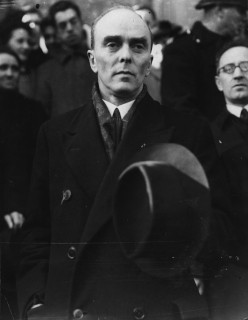
(Pictured: Sean MacBride, former Chief of staff of the Irish Republican Army and founder of Clann na Poblachta)
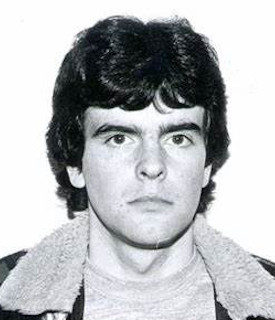
McElwaine is born on April 1, 1960, the oldest of eight children, in the townland of Knockacullion, beside the hamlet and townland of Knockatallon, near the village of Scotstown in the north of County Monaghan. At the age of 14, he takes his first steps towards becoming involved in physical force republicanism when he joins Na Fianna Éireann. Two years later he turns down an opportunity to study in the United States and joins the Irish Republican Army (IRA), stating “no one will ever be able to accuse me of running away.”
McElwaine becomes Officer Commanding of the IRA in County Fermanagh by the age of 19. On February 5, 1980, he kills off-duty Ulster Defence Regiment (UDR) corporal Aubrey Abercrombie as he drives a tractor in the townland of Drumacabranagher, near Florencecourt. Later that year, on September 23, he kills off-duty Royal Ulster Constabulary (RUC) Reserve Constable Ernest Johnston outside his home in Rosslea. He is suspected of involvement in at least ten other killings.
On March 14, 1981, a detachment of the British Army surrounds a farmhouse near Rosslea, containing McElwaine and three other IRA members. Despite being armed with four rifles, including an Armalite, the IRA members surrender and are arrested. While on remand in Crumlin Road Gaol, McElwaine stands in the February 1982 Irish general election as an independent candidate for Cavan–Monaghan and receives 3,974 votes (6.84% of the vote). In May 1982 he is convicted of murdering the RUC and UDR members, with the judge describing him as a “dangerous killer” and recommending he spend at least 30 years in prison.
On September 25, 1983, McElwaine is involved in the Maze Prison escape, the largest break-out of prisoners in Europe since World War II and in British prison history. Thirty-eight republican prisoners, armed with six handguns, hijack a prison meals lorry and smash their way out of the prison. After the escape McElwaine joins an IRA Active Service Unit operating in the area of the border between Counties Monaghan and Fermanagh. The unit targets police and military patrols with gun and bomb attacks, while sleeping rough in barns and outhouses to avoid capture.
On April 26, 1986, McElwaine and another IRA member, Seán Lynch, are preparing to ambush a British Army patrol near Rosslea, County Fermanagh when they are ambushed themselves by a detachment from the Special Air Service Regiment. Both are wounded but Lynch manages to crawl away. A January 1993 inquest jury returns a verdict that McElwaine had been unlawfully killed. The jury rules the soldiers had opened fire without giving him a chance to surrender, and that he was shot dead five minutes after being wounded. The Director of Public Prosecutions requests a full report on the inquest from the RUC, but no one has been prosecuted for McElwaine’s death.
McElwaine is buried in Scotstown, with his funeral attended by an estimated 3,000 people, including Gerry Adams and Martin McGuinness. McGuinness gives an oration describing McElwaine as “a brave intelligent soldier, a young man who gave up his youth to fight for the freedom of his country” and “an Irish freedom fighter murdered by British terrorists.”
On April 1, 1990, a monument to McElwaine is erected in Corlat, County Monaghan. The oration is given by a Catholic priest, Father Piaras Ó Dúill, who compares McElwaine to Nelson Mandela, saying they both had the same attitude to oppression, and both refused to denounce principle. The inscription on the monument is a quote from Patrick Pearse: “As long as Ireland is unfree the only honourable attitude for Irishmen and Irishwomen is an attitude of revolt.” A monument to McElwaine and six other republicans is erected in Rosslea in 1998 and unveiled by veteran republican Joe Cahill.
Samuel Madden, writer, economist, and philanthropist commonly called “Premium” Madden, is born in Dublin on December 23, 1686. His father is John Madden, and his mother is Mary Molyneux.
In 1729, Madden writes a tragedy entitled Themistocles, the Lover of His Country. In 1733, he writes Memoirs of the Twentieth Century, one of the first science fiction novels. However, it is suppressed by Sir Robert Walpole, and is now very rare. A reprint of the original sheets appears with publishing company Garland Science in 1972 (ISBN 0824005708). The work is originally designed to have six volumes yet is discontinued after the first volume.
In 1738, Madden writes his most famous work, Reflections and Resolutions Proper for the Gentlemen of Ireland, in which he describes the poor living conditions in Ireland at the time.
Dr. Samuel Johnson writes of Madden, “His was a name which Ireland ought to honour.” He suggests that the Royal Dublin Society initiate a scheme to fund improvements in agriculture and arts in Ireland via the use of premiums – the source of his nickname Premium.
Samuel Madden dies at the age of 79 on December 31, 1765, at Manor Waterhouse in County Fermanagh.
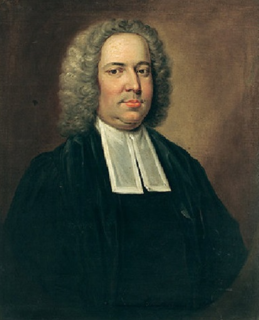
(Pictured: Portrait of Samuel Madden wearing clerical robes, Oil on Canvas,Philip Hussey (Irish, 1713–1783))
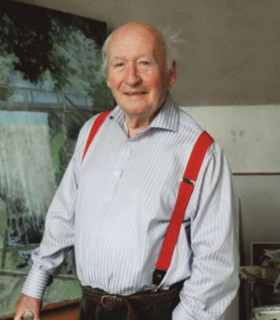
Terence Philip “T.P.” Flanagan, one of the finest landscape painters of his generation, passes away in Belfast on February 23, 2011, at the age of eighty. For more than 60 years he shapes the face of landscape painting in Northern Ireland and is known internationally for his rural scenes of his native County Fermanagh and County Sligo. With his stunning watercolours and intricate brush strokes, he is described as one of the most successful artists of his generation. PoetSeamus Heaney, who dedicates his 1969 poem Bogland to Flanagan, pays tribute saying “he was a teacher and a friend whose work held a deep personal significance.”
Flanagan is born in Enniskillen, County Fermanagh in 1929. When he is in his late teens, he learns the art of watercolour painting from the famous local portraitist and landscape artist Kathleen Bridle. Later, he paints her portrait, which now hangs in the Ulster Museum, and interviews her in a film of her life and art, which is produced shortly before her death in 1989.
After his time with Bridle, Flanagan attends Belfast College of Art from 1949-1953. The following year he joins the teaching staff at St. Mary’s College of Education, where he remains for 28 years, eventually becoming Head of the Art Department.
Flanagan spends the majority of his painting career in Ireland, but his landscapes have received wide attention and his work has been recognised both in Ireland and abroad. His first solo exhibition is held at the Council for the Encouragement of Music and the Arts (CEMA), Belfast in 1961. He also shows regularly at the Hendriks Gallery in Dublin and at the Tom Caldwell Gallery in Belfast during the 1970s and 1980s. He participates in many group exhibitions, including “Four Ulster Painters” at the Arnolfini gallery in Bristol (1965), “Two Irish Painters” (with Colin Middleton) at the Herbert Art Gallery & Museum, Coventry, (1968) and is represented in “The Gordon Lambert Collection Exhibitions” held at the Hugh Lane Gallery, Dublin (1972) and the Ulster Museum (1976). In addition, he exhibits at the Royal Hibernian Academy (RHA) in Dublin and at the Royal Ulster Academy Of Arts (RUA) in Belfast.
Abroad, Flanagan’s works are exhibited at the Armstrong Gallery, New York (1986) and the Concept Gallery, Pittsburgh. A retrospective of his painting from the period 1967-1977 is held at the Arts Council of Northern Ireland in 1977. In 1995, the Ulster Museum stages a major retrospective of his paintings (1945-1995). Other retrospectives are held at the Hugh Lane Gallery in Dublin and the Stadsmusueum, Gothenberg, Sweden. His paintings are also included in the show “A Century of Irish Painting” organized by the Hugh Lane Gallery which tours Japanese museums in 1995.
As an artist, Flanagan works in oils as well as his preferred watercolours, although by rapid application of the paint with minimal overworking, even his oils manage to retain the luminous colouring of the watercolourist. He specializes in landscape painting within his native County Fermanagh and the adjoining County Sligo, his methods being ideally suited to capturing the soft atmospheric light of Ireland’s northwest.
Flanagan is elected associate of the RUA in 1960, a full member in 1964, and President 1978-82. During his long career, he receives numerous commissions and other awards for his works, which are represented in the collections of The Arts Councils of Ireland & Northern Ireland, the Ulster Museum, the Hugh Lane Municipal Gallery, Dublin, Irish Museum of Modern Art, and the National Self-Portrait Collection, Limerick.
Flanagan dies suddenly on February 23, 2011. His funeral takes place at St. Brigid’s Church in south Belfast and is buried at St. Michaels’ Church in Enniskillen.
The auction record for a work by T.P. Flanagan is set in 2009, when his landscape painting, entitled Castlecoole From Lough Coole, is sold at Christie’s, London, for £20,000.
(From Encyclopedia of Visual Artists In Ireland, visual-arts-cork.com)
After serving for four years on the Roscommon County Council, Doherty is elected as a Fianna Fáil TD for the Roscommon–Leitrim constituency at the 1977 general election.
Doherty’s brother-in-law, Garda Thomas Nangle, is charged with assaulting James McGovern, a native of County Fermanagh, in a public house in December 1981. On September 27, 1982, hours before the case is due to be heard in District Court in the small village of Dowra, County Cavan, McGovern is arrested by the Special Branch of the Royal Ulster Constabulary (RUC) on the basis of entirely false Garda intelligence that he is involved in terrorism. The case against Nangle is dismissed because the principal witness, McGovern, fails to appear in court. The solicitor representing Nangle is Kevin Doherty, Seán Doherty’s brother. This questionable use of Garda/RUC Special Branch liaison, set up under the 1985 Hillsborough Anglo-Irish Agreement, prevents meetings between the Garda commissioner and the RUC chief constable for almost three years.
After Doherty leaves office it is revealed in The Irish Times that he ordered the tapping of three journalists home telephones. The newspaper also discloses that he has been interfering in the workings of the Garda and the administration of justice for both political and personal reasons. He immediately resigns from the party only to rejoin it in 1984.
At the 1989 general election his loses his seat in Dáil Éireann to the independent candidate Tom Foxe. He is also an unsuccessful candidate in the elections on the same day to the European Parliament, but he is later elected instead to the Seanad on the Administrative Panel and becomes the Cathaoirleach (Chairman) of the 19th Seanad.
In January 1992 the phone tapping scandal returns to haunt Fianna Fáil. Doherty announces in a television interview that he had shown transcripts of the conversations to Charles Haughey while Haughey was Taoiseach in 1982 although he had previously denied this. Haughey denies the claim also, but is forced to resign from the government, and then resigns as leader of Fianna Fáil. Doherty then regains his seat at the 1992 general election and holds it until his retirement at the 2002 general election.
Bullock’s father, Thomas Bullock, is a strict man who has eleven children and drives several to emigration because of his stern demeanour. Thomas Bullock works on the Crom Castle estate which runs along the Cavan/Fermanagh border and has both Catholic and Protestant workers. Protestant workers have the prime jobs and are employed as craftsmen and supervisors while Catholics work in the outer area of the estate at unskilled jobs. Folk memories of the Battle of Newtownbutler in 1689 remain long in the memory in the area where up to 1,500 Jacobite troops are hacked down or drowned in Upper Lough Erne when pursued by the Williamite cavalry. Many of the Williamite army is drawn from the local Protestant population.
Bullock is educated at Crom estate primary school run by the Church of Ireland and Farra School near Bunbrosna, County Westmeath. He fails the entrance exams at the University of Dublin. He tries his hand at farming but finds he is not suited. He moves to London in 1883 and becomes a Civil Service clerk. He takes to journalism to supplement his salary and publishes his first book of stories, The Awkward squads, in 1893. His stories are centered on Irish Catholic and Protestant small farmers and labourers and their struggles and tensions. He marries Emma Mitchell in 1899 and they have a son and daughter.
Bullock is well respected in literary circles, but his books are never successful enough for him to become a full-time writer. He says that the English are not interested in Irish stories and that there is no reading public in Ireland. He dislikes Orangesectarianism and is ambivalent to Irish nationalism. His novel The Red Leaguers looks at sectarianism conflict and Robert Thorne examines the lives of London clerks which is a popular theme at the time. His last and best novel The Loughsiders is published in 1924 and is the story of a conniving smallholder based on William Shakespeare’s Richard III.
Shan Bullock’s wife dies in 1922. He spends the final years of his life in Sutton, Surrey and dies there on February 27, 1935.
Billy Fox, Protestant Irish politician and a Fine Gael member of Dáil Éireann from 1969 to 1973, and of Seanad Éireann from 1973 until his death, is assassinated on March 12, 1974, by Irish Republican Army (IRA) gunmen who are carrying out a raid on his girlfriend’s farmhouse. Five members of the Provisional IRA are convicted of involvement in his murder.
Late on the night of Monday, March 11, 1974, about a dozen gunmen arrive at the home of Fox’s girlfriend, Marjorie Coulson. She lives there with her parents and brother, and Fox regularly visits on Monday evenings. The farmhouse is in the rural townland of Tircooney in County Monaghan, near the border with Northern Ireland. The gunmen search the farmhouse and demand the occupants hand over weapons. Shortly after midnight, as this is taking place, Fox drives down the laneway and is stopped by some of the gunmen who are outside. He runs but is shot and killed by a single gunshot through the upper torso. The gunmen then order everyone out of the house, set it on fire, and escape.
The next day, the Ulster Freedom Fighters claim that it had killed Fox because he had links to the Provisional IRA. The IRA issues a statement saying that it is not involved. However, shortly after the shooting, five men from County Monaghan are charged with Fox’s murder and IRA membership. They are convicted in May 1974 and sentenced to penal servitude for life. One of those convicted tells the court they had raided the farm because they received a tip-off that Ulster Volunteer Force (UVF) weapons were being stored there. He says there was an agreement that no shots were to be fired. His understanding is that Fox had taken some of the men by surprise and they had shot to wound, not recognizing him.
It is reported that the tip-off had come from another local family and was the result of a grudge. IRA members are already suspicious that the UVF is receiving local help, following an incident in November 1973. Loyalist gunmen had bombed a house at nearby Legnakelly and shot one of the occupants, a republican activist. In its statement on Fox’s killing, the IRA says, “We have repeatedly drawn attention to the murderous acts of a group of former B Specials from County Fermanagh…led by serving officers of the British Army.” The author, Tim Pat Coogan, however, suggests that members of the Official IRA are responsible for killing Fox.
The Seanad adjourns for a week as a mark of respect. About 500 people attend Fox’s funeral at Aughnamullen, including TaoiseachLiam Cosgrave and the Irish president, Erskine Childers. Fox is the first member of the Oireachtas to be killed since Minister for JusticeKevin O’Higgins by the anti-Treaty Irish Republican Army in 1927. When John Bruton first becomes a Teachta Dála (TD) in 1969 he shares an office with Fox. He says that he is still angry at the murder. The RTÉ documentary Rumours from Monaghan report in detail on the circumstances of Fox’s killing. Because Fox is a Protestant, some suggest that the motive for the killing was sectarian.