seamus dubhghaill

Promoting Irish Culture and History from Little Rock, Arkansas, USA


Leave a comment

Birth of Cyril Falls, Military Historian & Journalist

cyril-bentham-falls

Cyril Bentham Falls, British military historian, journalist and academic, noted for his works on World War I, is born in Dublin on March 2, 1888.

Falls is the eldest son of Sir Charles Falls, an Ulster landowner in County Tyrone. He receives his formal education at the Portora Royal School, Enniskillen, and the University of London. At the age of 27 he publishes his first book, Rudyard Kipling: A Critical Study (1915).

During World War I Falls receives a commission into the British Army as a subaltern in the Royal Inniskilling Fusiliers. He serves as a Staff Officer in the Head Quarters of the 36th (Ulster) Division and the 62nd (2nd West Riding) Division during the conflict. He receives the French Croix de guerre and is discharged from the British Armed Forces with the rank of Captain.

Immediately after leaving the British Army Falls writes a history of one of the Divisions that he had served with during the war, entitled The History of the 36th (Ulster) Division, which is published in 1922.

From 1923 to 1939 Falls is employed by the Historical Section of the United Kingdom Government‘s Committee of Imperial Defence, researching and writing the text of several volumes of the British Government’s official History of the Great War. He serves as the military correspondent for The Times during World War II from 1939 to 1945.

Falls holds the post of Chichele Professor of Military History at All Souls College, Oxford from 1946 to 1953. From the late 1940s through to the end of his life in the early 1970s he is a productive writer of military histories, publishing in-depth detailed studies as well as general works for the commercial market, his final two titles being published posthumously.

The historian Sir Michael Howard later describes Falls’ work The History of the 36th (Ulster) Division (1922) as “containing some of the finest descriptions of conditions on the Western Front to be found anywhere in the literature of the war.”

Cyril Falls dies at the age of 84 in Walton-on-Thames, Surrey, on April 23, 1971.


Leave a comment

Sean Graham Bookmaker’s Shop Shooting

sean-graham-bookmakers-shop

A mass shooting takes place at the Sean Graham bookmaker‘s shop on the Lower Ormeau Road in Belfast, Northern Ireland on February 5, 1992. Members of the Ulster Defence Association (UDA), a loyalist paramilitary group, open fire on the customers, killing five civilians and wounding another nine. The shop is in an Irish nationalist area, and all of the victims are local Catholic civilians. The UDA claims responsibility using the cover name “Ulster Freedom Fighters”, and says the shooting is retaliation for the Teebane bombing, which had been carried out by the Provisional Irish Republican Army (IRA) less than three weeks earlier.

The start of 1992 witnesses an intensification in the campaign of violence being carried out by the Ulster Defence Association (UDA) under their UFF covername. However, the Inner Council of the UDA, which contains the six brigadiers that control the organisation, feel that one-off killings are not sending a strong enough message to republicans and so it sanctions a higher-profile attack in which a number of people will be killed at once. On this basis the go-ahead is given to attack Sean Graham bookmaker’s shop on the Irish nationalist Lower Ormeau Road, which is near the UDA stronghold of Annadale Flats. The bookmaker’s shop is chosen by West Belfast Brigadier and Inner Council member Johnny Adair because he has strong personal ties with the commanders of the Annadale UDA. A 1993 report commissioned by the Royal Ulster Constabulary (RUC) Special Branch also claims that Adair is the driving force behind the attack.

The attack occurs at 2:20 in the afternoon. A car parks on University Avenue facing the bookmakers and two men, wearing boilersuits and balaclavas, leave the car and cross the Ormeau Road to the shop. One is armed with a vz.58 Czechoslovak assault rifle and the other with a 9mm pistol. They enter the shop and unleash a total of 44 shots on the fifteen customers. Five Catholic men and boys are killed and nine others are wounded, one critically.

In a separate incident, a unit of the Ulster Volunteer Force (UVF) travels to the area at the time of the attack with the intention of killing a local Sinn Féin activist based on intelligence they had received that he returns home about that time every day. The attack is abandoned, however, when the car carrying the UVF members is passed by speeding RUC vehicles and ambulances. The UVF members, who had already retrieved their weapons for the attack, are said to be livid with the UDA for not coordinating with them beforehand and effectively spoiling their chance to kill a leading local republican.

A UDA statement in the aftermath of the attack claims that the killings are justified as the Lower Ormeau is “one of the IRA’s most active areas.” The statement also includes the phrase “remember Teebane”, suggesting that the killings are in retaliation for the Teebane bombing in County Tyrone less than three weeks earlier. In that attack, the IRA had killed eight Protestant men who were repairing a British Army base. The same statement had also been yelled by the gunmen as they ran from the betting shop.

On February 5, 2002 a plaque is erected on the side of the bookmaker’s shop in Hatfield Street carrying the names of the five victims and the Irish language inscription Go ndéana Dia trócaire ar a n-anamacha (“May God have mercy on their souls”). A small memorial garden is later added. The unveiling ceremony, which takes place on the tenth anniversary of the attack, is accompanied by a two-minute silence and is attended by relatives of the dead and survivors of the attack. A new memorial stone is laid on February 5, 2012 to coincide with the publication of a booklet calling for justice for the killings.


Leave a comment

Birth of James Graham Fair, Mining Tycoon & U.S. Senator

james-graham-fair

James Graham Fair, banker, mining tycoon, and United States Senator from Nevada, is born in Clogher, County Tyrone on December 3, 1831. He is credited with discovering the Big Bonanza, one of the richest pockets of gold and silver on the Comstock Lode.

Born in what is now Northern Ireland in 1831 to Scotch-Irish parents, Fair immigrates with his family to the United States when he is a boy and grows up on a farm in Illinois. Following the 1849 California Gold Rush, he travels to California. He earns a reputation for understanding ore bodies, inspiring his eventual employment as superintendent of various mines.

The 1859 discovery of the Comstock Lode in Nevada provides Fair with new opportunities. In 1865, he becomes superintendent of the prestigious Ophir Mine. Two years later, the Hale and Norcross Mine in Virginia City hire him as assistant superintendent, but the owners dismiss him within a year for unclear reasons.

While at the Hale and Norcross, Fair meets John William Mackay, whose success at the Kentuck Mine made him a millionaire. The two Irish immigrants recognize common interests and form an alliance. Mackay gives Fair the position of superintendent of the Rising Star Mine in Idaho, a property he had recently acquired. The venture proves unsuccessful, but it solidifies a working relationship between the two.

Fair works quietly with Mackay and investors James C. Flood and William S. O’Brien to obtain control of the Hale and Norcross Mine. Fair turns it to profit with better management. He and Mackay combine their expertise to acquire and explore other claims. In 1873, largely through Fair’s persistent search in the Consolidated California and Virginia Mine, the partnership discovers the famed Big Bonanza, one of the richest ore bodies in history. Fair and the others become extremely wealthy. He uses his assets to defeat the incumbent William Sharon for a seat in the United States Senate, which he holds in an undistinguished way from 1881-1887 as a Democrat.

Fair develops real estate in San Francisco and acquires mining property outside Nevada. Theresa Fair, his wife, is respected in Virginia City for donations to causes including those of the Catholic Church and the Daughters of Charity. When she divorces her husband in 1883 for habitual adultery, national public opinion turns against the senator. During his bid for reelection, he finds little support. Even Mackay fails to come to his aid, and he easily loses his seat to William Morris Stewart in 1887. He then moves back to San Francisco.

James Fair dies on December 28, 1894 in San Francisco of diabetes mellitus at the age of 63. He is buried in Holy Cross Cemetery in Colma, California.


Leave a comment

Death of Colonel James Hagan

james-hagan

James Hagan, Irish American captain in the United States Army during the Mexican–American War and a Confederate States Army colonel during the American Civil War, dies in Mobile, Alabama on November 6, 1901.

Hagan is born in County Tyrone on June 17, 1822. His family moves to a farm near Philadelphia, Pennsylvania when he is still at an early age, and he is educated at Clermont Academy. He moves to Alabama in 1837. His prosperous uncle, John Hagen of New Orleans, Louisiana, takes him into the family business and sets him up in Mobile to manage the Hagan business there.

Hagan serves in John Coffee Hays‘s Texas Rangers, a cavalry unit in Major General Zachary Taylor‘s army during the Mexican–American War. He is recognized for his gallantry at the Battle of Monterrey. He is commissioned a captain in the 3rd U.S. Dragoons in 1848 and is discharged on July 31, 1848. After the war, he returns to Mobile where he purchases and subsequently manages a plantation rather than remaining in the family mercantile business. In 1854, he marries Bettie Oliver, daughter of Alabama’s attorney general.

At the beginning of the American Civil War, Hagan organizes and is elected captain of a cavalry company for the Alabama Militia, the “Mobile Dragoons,” which serves on guard duty along the Gulf Coast. At the rank of major he transfers to the 1st Mississippi Cavalry Regiment on October 26, 1861. The regiment fights at the Battle of Shiloh on April 6–7, 1862. He leads his men in a mounted charge at the Battle of Perryville, which is highly commended by his brigade commander, Brigadier General Joseph Wheeler.

Hagan is promoted to colonel of a new regiment, the 3rd Alabama Cavalry Regiment, on July 1, 1862. The regiment fights in all of the campaigns of the Army of Tennessee. In July 1863, He is assigned to command Brigade 1 of Brigadier General William T. Martin‘s Division of the Cavalry Corps of the Army of Tennessee, which is Major General Joseph Wheeler’s old brigade. During the spring and summer of 1863, the brigade screens the left front of General Braxton Bragg‘s army. Wheeler recommends that Hagan be promoted to brigadier general, but Bragg blocks the promotion because he says Hagan is in a state of “dissipation”, a reference to drunkenness or alcoholism. Hagan is wounded near Franklin, Tennessee in the winter of 1862 and again near Kingston, Tennessee in November 1863. In November 1863, he resigns and returns to Mobile to recover from his wounds and his disappointment from not being promoted.

After he recuperates, Hagan asks that his resignation be revoked. The resignation is revoked, and he returns to his regiment for the Atlanta campaign, where the regiment fights as infantry in the trenches. When Brigadier General William Wirt Adams is promoted to command of the Division, Hagan is assigned to permanent command of the brigade, consisting of five regiments and one battalion of Alabama cavalry. His brigade is part of Wheeler’s force which opposes Major General William Tecumseh Sherman‘s March to the Sea and Campaign of the Carolinas. He is wounded again at the Battle of Monroe’s Crossroads, near Kinston, North Carolina on March 10, 1865, and again at Fayetteville, North Carolina the next day.

Although Hagan is assigned as acting brigadier general in early 1865, he never receives an official appointment from Jefferson Davis or confirmation by the Confederate States Senate of an appointment as a general officer. Major General Wheeler later writes that he had been told unofficially by Confederate States War Department officials that brigadier general commissions had been issued for Hagan, Henry Marshall Ashby and Moses Wright Hannon near the end of the war, but no such commissions ever were delivered.

Hagan returns to Mobile after the war but is penniless since his fortune had been converted to Confederate money. He works as manager of a plantation on the Alabama River in the 1870s and early 1880s. President Grover Cleveland appoints him crier of the United States District Court in Alabama in 1885.

James Hagan dies on November 6, 1901, at Mobile, Alabama. He is buried in Magnolia Cemetery in Mobile.


Leave a comment

Birth of Physicist Ernest Thomas Sinton Walton

ernest-walton

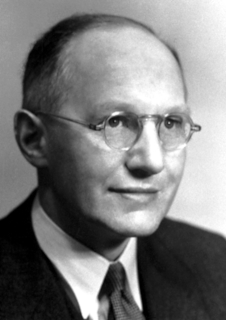
Ernest Thomas Sinton Walton, Irish physicist, is born in Abbeyside, Dungarvan, County Waterford on October 6, 1903. He is the corecipient, with Sir John Douglas Cockcroft of England, of the 1951 Nobel Prize in Physics for the development of the first nuclear particle accelerator, known as the Cockcroft-Walton generator.

Walton is the son of a Methodist minister, Rev John Walton (1874–1936), and Anna Sinton (1874–1906). In those days a general clergyman’s family moves once every three years, and this practice carries him and his family, while he is a small child, to Rathkeale, County Limerick, where his mother dies, and to County Monaghan. He attends day schools in counties Down and Tyrone, and at Wesley College in Dublin before becoming a boarder at Methodist College Belfast in 1915, where he excels in science and mathematics. He obtains degrees in mathematics and experimental science from Trinity College Dublin in 1926.

Walton goes to Trinity College, Cambridge in 1927 where he works with Cockcroft in the Cavendish Laboratory under Ernest Rutherford until 1934. In 1928 he attempts two methods of high-energy particle acceleration. Both fail, mainly because the available power sources could not generate the necessary energies, but his methods are later developed and used in the betatron and the linear particle accelerator. In 1929 Cockcroft and Walton devise an accelerator that generates large numbers of particles at lower energies. With this device in 1932 they disintegrate lithium nuclei with protons, the first artificial nuclear reaction not utilizing radioactive substances and so becomes the first person in history to split the atom.

After gaining his Ph.D. at Cambridge, Walton returns to Trinity College Dublin, in 1934, where he remains as a fellow for the next forty years and a fellow emeritus thereafter. He is Erasmus Smith Professor of Natural and Experimental Philosophy from 1946 to 1974 and chairman of the School of Cosmic Physics at the Dublin Institute for Advanced Studies after 1952.

Although he retires from Trinity College Dublin in 1974, he retains his association with the Physics Department at Trinity up to his final illness. His is a familiar face in the tea-room. Shortly before his death he marks his lifelong devotion to Trinity by presenting his Nobel medal and citation to the college. Ernest Walton dies at the age of 91 in Belfast on June 25, 1995. He is buried in Deans Grange Cemetery in Dublin.

(Pictured: Ernest T.S. Walton, 1951, by Nobel foundation)


Leave a comment

Birth of The Reverend Edward Hincks

edward-hincks

The Reverend Edward Hincks, Anglo-Irish clergyman best remembered as an Assyriologist and one of the decipherers of Mesopotamian cuneiform, is born in Cork, County Cork on August 19, 1792. He is one of the three men known as the “holy trinity of cuneiform,” with Sir Henry Creswicke Rawlinson and Jules Oppert.

Hincks is the eldest son of the Rev. Thomas Dix Hincks, a distinguished Protestant minister, orientalist and naturalist. He is an elder brother of Sir Francis Hincks, a prominent Canadian politician who is also sometime Governor of Barbados, and William Hincks, the first Professor of Natural History at Queen’s College, Cork and afterwards University College, Toronto.

Hincks is educated at home by his father and at Midleton College before entering Trinity College Dublin. He is elected a Scholar of the College in 1810, and in 1812 wins the Gold Medal and Bishop Law‘s Prize for Mathematics. He is elected a Fellow of the College in 1813 and four years later takes his M.A. In 1819, following the death of Thomas Meredith, he is presented to the Rectory of Ardtrea in County Tyrone. Though Ardtrea is a valuable and highly prized Rectory, it is also isolated for a young bachelor, and he resigns the position in 1826, taking up the Rectory in nearby Killyleagh, County Down, an office he holds for the remainder of his life.

The undemanding nature of his clerical duties leave him with more than enough time to pursue his interest in ancient languages. His first love is for the hieroglyphic writing of ancient Egypt. His greatest achievement is the decipherment of the ancient language and writing of Babylon and Assyria: Akkadian cuneiform.

Hincks deduces correctly that cuneiform writing had been invented by one of the earliest civilisations of Mesopotamia, who then bequeathed it to later states such as Babylon, Assyria and Elam. In 1848 he is awarded the Cunningham Medal of the Royal Irish Academy for his achievements.

By 1850 Hincks comes to a number of important conclusions regarding the nature of Assyro-Babylonian cuneiform. He also discovers that cuneiform characters are “polyphonic,” by which he means that a single sign can have several different readings depending on the context in which it occurs. However, not everyone is convinced by the claims being made by the Irishman and his distinguished colleagues. Some philologists even suggest that they are simply inventing multiple readings of the signs to suit their own translations.

In 1857 the versatile English Orientalist William Henry Fox Talbot suggests that an undeciphered cuneiform text be given to several different Assyriologists to translate. If, working independently of one another, they come up with reasonably similar translations, it will surely dispel the doubts surrounding their claims.

As it happens, Talbot, Hincks, Rawlinson and Oppert, are in London in 1857. Edwin Norris, secretary of the Royal Asiatic Society, gives each of them a copy of a recently discovered inscription from the reign of the Assyrian emperor Tiglath-Pileser I. A jury of experts is impaneled to examine the resulting translations and assess their accuracy.

In all essential points the translations produced by the four scholars are found to be in close agreement with one another. There are of course some slight discrepancies. The inexperienced Talbot makes a number of mistakes, and Oppert’s translation contains a few doubtful passages due to his unfamiliarity with the English language. But Hincks’ and Rawlinson’s versions are virtually identical. The jury declares itself satisfied, and the decipherment of cuneiform is adjudged a fait accompli.

Hincks devotes the remaining years of his life to the study of cuneiform and makes further significant contributions to its decipherment. He dies at his rectory in Killyleagh on December 3, 1866, at the age of 74. He is survived by a wife and four daughters.


Leave a comment

Birth of Jimmy Kennedy, Songwriter & Lyricist

jimmy-kennedy-1

James Kennedy, songwriter and lyricist, is born on July 20, 1902, near Omagh, County Tyrone in what is now Northern Ireland. He puts words to existing music such as “The Teddy Bears’ Picnic” and “My Prayer” and co-writes with composers Michael Carr, Wilhelm Grosz and Nat Simon, among others. In a career spanning more than fifty years, he writes some 2,000 songs, of which over 200 become worldwide hits and about 50 are all-time popular music classics.

Kennedy’s father, Joseph Hamilton Kennedy, is a policeman in the Royal Irish Constabulary (RIC). While growing up in the village of Coagh, Kennedy writes several songs and poems. He is inspired by local surroundings — the view of the Ballinderry River, the local Springhill House and the plentiful chestnut trees on his family’s property, as evidenced in his poem Chestnut Trees. He later moves to Portstewart, a seaside resort in County Londonderry.

Kennedy graduates from Trinity College, Dublin, before teaching in England. He is accepted into the Colonial Service, as a civil servant, in 1927.

While awaiting a Colonial Service posting to the colony of Nigeria, Kennedy embarks on a career in songwriting. His first success comes in 1930 with “The Barmaid’s Song”, sung by Gracie Fields. Fellow lyricist Harry Castling introduces him to Bert Feldman, a music publisher based in London‘s “Tin Pan Alley“, for whom he starts to work. In the early 1930s he writes a number of successful songs, including “Oh, Donna Clara” (1930), “My Song Goes Round the World” (1931), and “The Teddy Bears’ Picnic” (1933), in which he provides new lyrics to John Walter Bratton‘s tune from 1907.

In 1934, Feldman turns down Kennedy’s song “Isle of Capri“, but it becomes a major hit for a new publisher, Peter Maurice. He writes several more successful songs for Maurice, including “Red Sails in the Sunset” (1935), inspired by beautiful summer evenings in Portstewart, Northern Ireland, “Harbour Lights” (1937) and “South of the Border” (1939), inspired by a holiday picture postcard he receives from Tijuana, Mexico and written with composer Michael Carr. He and Carr also collaborate on several West End shows in the 1930s, including London Rhapsody (1937). “My Prayer,” with original music by Georges Boulanger, has English lyrics penned by Kennedy in 1939. It is originally written by Boulanger with the title “Avant de Mourir” in 1926.

During the early stages of World War II, while serving in the British Army‘s Royal Artillery, where he rises to the rank of Captain, Kennedy writes the wartime hit, “We’re Going to Hang out the Washing on the Siegfried Line.” His hits also include “Cokey Cokey” (1945), and the English lyrics to “Lili Marlene.” After the end of the war, his songs include “Apple Blossom Wedding” (1947), “Istanbul (Not Constantinople)” (1953), and “Love Is Like a Violin” (1960). In the 1960s he writes the song “The Banks of the Erne'”, for recording by his friend from the war years, Theo Hyde, also known as Ray Warren.

Kennedy is a patron of the Castlebar Song Contest from 1973 until his death in 1984 and his association with the event adds great prestige to the contest.

Kennedy wins two Ivor Novello Awards for his contribution to music and receives an honorary degree from the New University of Ulster. He is awarded the OBE in 1983 and, in 1997, is posthumously inducted into the Songwriter’s Hall of Fame.

Jimmy Kennedy dies in Cheltenham on April 6, 1984, at the age of 81. He is interred in Taunton, Somerset.


Leave a comment

The Crumlin Road Gaol Escape

crumlin-road-jail-escape

Eight Provisional Irish Republican Army prisoners escape from Crumlin Road Gaol in Belfast, one of the most heavily guarded prisons in Europe, on June 10, 1980. Using handguns that had been smuggled into the prison, they take prison officers hostage and shoot their way out of the building and exit through the front gate.

The regime inside Crumlin Road Gaol on that day is just like any other. The prison had been the scene of several protests regarding strip-searching shortly beforehand, but the rules had been somewhat relaxed. On A and C Wings the remand prisoners are outside in the yard for exercise. As usual, several men from each wing are called for visits. Some of these visits are from solicitors and an area of the prison is set aside to allow legal teams and the accused a place to discuss their business in private.

When warders come to return one set of prisoners to their wing, the operation begins. One of the Volunteers produces a gun, forces the warders to release the other prisoners and then locks about ten warders in the cell. They then make their way to B wing’s visiting area and arrest all the warders, visitors and solicitors who are there, before locking about thirty up in a room. One warder named Killen reaches for his baton, is disarmed and hit over the head.

Two warders and a solicitor are ordered to strip and three of the IRA Volunteers, dress in two uniforms and a suit respectively, calmly walk to the main gate which is opened for them. They then pull guns on the real warders in this key security area and make them lie on the ground until their five comrades run across a small courtyard to join them.

Once outside however, the alarm is set off and British Army sentries pour a hail of automatic fire at the prisoners from a watch tower before they are able to reach the front gate. Undeterred, the prisoners dash through the bullets, weaving from side to side to throw off their attackers.

As the men make their escape, clearly visible to republican prisoners in cells on the top landing of A wing, loud cheers go up and makeshift flags are flown from the windows.

Outside the prison, cars have been parked by the IRA’s Belfast Brigade in the car park of the health clinic beside the courthouse, their ignition keys hidden under the floor mats. The prisoners run across the road towards the health centre, dodging bullets as they run. The escapees head towards the loyalist Shankill area where they commandeer cars to help their getaway.

Stunned by the daring escapees, the crown forces erect checkpoints across Belfast and along all border routes.

Seven of the escapees, known as the “M60 gang,” are brothers Tony and Gerry Sloan, Gerard McKee, Joe Doherty, Angelo Fusco, Paul ‘Dingus’ Magee and Tony Campbell. All are from Belfast and charged in connection with either an M60 machine gun attack in 1980 on a Royal Ulster Constabulary (RUC) patrol in Andersonstown, or with the siege on the Antrim Road in May 1980, when a Special Air Service (SAS) captain is killed. The eighth escapee is Pete Ryan from Ardboe, County Tyrone who had been charged with killing an RUC Reservist and an Ulster Defence Regiment (UDR) soldier.

All eight men reach safe houses within an hour and, after a lying low for a short while, are spirited over the border to begin new lives “on the run.”

One week later, at the annual pilgrimage to the graveside of Wolfe Tone, the father of republicanism, which is always a source of renewed strength for its participants, the crowd is given an added morale boost when at the closing ceremony, one of the escapees, Paul ‘Dingus’ Magee, makes a dramatic appearance on the platform.

There are many more attempts to break free from Crumlin Road Gaol before it finally closes its doors in April 1995, having been used as a weapon in the attempted suppression of the Irish freedom struggle for 151 years.

(From: An Phoblacht Magazine, http://www.anphoblacht.com, June 15, 2006 edition)


Leave a comment

Birth of James Shields, U.S. Politician & Army Officer

james-shields

James Shields, Irish American Democratic politician and United States Army officer, is born in Altmore, County Tyrone, in what is now Northern Ireland, on May 10, 1806. He is the only person in U.S. history to serve as a Senator for three different states. He represents Illinois from 1849 to 1855, in the 31st, 32nd, and 33rd Congresses, Minnesota from 1858 to 1859, in the 35th Congress, and Missouri in 1879, in the 45th Congress.

Born and initially educated in Ireland, Shields emigrates to the United States in 1826. He is briefly a sailor and spends time in Quebec before settling in Kaskaskia, Illinois, where he studies and practices law. In 1836, he is elected to the Illinois House of Representatives, and later as State Auditor. His work as auditor is criticized by a young Abraham Lincoln, who with his then fiancée, Mary Todd, publishes a series of inflammatory pseudonymous letters in a local paper. Shields challenges Lincoln to a duel, and the two nearly fight on September 22, 1842, before making peace and eventually becoming friends.

In 1845, Shields is appointed to the Supreme Court of Illinois, from which he resigns to become Commissioner of the U.S. General Land Office. At the outbreak of the Mexican–American War, he leaves the Land Office to take an appointment as brigadier general of volunteers. He serves with distinction and is twice wounded.

In 1848, Shields is appointed to and confirmed by the Senate as the first governor of the Oregon Territory, which he declines. After serving as Senator from Illinois, he moves to Minnesota and there founds the town of Shieldsville. He is then elected as Senator from Minnesota. He serves in the American Civil War and, at the Battle of Kernstown, his troops inflict the only tactical defeat of Stonewall Jackson in the war. He resigns his commission shortly thereafter. After moving multiple times, he settles in Missouri and serves again for three months in the Senate.

Shields dies unexpectedly in Ottumwa, Iowa on June 1, 1879, while on a lecture tour, after reportedly complaining of chest pains. His body is transferred to Carrollton, Missouri by train, where a funeral is held at the Catholic church, and his body escorted to St. Mary’s Cemetery by two companies of the Nineteenth Infantry, the Craig Rifles, and a twenty-piece brass band. His grave remains unmarked for 30 years, until the local government and the U.S. Congress fund a granite and bronze monument there in his honor.

A bronze statue of Shields is given by the State of Illinois to the United States Capitol in 1893 and represents the state in the National Statuary Hall. The statue is sculpted by Leonard Volk and dedicated in December 1893. Statues of Shields also stand in front of the Carroll County Court House in Carrollton, Missouri and on the grounds of the Minnesota State Capitol in Saint Paul.


Leave a comment

Birth of William Carleton, Writer & Novelist

william-carleton

William Carleton, Irish writer and novelist, is born in Clogher, County Tyrone on February 20, 1794. He is best known for his Traits and Stories of the Irish Peasantry, a collection of ethnic sketches of the stereotypical Irishman.

Carleton receives a basic education at various hedge schools. Most of his learning is gained from a curate, Father Keenan, who teaches at a classical school at Donagh, County Monaghan which he attends from 1814 to 1816. He studies for the priesthood at St. Patrick’s Pontifical University, Maynooth, but leaves after two years. Around the age of 19 he undertakes one of the religious pilgrimages then common in Ireland. His experiences as a pilgrim make him give up the thought of entering the church.

Carleton’s vacillating ideas as to a mode of life are determined by reading the picaresque novel Gil Blas by Alain-René Lesage. He decides to try what fortune has in store for him, and he goes to Killanny, County Louth. For six months he serves as tutor to the family of a farmer named Piers Murphy. After some other experiments he sets out for Dublin, arriving with two shillings and sixpence in his pocket.

Carleton first seeks occupation as a bird-stuffer, but a proposal to use potatoes and meal as stuffing fails to recommend him. He then tries to become a soldier, but the colonel of the regiment dissuades him. After staying in a number of cheap lodgings, he eventually finds a place in a house on Francis Street which contains a circulating library. The landlady allows him to read from 12 to 16 hours a day. He obtains some teaching and a clerkship in a Sunday School office, begins to contribute to journals. “The Pilgrimage to Lough Derg,” which is published in the Christian Examiner, attracts great attention.

In 1830 Carleton publishes his first full-length book, Traits and Stories of the Irish Peasantry (2 volumes), which is considered his best achievement. A second series (3 volumes) appears in 1833, and Tales of Ireland in 1834. From that time until a few years prior to his death he writes constantly. “Fardorougha the Miser, or the Convicts of Lisnamona” appears in 1837–1838 in the Dublin University Magazine.

Carleton remained active publishing in Dublin magazines through the 1830s and 1840s writing many ethnic stories often drawn from the south Tyrone locality. He also writes a lot of fiction. During the last months of his life, he begins an autobiography which he brings down to the beginning of his literary career. This forms the first part of The Life of William Carleton by David James O’Donoghue, which contains full information about his life, and a list of his scattered writings.

Carleton’s later years are characterised by drunkenness and poverty. In spite of his considerable literary production, he remains poor but receives a pension in 1848 of £200 a year granted by Lord John Russell in response to a memorial on Carleton’s behalf signed by numbers of distinguished persons in Ireland.

William Carleton dies at his home at Woodville, Sandford Road, in Ranelagh, Dublin on January 30, 1869, and is interred at Mount Jerome Cemetery, Harold’s Cross, Dublin. The house, now demolished, is close to the entrance to the Jesuit residence at Milltown Park. Despite his conversion to Protestantism, Carleton remains on friendly terms with one of the priests there, Reverend Robert Carbery, who offers to give him the Last Rites of the Catholic Church. In the final weeks before his death, Carleton politely declines the offer, stating he had not been a Roman Catholic “for half a century and more.”

(Pictured: Portrait of Irish author William Carleton (1794-1869) by John Slattery (fl. 1850s))