seamus dubhghaill

Promoting Irish Culture and History from Little Rock, Arkansas, USA


Leave a comment

Paul Muldoon Wins the Pulitzer Prize for Poetry

Irish poet Paul Muldoon wins the Pulitzer Prize for Poetry on April 8, 2003, for his work Moy Sand and Gravel (2002). Additionally, he has published more than thirty collections and won the T. S. Eliot Prize. At Princeton University he has been both the Howard G. B. Clark ’21 University Professor in the Humanities and Founding Chair of the Lewis Center for the Arts. He holds the post of Professor of Poetry at the University of Oxford from 1999 to 2004 and has also served as president of The Poetry Society (UK) and poetry editor at The New Yorker.

Muldoon, the eldest of three children, is born on June 20, 1951, on a farm in County Armagh, Northern Ireland, outside The Moy, near the boundary with County Tyrone. His father works as a farmer (among other jobs) and his mother is a school mistress. In 2001, Muldoon says of the Moy:

“It’s a beautiful part of the world. It’s still the place that’s ‘burned into the retina,’ and although I haven’t been back there since I left for university 30 years ago, it’s the place I consider to be my home. We were a fairly non-political household; my parents were nationalists, of course, but it was not something, as I recall, that was a major area of discussion. But there were patrols; an army presence; movements of troops; and a sectarian divide. And that particular area was a nationalist enclave, while next door was the parish where the Orange Order was founded; we’d hear the drums on summer evenings. But I think my mother, in particular, may have tried to shelter us from it all. Besides, we didn’t really socialise a great deal. We were ‘blow-ins’ – arrivistes – new to the area, and didn’t have a lot of connections.”

Talking of his home life, Muldoon continues, “I’m astonished to think that, apart from some Catholic Truth Society pamphlets, some books on saints, there were, essentially, no books in the house, except one set, the Junior World Encyclopedia, which I certainly read again and again. People would say, I suppose that it might account for my interest in a wide range of arcane bits of information. At some level, I was self-educated.” He is a “Troubles poet” from the beginning.

In 1969, Muldoon reads English at Queen’s University Belfast (QUB), where he meets Seamus Heaney and becomes close to the Belfast Group of poets which include Michael Longley, Ciaran Carson, Medbh McGuckian and Frank Ormsby. He says of the experience, “I think it was fairly significant, certainly to me. It was exciting. But then I was 19, 20 years old, and at university, so everything was exciting, really.” He is not a strong student at QUB. He recalls, “I had stopped. Really, I should have dropped out. I’d basically lost interest halfway through. Not because there weren’t great people teaching me, but I’d stopped going to lectures, and rather than doing the decent thing, I just hung around.” During his time at QUB, his first collection New Weather (1973) is published by Faber & Faber. He meets his first wife, fellow student Anne-Marie Conway, and they are married after their graduation in 1973. The marriage breaks up in 1977.

For thirteen years (1973–86), Muldoon works as an arts producer for the BBC in Belfast. In this time, which sees the most bitter period of the Troubles, he published the collections Why Brownlee Left (1980) and Quoof (1983). After leaving the BBC, he teaches English and Creative Writing at the University of East Anglia and at Gonville and Caius College and Fitzwilliam College, Cambridge, where his students include Lee Hall (Billy Elliot) and Giles Foden (The Last King of Scotland). In 1987, he emigrates to the United States, where he teaches in the creative writing program at Princeton University. He is Professor of Poetry at Oxford University for the five-year term 1999–2004, and is an Honorary Fellow of Hertford College, Oxford.

Muldoon has been awarded fellowships in the Royal Society of Literature and the American Academy of Arts and Sciences, the 1994 T. S. Eliot Prize, the 1997 The Irish Times Literature Prize for Poetry, and the 2003 Griffin International Prize for Excellence in Poetry. He is also shortlisted for the 2007 Poetry Now Award. His poems have been collected into four books: Selected Poems 1968–1986 (1986), New Selected Poems: 1968–1994 (1996), Poems 1968–1998 (2001) and Selected Poems 1968–2014 (2016). In September 2007, he is hired as poetry editor of The New Yorker.

Muldoon is married to novelist Jean Hanff Korelitz, whom he meets at an Arvon Foundation writing course. He has two children, Dorothy and Asher, and lives primarily in New York City.

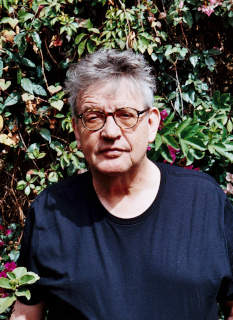
(Pictured: Paul Muldoon in Tepoztlán, Morelos, Mexico, 2018. Photograph by Alejandro Arras.)

Leave a comment

Birth of Patrick Kelly, Provisional Irish Republican Army Commander

Patrick Joseph Kelly, commander of the East Tyrone Brigade of the Provisional Irish Republican Army during the mid-1980s, is born in Carrickfergus, County Antrim, Northern Ireland, on March 19, 1957. He holds the position until his death in a Special Air Service (SAS) ambush at Loughgall, County Armagh in May 1987.

Kelly is the oldest child in a Roman Catholic family of five. He lives in Carrickfergus until he is sixteen, at which time the family returns to live in Dungannon. His uncle is the Irish Republican activist and elected official Liam Kelly.

Kelly becomes a member of the Provisional Irish Republican Army at the beginning of the 1970s and becomes one of the most experienced IRA men in County Tyrone. He is arrested in February 1982 based on testimony from an informant named Patrick McGurk but is released in October 1983 due to lack of evidence, after a trial that lasts fifteen minutes.

In 1985, Kelly becomes brigade commander in East Tyrone and begins developing tactics for attacking isolated Royal Ulster Constabulary (RUC) bases in his area. Under his leadership the East Tyrone Brigade becomes the most active IRA unit.

In 1986, Kelly attends the IRA Army Convention where the main topic of discussion is the principle of abstentionism. Gerry Adams and others argue that the abstentionist rule should be dropped and the Provisional movement should become involved in constitutional politics. Kelly votes against dropping the rule, and a rift with the majority of the IRA Army Council ensues.

Kelly is killed by the Special Air Service (SAS) on May 8, 1987, while he is participating in an attack on Loughgall police station, in which seven other IRA men, Pádraig McKearney, Declan Arthurs, Seamus Donnelly, Tony Gormley, Eugene Kelly, Jim Lynagh, and Gerard O’Callaghan, also die. His funeral in Dungannon is one of the largest in Tyrone during the Troubles.

Kelly is buried in Edendork Cemetery, two miles from his home in Dungannon.


Leave a comment

The 1991 Cappagh Killings

The 1991 Cappagh killings, a gun attack by the loyalist Ulster Volunteer Force (UVF) in the village of Cappagh, County Tyrone, Northern Ireland, takes place on March 3, 1991. A unit of the UVF’s Mid-Ulster Brigade drive to the staunchly republican village and shoot dead three Provisional Irish Republican Army (IRA) members and a Catholic civilian at Boyle’s Bar. There are allegations of collusion between the UVF and the Ulster Defence Regiment (UDR) in the shootings.

Although nobody is ever charged in connection with the killings, it is widely believed by nationalists and much of the press that the attack had been planned and led by Billy Wright, the leader of the Mid-Ulster Brigade’s Portadown unit. Wright himself takes credit for this and boasts to The Guardian newspaper, “I would look back and say Cappagh was probably our best,” though some sources are sceptical about his claim.

On the evening of Sunday, March 3, 1991, a unit of the UVF’s Mid-Ulster Brigade drive into the heartland of the East Tyrone IRA, intent on wiping out an entire IRA unit that is based in the County Tyrone village of Cappagh. One team of the UVF men wait outside Boyle’s Bar, while a second team waits on the outskirts of the town. At 10:30 p.m. a car pulls into the car park outside the bar and the UVF gunmen open fire with vz. 58 assault rifles, killing Provisional IRA volunteers John Quinn (23), Dwayne O’Donnell (17) and Malcolm Nugent (20). The victims and car are riddled with bullets. According to author Thomas G. Mitchell, Quinn, O’Donnell and Nugent are part of an IRA active service unit (ASU). The gunmen then attempt to enter the pub but are unable to after the civilians inside realise what is happening and barricade the door. Unable to get into the bar, a UVF gunman shoots through a high open toilet window killing local civilian, Thomas Armstrong (50) and badly wounding a 21-year-old man. Their intended target, IRA commander Brian Arthurs, escapes with his life by crouching behind the bar during the shooting. According to the Conflict Archive on the Internet (CAIN), the three IRA volunteers chose to go to the pub “on the spur of the moment,” thus are unlikely to be the UVF’s original target.

After the attack, the UVF issues a statement: “This was not a sectarian attack on the Catholic community, but was an operation directed at the very roots of the Provisional IRA command structure in the Armagh–Tyrone area.” The statement concludes with the promise that “if the Provisional IRA were to cease its campaign of terror, the Ulster Volunteer Force would no longer deem it necessary to continue with their military operations.” Privately the UVF are hugely pleased with the attack in a republican heartland and Billy Wright, leader of the Portadown unit of the UVF’s Mid-Ulster Brigade, who is alleged to be centrally involved, tells Jim Cusack and Henry McDonald the killings were “one of things we did militarily in thirty years. We proved we could take the war to the Provos in one of their strongest areas.” Cusack and McDonald assert that a wealthy UVF supporter with a business in South Belfast helped the UVF purchase the cars used in the attack at auctions in the city.

The Provisional IRA initially does not acknowledge that three of the victims are within its ranks, apparently with the aim of garnering sympathy from the wider world, particularly in the Republic of Ireland, toward nationalists in Northern Ireland.

The first reprisal takes place on April 9, 1991, when alleged UVF member Derek Ferguson, a cousin of local MP Reverend William McCrea, is shot and killed in Coagh by members of the East Tyrone Brigade. His family denies any paramilitary links. In the months following the 1991 shootings, two former UDR soldiers are killed by the IRA near Cappagh. One of them is shot dead while driving along Altmore Road on August 5, 1991. The other former soldier is blown up by an IRA bomb planted inside his car at Kildress on April 25, 1993. It is claimed that he has loyalist paramilitary connections. The 1993 bombing leads to allegations that the IRA is killing Protestant landowners in Tyrone and Fermanagh in an orchestrated campaign to drive Protestants out of the region. There are at least five botched IRA attempts against the life of Billy Wright before the Irish National Liberation Army (INLA) succeeds in killing him in 1997 inside the Maze Prison.

This is not the first time the UVF carries out an attack on Boyle’s Bar in Cappagh. On January 17, 1974, at around 7:40 p.m. two masked UVF gunmen enter the pub and open fire indiscriminately on the customers with a Sterling submachine gun and a Smith & Wesson revolver, firing at least 35 shots. A Catholic civilian and retired farmer Daniel Hughes (73) is shot eleven times and killed in the attack and three other people are injured. A group calling itself the “Donaghmore-Pomeroy Battalion of the UVF” claim responsibility for the shooting. The attack is linked to the notorious Glenanne gang.

(Pictured: The scene of the UVF attack outside Boyle’s Bar in Cappagh in March 1991. Photo: Pacemaker Archive Belfast 153-91-BW)


Leave a comment

Birth of David Ford, Northern Irish Politician

David Ford, former Northern Irish politician, is born on February 24, 1951, to Irish and Welsh parents in Orpington, Kent, England. He serves as leader of the Alliance Party of Northern Ireland from October 2001 until October 2016 and is Northern Ireland Minister of Justice from April 2010 until May 2016. He is a Member of the Northern Ireland Assembly (MLA) for South Antrim from 1998 to 2018.

Ford is educated at Warren Road Primary School, Orpington, and Dulwich College, London. He spends summer holidays on his uncle’s farm in Gortin, County Tyrone, and moves to Northern Ireland permanently in 1969 when he goes to study Economics at Queen’s University Belfast (QUB). There he joins the university’s student Alliance Party grouping. After graduating, he takes a year out to work as a volunteer at the ecumenical Corrymeela Community in Ballycastle, County Antrim, before starting work as a social worker in 1973.

Ford stands unsuccessfully for Antrim Borough Council in 1989 and enters politics full-time when he becomes general secretary of the Alliance Party. In that role, he is best known as a strong supporter of the then-leader John Alderdice and an advocate of better political organisation and community politics. He is elected to Antrim Borough Council in 1993, 1997 and – after leaving the Council in 2001 to concentrate on Assembly business – again in 2005.

In 1996, Ford stands unsuccessfully for election to the Northern Ireland Forum in South Antrim. In 1997, he obtains 12% of the vote in the general election in South Antrim, and in 1998 is elected to the Northern Ireland Assembly in the constituency of the same name. He sought South Antrim again in the 2000 South Antrim by-election and in the 2001 and 2005 United Kingdom general elections.

In 2001, Seán Neeson resigns from the Party leadership following poor election results. Ford wins the leadership election on October 6 by 86 votes to 45, ahead of Eileen Bell.

Ford gives Alliance a stability which it has lacked since the departure of John Alderdice, but the Party has declined seriously in the late 1990s and all he can do is stabilise the situation. Within a month of taking over the leadership, however, he has a chance to establish Alliance’s relevancy in the post-Good Friday Agreement environment. On November 6, 2001, the Northern Ireland Executive is to be re-established. Due to defections within his own Ulster Unionist Party (UUP), First Minister David Trimble has insufficient support within the Unionist bloc in the Assembly to be re-elected to his post. Ford and two of his five colleagues re-designate as Unionist for just 22 minutes in order to secure Trimble’s position and thereby enable the devolved institutions to operate for another year. However, Alliance fails to make any political gains from their move, and the UUP and Sinn Féin fail to reach agreement on the decommissioning issue, ensuring that the institutions collapse again in October 2002.

In the 2003 Northern Ireland Assembly election, Ford’s seat in the Assembly is perceived to be under severe threat from Sinn Féin’s Martin Meehan, with many commentators expecting him to lose it. However, his expertise in nuts-and-bolts electioneering stands him in good stead. Although Alliance’s vote almost halved, his own vote in South Antrim increases from 8.6% to 9.1%. Meehan’s vote increases dramatically, from 7.3% to 11.5%, and he starts the election count ahead. Ford has much greater transfer appeal and finishes 180 votes ahead of Meehan at the end of a dramatic three-way fight for the last two seats, with Thomas Burns of the Social Democratic and Labour Party (SDLP) just 14 votes ahead of Ford. Despite the dramatic fall in vote, Alliance holds on to its six seats in the Assembly, which remains suspended.

In 2004, Ford makes good his leadership election pledge to work with other parties, as Alliance joins with the Workers’ Party, Northern Ireland Conservatives and elements of the Northern Ireland Women’s Coalition to support Independent candidate John Gilliland in the European elections, achieving the best result for the centre ground for 25 years.

Ford’s greatest triumph comes in the 2007 Northern Ireland Assembly election, when the party achieves its highest vote share since Alderdice’s departure and picks up a seat in what is an otherwise poor election for the moderates. Despite media predictions once again of his demise, Ford himself is elected third in South Antrim, with over 13% of the poll.

On April 12, 2010, Ford is chosen by the Assembly to become Northern Ireland’s first Justice Minister in 38 years. He is supported in the Assembly by the Democratic Unionist Party (DUP), Sinn Féin, the Alliance Party, the Green Party and the Progressive Unionist Party (PUP). Separate candidates for the position are put forward by both the UUP and the SDLP, being Danny Kennedy and Alban Maginness respectively.

In the 2011 Northern Ireland Assembly election, the Alliance Party manages to increase their vote by 50% gaining an extra seat in Belfast East and surpassing the UUP in Belfast.

Ford announces his resignation as Leader in October 2016 on the fifteenth anniversary of his election as leader noting, “The team is working well, and I think it’s an appropriate time to hand over to a new leader who will lead the party forward in the next stage of its development and growth.”

Ford and his wife Anne have four grown children and live in rural County Antrim. Until the spring of 2013, he is an elder in the Second Donegore congregation of the Presbyterian Church in Ireland. He is removed from his role as a ruling elder over differences with fellow congregants on the subject of same-sex marriage. In a 2016 interview he says he is still hurt by the decision by his fellow elders who chose not to work with him because of his support for equal marriage. “It saddened me that there was, if I may put it, a lack of understanding from some people about the role I had as a legislator, compared to the role I have within the church.”


Leave a comment

Assault on the Blackwater Fort

On February 16, 1595, a Gaelic Irish force assaults and captures the English-held Blackwater Fort at Blackwatertown in County Armagh, during the Nine Years’ War. The Irish are led by Art MacBaron O’Neill, brother of Hugh O’Neill, Earl of Tyrone, and marks Tyrone’s break with the English Crown as he openly wages war against the English forces in Ireland.

The assault focuses on the English fort which sits at a bridge on the River Blackwater, marking the border between Counties Tyrone and Armagh. It is built by Walter Devereux, 1st Earl of Essex, in 1575 as an outpost of English military strength in the heart of Gaelic Ulster, but also to secure the power of the main Irish ally in the region, Hugh O’Neill, Baron of Dungannon. The fort is composed of a square earthwork bawn “twelve score yards in circuit” reinforced by two bulwarks and punctuated with gun loops in its ramparts. In one corner stands a wooden tower, four stories tall, topped with a wooden walkway and a slate-covered building. It is accessed by two doors, one leading out onto the ramparts, another leading to a cellar. Each story has defensive firing loops, also known as spike holes. This tower overlooks a road and bridge across the river. At the other side of the river, on the Tyrone side, is a stone tower. The stone tower controls access to the bridge, as the road runs through it via large wooden doors.

Hugh O’Neill, Lord of Tyrone, is thought an ally of the English Crown and he is supported by the English authorities in Dublin as a counterweight to the power of other native lords in Ulster such as Turlough Lynagh O’Neill. However, encroachment by English authorities on the liberties of the native Irish lords in Ulster during the 1580s and early 1590s causes O’Neill to create an alliance of Irish lords, which look to throw off English rule with the help of Philip II of Spain. From April 1593, O’Neill orchestrates a proxy war against the English using Hugh Maguire, Lord of Fermanagh, and Hugh Roe O’Donnell, Lord of Tyrconnell. They engage the English in the west of Ulster while O’Neill, outwardly still loyal to the Crown, strengthens his power base in Ulster and subdues the Crown’s Irish allies in the north. The Irish lay siege to Enniskillen Castle and defeat an English force sent to relieve it.

O’Neill’s alliance is not limited to Ulster as he is allied to Fiach McHugh O’Byrne in Leinster. He has come under increasing pressure from Lord Deputy William Russell‘s military expeditions into the Wicklow Mountains. In desperation, Fiach McHugh asks that Tyrone offer help or at least raid the northern Pale to draw Russell out of Wicklow. O’Neill requests a meeting with Russell to discuss how to proceed but this is dismissed by the Lord Deputy as a ploy to draw him out of O’Byrne’s lands. Therefore, to help O’Byrne, O’Neill makes his first open move against the Crown.

On the morning of Sunday, February 16, 1595, Art MacBaron O’Neill approaches the fort from the direction of Armagh with 40 men, escorting what appears to be two prisoners. As they cross the bridge one of the English warders notices the match cords of the Irishmen’s matchlock calivers are lit, a sign that they are ready to fire. The English open fire and MacBaron’s men force their way into the stone tower, but the English withdraw to the upper stories and prevent the Irish from taking the tower. Meanwhile, on the other side of the river, 200 Irish soldiers sweep over the earth ramparts and take the bawn. The English soldiers and their families retreat to the wooden tower. Defensive fire from within keeps the Irish back and twice the warders thwart MacBaron’s attempts to burn the position. Fifteen of MacBaron’s men are killed attempting to storm the towers, and eight more later die of their wounds. The stalemate lasts until five o’clock in the evening when MacBaron calls for a ceasefire. He offers the garrison terms for their surrender. The English, led by Edward Cornwall, are critically low on ammunition but still prevaricate until MacBaron threatens to burn the fort to the ground with all in it. The ward’s surrender is agreed and MacBaron guarantees their safe passage to Newry.

The loss of the fort is doubtless a military setback for the Crown, but of more significance is the presence of the Earl of Tyrone in person. According to the English commander, O’Neill arrives after the surrender and is outraged at the losses suffered in taking the fort and is angry that the defenders had not been executed. After the English soldiers and their families leave, O’Neill looks on as the bridge is demolished and the fort’s defence slighted. Up until this point there is no concrete proof that O’Neill was active in the attacks by Maguire and O’Donnell in the west of Ireland. Now there is indisputable proof that the Crown was at war with O’Neill.

(Pictured: The Blackwater Fort at present-day Blackwatertown in County Armagh, built by the Earl of Essex during a foray into Ulster in 1575 and captured and destroyed by the Irish in 1595. This pen and ink sketch measures 22½ by 16½ inches and is dated March 27, 1587.)


Leave a comment

Plantation Agreement Between the Crown & the Irish Society of London

The agreement on January 28, 1610, between the Crown and the Irish Society of London to carry out the plantation of Derry, Coleraine, and part of Tyrone refers to a significant historical event known as the Plantation of Ulster. This event takes place in the early 17th century and is part of the broader policy of the English and later British colonization of Ireland.

The Plantation of Ulster is a process initiated by the English Crown, primarily under King James I, to colonize the province of Ulster in the north of Ireland with English and Scottish Protestant settlers to defend against a future attack from within or without. This follows the Flight of the Earls in 1607, when several Gaelic Irish lords leave Ireland, leading to the confiscation of their lands by the Crown.

In his survey, James I finds that the town of Derry (renamed Londonderry) can become either a great asset as a control over the River Foyle and Lough Swilly, or it can become an inviting back door if the people of the area are against him. He pressures the guilds of the City of London to fund the resettlement of the area, including the building of a new walled city.

The Irish Society is formed by the City of London in response to James I’s royal request to participate in the plantation. The Society is a consortium of London livery companies, which are trade associations and guilds.

The Crown grants the Irish Society lands in Ulster, particularly in modern-day County Londonderry (then including what is now County Tyrone), to establish new settlements. The key areas are the city of Derry and the town of Coleraine.

The primary objective is to settle Ulster with loyal Protestant subjects, thus consolidating English influence in Ireland. The plantation aims to bring about economic development and to establish control over what is considered a rebellious and unruly region.

The livery companies of London undertake the establishment of new towns, fortifications, and the settlement of the land with tenants. However, the implementation faces various challenges, including resistance from the native Irish population, logistical difficulties, and issues of mismanagement.

The Plantation of Ulster has profound and lasting demographic, social, and political impacts. It leads to significant changes in land ownership and contributes to the religious and cultural diversification of the region. The plantation is also a root cause of the sectarian divide in Northern Ireland, contributing to centuries of conflict between the Protestant and Catholic communities.

The agreement between the Crown and the Irish Society of London to carry out the Plantation of Ulster is a pivotal event in Irish history. It plays a crucial role in shaping the historical trajectory of Ireland, particularly Northern Ireland, and its effects are still felt in the region’s complex socio-political landscape.

The Plantation of Ulster remains a subject of historical analysis and debate, reflecting the complex interplay of colonization, cultural identity, and conflict in Irish history.

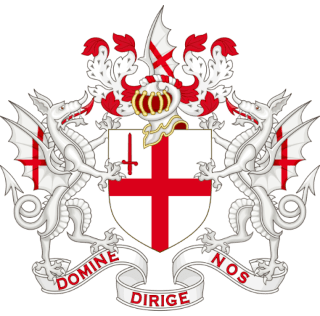
(From: “The Crown and the Irish Society of London, Agree to Carry Out the Plantation of Derry, Coleraine and Part of Tyrone,” McManus Family History, http://www.mcmanusfamilyhistory.com | Pictured: The crest of the Irish Society of London)


Leave a comment

Charles Blount, 8th Baron Mountjoy, Becomes Lord Deputy of Ireland

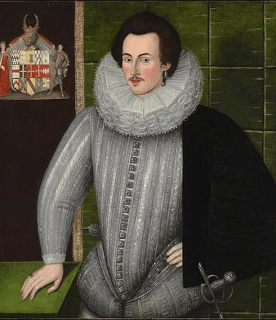
Charles Blount, 8th Baron Mountjoy, English nobleman and soldier, becomes Lord Deputy of Ireland under Queen Elizabeth I on January 21, 1600.

Blount is born in 1563, the second son of James, 6th Baron Mountjoy, and Catherine, only daughter of Sir Thomas Legh. He is among the most distinguished of the family, succeeding as 8th Baron Mountjoy on the death in 1594 of his unmarried elder brother William, 7th Baron Mountjoy. The good fortune of his youthful and handsome looks find favour with Queen Elizabeth I which arouses the jealousy of Robert Devereux, 2nd Earl of Essex, leading to a duel between the two courtiers, who later become close friends.

Blount is returned to the House of Commons as MP for St. Ives, Cornwall in 1584 and for Bere Alston in 1586 and 1593, before entering the House of Lords in 1594. Between 1586 and 1598, he spends most of his time on the Continent, serving in the Netherlands and Brittany. He joins Lord Essex and Sir Walter Raleigh in their expedition to the Azores in 1597, along with his distant cousin, Sir Christopher Blount.

The downfall of Lord Essex does not damage Blount’s career. After the failure of his rebellion, Essex shocks many by denouncing his sister Penelope, who is Blount’s mistress, as a traitor, which inevitably raises the question of his own possible involvement. But the Crown, anxious to retain Blount’s services, and also to show as much leniency as possible to the defeated rebels, simply ignore the accusation.

On February 24, 1600, Blount lands in Ireland as Lord Deputy following Lord Essex and in the ensuing years brings the Nine Years’ War to an end. The leader of the rebellion, Hugh O’Neill, Earl of Tyrone, writes about Blount’s “refined manners” that he would lose a whole season of campaigning “while waiting until breakfast is prepared to his mind!” Despite this, Blount proves that he is quite qualified to pursue the war.

In early 1600, Blount dispatches Sir Henry Docwra with an army of 4,200 troops to land at Culmore to erect a fortress commanding the shores of Lough Foyle in the northwest of Ulster. To prevent Hugh O’Neill from sending a strong force to repulse Dowcra’s forces, Blount advances in force from Dublin to Newry causing O’Neill to fear a southern advance into Tyrone.

Blount aims to avoid the mistakes of previous Lords-Deputy. After the Battle of Moyry Pass, he has it cleared, and a garrison is established there. It had long been a problem for English forces advancing into Ulster from the south. He also establishes posts with garrisons at Mountnorris and Armagh.

On July 13, 1601, Blount and his army along with Turlough McHenry O’Neill of the Fews who had recently switched to the English side in the war, have a stand-off with Hugh O’Neill’s forces at the River Blackwater. After a few shots in vain from either side, O’Neill’s forces withdraw, and Blount sends his forces to occupy the ruined Blackwater fort destroyed by O’Neill in 1595. Later O’Neill’s forces attack Blount’s camp before withdrawing. In response, the Lord-Deputy sends his forces across the river where they find strong artificially fortified fords, which would have held out against the English.

By July 15, 1601, the Lord-Deputy has secured the surrender of O’Neill’s ally Hugh Magennis. That month, he has a new fort near the old Blackwater fort erected.

Blount reports to the council in England that O’Neill is determined to prevent his forces from advancing into Tyrone and toward Dungannon. As such, he initiates a policy of burning large quantities of corn to induce a famine to drive the rebels out of their strongholds.

Blount sets about trying to entice Hugh’s forces to come out and attack by fetching some materials for the new fort from the Tyrone side of the river as well as burning more corn. Further skirmishes between Blount and O’Neill’s forces ensue during the summer of 1601.

Spanish forces land in Munster in August 1601, forcing Blount to send his forces southward leaving O’Neill remaining in his unbroken heartland of Tyrone. The Spanish arrival culminates in the Siege of Kinsale that December, which sees a major defeat of the rebels and their allies.

O’Neill during this time has also moved south to assist some of his allies, however, after some serious defeats at the hands of the forces of Richard Burke, 4th Earl of Clanricarde of Connacht, he is in no place to offer any effective resistance once Blount marches once more to Tyrone in the summer of 1602.

Blount advances to the location he found the previous summer at the River Blackwater, which commands safe and secure passage into Tyrone, previously inaccessible, and sets about erecting a new fort. Having observed this, O’Neill burns his capital at Dungannon and flees to his last refuge in Glenconkeyne.

Advancing northward through Tyrone, Blount erects a fort in the townland of Magheralamfield, afterward known as Mountjoy Castle. He also christens the new fort at the Blackwater Charlemont Fort after himself.

Once in Tyrone, Blount carries out a campaign of devastation throughout it resulting in the mass hunting of rebels, spoiling of corn, the burning of houses and the killing of churls so as to force the submission of O’Neill and his remaining allies. Most symbolically, Blount has the inauguration site of the O’Neill’s at Tullyhogue Fort destroyed.

On March 30, 1603, six days after the death of Elizabeth and the accession of James I, O’Neill makes peace with Blount, signing the Treaty of Mellifont. Blount continues in office with the more distinguished title of Lord-Lieutenant. He declares amnesty for the rebels and grants them honourable terms, which causes some severe criticism from England. He shows similar moderation in putting down the abortive risings in Cork, Waterford and Wexford, where the aldermen, apparently with some vague idea of gaining greater toleration for Roman Catholics, refuse to proclaim the new King. In Cork, three insurgents are hanged after a summary trial, but the rest are acquitted or pardoned.

As part of the Plantation of Ulster, the majority of the barony of Loughinsholin is detached from County Tyrone and made part of the newly created County Londonderry. The rest of Loughinsholin along with the northern parts of Dungannon barony are merged to create the short-lived barony of Mountjoy. It is later amalgamated with the barony of Dungannon.

On his return to England, Blount serves as one of Sir Walter Raleigh’s judges in 1603, and in the same year King James I appoints him Master-General of the Ordnance as well as creating him Earl of Devonshire, granting him extensive estates. He is one of the founder members of the Spanish Company re-founded by royal charter in 1605.

Toward the end of Blount’s life, on December 26, 1605, at Wanstead House near London, in a ceremony conducted by his chaplain William Laud, afterward Archbishop of Canterbury, he marries his long-time mistress Lady Penelope, formerly wife of Robert Rich, 3rd Baron Rich (later 1st Earl of Warwick) and sister of Robert Devereux, 2nd Earl of Essex.

Blount leaves no legitimate children, and so his hereditary titles become extinct at his death on April 3, 1606, at Savoy House, London.


Leave a comment

Birth of Tom McGurk, Journalist, Radio Presenter & Sportscaster

Tom McGurk (Irish: Tomás Mag Oirc), Irish poet, journalist, radio presenter and sportscaster, is born on December 20, 1946, in Cookstown, County Tyrone, Northern Ireland. He attends Portadown College and studies English and Philosophy at Queen’s University Belfast (QUB). He is involved in the Civil Rights demonstrations while at Queen’s.

McGurk first joins RTÉ in 1972, as a news reporter, moving on to present Last House and First House on television. In 1972 he wins a Jacob’s Award for his RTÉ Radio documentaries on Ireland’s islands. For 20 years he is the presenter of RTÉ Sport‘s rugby coverage, most notable of the Six Nations Championship and Internationals with the panel of George Hook and Brent Pope. He also spends time in the 1980s and 1990s in the UK, working for BBC Radio 4‘s Start of the Week as a presenter on the regional ITV station for the North West of England, Granada Television. On his return to Ireland, he presents the Sunday Show on RTE Radio 1. He also guest presents Tonight with Vincent Browne, on TV3. He presents a drive-time radio show on 4FM when it launches in 2009.

Until 2019, McGurk is a columnist with The Sunday Business Post. He then writes for The Currency until 2020.

McGurk writes the script for the TV film Dear Sarah based on the letters from Sarah Conlon, campaigning for the release of her husband (Giuseppe Conlon), son (Gerry Conlon) and sister Anne Maguire, caught up in the Guildford Four miscarriage of justice.

Among his poems is “Big Ned” about a farmer from Brockagh, County Tyrone.

While working for 4FM, the Director of the National Women’s Council of Ireland, Susan McKay, speaks out against an “uncouth and objectionable” interview McGurk conducts with her. The National Women’s Council has since refrained from giving interviews to 4FM.

From 1983 to 1996 McGurk is married to the broadcaster Miriam O’Callaghan, with whom he has four daughters. In 2003 he marries PR consultant Caroline Kennedy.

On December 5, 2017, the Irish Revenue Commissioners list of tax defaulters reveal that McGurk had made a settlement of €76,000 with the Revenue for the underpayment of income tax.


Leave a comment

Shooting of Protestant Senator John Barnhill

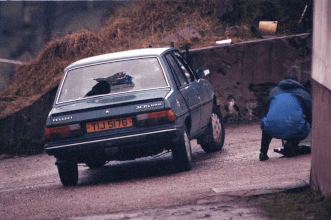
Gunmen shoot the hardline Protestant Senator John Barnhill at his home near Strabane, County Tyrone, Northern Ireland, on December 12, 1971, then wreck his country mansion with a bomb. His body is buried under tons of rubble.

Barnhill, a right‐wing member of the Protestant‐based Ulster Unionist Party (UUP), which rules the British province, is the first member of the Parliament of Northern Ireland to die in two years of violence that have resulted in 196 deaths up to this point.

Barnhill’s wife says that the senator had gone to answer the door at their home, close to the border with the Republic of Ireland. She says she heard two shots and found her husband lying near the door with a gunman kneeling at his side. Then, she says, a second man helps drag him into the main room, where the attackers plant a gelignite bomb beside his body.

Barnhill, 63 years old, has been a Senator for ten years. He often is outspoken in public denunciations of the outlawed Irish Republican Army (IRA) for its terrorist campaign to overthrow the provincial government. He is an officer in the Orange Order, the powerful Freemasonry of Northern Ireland Protestants, and a director of a Londonderry seed company.

The police say that Mrs. Barnhill ran for help from the ruins of her home and is admitted to a hospital under treatment for shock.

At least 28 people die in the violence of the previous nine days, fifteen of them in an explosion on December 4 that wrecks a bar in a Roman Catholic area.

The leadership of the Irish Republican Army disclaims responsibility for the bombs and charges that they were set off as acts of provocation by the British Army. The British dismiss the charge as ludicrous.

The IRA, fighting for the separation of predominantly Protestant Northern Ireland from Britain and its merger with the Republic of Ireland to the south, has threatened to destroy Belfast‘s center by Christmas. Mass arrests fail to halt the latest wave of violence.

On December 13, Cardinal William Conway, Primate of All Ireland, denounces bombers and gunmen who have participated in the violence as “monsters.”

Preaching in St. Patrick’s Cathedral, Armagh, Ireland’s ecclesiastical capital, the Belfast‐born Cardinal delivers his toughest attack yet on the latest incidents, which include the fatal shooting of a parttime soldier in his home in front of his five children, and the bombing the previous day of a Protestant‐owned Belfast furniture showroom, in which four people are killed and nineteen are injured.

A plaque commemorating Barnhill’s murder is unveiled at Stormont on the 30th anniversary of his death on December 12, 2001.

(From: “Rightist Ulster Senator Slain by Gunmen in Home,” The New York Times, http://www.nytimes.com, December 13, 1971)


Leave a comment

Death of Martin McCaughey, Sinn Féin Councillor & IRA Volunteer

Gerard Patrick Martin McCaughey, Sinn Féin councillor and volunteer in the East Tyrone Brigade of the Provisional Irish Republican Army (IRA), is killed by undercover British Army soldiers in County Armagh on October 9, 1990, along with fellow IRA volunteer Dessie Grew.

McCaughey, from Aughnagar, Galbally, County Tyrone, Northern Ireland, is born on February 24, 1967, the oldest son of Owen and Bridget McCaughey. He is a boyhood friend of several of the “Loughgall Martyrs” including Declan Arthurs, Seamus Donnelly, Tony Gormley and Eugene Kelly, with whom he travels to local discos and football matches when they are growing up.

McCaughey is a talented Gaelic football player who plays for local side Galbally Pearses and is also selected for the Tyrone minor Gaelic team.

McCaughey is elected as a Sinn Féin councillor for Dungannon and South Tyrone Borough Council and at the time is the youngest elected representative on the island of Ireland.

Two months prior to his shooting, McCaughey is disqualified from holding his office on the council as he had failed to appear for a monthly council meeting. After his death, the Royal Ulster Constabulary (RUC) reveals the explanation behind his disappearance. He had been shot and wounded in a shoot-out with undercover British Army security forces near Cappagh, County Tyrone. He is then taken south across the Irish border into the Republic of Ireland where he is given hospital treatment and therefore unable to attend the meetings.

Ulster Unionist MP and fellow Dungannon councillor Ken Maginnis alleges that McCaughey had conspired to kill him while both sat as councillors.

McCaughey is shot dead on October 9, 1990, along with Dessie Grew, in an operation by undercover British soldiers. A secret undercover intelligence unit named 14 Intelligence Company, also known as the DET, are monitoring three AK-47s at a farm building in a rural part of County Armagh and are aware that the pair are due to remove the guns.

As McCaughey and Grew are approaching an agricultural shed which is being used to grow mushrooms and also thought to be an IRA arms dump, as many as 200 shots are fired at the two men. British Army reports of the shooting state that the two men left the shed holding two rifles. Republican sources state the men were unarmed.

McCaughey is buried at Galbally Cemetery in October 1990.

The family of McCaughey claims that he and Grew were ambushed after a stakeout by the Special Air Service (SAS). In January 2002, Justice Weatherup, a Northern Ireland High Court judge, orders that official military documents relating to the shooting should be disclosed. However, Police Service of Northern Ireland (PSNI) Chief Constable Hugh Orde has the ruling overturned on appeal in January 2005.

Fellow Sinn Féin representative, Francie Molloy, replaces McCaughey on Dungannon Council after a by-election is held following McCaughey’s death.

In January 2007, the lawyers representing McCaughey and another volunteer, Pearse Jordan, apply to the House of Lords to challenge the details of how the inquests into their deaths are to proceed.

McCaughey’s father, Owen, seeks to compel Chief Constable Hugh Orde to produce key documents including intelligence reports relevant to the shooting and the report of the RUC’s investigating officer.

In 2010, a commemorative portrait of McCaughey is unveiled in the mayor’s parlour at Dungannon council.