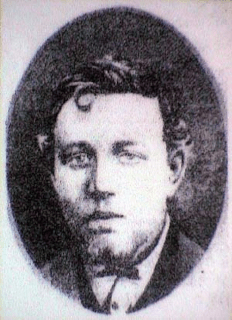
Casey is born to a teacher during the height of the Great Famine of 1846. Eight years later he moves to Gurteen, near Ballymahon in County Longford, when his father is given the post of headmaster at the local school. His work would come to be closely associated with Ballymahon.
As a teenager Casey works as an assistant to his father and is expected to follow him into teaching. However, he is disillusioned by the insufficiently nationalistic nature of the curriculum and spends a great deal of time writing poetry. It is at this time, reputedly at the age of fifteen, that he writes his best-known song, “The Rising of the Moon,” which commemorates the Irish Rebellion of 1798.
Following the increasing popularity of his songs and ballads at nationalist gatherings, Casey moves to Dublin in the 1860s and becomes active in the Fenian movement. He is a major contributor to The Nation newspaper, for which he assumes his pen name of ‘Leo.’
In 1866, at the age of 20, Casey publishes a collection of poems, entitled A Wreath of Shamrocks. Most of the poems therein had already been published elsewhere, primarily in The Nation. The further fame engendered by the success of the book leads him to be sought after as a speaker. He addresses mass rallies in Dublin, Liverpool and London that year, in the lead up to the Fenian Rising in 1867.
When the uprising fails, Casey is imprisoned without trial for eight months in Mountjoy Prison. He is released on the understanding that he would leave for Australia and not return to Ireland. However, he chooses to stay on in Summerhill, Dublin in disguise, living as a Quaker and continuing to write and publish in secret.
Casey marries Mary Josephine Briscoe in January 1868 and they have a son Michael, who dies shortly after birth in October 1869. Casey’s health had been broken by the treatment he had received in prison. He falls from a cab on or near O’Connell Bridge in the centre of Dublin in 1870. He dies from his injuries on St. Patrick’s Day, March 17, 1870.
Following his death, Casey is buried in Glasnevin Cemetery. The newspapers report that between fifty and one hundred thousand mourners walk in his funeral procession.
Wilson becomes interested in astronomy and travels to Oran in 1870 to photograph the solar eclipse. In 1871 he acquires a reflecting telescope of 12 inches (30.5 cm) aperture and sets it up in a dome in the gardens of Daramona House. He uses it to experiment on the photography of the moon with wet plates and also begins to study solar radiation using thermopiles. In 1881, he replaces the original telescope with a Grubb reflector of 24 inches (61 cm) aperture and a new dome and mounting that has an electrically controlled clock drive. The new telescope is mounted in a two-story tower attached to the house with an attached physical laboratory, darkroom and machine shop.
Wilson’s main research effort, in partnership with P.L. Gray, is to determine the temperature of the sun using a “differential radio-micrometer” of the sort developed by C.V. Boys in 1889, which combines a bolometer and galvanometer into one instrument. The result of their measurements is an effective temperature of about 8000 °C for the sun which, after correction to deal with absorption in the earth’s atmosphere, give a value of 6590 °C, compared to the modern value of 6075 °C.
Some of Wilson’s other astronomical projects include observations on the transit of Venus, determination of stellar motion, observations of sunspots and a trip to Spain to photograph a solar eclipse. He takes a great many excellent photographs of celestial bodies such as nebulae. His astronomical findings are published in a series of memoirs such as Experimental Observations on the Effective Temperature of the Sun.
Wilson dies on March 6, 1908 at Daramona at the relatively young age of 56, and is buried in the family plot in Steete churchyard. He had married Caroline Ada in 1886, the daughter of Capt. R.C. Granville, and they have a son and two daughters. His son donates his telescope to the University of London, where it is used for research and teaching, finally becoming a feature in Liverpool museum.
Potter receives his commission as District Inspector on April 27, 1901, having completed his cadetship at the Depot, Phoenix Park, Dublin. His first assignment is to Castlepollard, County Westmeath. During the 1909 ITGWU strike in Cork, he is temporarily posted there from Dublin and is also involved in policing the August 14 marches in Portadown. Having had charge of No. 4 Company at the Depot, he is assigned to Cahir in 1912.
On April 23, 1921, District Inspector Potter is captured by the 3rd Tipperary Brigade, IRA, following the Hyland’s Cross Ambush. This occurs near Curraghcloney, close to the village of Ballylooby. The ambush party is initially made up of a combination of the 1st and 2nd Flying Columns 3rd Tipperary Brigade. This is the largest force assembled to date by the Tipperary IRA in anticipation of a major battle. However, the convoy of military lorries that is expected never materialises. Dan Breen and Con Moloney return to Battalion Headquarters, while Seán Hogan‘s Column withdraws northward in the direction of the Galtee Mountains.
As Dinny Lacey‘s No.1 Column prepares to leave towards the south, a small party of British soldiers accompanying two horse-drawn carts unexpectedly approaches from Clogheen and are immediately fired upon. Amid some confusion Lacey’s scattered men withdraw southwards towards the Knockmealdown Mountains. One British soldier, Frank Edward Conday, is fatally wounded and two others from the relieving party are wounded.
By chance, Potter, who is returning by car from police duties at Ballyporeen, drives into a section of the withdrawing No.1 Column. Although in civilian attire, he is recognised by one of the IRA Volunteers and taken prisoner. As part of a new strategy, he is held as a hostage for the safe release of Thomas Traynor, an IRA volunteer and father of ten young children, then under sentence of death at Mountjoy Gaol. The IRA offers to release Potter in exchange for Traynor’s release. Traynor is executed. Traynor has since been honoured by the Irish state as one of “The Forgotten Ten.”
The Column, under sporadic fire from soldiers, alerted at the nearby Clogheen barracks, follow the contours of the mountains to the village of Newcastle. Losing their pursuers, they stay for a period of time at the townland of Glasha. Here Potter is detained in an out-building of a farm which is regularly used by the IRA as a safe house. From there the party is guided into the Nire Valley by a contingent of local Waterford Volunteers and on to the Comeragh Mountains.
Accounts from Rathgormack, County Waterford suggest he is kept for at least one night at a nearby Ringfort before being taken down the hill to a field then owned by Powers of Munsboro, where he meets his ultimate fate. At 7:00 PM, on April 27, following news of Traynor’s execution by hanging, he is shot to death, and hastily buried in a shallow grave on the banks of the River Clodiagh. A diary he kept during his period of captivity and some personal effects and farewell letters, are returned anonymously to his wife. It is the first confirmation she has that he has been killed. The artifacts are later lost when his son’s ship is torpedoed in 1942, during World War II.
(Pictured: Photo of District Inspector Gilbert Potter R.I.C. that appeared in the Press during his time in captivity)
Glennon is named Coadjutor Archbishop of St. Louis on April 27, 1903. He succeeds Archbishop Kain as the fourth Archbishop of St. Louis upon the latter’s death on October 13 of that year. Realizing the Cathedral of St. Louis can no longer accommodate its growing congregation, he quickly begins raising funds for a new cathedral, the cornerstone of which is later laid on October 18, 1908.
Glennon opens the new Kenrick Seminary in 1915, followed by the minor seminary in Shrewsbury. He delivers the eulogy at the funeral of Cardinal James Gibbons and is appointed an Assistant at the Pontifical Throne on June 28, 1921. He opposes British rule in Ireland and supports the leaders of the Easter Rising. He is an outspoken opponent of divorce, condemns gambling games, and prohibits dancing and drinking at church-sponsored events. He sometimes throws the opening ball for the St. Louis Cardinals, but does not play any sports himself, once saying, “I once tried golf, but I so disfigured the scenery that I never played again, in fear of public indignation and reprisal.”[2]
Despite a rather popular tenure, as Archbishop of St. Louis Glennon opposes racial integration in the city’s Catholic schools, colleges, and universities. During the early 1940s, many local priests, especially Jesuits, challenge the segregationist policies at the city’s Catholic schools. The St. Louis chapter of the Midwest Clergy Conference on Negro Welfare, formed locally in 1938, pushes the all-female Webster College to integrate first. However, in 1943, Glennon blocks the enrollment of a young black woman at the college by speaking privately with the Kentucky-based superior of the Sisters of Loretto, which staffs the college. When approached directly by pro-integration priests, he calls the integration plan a “Jesuit ploy,” and quickly transfers one of the complaining priests away from his mission at an African American parish.
The Pittsburgh Courier, an African American newspaper with national circulation, discovers Glennon’s intervention and runs a front-page feature on the Webster incident. In response, Father Claude Heithaus, professor of Classical Archaeology at the Catholic Saint Louis University, delivers an angry sermon accusing his own institution of immoral behavior in its segregation policies. Saint Louis University begins admitting African American students that summer when its president, Father Patrick Holloran, manages to secure approval from the reluctant Archbishop Glennon. Nevertheless, St. Louis maintains one of the largest numbers of African American parishes and schools in the country.
During the return trip to the United States, Glennon stops in his native Ireland, where he is received by PresidentSeán T. O’Kelly and TaoiseachÉamon de Valera. While in Dublin, he is diagnosed with uremic poisoning and dies on March 9, 1946, ending a 42-year tenure as Archbishop. The Cardinal’s body is returned to St. Louis and then buried at the Cathedral.
Mac Eoin is born John Joseph McKeon on September 30, 1893, at Bunlahy, Granard, County Longford, the eldest son of Andrew McKeon and Catherine Treacy. After a national school education, he trains as a blacksmith at his father’s forge and, on his father’s death in February 1913, he takes over the running of the forge and the maintenance of the McKeon family. He moves to Kilinshley in the Ballinalee district of County Longford to set up a new forge.
Mac Eoin comes to prominence in the Irish War of Independence as leader of an Irish Republican Army (IRA) flying column. In November 1920, he leads the Longford brigade in attacking Crown forces in Granard during one of the periodic government reprisals, forcing them to retreat to their barracks. On October 31, Inspector Philip St. John Howlett Kelleher of the RIC is shot dead in the Greville Arms Hotel in Granard. Members of the British Auxiliary Division set fire to parts of the town. The following day, Mac Eoin holds the village of Ballinalee situated on the Longford Road between Longford and Granard. They stand against superior British forces, forcing them to retreat and abandon their ammunition. In a separate attack on November 8, he leads his men against the RIC at Ballinalee. One constable is killed, and two others are wounded.
On the afternoon of January 7, 1921, a joint RIC and British Army patrol consisting of ten policemen appears on Anne Martin’s street. According to Mac Eoin’s own testimony at his trial he is in the house in partial uniform, wearing Sam Browne belt and revolver with two Mills No. 4 bombs in his pocket. Owing to some females being in the house, he has to get out as to not endanger them. He steps out on the street and opens fire with his revolver. The leading file falls and the second file brings their rifles to the ready. He then throws a bomb, after which he sees that the entire force has cleared away, save the officer who was dead or dying on the street.
On February 2, 1921, the Longford IRA ambushes a force of the Auxiliaries on the road at Clonfin, using a mine it had planted. Two lorries are involved, the first blown up, and the second strafed by rapid rifle fire. Four auxiliaries and a driver are killed and eight wounded. The IRA volunteers capture 18 rifles, 20 revolvers and a Lewis gun. At the Clonfin Ambush, Mac Eoin orders his men to care for the wounded British, at the expense of captured weaponry, earning him both praise and criticism. He is admired by many within the IRA for leading practically the only effective column in the midlands.
Mac Eoin is captured at Mullingar railway station on March 1, 1921, imprisoned and sentenced to death for the murder of an RIC district inspector in the shooting at Anne Martin’s street in January 1921.
In June 1921, Henry Wilson, the British Chief of the General Staff (CIGS), is petitioned for clemency by Mac Eoin’s mother, his brother Jemmy, and the local Church of Irelandvicar, but passes on the appeals out of respect for the latter two individuals. Three auxiliaries had already given character references on his behalf after he had treated them chivalrously at the Clonfin Ambush in February 1921. However, Nevil Macready, British Commander-in-Chief, Ireland, confirms the death sentence describing Mac Eoin as “nothing more than a murderer.”
While imprisoned Mac Eoin is elected to Dáil Éireann at the 1921 Irish elections, as a TD for Longford–Westmeath. He is eventually released from prison, along with all other members of the Dáil, after Michael Collins threatens to break off treaty negotiations with the British government unless they are freed.
Mac Eoin joins the National Army and is appointed GOC Western Command in June 1922. His military career soars after the Irish Civil War. He is appointed GOC Curragh Training Camp in August 1925, Quartermaster General in March 1927, and Chief of Staff in February 1929.
Mac Eoin resigns from the Army in 1929 and is elected at a by-election to Dáil Éireann for the Leitrim–Sligo constituency, representing Cumann na nGaedheal. At the 1932 Irish general election, he returns to the constituency of Longford–Westmeath and continues to serve the Longford area as TD until he is defeated at the 1965 Irish general election.
Gregg is born on June 17, 1867, in Shantonagh, County Westmeath, as the youngest child of Robert and Margaret Gregg, where they remain until 1872, when they move to Rockcorry, County Monaghan. He enters the village school in Rockcorry in 1872. On his second day of class, he is caught whispering to a schoolmate, which prompts the schoolmaster to hit the two children’s heads together. This incident profoundly damages his hearing for the rest of his life, rendering him unable to participate fully in school, unable to understand his teacher. This ultimately leads to him being unnecessarily perceived as dull or mentally challenged by his peers, teachers, and family.
In 1877, after seeing a friend use Pitman shorthand to take verbatim notes of a preacher’s sermon, Robert Gregg sees the shorthand skill as a powerful asset, so he makes it mandatory for his children to learn Pitman shorthand, with the exception of John, who is considered by his family too “simple” to learn it. None of the children succeed in fully learning the system. On his own, John learns the shorthand system of Samuel Taylor. He teaches himself the system fully, since he does not require the ability to hear in order to learn from the book.
Gregg says he initially set out to improve the English adaptation by John Matthew Sloan of the French Duployan shorthand, while working with one of Sloan’s sales agents, Thomas Malone. Malone publishes a system called Script Phonography, of which Gregg asserts a share in authorship is owed to him. Angered by Malone, he resigns from working with him and encouraged by his older brother Samuel, publishes and copyrights his own system of shorthand in 1888. It is put forth in a brochure entitled Light-Line Phonography: The Phonetic Handwriting which he publishes in Liverpool, England.
In 1893, Gregg emigrates to the United States. That year he publishes Gregg shorthand with great success. He settles in Chicago in 1895 and by 1896 dozens of American public schools are teaching Gregg shorthand. The first Gregg Shorthand Association is formed in Chicago that year with 40 members. In 1897 the Gregg Publishing Company is formed to publish shorthand textbooks.
By 1907 Gregg is so successful that he opens an office in New York and then moves there. The popularity of his shorthand system continues to grow with it being taught in 533 school systems by 1912. In 1914 the New York City Board of Education approves the experimental introduction of Gregg shorthand into its high schools, where the Pitman system had long held sway. That same year the system is admitted to Columbia University (New York) and the University of California, Berkeley.
After World War I, Gregg travels extensively throughout Great Britain, hoping to popularize his system there. He is not quite as successful in this endeavor as he had been in America, but he sees Gregg shorthand become wildly popular in France, Germany, Poland, Spain, and especially Latin America, where for years Gregg’s birthday is a national holiday.
Following his wife’s death in 1928 Gregg returns to New York. He throws himself into volunteer work and continues to perfect the Gregg system. Over the next several years he is the recipient of several honorary degrees from American educational institutions. At one such ceremony in June 1930 he renews his acquaintance with Janet Kinley, daughter of the president of the University of Illinois. The two are married in October of that year. They purchase a home in Cannondale, a historic section of Wilton, Connecticut.
In the 1930s Gregg begins writing a history of shorthand, the subject that had been his lifelong obsession. The first chapter is printed in 1933, and successive chapters follow at intervals until 1936. He devotes time to charitable work and institutes scholarships in the arts and in court reporting at his Chicago school. His voluntary work on behalf of Allied soldiers and British civilians during World War II wins recognition from King George VI, who awards him a medal for “Service in the Cause of Freedom” in 1947.
In December 1947 Gregg undergoes surgery from which he seems to recover well. However, on February 23, 1948, he suffers a heart attack and dies in Cannondale, Connecticut at the age of eighty.
Lance-Corporal Abraham Boulger Date of Acts of Bravery, from 12th July to 25th September, 1857 For distinguished bravery and forwardness; a skirmisher, in all the twelve action’s fought between 12th July, and 25th September, 1857. (Extract from Field Force Orders of the late Major-GeneralHenry Havelock, dated October 17, 1857.)
Boulger serves as a quartermaster during the 1882 Anglo-Egyptian War and later achieves the rank of lieutenant colonel. He dies at the age of 64 in Moate, County Westmeath, on January 23, 1900. He is buried in the Ballymore Churchyard, County Westmeath. His Victoria Cross is displayed at the York & Lancaster Regiment Museum at Clifton Park in Rotherham, South Yorkshire, England.
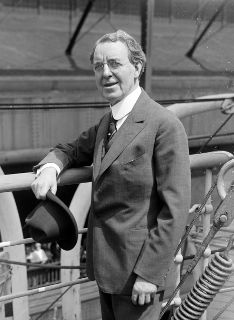
In 1956, Whitaker is appointed Secretary of the Department of Finance. His appointment takes place at a time when Ireland’s economy is in deep depression. Economic growth is non-existent, inflation apparently insoluble, unemployment rife, living standards low and emigration at a figure not far below the birth rate. He believes that free trade, with increased competition and the end of protectionism, will become inevitable and that jobs will have to be created by a shift from agriculture to industry and services. He forms a team of officials within the department which produces a detailed study of the economy, culminating in a plan recommending policies for improvement. The plan is accepted by the government and is transformed into a white paper which becomes known as the First Programme for Economic Expansion. Quite unusually this is published with his name attached in November 1958. The programme which becomes known as the “Grey Book” brings the stimulus of foreign investment into the Irish economy. Before devoting himself to poetry, Thomas Kinsella is Whitaker’s private secretary.
In 1977, TaoiseachJack Lynch nominates Whitaker as a member of the 14th Seanad Éireann. He serves as a Senator from 1977–81, where he sits as an independent Senator.
In 1981, Whitaker is nominated to the 15th Seanad Éireann by Taoiseach Garret FitzGerald, where he serves until 1982. FitzGerald also appoints him to chair a Committee of Inquiry into the Irish penal system, and he chairs a Parole Board or Sentence Review Group for several years.
Whitaker also serves as Chancellor of the National University of Ireland from 1976 to 1996. He is also President of the Royal Irish Academy and as such, a member of the Board of Governors and Guardians of the National Gallery of Ireland, from 1985 to 1987. He has a very strong love for the Irish language throughout his career and the collection of Irish poetry, An Duanaire: Poems of the Dispossessed 1600–1900, edited by Seán Ó Tuama and Thomas Kinsella, is dedicated to Whitaker. From 1995–96 he chairs the Constitution Review Group, an independent expert group established by the government, which publishes its report in July 1996.
Whitaker receives many national and international honours and tributes for his achievements during his lifetime, most notably the conferral of “Irishman of the 20th Century” in 2001 and Greatest Living Irish Person in 2002. In November 2014, the Institute of Banking confers an Honorary Fellowship on Whitaker and creates an annual T.K. Whitaker Scholarship in his name. In April 2015, he is presented with a lifetime achievement award by University College Dublin’s Economics Society for his outstanding contribution to Ireland’s economic policy.
In November 2016, to mark his centenary year, Dún Laoghaire-Rathdown County Council acknowledges Whitaker’s “outstanding and progressive contribution to Irish public service and to society.” The Cathaoirleach of Dún Laoghaire Rathdown, Cormac Devlin, presents a special award to Whitaker which is accepted by Ken Whitaker on behalf of his father.
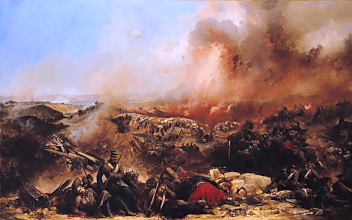
“On 18 June 1855 after the attack on the Redan at Sevastopol, Crimea, Alexander went out from the trenches under very heavy fire and brought in several wounded men. On 6 September, when he was with a working party in the most advanced trench, he went out under heavy fire and helped to bring in a captain who was severely wounded.”
John Bligh, 3rd Earl of Darnley and former Member of Parliament (MP) for Athboy, who suffers from the delusion that he is a teapot, marries suddenly and unexpectedly on September 11, 1766 at nearly 50 years of age. Suffering from the delusion that he is a teapot, from the date of his marriage until his death in 1781 he fathers at least seven children “in spite of his initial alarm that his spout would come off in the night.”
Bligh is born on October 1, 1719 near Gravesend, Kent, the son of John Bligh, 1st Earl of Darnley and Lady Theodosia Hyde, later Baroness Clifton (in her own right). At the age of eight he is sent to Westminster School. He matriculates at Merton College on May 13, 1735 and is created MA on July 13, 1738.
Outwardly, Bligh appears “solid” and “capable,” a man “terribly conscious of his own dignity.” His eccentricities do not stop him becoming MP for Athboy, which he represents from 1739 until 1748, and for Maidstone, Kent, which he serves from 1741 to 1747.
After failing to be elected MP for Tregony, Cornwall, in 1754, Bligh never stands again for parliament, either in England or Ireland. The seat that he gains in the House of Lords, in 1765, gives him the opportunity to return to Ireland more frequently.
In Dublin, on September 11, 1766, the “ageing nobleman” of almost 48-years-old, suddenly marries eighteen-year-old Mary Stoyte, a wealthy heiress and only child of John Stoyte, a leading barrister from Streete, County Westmeath. The unexpected marriage, between a sworn bachelor and a young woman, shocks Dublin society.
The new Countess of Darnley has to cope with the odd private behaviour of her touchy husband. According to a manuscript in the possession of the Tighe family, on the night of his marriage, Bligh “imagined himself to be a fine China tea pot, and was under great fears, lest the spout should be broken off before morning!”
In spite of his nocturnal fears, the earl manages to father at least seven children: John (1767), Mary (1768), Edward (1769), Theodosia (1771), Sarah (1772), Catherine (1774), and William (1775).
Each summer, Bligh takes his family to Weymouth, where the seawater is believed to strengthen weak constitutions and help brace nerves.
Despite every precaution, in 1781 Bligh catches malaria. Attempts to treat him with quinine and peppermint-water purges fail, and on July 31, 1781, he dies at the age of 61, his spout supposedly still intact. Mary lives on until 1803.






 seamus dubhghaill