The Royalist rebellion that breaks out in Ireland against the new English republic in 1649 is met by a prompt English response. On August 15 Oliver Cromwell and 15,000 troops land in Dublin. His merciless policy toward the Irish Royalists becomes brutally clear within a month.
The defeat of the Irish Royalists at Rathmines in early August is fortuitous for Cromwell, for without it, the English would have held only the small port of Derry (known as Londonderry from 1662) in the north, making his invasion almost impossible to effect. Cromwell quickly finds that the Irish Royalists have retreated into fortified towns. He therefore prepares for a series of sieges.
The first such siege occurs at Drogheda, 28 miles north of Dublin. Cromwell arrives at Drogheda on September 3. His siege guns, brought up by sea, arrive two days later. He finds the town surrounded by high but relatively thin walls and its governor, Sir Arthur Ashton, is confident of his defenses and refuses an order to surrender. On September 10 Cromwell begins an artillery bombardment of the walls. These are breached the following day, but the gap created is too small to allow troops to enter the city. Twice they are repelled until Cromwell himself leads an assault and overwhelms the defenders on September 11.
The carnage inside the city is appalling. Cromwell’s troops kill priests and monks on sight and set fire to a Catholic church sheltering some soldiers. Civilians as well as soldiers are massacred, and Ashton is bludgeoned to death with his own wooden leg. The few Royalist soldiers who survive are transported to Barbados. What happens at Drogheda is replicated at Wexford the following month and Clonmel the next May. By the time Cromwell has put down the rebellion and returned to England in that same month, he has become forever hated by Irish Catholics.
During the eight day siege the British lose 150 of their 12,000 men while 2,800 Irish are killed and 200 captured of the 3,100 at Drogheda.
(Pictured: St Laurence’s Gate – the last remaining of the ten original defensive gates at Drogheda)
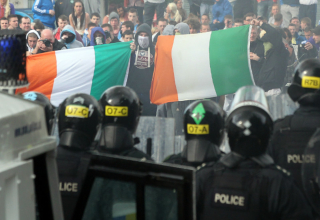
Catholic rioting has been common in recent years when the parades are forced through the mostly Irish nationalist Ardoyne in north Belfast. The local Orangemen parade down the predominantly Ulster loyalist Crumlin Road towards the loyalist Woodvale area. Before turning into the Woodvale, they are met by Irish republican protesters and a nearby counter-parade organised by the Greater Ardoyne Residents Association (GARC). Nationalists then attack the Police Service of Northern Ireland (PSNI) and the parade with bricks, bottles and petrol bombs.
There is also violence in the Bogside area of Derry, where petrol bombs are thrown at police and a car is set afire. In south and east Belfast there are five arrests for a variety of offences including disorderly behaviour.
Prolonged attacks on the PSNI by Catholics follow the parades with missiles being thrown at police lines. Three cars are hijacked and pushed at police lines with at least one of them being set on fire, and at night ten shots are fired at police by a nationalist gunman who intends to kill police officers. On July 18, 2012, a 47-year-old man is charged with attempted murder of the police officers. The PSNI blames the violence on “thugs” and makes a further 26 arrests across Northern Ireland relating to the trouble.
In another incident during a different parade, a Shankill Road-based loyalist band “The Young Conway Volunteers” is filmed by a Sinn Féin activist playing The Famine Song outside St. Patrick’s Catholic Church in Ardoyne. The activist filming the incident is attacked by band members who try to snatch the phone from him. The incident brings condemnation, with Sinn Féin declaring it “provocative.” Protestant church leaders also condemn the incident as “blatantly sectarian.” It is this incident that is believed to ignite tensions in the area which continue over the next few months.
In the days that follow strong loyalist criticism is levelled at the Parades Commission blaming them for the violence. Nigel Dodds of the Democratic Unionist Party (DUP) accuses the Parades Commission of making a “bizarre, crazy, and mad decision” to allow the nationalist parade to coincide with the Orange parade while Sinn Féin’s Gerry Kelly blames the Orangemen for violating regulations set out by the Parades Commission. The Parades Commission denies responsibility, explaining “We have to balance the rights of everybody concerned in parades, not just the rights of paraders, but the rights of people who live in the areas and the rights of police officers.”
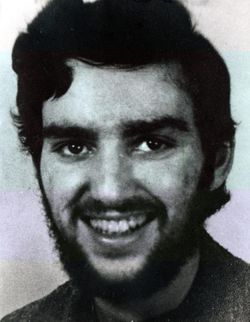
O’Hara joins Na Fianna Éireann in 1970 and, in 1971, his brother Sean is interned in Long Kesh Prison. In late 1971, at the age of 14, he is shot and wounded by a soldier while manning a barricade. Due to his injuries, he is unable to attend the civil rights march on Bloody Sunday but watches it go by him in the Brandywell Stadium, and the events of the day have a lasting effect on him.
In October 1974, O’Hara is interned in Long Kesh Prison, and upon his release in April 1975 he joins the Irish Republican Socialist Party (IRSP) and INLA. He is arrested in Derry in June 1975 and held on remand for six months. In September 1976, he is arrested again and once more held on remand for four months.
On May 10, 1978, O’Hara is arrested on O’Connell Street in Dublin under section 30 of the Offences Against the State Act and is released eighteen hours later. He returns to Derry in January 1979 and is active in the INLA. On May 14, 1979, he is arrested and is convicted of possessing a hand grenade. He is sentenced to eight years in prison in January 1980.
O’Hara becomes Officer Commanding of the INLA prisoners at the beginning of the first hunger strike in 1980, and he joins the 1981 strike on March 22.
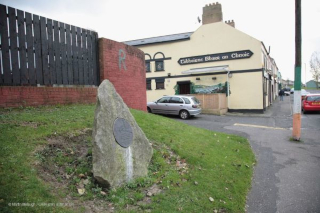
On Thursday, May 21, 1981, at 11:29 PM, Patsy O’Hara dies after 61 days on hunger strike, at the age of 23. In accordance with his wishes, his parents do not get him the medical intervention needed to save his life. His corpse is found to be mysteriously disfigured prior to its departure from prison and before the funeral, including signs of his face being beaten, a broken nose, and cigarette burns on his body.
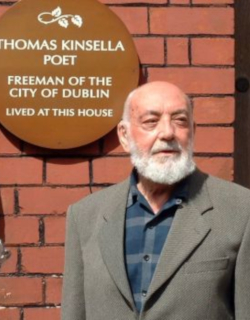
Thomas Kinsella, poet whose sensitive lyrics deal with primal aspects of the human experience, often in a specifically Irish context, is born in Inchicore, Dublin on May 4, 1928.
Kinsella spends most of his childhood in the Kilmainham/Inchicore area of Dublin. He is educated at the Model School, Inchicore, where classes are taught in Irish Gaelic, and at the O’Connell School in North Richmond Street, Dublin. He acquires a series of grants and scholarships that allow him to attend University College Dublin, where he studies physics and chemistry before receiving a degree in public administration.
Kinsella begins serving in the Irish civil service in 1946, and in the early 1950s he meets Liam Miller, the founder of Dolman Press, which publishes much of Kinsella’s poetry beginning in 1952. Among these publications are Poems (1956), his first volume of collected work, Another September (1958), which contains poems that explore the imposition of existential order through various forms, be they natural or products of the poet’s imagination and Downstream (1962), a collection focusing on war and political and social disruption in modern Ireland.
In 1965 Kinsella leaves the Irish civil service and takes a position as a writer in residence at Southern Illinois University in Carbondale (1965–70). During this time, he publishes Nightwalker, and Other Poems (1967), a sombre collection ruminating on Ireland’s past and turbulent present. His translation of the ancient Gaelic saga The Cattle Raid of Cooley (Táin bó Cuailnge) is published in 1969, and the following year he begins teaching at Temple University in Philadelphia. New Poems 1956–73 (1973) and One, and Other Poems (1979) skillfully extend the themes of love, death, and rejuvenation.
Kinsella founds his own publishing company, the Peppercanister Press, in Dublin in 1972, which allows him to publish pamphlets and individual poems in limited editions without relying on submissions to journals or magazines. His first poem to be published through his press is Butcher’s Dozen (1972), about Bloody Sunday, in which 13 demonstrators are killed by British troops in Derry, Northern Ireland, and the ensuing tribunal. Blood & Family (1988) combines four short collections of prose and verse originally published individually through Peppercanister, and Godhead (1999) explores the Trinity in the light of contemporary society. Later works published through Peppercanister include Marginal Economy (2006), Man of War (2007), and Belief and Unbelief (2007). Numerous collections of his poems have been released, including Collected Poems, 1956–2001 (2001) and Selected Poems (2007).
In December 2018, Kinsella is awarded Doctor in Littoris, Honoris Causa, by Trinity College Dublin.
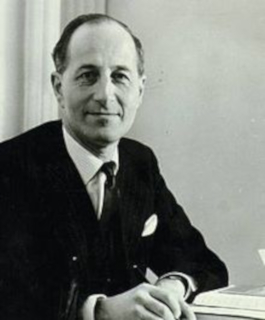
O’Neill is born on September 10, 1914 in London. Having served in the Irish Guards, he comes to live in Northern Ireland in 1945. He is returned unopposed for the Stormont seat of Bannside in November 1946 for the Ulster Unionist Party (UUP) and ten years later reaches cabinet rank. When Lord Brookeborough retires as prime minister in March 1963, O’Neill succeeds as the apostle of technocratic modernization who could see off the Northern Ireland Labour Party. In community relations O’Neill is unprecedentedly liberal, visiting Catholic schools and, more dramatically, meeting with the Taoiseach of the Irish Republic, Seán Lemass, at Stormont on January 14, 1964. O’Neill hopes to encourage Catholic acceptance of the state, but he more quickly aggravates suspicious unionist and loyalist opinion.
The eruption of the civil rights movement of 1968 multiplies pressures for substantive reform from the British government. O’Neill impresses on his cabinet colleagues the necessity of concessions. On November 22 he unveils a program of reforms, notably the closing down of the gerrymandered Londonderry Corporation. However, the local government’s rate-based franchise is for the time untouched. In a television broadcast on December 9, 1968, O’Neill warns that Northern Ireland stands at the crossroads. He calls for an end to street demonstrations but also promises meaningful reforms. There is a massive response from the public, but attitudes polarize again when a radical civil rights march from Belfast to Derry is attacked by loyalists at Burntollet Bridge on January 4, 1969.
O’Neill’s failure to preserve governmental authority by repression or concession leads to discontent in his party. In an attempt to regain the initiative and remake the Ulster Unionist Party, he calls for an election on February 24, 1969. He refuses to campaign for official unionist candidates opposed to his leadership and lends his support to Independent candidates who vow to support him personally. Breaking with unionist convention, O’Neill openly canvasses for Catholic votes. Such strategic innovations fail to produce a clear victory, however, and a phalanx of anti-O’Neill unionists are returned. There is little evidence that O’Neill’s re-branded unionism has succeeded in attracting Catholic votes.
From O’Neill’s point of view, the election results are inconclusive. He is humiliated by his near-defeat in his own constituency of Bannside by Ian Paisley and resigns as leader of the UUP and as Prime Minister on April 28, 1969 after a series of bomb explosions on Belfast’s water supply by the Ulster Volunteer Force (UVF) bring his personal political crisis to a head. Before leaving, he secures “one person, one vote” in place of the ratepayers’ franchise in local elections as well as the succession of the relatively loyal James Chichester-Clarke.
O’Neill retires from Stormont politics in January 1970 when he resigns his seat, having become the Father of the House in the previous year. On January 23, 1970, he is created a life peer as Baron O’Neill of the Maine, of Ahoghill in the County of Antrim. The Maine is a river which flows near Ahoghill.
O’Neill spends his last years at Lisle Court, Lymington, Hampshire, although he continues to speak on the problems of Northern Ireland in the House of Lords where he sits as a crossbencher. His Reform Policies are largely forgotten by British Unionists and Irish Nationalists in Ulster, however he is remembered by historians for his efforts to reform the discrimination and sectarianism within the Province during the 1960s. In retirement he is also a trustee of the Winston Churchill Memorial Trusts.
Terence O’Neill dies at his home of cancer on June 12, 1990.
The Bloody Sunday Inquiry, also known as the Saville Inquiry or the Saville Report after its chairman, Mark Saville, Baron Saville of Newdigate, is launched on April 3, 1998, by British Prime MinisterTony Blair. The inquiry follows campaigns for a second inquiry by families of those killed and injured in Derry on Bloody Sunday during the peak of ethno-political violence known as The Troubles. The inquiry is set up to establish a definitive version of the events of Sunday, January 30, 1972, superseding the tribunal set up under John Widgery, Baron Widgery that had reported on April 19, 1972, eleven weeks after the events, and to resolve the accusations of a whitewash that had surrounded it.
The judges finish hearing evidence on November 23, 2004, and reconvene once again on December 16 to listen to testimony from another witness, known as Witness X, who had been unavailable earlier.
The report is published on June 15, 2010. That morning thousands of people walk the path that the civil rights marchers had taken on Bloody Sunday before fourteen were killed, holding photos of those who had been shot. The families of the victims receive advance copies of the report inside the Guildhall.
Then British prime minister David Cameron addresses the House of Commons that afternoon where he describes what British soldiers had done as “both unjustified and unjustifiable, it was wrong.” He acknowledges, among other things, that the paratroopers had fired the first shot, had fired on fleeing unarmed civilians, and shot and killed one man who was already wounded. He then apologises on behalf of the British Government by saying he is “deeply sorry.”
(Pictured: Lord Saville and his colleagues visit the Bogside during their first day in the city on April 3, 1998. Credit: Derry Journal)
Phil Coulter, musician, songwriter and record producer, is born in Derry, County Londonderry, Northern Ireland on February 19, 1942. He is one of the most eclectic and accomplished arranger/musicians to emerge from Ireland during the 1960s.
Coulter spends his secondary school years at St. Columb’s College. He later studies music and French at the Queen’s University Belfast. During his time at Queen’s he takes up songwriting, composing the hit Foolin’ Time for the Capitol Showband. His talents are swiftly captured by leading entrepreneur Phil Solomon. Initially working with such showbands as the Cadets and Pacific, he continues to compose for the Capitol Showband and even pens their 1965 Eurovision Song Contest entry, Walking the Streets in the Rain. In the meantime, Coulter works on Solomon’s other acts, including Twinkle, who enjoys a major UK hit with the Coulter-arranged Terry. He also contributes to Them’s song catalogue, with the driving I Can Only Give You Everything.
After leaving the Solomon stable in 1967, Coulter, now based in London, forms a partnership with Bill Martin, which becomes one of the most successful of its era. The duo is particularly known for their ability to produce instantly memorable pop hits, and achieve international fame after penning Sandie Shaw’s 1967 Eurovision Song Contest winner, Puppet on a String. They barely miss repeating that feat the following year with Cliff Richard’s stomping Congratulations.
Coulter subsequently leads his own country to victory in the contest by arranging Dana’s 1970 winner, All Kinds of Everything. That same year, Coulter/Martin are commissioned to write Back Home, the official song for the England national football team, which proves a lengthy UK number 1. As well as his pop outings, which include writing My Boy and an album’s worth of material for Richard Harris, he maintains his connection with the Irish folk scene, via his work with another of Solomon’s acts, The Dubliners. He also produces three albums for the groundbreaking Planxty and works with The Fureys.
After his partnership with Martin ends in the late 1970s, Coulter specializes in orchestral recordings, which prove hugely successful in Irish communities. Albums such as Classic Tranquillity and Sea Of Tranquillity (both 1984), Words And Music (1989), American Tranquillity (1994), Celtic Horizons (1996), and collaborations with flautist James Galway and Roma Downey, also enjoy major international success, and Coulter is a regular fixture in the upper regions of the U.S. New Age album chart.
Coulter’s production credits during the 1990s include work for Sinéad O’Connor and Boyzone. His lengthy career, as producer, arranger, songwriter and performer, is all the more remarkable for encompassing such contrasting musical areas from folk and orchestral to straightforward Tin Pan Alley pop.
Despite his successes, Coulter suffers several family tragedies. His son is born with Down syndrome and dies at the age of three. The song Scorn Not His Simplicity is written in his memory. His brother also dies tragically in a drowning incident in Ireland, which briefly causes him to retreat from the music business. He records the anthemic Home From The Sea with the Lifeboat Chorus as a tribute.
On February 11, 1922, Irish Republican Army (IRA) volunteers stop a group of Ulster Special Constabulary (USC) constables on a train at Clones, County Monaghan, a short distance into Southern territory in an event recorded in history as the “Clones Ambush.” A gunfight begins in which one IRA officer and four USC constables are killed. The remaining USC constables are captured.
On January 22, the UlsterGaelic Football Final is played in Derry. The previous evening six cars leave Monaghan to bring the Monaghan players to Derry, many of the members of the team being members of the IRA. They are stopped by a B Specials (Ulster Special Constabulary) check point at Dromore station. After a search the Specials discover weapons in the cars and arrest ten of the men. The IRA men are led by Dan Hogan O/C of the Fifth Northern Division. The men are taken to Omagh and interned.
The IRA waits impatiently for a chance at reprisal and on February 11, a group of Irish Republican Army volunteers attempt to ambush a party of Ulster Special Constabulary policemen travelling on a train through Clones. The volunteers enter a carriage of a train and order the Specials to put their hands up. IRA Commandant Matthew Fitzpatrick is shot and killed in the ensuing fight and five members of the Specials, Doherty, McMahon, McCullough, Lewis and McFarland are shot and killed. Several members of the Specials run down the track and cross the border into Fermanagh. The few remaining B Specials on the train decide to surrender and are arrested.
The IRA lifts the body of the Commandant Fitzpatrick and it is attended to by Monsignor E.C. Ward who gives him his Last Rites.
The Clones railway station is on the Dundalk and Enniskillen Railway. The Dundalk and Enniskillen Railway opens the station on June 26, 1858. The station closes on October 1, 1957.
(Photo: Clones Train Station, Co Monaghan, caught in mid-demolition by photographer James O’Dea on November 22, 1960)
Knowles’ early interest in botany is encouraged by her father, William James Knowles, himself an amateur scientist who takes Matilda and her sister to meetings of the Belfast Naturalists’ Field Club. This is where she first meets Robert Lloyd Praeger who continues to be a lifelong influence. In 1895 she is introduced to the Derry botanist Mary Leebody and together they work on a supplement to Samuel Alexander Stewart‘s and Thomas Hughes Corey‘s 1888 book the Flora of the North-east of Ireland.
Knowles then volunteers to help with the crowdsourcing of material about the plants of County Tyrone. While completing this work Knowles publishes her own first paper about Tyrone’s flowering plants in 1897. She eventually sends in over 500 examples that are considered for inclusion in the Irish Topographical Botany, which Praeger publishes in 1901.
In 1902, after attending the Royal College of Science for Ireland for a year, Knowles is appointed a temporary assistant in the then Botanical Section of the National Science and Art Museum. She works closely with Professor Thomas Johnson to continue the development of the Herbarium collection. She also co-authors with him the Hand List of Irish Flowering Plants and Ferns (1910).
One of Knowles’ first works is The Maritime and Marine Lichens of Howth, which the Royal Dublin Society publishes in 1913. Knowles had gathered the knowledge and experience to do this while diligently assisting with a survey of Clare Island as suggested by Praeger. This novel survey involves not only Irish but also several European scientists including prominent UK lichenologist, Annie Lorrain Smith. This is claimed as the most extensive piece of field work at the time. As a result, Knowles is able to create a foundation for her later specialism in lichens.
Knowles publishes more than thirty scientific papers on a wide range of botanical subjects between 1897 and 1933. It is while studying the lichens of Howth that she discovers how lichens by the shore grow in distinct tidal zones that can be distinguished by their colour: black, orange and grey.
Her major work is The Lichens of Ireland which adds over 100 species of lichen to the Irish List and records the distribution of the eight hundred species identified in Ireland. She achieves this task with the collaboration of thirty other natural scientists. It is published in 1929 and includes twenty lichens that had previously not been identified as Irish.
Professor Thomas Johnson retires in 1923, allowing Knowles to take over curatorship, working with Margaret Buchanan. As she becomes older Knowles’ hearing begins to fail such that she has to rely on an ear trumpet. Despite her deafness she still attends meetings. She cares for and adds to the National Museum Herbarium collection although never gets the credit she deserves. In 1933 she plans to retire but pneumonia ends her life before she ends her career. Knowles dies in Dublin on April 27, 1933.
Knowles is honoured with a commemorative plaque by the Irish National Committee for Science and Engineering in October 2014 to mark the 150th anniversary of her birth.
Galvin serves as the publicity director for the New York-based NORAID, an Irish American group fundraising organization which raises money for the families of Irish republican prisoners, but is also accused by the American, British, and Irish governments to be a front for the supply of weapons to the Provisional Irish Republican Army
Galvin becomes a publisher of The Irish People in the 1980s. He is banned from Northern Ireland because of a speech he gives that seems to endorse terrorism. In August 1984 he defies the ban and enters Northern Ireland from the Republic of Ireland. The following year he returns to Northern Ireland to attend a funeral for an IRA member killed when a makeshift grenade launcher he is trying to fire at a Royal Ulster Constabulary barracks explodes. In 1989 Galvin is arrested and deported for violating the exclusion ban yet again.