Parnell dies of pneumonia at half-past eleven on the night of October 6 at his residence at 10 Walsingham Terrace, Aldrington, near Brighton, England. He dies in the arms of his wife Katherine whom he had married just five months earlier.
Prior to the funeral, Parnell’s body lay in state for several hours and his death is the primary topic of conversation around Dublin. The belief that his demise would close the chasm in the Irish ranks is no longer tenable. His death makes it too wide even to be bridged. His old opponents may have felt inclined to forget and forgive, but this spirit is crushed almost before it is born, and his old adherents are simply ferocious in their enmity.
The city is astir at an unusually early hour, and there is a crowd of thousands in and around the Westland Row Station before seven o’clock. In front, as a guard of honor, stands a body of the Gaelic Athletic Association, armed with camans, around which are bound crape and green ribbon. It is nearly eight o’clock when Parnell’s body is placed in a hearse drawn by four black horses. The Gaels march in front. Thousands join the cortège, which includes several bands and fife corps.
Though an Anglican, Parnell’s funeral at the Irish National nondenominational Glasnevin Cemetery in Dublin is attended by more than 200,000 people. His notability is such that his gravestone of unhewn Wicklow granite, erected in 1940, reads only “Parnell.”
Parnell is buried amid warring elements and in the presence of an immense assemblage. As a scene of great but suppressed excitement, and of still greater impressiveness, the funeral and its surroundings will never be forgotten by those who witness it, and it will long furnish a landmark in history for Ireland.
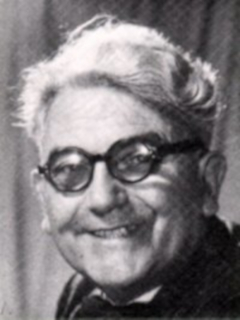
In 1939, Fallon leaves Dublin to serve as a Customs official in County Wexford, living in Prospect House, near Wexford with his wife, Dorothea (née Maher) and his six sons. During this time, he becomes a close friend of the painter Tony O’Malley.
Fallon’s early poetry, short stories and literary criticism are published in The Dublin Magazine and The Bell. He is a regular contributor to Raidió Éireann in the 1940s and 1950s, serving variously as a journalist, scriptwriter and literary critic. A number of his short stories and early dramatic pieces are broadcast by the station during the 1940s. The first of his verse plays for radio, Diarmuid and Gráinne, is broadcast by Raidió Éireann in November 1950. This is followed by The Vision of Mac Conglinne (1953), Two Men with a Face (1953), The Poplar (1953), Steeple Jerkin (1954), The Wooing of Étain (1954), A Man in the Window (1955), Outpost (1955), Deirdre’s King (1956), The Five Stations (1957), The Hags of Clough (1957), The Third Bachelor (1958), At the Bridge Inn (1960) and Lighting up Time (1961).
Three plays adapted from Irish mythology, Diarmuid and Gráinne, The Vision of Mac Conglinne and Deirdre’s King, receive particular contemporary critical acclaim. The landscape, mythology and history of Ireland, interwoven with classical themes and religious symbolism, are frequent themes in his poetry and dramatic works. A number of Fallon’s radio plays are later broadcast on BBC Third Programme and, in translation, in Germany, the Netherlands, and Hungary. The play The Seventh Step is staged at The Globe Theatre in Dublin in 1954. A second one, Sweet Love ’till Morn, is staged at the Abbey Theatre in 1971. He also writes dramatic pieces for television such as A Sword of Steel (1966) and The Fenians (1967), the latter produced by James Plunkett. In a number of his plays and radio dramas he cooperates with contemporary composers providing incidental music, an example being The Wooing of Étain (1954) with music by Brian Boydell.
Fallon retires from the Civil Service in 1963, returning to Dublin before moving to Cornwall in 1967 to live with his son, the sculptor Conor Fallon and his daughter-in-law, the artist Nancy Wynne-Jones. He and his wife return to Ireland in 1971. He spends his last years in Kinsale. He is visiting his son Ivan Fallon in Kent at the time of his death.
While Fallon’s poetry had previously appeared in The Dublin Magazine, The Bell, The Irish Times and a number of anthologies, his first volume of collected poetry, Poems, incorporating a number of previously unpublished poems, is not produced until 1974, months before his death. Three volumes of his poetry, edited by his son, the journalist and critic Brian Fallon, are published after his death: Poems and Versions in 1983, Collected Poems in 1990, and A Look in the Mirror and Other Poems in 2003. In 2005, three of his verse plays, The Vision of Mac Conglinne, The Poplar, and The Hags of Clough, are published in a single volume. A selection of his prose writings and criticism edited by Brian Fallon, A Poet’s Journal, is published in the same year.
Together with Kevin Gildea and Barry Murphy, O’Hanlon founds the International Comedy Cellar, upstairs in the International Bar on Dublin’s South Wicklow Street. Dublin has no comedy scene at the time. As a stand up, he wins the Hackney Empire New Act of the Year competition in 1994. For a time, he is the presenter of The Stand Up Show.
O’Hanlon moves into straight acting alongside Emma Fielding and Beth Goddard in the ITV comedy-drama Big Bad World, which airs for two series in summer 1999 and winter 2001. He also plays a minor role in The Butcher Boy and appears in an episode of the original Whose Line is it Anyway?.
In 2000, O’Hanlon stars in the comedy series My Hero, in which he plays a very naive superhero from the planet Ultron. His character juggles world-saving heroics with life in suburbia. He stays in the role until the first episode of series 6 in July 2006 where he is replaced by James Dreyfus during the same episode.
O’Hanlon also provides the voice of the lead character in the three Christmas television cartoon specials of Robbie the Reindeer. He appears in the 2005 BBC One sitcom Blessed, written by Ben Elton. Towards the end of 2005, he plays an eccentric Scottish character, Coconut Tam, in the family-based film, The Adventures of Greyfriars Bobby. Although more commonly on television, he also appears on radio. In 2015 he appears as incompetent angel Smallbone in the sitcom The Best Laid Plans, also on BBC Radio 4.
In 2006, O’Hanlon writes and presents an RTÉ television series called Leagues Apart, which sees him investigate the biggest and most passionate football rivalries in a number of European countries. He follows this with another RTÉ show, So You Want To Be Taoiseach? in 2007. It is a political series where he gives tongue-in-cheek advice on how to go about becoming Taoiseach of Ireland.
O’Hanlon appears in the Doctor Who episode “Gridlock“, broadcast on April 14, 2007, in which he plays a cat-like creature named Thomas Kincade Brannigan. He appears in Series 3 of the TV show Skins, playing Naomi Campbell’s Politics teacher named Kieran. He then goes on to form a relationship with Naomi’s mother, played by Olivia Colman. He plays the lead role in Irish comedy television programme Val Falvey, TD on RTÉ One.
O’Hanlon has written a novel, The Talk of the Town, which is published in 1998. The novel is about a teenage boy, Patrick Scully, and his friends.
In February 2015 O’Hanlon officially launches the 2015 Sky Cat Laughs Comedy Festival which takes place in Kilkenny from May 28–June 1. In 2015 he plays the role of Peter the Milkman in the Sky One sitcom After Hours.
On February 2, 2017, it is announced O’Hanlon will play the lead role in the BBC crime drama Death in Paradise taking the role of DI Jack Mooney following Kris Marshall‘s departure the same day.
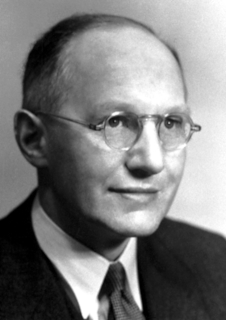
Walton is the son of a Methodist minister, Rev John Walton (1874–1936), and Anna Sinton (1874–1906). In those days a general clergyman’s family moves once every three years, and this practice carries him and his family, while he is a small child, to Rathkeale, County Limerick, where his mother dies, and to County Monaghan. He attends day schools in counties Down and Tyrone, and at Wesley College in Dublin before becoming a boarder at Methodist College Belfast in 1915, where he excels in science and mathematics. He obtains degrees in mathematics and experimental science from Trinity College Dublin in 1926.
Walton goes to Trinity College, Cambridge in 1927 where he works with Cockcroft in the Cavendish Laboratory under Ernest Rutherford until 1934. In 1928 he attempts two methods of high-energy particle acceleration. Both fail, mainly because the available power sources could not generate the necessary energies, but his methods are later developed and used in the betatron and the linear particle accelerator. In 1929 Cockcroft and Walton devise an accelerator that generates large numbers of particles at lower energies. With this device in 1932 they disintegrate lithium nuclei with protons, the first artificial nuclear reaction not utilizing radioactive substances and so becomes the first person in history to split the atom.
Although he retires from Trinity College Dublin in 1974, he retains his association with the Physics Department at Trinity up to his final illness. His is a familiar face in the tea-room. Shortly before his death he marks his lifelong devotion to Trinity by presenting his Nobel medal and citation to the college. Ernest Walton dies at the age of 91 in Belfast on June 25, 1995. He is buried in Deans Grange Cemetery in Dublin.
(Pictured: Ernest T.S. Walton, 1951, by Nobel foundation)
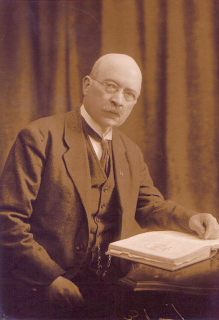
Mac Fhionnlaoich is the son of Micheal McGinley and Susan Toner. He attends school locally until he is seventeen. He then attends Blackrock College in Dublin for two years. Upon leaving school he enters into the British Civil Service becoming an Inland Revenue Officer. In 1895 he marries Elizabeth Woods (Irish: Sibhéal Ní Uadhaigh) and they have twelve children. He speaks Irish from an early age and keeps an interest in the language throughout his life, first publishing an Irish language short story and poem in The Donegal Christmas Annual 1883. It is not until 1895 while living in Belfast that he becomes involved in the Gaelic Movement.
It is in Mac Fhionnlaoich’s Belfast home that the first meeting of the Ulster branch of the Conradh na Gaeilge takes place in 1895. From this point on he becomes very involved in Conradh na Gaeilge becoming the organisations president on several occasions.
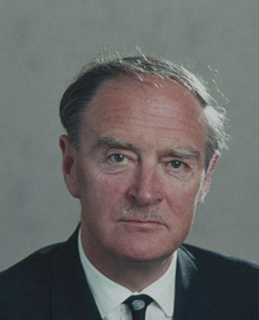
Liam Cosgrave, politician who serves as Taoiseach from February 1973 to July 1977, dies at the age of 97 in Tallaght, Dublin on October 4, 2017. He is the longest-lived Taoiseach, dying at the age of 97 years, 174 days.
Cosgrave succeeds James Dillon as leader of the Fine Gael party in 1965. Eight years later, as leader of a coalition government in which Fine Gael combines forces with the Labour Party, he becomes Taoiseach. He and British Prime MinisterEdward Heath are the main participants in the intergovernmental conference at Sunningdale in December 1973 that gives birth to Northern Ireland’s first, though short-lived, power-sharing executive (1973–74). A devout Roman Catholic, he is intensely conservative on social issues and shocks his cabinet colleagues by voting against his own government’s bill on liberalizing the sale of contraceptives in 1974. The National Coalition is defeated in the 1977 Irish general election, largely on the economic issues of inflation and unemployment.
Cosgrave retires at the 1981 Irish general election. In 1981, he retires as Dáil Deputy for Dún Laoghaire to be replaced by his son, Liam T. Cosgrave. He reduces his involvement in public life but makes occasional appearances and speeches.
Liam Cosgrave dies on October 4, 2017, at the age of 97 of natural causes. He had been at Tallaght Hospital for several months prior to his death there. His funeral is held on October 7, 2017, after which he is interred alongside his father at Inchicore‘s Goldenbridge Cemetery.
O’Brien shares his primary education with a townsman with whom he is later to have a close political connection, CanonPatrick Augustine Sheehan of Doneraile. He enjoys his secondary education at the Cloyne diocesan college, which results in his being brought up in an environment noted for its religious tolerance. He greatly values having had this experience from an early age, which strongly influences his later views for the need of such tolerance in Irish national life.
A journalist from 1869, O’Brien is appointed editor of the Irish Land League’s weekly United Ireland by Parnell in 1881. In October of that year the British authorities suppress the paper and put O’Brien in Kilmainham Gaol in Dublin, along with Parnell and others. There he draws up a No Rent Manifesto, which, when read at a Land League meeting, results in the outlawing of the League. Released from prison in 1882, he resumes the editorship of United Ireland, and in 1883 he is elected to the British House of Commons, remaining there until 1895. His “plan of campaign” is disavowed by Parnell but nonetheless stirs up fierce agitation. To suppress the movement, the British government passes the Criminal Law and Procedure (Ireland) Act 1887, under which O’Brien is jailed again.
For some time following the O’Shea divorce case (1889–90), in which Parnell is corespondent, O’Brien attempts to mediate between the Parnellites and their opponents, although he sides with the majority in rejecting Parnell’s continued leadership of the Irish Home Rule struggle. In 1902 he supports the Land Conference, which secures agreement between landlords and tenants’ representatives and results in George Wyndham‘s Land Purchase Act (1903), which is designed to turn Irish tenant farmers into occupying owners.
Retiring from political life, O’Brien contents himself with writing and declines Éamon de Valera‘s offer to stand for Fianna Fáil in the 1927 general election. He dies suddenly at the age of 75 on February 25, 1928, while on a visit to London with his wife. His remains rest in Mallow, and one of the principal streets in the town bears his name to this day. His head-bust overlooks the town Council’s Chamber Room and one of his finest portraits hangs in University College Cork.
Storero is born in Pinasca, Italy on September 26, 1926. He is ordained into the priesthood on June 29, 1949. On November 22, 1969, he is appointed Titular Archbishop of Tigimma and the same day is appointed an Apostolic Delegate. He is appointed Apostolic Nuncio on December 24, 1970, to the Dominican Republic. He serves as Pro-Nuncio to Gabon and Cameroon from 1973. He is the Apostolic Nunciature to India from 1976 to 1981. He also serves as Apostolic Nunciature to Venezuela from 1981. On November 15, 1995, he is appointed the tenth Apostolic Nunciature to Ireland. He remains in that position until his death.
It is reported in the United States in January 2011, as Nuncio to Ireland in 1997, Storero signed a two-page letter that warns the Irish bishops against implementing a policy “that included ‘mandatory reporting’ of suspected abusers to civil authorities.” The policy, which had been approved by the Irish bishops, put the Irish church in opposition to Storero and the Vatican.
That opposition is not reversed at least until Cardinal Joseph Aloisius Ratzinger (the future Pope Benedict XVI) is put in charge of the Congregation for the Doctrine of the Faith by Pope John Paul II in 2001. At that time the Vatican begins to tip the balance in canon law in favour of the victims. “But has [the Pope] done enough?” asks a report earlier in 2011 on the Irish television network RTÉ. “The Vatican has yet to acknowledge its contribution in creating the problem in the first place … [when] they put the reputation of the Church and the avoidance of scandal over the concerns for the victims [under Storero and before].”
Luciano Storero dies of cancer at Mater Private Hospital in Dublin on October 1, 2000. His remains are removed from the hospital to the St. Mary’s Pro-Cathedral in Dublin where Requiem Mass is celebrated at noon on October 3, 2000, before being transferred to Dublin Airport under Army escort for transport to Italy where he is interred in his hometown of Pinasca.
Finbar Furey, multi-instrumental Irish folk musician, is born in Ballyfermot, Dublin on September 28, 1946. He is best known for his band of brothers, The Fureys.
Furey’s well-known musician father, Ted, starts him on the Uilleann pipes while he is very young. By his teens, he has won three All Ireland Medals, The Oireachtas, and many Feisanna. He is the only piper to win the All-Ireland, the Oireachtas medal and the four province titles in the same year. He is also an Irish Traveller.
Furey popularizes the pipes worldwide while on tour with his brother Eddie in the 1960s. In 1969, he and Eddie begin touring as backup musicians for the influential Irish folk group, The Clancy Brothers. He plays the pipes, as well as the banjo, tin whistle, and guitar with the group in live performances, on television, and on recordings. The Furey brothers leave the group the following year and begin performing as a duo again. They are awarded Single of the Year by John Peel in 1972.
In 1997, after nearly thirty years as The Fureys’ front man, Furey decides the time is right to follow his own path as a singer songwriter. He decides to step aside and pursue his solo career, to present his definitive one-man show and to explore new pastures as a singer, producer and writer.
In August 2013, Furey appears on the Irish television show The Hit. He records a single pitched by a songwriter, Gerry Fleming. The single, “The Last Great Love Song”, charts at number one in the Irish charts against Mundy‘s song “Jigsaw Man” written by Mark Walsh which charts at number five. The song is performed again with the RTÉ Concert Orchestra in the final and comes in first place in the public vote earning the title “The Ultimate Hit.”
Between 1932 and 1937 Dillon serves as Teachta Dála (TD) for the Donegal constituency for the National Centre Party and after its merger with Cumann na nGaedheal, for the new party of Fine Gael. He plays a key role in instigating the creation of Fine Gael and becomes a key member of the party in later years. He remains as TD for Monaghan from 1937 to 1969. He becomes deputy leader of Fine Gael under W. T. Cosgrave.
Dillon resigns from Fine Gael in 1942 over its stance on Irish neutrality during World War II. While Fine Gael supports the government’s decision to stay out of the war, he urges the government to side with the Allies. He is a rabid anti-Nazi, proclaiming the Nazi ideology is “the devil himself with twentieth-century efficiency.” His zealousness against the Nazis draws him the ire of the German minister to Ireland, Eduard Hempel, who denounces him as a “Jew” and “German-hater.”
Dillon has a personally eventful 1942. While holidaying in Carna, County Galway he meets Maura Phelan of Clonmel on a Friday. By that Monday the two are engaged and six weeks after that they are married.
Dillon is one of the independents who supports the first inter-party government (1948–1951) and is appointed Minister for Agriculture. As Minister, he is responsible for huge improvements in Irish agriculture. Money is spent on land reclamation projects in the areas of less fertile land while the overall quality of Irish agricultural produce increases.
Dillon rejoins Fine Gael in 1953. He becomes Minister for Agriculture again in the second inter-party government (1954–1957). In 1959 he becomes leader of Fine Gael, succeeding Richard Mulcahy. He becomes president of the party in 1960. In 1965 Fine Gael loses the general election to Seán Lemass and Fianna Fáil. The non-Fianna Fáil parties win 69 seats to Fianna Fáil’s 72. Had the other parties been able to win four more seats between them, they would have been able to form a government. Having narrowly failed to become Taoiseach, Dillon stands down as Fine Gael leader after the election.
Dillon is a colourful contributor to Dáil proceedings and is noted for his high standard of oratory. He remains a TD until 1969, when he retires from politics. He died in Malahide, Dublin on February 10, 1986, at the age of 83.

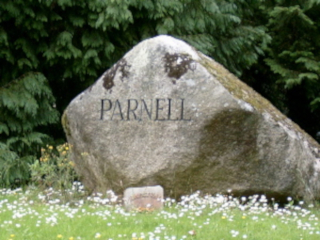 The funeral and burial of Charles Stewart Parnell, Irish nationalist politician who serves from 1875 as Member of Parliament (MP) in the House of Commons of the United Kingdom of Great Britain and Ireland, takes place in Dublin on October 11, 1891.