Patrick Darcy, a prominent constitutional lawyer who wrote the constitution of Confederate Ireland, delivers his famous Argument during a conference on June 9, 1641.
During a conference held in the dining room of Dublin Castle, Darcy delivers his Argument. Published in 1643 and reprinted in 1764, it is the first forceful and detailed statement of the rule of law in Ireland, articulating an effective constitutional position for her as England‘s colonial country. He is quoted arguing to William Molyneux that “no parliament but an Irish one can properly legislate for Ireland,” which is the central summation of his work.
In 1961, the American constitutional expert C.H. McIlwain says in compliment of Darcy’s Argument that it “constitute the first definite statement of the central point of the American opposition more than a century later. Patrick Darcy deserves a place in American constitutional history.”
The format of the 142-page Argument comprises a series of legal questions on the powers of the Parliament of Ireland in 1640–41. It refers to and suggests the extent by which the parliament’s general self-governing powers are superior to all ad-hoc (and possible illegal, unlawful or illicit) decisions by judges and royal officials in the Kingdom of Ireland. The relevant text nearest to the subject of Irish self-government is at page 130:
“Whither the Subjects of this kingdome bee a free people, and to be governed onely by the Common-lawes of England, and statutes of force in this kingdome. The subjects of this his Majesties kingdome of Ireland, are a free people, and to be governed onely according to the Common-law of England, and Statutes made & established by Parliament in this kingdome of Ireland, and according to the lawfull customes used in the same.”
Herbert is born in Dublin on February 1, 1859, to Protestants Edward Herbert and Fanny Herbert (née Lover). At age three and a half, shortly after the death of his father, he and his mother move to live with his maternal grandparents in London, England, where he received encouragement in his creative endeavours. His grandfather is the Irish novelist, playwright, poet and composer Samuel Lover. The Lovers welcome a steady flow of musicians, writers and artists into their home. He joins his mother in Stuttgart, Germany in 1867, a year after she marries a German physician, Carl Schmidt of Langenargen. In Stuttgart he receives a strong liberal education at the Eberhard-Ludwigs-Gymnasium, which includes musical training.
Herbert initially plans to pursue a career as a medical doctor. Although his stepfather is related by blood to the German royal family, his financial situation is not good by the time Herbert is a teenager. Medical education in Germany is expensive, and so he focuses instead on music. He initially studies the piano, flute and piccolo but ultimately settles on the cello, beginning studies on that instrument with Bernhard Cossmann from age 15 to age 18. He then attends the Stuttgart Conservatory. After studying cello, music theory and composition under Max Seifritz, he graduates with a diploma in 1879.
Although Herbert enjoys important careers as a cello soloist and conductor, he is best known for composing many successful operettas that premiere on Broadway from the 1890s to World War I. He is also prominent among the Tin Pan Alley composers and is later a founder of the American Society of Composers, Authors, and Publishers (ASCAP). A prolific composer, Herbert produces two operas, a cantata, 43 operettas, incidental music to 10 plays, 31 compositions for orchestra, nine band compositions, nine cello compositions, five violin compositions with piano or orchestra, 22 piano compositions and numerous songs, choral compositions and orchestrations of works by other composers, among other music.
In the early 1880s, Herbert begins a career as a cellist in Vienna, Austria, and Stuttgart, Germany, during which he begins to compose orchestral music. Herbert and his opera singer wife, Therese Förster, move to the United States in 1886 when both are engaged by the Metropolitan Opera. He continues his performing career, while also teaching at the National Conservatory of Music of America, conducting and composing. His most notable instrumental compositions are his Cello Concerto No. 2 in E minor, Op. 30 (1894), which enters the standard repertoire, and his Auditorium Festival March (1901). He leads the Pittsburgh Symphony Orchestra from 1898 to 1904 and then founds the Victor Herbert Orchestra, which he conducts throughout the rest of his life.
Herbert begins to compose operettas in 1894, producing several successes, including The Serenade (1897) and The Fortune Teller (1898). Some of the operettas that he writes after the turn of the 20th century are even more successful: Babes in Toyland (1903), Mlle. Modiste (1905), The Red Mill (1906), Naughty Marietta (1910), Sweethearts (1913) and Eileen (1917). After World War I, with the change of popular musical tastes, he begins to compose musicals and contributes music to other composers’ shows. While some of these are well-received, he never again achieves the level of success that he enjoyed with his most popular operettas.
A healthy man throughout his life, Herbert dies suddenly of a heart attack at the age of 65 on May 26, 1924, shortly after his final show, The Dream Girl, began its pre-Broadway run in New Haven. He is survived by his wife and two children, Ella Victoria Herbert Bartlett and Clifford Victor Herbert. He is entombed in Woodlawn Cemetery in The Bronx, New York City.
Just ten years after Guinness is first brewed in St. James Gate, Dublin, the beautiful magic brew is first exported from Ireland on May 19, 1769 as six-and-a-half barrels are shipped to England.
Guinness is an Irish dry stout that originates in the brewery of Arthur Guinness (1725–1803) at St. James’s Gate brewery in the capital city of Dublin. Guinness, produced by the Diageo beverages company, is one of the most successful beer brands worldwide. It is brewed in almost 50 countries and is available in over 120. Annual sales total of Guinness in 2011 was 850 million litres (220,000,000 US gal).
Guinness features a burnt flavour that is derived from malted barley and roasted unmalted barley. The use of roasted barley is a relatively modern development, not becoming part of the grist until the mid-20th century. For many years, a portion of aged brew is blended with freshly brewed beer to give a sharp lactic acid flavour. Although Guinness’s palate still features a characteristic “tang,” the company has refused to confirm whether this type of blending still occurs. The draught beer‘s thick, creamy head comes from mixing the beer with nitrogen and carbon dioxide when poured. It is popular with the Irish, both in Ireland and abroad. In spite of declining consumption since 2001, it is still the best-selling alcoholic drink in Ireland where Guinness & Co. Brewery makes almost €2 billion worth of the beverage annually.
The company is started in 1759 in Dublin, but has to move its headquarters to London at the beginning of the Anglo-Irish Trade War in 1932. In 1997, Guinness plc merges with Grand Metropolitan to form the multinational alcoholic drinks producer Diageo.
Fagan is the eldest of the five children of Sir James Fagan, a surgeon at the Belfast Royal Hospital and an inspector of Irish reformatories, and Mary Catherine Fagan, née Hughes. He attends Clongowes Wood College near Clane, County Kildare and then moves to England. Initially interested in a career in the church, he begins studying law at Trinity College, Oxford in 1892 but leaves in 1893 without a degree. He works for a time in the Indian Civil Service but abandons this career for the stage.
Fagan begins his career as an actor with the company of Sir Frank Benson for two years, then joining, from 1895 to 1899, the company of Herbert Beerbohm Tree at Her Majesty’s Theatre. There he appears in Katherine and Petruchio, A Man’s Shadow, Julius Caesar, The Musketeers and Carnac Sahib. He starts writing plays in 1899, with The Rebels, for the time forsaking acting. In 1913 he returns to the stage touring as the Rt Hon. Denzil Trevena in his own play, The Earth. He next writes The Fourth of August (1914) and Doctor O’Toole (1917). In 1917 he produces his first play, his own adaptation of the Brieux play Damaged Goods at St. Martin’s Theatre. He next produces The Wonder Tales and The Little Brother at the Ambassadors Theatre in London.
Fagan takes over the Court Theatre in London’s Sloane Square as a Shakespearean playhouse in 1920. The Times calls his revivals of Twelfth Night, The Merchant of Venice, Henry the Fourth (Part Two) and A Midsummer Night’s Dream “memorable for their freshness, sanity and distinction, and [deserving of] a place in theatrical history.” At the Court, he revives Damaged Goods and, in 1921, with the assistance of the author, produces George Bernard Shaw‘s Heartbreak House, with Edith Evans as “Lady Utterwood.” In 1922 he produces his play The Wheel at the Apollo Theatre. Its success allows him to repay his creditors. Even more successful is his adaptation of Treasure Island at the Savoy Theatre with Arthur Bourchier as “Long John Silver,” which opens December 26, 1922. It is revived every Christmas until the outbreak of World War II.
Fagan is persuaded by Jane Ellis, the actress who with Alfred Ballard founds the Oxford Playhouse “Red Barn” in 1923, to be its first manager. His first production at the Oxford Playhouse is a restaging of Shaw’s Heartbreak House and numbered Shaw among the audience. He produces The Cherry Orchard, at various theatres, to favourable reviews, popularising Anton Chekhov in Britain. From November 16, 1925, with Dennis Eadie, he presents Juno and the Paycock at the Royalty Theatre, thus bringing Seán O’Casey to the attention of London’s theatre-going public. O’Casey’s The Plough follows the next year.
Fagan receives little support from the University of Oxford or the play-going public and resigns in 1929. His successor is Stanford Holme, who broadens its appeal and, despite the straitened times, makes it financially viable. In 1929, he is a director of the Festival Theatre, Cambridge, where his friend Terence Gray is director. He also produces many works for the Irish Players.
Beginning in the 1920s, several of Fagan’s plays are adapted for film. He moves to Hollywood in 1929 for the filming by Paramount Pictures of his play The Wheel as The Wheel of Life. Other film work includes his co-adaptation of the screenplay for the 1932 film Smilin’ Through, and he co-writes Paramount’s Forgotten Commandments the same year. His play Bella Donna is filmed four times, including posthumously in 1946, and a 1936 film, The Improper Duchess is based on his 1931 play of the same name.
James Bernard Fagan dies in Hollywood, California, on February 17, 1933, at the age of 59 of a heart attack following a bout of influenza.
Holt is one of six sons of John Holt, a farmer in County Wicklow. He joins the Irish Volunteers in the 1780s and holds a number of minor public offices but becomes involved in law enforcement as a sub-constable, billet master for the militia and a bounty hunter. He is involved in the Battle of Vinegar Hill which is an engagement during the Irish Rebellion of 1798 on June 21, 1798, when over 15,000 British soldiers launch an attack on Vinegar Hill outside Enniscorthy, County Wexford.
Despite Holt’s apparent loyalism, he becomes a member of the Society of United Irishmen in 1797 and gradually begins to attract suspicion until finally in May 1798, his house is burned down by the militia of Fermanagh. He then takes to the Wicklow mountains, gradually assuming a position of prominence with the United Irish rebels. The defeat of the County Wexford rebels at Vinegar Hill on June 21 sees surviving rebel factions heading towards the Wicklow Mountains to link up with Holt’s forces.
Emerging to meet them, Holt is given much of the credit for the planning of the ambush and defeat of a pursuing force of 200 British cavalry in the Battle of Ballyellis on June 30, 1798. However, the subsequent Midlands campaign to revive the rebellion is a disaster, and he is lucky to escape with his life back to the safety of the Wicklow Mountains.
Holt largely holds out in expectation of the arrival of French aid but news of the defeat of the French in the Battle of Ballinamuck together with his ill-health brought about by the hardships of his fugitive life, age and family considerations prompt him to initiate contact with the Dublin Castle authorities with a view to a negotiated surrender. Dublin Castle is eager to end the rebellion in Wicklow and allows him exile after incarceration in the Bermingham Tower without trial in New South Wales.
Holt goes out on the Minerva and meets Captain William Cox who has been appointed paymaster of the New South Wales Corps. The ship arrives at Sydney on January 11, 1800, and shortly afterwards Holt agrees to manage Captain Cox’s farm. He always claims in Australia that he is a political exile and not a convict. In 1804 when the Castle Hill uprising occurs Holt, who is not involved, has been warned that evening that it is about to happen. During the night he sets up a defense of Captain Cox’s house. He is nonetheless afterwards hounded by Governor Philip Gidley King and many false witnesses are brought against him. Although there is no plausible evidence at all against him, he is exiled by King to Norfolk Island in April 1804, and there put to hard labour.
Holt is officially pardoned on January 1, 1811, and in December 1812, with his wife and younger son, takes passage to Europe on the Isabella. The ship is wrecked by a reef, so the passengers and crew are landed at Eagle Island, one of the Falkland Islands. He shows great resolution and ingenuity in making the best of the conditions on the island. He is rescued on April 4, 1813, but does not reach England until February 22, 1814, as he travels via the United States. He retires to Ireland where he lives for the rest of his life but regrets he had left Australia.
John Blaquiere, 1st Baron de Blaquiere, British soldier, diplomat and politician of French descent, is born on May 15, 1732. He serves as Chief Secretary for Ireland between 1772 and 1776. He is the fifth son of Jean de Blaquiere, a French merchant who had emigrated to England in 1685, and his wife Marie Elizabeth de Varennes.
Blaquiere at first serves in the Army, in the 18th Dragoons, later renumbered the 17th Dragoons, where he achieves the rank of Lieutenant Colonel. In 1771 he is appointed Secretary of Legation at the British Embassy in Paris, a post he holds until 1772. The latter year Simon Harcourt, 1st Earl Harcourt, the British Ambassador in Paris, is appointed Lord Lieutenant of Ireland, and Blaquiere joins him as Chief Secretary for Ireland. He is admitted to the Privy Council of Ireland the same year and made a Knight Companion of the Order of the Bath two years later.
Blaquiere is to remain Chief Secretary until December 6, 1776. He is elected to the Irish House of Commons for Old Leighlin in 1773, a seat he holds until 1783. After representing Enniskillen for a few months in 1783, he sits then for Carlingford from 1783 to 1790, for Charleville from 1790 to 1798 and for Newtownards from 1798 until the Act of Union comes into force in 1801. He is created a Baronet, of Ardkill in County Londonderry, in 1784, and is raised to the Peerage of Ireland as Baron de Blaquiere, of Ardkill in the County of Londonderry, in 1800, for his support for the Act of Union. Lord de Blaquiere also sits as a Member of the British House of Commons for Rye from 1801 to 1802 and for Downton from 1802 to 1806. He is elected a Fellow of the Royal Society in 1803.
Lord de Blaquiere marries Eleanor, daughter of Robert Dobson, in 1775. They have four sons, including Peter de Blaquière, and three daughters. Lord de Blaquiere dies at the age of 80 in Bray, County Wicklow, on August 27, 1812. He is succeeded in his titles by his eldest son, John. Lady de Blaquiere dies at Regent’s Park, Marylebone, London, in December 1833.
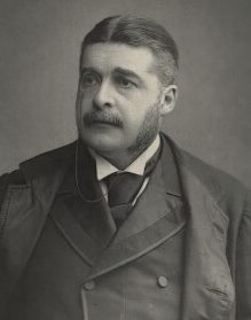
In 1866 Sullivan composes a one-act comic opera, Cox and Box, which is still widely performed. He writes his first opera with W. S. Gilbert, Thespis, in 1871. Four years later, the impresarioRichard D’Oyly Carte engages Gilbert and Sullivan to create a one-act piece, Trial by Jury (1875). Its box office success leads to a series of twelve full-length comic operas by the collaborators. After the extraordinary success of H.M.S. Pinafore (1878) and The Pirates of Penzance (1879), Carte uses his profits from the partnership to build the Savoy Theatre in 1881, and their joint works become known as the Savoy operas. Among the best known of the later operas are The Mikado (1885) and The Gondoliers (1889). Gilbert breaks from Sullivan and Carte in 1890, after a quarrel over expenses at the Savoy. They reunite in the 1890s for two more operas, but these do not achieve the popularity of their earlier works.
Sullivan’s infrequent serious pieces during the 1880s included two cantatas, The Martyr of Antioch (1880) and The Golden Legend (1886), his most popular choral work. He also writes incidental music for West End productions of several Shakespeare plays and holds conducting and academic appointments. Sullivan’s only grand opera, Ivanhoe, though initially successful in 1891, has rarely been revived. In his last decade Sullivan continues to compose comic operas with various librettists and writes other major and minor works.
Sullivan’s health is never robust. From his thirties kidney disease obliges him to conduct sitting down. He dies at the age of 58 of heart failure, following an attack of bronchitis, at his flat in London on November 22, 1900. Sullivan’s wishes are to be buried in Brompton Cemetery with his parents and brother, but by order of the Queen he is buried in St. Paul’s Cathedral.
Arthur Sullivan is regarded as Britain’s foremost composer. His comic opera style serves as a model for generations of musical theatre composers that follow, and his music is still frequently performed, recorded and pastiched.
During a period in India Kennedy meets Sir Charles James Napier and when he returns to Ireland he sets up agricultural schools designed to improve the economy of the country. One is at Cloghan near Ballybofey, and another at Eglinton near Derry. He becomes a farm manager and marries Anna, daughter of Sir Charles Styles, who owns large estates around Ballybofey, in 1838. Kennedy′s methods of improving the condition of the agricultural classes are indicated by the title of his work, Instruct; Employ; Don’t Hang Them: or Ireland Tranquilized without Soldiers and Enriched without English Capital (1835). He writes several others of similar nature, and as inspector general for Irish education (1837), as secretary to the Devon Commission (1843), and to the Famine Relief Committee (1845), his labours are unceasing in behalf of his native land.
Kennedy returns to the army in 1849 as military secretary to Sir Charles Napier and accompanies him to India, where he builds the military road named after him and extending from Kalka via Shimla to Kunawur and Tibet. He publishes British Home and Colonial Empire (1865–69), as well as a number of technical works relating to his Indian career. He also serves as District Grandmaster of Bengal.
Bacon is born in Dublin on October 28, 1909. He is best known for his depictions of popes, crucifixions and portraits of close friends. His abstracted figures are typically isolated in geometrical cage like spaces, set against flat, nondescript backgrounds. Bacon says that he sees images “in series,” and his work typically focuses on a single subject for sustained periods, often in triptych or diptych formats. His output can be broadly described as sequences or variations on a single motif, beginning with the 1930s Pablo Picasso-informed Furies, moving on to the 1940s male heads isolated in rooms or geometric structures, the 1950s screaming popes, and the mid-to-late 1950s animals and lone figures, the 1960s portraits of friends, the nihilistic 1970s self-portraits, and the cooler more technical 1980s late works.
Bacon takes up painting in his late 30s, having drifted as an interior decorator, bon vivant and gambler. He says that his artistic career was delayed because he spent too long looking for subject matter that could sustain his interest. His breakthrough comes with the 1944 triptych Three Studies for Figures at the Base of a Crucifixion, which seals his reputation as a uniquely bleak chronicler of the human condition. From the mid-1960s he mainly produces portraits of friends and drinking companions, either as single or triptych panels. Following the 1971 suicide of his lover, George Dyer, his art becomes more sombre, inward-looking and preoccupied with the passage of time and death. The climax of this later period is marked by masterpieces, including Study for Self-Portrait (1982) and Study for a Self-Portrait—Triptych, 1985–86.
Despite his bleak existentialist outlook, solidified in the public mind through his articulate and vivid series of interviews with David Sylvester, Bacon in person is highly engaging and charismatic, articulate, well-read and unapologetically gay. He is a prolific artist, but nonetheless spends many of the evenings of his middle age eating, drinking and gambling in London‘s Soho with like-minded friends such as Lucian Freud, John Deakin, Muriel Belcher, Henrietta Moraes, Daniel Farson, Tom Baker, and Jeffrey Bernard.
After Dyer’s suicide he largely distances himself from this circle, and while his social life is still active and his passion for gambling and drinking continues, he settles into a platonic and somewhat fatherly relationship with his eventual heir, John Edwards. The art critic Robert Hughes describes him as “the most implacable, lyric artist in late 20th-century England, perhaps in all the world” and along with Willem de Kooning as “the most important painter of the disquieting human figure in the 50’s of the 20th century.” Bacon is the subject of two Tate retrospectives and a major showing in 1971 at the Grand Palais.
While on holiday in Madrid in 1992, Francis Bacon is admitted to the Handmaids of Maria, a private clinic, where he is cared for by Sister Mercedes. His chronic asthma, which has plagued him all his life, has developed into a respiratory condition and he is unable to talk or breathe very well. He dies of a heart attack on April 28, 1992, after attempts to resuscitate him fail.
Bacon bequeaths his estate, then valued at £11 million, to John Edwards and Brian Clark, executors. In 1998 the director of the Hugh Lane Gallery in Dublin secures the donation of the contents of Bacon’s chaotic studio at 7 Reece Mews, South Kensington. The contents of his studio are moved and reconstructed in the gallery. Most of his works remain in the Hugh Lane in Dublin today.
Since his death his reputation and market value have grown steadily, and his work is among the most acclaimed, expensive and sought-after. In the late 1990s a number of major works, previously assumed destroyed, including early 1950s popes and 1960s portraits, reemerge to set record prices at auction. In 2013 his Three Studies of Lucian Freud sets the world record as the most expensive piece of art sold at auction.
O’Hanlon spends several years in exile as an officer with the French army and is awarded the title of Count of the French Empire. He returns to Ireland around 1660, after the Restoration of King Charles II of England. After realizing there will be no restitution of his family’s lands, he takes to the hills around Slieve Gullion and becomes a notorious highwayman.
Although O’Hanlon is often compared to a real-life Robin Hood, the truth is more complex. Protestant landlords, militia officers, and even Anglican and Catholic priests work as informal members of the O’Hanlon gang, giving him information and scouting sites for him to rob. He also forces the landlords and merchants of northern Ireland to pay protection money. It is stated that the criminal activities of O’Hanlon are bringing in more money than the King’s revenue collectors.
In 1674 the colonial authorities in Dublin put a price on O’Hanlon’s head with posters advertising for his capture, dead or alive. The Anglo-Irish landowner Henry St. John, who had been granted the traditional lands of the O’Hanlon clan, receives O’Hanlon’s undying hatred when he begins evicting his clansmen in large numbers. St. John responds by waging a private war against the O’Hanlon Gang. The loss of his 19-year-old son while pursuing O’Hanlon only makes Henry St. John increasingly brutal toward anyone suspected of aiding Redmond O’Hanlon. On September 9, 1679, St. John is riding on his estate with a manservant and the Reverend Lawrence Power, the Church of Ireland Rector of Tandragee. A party of O’Hanlon’s associates ride into view and seize him, warning that he would be killed if a rescue is attempted. Then, a group of the family’s retainers ride into view and open fire on the kidnappers. As a result, Henry St. John receives two pistol balls in the forehead.
At the landlord’s funeral, an outraged Reverend Power denounces the outlaws and the landowners who do business with them. Outraged, James Butler, 1st Duke of Ormond, the Lord Deputy of Ireland, orders the assassination of O’Hanlon.
Count Redmond O’Hanlon is murdered in his sleep by his foster brother and close associate Art MacCall O’Hanlon at Eight Mile Bridge near Hilltown, County Down, on April 25, 1681. Art receives a full pardon and two hundred pounds from the Duke of Ormond for murdering his leader. William Lucas, the militia officer who had recruited Art and arranges the killing, receives a Lieutenant’s commission in the British Army.
As is the custom of the day, there are gruesome displays of his body parts including his head which is placed on a spike over Downpatrick jail. His remains are eventually removed to lie in a family plot in Conwal Parish Church cemetery in Letterkenny, County Donegal, where his parents had fled from Henry St. John. His bones, however, are not left to rest in peace there and his grave is constantly desecrated by the duke’s supporters. His remains are finally removed by his family and interred in his final secret resting place, somewhere within Lurgan Parish.

 Patrick Darcy, a prominent constitutional lawyer who wrote the constitution of Confederate Ireland, delivers his famous Argument during a conference on June 9, 1641.
 Just ten years after


 seamus dubhghaill