seamus dubhghaill

Promoting Irish Culture and History from Little Rock, Arkansas, USA


2 Comments

Death of Actress Maureen O’Sullivan

maureen-osullivan

Maureen Paula O’Sullivan, Irish American actress best known for playing Jane in the Tarzan series of films starring Johnny Weissmuller, dies in Scottsdale, Arizona, of complications from heart surgery on June 23, 1998.

O’Sullivan is born in Boyle, County Roscommon on May 17, 1911, the daughter of Evangeline “Mary Eva” Lovatt and Charles Joseph O’Sullivan, an officer in the Connaught Rangers who serves in World War I. She attends a convent school in Dublin, then the Convent of the Sacred Heart at Roehampton, England. One of her classmates there is Vivian Mary Hartley, future Academy Award-winning actress Vivien Leigh. After attending finishing school in France, O’Sullivan returns to Dublin to work with the poor.

O’Sullivan’s film career begins when she meets motion picture director Frank Borzage, who is doing location filming on Song o’ My Heart for 20th Century Fox. He suggests she take a screen test, which she does, and wins a part in the movie, which stars Irish tenor John McCormack. She travels to the United States to complete the movie in Hollywood. O’Sullivan appears in six movies at Fox, then makes three more at other movie studios.

In 1932, she signs a contract with Metro-Goldwyn-Mayer. After several roles there and at other movie studios, she is chosen by Irving Thalberg to appear as Jane Parker in Tarzan the Ape Man, opposite co-star Johnny Weissmuller. She is one of the more popular ingenues at MGM throughout the 1930s and appears in a number of other productions with various stars. In all, O’Sullivan plays Jane in six features between 1932 and 1942.

She stars with William Powell and Myrna Loy in The Thin Man (1934) and plays Kitty in Anna Karenina (1935) with Greta Garbo and Basil Rathbone. After co-starring with the Marx Bros. in A Day At The Races (1937), she appears as Molly Beaumont in A Yank at Oxford (1938), which is written partly by F. Scott Fitzgerald. At her request, he rewrites her part to give it substance and novelty.

She plays another Jane in Pride and Prejudice (1940) with Laurence Olivier and Greer Garson and supports Ann Sothern in Maisie Was a Lady (1941). After appearing in Tarzan’s New York Adventure (1942), O’Sullivan asks MGM to release her from her contract so she can care for her husband who has just left the Navy with typhoid. She retreats from show business, devoting her time to her family. In 1948, she re-appears on the screen in The Big Clock, directed by her husband for Paramount Pictures. She continues to appear occasionally in her husband’s movies and on television. However, by 1960 she believes she has permanently retired. In 1958, Farrow’s and O’Sullivan’s eldest son, Michael, dies in a plane crash in California.

Actor Pat O’Brien encourages her to take a part in summer stock, and the play A Roomful of Roses opens in 1961. That leads to another play, Never Too Late, in which she co-stars with Paul Ford in what is her Broadway debut. Shortly after it opens on Broadway, John Farrow dies of a heart attack. O’Sullivan sticks with acting after Farrow’s death. She is also an executive director of a bridal consulting service, Wediquette International. In June and July 1972, O’Sullivan is in Denver, Colorado, to star in the Elitch Theatre production of Butterflies are Free with Karen Grassle and Brandon deWilde. The show ends on July 1, 1972. Five days later, while still in Denver, deWilde is killed in a motor vehicle accident.

When her daughter, actress Mia Farrow, becomes involved with Woody Allen both professionally and romantically, she appears in Hannah and Her Sisters, playing Farrow’s mother. She has roles in Peggy Sue Got Married (1986) and the science fiction oddity Stranded (1987). Mia Farrow names one of her own sons Ronan O’Sullivan Farrow for her mother. In 1994, she appears with Robert Wagner and Stefanie Powers in Hart to Hart: Home Is Where the Hart Is, a feature-length made-for-TV movie with the wealthy husband-and-wife team from the popular weekly detective series Hart to Hart.

Maureen O’Sullivan dies in Scottsdale, Arizona, of complications from heart surgery on June 23, 1998, at the age of 87. O’Sullivan is buried at Most Holy Redeemer Cemetery, Niskayuna, New York. She is survived by six of her children, 32 grandchildren, and 13 great-grandchildren. Michael, her oldest son, is killed at age 19 in a plane crash in 1958.
Leave a comment

Birth of George Arthur French, Army Officer

george-arthur-french

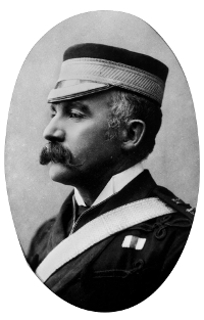
Major General Sir George Arthur French, KCMG, British Army officer, is born in Roscommon, County Roscommon on June 19, 1841. He serves as the first Commissioner of the North-West Mounted Police, predecessor of the Royal Canadian Mounted Police, from October 1873 to July 1876, and as Commandant of the colonial military forces in Queensland (1883–91) and New South Wales (1896–1902). He is also a relative of songwriter Percy French.

French is educated at the Royal Military College, Sandhurst, and the Royal Military Academy, Woolwich, and commissioned in the Royal Artillery in 1860.

In 1871, at the request of the Canadian government, French is sent to Canada as a military inspector, eventually becoming head of the School of Gunnery at Kingston, Ontario.

French is appointed to organise the North-West Mounted Police on its creation in 1873, and the next year he leads the force on its famous march to the foothills of the Rocky Mountains.

French resigns in 1876 and returns to duty in the British Army, eventually attaining the rank of major general. The organizational skills developed in Canada are used to establish local defence forces in India and Australia. In September 1883 he is appointed Commandant of the Queensland Local Forces with the local rank of colonel, and arrives in the colony on January 4, 1884. In 1862, he marries Janet Clarke, daughter of the late Robert Long Innes, formerly of the 37th Regiment. French retires in 1891 and returns to England.

French retires from the army on September 3, 1902 and is knighted as Knight Commander of the Order of St. Michael and St. George (KCMG) in the November 1902 Birthday Honours. For the next 19 years much of his time is spent guarding the crown jewels in London, where he dies on July 7, 1921. He is buried in Brompton Cemetery in London.


Leave a comment

Death of William Smith O’Brien, Young Ireland Leader

william-smith-obrien

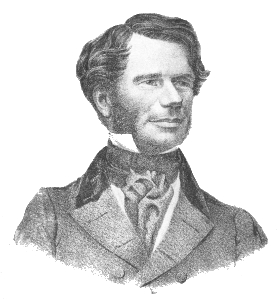
William Smith O’Brien, Irish nationalist Member of Parliament (MP) and leader of the Young Ireland movement, dies in Bangor, Gwynedd, Wales on June 18, 1864.

Born in Dromoland, Newmarket-on-Fergus, County Clare, O’Brien is the second son of Sir Edward O’Brien, 4th Baronet, of Dromoland Castle. His mother is Charlotte Smith, whose father owns a property called Cahirmoyle in County Limerick. He takes the additional surname Smith, his mother’s maiden name, upon inheriting the property. He lives at Cahermoyle House, a mile from Ardagh, County Limerick. He is a descendant of the eleventh century Ard Rí (High King of Ireland), Brian Boru. He receives an upper-class English education at Harrow School and Trinity College, Cambridge. Subsequently, he studies law at King’s Inns in Dublin and Lincoln’s Inn in London.

From April 1828 to 1831 O’Brien is Conservative MP for Ennis. He becomes MP for Limerick County in 1835, holding his seat in the House of Commons of the United Kingdom until 1849.

Although a Protestant country-gentleman, O’Brien supports Catholic emancipation while remaining a supporter of British-Irish union. In 1843, in protest against the imprisonment of Daniel O’Connell, he joins O’Connell’s anti-union Repeal Association.

Three years later, O’Brien withdraws the Young Irelanders from the association. In January 1847, with Thomas Francis Meagher, he founds the Irish Confederation, although he continues to preach reconciliation until O’Connell’s death in May 1847. He is active in seeking relief from the hardships of the famine. In March 1848, he speaks out in favour of a National Guard and tries to incite a national rebellion. He is tried for sedition on May 15, 1848, but is not convicted.

On July 29, 1848, O’Brien and other Young Irelanders lead landlords and tenants in a rising in three counties, with an almost bloodless battle against police at Ballingarry, County Tipperary. In O’Brien’s subsequent trial, the jury finds him guilty of high treason. He is sentenced to be hanged, drawn, and quartered. Petitions for clemency are signed by 70,000 people in Ireland and 10,000 people in England. In Dublin on June 5, 1849, the sentences of O’Brien and other members of the Irish Confederation are commuted to transportation for life to Van Diemen’s Land (Tasmania in present-day Australia).

O’Brien attempts to escape from Maria Island off Tasmania but is betrayed by the captain of the schooner hired for the escape. He is sent to Port Arthur where he meets up with John Mitchel.

O’Brien is a founding member of the Ossianic Society, which is founded in Dublin on St. Patrick’s Day 1853, whose aim is to further the interests of the Irish language and to publish and translate literature relating to the Fianna. He writes to his son Edward from Van Diemen’s Land, urging him to learn the Irish language. He himself studies the language and uses an Irish-language Bible and presents to the Royal Irish Academy Irish-language manuscripts he has collected.

In 1854, after five years in Tasmania, O’Brien is released on the condition he never returns to Ireland. He settles in Brussels. In May 1856, he is granted an unconditional pardon and returns to Ireland that July. He contributes to the Nation newspaper but plays no further part in politics.

In 1864 he visits England and Wales, with the view of rallying his failing health, but no improvement takes place, and he dies at Bangor, in Wales on June 16, 1864.

A statue of William Smith O’Brien stands in O’Connell Street, Dublin. Sculpted in Portland limestone, it is designed by Thomas Farrell and erected in D’Olier Street, Dublin, in 1870. It is moved to its present position in 1929.


Leave a comment

Birth of John Robert Gregg, Inventor of Gregg Shorthand

john-robert-gregg

John Robert Gregg, educator, publisher, humanitarian, and the inventor of the eponymous shorthand system Gregg shorthand, is born in Shantonagh, County Monaghan on June 17, 1867.

Gregg is the youngest child of Robert and Margaret Gregg. They move to Rockcorry in 1872. Robert Gregg, who is of Scottish ancestry, is stationmaster at the Bushford railway station in Rockcorry. He and his wife raise their children as strict Presbyterians and send their children to the village school in Rockcorry. On Gregg’s second day of class, he is caught whispering to a schoolmate, which prompts the schoolmaster to hit the two children’s heads together. This incident profoundly damages Gregg’s hearing for the rest of his life, rendering him unable to participate fully in school, unable to understand his teacher. This ultimately leads to him unnecessarily being perceived as dull or mentally challenged by his peers, teachers, and family.

In 1877, one of Robert Gregg’s friends, a journalist named Annesley, visits the village for a weekend. He is versed in Pitman Shorthand and takes verbatim notes of the sermon at the village church. This causes the preacher to sweat and stutter out of fear that his sermon, which he has plagiarized from a famous preacher, would be made public through Annesley’s notes. That day, Robert Gregg sees the shorthand skill as a powerful asset, so he makes it mandatory for his children to learn Pitman shorthand, with the exception of John, who is considered by his family too “simple” to learn it. None of the children succeed in fully learning the system. On his own, John Robert learns a different shorthand system, that of Samuel Taylor, published in a small book by Odell. He teaches himself the system fully since he does not require the ability to hear in order to learn from the book.

Due to hardships on the family, Gregg has to leave school before the age of 13 in order to support his family’s income. He works in a law office, earning five shillings a week.

Gregg professes he initially set out to improve the English adaptation by John Matthew Sloan of the French Prévost Duployan shorthand, while working with one of Sloan’s sales agents, Thomas Malone. Malone publishes a system called Script Phonography, of which Gregg asserts a share in authorship is owed to him. Angered by Malone, Gregg resigns from working with him and encouraged by his older brother Samuel, publishes and copyrights his own system of shorthand in 1888. It is put forth in a brochure entitled Light-Line Phonography: The Phonetic Handwriting which he publishes in Liverpool, England.

In 1893, he emigrates to the United States, where he publishes in the same year Gregg Shorthand. The method meets with great success in the new country, and Gregg settles in Chicago where he authors numerous books for the Gregg Publishing Company on the subjects of shorthand and contemporary business practices.

John Robert Gregg dies in New York City, at the age of 80, on February 23, 1948.


Leave a comment

Birth of Januarius MacGahan, Journalist & Correspondent

januarius-macgahan

Januarius Aloysius MacGahan, American journalist and war correspondent for the New York Herald and The Daily News, is born near New Lexington, Ohio on June 12, 1844. His articles describing the massacre of Bulgarian civilians by Turkish soldiers and irregular volunteers in 1876 creates public outrage in Europe and are a major factor in preventing Britain from supporting Turkey in the Russo–Turkish War of 1877–78, which leads to Bulgaria gaining independence from the Ottoman Empire.

MacGahan’s father is an immigrant from Ireland who had served on the Northumberland, the ship which took Napoleon into exile on Saint Helena. He moves to St. Louis, where he briefly works as a teacher and as a journalist. There he meets his cousin, General Philip Sheridan, an American Civil War hero also of Irish parentage, who convinces him to study law in Europe. He sails to Brussels in December 1868.

MacGahan does not get a law degree, but he discovers that he has a gift for languages, learning French and German. He runs short of money and is about to return to America in 1870 when the Franco-Prussian War breaks out. Sheridan happens to be an observer with the German Army, and he uses his influence to persuade the European editor of the New York Herald to hire MacGahan as a war correspondent with the French Army.

MacGahan’s vivid articles from the front lines describing the stunning defeat of the French Army win him a large following, and many of his dispatches to the Herald are reprinted by European newspapers. When the war ends, he interviews French leader Léon Gambetta and Victor Hugo and, in March 1871, he hurries to Paris and is one of the first foreign correspondents to report on the uprising of the Paris Commune. He is arrested by the French military and nearly executed and is only rescued through the intervention of the U.S. Minister to France Elihu B. Washburne.

In 1871 MacGahan is assigned as the Herald‘s correspondent to Saint Petersburg. He learns Russian, mingles with the Russian military and nobility, covers the Russian tour of General William Tecumseh Sherman and meets his future wife, Varvara Elagina, whom he marries in 1873. In 1874 he spends ten months in Spain, covering the Third Carlist War.

In 1876 MacGahan quarrels with James Gordon Bennett Jr., the publisher of the New York Herald, and leaves the newspaper. He is invited by his friend, Eugene Schuyler, the American Consul-General in Constantinople, to investigate reports of large-scale atrocities committed by the Turkish Army following the failure of an attempted uprising by Bulgarian nationalists in April 1876. He obtains a commission from The Daily News, then the leading liberal newspaper in England, and leaves for Bulgaria on July 23, 1876.

MacGahan reports that the Turkish soldiers have forced some of the villagers into the church, then the church is burned, and survivors tortured to learn where they have hidden their treasures. He says that of a population of seven thousand, only two thousand survive. According to his account, fifty-eight villages in Bulgaria are destroyed, five monasteries demolished, and fifteen thousand people in all massacred. These reports, published first in The Daily News, and then in other papers, cause widespread popular outrage against Turkey in Britain. The government of British Prime Minister Benjamin Disraeli, a supporter of Turkey, tries to minimize the massacres and says that the Bulgarians are equally to blame, but his arguments are refuted by the newspaper accounts of MacGahan.

In the wake of the massacres and atrocities committed by the Ottoman forces during the suppression of the April Uprising, as well as centuries-long conflicts between Russia and Turkey in Crimea, the Russian Government, stirred by anti-Turkish and Pan-Slavism sentiment, prepare to invade the Ottoman Empire, and declare war on it on April 24, 1877. The Turkish Government of Sultan Abdul Hamid II appeals for help to Britain, its traditional ally against Russia, but the British government responds that it cannot intervene “because of the state of public feeling.”

MacGahan is assigned as a war correspondent for The Daily News and, thanks to his friendship with General Skobelev, the Russian commander, rides with the first units of the Russian Army as it crosses the Danube into Bulgaria. He covers all the major battles of the Russo–Turkish War, including the Siege of Plevna and the Battle of Shipka Pass. He reports on the final defeat of the Turkish armies and is present at the signing of the Treaty of San Stefano, which ends the war.

MacGahan is in Constantinople, preparing to travel to Berlin for the conference that determines the final borders of Bulgaria, when he catches typhoid fever. He dies on June 9, 1878, and is buried in the Greek cemetery, in the presence of diplomats, war correspondents, and General Skobelev. Five years later his body is returned to the United States and reburied in New Lexington and a statue is erected in his honor by a society of Bulgarian Americans.


Leave a comment

Birth of Richard Todd, Stage & Film Actor

richard-todd

Richard Andrew Palethorpe Todd OBE, an English soldier, stage and film actor and film director, is born in Dublin on June 11, 1919.

Todd spends a few of his childhood years in India, where his father, an officer in the British Army, serves as a physician. Later his family moves to Devon, and he attends Shrewsbury School. Upon leaving school, he trains for a potential military career at Royal Military Academy Sandhurst before beginning his acting training at the Italia Conti Academy of Theatre Arts in London. This change in career leads to estrangement from his mother. When he learns at age 19 that she has committed suicide, he does not grieve long for her, he admits in later life.

Todd first appears professionally as an actor at the Regent’s Park Open Air Theatre in 1936 in a production of Twelfth Night. He plays in regional theatres and then co-founds the Dundee Repertory Theatre in Scotland in 1939. He also appears as an extra in British films like Good Morning, Boys (1937), A Yank at Oxford (1938) and Old Bones of the River (1939).

At the beginning of World War II, Todd enlists in the British Army, receiving a commission in 1941. On June 6, 1944, as a captain, he participates in Operation Tonga during the Normandy landings. He is among the first British officers to land in Normandy as part of Operation Overlord.

After the war, Todd is unsure what direction to take in his career. His former agent, Robert Lennard, has become a casting agent for Associated British Picture Corporation and advises him to try out for the Dundee Repertory Company. He does so, performing in plays such as Claudia, where he appears with Claudia Grant-Bogle. Lennard arranges for a screen test and Associated British offers him a long-term contract in 1948. He is cast in the lead in For Them That Trespass (1949), directed by Alberto Cavalcanti. The film is a minor hit and his career is launched.

Having portrayed the role of Yank in the Dundee Repertory stage version of John Patrick‘s play The Hasty Heart, Todd is subsequently chosen to appear in the 1948 London stage version of the play, this time in the leading role of Cpl. Lachlan McLachlan. This leads to his being cast in that role in the Warner Bros. film adaptation of the play, which is filmed in the United Kingdom, alongside Ronald Reagan and Patricia Neal. He is nominated for the Academy Award for Best Actor for the role in 1949.

Todd is now in much demand. He appears in the thriller The Interrupted Journey (1949), Alfred Hitchcock‘s Stage Fright (1950), opposite Marlene Dietrich and Jane Wyman, Portrait of Clare (1950), Flesh and Blood (1951), The Story of Robin Hood and His Merrie Men (1952), 24 Hours of a Woman’s Life (1952), with Merle Oberon, Venetian Bird (1952), The Sword and the Rose (1953) and Rob Roy, the Highland Rogue (1953). In 1953, he appears in a BBC Television adaptation of the novel Wuthering Heights.

Todd’s career receives a boost when 20th Century Fox signs him to a non-exclusive contract. He appears the film version of Catherine Marshall‘s best-selling biography, A Man Called Peter (1955), which is a popular success. Other films in which he appears include The Dam Busters (1955), The Virgin Queen (1955), Marie Antoinette Queen of France (1956), D-Day the Sixth of June (1956), Yangtse Incident: The Story of H.M.S. Amethyst (1957), Saint Joan (1957), Chase a Crooked Shadow (1958), Intent to Kill (1958), Danger Within (1958), Never Let Go (1960) and The Long and the Short and the Tall (1961).

Todd’s career in films rapidly declines in the 1960s as the counter-culture movement in the Arts becomes fashionable in England, with social-realist dramas commercially replacing the more middle-class orientated dramatic productions that Todd’s performance character-type had previously excelled in.

In retirement, Todd lives in the village of Little Ponton and later in Little Humby, eight miles from Grantham, Lincolnshire. Suffering from cancer, he dies at his home on December 3, 2009. He is buried between his two sons, Seamus and Peter, at St. Guthlac’s Church in Little Ponton, Lincolnshire, England.


Leave a comment

Patrick Darcy Delivers His “Argument”

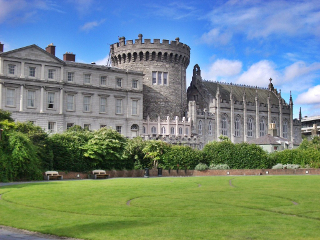
dublin-castlePatrick Darcy, a prominent constitutional lawyer who wrote the constitution of Confederate Ireland, delivers his famous Argument during a conference on June 9, 1641.

During a conference held in the dining room of Dublin Castle, Darcy delivers his Argument. Published in 1643 and reprinted in 1764, it is the first forceful and detailed statement of the rule of law in Ireland, articulating an effective constitutional position for her as England‘s colonial country. He is quoted arguing to William Molyneux that “no parliament but an Irish one can properly legislate for Ireland,” which is the central summation of his work.

In 1961, the American constitutional expert C.H. McIlwain says in compliment of Darcy’s Argument that it “constitute the first definite statement of the central point of the American opposition more than a century later. Patrick Darcy deserves a place in American constitutional history.”

The format of the 142-page Argument comprises a series of legal questions on the powers of the Parliament of Ireland in 1640–41. It refers to and suggests the extent by which the parliament’s general self-governing powers are superior to all ad-hoc (and possible illegal, unlawful or illicit) decisions by judges and royal officials in the Kingdom of Ireland. The relevant text nearest to the subject of Irish self-government is at page 130:

“Whither the Subjects of this kingdome bee a free people, and to be governed onely by the Common-lawes of England, and statutes of force in this kingdome. The subjects of this his Majesties kingdome of Ireland, are a free people, and to be governed onely according to the Common-law of England, and Statutes made & established by Parliament in this kingdome of Ireland, and according to the lawfull customes used in the same.”

(Pictured: Dublin Castle)


Leave a comment

Death of Victor Herbert, Composer, Cellist and Conductor

victor-herbert

Victor August Herbert, an Irish-born, German-raised American composer, cellist and conductor, dies suddenly of a heart attack on May 26, 1924, shortly after his final show, The Dream Girl, begins its pre-Broadway run in New Haven, Connecticut.

Herbert is born in Dublin on February 1, 1859, to Protestants Edward Herbert and Fanny Herbert (née Lover). At age three and a half, shortly after the death of his father, he and his mother move to live with his maternal grandparents in London, England, where he received encouragement in his creative endeavours. His grandfather is the Irish novelist, playwright, poet and composer Samuel Lover. The Lovers welcome a steady flow of musicians, writers and artists into their home. He joins his mother in Stuttgart, Germany in 1867, a year after she marries a German physician, Carl Schmidt of Langenargen. In Stuttgart he receives a strong liberal education at the Eberhard-Ludwigs-Gymnasium, which includes musical training.

Herbert initially plans to pursue a career as a medical doctor. Although his stepfather is related by blood to the German royal family, his financial situation is not good by the time Herbert is a teenager. Medical education in Germany is expensive, and so he focuses instead on music. He initially studies the piano, flute and piccolo but ultimately settles on the cello, beginning studies on that instrument with Bernhard Cossmann from age 15 to age 18. He then attends the Stuttgart Conservatory. After studying cello, music theory and composition under Max Seifritz, he graduates with a diploma in 1879.

Although Herbert enjoys important careers as a cello soloist and conductor, he is best known for composing many successful operettas that premiere on Broadway from the 1890s to World War I. He is also prominent among the Tin Pan Alley composers and is later a founder of the American Society of Composers, Authors, and Publishers (ASCAP). A prolific composer, Herbert produces two operas, a cantata, 43 operettas, incidental music to 10 plays, 31 compositions for orchestra, nine band compositions, nine cello compositions, five violin compositions with piano or orchestra, 22 piano compositions and numerous songs, choral compositions and orchestrations of works by other composers, among other music.

In the early 1880s, Herbert begins a career as a cellist in Vienna, Austria, and Stuttgart, Germany, during which he begins to compose orchestral music. Herbert and his opera singer wife, Therese Förster, move to the United States in 1886 when both are engaged by the Metropolitan Opera. He continues his performing career, while also teaching at the National Conservatory of Music of America, conducting and composing. His most notable instrumental compositions are his Cello Concerto No. 2 in E minor, Op. 30 (1894), which enters the standard repertoire, and his Auditorium Festival March (1901). He leads the Pittsburgh Symphony Orchestra from 1898 to 1904 and then founds the Victor Herbert Orchestra, which he conducts throughout the rest of his life.

Herbert begins to compose operettas in 1894, producing several successes, including The Serenade (1897) and The Fortune Teller (1898). Some of the operettas that he writes after the turn of the 20th century are even more successful: Babes in Toyland (1903), Mlle. Modiste (1905), The Red Mill (1906), Naughty Marietta (1910), Sweethearts (1913) and Eileen (1917). After World War I, with the change of popular musical tastes, he begins to compose musicals and contributes music to other composers’ shows. While some of these are well-received, he never again achieves the level of success that he enjoyed with his most popular operettas.

A healthy man throughout his life, Herbert dies suddenly of a heart attack at the age of 65 on May 26, 1924, shortly after his final show, The Dream Girl, began its pre-Broadway run in New Haven. He is survived by his wife and two children, Ella Victoria Herbert Bartlett and Clifford Victor Herbert. He is entombed in Woodlawn Cemetery in The Bronx, New York City.

Herbert and his music are celebrated in the 1939 film The Great Victor Herbert, where he is portrayed by Walter Connolly, and which also features Mary Martin. He is also portrayed by Paul Maxey in the 1946 film Till the Clouds Roll By. Many of Herbert’s own works are made into films, and his music has been used in numerous films and television shows. A Chicago elementary school is named for him. During World War II the Liberty ship SS Victor Herbert is built in Panama City, Florida, and named in his honor.


Leave a comment

Guinness First Exported from Ireland

guinnessJust ten years after Guinness is first brewed in St. James Gate, Dublin, the beautiful magic brew is first exported from Ireland on May 19, 1769 as six-and-a-half barrels are shipped to England.

Guinness is an Irish dry stout that originates in the brewery of Arthur Guinness (1725–1803) at St. James’s Gate brewery in the capital city of Dublin. Guinness, produced by the Diageo beverages company, is one of the most successful beer brands worldwide. It is brewed in almost 50 countries and is available in over 120. Annual sales total of Guinness in 2011 was 850 million litres (220,000,000 US gal).

Guinness features a burnt flavour that is derived from malted barley and roasted unmalted barley. The use of roasted barley is a relatively modern development, not becoming part of the grist until the mid-20th century. For many years, a portion of aged brew is blended with freshly brewed beer to give a sharp lactic acid flavour. Although Guinness’s palate still features a characteristic “tang,” the company has refused to confirm whether this type of blending still occurs. The draught beer‘s thick, creamy head comes from mixing the beer with nitrogen and carbon dioxide when poured. It is popular with the Irish, both in Ireland and abroad. In spite of declining consumption since 2001, it is still the best-selling alcoholic drink in Ireland where Guinness & Co. Brewery makes almost €2 billion worth of the beverage annually.

The company is started in 1759 in Dublin, but has to move its headquarters to London at the beginning of the Anglo-Irish Trade War in 1932. In 1997, Guinness plc merges with Grand Metropolitan to form the multinational alcoholic drinks producer Diageo.


Leave a comment

Birth of James Bernard Fagan, Producer & Playwright

james-bernard-fagan

James Bernard Fagan, Irish-born actor, theatre manager, producer and playwright in England, is born in Belfast on May 18, 1873.

Fagan is the eldest of the five children of Sir James Fagan, a surgeon at the Belfast Royal Hospital and an inspector of Irish reformatories, and Mary Catherine Fagan, née Hughes. He attends Clongowes Wood College near Clane, County Kildare and then moves to England. Initially interested in a career in the church, he begins studying law at Trinity College, Oxford in 1892 but leaves in 1893 without a degree. He works for a time in the Indian Civil Service but abandons this career for the stage.

Fagan begins his career as an actor with the company of Sir Frank Benson for two years, then joining, from 1895 to 1899, the company of Herbert Beerbohm Tree at Her Majesty’s Theatre. There he appears in Katherine and Petruchio, A Man’s Shadow, Julius Caesar, The Musketeers and Carnac Sahib. He starts writing plays in 1899, with The Rebels, for the time forsaking acting. In 1913 he returns to the stage touring as the Rt Hon. Denzil Trevena in his own play, The Earth. He next writes The Fourth of August (1914) and Doctor O’Toole (1917). In 1917 he produces his first play, his own adaptation of the Brieux play Damaged Goods at St. Martin’s Theatre. He next produces The Wonder Tales and The Little Brother at the Ambassadors Theatre in London.

Fagan takes over the Court Theatre in London’s Sloane Square as a Shakespearean playhouse in 1920. The Times calls his revivals of Twelfth Night, The Merchant of Venice, Henry the Fourth (Part Two) and A Midsummer Night’s Dream “memorable for their freshness, sanity and distinction, and [deserving of] a place in theatrical history.” At the Court, he revives Damaged Goods and, in 1921, with the assistance of the author, produces George Bernard Shaw‘s Heartbreak House, with Edith Evans as “Lady Utterwood.” In 1922 he produces his play The Wheel at the Apollo Theatre. Its success allows him to repay his creditors. Even more successful is his adaptation of Treasure Island at the Savoy Theatre with Arthur Bourchier as “Long John Silver,” which opens December 26, 1922. It is revived every Christmas until the outbreak of World War II.

Fagan is persuaded by Jane Ellis, the actress who with Alfred Ballard founds the Oxford Playhouse “Red Barn” in 1923, to be its first manager. His first production at the Oxford Playhouse is a restaging of Shaw’s Heartbreak House and numbered Shaw among the audience. He produces The Cherry Orchard, at various theatres, to favourable reviews, popularising Anton Chekhov in Britain. From November 16, 1925, with Dennis Eadie, he presents Juno and the Paycock at the Royalty Theatre, thus bringing Seán O’Casey to the attention of London’s theatre-going public. O’Casey’s The Plough follows the next year.

Fagan receives little support from the University of Oxford or the play-going public and resigns in 1929. His successor is Stanford Holme, who broadens its appeal and, despite the straitened times, makes it financially viable. In 1929, he is a director of the Festival Theatre, Cambridge, where his friend Terence Gray is director. He also produces many works for the Irish Players.

Beginning in the 1920s, several of Fagan’s plays are adapted for film. He moves to Hollywood in 1929 for the filming by Paramount Pictures of his play The Wheel as The Wheel of Life. Other film work includes his co-adaptation of the screenplay for the 1932 film Smilin’ Through, and he co-writes Paramount’s Forgotten Commandments the same year. His play Bella Donna is filmed four times, including posthumously in 1946, and a 1936 film, The Improper Duchess is based on his 1931 play of the same name.

James Bernard Fagan dies in Hollywood, California, on February 17, 1933, at the age of 59 of a heart attack following a bout of influenza.