seamus dubhghaill

Promoting Irish Culture and History from Little Rock, Arkansas, USA


1 Comment

The 1996 Docklands Bombing

docklands-bombing

The Docklands bombing, also known as the Canary Wharf bombing or the South Quay bombing, occurs on February 9, 1996, marking the end of the Irish Republican Army‘s (IRA) seventeen-month ceasefire.

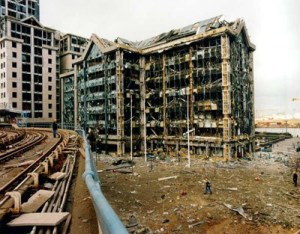
At about 7:01 PM on February 9, the Provisional Irish Republican Army detonates a large bomb in a small lorry about 80 yards from South Quay Station on the Docklands Light Railway in the Canary Wharf financial district of London. The bomb, containing 500 kg of ammonium nitrate fertilizer and sugar and a detonating cord made of semtex, PETN, and RDX high explosives, is placed directly under the point where the tracks cross Marsh Wall.

The IRA sends telephone warnings 90 minutes prior to the detonation and the area is evacuated. However, two men working in the newsagents shop directly opposite the explosion, Inam Bashir and John Jeffries, are not evacuated in time and are killed in the explosion. Thirty-nine people require hospital treatment as a result of the blast and falling glass. A portion of the South Quay Plaza is destroyed, and the explosion leaves a crater ten metres wide and three metres deep. The shockwave from the blast causes windows to rattle five miles away.

Approximately £100 million worth of damage is done by the blast. The Midland Bank building is damaged beyond economic repair and is demolished. South Quay Plaza I and II are severely damaged and require complete rebuilding. The station itself is extensively damaged, but both it and the bridge under which the bomb is exploded are reopened within weeks.

The bombing marks the end of a 17-month IRA ceasefire during which Irish, British, and American leaders work for a political solution to the troubles in Northern Ireland. IRA member James McArdle is convicted of conspiracy to cause explosions and sentenced to 25 years in prison, but murder charges are dropped. McArdle is released under the terms of the Good Friday Agreement in June 2000 with a royal prerogative of mercy from Queen Elizabeth II.

dockland-bombing-damage

The IRA describes the deaths and injuries as a result of the bomb as “regrettable,” but says that they could have been avoided if police had responded promptly to “clear and specific warnings.” Commissioner of the Metropolitan Police Sir Paul Condon says, “It would be unfair to describe this as a failure of security. It was a failure of humanity.”

Gerry Adams, the leader of Sinn Féin, the political wing of the IRA, speaks of the need to continue the peace process. British Prime Minister John Major says there is now “a dark shadow of doubt” where optimism has existed.

On February 28, Prime Minister Major and Taoiseach of the Republic of Ireland John Bruton, announce that all-party talks will be resumed in June. Major’s decision to drop the demand for IRA decommissioning of weapons before Sinn Fein is allowed into talks leads to criticism from the press, which accuse him of being “bombed to the table.”

Leave a comment

Éamon de Valera Escapes from Lincoln Gaol

boland-collins-devalera

Éamon de Valera, along with Seán McGarry and Seán Milroy, escape from Lincoln Gaol in Lincoln, Lincolnshire, England on February 3, 1919.  The escape plot is engineered by fellow Sinn Féin members Harry Boland and Michael Collins (pictured to the left of de Valera).

After his participation as a leader of the Easter Rising of 1916, de Valera is arrested and sentenced to death for his role in the uprising, but the sentence is later commuted due to his American citizenship. Following his release from prison in 1916, he quickly gains fame on the Irish political scene, ultimately becoming the leader of Sinn Féin. He also gains notoriety amongst the British political elites, which ensures his eventual re-arrest and imprisonment in Lincoln Gaol.

De Valera is sent to Lincoln Gaol presumably for his participation in a “German Plot” against the British. Once incarcerated at Lincoln, de Valera, wanting to embarrass the English, quickly begins to plan his escape with the assistance of Milroy and McGarry. Irish Republicans on the outside, including Boland and Collins, also assist in the planning.

Open fields surrounded by barbed wire are to the rear and east of the prison. The Republicans hope to use this to their advantage by sneaking de Valera through a rear door. The plans are sung in Gaelic to de Valera through a window in his cell by a fellow Irish inmate in order to confuse the guards. The first song tells him of the escape route and the second gives him instructions to obtain a copy of the master-key for the prison.

De Valera, being a deeply religious man, is active in the prison’s chapel from the beginning of his internment. Using his connections within the chapel, over time he manages to steal candles from the altar. While Mass is being read, he “borrows” the master-key of the chaplain and makes an impression of it in the candle wax. The mould is then wrapped in paper and tossed over the prison wall so a duplicate can be made.

The key is duplicated and smuggled back into the prison concealed in a cake and the escape begins on the evening of February 3, 1919. While Collins and other members of Sinn Féin cut through the barbed wire, a group of Irish girls are sent to flirt with the prison guards to ensure they are preoccupied. With the guards’ attention diverted, de Valera, wrapped in a fur coat, McGarry, and Milroy are able to walk to the back door of the prison and, after some difficulty with the key, walk away from the prison.

They stroll down Wragby Road to the Adam & Eve Pub where a taxi driver, unaware of who his passengers are, awaits them. De Valera is swiftly moved to the railway station where they split up. Collins and Boland catch a train to London from St. Mark’s while the rest drive to Worksop where another innocent taxi driver drives them to Sheffield. De Valera then returns to Ireland briefly before traveling on to the United States. The prison officials, realizing that the men will be virtually impossible to locate, concede defeat after a one-day search of the city.

The escape from Lincoln Gaol is major news and is covered in all the national papers. Prison officials blame the escape on the ability of special prisoners to interact with the general prison population. The escape proves to be an important moment in Irish history – when a cake, a wax key, and some pretty Irish girls help spring the future Irish president from Lincoln Gaol.


Leave a comment

Creation of The Honourable The Irish Society

irish-society-coat-of-arms

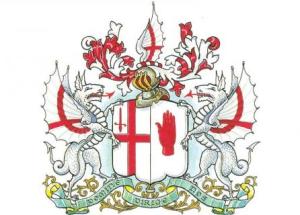
On January 28, 1613, The Honourable The Irish Society, a consortium of livery companies of the City of London, is created by Royal Charter of James I of England to undertake the Plantation in the North West of Ulster that is then being driven by the English Crown.

Following the Gaelic defeat in the Nine Years’ War in 1603 and the Flight of the Earls in 1607, northwest Ulster is left open to colonisation. James I sets out to defend against a future attack from within or without. He finds that the town of Derry can become either a great asset as a control over the River Foyle and Lough Swilly, or it can become an inviting back door should the people of the area turn against him. He pressures the guilds of the City of London to fund the resettlement of the area, including the building of a new walled city. This results in the creation of the Society.

The city of Derry is renamed Londonderry in recognition of the London origin of the Irish Society. County Coleraine is enlarged and renamed County Londonderry after its new county town. The rural area of the county is subdivided between the Great Twelve livery companies, while the towns and environs of Londonderry and Coleraine are retained by the Irish Society.

In January 1635, the Irish Society, as well as the City of London, are found guilty of mismanagement and neglect of Derry plantation. They are sentenced to a fine of £70,000 and forfeiture of Derry property. The Society is suppressed in 1637 but is revived by Oliver Cromwell in 1650 and again after the Restoration by Londonderry’s 1662 royal charter.

The Society is involved in several controversies over the years including a dispute over fishing rights with the Church of Ireland and Bishop of Derry and a lawsuit brought by The Skinners’ Company in 1832 over the distribution of profits. The Society also has some disputes with the corporations over ownership and development of property. During the 17th and 18th centuries, four of the twelve livery companies sell their estates, with the Irish Society requiring a bond of indemnity in each case. Leases to middlemen granted by the remaining companies expire at various times during the nineteenth century, after which the companies “enormously increased the rental.”

The Society finances the building of the Guildhall in Derry. Construction begins in 1887 and it is opened in July 1890, at a cost of £19,000.

The Society remains in existence today as a relatively small grant-giving charitable body. Its educational grants are funded by its remaining property, including the Walls of Derry, a tourist attraction and heritage site, and fisheries on the River Bann. The Society is based in London, but maintains a “representative” resident in County Londonderry.


Leave a comment

King Henry VIII Marries Anne Bolen

henry-viii-anne-bolen

England’s King Henry VIII, Lord of Ireland and self-declared King of Ireland, marries Anne Boleyn on January 25, 1533, after a secret marriage November 14, 1532. On May 23, 1533, Thomas Cranmer, Archbishop of Canterbury, declares Henry’s first marriage to Catherine of Aragon to be null and void. Five days later, he declares Henry and Anne’s marriage to be valid.

Soon thereafter, Pope Clement VII, who had refused to annul the marriage of Henry and Anne, decrees sentences of excommunication against Henry and Cranmer. As a result of this marriage and these excommunications, the first break between the Church of England and Rome takes place and the Church of England is brought under the King’s control.

Anne is crowned Queen of England on June 1, 1533, and on September 7, she gives birth to a daughter who is christened Elizabeth, in honour of Henry’s mother, Elizabeth of York, and who becomes the future Queen Elizabeth I. Henry is disappointed to have a daughter rather than a son but hopes a son will follow and professes to love Elizabeth.

The king and queen are not pleased with married life. The royal couple enjoys periods of calm and affection but Anne refuses to play the submissive role expected of her. Henry dislikes Anne’s constant irritability and violent temper. After a miscarriage in 1534, Henry sees her failure to give him a son as a betrayal. As early as Christmas 1534, Henry is discussing with Archbishop Cranmer and Thomas Cromwell, his chief minister, the chances of leaving Anne without having to return to Catherine.

In January 1536, the Henry is thrown from his horse in a tournament and is badly injured. It seems for a time that the king’s life was in danger. When news of this accident reaches the queen, who is again pregnant and aware of the consequences if she fails to give birth to a son, she is sent into shock and miscarries a male child that is about 15 weeks old. This is seen by most historians as the beginning of the end of the royal marriage.

Anne’s downfall comes shortly after she has recovered from her miscarriage. Henry has Anne investigated for high treason in April 1536. On May 2, she is arrested and sent to the Tower of London where she is tried before a jury of peers, which includes Henry Percy, her first husband, and her own uncle, Thomas Howard. Anne is found guilty on May 15 and is beheaded on Tower Green at 8:00 AM on May 19, 1536, at the age of 36.


Leave a comment

Death of Irish Songwriter Percy French

percy-french

Percy French, one of Ireland’s foremost songwriters and entertainers of his day, dies of pneumonia in Formby, England, on January 24, 1920.

French is born at Cloonyquin House, near Tulsk, County Roscommon. He is educated at Foyle College, Derry, and writes his first successful song, Abdul Abulbul Amir, while studying at Trinity College Dublin in 1877. The song is sold for £5 to an unscrupulous publisher and later becomes hugely popular and is falsely claimed by other authors.

He graduates from Trinity as a civil engineer in 1881 and joins the Board of Works in County Cavan as an “Inspector of Drains.” It is said that he writes his best songs during this period. French is also a prolific painter of landscape watercolours and during this period he considers art to be his true vocation. When he becomes well-known later in his life, his paintings from his time as a civil engineer become fashionable and sought after.

When the Board of Works reduces its staff around 1887, French turns to journalism as the editor of The Jarvey, a weekly comic paper. Upon the failure of the paper, he embarks on a long and successful career as a songwriter and entertainer. It is around this time that he marries Ethel Kathleen Armitage-Moore, second daughter of William Armytage-Moore, brother of Countess of Annesley. Tragically, at the age of 20, she dies during childbirth along with her daughter.

percy-french-statue

French becomes renowned for composing and singing comic songs and gains considerable distinction with such songs as Phil the Fluther’s Ball, Slattery’s Mounted Foot, and The Mountains of Mourne. One of his most famous songs is Are Ye Right There Michael, a song that ridicules the state of the rail system in rural County Clare. The song causes such embarrassment to the rail company that it lead to an ultimately unsuccessful libel action against French. It is said that he arrives late for the libel hearing and, when questioned by the judge on his lateness, he responds, “Your honour, I travelled by the West Clare Railway,” which results in the case being thrown out.

French takes ill while performing in Glasgow and dies of pneumonia on January 24, 1920, at the age of 65 at the home of his cousin, Canon Richardson of Green Lea, in Formby. He is buried in the churchyard of St. Luke’s Parish Church, Formby in Merseyside. A statue of him sitting on a park bench can be found in the town center of Ballyjamesduff in honour of him and his famous song, Come Back Paddy Reilly to Ballyjamesduff.


1 Comment

Death of Terence Bellew MacManus in San Francisco

terrence-bellew-macmanus

Terence Bellew MacManus, an Irish rebel and Young Irelander, dies in San Francisco, California, on January 15, 1861.

MacManus is born in 1811 in Tempo, County Fermanagh, Ireland, and was educated in parochial schools. As a young man he moves to the major port of Liverpool, where he becomes a successful shipping agent. In 1848 he returns to Ireland, where he becomes active in the Repeal Association, which seeks to overturn the Act of Union between Great Britain and Ireland. After joining the Irish Confederation, he is among those who take part with William Smith O’Brien and John Blake Dillon in the July 1848 Young Ireland Rebellion in Ballingarry, County Tipperary, where the only substantial armed action occurs. MacManus and the other leaders are charged and convicted of treason and sentenced to death for their actions.

Due to public outcry for clemency, the men’s sentences are commuted to deportation for life. MacManus, along with O’Brien, Thomas Francis Meagher, and Patrick O’Donoghue, is transported to Van Diemen’s Land in Tasmania, Australia in 1849. They are assigned to different settlements to reduce their collaboration in the new land; however, the Irish men continue to meet secretly.

In 1852 MacManus and Meagher escape from Australia and make their way to San Francisco, California, where MacManus settles. Meagher goes on to New York City. Like other immigrants, the Irish revolutionaries carry their issues to the United States. A Captain Ellis, of a ship that is supposed to carry O’Brien to freedom, also emigrates to San Francisco. MacManus holds a lynch court of Ellis among Irish emigrants for his betrayal of O’Brien in his escape attempt from Van Diemen’s Land. The court-martial acquits Ellis for lack of evidence.

Failing to re-establish his career as a shipping agent, MacManus lives in San Francisco and dies in poverty in 1861. It is after his death, however, that he performs his most valuable service to the cause of Irish freedom. On learning of his death, American Fenian leaders decide to return his body to Ireland for burial. This foreshadows the treatment given to Jeremiah O’Donovan Rossa at his famous funeral in 1915. Crowds of Irish gather in New York as Archbishop John Hughes, like MacManus born in Ulster, blesses MacManus’ body. Thousands greet his body when it arrives in Cork and crowds gather at rail stations all the way to Dublin.

The church, in the person of Archbishop of Dublin Paul Cullen, refuses permission for his body to lie-in-state at any church in Dublin. Thus, for a week MacManus’ body lies in the Mechanics’ Institute, while thousands pass by paying their respects. But Father Patrick Lavelle, a Fenian supporter, defies Cullen and performs the funeral ceremony on November 10, 1861. A crowd estimated at 50,000 follow the casket to Dublin’s Glasnevin Cemetery, and hundreds of thousands line the streets. The MacManus funeral is a seminal moment for the Fenian movement. It invigorates the nationalist movement in Ireland, just as Rossa’s funeral does 54 years later.

MacManus is notable for his statement in court in 1848 where he explains his actions by saying, “It was not because I loved England less, but because I loved Ireland more.”


Leave a comment

Death of Irish Actor Barry Fitzgerald

© Copyright 2010 CorbisCorporation

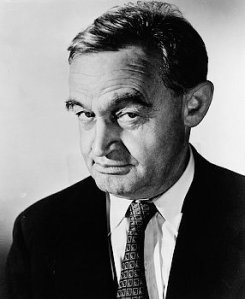
Barry Fitzgerald, Irish stage, film, and television actor, dies on January 14, 1961.

Fitzgerald is born William Joseph Shields in Walworth Road, Portobello, Dublin, Ireland, on March 10, 1888. He is the older brother of Irish actor Arthur Shields. He goes to Skerry’s College in Dublin before going on to work in the civil service while also working at the Abbey Theatre.

Unknown to many, Fitzgerald is also a patriot. In 1916 he is a member of the Irish Volunteers and is prepared to fight in the Easter Rising on Easter Sunday when the orders are countermanded. On Easter Monday the revolution is on again, and Shields goes to the Abbey Theatre and retrieves his rifle from under the stage. He goes around the corner to Liberty Hall and joins with James Connolly’s Irish Citizen Army.

He then marches to the General Post Office on Sackville Street where he fights before evacuating on Friday. He is sent to Stafford Prison in England with another famous rebel, Michael Collins, and from there they are both sent to the Frongoch internment camp in Wales. Both return to Dublin by the end of 1916, Collins to terrorise the British and Shields to return to the Abbey Theatre stage.

By 1929, he turns to acting full-time. He is briefly a roommate of famed playwright Sean O’Casey and stars in such plays as O’Casey’s Juno and the Paycock and the premiere of The Silver Tassie.

Fitzgerald goes to Hollywood to star in another O’Casey work, The Plough and the Stars (1936), directed by John Ford. He has a successful Hollywood career in such films as The Long Voyage Home (1940), How Green Was My Valley (1941), And Then There Were None (1945), The Naked City (1948), and The Quiet Man (1952). Fitzgerald achieves a feat unmatched in the history of the Academy Awards. He is nominated for both the Best Actor Oscar and the Best Supporting Actor Oscar for the same performance, as Father Fitzgibbon in Going My Way (1944). He wins the Best Supporting Actor Award. This feat will likely never be matched as the Academy Award rules have since been changed to prevent this. During World War II, Oscar statues are made of plaster rather than gold due to wartime metal shortages. Being an avid golfer, Fitzgerald later breaks the head off his Oscar statue while practicing his golf swing.

Fitzgerald has two stars on the Hollywood Walk of Fame, one for films located at 6220 Hollywood Blvd. and one for television located at 7001 Hollywood Blvd.

Fitzgerald returns to live in Dublin in 1959. He dies of heart failure on January 14, 1961, and is buried at Deansgrange Cemetery in Dublin.


Leave a comment

Birth of Thomas Patrick Ashe

thomas-patrick-ashe

Thomas Patrick Ashe, a member of the Gaelic League, the Irish Republican Brotherhood (IRB), and a founding member of the Irish Volunteers, is born in Lispole, County Kerry, on January 12, 1885. Ashe enters De La Salle Training College, Waterford, in 1905 and begins a teaching career as principal of Corduff National School, Lusk, County Dublin, in 1908.

Ashe plays a major part in the 1916 Easter Rising outside the capital city commanding the Fingal battalion of the Irish Volunteers. Ashe is commandant of the 5th battalion of the Dublin brigade, a force of 60–70 men engaging British forces around north County Dublin during the rising. They are armed only with a few rounds, about a dozen service rifles, a dozen Mausers, and a dozen Martini-Henry carbines. Some of Ashe’s men are armed only with a shotgun against the well-equipped army regulars.

Ashe’s battalion wins a major victory in Ashbourne, County Meath, where they engage a much larger force. They capture a significant quantity of arms and up to twenty Royal Irish Constabulary (RIC) vehicles. Eleven RIC members, including County Inspector Alexander Gray, and two volunteers are killed during the 5-1/2-hour battle. Twenty-four hours after the rising collapses, Ashe’s battalion surrenders on the orders of Patrick Pearse. On May 8, 1916, Ashe and Éamon de Valera are court-martialled and sentenced to death. The sentences are commuted to penal servitude for life. Ashe is imprisoned in Lewes Prison in Lewes, East Sussex, England.

De Valera, Ashe, and Thomas Hunter lead a prisoner hunger strike on May 28, 1917. With accounts of prison mistreatment appearing in the Irish press and mounting protests in Ireland, Ashe and the remaining prisoners are freed on June 18, 1917, by David Lloyd George as part of a general amnesty.

Upon his release, Ashe returns to Ireland and begins a series of speaking engagements. In August 1917, he is arrested and charged with sedition for a speech that he makes in Ballinalee, County Longford, where Michael Collins is also speaking. He is detained at the Curragh but is then transferred to Mountjoy Prison in Dublin. He is convicted and sentenced to two years hard labour. Ashe and other prisoners, including Austin Stack, demand prisoner of war status. On September 20, 1917, Ashe again goes on hunger strike. He dies at the Mater Hospital on September 25, 1917, after being force fed by prison authorities. At the inquest into his death, the jury condemns the staff at the prison for the “inhuman and dangerous operation performed on the prisoner, and other acts of unfeeling and barbaric conduct.” His body lies in state at Dublin City Hall and is buried in Glasnevin Cemetery in Dublin.

Ashe is a relative of Catherine Ashe, the paternal grandmother of American actor Gregory Peck, who emigrates to the United States in the 19th century. The Ashe Memorial Hall built in 1928, housing the Kerry County Museum, in Tralee, County Kerry, is named after him while Nelson Street, also in Tralee, is renamed Ashe Street.


Leave a comment

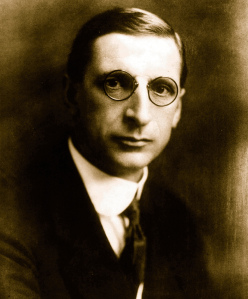
Éamon de Valera Resigns as President of the Republic

eamon-de-valeraThe Anglo-Irish Treaty is introduced to replace the Republic with a dominion of the British Commonwealth with the King represented by a Governor-General of the Irish Free State. The Treaty is finally signed on December 6, 1921.
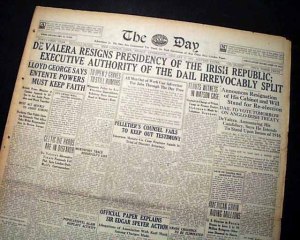
Éamon de Valera does not join in on the negotiations. His opponents say that he does so because he knows that the British will only allow an Irish dominion, not a republic, and does not want to be blamed for giving up the idea of a republic. De Valera says he is angry because the delegates working out the treaty had not asked him before signing the treaty. But at a secret session of the Dáil during the Treaty debates and publicised in January 1922, de Valera’s ideas for a treaty include dominion status, the “Treaty Ports,” a veto by the parliament in Belfast, and the king as head of the Commonwealth. Ireland would pay a share of the imperial debt.

On January 9, 1922, when the Treaty is accepted by a vote of 64 to 57, de Valera resigns as President of the Republic and a large minority of Sinn Féin Teachta Dálas (TDs) leave Dáil Éireann. De Valera  states, “In view of the vote that was taken here on Saturday and which I had definitely to oppose as one that was tending to subvert the Republic which I was elected to my present position to defend and maintain; and as it appeared to me also to be a vote which would tend to subvert the independence of the country, I could no longer continue— as I was beaten in that — I could no longer continue in my present office feeling I did not have the confidence of the House. I therefore wish to place my resignation in the hands of the Assembly.”the-day-01-09-1922

A motion to re-elect De Valera as President is defeated along pro and anti-treaty lines by 60 votes to 58. Arthur Griffith, de Valera opponent and former colleague, is elected President of Dáil Éireann in his place.

Following the vote, Griffith says, “Before another word is spoken I want to say: I want the Deputies here to know, and all Ireland to know, that this vote is not to be taken as against President de Valera. It is a vote to help the Treaty, and I want to say now that there is scarcely a man I have ever met in my life that I have more love and respect for than President de Valera. I am thoroughly sorry to see him placed in such a position. We want him with us.”


Leave a comment

The Night of the Big Wind

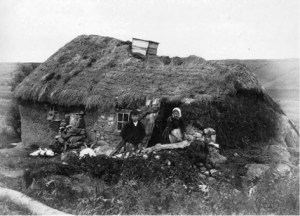
night-of-the-big-windThe Night of the Big Wind (Irish: Oíche na Gaoithe Móire), a powerful European windstorm sweeps without warning across Ireland beginning in the afternoon of January 6, 1839, causing severe damage to property and several hundred deaths. As many as one quarter of the houses in north Dublin are damaged or destroyed and 42 ships are wrecked. The storm tracks eastward to the north of Ireland bringing winds gusts of over 100 knots to the south before moving across the north of England and onto the European continent where it eventually dies out. At the time, it is the most damaging Irish storm in 300 years.

The storm develops after a period of unusual weather. Heavy snow, which is rare in Ireland, falls across the country on the night of January 5, and is replaced on the morning of January 6 by an Atlantic warm front, which brings a period of complete calm with dense, motionless, cloud cover. Through the day, temperatures rise well above their seasonal average, resulting in rapid melting of the snow.

Later in the day, a deep Atlantic depression begins to move towards Ireland, forming a cold front bringing strong winds and heavy rain when it collides with the warm air over land. First reports of stormy weather come from western County Mayo around noon and the storm moves very slowly across the island through the remainder of the day, gathering strength as it progresses.

By midnight the winds reach hurricane force. It is estimated that between 250 and 300 people lose their lives in the storm. Severe property damage is caused, particularly in Connacht, but also in Ulster and northern Leinster. Much of the inland damage is caused by a storm surge that draws large quantities of sea water inland, resulting in widespread flooding.

The Night of the Big Wind has become part of Irish folk tradition. Irish folklore held that Judgement Day would occur on the Feast of the Epiphany, January 6. Such a severe storm led many to believe that the end of the world was at hand.